
The implant process has revolutionized modern dentistry, offering a permanent solution for missing teeth. Understanding each stage of the dental implant process helps patients feel confident and prepared. This comprehensive guide walks you through everything from initial consultation to final crown placement, ensuring you know exactly what to expect during your implant process journey at every step.
What to Expect During the Dental Implant Process
The dental implant process begins with a thorough evaluation of your oral health and continues through several carefully planned stages. Each phase of the implant process is designed to ensure optimal results and long-lasting success. From your first consultation to final restoration, the implant process typically spans several months, allowing proper healing and integration with your jawbone for maximum stability.
Initial Consultation and Assessment
Your implant process starts with a comprehensive oral examination where our dentists evaluate your teeth, gums, and jawbone structure. Digital X-rays and 3D imaging help determine bone density and identify potential challenges. During this appointment, we discuss your medical history, medications, and treatment goals. This thorough assessment ensures the implant process is tailored specifically to your unique dental needs and circumstances.
Oral examination and X-rays: Advanced diagnostic imaging reveals bone quality, sinus position, and nerve locations to plan safe implant placement. Our team analyzes these images to create a precise surgical guide. Digital technology ensures accuracy throughout your implant process, minimizing risks and optimizing outcomes for predictable results.
Discussing treatment options: We present various implant solutions including single tooth replacement, multiple implants, or full-arch restorations. Each option is explained with associated timelines, costs, and success rates. Understanding all alternatives empowers you to make informed decisions about your implant process. We answer questions and address concerns to ensure complete clarity.
Treatment Planning
A customized treatment plan forms the foundation of a successful implant process. Using advanced software, we map exact implant positions, angles, and depths. This digital blueprint guides every subsequent step of your implant process. Precision planning reduces complications, shortens surgery time, and improves final aesthetics. Your unique anatomy determines the specific approach we’ll take.
Customized implant plan: Your personalized roadmap details each phase of the implant process with estimated timelines and procedures required. We consider factors like bone availability, aesthetic goals, and budget constraints. This tailored approach ensures the implant process addresses your specific needs. Regular reviews allow adjustments as healing progresses throughout treatment.
Digital imaging for precision: 3D cone beam CT scans create detailed models of your jaw, allowing virtual implant placement before surgery. This technology identifies optimal positions and prevents damage to nerves or sinuses. Digital guides manufactured from these scans ensure surgical accuracy during the actual implant process. Advanced planning translates to better outcomes and faster recovery.
From Consultation to Completion: The Implant Process Explained
The dental implant process explained involves multiple sequential stages, each crucial for long-term success. Understanding this step-by-step overview helps you prepare mentally and physically for treatment. The implant process requires patience as biological healing cannot be rushed. However, each phase brings you closer to restored function and confidence with your beautiful new smile.
Tooth Extraction (if needed)
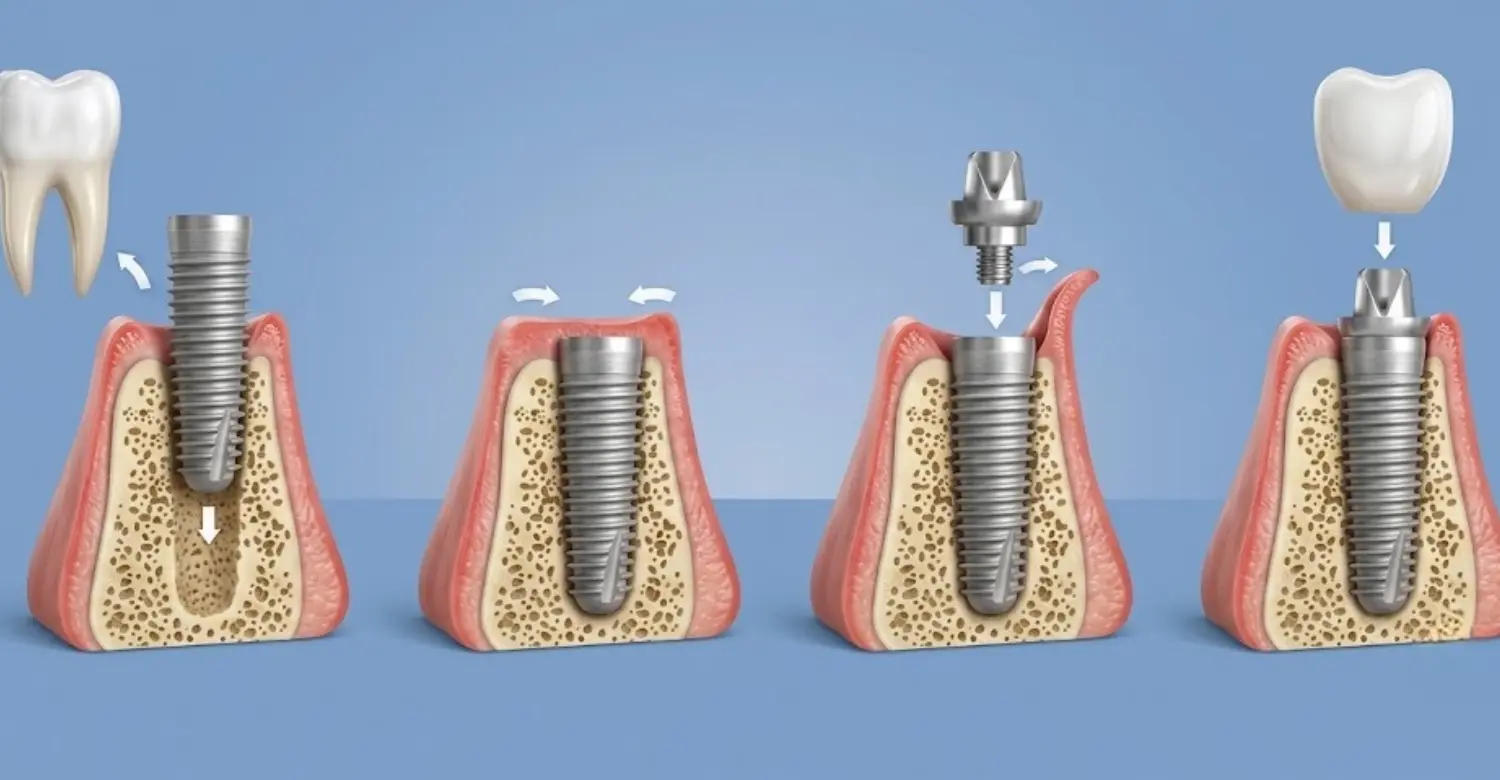
When replacing a damaged tooth, extraction precedes the implant process. Our gentle techniques minimize trauma to surrounding bone and tissue. Sometimes extraction and implant placement occur simultaneously during the same appointment. Other cases require healing time before continuing the implant process. We determine the best approach based on infection presence, bone condition, and individual circumstances.
Preparing the site for implant placement: After extraction, the socket must heal adequately before implant surgery. This typically takes 8-12 weeks, allowing bone to fill the space. Proper socket preservation during extraction maintains bone volume for the subsequent implant process. We may place bone grafting material immediately to support future implant stability and success.
Bone Grafting (if necessary)
Insufficient bone volume requires grafting before the implant process can proceed. We add bone material to areas lacking adequate height, width, or density. The graft integrates with existing bone over 3-6 months, creating a solid foundation. While bone grafting extends the overall implant process timeline, it’s essential for long-term implant success and prevents future complications.
Ensuring sufficient bone support: Dental implants need substantial bone to anchor securely and withstand chewing forces. Bone grafting rebuilds lost structure from periodontal disease, infection, or long-term tooth absence. Various grafting materials include your own bone, donor bone, or synthetic alternatives. This preparatory step ensures the subsequent implant process has the best possible foundation.
Implant Placement Surgery
The core of the implant process involves surgically inserting a titanium post into your jawbone. Under local anesthesia, we make a small incision in your gum tissue. A precise hole is drilled into the bone where the implant is carefully positioned. The implant process continues as the gum is sutured closed over or around the implant. Most patients experience minimal discomfort during this crucial phase.
Procedure overview: Implant surgery typically takes 1-2 hours per implant depending on complexity. We use sterile techniques in a controlled environment to prevent infection. The titanium post serves as an artificial tooth root during the implant process. Advanced surgical protocols ensure accurate placement at the predetermined angle and depth. You’ll receive detailed post-operative instructions before leaving.
Healing and osseointegration: The most critical phase of the implant process occurs over the next 3-6 months as bone grows around the implant. This biological process called osseointegration creates a permanent bond between titanium and bone. During healing, you’ll wear a temporary restoration to maintain aesthetics and function. Regular checkups monitor the implant process to ensure proper integration is occurring.
Abutment Placement
Once osseointegration completes, the implant process continues with abutment placement. This small connector piece attaches to the implant and protrudes through the gum. A minor surgical procedure exposes the implant if it was covered during healing. The abutment is secured, and gums are allowed to heal around it for 1-2 weeks. This step prepares for the final restoration phase.
Connecting the implant to the prosthetic tooth: The abutment serves as the link between your implant and crown during the implant process. We select the appropriate size, shape, and angle to support your final restoration. Custom abutments may be fabricated for optimal aesthetics in visible areas. Gum tissue contours naturally around the abutment, creating a lifelike appearance for the completed implant process.
Crown Placement
The implant process culminates with your custom crown being attached to the abutment. We take impressions to create a restoration matching your natural teeth in color, shape, and size. The crown is either screwed or cemented onto the abutment permanently. This final step completes the implant process, restoring full function and aesthetics. You can now eat, speak, and smile with complete confidence.
Final restoration: Your permanent crown is crafted from durable materials like porcelain or zirconia that mimic natural tooth appearance. The implant process ensures your restoration blends seamlessly with surrounding teeth. We adjust the bite to distribute forces evenly and prevent complications. Proper crown design contributes significantly to long-term implant success and patient satisfaction.
Checking bite and aesthetics: Before finalizing the implant process, we verify that your bite feels comfortable and natural. The crown should not interfere with chewing or jaw movement. We also confirm that color, shape, and positioning meet your aesthetic expectations. Minor adjustments can be made during this appointment to perfect the results of your implant process.
Dental Implant Process Timeline: How Long It Really Takes
The implant process timeline varies significantly based on individual factors and treatment complexity. A straightforward single implant typically requires 3-6 months from start to finish. However, the dental implant duration extends when bone grafting, extractions, or multiple implants are involved. Understanding realistic timeframes helps you plan accordingly and maintain patience throughout the implant process as healing cannot be accelerated beyond biological limits.
Typical Healing Times
The implant process timeline is largely determined by osseointegration, which cannot be rushed. Lower jaw implants typically integrate in 3-4 months, while upper jaw implants need 5-6 months. Bone grafting adds another 3-6 months before implant placement. Individual healing rates vary based on age, health, and oral hygiene. The complete implant process from consultation to final crown averages 6-12 months for most patients.
Osseointegration duration: This biological fusion between titanium and bone is the cornerstone of the implant process. During osseointegration, bone cells grow directly onto the implant surface, creating exceptional stability. Rushing this phase of the implant process increases failure risk significantly. We monitor healing progress through clinical examination and imaging to confirm successful integration before proceeding.
Factors affecting healing: Several variables influence your individual implant process timeline including smoking, diabetes, and bone quality. Poor oral hygiene can delay healing or cause complications during the implant process. Adequate nutrition supports tissue repair and bone formation. Younger patients generally heal faster than older individuals. Following post-operative instructions carefully optimizes your implant process timeline and ensures successful outcomes.
Accelerated Implant Options
Some patients qualify for immediate load implants that shorten the overall implant process. These protocols place a temporary crown on the same day as implant surgery. However, immediate loading requires excellent bone quality and specific case criteria. While appealing, rushed timelines can compromise long-term success of the implant process. We carefully evaluate whether you’re a suitable candidate for accelerated treatment approaches.
Immediate load implants: This modified implant process places implants and temporary restorations in a single appointment. The technique works well for full-arch replacements with multiple implants distributing forces. Single tooth immediate loading has stricter requirements during the implant process. Patients enjoy instant aesthetics and function, though temporary restorations have dietary restrictions. Permanent crowns still require waiting for complete osseointegration.
Pros and cons: Accelerated implant process options reduce treatment time and provide immediate aesthetics. However, failure rates are slightly higher compared to traditional healing protocols. Not all patients qualify based on bone density and medical history. The condensed implant process timeline may increase cost due to additional surgical complexity. We’ll discuss whether immediate loading suits your specific situation and treatment goals.
Implant Process for Missing Teeth: A Complete Overview
The implant process for missing teeth adapts based on how many teeth need replacement. Whether restoring a single gap or an entire arch, the fundamental principles remain consistent. However, procedural details and timelines vary considerably. Understanding these differences helps you comprehend what your specific implant process will involve and prepare appropriately for each stage of treatment.
Single Tooth Implants
Replacing one missing tooth represents the most straightforward implant process. A single titanium post is placed into the jawbone where the tooth root once existed. After osseointegration, an individual crown is attached to complete the restoration. The implant process for single teeth typically takes 3-6 months total. This solution preserves adjacent teeth, unlike bridges that require grinding down healthy tooth structure.
Procedure and timeline: Your single tooth implant process begins with implant placement surgery requiring about one hour. Healing time of 3-6 months allows osseointegration before the abutment and crown are added. Total treatment involves 3-4 appointments spread across several months. The completed implant process provides a restoration indistinguishable from natural teeth in appearance and function.
Find out if you can get dental implants with bone loss
Multiple Teeth and Full-Arch Implants
Restoring several missing teeth or entire arches modifies the standard implant process. Strategic implant placement supports multiple crowns or a fixed bridge. Full-arch replacements may use 4-6 implants per jaw with immediate temporary teeth. The implant process becomes more complex but remains highly predictable with proper planning. Comprehensive solutions restore complete oral function and dramatically improve quality of life.
Differences in process and recovery: Multiple implant procedures require longer surgical appointments during the implant process. Recovery may involve more swelling and discomfort compared to single implants. However, placing several implants simultaneously is more efficient than staging multiple surgeries. The overall implant process timeline for full-arch treatment can actually be shorter due to immediate loading options available for these cases.
Tips to Make Your Dental Implant Process Smooth and Easy
Following proper guidelines significantly improves your implant process experience and outcomes. Preparation and aftercare directly impact healing speed and complication rates. These practical tips help ensure your implant process proceeds smoothly from start to finish. Patient compliance with our recommendations is the single most important factor determining success. Small efforts make a tremendous difference in your final results.
Pre-Procedure Preparation
Optimizing your health before surgery sets the foundation for a successful implant process. Schedule your procedure when you can rest afterward without work or social obligations. Arrange transportation since sedation prevents driving. Fill prescriptions beforehand so medications are ready when needed. Preparing properly reduces stress and allows you to focus on healing throughout the implant process.
Oral hygiene and diet: Excellent oral hygiene before surgery reduces bacteria that could compromise the implant process. Professional cleaning removes tartar and plaque immediately before your procedure. Eat a nutritious meal beforehand since you’ll have dietary restrictions afterward. The implant process succeeds best when starting from a foundation of optimal oral health. Brush and floss thoroughly in the days leading up to surgery.
Health considerations: Inform us about all medications, supplements, and health conditions affecting the implant process. Certain medications may need temporary adjustment before surgery. Control chronic conditions like diabetes to optimize healing during the implant process. Avoid smoking for at least two weeks before and after surgery. Your overall health status significantly influences implant process outcomes and complication rates.
Post-Procedure Care
Diligent aftercare is crucial for successful healing throughout the implant process. Apply ice packs during the first 24 hours to minimize swelling. Sleep with your head elevated above heart level for several nights. Stick to soft foods and avoid chewing near the surgical site. Following these guidelines prevents complications and keeps your implant process on track. Most discomfort resolves within 3-5 days with proper care.
Pain management: Mild to moderate discomfort is normal during the initial implant process recovery. Take prescribed pain medications as directed before discomfort becomes severe. Over-the-counter options often suffice after the first few days. Pain should gradually decrease throughout the implant process healing period. Contact us immediately if pain worsens or persists beyond one week.
Preventing infection: Infection can derail the entire implant process and cause implant failure. Take antibiotics exactly as prescribed to prevent bacterial complications. Gently rinse with warm salt water beginning 24 hours after surgery. Avoid touching the surgical site with fingers or tongue during the implant process healing. Maintain excellent oral hygiene while being gentle around the treatment area.
Follow-up schedule: Regular checkups monitor healing progress throughout the implant process. We’ll schedule appointments to remove sutures, check integration, and place your restoration. Attend all appointments as healing complications can develop between visits. These checkups allow early intervention if problems arise during the implant process. Your commitment to follow-up care directly impacts long-term success and satisfaction.
Learn about the role of a bone graft for tooth implant
Dental Implants vs. Bridges and Dentures: What Makes Them Different?
Dental implants, bridges, and dentures are common solutions for replacing missing teeth, but each option works differently.
Dental implants replace the missing tooth root with a titanium implant placed inside the jawbone.
Bridges replace missing teeth by attaching artificial teeth to neighboring natural teeth for support.
Dentures are removable appliances that replace multiple missing teeth but do not stimulate the jawbone.
At Vitrin Clinic, dentists evaluate your oral health, bone condition, and aesthetic expectations before recommending the best option.
Dr. Rifat Alsaman, Head of the Medical Team at Vitrin Clinic and cosmetic dentist, explains that dental implants often provide a more natural feeling.
He highlights that implants offer strong stability because they replace the tooth structure from root to crown.
Understanding the Main Differences Between Dental Implants, Bridges, and Dentures
Dental implants, bridges, and dentures can replace missing teeth, but their functions and long-term results are different.
Dental implants replace the tooth root with a titanium implant, creating a stable foundation inside the jawbone.
Bridges replace missing teeth by using nearby teeth as support, while dentures rest on the gums without fixed attachment.
At Vitrin Clinic, treatment decisions are based on your oral condition, bone structure, and aesthetic goals.
Dr. Rifat Alsaman, Head of the Medical Team at Vitrin Clinic and cosmetic dentist, explains that implant-supported solutions often provide better stability.
He highlights that every patient requires a personalized evaluation before choosing between implants, bridges, or dentures.
Why Dental Implants Often Provide More Natural Results
Dental implants closely imitate natural teeth because they replace both the visible crown and the missing root.
They allow patients to chew comfortably and maintain a natural smile appearance for many years.
Unlike removable dentures, implants remain fixed and provide improved confidence during daily activities.
Vitrin Clinic combines advanced implant technology with cosmetic dentistry expertise to achieve functional and aesthetic outcomes.
What We Notice Clinically
Patients choosing dental implants usually experience improved chewing ability and stronger confidence after completing treatment.
Dr. Rifat Alsaman, Head of the Medical Team at Vitrin Clinic and cosmetic dentist, notices that stability improves patient satisfaction.
Clinical evaluations show that implant-supported restorations help patients maintain healthier oral function compared with removable options.
Clinical Note
Clinical Note: Dental implants require sufficient bone support because the implant needs stable integration with the jawbone.
A complete examination with digital imaging helps identify bone quality and determines the most suitable treatment approach.
Tips for Patients
Patients should compare long-term benefits instead of focusing only on the initial treatment cost.
Maintaining excellent oral hygiene after implants helps protect the surrounding gums and supporting tissues.
Regular follow-up visits at Vitrin Clinic support long-lasting implant health and successful outcomes.
How Do Dental Implants Prevent Bone Loss and Facial Structure Collapse?
After losing a natural tooth, the jawbone gradually loses stimulation because the tooth root is no longer present.
This process is called jawbone resorption and can affect facial support over time.
Dental implants help prevent bone loss by acting like artificial tooth roots inside the jawbone.
During osseointegration, the implant bonds with the surrounding bone and helps maintain its strength.
At Vitrin Clinic, implant planning focuses on preserving jaw structure while restoring natural smile appearance.
Dr. Rifat Alsaman, Head of the Medical Team at Vitrin Clinic and cosmetic dentist, emphasizes the importance of early tooth replacement.
He explains that protecting bone structure can improve both facial aesthetics and future dental treatment options.
The Connection Between Tooth Loss and Jawbone Resorption
When a tooth is lost, the jawbone no longer receives stimulation from natural chewing forces.
Over time, this can lead to jawbone resorption and changes in facial appearance.
Bone loss after tooth loss may affect facial support, causing a sunken or aged appearance.
How Dental Implants Preserve Jawbone Structure
Dental implants stimulate the jawbone similarly to natural tooth roots through a process called osseointegration.
This stimulation helps maintain bone density and supports healthier facial proportions.
At Vitrin Clinic, implant planning focuses on preserving both oral function and facial aesthetics.
Dr. Rifat Alsaman, Head of the Medical Team at Vitrin Clinic and cosmetic dentist, emphasizes bone preservation.
He explains that replacing missing teeth early can help prevent future structural complications.
What We Notice Clinically
Clinically, patients with delayed tooth replacement may show changes in bone volume and facial support.
Dr. Rifat Alsaman observes that early implant placement can protect remaining oral structures.
Vitrin Clinic evaluates each case carefully to prevent unnecessary bone deterioration.
Clinical Note
Clinical Note: Bone loss does not stop immediately after tooth extraction and may continue gradually without replacement.
Digital scans allow dentists to evaluate bone levels before planning implant placement.
Tips for Patients
Patients should avoid delaying tooth replacement after losing a permanent tooth.
Early consultation helps determine whether implant placement can preserve existing bone volume.
Follow professional cleaning recommendations to maintain healthy tissues around dental implants.
Dental Implant Process Recovery: What to Expect
Understanding recovery expectations helps you navigate the implant process confidently. Each healing phase has characteristic symptoms and duration. While individual experiences vary, most patients find the implant process recovery easier than anticipated. Knowing what’s normal versus concerning helps you respond appropriately. Proper recovery management ensures your implant process stays on track for optimal final results.
Immediate Recovery
The first 24-72 hours after implant placement represent the most critical recovery period. Swelling peaks around day two or three before gradually subsiding. Minor bleeding may occur for several hours after the implant process surgery. Bruising sometimes develops, especially with bone grafting or multiple implants. These symptoms are normal parts of the implant process and don’t indicate problems when managed properly.
Swelling, bruising, and pain management: Expect facial swelling on the surgical side that typically resolves within one week of the implant process. Ice packs applied for 20 minutes on, 20 minutes off reduce swelling significantly. Bruising may appear yellowish or purple as it fades. Pain medication keeps you comfortable during early recovery from the implant process. Most patients return to normal activities within 3-5 days following surgery.
Long-Term Healing and Care
After initial recovery, the real work of the implant process begins internally as osseointegration occurs. You won’t feel this happening, but bone is actively growing around your implant. Avoid disturbing the surgical site during this crucial implant process phase. Temporary restorations protect the area while allowing normal function. Patience during this extended healing period determines your implant process success.
Maintaining oral hygiene: Continue regular brushing and flossing while being gentle around the implant during the healing implant process. Use a soft-bristled toothbrush and non-abrasive toothpaste near the surgical site. Antimicrobial mouthwash may be recommended to support healing throughout the implant process. Good oral hygiene prevents infection without disrupting the integration occurring during the implant process.
Regular check-ups: We monitor your implant process through periodic examinations and X-rays during osseointegration. These appointments ensure healing progresses normally without complications. We’ll assess gum health, implant stability, and bone integration at each visit. Regular professional monitoring throughout the implant process catches potential problems early when they’re easiest to address. These checkups are essential for long-term success.
The Long-Term Success Rate of Dental Implants: What the Statistics Show
Dental implants are considered one of the most predictable treatments for replacing missing teeth.
Their long-term success depends on several factors including implant placement, healing, and patient care.
Research shows that dental implants can achieve high success rates when proper protocols are followed.
Good oral hygiene and regular professional maintenance are essential for protecting implant health.
At Vitrin Clinic, treatment planning combines modern implant techniques with personalized patient care.
Dr. Rifat Alsaman, Head of the Medical Team at Vitrin Clinic and cosmetic dentist, explains that successful implants require precision.
He believes long-term results depend on accurate diagnosis, quality materials, and patient commitment.
Understanding Dental Implant Success Factors
Dental implants have high success rates when patients receive proper diagnosis and professional treatment planning.
Success depends on bone quality, implant placement accuracy, oral hygiene, and patient health conditions.
Modern implant techniques continue improving predictable long-term results for suitable candidates.
Why Implant Maintenance Affects Long-Term Results
Although implants are durable, they require regular care to remain healthy.
Daily brushing, professional cleaning, and routine examinations protect implant-supported restorations.
Vitrin Clinic provides personalized aftercare guidance to help patients maintain their new smiles.
What We Notice Clinically
Patients who follow maintenance instructions usually achieve more stable and comfortable implant results.
Dr. Rifat Alsaman, Head of the Medical Team at Vitrin Clinic and cosmetic dentist, highlights patient cooperation.
He explains that successful implants require teamwork between the dental team and the patient.
Clinical Note
Clinical Note: Dental implant success is influenced by biological healing and proper professional management.
Regular examinations help detect early problems before they affect implant stability.
Tips for Patients
Avoid smoking because it can negatively influence healing around dental implants.
Maintain regular dental appointments to monitor implant health and surrounding gum tissues.
Choose an experienced implant team like Vitrin Clinic for accurate planning and follow-up care.
Common Questions About the Dental Implant Process
Patients naturally have questions throughout the implant process. Understanding what to expect reduces anxiety and helps you make informed decisions. These common questions about the dental implant process address the most frequent concerns we encounter. Having clear answers empowers you to approach treatment confidently. Don’t hesitate to ask additional questions specific to your situation during consultations.
Understand the purpose and process of sinus lift surgery
Is the dental implant process painful?
Modern anesthesia makes the implant process virtually painless during surgery. You’ll feel pressure but no pain while we place your implants. Afterward, discomfort is typically mild and well-controlled with medication. Most patients describe the implant process as less painful than tooth extraction. Any discomfort usually subsides within 3-5 days. The healing implant process occurs without pain as it happens internally within the bone.
How long does the entire implant process take?
The complete implant process typically requires 3-6 months from placement to final restoration. However, this timeline extends with bone grafting, extractions, or multiple implants. Upper jaw implants need longer healing than lower jaw. Your specific implant process duration depends on individual factors including bone quality and healing rate. We’ll provide a personalized timeline during your consultation outlining each implant process phase.
What are the risks during the implant process?
Like any surgery, the implant process carries some risks including infection, nerve damage, or sinus complications. However, these occur rarely with experienced surgeons using proper techniques. Implant failure happens in approximately 5% of cases, usually due to failed osseointegration. Smoking significantly increases risks throughout the implant process. Choosing a qualified provider and following care instructions minimizes complications during your implant process.
Can everyone get dental implants?
Most healthy adults qualify for the implant process regardless of age. However, certain conditions may affect candidacy including uncontrolled diabetes, active periodontal disease, or insufficient bone. Heavy smoking reduces implant process success rates significantly. We’ll evaluate your specific situation to determine if the implant process is appropriate. Alternative treatments exist for those who don’t qualify for traditional implant placement.
How much does the dental implant process cost?
The implant process cost varies based on number of implants, bone grafting needs, and restoration type. Single tooth replacement typically ranges $3,000-$6,000 including all phases. Full-arch restoration costs significantly more but replaces many teeth. Vitrin Clinic offers the complete implant process at 60-70% less than Western countries without compromising quality. We provide transparent pricing during consultation covering your entire implant process.
Is the Dental Implant Process Right for You? A Candidacy Checklist
The dental implant process is suitable for many patients with missing teeth after proper evaluation.
A successful implant treatment requires healthy gums, sufficient bone support, and good oral hygiene habits.
Dentists use advanced examinations to determine whether implants are the right solution for each patient.
A dental implant candidacy checklist usually includes missing teeth, healthy tissues, adequate bone, and realistic expectations.
Patients with insufficient bone may need additional procedures before implant placement.
At Vitrin Clinic, every patient receives a customized assessment before starting dental implant treatment.
Dr. Rifat Alsaman, Head of the Medical Team at Vitrin Clinic and cosmetic dentist, evaluates each case carefully.
He explains that personalized planning helps achieve predictable results and natural-looking smiles.
Who Can Get Dental Implants?
Most adults with missing teeth may qualify for dental implants after proper evaluation.
Candidates usually need healthy gums, adequate bone support, and good overall oral hygiene.
A professional consultation determines whether implants are suitable for each individual case.
Dental Implant Candidacy Checklist
A dental implant candidate usually meets these important conditions:
Missing one or more teeth.
Healthy gums without uncontrolled infection.
Enough jawbone volume for implant placement.
Commitment to proper oral hygiene.
Willingness to attend follow-up appointments.
When Additional Treatments May Be Needed
Some patients may require bone grafting or gum treatment before implant placement.
These procedures improve the foundation and increase treatment predictability.
Vitrin Clinic creates customized treatment plans according to every patient's specific needs.
What We Notice Clinically
Many patients believe they cannot receive implants without checking their actual bone condition.
Dr. Rifat Alsaman, Head of the Medical Team at Vitrin Clinic and cosmetic dentist, recommends professional evaluation first.
He explains that advanced techniques allow many patients to become suitable candidates.
Clinical Note
Clinical Note: Early cavities frequently cause no pain or visible changes during home checks.
Dental examinations with X-rays can detect decay between teeth and under enamel before symptoms appear.
Tips for Patients
Use toothpaste containing 1,450 ppm fluoride to strengthen enamel and prevent decay.
After brushing, spit without rinsing to allow fluoride protection to remain longer.
If eating sugary foods, consume them with meals instead of frequent snacking throughout the day.
The frequency of acid attacks has a stronger impact on cavities than the total sugar amount.
Dental Implant Process: What Research Shows
Dental implants are among the most successful treatments for replacing missing teeth with predictable long-term results.
Clinical studies show that dental implants commonly achieve success rates above 90–95% over many years when proper planning and maintenance are followed.
The success of implants depends on several factors including bone quality, surgical accuracy, patient health, and oral hygiene.
Research indicates that implants placed in healthy conditions can remain functional for decades with professional care.
The increasing use of digital planning, guided surgery, and advanced implant materials continues improving treatment accuracy.
At Vitrin Clinic, implant treatments follow modern protocols to maximize stability, aesthetics, and long-term patient satisfaction.
Dr. Rifat Alsaman, Head of the Medical Team at Vitrin Clinic and cosmetic dentist, explains that success begins with accurate diagnosis.
He emphasizes that every implant case requires customized planning based on bone condition, smile design, and patient expectations.
Key Dental Implant Process
Dental implants have reported success rates ranging from 90% to 98% in suitable patients.
Proper oral hygiene significantly improves long-term implant survival.
Implant-supported teeth provide stronger stability compared with traditional removable dentures.
Bone preservation is one of the major advantages compared with untreated tooth loss.
Regular maintenance appointments help detect early complications and protect implant health.
Factors That Influence Dental Implant Success
Successful dental implants depend on careful evaluation before treatment begins.
Healthy gums create a better environment for implant stability and healing.
Adequate jawbone volume allows the implant to integrate securely with surrounding tissues.
Lifestyle factors such as smoking and poor oral hygiene may reduce treatment predictability.
Vitrin Clinic evaluates every patient individually to create a safe and effective implant plan.
What We Notice Clinically
Clinically, patients with realistic expectations usually achieve higher satisfaction after implant treatment.
Dr. Rifat Alsaman notices that education before treatment improves patient confidence and cooperation.
He explains that successful implants require teamwork between the dental team and the patient.
At Vitrin Clinic, detailed consultations help patients understand every stage of their implant journey.
Clinical Note
Clinical Note: Dental implant success is not measured only by implant survival.
It also includes healthy gums, stable bone levels, comfortable function, and natural aesthetic results.
Regular examinations allow dentists to monitor implant condition and prevent possible complications.
Tips for Patients
Maintain daily brushing and flossing routines to protect tissues around dental implants.
Attend regular dental checkups to monitor implant health and surrounding bone levels.
Avoid smoking because it can negatively affect healing and long-term implant stability.
Your Friendly Guide to the Dental Implant Process
Choosing the right provider significantly impacts your implant process experience and results. Vitrin Clinic combines advanced technology with experienced specialists to deliver exceptional outcomes. Our patient-centered approach makes the implant process comfortable and predictable. We guide you through every phase with clear communication and comprehensive support. Your successful implant process is our top priority from initial consultation through final restoration.
Recognize and treat the condition of peri-implantitis
Why Choose Vitrin Clinic for Your Implant Process
Vitrin Clinic specializes in comprehensive implant dentistry using cutting-edge techniques and materials. Our surgeons have placed thousands of implants with exceptional success rates. We offer transparent pricing that’s 60-70% less expensive than Western countries. The implant process at our Istanbul facility includes personalized treatment plans tailored to your unique needs. We coordinate every aspect ensuring a smooth, efficient implant process from beginning to end.
Experienced dentists and advanced technology: Our team includes specialists trained in the latest implant process techniques and technologies. We use 3D imaging, digital planning software, and guided surgery for unmatched precision. Advanced equipment ensures your implant process is safe, comfortable, and predictable. Continuing education keeps our dentists current with evolving implant process innovations. This expertise translates to superior results for your dental restoration.
Personalized treatment plans: No two patients are identical, so we customize every implant process to individual circumstances. Your treatment plan considers aesthetic goals, budget, timeline, and oral health status. We explain each step of your implant process clearly with realistic expectations. Alternative options are presented when multiple approaches could work. This personalized attention ensures your implant process aligns perfectly with your needs and preferences.
Transparent cost estimates: We provide detailed breakdowns covering every phase of your implant process before treatment begins. Our pricing includes surgery, materials, restorations, and follow-up appointments. No hidden fees surprise you during the implant process. Vitrin Clinic’s competitive rates make premium dental care accessible without sacrificing quality. We’ll work within your budget to design an implant process that delivers exceptional value and lasting results.
Dental Implant Expert Conclusion
Dental implants provide a long-term solution that restores both oral function and smile aesthetics.
Unlike removable options, implants replace the missing tooth root and help support jawbone preservation.
The best outcomes happen when treatment combines advanced technology, professional expertise, and patient commitment.
At Vitrin Clinic, dental implant procedures focus on creating natural-looking results with personalized treatment planning.
Dr. Rifat Alsaman, Head of the Medical Team at Vitrin Clinic and cosmetic dentist, believes successful implant dentistry requires precision and patient-centered care.
He explains that every smile transformation should balance function, durability, and aesthetic harmony.
Final Conclusion
Choosing dental implants is a long-term investment in oral health, confidence, and quality of life.
The dental implant process provides stable results when patients receive proper evaluation and professional care.
Modern implant dentistry allows many patients to restore missing teeth with natural function and appearance.
Vitrin Clinic combines advanced techniques with experienced medical expertise to help patients achieve successful smile transformations.
A personalized consultation is the first step toward discovering whether dental implants are the right solution for you.
Book your FREE Treatment Plan today at Vitrin Clinic and start your journey toward a new smile and a new life.
Key Takeaways About the Dental Implant Process
The implant process involves multiple stages including consultation, surgery, healing, and restoration placement. Osseointegration requires 3-6 months but creates a stable foundation for your new tooth. Individual timelines vary based on bone quality, health factors, and treatment complexity. Proper planning and patient compliance determine implant process success. The final result functions and appears just like your natural teeth with proper maintenance.
Step-by-step overview: Your implant process begins with comprehensive evaluation and customized planning. Surgical placement of titanium posts occurs under local anesthesia. Extended healing allows bone integration before abutment and crown placement. Each stage of the implant process serves an important purpose. Understanding this sequence helps you remain patient and committed throughout the complete implant process timeline.
Recovery and care tips: Follow all post-operative instructions carefully to optimize your implant process outcomes. Maintain excellent oral hygiene while avoiding disruption to the surgical site. Attend scheduled follow-up appointments to monitor healing progress during the implant process. Contact us immediately if unusual symptoms develop. Your active participation in recovery significantly influences the ultimate success of your implant process.
Find out how much snap-in dentures cost
Schedule Your Consultation at Vitrin Clinic
Ready to begin your implant process journey? Contact Vitrin Clinic today to schedule a comprehensive consultation. We’ll evaluate your needs, discuss treatment options, and create a personalized implant process plan. Our experienced team guides you through every step with expert care and support. Don’t let missing teeth compromise your confidence and oral health. Start your implant process now and discover the life-changing benefits of permanent tooth replacement.
Strong call to action: Transform your smile with dental implants at Vitrin Clinic. Our specialists deliver exceptional results at prices 60-70% less than Western countries. The implant process we provide combines advanced technology with personalized attention for optimal outcomes. Contact us today to learn how dental implants can restore your confidence and oral function. Schedule your consultation and take the first step toward your perfect smile.
Reference
Jensen, S. S., Aghaloo, T., Jung, R. E., Bertl, K., Buser, D., Chappuis, V., de Stavola, L., Monje, A., Pispero, A., Roccuzzo, A., Shahdad, S., Stefanini, M., Tavelli, L., Wang, H.-L., & Zucchelli, G. (2023). Group 1 ITI Consensus Report: The role of bone dimensions and soft tissue augmentation procedures on the stability of clinical, radiographic, and patient-reported outcomes of implant treatment. Clinical Oral Implants Research, 34(S26), 43–49. https://doi.org/10.1111/clr.14154
Morton, D., Gallucci, G., Lin, W.-S., Pjetursson, B., Polido, W., Roehling, S., Sailer, I., Aghaloo, T., Albera, H., Bohner, L., Braut, V., Buser, D., Chen, S., Dawson, A., Eckert, S., Gahlert, M., Hamilton, A., Jaffin, R., Jarry, C., Karayazgan, B., Laine, J., Martin, W., Rahman, L., Schlegel, A., & Shiota, M. (2018). Group 2 ITI Consensus Report: Prosthodontics and implant dentistry. Clinical Oral Implants Research, 29(S16), 215–223. https://doi.org/10.1111/clr.13298
Peitsinis, P. R., Blouchou, A., Chatzopoulos, G. S., & Vouros, I. D. (2025). Optimizing Implant Placement Timing and Loading Protocols for Successful Functional and Esthetic Outcomes: A Narrative Literature Review. Journal of Clinical Medicine, 14(5), 1442. https://doi.org/10.3390/jcm14051442
Wismeijer, D., Joda, T., Flügge, T., Fokas, G., Tahmaseb, A., Bechelli, D., Bohner, L., Bornstein, M., Burgoyne, A., Caram, S., Carmichael, R., Chen, C.-Y., Coucke, W., Derksen, W., Donos, N., El Kholy, K., Evans, C., Fehmer, V., Fickl, S., Fragola, G., Gimenez Gonzales, B., Gholami, H., Hashim, D., Hui, Y., & Kökat, A. (2018). Group 5 ITI Consensus Report: Digital technologies. Clinical Oral Implants Research, 29(S16), 436–442. https://doi.org/10.1111/clr.13309
FAQs

Dr. Rifat Alsaman has more than 5 years of clinical experience in dentistry and currently serves as the Head of the Medical Team at Vitrin Clinic. He is dedicated to providing exceptional patient care, overseeing treatment planning, and ensuring the highest clinical standards across the team. His expertise, attention to detail, and commitment to continuous professional development have helped countless patients achieve healthier, more confident smiles.


