Dental Bridge
July 5, 2026
The Maryland Bridge: Advantages, Disadvantages and Alternatives
 Dr. Rifat Alsaman
The Maryland bridge is a conservative dental solution designed to replace one or more missing teeth without aggressively filing down the neighboring teeth. Unlike a traditional bridge, it relies on metal or ceramic wings bonded to the back of the adjacent teeth. At Vitrin Clinic, this option is offered to patients seeking a fast, affordable, and minimally invasive alternative. This article explores in detail how it works, its advantages, its limitations, and the alternatives available.
What is a Dental Bridge?
A dental bridge is a fixed prosthetic device used to fill the gap left by one or more missing teeth. It typically relies on natural neighboring teeth or implants to hold the artificial tooth or teeth in place. There are several types of bridges, including the traditional bridge and the Maryland bridge, each with its own indications. At Vitrin Clinic, the choice of bridge type depends on the condition of the adjacent teeth, the location of the missing tooth, and the patient's aesthetic expectations.
What is a Maryland Bridge?
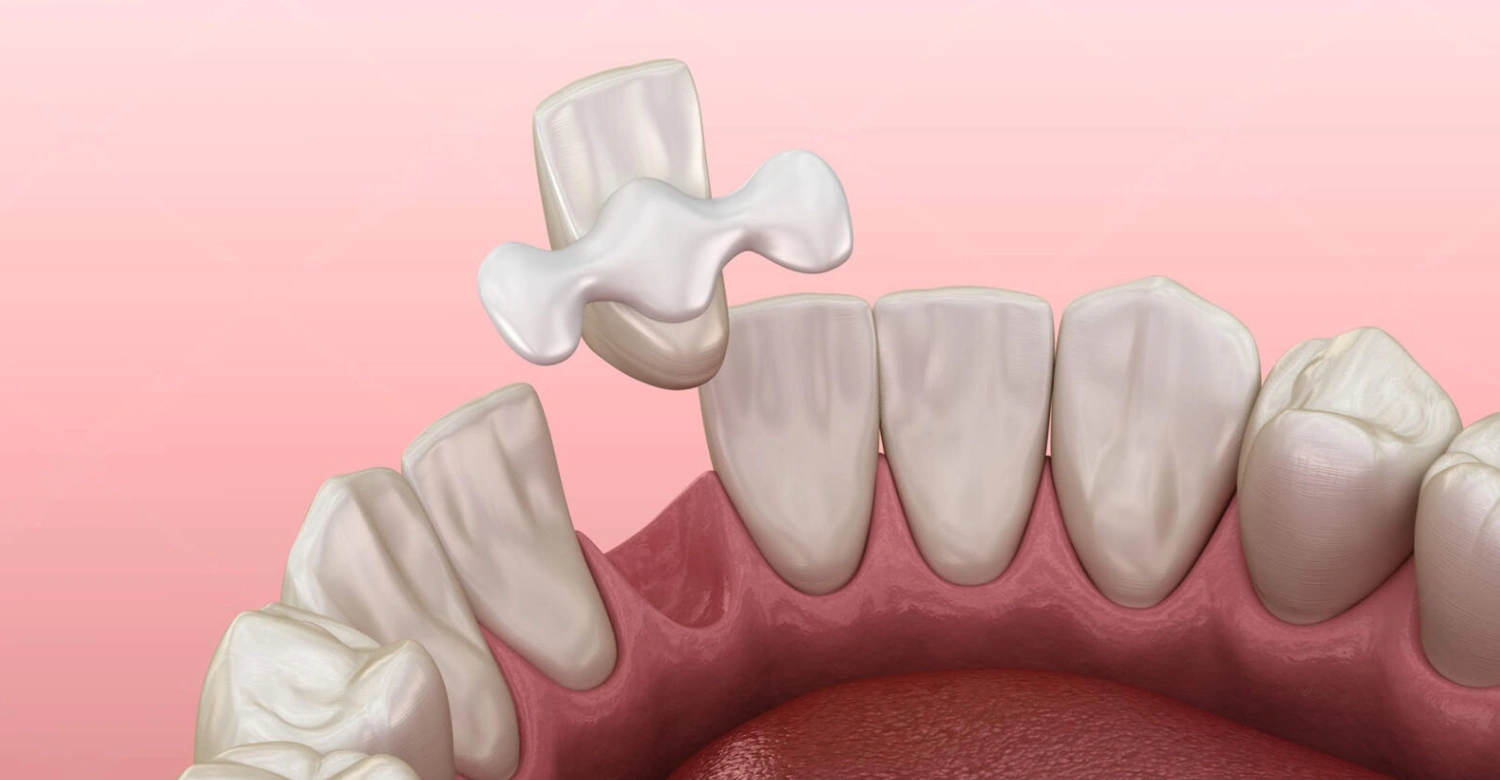
The Maryland bridge is a minimalist type of bonded bridge made up of a pontic (the artificial tooth) attached to two thin wings bonded behind the neighboring teeth. This technique avoids heavily filing down the enamel of the adjacent teeth, unlike a traditional bridge. The Maryland bridge is particularly recommended for replacing a missing incisor in the front area, where aesthetics and preserving tooth structure are the priority. Vitrin Clinic uses modern materials to guarantee a natural and long-lasting result.
Maryland Bridge vs Traditional Bridge
The Maryland bridge vs traditional bridge comparison mainly comes down to invasiveness and durability. A traditional bridge requires filing down the neighboring teeth to fit crowns, while a Maryland bridge only involves bonding thin wings without significantly altering the enamel. In exchange, a traditional bridge generally offers better long-term mechanical strength. The choice between the two depends on the location of the missing tooth, chewing load, and the recommendations given during the consultation at Vitrin Clinic.
The Maryland Bridge Protocol at Vitrin Clinic
At Vitrin Clinic, placing a Maryland bridge follows a precise clinical protocol carried out in several stages, from the initial diagnosis to the final bonding. This structured approach ensures an optimal fit of the wings and the pontic, while maintaining patient comfort at every step. With modern digital tools and personalized follow-up, the medical team ensures that every bonded bridge delivers a natural, long-lasting aesthetic result.
Diagnosis
The first step consists of a complete clinical and radiographic examination of the missing teeth and neighboring teeth. At Vitrin Clinic, this diagnosis makes it possible to assess whether the patient is a good candidate for a Maryland bridge or whether another solution, such as an implant, would be more suitable. Occlusion, periodontal health, and smile aesthetics are analyzed precisely using modern digital tools, ensuring reliable planning before any procedure.
Impressions
Once the diagnosis is confirmed, digital or physical impressions of the teeth involved are taken. These impressions allow a Maryland bridge to be designed that fits the patient's anatomy perfectly. Vitrin Clinic uses intraoral scanning technology to ensure optimal precision, reducing the adjustments needed during final placement. This step is essential to ensure a discreet fit of the wings and a natural-looking pontic.
Fitting and Bonding
Before final placement, a trial fitting of the Maryland bridge is carried out to check fit, color, and comfort. Once approved, the bonded bridge is secured using a specific adhesive cement applied to the wings. At Vitrin Clinic, this final step is carried out under a rigorous clinical protocol with personalized follow-up, ensuring durable adhesion and a harmonious aesthetic result from the moment the patient leaves the clinic.
What is a Maryland Bridge Made Of?
A Maryland bridge consists of three main elements: the pontic, which replaces the missing tooth, and two thin wings bonded behind the adjacent teeth. These elements can be made of zirconia, an aesthetic and biocompatible material, or metal covered with ceramic for added strength. Vitrin Clinic generally favors zirconia for its natural appearance and compatibility with gum tissue, while ensuring good longevity of the bonded bridge.
Alternatives to the Maryland Bridge
Among the alternatives to the Maryland bridge, dental implants are the main option, offering a fixed solution independent of neighboring teeth. A traditional bridge also remains an option for patients needing more strength. Other solutions, such as removable partial dentures, may be considered in certain specific cases. At Vitrin Clinic, each alternative is presented with its advantages and limitations so the patient can choose the solution best suited to their clinical situation and budget.
Maryland Bridge Lifespan
Maryland bridge lifespan generally ranges between 5 and 10 years, depending on oral hygiene, the quality of the bonding, and the patient's eating habits. Good hygiene and regular check-ups at Vitrin Clinic help extend this lifespan. Unlike implants, a Maryland bridge may occasionally need the wings rebonded in case of partial detachment, a simple and quick procedure performed in-clinic without major intervention.
Advantages and Limitations of the Maryland Bridge
Regarding Maryland bridge advantages and disadvantages, the main benefits are quick placement, lower cost, and preservation of the enamel on neighboring teeth. However, this type of dental bridge also has limitations: lower mechanical strength compared to a traditional bridge and a risk of the wings detaching over time. Vitrin Clinic recommends this solution mainly for low chewing-load areas, such as the incisors, where aesthetics take priority over strength.
Who Is a Good Candidate for a Maryland Bridge?
A good candidate for a Maryland bridge is generally someone with a single missing tooth in the front area, with healthy, cavity-free neighboring teeth. Patients looking for a fast, affordable, and minimally invasive solution often favor this option. On the other hand, patients with significant bruxism or heavy chewing load are better directed toward a traditional bridge or an implant. A consultation at Vitrin Clinic helps determine each patient's eligibility.
What We Notice Clinically
According to Dr. Rifat Alsaman, Head of the Medical Team at Vitrin Clinic and cosmetic dentist, the Maryland bridge gives the best results when placed on perfectly healthy and stable neighboring teeth. Dr. Rifat Alsaman points out that failures often occur when the initial diagnosis is insufficient or when the patient's occlusion has not been properly assessed before placing the bonded bridge, which is why a rigorous protocol like the one applied at Vitrin Clinic matters.
In Summary
The Maryland bridge is an effective, fast, and minimally invasive solution for replacing a single missing tooth, particularly in the front area. While it has certain limitations compared to a traditional bridge or dental implants, its aesthetic and conservative advantages make it a go-to option for many patients. Vitrin Clinic guides each patient in choosing the solution best suited to their needs and budget.
References:
FAQs
Dr. Rifat Alsaman has more than 5 years of clinical experience in dentistry and currently serves as the Head of the Medical Team at Vitrin Clinic. He is dedicated to providing exceptional patient care, overseeing treatment planning, and ensuring the highest clinical standards across the team. His expertise, attention to detail, and commitment to continuous professional development have helped countless patients achieve healthier, more confident smiles.


