


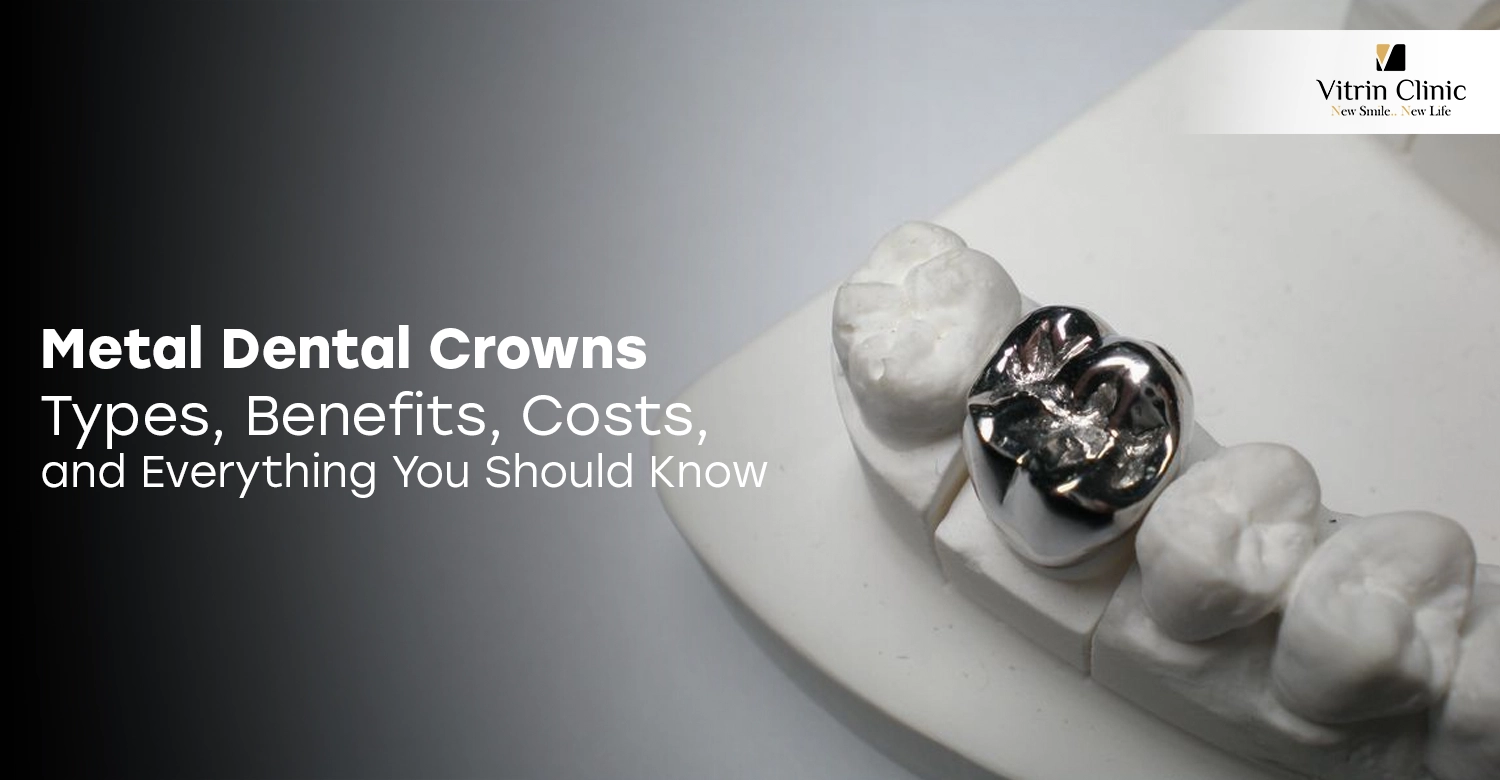
Metal dental crowns represent one of dentistry’s most time-tested restorative solutions, offering unmatched durability for damaged teeth. Whether you’re exploring dental crown metal options for back molars or comparing ceramic vs metal dental crowns differences, understanding these restorations helps you make informed decisions. This comprehensive guide covers metal crown types, costs, materials, safety concerns, and alternatives. Vitrin Clinic specializes in all crown options, ensuring patients receive personalized care tailored to their unique needs and aesthetic goals.
What Are Metal Dental Crowns?
Metal dental crowns are tooth-shaped caps crafted from various metal alloys that completely cover damaged or weakened teeth. A dental crown metal restoration protects the tooth structure while restoring full functionality for chewing and biting. Metal crowns dental solutions provide exceptional strength, making them ideal for posterior teeth that endure significant pressure. These crown options have served patients reliably for decades, offering longevity that often exceeds other materials in demanding oral environments.
How Are Metal Dental Crowns Made?
Creating a metal crown involves precision digital impressions or traditional molds of the prepared tooth. Dental laboratories receive these specifications and cast the crown metal dental restoration using specialized equipment and high-grade metal dental crown material. Technicians carefully shape and polish each metal crown dental piece to ensure proper fit and bite alignment. The dental crown metal ceramic fabrication process typically requires one to two weeks before final cementation at Vitrin Clinic for optimal results.
Types of Metal Used in Dental Crowns
Metal crowns utilize various metal dental crown material options including precious and base alloys. Gold crowns represent traditional metal used for dental crowns, offering exceptional biocompatibility under noble metal cast crown dental code D2790. Palladium and platinum create silvery dental metal crown restorations with excellent strength. Base metal alloys dental crowns containing nickel and chromium provide affordable durability. Each metal dental crown material offers distinct advantages regarding cost, appearance, and longevity for different clinical situations requiring crown metal dental protection.
Gold Crowns
Gold crowns utilize precious metal used for dental crowns, specifically high-noble alloys containing gold, platinum, and palladium. The noble metal cast crown dental code D2790 identifies these restorations in insurance documentation. Gold metal crowns offer exceptional biocompatibility, rarely causing allergic reactions. Their malleability allows precise fitting against opposing teeth. Though expensive, gold crown options provide unparalleled longevity. Base metal alloys dental crowns offer more affordable alternatives while maintaining strength and corrosion resistance.
Palladium & Platinum Alloys
Palladium and platinum alloys create silvery-white metal crowns with excellent strength characteristics. These noble metal cast crown dental code restorations resist tarnishing and corrosion while maintaining biocompatibility. The metal dental crown material combines durability with reduced visibility compared to gold options. These crown metal dental choices work exceptionally well for patients seeking strong posterior restorations. Vitrin Clinic offers these crown types for patients prioritizing longevity. The metal used for dental crowns includes varying platinum-palladium ratios.
Base Metal Alloys (Nickel, Chromium)
Base metal alloys dental crowns utilize non-precious metals including nickel, chromium, and cobalt-chromium combinations. These metal dental crown material options provide exceptional strength at reduced costs. The dental metal crown resists wear while requiring minimal tooth reduction during preparation. However, some patients experience metal dental crown taste like metal sensations initially. Nickel content may cause allergic reactions in sensitive individuals. Despite these considerations, base metal alloys remain popular crown types worldwide due to affordability and durability. Metal is the preferred material for fake molars that endure heavy chewing
Why Choose a Metal Dental Crown?
Metal dental crowns pros cons analysis reveals significant advantages including superior strength that withstands extreme bite forces. These dental crowns metal options require minimal tooth structure removal compared to ceramic alternatives, preserving natural tooth integrity. Advantages and disadvantages of ceramic metal dental crowns comparisons show metals rarely chip or fracture. Metal crown dental restorations typically last fifteen to thirty years with proper care. Their exceptional longevity makes these crowns cost-effective long-term investments despite higher initial prices than composite options.
Do Metal Dental Crowns Affect Health or MRI Safety?
Concerns about whether metal dental crowns affect mri scans arise frequently among patients requiring medical imaging. Modern metal crowns are generally MRI-safe, though they may create minor image artifacts near the restoration site without posing health risks. Regarding metal dental crowns toxic worries, approved dental alloys meet strict biocompatibility standards. Some patients report dental implant crown taste like metal initially, which typically subsides within weeks. Are metal dental crowns MRI safe? Yes, radiologists routinely scan patients with these restorations safely.
Metal vs Ceramic Dental Crowns – Key Differences
Understanding ceramic vs metal dental crowns differences helps patients select appropriate restorations. Dental crown metal vs ceramic comparisons reveal distinct characteristics affecting aesthetics, durability, and cost. Metal crowns excel in strength and longevity, particularly for posterior teeth experiencing heavy chewing forces. Dental crowns porcelain vs metal considerations involve balancing natural appearance against functional demands. Vitrin Clinic’s experienced team evaluates individual cases to recommend whether dental crown metal or ceramic options best serve each patient’s specific requirements. For better looks, consider porcelain fused metal options
Appearance & Aesthetics
Dental crowns porcelain vs metal aesthetic differences remain the primary distinction between restoration types. Porcelain fused to metal dental crowns combine metal strength with tooth-colored exteriors, though metal collar dental crown margins may eventually show as gums recede. Full ceramic crowns offer superior translucency mimicking natural tooth enamel. Metal crowns appear silver or gold, making them unsuitable for visible anterior teeth. For posterior molars where appearance matters less, metal crown options provide unmatched durability without aesthetic compromise.
Longevity & Maintenance
Metal dental crown problems occur less frequently than ceramic fractures or chipping. These restorations resist wear exceptionally well, often lasting two to three decades with routine care. Metal crown lifespan exceeds porcelain alternatives significantly, particularly in patients with heavy bite forces or bruxism. Maintenance involves regular brushing, flossing, and professional cleanings at Vitrin Clinic. While dental crown exposed metal margins may become visible over time with gum recession, the restoration itself remains structurally sound and functional throughout its extended lifespan.
Cost Comparison
Metal dental crown cost varies significantly based on materials used and geographic location. Noble metal cast crown dental code restorations containing gold typically range from $800-$2,500 per tooth in Western countries. Metal dental crown cost india averages $150-$400, making international dental tourism attractive. Metal dental crown price considerations include laboratory fees, dentist expertise, and material quality. Base metal alloys dental crowns cost less than precious metal versions. Vitrin Clinic offers competitive pricing without compromising quality, making metal crowns accessible internationally. In the debate of veneers vs crowns , metal crowns win on durability
Types of Metal Dental Crowns
Metal dental crown types include full metal, porcelain-fused-to-metal, and metal-ceramic variants, each serving specific clinical situations. Dental metal crown classifications help dentists select appropriate restorations based on tooth location, bite forces, and aesthetic requirements. Metal ceramic dental crown options combine strength with improved appearance. Understanding these crown types enables informed discussions with your Vitrin Clinic dentist about which dental crown metal option best addresses your restoration needs while balancing functional demands and budget considerations effectively.
Full Metal Crowns
Full metal crown dental restorations consist entirely of metal alloys without any porcelain overlay. These crowns provide maximum strength and durability for posterior molars. The full metal crown dental code D2790 identifies high-noble metal versions, while D2791 represents predominantly base metal crowns. These metal crown dental options require minimal tooth reduction during preparation. Their exceptional longevity and fracture resistance make full metal dental crowns ideal for patients with heavy bite forces. Vitrin Clinic recommends these crown types for non-visible posterior teeth.
Porcelain-Fused-to-Metal Crowns
Porcelain fused to metal dental crowns feature metal substructures overlaid with tooth-colored porcelain. The metal crown dental code D2750 represents these hybrid restorations in insurance documentation. These dental crown metal ceramic combinations provide reasonable aesthetics with underlying metal strength. However, porcelain layers may chip over time, exposing the dental crown exposed metal beneath. Metal collar dental crown margins can become visible as gums recede. Despite these limitations, porcelain fused to metal dental crowns balance appearance and durability effectively for transitional teeth.
Metal-Ceramic & Other Variants
Dental crown metal ceramic variants include numerous specialized formulations optimizing specific properties. Some metal dental crowns pros cons analyses favor newer alloys reducing porcelain chipping. Advanced metal ceramic dental crown designs minimize metal collar dental crown visibility. Manufacturers continually refine metal dental crown material compositions enhancing biocompatibility and aesthetics. These crown types represent evolving technology bridging fully metal and all-ceramic restorations. Vitrin Clinic stays current with innovations, offering patients the latest crown options suited to individual clinical situations.
Metal Dental Crowns in Practice
Metal crowns dental applications extend throughout restorative dentistry, addressing various tooth damage scenarios. Crown metal dental restorations repair extensively decayed teeth, protect root canal-treated teeth, and support dental bridges. Metal dental crown image documentation helps patients visualize these restorations before treatment. Understanding practical aspects of crown placement, potential complications, and daily life considerations ensures realistic expectations. Vitrin Clinic’s comprehensive approach addresses all patient concerns from initial consultation through final cementation and long-term maintenance of metal crowns. Metal crowns often serve as anchors for fixed partial dentures
Placement Procedure
Installing a metal crown requires multiple appointments at Vitrin Clinic. First, the dentist numbs the area and shapes the tooth, removing decay while preserving healthy structure. This metal dental crown preparation requires minimal tooth reduction compared to ceramic options. Precise impressions capture tooth dimensions for laboratory fabrication of your metal crown dental restoration. A temporary crown protects the prepared tooth during the one-to-two-week period while technicians craft your permanent crown using appropriate dental crown metal materials before final cementation.
Tooth Preparation
Installing a metal crown begins with numbing the area and removing decay or damaged tooth structure. The dentist shapes the tooth, creating space for the metal crown dental restoration while preserving maximum healthy structure. This procedure requires less tooth reduction than ceramic crowns, conserving natural tissue. Impressions capture precise tooth dimensions for laboratory fabrication. Temporary crowns protect prepared teeth during the one-to-two-week fabrication period before permanent crown cementation at Vitrin Clinic.
Impression & Lab Fabrication
After tooth preparation, dentists take detailed impressions using traditional materials or digital scanners. These specifications guide laboratory technicians crafting your crown using appropriate metal dental crown material. Skilled technicians cast, shape, and polish each crown metal dental restoration ensuring proper fit and bite alignment. The dental metal crown undergoes quality inspections before returning to Vitrin Clinic. Advanced CAD/CAM technology accelerates crown fabrication while maintaining precision. Some metal crown types require multiple try-in appointments ensuring optimal fit.
Cementation
Final crown placement involves thorough cleaning of the prepared tooth and crown interior. Dentists use the best dental cement for metal crowns, typically resin-modified glass ionomer or resin cements providing strong, durable bonds. The metal crown dental restoration is carefully positioned and seated with firm pressure. Excess cement is removed, and bite adjustments ensure comfortable occlusion. Patients receive care instructions for maintaining their crown. Vitrin Clinic schedules follow-up appointments monitoring restoration success and addressing any metal dental crown problems promptly.
Common Problems & Solutions
Metal dental crown problems rarely occur but may include sensitivity, loosening, or gum irritation. Some patients initially experience dental implant crown taste like metal sensations that typically resolve within weeks. Dental crown exposed metal margins can develop as gums naturally recede over years. Loose crowns require prompt re-cementation preventing tooth decay underneath. Rarely, allergic reactions to base metal alloys dental crowns cause inflammation requiring crown replacement. Vitrin Clinic addresses crown problems efficiently, often resolving issues during same-day appointments with appropriate interventions.
Do Metal Crowns Trigger Detectors or MRI Scans?
Questions about whether dental crowns set off metal detectors concern travelers with metal crowns. Airport security systems rarely detect dental restorations since metal quantities are minimal. Regarding are metal dental crowns mri safe, these restorations pose no safety risks during magnetic resonance imaging. However, metal crowns may create small image artifacts obscuring nearby anatomy. Radiologists account for dental work when interpreting scans. Patients should inform medical staff about metal crowns dental restorations before imaging. Do metal dental crowns affect mri significantly? No, they’re compatible with standard medical procedures.
Choosing the Right Metal Dental Crown
Selecting appropriate metal crown options requires evaluating multiple factors including tooth location, aesthetic priorities, and budget constraints. Metal dental crown material choices significantly impact restoration appearance, longevity, and cost. Understanding metal dental crowns pros and cons helps patients make informed decisions aligned with their values and expectations. Vitrin Clinic’s expert team assesses individual cases comprehensively, considering bite forces, opposing tooth wear, and patient preferences when recommending specific crown types for optimal long-term outcomes and satisfaction. They are an affordable and long-lasting choice
Factors to Consider
Selecting appropriate metal crowns requires evaluating tooth location, aesthetic priorities, and budget constraints. Posterior molars enduring heavy chewing forces benefit from durable metal crown dental restorations. Visible anterior teeth typically need non metal dental crowns for natural appearance. Patients must balance metal dental crown cost against expected longevity, ceramic vs metal dental crowns differences include durability and aesthetics. Consider bite patterns, opposing tooth wear, and personal preferences. Vitrin Clinic’s comprehensive evaluations determine optimal metal dental crown material choices ensuring successful long-term outcomes matching individual requirements perfectly.
Tooth Location & Bite Forces
Posterior molars enduring heavy chewing pressure benefit most from metal crowns offering superior strength. Metal crown dental restorations rarely fracture under extreme bite forces, unlike ceramic alternatives. Front teeth requiring aesthetic excellence typically need non metal dental crowns instead. Patients with bruxism or clenching habits particularly benefit from durable crown options. Crown metal dental placement in high-stress areas ensures long-lasting restorations. Vitrin Clinic evaluates bite patterns and jaw relationships determining which teeth warrant metal crown protection versus ceramic aesthetics.
Aesthetic Priorities
Visible anterior teeth typically require non metal dental crowns achieving natural translucency and color matching. However, porcelain fused to metal dental crowns offer compromise solutions for bicuspids bridging aesthetic and functional zones. Patients unconcerned about metal crown appearance in posterior regions achieve maximum longevity and value. Metal crown types lacking porcelain overlays provide unmatched durability without aesthetic compromise for non-visible teeth. Vitrin Clinic helps patients balance appearance desires against functional requirements, recommending appropriate metal crown or ceramic solutions per tooth location.
Budget & Longevity
Metal dental crown cost considerations involve balancing initial investment against expected lifespan. Though metal dental crown price exceeds composite crowns initially, their extended durability provides superior long-term value. The cost of metal dental crown in India through dental tourism significantly reduces expenses without sacrificing quality. Metal crowns lasting two to three decades require fewer replacements than ceramic alternatives. Vitrin Clinic offers transparent pricing for various metal dental crown material options, helping patients select restorations fitting budgetary constraints while meeting functional requirements effectively.
Best Dental Cement for Metal Crowns
Best dental cement for metal crowns includes resin-modified glass ionomer cements providing strong adhesion and fluoride release. Resin cements offer maximum bond strength for metal crowns, ensuring long-term retention. Traditional zinc phosphate cement, though time-tested, has been largely superseded by modern adhesive systems. The metal dental crown material and preparation design influence cement selection. Self-adhesive resin cements simplify cementation procedures while maintaining excellent retention. Vitrin Clinic utilizes premium dental cements specifically formulated for metal crown applications, ensuring durable bonds and restoration longevity.
Metal-Free Alternatives
Metal free dental crowns and bridges offer aesthetic solutions for patients preferring no metal dental crown options. All-ceramic and zirconia crowns provide excellent appearance without metal substructures. Non metal dental crowns eliminate concerns about dental crown metal vs ceramic aesthetics and metal collar dental crown visibility. However, metal free dental crowns and bridges may lack the extreme durability of metal crowns for posterior teeth with heavy bite forces. Metal free dental crowns and bridges owings mills md and worldwide provide viable alternatives. Vitrin Clinic offers comprehensive consultations comparing metal versus ceramic options.
H2: Get Your Metal Dental Crowns at Vitrin Clinic
Vitrin Clinic offers world-class dental care for patients seeking durable and high-quality metal dental crowns. With a team of internationally trained dentists and state-of-the-art facilities, Vitrin Clinic ensures each crown is custom-designed to fit your smile perfectly while maintaining strength and longevity.
H3: Why Choose Vitrin Clinic for Metal Crowns
- Expertise: Experienced dentists specializing in restorative dentistry and crown placement.
- Customization: Metal crowns tailored to your bite, tooth shape, and aesthetic preferences.
- Quality Materials: Only premium dental alloys are used for long-lasting results.
- Advanced Technology: Digital impressions and precise manufacturing techniques for perfect fit.
- International Patient Care: Packages include airport transfers, accommodation, interpreter services, and follow-up support, making the experience seamless for visitors seeking dental tourism.
H3: Patient Experience and Results
At Vitrin Clinic, patients not only get functional and durable metal crowns, but also a smile that complements their facial structure. From consultation to final placement, the process is designed to be comfortable, efficient, and fully tailored to each individual’s needs.
FAQs
What Is the Difference Between Metal and Metal-Ceramic Dental Crowns?
Metal dental crowns consist entirely of alloy without porcelain overlay, providing maximum strength for posterior teeth. Metal ceramic dental crown restorations feature metal substructures covered with tooth-colored porcelain, balancing strength and aesthetics. Full metal dental crowns require less tooth reduction and rarely fracture. Dental crown metal ceramic combinations offer improved appearance but risk porcelain chipping. The metal crown types serve different purposes: full metal for non-visible molars, metal-ceramic for transitional teeth. Vitrin Clinic recommends appropriate options based on tooth location and aesthetic priorities.
Do Metal Dental Crowns Taste Like Metal?
Some patients initially report dental implant crown taste like metal sensations after receiving metal crowns, particularly with base metal alloys dental crowns. This metallic taste typically subsides within weeks as patients adapt. High-noble metal dental crown material like gold rarely produces taste issues due to superior biocompatibility. Galvanic reactions between dissimilar metals occasionally cause metallic tastes. Proper oral hygiene minimizes concerns. Most patients experience no lasting taste problems with metal crowns. Vitrin Clinic addresses persistent concerns by evaluating restoration materials and recommending solutions.
How Long Do Metal Dental Crowns Last?
Metal dental crowns typically last fifteen to thirty years with proper maintenance, significantly exceeding ceramic crown longevity. Factors affecting metal crown lifespan include oral hygiene, bite forces, bruxism, and regular dental visits. Gold and high-noble metal crowns often last longest due to exceptional biocompatibility and wear resistance. Base metal alloys dental crowns also provide extended service life. Proper care at Vitrin Clinic through regular examinations and professional cleanings maximizes crown longevity. Many metal crowns function excellently for three decades, representing outstanding long-term investments.
Are Metal Dental Crowns Safe for MRI Scans?
Are metal dental crowns mri safe remains a common patient concern. Modern metal dental crowns are fully compatible with MRI procedures without safety risks. Do metal dental crowns affect mri image quality? They may create minor artifacts near the restoration but don’t prevent diagnostic imaging. Radiologists routinely accommodate dental metal crown restorations when interpreting scans. Patients should inform technicians about metal crowns dental work beforehand. Medical imaging proceeds safely with metal crowns present. Vitrin Clinic assures patients their crown poses no contraindications for necessary MRI examinations.
How Much Do Metal Dental Crowns Cost in India and Worldwide?
Metal dental crown cost varies significantly by location and materials used. In Western countries, metal dental crown price ranges $800-$2,500 per tooth for high-noble alloys. Metal dental crown cost india averages $150-$400, making dental tourism attractive. The cost of metal dental crown in India through facilities like Vitrin Clinic provides substantial savings without compromising quality. Base metal alloys dental crowns cost less than precious metal versions globally. Metal dental crown price considerations include laboratory fees, dentist expertise, and material quality. Vitrin Clinic offers competitive international pricing for all crown types.


