


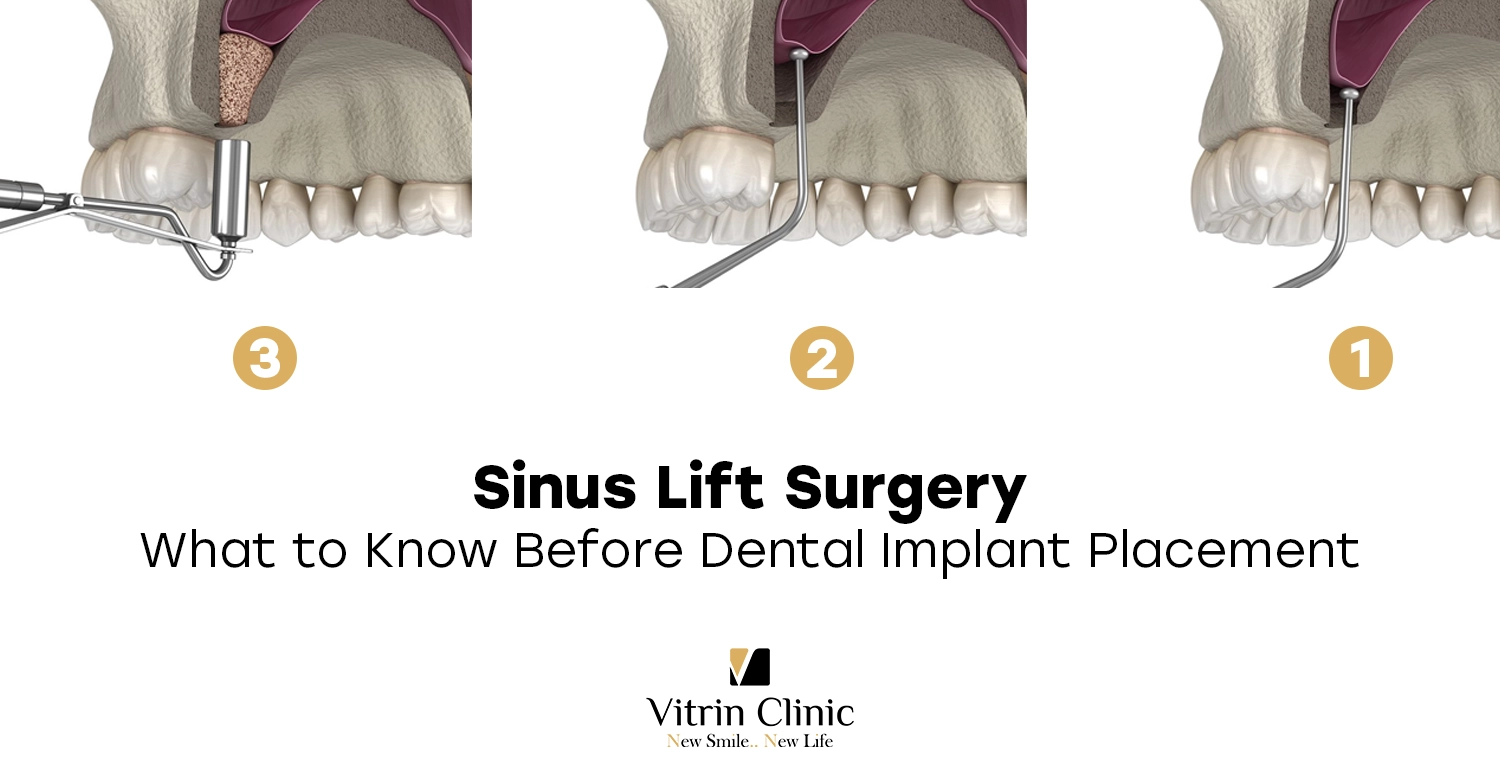
Sinus lift surgery is a specialized procedure that creates adequate bone height in the upper jaw for dental implant placement. When natural bone beneath the maxillary sinus is insufficient, sinus lift surgery elevates the sinus membrane and adds bone graft material. This comprehensive guide covers the sinus lift procedure for dental implants, recovery times, costs, and success rates for patients considering upper jaw implant treatment.
Understanding Sinus Lift Surgery
Sinus lift surgery, also called sinus augmentation surgery, increases bone height in the posterior upper jaw to accommodate dental implants. The dental sinus lift surgery procedure addresses bone loss from tooth extraction, periodontal disease, or natural sinus pneumatization. Understanding when sinus lift is needed for dental implant and how the procedure works helps patients make informed decisions about their implant treatment options.
What Is Sinus Lift Surgery?
Sinus lift surgery is a bone grafting procedure that elevates the maxillary sinus floor to create space for bone augmentation. The dental sinus lift surgery involves accessing the sinus cavity, lifting the membrane lining, and placing bone graft material beneath it. This sinus lift procedure for dental implants increases vertical bone height, enabling successful implant placement in the upper posterior jaw region.
Why the Sinus Area Affects Dental Implants
The maxillary sinuses are air-filled cavities located above the upper back teeth, naturally limiting available bone for implants. After tooth loss, the sinus often expands while bone resorbs, reducing implant placement space. Sinus lift surgery addresses this anatomical challenge by creating adequate bone height. Without sufficient bone, dental implants cannot achieve stability, making sinus augmentation surgery essential for upper jaw restoration success.
When Is Sinus Lift Needed for Dental Implant?
When the sinus lift needed for dental implant depends on remaining bone height below the sinus floor. Sinus lift surgery becomes necessary when bone measures less than 4-5mm in height. The sinus lift procedure for dental implants is commonly required for patients missing upper molars and premolars. Dental sinus lift surgery evaluation involves CT scanning to measure bone dimensions and determine if sinus augmentation surgery is required.
Signs You May Need a Sinus Lift Before Dental Implant
You may need sinus lift surgery if experiencing upper jaw bone loss after tooth extraction or periodontal disease. Insufficient bone height for implant placement, typically below 5mm, indicates sinus lift before dental implant necessity. Long-term tooth absence causing bone resorption requires sinus lift procedure for dental implants. Advanced imaging reveals when dental sinus lift surgery is needed to achieve adequate bone support for successful implantation.
How Much Bone Is Required Below the Sinus for Implants?
Dental implants require minimum 10mm bone height for successful placement and stability. When natural bone below the sinus measures less than 4-5mm, sinus lift surgery becomes necessary. The sinus lift procedure for dental implants creates additional 10-15mm bone height through sinus augmentation surgery. Adequate bone dimensions ensure implants achieve proper osseointegration. Insufficient bone without dental sinus lift surgery leads to implant failure or improper positioning.

Sinus Lift Procedure for Dental Implants
The sinus lift procedure for dental implants involves surgical access to the sinus cavity, membrane elevation, and bone graft placement. Sinus lift before dental implant creates adequate vertical bone height for implant fixture accommodation. Dental sinus lift surgery uses specialized techniques to safely lift the sinus membrane without perforation. Sinus lift bone graft material integrates with existing bone, creating stable foundations for successful implant placement.
Step-by-Step Dental Sinus Lift Procedure
The dental sinus lift surgery begins with local anesthesia and incision in the gum tissue to expose the jawbone. A small window is created in the bone to access the sinus cavity during sinus lift surgery. The sinus membrane is carefully lifted upward, creating space for bone graft placement. Sinus lift bone graft material fills the cavity beneath the membrane. The surgical site is closed with sutures, beginning the sinus lift recovery time.
Sinus Lift Bone Graft Placement Explained
Sinus lift bone graft placement involves inserting bone material beneath the elevated sinus membrane during sinus lift surgery. The sinus lift procedure for dental implants uses autograft, allograft, xenograft, or synthetic bone materials. Bone graft particles fill the space created by sinus augmentation surgery, typically 5-15cc volume depending on deficiency. The sinus lift bone graft integrates over months, creating adequate height for dental sinus lift surgery completion and implant placement.
Creating space in the upper jaw is the goal of sinus lift surgery
Types of Sinus Lift Procedures
Types of sinus lift procedures include internal (crestal) and external (lateral window) approaches for sinus augmentation surgery. Selection depends on existing bone height and the extent of sinus lift surgery required. The sinus lift procedure for dental implants varies in invasiveness and healing time. Understanding different types of sinus lift procedures helps patients and dentists choose optimal approaches for successful dental sinus lift surgery outcomes and implant integration.
Internal (Crestal) Sinus Lift
Internal sinus lift surgery uses the implant site itself to access and elevate the sinus membrane with minimal invasiveness. This sinus lift procedure for dental implants works when 4-6mm residual bone exists below the sinus. Special osteotomes gently fracture and elevate the sinus floor during dental sinus lift surgery. Internal sinus augmentation surgery allows simultaneous implant placement, reducing overall treatment time and sinus lift recovery time significantly.
External (Lateral Window) Sinus Lift
External sinus lift surgery creates a side window in the sinus wall for direct membrane access and extensive bone grafting. This sinus lift procedure for dental implants is necessary when bone height measures less than 4mm. The lateral approach during dental sinus lift surgery allows larger sinus lift bone graft volumes, creating substantial bone height. External sinus augmentation surgery typically requires separate healing before implant placement, extending sinus lift recovery time.
Sinus Augmentation Surgery
Sinus augmentation surgery increases bone volume in the posterior upper jaw through controlled sinus membrane elevation and bone grafting. This advanced sinus lift surgery technique creates adequate dimensions for dental implant placement where naturally insufficient. The sinus lift procedure for dental implants through sinus augmentation surgery demonstrates predictable outcomes with proper technique. Dental sinus lift surgery expands treatment possibilities, enabling implants in previously impossible upper jaw locations.
How Sinus Augmentation Improves Implant Stability
Sinus augmentation surgery improves implant stability by increasing vertical bone height supporting implant fixtures during sinus lift surgery. Adequate bone from the sinus lift procedure for dental implants allows proper implant length placement, distributing chewing forces effectively. Enhanced bone volume through dental sinus lift surgery creates primary stability during placement and long-term secondary stability. Sinus lift bone graft integration provides dense bone supporting implants throughout their functional lifespan.
Building a solid foundation often starts with a bone graft for a tooth implant
Bone Graft Materials Used in Sinus Lift Surgery
Sinus lift surgery uses various bone graft materials including autograft, allograft, xenograft, and synthetic options for sinus augmentation surgery. Autograft from the patient offers highest success in sinus lift procedure for dental implants but requires additional surgery. Allograft uses processed donor bone, while xenograft derives from bovine sources. Synthetic materials provide predictable results in dental sinus lift surgery. Each sinus lift bone graft type demonstrates excellent integration rates.
Sinus Lift Recovery Time
Sinus lift recovery time typically spans 6-9 months for complete bone graft integration before dental implant placement. Initial healing from sinus lift surgery takes 7-10 days, with swelling and discomfort subsiding gradually. The sinus lift procedure for dental implants requires adequate healing for bone maturation. Understanding sinus lift recovery time helps patients plan treatment timelines. Proper post-operative care following dental sinus lift surgery accelerates healing and improves sinus augmentation surgery outcomes.
Healing Timeline After Sinus Lift Surgery
Sinus lift recovery time progresses through distinct healing phases after sinus lift surgery completion. Initial soft tissue healing occurs within 2 weeks following the sinus lift procedure for dental implants. Bone graft integration during dental sinus lift surgery takes 6-9 months for complete maturation. Minor grafts in internal sinus augmentation surgery may heal in 4-6 months. Complete sinus lift recovery time ensures adequate bone density for successful implant placement and stability.
Post-Surgery Care Tips for Faster Recovery
Faster sinus lift recovery time requires avoiding nose blowing, sneezing with mouth closed, or drinking through straws after sinus lift surgery. Patients should take prescribed antibiotics and decongestants following the sinus lift procedure for dental implants. Soft diet and avoiding upper jaw pressure accelerates dental sinus lift surgery healing. Maintaining excellent oral hygiene without disturbing the surgical site promotes sinus augmentation surgery success and reduces sinus lift recovery time complications.
Sinus Lift Surgery Cost
Sinus lift surgery cost ranges from $1,500 to $5,000 per side depending on procedure complexity and graft materials used. The sinus lift procedure for dental implants price varies between internal and external approaches. Dental sinus lift surgery cost includes surgical fees, bone graft materials, and anesthesia. Understanding sinus augmentation surgery expenses helps patients budget treatment. International options like Turkey offer sinus lift surgery at 60-70% reduced costs while maintaining quality standards.
Average Cost of Sinus Lift for Dental Implants
Average sinus lift surgery cost ranges $1,500-$2,500 for internal approaches and $2,500-$5,000 for external lateral window procedures. The sinus lift procedure for dental implants price includes bone graft materials, typically adding $500-$1,200 depending on type and volume. Dental sinus lift surgery expenses vary by geographic location and surgeon experience. Turkey offers sinus augmentation surgery at significantly lower costs, with comprehensive sinus lift surgery packages including imaging and follow-up care.
Advanced techniques now make it possible to explore dental implants even with bone loss
Does Insurance Cover Sinus Lift Surgery?
Insurance coverage for sinus lift surgery cost varies significantly between dental insurance providers and specific plans. Many policies consider the sinus lift procedure for dental implants elective, offering limited or no coverage. Some medical insurance covers dental sinus lift surgery when medically necessary for trauma or disease. Patients should verify benefits before sinus augmentation surgery, exploring payment plans for uncovered sinus lift surgery expenses and associated treatment costs.
Sinus Lift Success Rate
Sinus lift success rate exceeds 90-95% when performed by experienced surgeons using proper techniques and materials. Successful sinus lift surgery achieves adequate bone formation for dental implant placement and integration. The sinus lift procedure for dental implants demonstrates predictable, long-term outcomes with appropriate patient selection. Dental sinus lift surgery success depends on surgical precision, bone graft quality, and post-operative care. Modern sinus augmentation surgery techniques make sinus lift surgery highly reliable for implant treatment.
How Successful Is Sinus Lift Surgery?
Sinus lift success rate reaches 90-95% with contemporary techniques and experienced surgeons performing sinus lift surgery. Successful sinus lift procedure for dental implants creates adequate bone height and density for implant osseointegration. Complications in dental sinus lift surgery remain rare, including membrane perforation in 10-30% of cases, usually managed without affecting outcomes. Long-term sinus augmentation surgery studies show implants placed after sinus lift surgery achieve similar success rates as standard implants.
Factors That Affect Sinus Lift and Implant Success
Sinus lift success rate improves with excellent surgeon experience, proper technique during sinus lift surgery, and appropriate bone graft selection. Smoking significantly reduces outcomes in the sinus lift procedure for dental implants, while good health enhances healing. Membrane perforation during dental sinus lift surgery can decrease success if not properly managed. Patient compliance with post-operative care instructions following sinus augmentation surgery maximizes bone integration and improves overall sinus lift surgery outcomes.
Dental Implant Placement After Sinus Lift
Dental implant placement after sinus lift surgery typically occurs 6-9 months following sinus augmentation surgery completion. The sinus lift before dental implant approach allows adequate bone maturation and integration. Internal sinus lift procedure for dental implants may enable simultaneous implant placement when sufficient bone exists. Proper healing from dental sinus lift surgery ensures implants achieve primary stability and successful osseointegration, creating permanent foundations for tooth replacement restorations.
Rebuild an entire arch of teeth efficiently with the innovative All-on-4 dental implants technique
How Long After Sinus Lift Can Implants Be Placed?
Implants can be placed 6-9 months after external sinus lift surgery to allow complete bone graft integration and maturation. Internal sinus lift procedure for dental implants may permit simultaneous implant placement when 4-6mm residual bone exists. The sinus lift before dental implant healing period ensures adequate bone density and strength. Dentists confirm readiness through clinical examination and imaging before proceeding with implant surgery following dental sinus lift surgery completion.
Single-Stage vs Two-Stage Sinus Lift and Implant Placement
Single-stage sinus lift surgery allows simultaneous implant placement during internal sinus lift procedure for dental implants when adequate residual bone exists. Two-stage approach involves sinus lift before dental implant placement, typically used for external lateral window dental sinus lift surgery with minimal existing bone. Single-stage reduces treatment time but requires sufficient bone for implant stability. Two-stage sinus augmentation surgery provides more predictable outcomes when bone height is severely deficient.
Choosing the Right Clinic for Sinus Lift Surgery
Choosing the right clinic for sinus lift surgery ensures optimal outcomes, safety, and implant success. Experienced surgeons performing the sinus lift procedure for dental implants use advanced imaging and specialized techniques. Quality clinics offer comprehensive dental sinus lift surgery services from evaluation through implant placement. Proper facility selection for sinus augmentation surgery provides patients confidence in treatment decisions, expected sinus lift recovery time, and overall results for their dental restoration.
Importance of 3D Imaging and Sinus Evaluation
3D CBCT imaging is essential for accurate sinus lift surgery planning, revealing sinus anatomy, bone dimensions, and membrane thickness. Advanced imaging before the sinus lift procedure for dental implants identifies anatomical variations affecting surgical approach selection. Precise evaluation during dental sinus lift surgery reduces complications like membrane perforation. Digital planning for sinus augmentation surgery enables virtual surgical simulation, improving sinus lift success rate and ensuring predictable outcomes for safe, effective treatment.
How Experienced Surgeons Improve Sinus Lift Outcomes
Experienced surgeons improve sinus lift surgery outcomes through advanced training, refined technique, and thousands of procedures performed. Specialists in the sinus lift procedure for dental implants understand complex sinus anatomy and handle complications effectively. Their expertise in dental sinus lift surgery minimizes membrane perforation and maximizes bone graft integration. Choosing qualified professionals for sinus augmentation surgery ensures higher sinus lift success rate, reduced sinus lift recovery time complications, and long-term implant stability.
Restore chewing power in the back of your mouth with durable molar implants
Conclusion
Sinus lift surgery enables successful dental implant placement in the posterior upper jaw when natural bone height is insufficient. Understanding the sinus lift procedure for dental implants, recovery expectations, and costs helps patients make informed treatment decisions. With sinus lift success rate exceeding 90%, sinus augmentation surgery provides reliable solutions for upper jaw tooth replacement, creating adequate bone foundations for permanent implant restorations and complete smile rehabilitation.
Key Takeaways About Sinus Lift Surgery
Sinus lift surgery creates adequate bone height in the upper jaw for dental implant placement through membrane elevation and bone grafting. The sinus lift procedure for dental implants requires 6-9 months healing before implant placement in most cases. Dental sinus lift surgery shows 90-95% success rates with experienced surgeons. Understanding sinus lift surgery cost, recovery time, and techniques helps patients plan treatment effectively for successful upper jaw implant restoration.
Why Sinus Lift Surgery Makes Dental Implants Possible
Sinus lift surgery makes dental implants possible for patients with insufficient upper jaw bone height below the maxillary sinus. Without the sinus lift procedure for dental implants, many upper jaw cases would remain ineligible for implant treatment. Dental sinus lift surgery restores adequate bone dimensions, enabling successful implant integration. Sinus augmentation surgery expands treatment possibilities, providing patients permanent solutions for missing upper back teeth with stable, functional, aesthetic tooth replacement restorations.
FAQs
When is sinus lift needed for dental implant placement?
When the sinus lift needed for dental implant depends on bone height below the maxillary sinus floor. Sinus lift surgery becomes necessary when vertical bone measures less than 4-5mm. The sinus lift procedure for dental implants is commonly required after upper molar or premolar loss causing bone resorption. Advanced CT imaging during dental sinus lift surgery evaluation reveals bone dimensions, determining if sinus augmentation surgery is needed for successful implant placement.
Is sinus lift surgery painful?
Sinus lift surgery causes minimal pain during the procedure due to local anesthesia or sedation used. Post-operative discomfort from the sinus lift procedure for dental implants resembles tooth extraction soreness, managed with prescribed pain medication. Most patients experience mild to moderate pain for 3-7 days following dental sinus lift surgery. Swelling and discomfort decrease progressively during sinus lift recovery time, with complete comfort returning within two weeks after sinus augmentation surgery completion.
How long does sinus lift surgery take?
Sinus lift surgery typically takes 60-90 minutes for single-side procedures depending on complexity and approach used. Internal sinus lift procedure for dental implants requires 30-45 minutes per side with less invasive technique. External lateral window dental sinus lift surgery takes 90-120 minutes for extensive bone grafting. Bilateral sinus augmentation surgery may require 2-3 hours total. Experienced surgeons complete sinus lift surgery efficiently while maintaining precision for optimal outcomes and patient comfort.
What is the recovery time after a sinus lift?
Sinus lift recovery time requires 6-9 months for complete bone graft integration before dental implant placement proceeds. Initial healing from sinus lift surgery takes 7-10 days for soft tissue recovery. The sinus lift procedure for dental implants achieves bone maturation over several months. Minor internal dental sinus lift surgery may heal in 4-6 months, while extensive external sinus augmentation surgery needs 6-9 months for adequate bone formation and density.
How successful is sinus lift surgery?
Sinus lift success rate exceeds 90-95% when performed by experienced surgeons using modern techniques and appropriate bone graft materials. Successful sinus lift surgery creates adequate bone height and density for dental implant osseointegration. The sinus lift procedure for dental implants demonstrates predictable long-term outcomes with proper patient selection. Complications in dental sinus lift surgery remain minimal and manageable. Implants placed after sinus augmentation surgery achieve success rates comparable to standard implant procedures.
Can dental implants fail after sinus lift surgery?
Dental implants can fail after sinus lift surgery due to inadequate bone integration, infection, or excessive force during healing. Failure rates following the sinus lift procedure for dental implants remain low at 5-10% when proper protocols are followed. Smoking significantly increases failure risk after dental sinus lift surgery. Poor oral hygiene and insufficient healing time before implant placement compromise sinus augmentation surgery outcomes. Choosing experienced surgeons and following post-operative care minimizes sinus lift surgery failure risks.
What bone graft materials are used in sinus lift surgery?
Sinus lift surgery uses autograft, allograft, xenograft, or synthetic bone graft materials for sinus augmentation surgery procedures. Autograft from the patient’s own bone shows highest success in the sinus lift procedure for dental implants but requires additional surgical site. Allograft uses processed human donor bone without secondary surgery. Xenograft derives from bovine sources, commonly used in dental sinus lift surgery. Synthetic hydroxyapatite materials provide predictable results with unlimited availability for sinus lift bone graft placement.
How much does sinus lift surgery cost?
Sinus lift surgery cost ranges $1,500-$5,000 per side depending on procedure complexity, bone graft materials, and geographic location. Internal sinus lift procedure for dental implants costs $1,500-$2,500, while external approaches reach $2,500-$5,000. Dental sinus lift surgery expenses include surgical fees, bone graft materials, imaging, and anesthesia. International destinations like Turkey offer sinus augmentation surgery at 60-70% reduced costs while maintaining quality standards and experienced surgeons for affordable, effective treatment options.


