Jaw Surgery
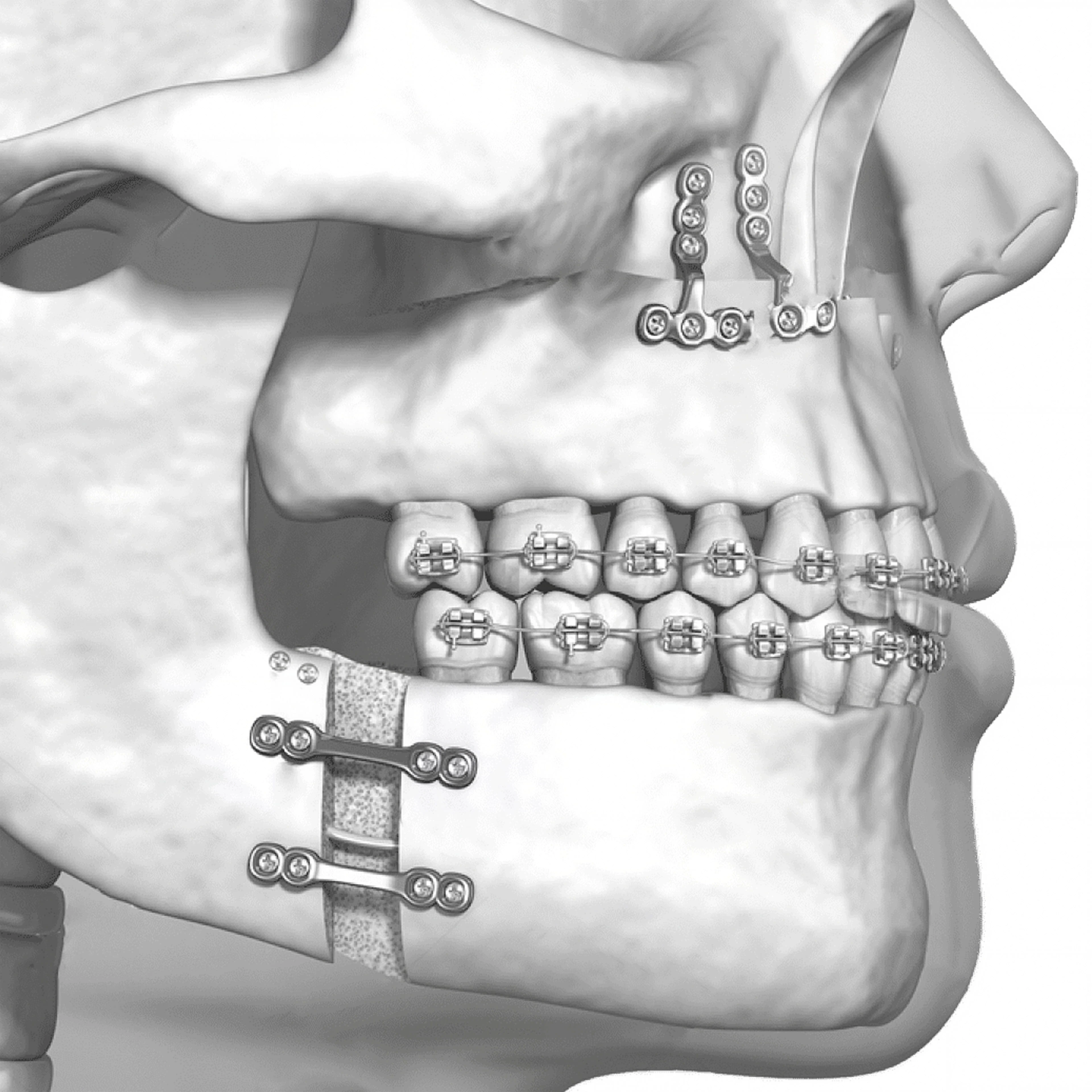
From bite misalignment to facial asymmetry, corrective jaw surgery resolves skeletal imbalances including those requiring overbite corrective jaw surgery or underbite jaw correction surgery that orthodontics alone cannot correct.
Treatment Process
A clear step-by-step overview of how the treatment is planned and performed, from the initial consultation to the final results, ensuring comfort, safety, and predictable outcomes.
01
Consultation & Diagnosis
Both orthodontists and oral surgeons evaluate you. We assess teeth, jaw alignment, and facial structure, and discuss your concerns and goals. This sets the foundation for a precise, personalized treatment plan.
02
Advanced Imaging
We use panoramic and cephalometric X-rays, 3D CT scans for precise jawbone mapping, and MRI to visualize soft tissue and the TMJ. This detailed imaging drives accurate surgical planning with no guesswork.
03
Digital Surgical Planning
Our advanced software simulates jaw movements and facial outcomes for an accurate, patient-specific plan. The orthodontist and surgeon collaborate to create a unified treatment approach before any procedure begins.
04
Pre-Surgical Orthodontics
Where needed, braces or clear aligners are fitted prior to surgery to align the teeth within each jaw. This phase typically lasts 6–18 months and prepares the bite for the surgical correction.
05
The Surgery
Performed under general anaesthesia, the jaw is repositioned and secured using titanium plates and screws according to the digital plan. The procedure is performed by our experienced surgical team in a fully equipped, sterile facility.
06
Recovery & Follow-Up
Initial swelling peaks at 48–72 hours and subsides over weeks. Most patients return to work in 2–4 weeks with full recovery taking 3–6 months. Follow-ups scheduled at 2–5 days, a few weeks, and ongoing up to 2 years.
Frequently Asked Questions
Answers to common questions about the treatment, including suitability, procedure details, recovery, and long-term care — helping you feel informed and confident before moving forward.