Dental Emergency Before Your Turkey Trip? What Should You Do Before Flying?
A dental emergency before travelling for treatment needs attention before you confirm your flight or elective dental appointments.

A dental emergency before travelling for treatment needs attention before you confirm your flight or elective dental appointments. Sudden toothache, facial swelling, infection, or a broken tooth can change your travel plans. The safest next step is identifying the cause and receiving appropriate professional care. Do not assume pain relief alone makes flying safe.
Key Takeaways
Don't fly through the pain: Severe toothache, swelling, or suspected infection needs professional attention before departure.
Recognize the warning signs: Fever, facial swelling, pus, uncontrolled bleeding, or difficulty opening your mouth should never be ignored.
Know when to seek emergency care: Breathing or swallowing difficulties and rapidly spreading swelling require immediate medical attention.
Treat the cause, not just the symptoms: Painkillers may offer temporary relief, but an abscess or infected tooth needs appropriate dental treatment.
Don't depend on antibiotics alone: Antibiotics cannot replace drainage, root canal treatment, or extraction when these procedures are clinically necessary.
Get clearance before boarding: Ask your treating dentist whether your condition and recent procedure allow you to fly safely.
Keep Vitrin Clinic updated: Share new symptoms, X-rays, treatment reports, and recovery instructions before confirming your appointment.
Allow room for unexpected changes: Recovery, additional treatment, or complications may require postponing flights and rearranging appointments.
Put oral health before travel plans: Never rush an emergency procedure or elective treatment simply to meet a scheduled departure date.
Ready to transform your smile?
Talk to our team and get a personal FREE treatment plan.
What Should You Know About a Dental Emergency Before Travelling for Treatment?
A dental emergency before travelling for treatment may involve severe pain, infection, swelling, trauma, or uncontrolled bleeding. Some problems need urgent dental treatment, while others require hospital care. Recognising the difference helps you make safer travel decisions.
What Is Considered a Dental Emergency Before International Travel?
A dental emergency is a problem requiring prompt attention to relieve severe symptoms or prevent deterioration. Examples include a dental abscess, severe toothache, facial swelling, dental trauma, and uncontrolled oral bleeding. A loose crown or broken filling may also need urgent attention. The urgency depends on symptoms, examination findings, and your general health.
Which Dental Symptoms Should Never Be Ignored Before Flying?
Seek prompt dental advice for:
Severe or persistent toothache.
Facial or gum swelling.
Fever alongside dental pain.
Pus, a bad taste, or suspected infection.
Pain when biting or opening your mouth.
A knocked-out, displaced, or badly broken tooth.
Bleeding that does not stop.
These symptoms can indicate problems needing treatment before departure. A dental emergency before travelling for treatment should never be managed through guesswork.
How Can You Distinguish Routine Dental Discomfort From an Emergency?
Mild, brief sensitivity may not indicate an emergency. However, persistent pain, increasing swelling, fever, or difficulty chewing requires professional review. Pain that interrupts sleep or daily activities also deserves prompt attention. Only an examination can establish the cause and urgency.
When Should You Seek Immediate Medical Attention Instead of Waiting for a Dentist?
Call emergency services or attend an emergency department if you experience:
Difficulty breathing, swallowing, or speaking.
Rapidly spreading swelling around the mouth, throat, or neck.
Swelling affects the eye or sudden vision problems.
Severe facial injury or uncontrolled bleeding.
Signs of serious illness alongside spreading infection.
These symptoms may indicate a potentially life-threatening complication. Do not wait for an overseas dental appointment.
.jpg)
.jpg)
.jpg)
Which Dental Problems Could Disrupt Your Upcoming Trip to Turkey?
Several untreated dental conditions can make flying uncomfortable or medically inappropriate. A dental emergency before travelling for treatment should be reviewed locally before you travel. The underlying problem matters more than your original appointment date.
Can You Travel With a Toothache Before Your Flight?
You may be able to fly with mild, stable discomfort, but professional advice is important. Severe, persistent, or worsening toothache needs dental examination before departure. Cabin-pressure changes can aggravate pain from certain underlying dental problems. Do not rely on pain relief to determine whether flying is appropriate.
What Should You Do If You Develop a Dental Infection Before Traveling?
Contact a dentist promptly if you suspect an infection. Signs include swelling, tenderness, pus, fever, and a persistent unpleasant taste. Treatment may involve drainage, root canal treatment, or extraction. Antibiotics may be appropriate in selected cases, but they do not replace treatment of the dental source.
What Are the First Signs of an Abscessed Tooth?
Early signs may include:
Persistent, throbbing toothache
Pain when biting or chewing
Sensitivity to hot or cold that lingers
Tender, swollen, or red gums near the tooth
A small pimple-like bump on the gum
A bad taste or bad breath
Fever, facial swelling, or swollen glands suggest the infection may be progressing. Contact a dentist promptly.
How to Tell if It's a Dental Abscess or Infection?
A dental abscess is a collection of pus caused by a bacterial infection, usually at the tip of the root or in the gum. Every abscess involves infection, but not every dental infection forms an abscess. An abscess often causes localised swelling, a gum bump, throbbing pain, or pus discharge. A dentist confirms the diagnosis through examination and, when needed, X-rays.
Can I Still Brush My Teeth With an Abscess?
Yes. Keep brushing twice daily with a soft-bristled toothbrush, cleaning gently around the painful area. Good oral hygiene helps reduce bacteria but does not treat the abscess. Avoid pressing on the swelling or trying to burst it. Arrange prompt dental treatment.
Does a Broken Tooth Before Your Trip Require Emergency Treatment?
A broken tooth needs examination because the fracture may involve enamel, dentine, or the dental pulp. Cover sharp edges temporarily with dental wax if available. Avoid chewing on that side and arrange prompt care. A dentist may smooth, restore, protect, or otherwise treat the tooth.
Can You Fly With a Dental Abscess or Facial Swelling?
Do not fly without urgent professional review if you suspect an abscess. An abscess does not reliably disappear without dental treatment. Facial swelling may indicate spreading infection. Breathing or swallowing difficulties require emergency medical attention, not an airport or clinic appointment.
Could Severe Gum Inflammation Affect Your Travel Plans?
Yes. Severe gum inflammation may cause pain, bleeding, swelling, and difficulty eating. These symptoms can also occur with periodontal disease or an acute infection. A dentist should identify the cause before departure. Treatment depends on the affected tissues and the severity of inflammation.
When Does Dental Pain Become Too Severe to Ignore?
Pain that persists, worsens, disrupts sleep, or remains despite appropriate pain relief needs dental review. Fever, facial swelling, or difficulty opening your mouth increases concern. A dental emergency before travelling for treatment should be assessed before you decide to board.
Should You Book an Emergency Dental Appointment Before Travelling?
Yes, arrange an urgent appointment when symptoms suggest infection, trauma, severe pain, or worsening swelling. Early examination helps determine whether treatment, monitoring, or postponing travel is necessary.
When Should You Arrange an Emergency Dental Appointment?
Contact a dentist as soon as possible for severe or persistent pain, swelling, fever, dental trauma, or suspected abscess. Do not wait until your departure date. If symptoms are rapidly worsening, seek same-day advice. Breathing or swallowing problems require emergency medical care.
What Happens During an Urgent Dental Assessment?
The dentist asks about your symptoms, medical history, medications, and previous dental treatment. They examine the affected tooth, gums, surrounding tissues, and facial swelling. They may check your temperature or other signs when infection is suspected. The findings guide the next steps.
Which Diagnostic Examinations Can Identify the Cause of Dental Pain?
Examinations may include:
Visual inspection of teeth and gums.
Percussion and bite tests.
Pulp vitality or sensitivity tests.
Digital dental X-rays when indicated.
Additional imaging when clinical findings justify it.
Not everyone needs every test. Imaging should answer a clinical question rather than being performed automatically.
Can an Emergency Dentist Stabilize Your Tooth Before Your Flight?
Sometimes. Treatment may include a temporary restoration, protective dressing, drainage, or another suitable intervention. Stabilisation can reduce immediate problems but may not complete definitive treatment. Your dentist should explain what remains necessary and whether flying is appropriate.
What Should You Ask Your Local Dentist Before Travelling to Turkey?
Ask your dentist:
What is causing the symptoms?
Is there an active infection?
Has the problem received definitive treatment?
Is flying appropriate after the procedure?
What symptoms require urgent review?
Which records should I share with my overseas clinic?
Request copies of examination notes, X-rays, prescriptions, and treatment details. This information can support continuity of care.
Which Emergency Dental Treatments Could You Need Before Departure?
Treatment depends on the diagnosis, tooth condition, infection severity, and time available. A dental emergency before travelling for treatment may require temporary stabilisation or definitive care. Your dentist should explain the benefits and limitations of each option.
Can Root Canal Treatment Resolve Severe Toothache Before Travelling?
Root canal treatment may be recommended when the dental pulp is irreversibly inflamed or infected. The dentist removes affected tissue, cleans the root canals, and seals them. Some cases require more than one appointment or a protective restoration. Your clinician should confirm whether treatment is complete before flying.
When Might an Emergency Tooth Extraction Be Necessary?
Extraction may be considered when a tooth cannot be predictably restored or infection requires removal. The dentist evaluates the tooth, surrounding bone, medical history, and alternatives. Surgical extractions may require longer recovery than straightforward procedures. Do not assume extraction is always the quickest or best option.
Can a Temporary Filling Protect a Broken Tooth During Travel?
A temporary filling may cover exposed tooth structure and reduce irritation. It can provide short-term protection when definitive treatment is not immediately possible. Temporary materials can wear, loosen, or fracture. Follow the dentist's instructions and arrange the recommended follow-up.
How Is a Dental Abscess Treated Before International Travel?
Treatment usually targets the infection source. Depending on the diagnosis, the dentist may drain the abscess, perform root canal treatment, or remove the affected tooth. Pain relief and other supportive care may also be recommended. A dental emergency before travelling for treatment needs a clear plan for infection control and follow-up.
Why Won't the Dentist Drain an Abscess?
Drainage is not always the right first step. The infection may not yet have formed a collection of pus, or the swelling may be spread through the tissues rather than localised. In many cases, the dentist drains the infection through the tooth during root canal treatment, or by removing the tooth, instead of cutting the gum. Severe or deep infections may need hospital care. Your dentist should explain why a particular approach is recommended.
Will an Abscess Go Away if You Drain It?
Drainage relieves pressure and pain, but the abscess usually returns unless the source is treated. The infected tooth typically needs root canal treatment or extraction, and a gum abscess needs treatment of the affected gum pocket. Attend all follow-up appointments, even if you feel better.
Are Antibiotics Enough to Resolve a Dental Infection?
Usually not. Antibiotics may be prescribed when infection has spread or systemic symptoms are present. However, they cannot reliably remove infected tissue or drain an abscess. Definitive dental treatment remains important. Never use leftover antibiotics or someone else's prescription.
Will a Dentist Pull an Infected Tooth Without Antibiotics?
Often, yes. Removing the infected tooth removes the source of infection, and many patients do not need antibiotics afterwards. Antibiotics may be prescribed when infection is spreading, when you have fever or facial swelling, or when certain medical conditions increase your risk. Your dentist decides based on the examination and your medical history.
Will Your Body Fight Off a Tooth Infection Without Antibiotics?
Not reliably. Your immune system may reduce symptoms for a while, but it cannot remove the infected tissue inside a tooth. Pain may ease if the nerve dies or the abscess drains on its own, yet the infection often remains and can flare up or spread. A dental infection needs professional treatment.
How Can Your Dentist Determine Whether Treatment Can Wait?
Your dentist considers pain severity, swelling, fever, infection spread, tooth damage, and medical risks. They also consider the planned procedure and flight timing. Some problems can be monitored briefly. Others need immediate treatment or hospital referral. Never make this decision based only on symptom improvement.
How Long Can You Wait to Get an Infected Tooth Pulled?
You should not wait longer than necessary. A dentist should assess an infected tooth as soon as possible, ideally within a day or two of symptoms appearing, and sooner if swelling or fever develops. Waiting several days or weeks increases the risk of spreading infection and can make treatment more complex. Do not postpone treatment to fit around a planned trip.
Can You Safely Fly With Dental Pain or an Untreated Infection?
Flying may be possible after some dental problems, but active infection and recent procedures require individual advice. Pressure changes can trigger dental pain in teeth with underlying disease. Your dentist should consider your symptoms, treatment, and recovery before departure.
Can Cabin Pressure Make Existing Dental Pain Worse?
Yes. Changes in cabin pressure can trigger pain in teeth with trapped gas or underlying disease. This phenomenon is called barodontalgia. It may occur during ascent or descent. Deep decay, defective restorations, and dental inflammation can increase susceptibility.
Why Can Untreated Dental Infections Become Dangerous During Travel?
An infection may spread beyond the original tooth into nearby tissues. Increasing swelling, fever, and difficulty opening the mouth need urgent review. Severe spread can threaten the airway or general health. Travel may also delay access to familiar records and follow-up care.
What Are the Signs That a Tooth Infection Is Spreading?
Warning signs include:
Facial or neck swelling that is increasing
Swelling spreading towards the eye or under the jaw
Fever, chills, or feeling generally unwell
Difficulty opening your mouth, swallowing, or breathing
Swollen, tender lymph nodes in the neck
A rapid heartbeat or confusion
These symptoms require urgent medical or dental care. Breathing or swallowing difficulties are an emergency.
How Long Does It Take for a Tooth Abscess to Go Septic?
There is no fixed timeline. Most dental abscesses do not lead to sepsis, but an untreated infection can spread over days, and sometimes faster in people with weakened immunity or other health conditions. Warning signs include a high fever or very low temperature, a rapid heartbeat or breathing, confusion, and feeling extremely unwell. These symptoms require emergency medical care immediately.
Can You Fly After an Emergency Tooth Extraction?
It depends on the extraction, bleeding control, pain, swelling, and complications. Published dental-tourism guidance suggests waiting at least 24–48 hours after a simple extraction. Surgical extraction may require longer. Your treating dentist must confirm that flying is appropriate for your specific recovery.
Which Symptoms Mean You Should Postpone Your Flight?
Postpone travel and seek urgent advice if you have:
Increasing facial or neck swelling.
Fever with worsening dental symptoms.
Uncontrolled bleeding.
Severe pain that remains uncontrolled.
Difficulty opening your mouth.
A suspected infection without a treatment plan.
Breathing or swallowing difficulties require emergency medical attention. Do not travel while awaiting routine overseas care for these symptoms.
When Should You Obtain Professional Advice Before Boarding?
Obtain advice before boarding whenever pain is persistent, swelling is present, or dental treatment was recently performed. Ask about the procedure-specific waiting period and warning signs. A dental emergency before travelling for treatment should not be judged safe simply because the flight is short.
Can Vitrin Help You Coordinate Your Dental Appointment Around Your Recovery?
Vitrin can review available records and discuss preliminary appointment coordination. However, remote communication cannot confirm that an active infection is safe for air travel. Obtain local clinical clearance first when symptoms require urgent treatment. Share your recovery instructions before confirming an overseas appointment.
Ready to transform your smile?
Talk to our team and get a personal FREE treatment plan.
How Can Vitrin Clinic Help Before You Travel With a Dental Emergency?
Vitrin Clinic can review available information before arrival and discuss possible next steps. Remote review is preliminary, not a substitute for urgent local examination. A dental emergency before travelling for treatment should be stabilised locally when necessary.
Can Vitrin Review Your Dental Symptoms Before Your Arrival in Turkey?
Yes, you can share a clear description of your symptoms and previous treatment. Include when the pain started and whether swelling or fever is present. Vitrin can use this information to discuss appointment planning. Severe or spreading symptoms still require immediate local care.
Which Dental Photographs and Records Should You Send to Vitrin?
Useful records include:
Clear photographs of the affected area.
Recent dental X-rays, if available.
Previous treatment reports.
A list of current medicines.
Details of allergies and relevant medical conditions.
Your dentist's diagnosis and recommendations.
Photographs cannot show every problem beneath the gums or inside a tooth. Do not delay urgent examinations while collecting documents.
How Does Vitrin Review Previous Dental Treatment and Available X-rays?
The clinical team can review the records you provide and identify questions for an in-person examination. Existing images may help explain previous treatment. Their quality and date matter. New imaging may be recommended only when clinically appropriate.
Can Vitrin Help Coordinate Your Treatment After an Unexpected Dental Problem?
Vitrin can discuss appointment availability and possible changes to your treatment schedule. The appropriate plan depends on your local dentist's findings and your recovery. Share any new diagnosis or procedure before travelling. This helps the team avoid treating an outdated treatment plan as current.
How Does Vitrin Develop an Individual Treatment Plan After Clinical Examination?
The team first identifies the cause and extent of the problem. Examination findings, medical history, and appropriate imaging guide treatment selection. Options, limitations, estimated costs, and follow-up needs should be discussed. Treatment should not be selected solely to fit a travel deadline.
Can Digital Scanning and Appropriate Imaging Help Clarify Your Treatment Requirements?
Digital scans can record tooth surfaces and support restorative planning. Dental X-rays show structures that photographs cannot reveal. CBCT imaging may be appropriate for selected implant or complex cases. Each examination should have a clear clinical purpose.
Why Does Vitrin Recommend Resolving Active Dental Emergencies Before Elective Treatment?
Active pain or infection can change the suitability and timing of elective treatment. The priority is to diagnose and manage the urgent condition. This may affect planned crowns, implants, or full-mouth rehabilitation. A dental emergency before travelling for treatment should not be hidden to preserve an appointment.
How Much Does Emergency Dental Treatment Cost in the USA, UK, and Turkey?
Emergency dental treatment costs depend on the diagnosis, provider, location, and treatment complexity. The following comparison uses US dollars throughout. UK prices represent NHS England charges converted into USD. Vitrin Clinic figures use previously supplied starting prices and provisional estimates, not a confirmed emergency treatment tariff.
How Do Emergency Dental Treatment Costs Compare in the USA, UK, and Vitrin Clinic?
UK
From $37
Subsidized NHS band benchmarks
Examination and X-ray: $37, including necessary X-rays under Band 1
Filling: $100 under Band 2
Root canal: $100 under Band 2
Simple extraction: $100 under Band 2
Abscess drainage: From $37 for eligible urgent care; further treatment may cost more
Vitrin Clinic: Turkey
From $40
Restorative & urgent dental care
Examination and X-ray: 45–100
Filling: From $40
Root canal: From $100
Simple extraction: From $50
Abscess drainage: 100–250
US
From 50
US private dental benchmark
Examination and X-ray: 50–350+
Filling: 139–976
Root canal: 776–1,911
Simple extraction: 281–702 for selected surgical cases
Abscess drainage: 100–1,000+
How Much Does an Emergency Dental Appointment Cost in the USA?
US emergency dental fees depend on the practice, insurance, location, and appointment type. Published examples place fillings between $139 and $976. Root canal treatment may cost 776–1,911. Selected surgical extractions can cost 281–702.
Fillings & Surgical Extraction
From 139
US emergency dental expense
Filling: 139–976
Selected surgical extraction: 281–702
Varies by restoration material & tooth complexity
Diagnostics & Urgent Care
From 50
US emergency dental expense
Examination and X-rays: 50–350+
Additional emergency treatment: 100–1,000+
Covers initial stabilization, abscess drainage & relief
Root Canal Treatment
Illustrative cost: 776–1,911
US emergency dental expense
Root canal: 776–1,911
Higher range applies to multi-canal molars
Permanent crown restoration typically billed separately
What Are the Typical Emergency Dental Treatment Costs in the UK?
In England, eligible NHS urgent dental treatment costs approximately $37 under Band 1. Band 2 treatment costs approximately $100 and covers fillings, root canals, and extractions.
Band 2: Fillings, Root Canals, and Extractions
Approximate cost: $100
UK treatment
Approximate cost: $100
Includes all Band 1 exam & diagnostic items
Covers fillings, root canals & tooth extractions
Band 1: Examination and Necessary X-Rays
Approximate cost: $37
UK treatment
Approximate cost: $37
Covers routine clinical examination & diagnosis
Includes necessary X-rays & preventive advice
Additional Treatment Beyond the Initial Course
Approximate cost: Depends on eligibility and treatment required
UK treatment
Depends on eligibility and treatment required
Complex lab work (crowns, bridges, dentures) falls under Band 3
Cosmetic or non-NHS options billed at private clinic rates
How Much Might Emergency Dental Treatment Cost at Vitrin Clinic in Turkey?
Vitrin Clinic's treatment costs depend on the diagnosis and procedures required. The following table uses previously supplied starting prices and provisional planning estimates.
Examinations & Follow-Ups
From 30
Vitrin Clinic service
Standard clinical examination: 30–45
Follow-up examination: 30–45
Specialist examination: 40–60
Diagnostic Imaging & X-Rays
From 15
Vitrin Clinic service
Periapical X-ray: 15–25
Panoramic X-ray: 40–55
Examination and X-ray allowance: 45–100
Restorative & Urgent Care
From $40
Vitrin Clinic service
Filling: From $40
Simple extraction: From $50
Root canal treatment: From $100
Abscess drainage: 100–250
An emergency examination helps identify the source of pain or infection. Additional imaging, specialist care, or surgery may change the final quotation.
How Much Could You Save by Choosing Vitrin Clinic Compared With the USA and UK?
Vitrin's lower starting prices may offer savings compared with some private US and UK quotations. The examples below compare individual procedures using the available figures.
Filling
Illustrative saving: 99–936 (71.2%–95.9%)
Treatment
Vitrin starting price: $40
US cost: 139–976
Illustrative saving: 99–936 (71.2%–95.9%)
Root Canal
Illustrative saving: 676–1,811 (87.1%–94.8%)
Treatment
Vitrin starting price: $100
US cost: 776–1,911
Illustrative saving: 676–1,811 (87.1%–94.8%)
Simple Extraction
Illustrative saving: Not directly comparable
Treatment
Vitrin starting price: $50
US cost: 281–702
US benchmark reflects surgical or multi-tooth complexity
Simple Extraction
Illustrative saving: $50 (50%)*
Treatment
Vitrin starting price: $50
UK cost: $100
Illustrative saving: $50 (50%)
Filling
Illustrative saving: $60 (60%)
Treatment
Vitrin starting price: $40
UK cost: $100
Illustrative saving: $60 (60%)
Root Canal
Illustrative saving: $0 (0%)
Treatment
Vitrin starting price: $100
UK cost: $100
Illustrative saving: $0 (0%)
Which Factors Influence Emergency Dental Treatment Prices at Vitrin Clinic?
The final estimate depends on the diagnosis, tooth location, infection severity, and required treatment. Additional imaging, specialist care, temporary restorations, or surgery may increase the cost.
Examinations & Follow-Ups
From 30
Cost factor
Standard examination: 30–45
Follow-up examination: 30–45
Specialist examination: 40–60
Diagnostic Imaging & Scans
From 15
Cost factor
Periapical X-ray: 15–25
Panoramic X-ray: 40–55
Regional CBCT: 55–75
Restorative & Urgent Care
Possible additional cost: 100–250
Cost factor
Temporary restoration: 100–250
Abscess drainage: 100–250
Stabilizes acute infection or protects prepared teeth
How Does Vitrin Prepare an Individualised and Itemised Treatment Quotation?
A useful quotation separates the examination, imaging, treatment, materials, and follow-up. It should identify included services and possible additional charges.
Quotation component | What should be clarified |
Clinical examination | Whether the initial examination is included |
Diagnostic imaging | Which X-rays or scans are necessary |
Emergency procedure | The exact treatment being proposed |
Materials | Whether restoration materials are included |
Additional procedures | Whether drainage, surgery, or temporary treatment costs extra |
Follow-up | Whether another examination is included |
What Is Included in Vitrin's Dental Treatment Planning and International Patient Coordination?
Planning may include preliminary record review, appointment coordination, and discussion of proposed treatment. International patients should confirm accommodation, transport, and other travel arrangements separately.
Planning item | What to confirm |
Preliminary record review | Whether photographs and existing X-rays can be reviewed |
Appointment coordination | Availability of an emergency examination |
Treatment quotation | Whether all proposed procedures are itemised |
Accommodation | Whether hotel arrangements are included |
Airport transfers | Whether transfers are included |
Aftercare | How follow-up communication is arranged |
Do not assume travel services or accommodation are included in every treatment quotation.
Could Additional Procedures Increase Your Dental Treatment Costs?
Yes. Complex infection, surgical extraction, specialist referral, or additional imaging may increase the total. Temporary treatment may also require later definitive care.
Specialist & Follow-Up Exams
From 30
Possible additional procedure
Follow-up examination: 30–45
Specialist examination: 40–60
Targeted clinical evaluation & recovery review
Diagnostic Imaging & Scans
From 15
Possible additional procedure
Additional X-ray: 15–55
Regional CBCT: 55–75
Often bundled into comprehensive implant or crown plans
Restorative & Urgent Care
Indicative cost: 100–250
Possible additional procedure
Temporary restoration: 100–250
Abscess drainage: 100–250
Protects prepared teeth or resolves acute infection
How Can You Budget for Emergency Treatment and Unexpected Travel Changes?
Keep separate allowances for dental care, accommodation, transport, and flight changes. Check travel insurance exclusions and cancellation conditions.
Flights & Accommodation
From 40 / night
Travel expense
Accommodation per night: 40–150
Return flights: 150–600
5–7 nights typical stay; hotel often included in packages
Transfers & Local Transit
From 10
Travel expense
Local transportation: 10–50
Airport transfers: 20–80
VIP airport-hotel-clinic rides often bundled in packages
Follow-Up & Contingency
From 30
Travel expense
Additional dental follow-up: 30–120
Unexpected travel changes: 50–300
Covers schedule shifts, lab buffer & post-trip reviews
Should You Compare Treatment Prices Before Confirming Your International Dental Appointment?
Yes, but compare equivalent treatment plans rather than headline prices. Check examination fees, imaging, materials, temporary restorations, aftercare, and travel expenses.
A dental emergency before travelling for treatment may require local care before an overseas appointment. Severe swelling, fever, difficulty swallowing, or difficulty breathing requires urgent medical attention. Do not delay emergency care while comparing international prices.
Is Vitrin Clinic a Cost-Effective Option for Emergency Dental Treatment?
Vitrin Clinic may offer lower starting prices than some private dental providers in the USA and UK. However, actual costs depend on clinical findings and treatment requirements. Request an itemised quotation before confirming your visit. Compare equivalent procedures and include travel and follow-up expenses when calculating potential savings.
Ready to transform your smile?
Talk to our team and get a personal FREE treatment plan.
How Can You Continue Your Dental Treatment Journey With Vitrin After an Emergency?
You can discuss continuing your planned treatment after the urgent problem has been reviewed and stabilised. The next stage depends on clinical findings, recovery, and travel suitability.
What Is the First Step When You Contact Vitrin About a Dental Emergency?
Explain the symptoms, their onset, and any treatment already received. Send relevant records and mention your planned flight date. If symptoms are severe, seek local care first. Vitrin's preliminary review should support coordination, not replace emergency treatment.
How Does Vitrin Coordinate Your Preliminary Clinical Review Before Arrival?
The team can review available photographs, X-rays, and treatment reports. They may ask for further details about your medical history. This helps identify questions for your appointment. It cannot establish a final diagnosis remotely.
What Happens During Your First Dental Examination at Vitrin Clinic?
The dentist reviews your concerns and examines your teeth, gums, and oral tissues. They may assess bite, tenderness, and existing restorations. Digital X-rays or other imaging may be requested when indicated. The findings determine whether your original plan remains suitable.
How Does Vitrin Confirm Your Treatment Plan After Reviewing Your Oral Health?
The clinical team compares the examination findings with your initial records. They explain the diagnosis, appropriate options, and any changes to the plan. You should understand the expected stages, limitations, costs, and follow-up requirements before consenting.
How Are Your Dental Appointments Organized Around Your Treatment Requirements?
Appointments should reflect clinical priorities and the time required for each procedure. Urgent treatment takes priority over elective work. Healing periods must not be shortened simply to meet a return flight. Complex treatment may require a longer stay or another visit.
How Does Vitrin Coordinate Your Treatment Schedule and International Patient Support?
The coordination team can discuss appointment timing and practical arrangements. Confirm the treatment schedule after clinical examination. Keep flexibility for additional tests or recovery. Do not book a non-refundable return flight before understanding the expected clinical timeline.
What Happens If Your Clinical Examination Reveals Additional Dental Problems?
The dentist explains the new findings and whether they affect your original plan. Additional treatment should be discussed separately, including benefits, alternatives, costs, and timing. You should have time to consider the options without pressure.
How Does Vitrin Support Follow-Up Planning After Your Treatment?
Before leaving, request written aftercare instructions and details of warning signs. Confirm who to contact if symptoms develop. Ask which reviews can happen remotely and which require an in-person dentist. Keep copies of your treatment records for future care.
Why Choose Vitrin Clinic for Your International Dental Treatment Journey?
Choosing an overseas clinic should involve clinical suitability, transparent planning, communication, and realistic aftercare. The safest decision is based on your oral health, not a promotional promise.
How Does Vitrin Approach Individual Dental Treatment Planning?
Vitrin's treatment planning should begin with your clinical needs and examination findings. The proposed treatment should address the underlying problem. Options and limitations should be explained before you make a decision.
Why Is Clinical Examination Important Before Confirming Your Treatment?
A clinical examination helps identify decay, infection, gum problems, and damaged restorations. It also helps determine whether planned treatment is appropriate. Photographs and online discussions cannot replace an in-person examination.
How Does Vitrin Use Digital Technology When Clinically Indicated?
Digital scanning can record tooth surfaces and support restorative planning. Digital X-rays can help assess tooth roots and surrounding structures. CBCT may be used when a three-dimensional view is clinically necessary. Technology should support diagnosis, not replace clinical judgement.
How Can Vitrin's Clinical Coordination Help International Patients?
Clear communication helps patients understand appointments, records, and treatment stages. Share changes in symptoms promptly. Ask for written explanations when treatment recommendations change. Good coordination cannot guarantee that unexpected clinical delays will not occur.
How Does Vitrin Organize Treatment Appointments for Overseas Patients?
The schedule should allow enough time for examinations, treatment, and necessary reviews. Some procedures require healing before the next stage. The team should explain whether another visit may be necessary.
What Support Can International Patients Receive During Their Stay in Istanbul?
Ask Vitrin to confirm available coordination, transport, and accommodation support before booking. Services and package inclusions should be documented. Keep independent access to local emergency services during your stay.
How Does Vitrin Approach Aftercare and Follow-Up for International Patients?
Aftercare instructions should explain hygiene, eating, activity, and warning signs. Patients should know how to contact the clinic after returning home. Local dental follow-up may still be necessary, especially after surgery or infection treatment.
Why Should Your Dental Treatment Decisions Be Based on Clinical Needs Rather Than Travel Deadlines?
A travel date cannot determine whether a tooth is safe to treat or whether healing is complete. Rushing can create avoidable clinical and logistical problems. A dental emergency before travelling for treatment should be managed according to clinical urgency.
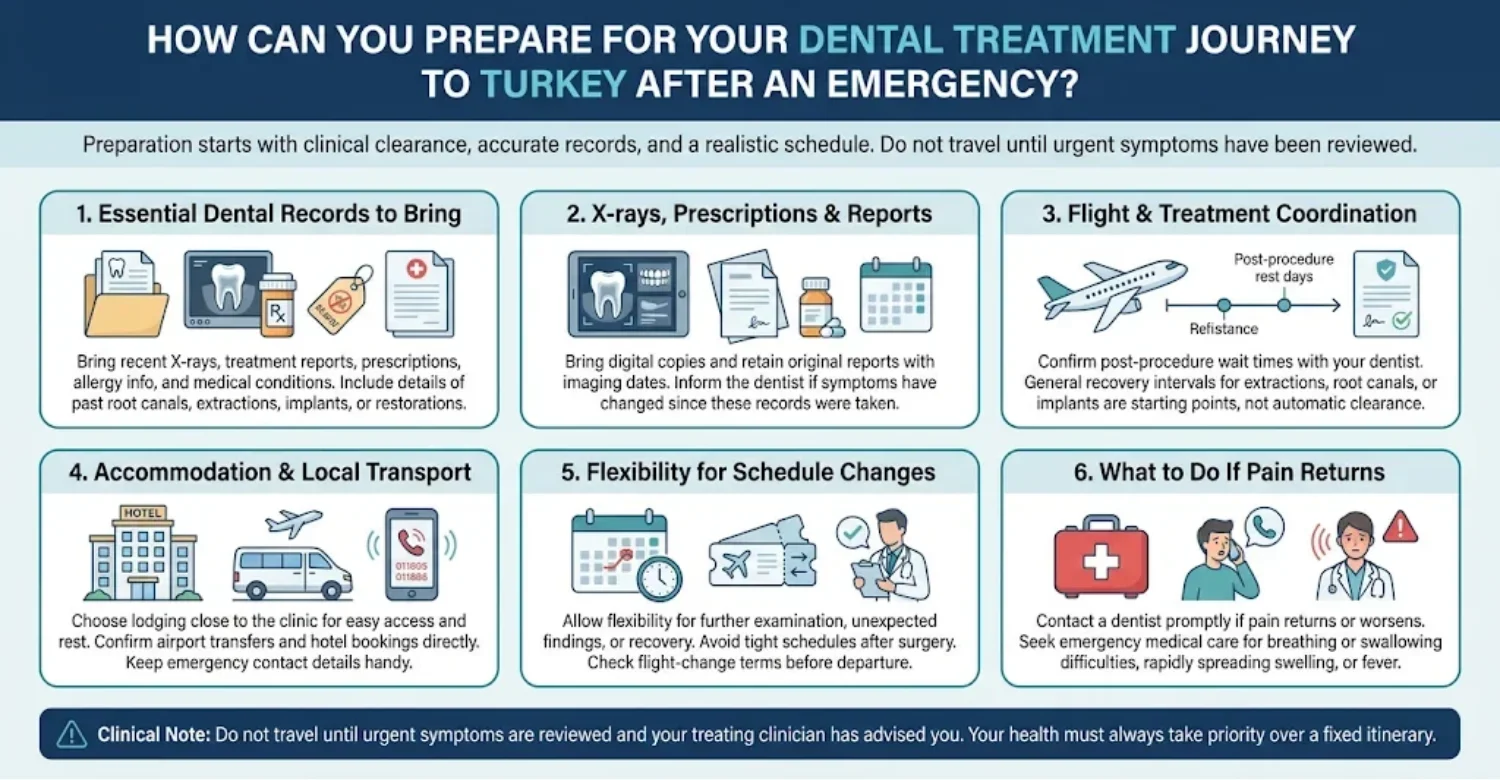
How Can You Prepare for Your Dental Treatment Journey to Turkey After an Emergency?
Preparation starts with clinical clearance, accurate records, and a realistic schedule. Do not travel until urgent symptoms have been reviewed and your treating clinician has advised you.
Which Dental Records Should You Bring to Vitrin Clinic?
Bring recent X-rays, treatment reports, prescriptions, allergy information, and a list of medical conditions. Include details of previous root canals, extractions, implants, or restorations. Accurate records help the dentist understand your dental history.
Should You Bring Previous X-rays, Prescriptions, and Treatment Reports?
Yes. Bring digital copies where possible and retain the original reports. Include the dates of imaging and procedures. Tell the dentist if symptoms changed after those records were produced.
How Can You Coordinate Your Flight With Your Confirmed Treatment Schedule?
Ask your treating dentist how long you should wait after the specific procedure. Published guidance suggests different intervals for restorations, extractions, root canal treatment, and implant surgery. These are starting points, not automatic clearance.
What Should You Know About Accommodation and Transportation in Istanbul?
Choose accommodation that allows convenient access to appointments and rest. Confirm airport transfers and hotel arrangements directly. Keep clinic contact details and emergency information accessible throughout your stay.
How Should You Prepare for Possible Changes to Your Dental Appointment?
Allow flexibility for further examination, unexpected findings, or recovery. Avoid scheduling important activities immediately after surgery. Check flight-change conditions before departure. Your health should take priority over a fixed itinerary.
What Should You Do If Dental Pain Returns During Your Journey?
Contact a dentist promptly if pain returns or worsens. Tell the clinician about recent treatment and provide your records. Seek emergency medical help for breathing or swallowing difficulties, rapidly spreading swelling, or serious illness.
Which Mistakes Should You Avoid Before Travelling for Dental Treatment?
Avoid delaying diagnosis, self-prescribing medicines, or treating temporary pain relief as proof of recovery. A dental emergency before travelling for treatment needs a clear clinical plan.
Why Should You Never Ignore Facial Swelling or Severe Toothache?
Facial swelling may indicate an infection that needs urgent treatment. Severe toothache can arise from deep decay, pulp inflammation, or infection. Delaying examination may allow the problem to worsen. Seek urgent advice rather than waiting for your flight.
Can Taking Painkillers Without a Dental Examination Delay Proper Treatment?
Pain relief may temporarily reduce symptoms without treating the cause. Follow the product label and seek pharmacist or clinician advice when uncertain. Medication safety depends on formulation, age, weight when relevant, health conditions, and other medicines. Persistent pain still needs dental examination.
Why Should You Avoid Self-Prescribing Antibiotics Before Flying?
Antibiotics are not appropriate for every toothache or dental infection. The wrong medicine may cause side effects and delay definitive treatment. A clinician should decide whether antibiotics are needed. Never use leftover prescriptions or medicines obtained without appropriate advice.
Could Travelling With an Untreated Infection Complicate Your Dental Treatment?
Yes. Infection may spread, symptoms may worsen, and access to follow-up may become difficult. Travel can also complicate coordination between clinicians. Obtain appropriate treatment and advice before departure.
Why Should You Avoid Confirming Elective Treatment Before Resolving Active Problems?
Active infection, severe inflammation, or unexplained pain may change the treatment plan. The dentist should establish whether elective procedures remain appropriate. Treating the urgent problem first may prevent unnecessary changes later.
How Can Early Communication With Vitrin Prevent Unnecessary Travel Complications?
Tell Vitrin about new symptoms, diagnoses, and treatment before departure. Send updated records and discuss whether your appointment remains suitable. Early communication helps coordinate plans, although it cannot replace local emergency care.
.jpg)
What Should You Do If a Dental Emergency Forces You to Change Your Travel Plans?
Inform your clinic and airline as soon as possible when symptoms affect your ability to travel. Prioritise appropriate treatment and obtain clear advice before rebooking.
When Should You Inform Vitrin Clinic About an Unexpected Dental Emergency?
Contact Vitrin when a new problem changes your treatment readiness or appointment availability. Explain the diagnosis and treatment received. For severe symptoms, arrange local emergency care before discussing travel logistics.
How Can You Coordinate a New Appointment With Vitrin?
Share your updated clinical records and recovery advice. Ask the coordination team to confirm suitable appointment dates. The revised schedule should allow adequate examination and treatment time.
What Should You Confirm Before Rebooking Your Flight?
Confirm clinical fitness to fly with the treating professional. Check the recommended recovery interval and any follow-up appointment. Review airline change fees, accommodation conditions, and travel insurance requirements.
How Can You Protect Your Treatment Budget When Travel Dates Change?
Review cancellation policies and keep receipts for treatment and travel changes. Ask which clinic fees remain payable after rescheduling. Do not assume a package automatically covers emergency treatment or unused services.
What Information Does Vitrin Need to Reorganize Your Treatment Journey?
Provide your new travel dates, diagnosis, treatment details, current symptoms, and updated records. Include any restrictions given by your dentist. This helps the team discuss realistic appointment options.
Ready to transform your smile?
Talk to our team and get a personal FREE treatment plan.
How Can You Make the Safest Decision About Travelling for Dental Treatment?
The safest decision depends on diagnosis, treatment, recovery, and professional advice. Do not use a flight date as a substitute for clinical clearance.
Should You Treat Your Dental Emergency Before Flying to Turkey?
Yes, when examination identifies an urgent condition requiring treatment before travel. A dental emergency before travelling for treatment should be managed locally if delaying care could be unsafe. Your dentist can advise whether further overseas treatment remains appropriate.
When Can You Continue Your Dental Journey After Professional Review?
You may continue when the urgent condition has been appropriately managed and your clinician considers travel suitable. The decision depends on symptoms, procedure, complications, and follow-up needs. Share the updated clinical plan with Vitrin before departure.
Why Should Clinical Readiness Always Come Before Your Travel Schedule?
Clinical readiness protects your health and supports realistic treatment planning. A postponed appointment is preferable to travelling with an unsafe or untreated condition. Make decisions using professional advice, not pressure to keep a booking.
How Can You Prepare for a Safer Dental Treatment Journey With Vitrin Clinic?
Start with an accurate diagnosis, appropriate treatment, and clear advice about flying. Share updated records with Vitrin and confirm your appointment after clinical review. Allow enough time for recovery and follow-up. Your dental health should guide every travel decision.
Reference

Medically reviewed by
Dr. Rifat AlsamanDr. Rifat Alsaman has more than 5 years of clinical experience in dentistry and currently serves as the Head of the Medical Team at Vitrin Clinic. He is dedicated to providing exceptional patient care, overseeing treatment planning, and ensuring the highest clinical standards across the team. His expertise, attention to detail, and commitment to continuous professional development have helped countless patients achieve healthier, more confident smiles.
More in Preparation & Travel
View all 16 min readWhat Should I Pack When Travelling to Turkey for Dental Treatment?What to pack for dental treatment abroad comes down to three groups: documents that get you to the clinic, health items that keep treatment safe, and comfort items that make recovery easier.
 18 min readShould I Inform the Clinic If My Health or Medication Changes Before My Appointment?Health changes before dental appointment dates should always be shared with your clinic. The short answer is yes: tell the clinic if your health or medication changes after you book.
 26 min readQuestions to Ask Before Dental Treatment Abroad: 10 Must Answers you must KnowsChoosing a dental clinic abroad should never feel like buying a holiday package.
 11 min readShould I Tell the Clinic About Previous Dental Work Before My First Appointment?Yes, you should always tell the clinic about your previous dental treatment history before your first appointment. Old crowns, implants, root canals and fillings all affect how new treatment is planned, how long it takes and what it costs. This guide explains what to share, why it matters and how Vitrin Clinic uses your history to plan your care.
Still have a question?
Our patient coordinators answer every day of the week: before, during and long after your treatment.