Can You Get a Dental Implant and Sinus Lift Together in One Procedure?
Yes, a dental implant and sinus lift together in one surgery is often possible. It depends on how much bone is left under your sinus and whether the implant can be held firmly on the day. When there's too little bone, the sinus is lifted first and the implant follows once new bone has formed.

Yes, a dental implant and sinus lift together in one surgery is often possible. It depends on how much bone is left under your sinus and whether the implant can be held firmly on the day. When there's too little bone, the sinus is lifted first and the implant follows once new bone has formed.
At Vitrin Clinic, the online consultation is free and no-obligation, with a written plan and fixed price before you travel.
This guide explains how the one-surgery-or-two decision is made, how each technique works, what recovery looks like and how many trips to Istanbul you may need.
Key Takeaways
A dental implant and sinus lift together is often possible when enough bone holds the implant firmly.
A 3D (CBCT) scan decides between a one-stage and a two-stage plan.
A crestal lift suits small lifts; a lateral window lift suits larger ones.
Even with one surgery, the implant needs several months to heal before the final crown.
When bone is very thin, a staged lift or an alternative implant design may be safer.
At Vitrin Clinic, you can start with a free online review and receive a written plan with a fixed, all-inclusive price before you book flights.
Ready to transform your smile?
Talk to our team and get your Free Treatment plan.
What Does "Same Procedure" Actually Mean?
It means one surgical appointment: the sinus floor is raised, graft material is added if needed, and the implant goes in during the same visit. It doesn't mean same-day teeth, because the implant still needs months to heal before the crown.
What Is the Difference Between a Simultaneous and a Staged Sinus Lift?
Simultaneous (one-stage): the lift and the implant happen in the same surgery.
Staged (two-stage): the sinus is lifted and grafted first, and the implant is placed in a second surgery once the graft has turned into bone.
Why Does Upper Jaw Implant Preparation Sometimes Need Sinus Augmentation?
The maxillary sinuses are air spaces just above the roots of the upper back teeth. An implant needs enough bone length to anchor in. When the bone under the sinus is too short, a sinus augmentation procedure lifts the sinus lining to make room for new bone.
How Does the Sinus Expand After Upper Back Teeth Are Lost?
After an upper back tooth is removed, the bone that held it starts to shrink, and the sinus can slowly expand downward into space. The longer the tooth has been missing, the less bone usually remains. Past gum disease can also reduce bone height.
Why Does Implant Stability Depend on the Bone You Already Have?
On the day of surgery, the implant is held only by the bone around it. Over the following months, the bone bonds to the implant surface. Bone in the upper back jaw is often softer than elsewhere, so the height and quality of the bone you already have matters a lot.
Who Can Have a Simultaneous Sinus Lift?
You may be able to have a dental implant and sinus lift together if enough bone remains to hold the implant firmly. You also need a healthy sinus and good general health. At Vitrin Clinic, these are checked at your exam and 3D scan in Istanbul before any treatment begins.
How Much Residual Bone Height Is Needed?
There's no single cut-off, but dentists often use these general guides:
Around 5 mm or more: a crestal lift with a same-day implant is often possible.
Around 4 to 5 mm: a lateral window lift with a simultaneous implant may be possible, if the implant is stable.
Less than about 4 mm: the sinus is usually lifted and grafted first.
Medical note: These figures are general guides, not fixed rules. Bone height is weighed together with density, width, sinus shape and implant stability, so only an exam and a 3D scan can confirm the right approach.
Why Is Primary Implant Stability the Deciding Factor?
An implant that moves when it's placed may not bond to the bone. During surgery, the surgeon checks how firmly it sits. If it isn't stable, the graft is placed alone and the implant follows later.
How Do Bone Quality, Width and Sinus Anatomy Affect the Plan?
Bone quality: soft bone holds an implant less firmly, even when the height looks enough.
Bone width: a narrow ridge may need grafting on the side as well.
Sinus anatomy: thin bony walls inside the sinus (septa) or an unusual sinus shape make the lift harder.
Sinus lining: a very thin or thickened lining needs extra care.
Which Sinus Health and Medical Factors Affect Eligibility?
A sinus lift may need to wait, or may not be suitable, if you have:
an active sinus infection or untreated chronic sinusitis
uncontrolled diabetes
a heavy smoking habit
past radiation treatment to the head or neck
medicines that affect bone healing
untreated gum disease
Medical note: If a scan shows signs of sinus disease, treatment by an ear, nose and throat specialist may be needed before the lift. Treating the sinus first lowers the risk of infection afterward.
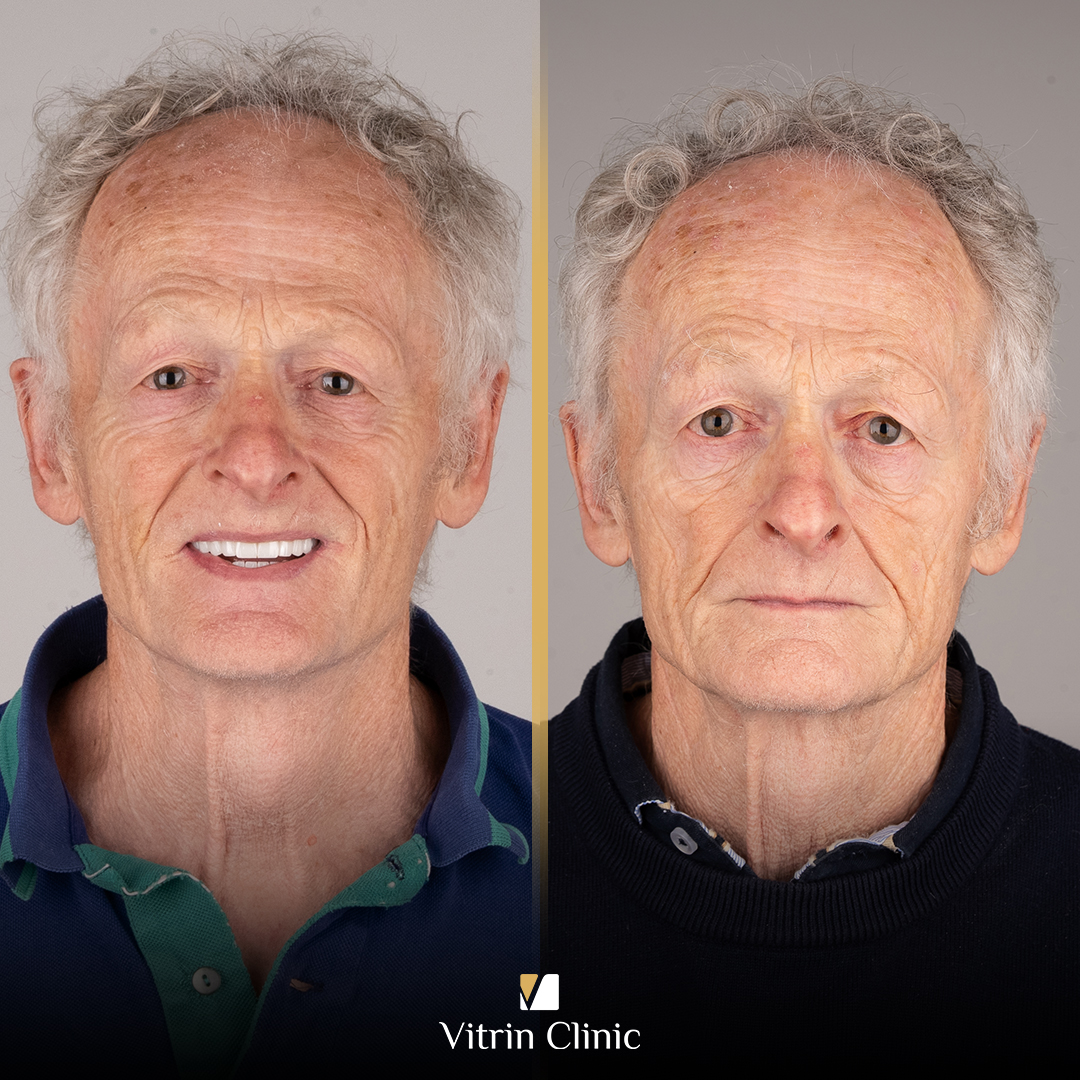
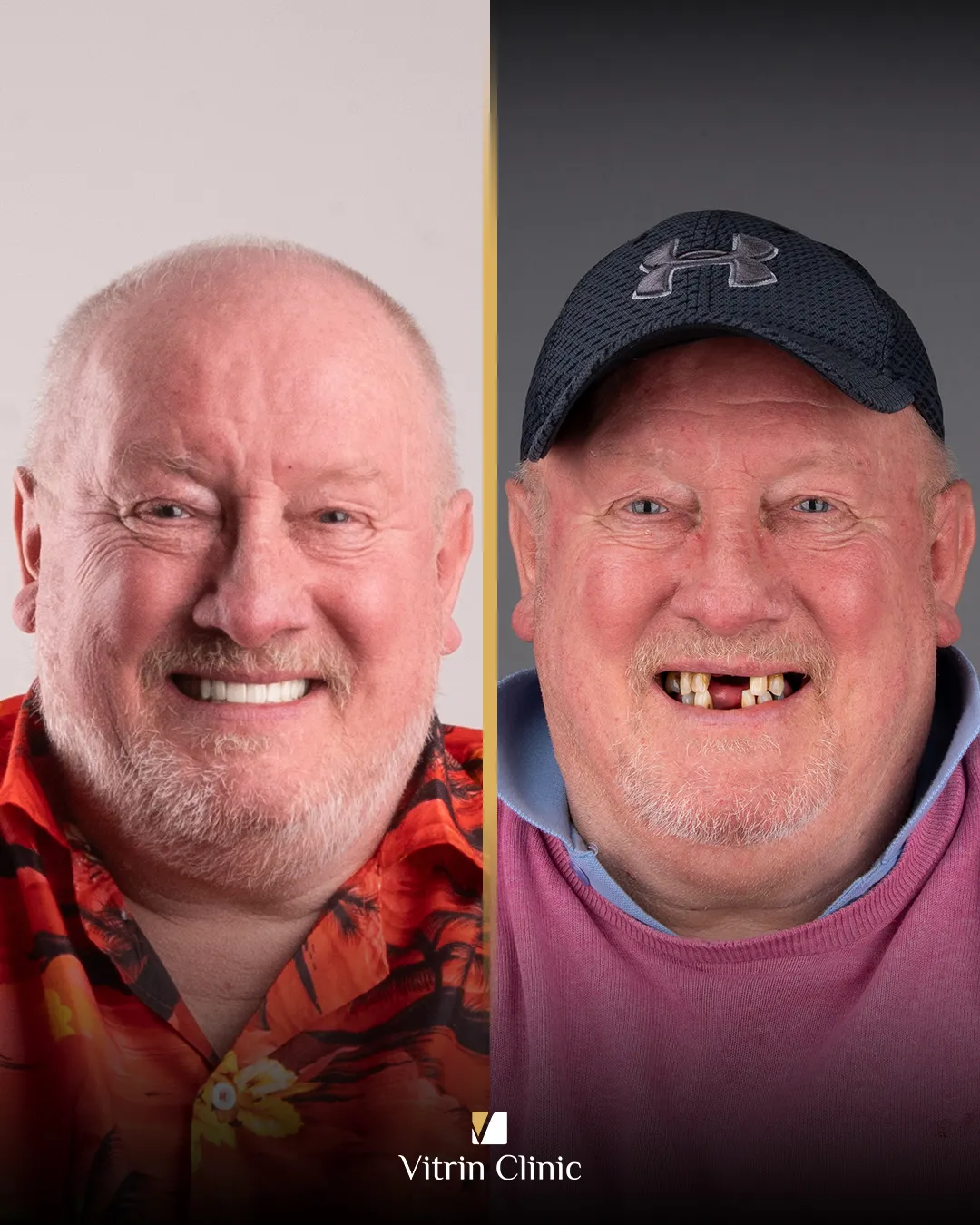
Real Results, Real Confidence
.jpg)
How Does a CBCT Scan Decide Between One Stage and Two Stages?
A CBCT scan is a 3D X-ray that shows bone height and width at each implant site, the shape of the sinus floor, any septa and any thickened lining. A regular 2D X-ray can't show all of this clearly, which is why the decision is based on the 3D scan.
Which Sinus Lift Techniques Allow Implant Placement in the Same Surgery?
Both main techniques can be combined with an implant. The choice depends on how much lift you need.
How Does a Crestal (Internal) Sinus Lift With Implant Placement Work?
The implant site is prepared from the top of the ridge, as for a standard implant. Small instruments then gently push the sinus floor up by a few millimetres through the same opening. Graft material may be added, and the implant goes in straight away, usually with a milder recovery.
How Does a Lateral Window Sinus Lift With a Simultaneous Implant Work?
A small window is made in the outer wall of the upper jaw, and the sinus lining is lifted carefully. Graft material fills the new space, and the implant is placed if the remaining bone holds it firmly. It allows a bigger lift but usually causes more swelling.
Can the Sinus Floor Be Raised Without a Graft?
Yes, in some cases. The lining is lifted and held up by the implant alone, and the space fills with a blood clot that can turn into bone. It suits only some cases, depending on the remaining bone and the size of the lift.
How Do the Techniques Compare for Same-Surgery Implants?
Feature | Crestal (internal) sinus lift | Lateral window sinus lift |
|---|---|---|
How the sinus is reached | Through the implant site | Through a small window in the side of the jaw |
Typical lift | Smaller, a few millimeters | Larger |
Graft | Optional | Usually used |
Recovery | Usually milder | More swelling and bruising |
Main surgical risk | Lining tear, harder to see | Lining tear, easier to see and repair |
Is a Graft Always Needed With the Implant?
No. A small lift can sometimes be done without a graft, while larger lifts usually need one. Graft material may be your own bone, processed donor bone, or animal-derived or synthetic bone substitutes. Over several months, it's gradually replaced by your own bone.
What Happens During Implant Surgery With Sinus Augmentation?
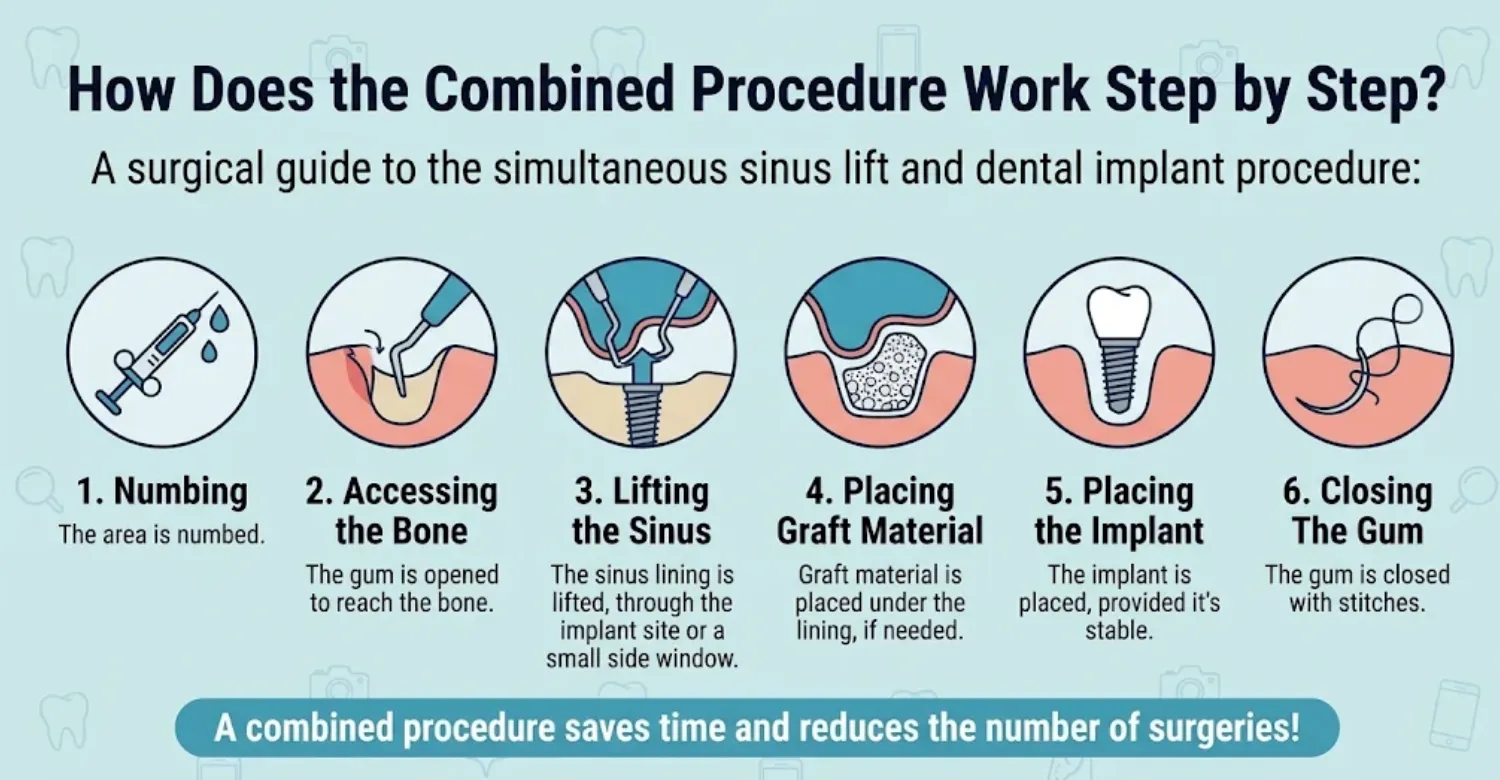
The combined surgery is usually done under local anesthesia in one appointment.
How Do You Prepare Before Surgery?
An exam and CBCT scan to plan the lift and implant
A review of your medical history and medicines
Treatment of any gum disease or sinus problem first
Stopping or cutting down smoking before and after surgery
Any antibiotics or mouth rinses your dentist prescribes
How Does the Combined Procedure Work Step by Step?
How Painful Is a Sinus Lift and Implant?
You should feel pressure rather than pain during surgery. Afterwards, soreness, swelling and a blocked-nose feeling for a few days are common and usually controlled with pain relief. The lateral window approach tends to cause more swelling.
What Happens if the Sinus Membrane Tears During Surgery?
A tear in the sinus lining is the most common complication. Small tears can usually be repaired during surgery with a protective membrane. If the tear is large, the area is closed and the lift is repeated later, turning a one-stage plan into a two-stage one.
Medical note: A repaired tear doesn't always affect the result, but it can raise the risk of infection or graft loss. Report fever, facial pain or a bad-smelling nasal discharge promptly.
What Is the Healing Timeline After a Simultaneous Sinus Lift?
Most people feel back to normal within one to two weeks. The implant and any graft then need several months to heal, often around 4 to 9, before the final crown. Smaller crestal lifts may heal faster.
At Vitrin Clinic, you leave with aftercare instructions, and our team continues follow-ups with you from home during these months.
What Happens in the First Two Weeks?
Swelling, bruising, mild pain and a stuffy nose are common for a few days, and a light nosebleed can happen. Stitches are usually removed after one to two weeks.
Don't blow your nose hard, and sneeze with your mouth open.
Avoid straws, smoking and strenuous exercise.
Take any medicines exactly as prescribed.
How Long Do Implant Integration and Graft Maturation Take?
This is the several-month period described above. The exact time depends on the amount of graft, your bone quality and your general health.
When Can the Final Crown Be Placed?
The crown is fitted once your dentist confirms, with an exam and an X-ray, that the implant is firmly bonded to the bone. A digital scan or impression is then taken and your crown is made.
Can You Fly After a Sinus Lift?
Cabin pressure changes can strain a healing sinus, so don't fly until your surgeon confirms it's safe. If you're traveling for treatment, plan your return flight with this in mind.
How Many Times Will You Travel to Turkey for a Sinus Lift and Implant?
A one-stage treatment usually needs two trips, and a staged treatment usually needs three. With Vitrin Clinic, your expected trips are set out in your written plan with a fixed, all-inclusive price, and our team books your hotel and arranges your airport, hotel and clinic transfers for each visit.
What Does the Trip Plan Look Like for a One-Stage Procedure?
Trip 1: exam, CBCT scan and combined surgery, then early checks and stitch removal.
At home: healing, with follow-ups.
Trip 2: implant check, then your final crown.
What Does the Trip Plan Look Like for a Two-Stage Procedure?
Trip 1: exam, CBCT scan and sinus lift with graft.
At home: graft healing.
Trip 2: implant placement.
At home: implant healing.
Trip 3: your final crown.
What Are the Benefits and Limitations of Combining Both Procedures?
Having a dental implant and sinus lift together saves a surgery and months of time. However, it only works when the bone allows it.
What Are the Benefits of a One-Stage Approach?
One surgery and one recovery instead of two
A shorter total treatment time
Fewer trips if you're traveling for treatment
Often a lower overall cost than two separate surgeries
What Limitations and Risks Should You Consider?
It needs enough bone to hold the implant firmly.
The plan can change during surgery if the implant isn't stable or the lining tears.
The implant sits in a graft that hasn't matured yet.
Possible complications include lining tears, infection, sinusitis, graft loss and implant failure.
Ready to transform your smile?
Talk to our team and get your Free Treatment plan.
When Is a Staged Sinus Lift the Safer Choice?
A staged lift is often safer when very little bone remains, the implant can't be held firmly, a large graft is needed, the lining tears during surgery or sinus problems need to settle first. It adds a surgery, but gives the graft time to become solid bone.
How Long Do You Wait Between a Sinus Lift and an Implant?
In a staged plan, the implant is placed once the graft has healed, within the same several-month window as above. A new scan confirms the bone is ready first.
What Are the Alternatives When a Sinus Lift With Implant Placement Isn't Suitable?
Some implant options avoid the sinus or anchor in bone elsewhere. At Vitrin Clinic, subperiosteal implants are another option for patients with low bone volume, with no grafting needed.
When Are Short Implants an Option?
Short implants can fit in the bone already there, without lifting the sinus. A review of clinical trials suggested they may be a reasonable alternative to sinus augmentation in some cases with moderate bone height, although the evidence was limited.
When Are Tilted, Pterygoid or Zygomatic Implants Used?
Tilted implants:
placed at an angle to avoid the sinus, often in full-arch treatment.
Pterygoid implants:
anchored in dense bone at the very back of the upper jaw.
Zygomatic implants:
anchored in the cheekbone when upper jaw bone loss is severe.
What Does the Research Say About Simultaneous Sinus Lift Success?
A systematic review of the lateral window technique reported an estimated 3-year implant survival of about 90% overall, and about 98% for implants with modern rough surfaces. A matching review of the crestal technique reported about 93% at three years. For comparison, standard dental implants show a 10-year survival of about 96%.
Medical note: Pooled figures can't predict one person's result. Your outcome depends on your bone, sinus health, smoking status and aftercare.
What Percentage of Sinus Lifts Fail?
Complete failure is uncommon. In the lateral window review, graft loss was reported in about 2% of cases. Lining tears happened in about 1 in 5 procedures and were usually repaired during surgery.
How Much Does a Sinus Lift With Implants Cost?
The cost depends on the technique, the amount of graft, one surgery or two, the number of implants and any extra treatment, such as extractions.
At Vitrin Clinic, you receive a written plan with a fixed, all-inclusive price before you travel, so you know the total before booking flights.
What Do Patients Often Ask Before Booking?
Before booking, most patients want practical answers: where the crown will be fitted, whether they'll have a gap while the implant heals, and whether the lift could affect their sinuses later. These are the questions patients ask most often about a sinus lift with implant placement, with short, direct answers.
Can I have the sinus lift abroad and the crown at home?
It's possible, but splitting care between two dentists makes it harder to know who is responsible if something goes wrong. Many patients prefer one team to place the implant and fit the crown. At Vitrin Clinic, follow-ups continue from home while you heal, and the crown is fitted at your next visit.
Will I have a gap while the implant heals?
For upper back teeth, many people manage without a temporary tooth, because the gap is rarely visible. If it is, a removable temporary tooth is often an option, as long as it doesn't press on the healing site.
Can a sinus lift cause long-term sinus problems?
Long-term sinus problems after a sinus lift are uncommon. The risk is higher if you already have untreated sinus disease, which is why a sinus check before surgery matters.
Can both sides be lifted at the same time?
Yes, both sinuses can be lifted in one surgery when both sides need it. Expect more swelling than with one side and a slightly slower first week.
I just had an upper tooth removed. Do I have to wait before a sinus lift?
Usually, yes. The gum and bone need time to heal after an extraction, often a couple of months, before a sinus lift is planned.
Is a One-Stage Sinus Lift the Right Choice for You?
Having a dental implant and sinus lift together is the right choice when your scan shows enough bone to hold the implant firmly. If it doesn't, a staged plan is safer, even though it adds a surgery and a trip. Either way, the decision comes from your scan, not a fixed rule.
At Vitrin Clinic, you can start with a free online review and receive a written plan with a fixed, all-inclusive price before you travel.
What Else Do Patients Ask About a Sinus Lift With Implant Placement?
Beyond eligibility, recovery and trips, patients often have a few quick questions about how a sinus lift will feel and affect daily life. Here are short answers to the questions that come up most, from surgery time and eating afterward to how to start your free online review with Vitrin Clinic.
Will a sinus lift change my voice or the shape of my face?
No. The lift takes place inside the sinus, above the upper back teeth. It doesn't change your voice or facial appearance, although temporary swelling is common.
How long does sinus lift surgery take?
It usually takes about one to two hours. Combined surgery with implants, or lifting both sides, can take longer.
Can a failed sinus lift be redone?
Yes, in most cases. The area is left to heal for several months, and the lift can then be repeated after a new scan.
Do I need a sinus lift for a front tooth implant?
No. The sinuses sit above the upper back teeth, so sinus lifts are only needed for premolar and molar implants.
What can I eat after a sinus lift?
Stick to soft, lukewarm foods for the first few days and avoid chewing on the surgery side. You can usually return to a normal diet gradually as the gum heals.
Will I need antibiotics after a sinus lift?
Antibiotics are often prescribed around sinus surgery to lower the risk of infection. Take them exactly as your dentist instructs.
How do I start a free online review with Vitrin Clinic?
Send Vitrin Clinic your photos, dental history and any X-rays or 3D scans. Our dentists review your case free of charge and with no obligation.
Does This Article Replace a Dental Exam?
No. This article is for general education only. Whether a sinus lift and implant can be combined, and your timeline and cost, can only be confirmed after a clinical exam and a 3D scan.
Which Implant Treatments Does Vitrin Clinic Provide?
At Vitrin Clinic, your implant plan is built around how many teeth you're missing and how much bone you have. Our implant options include:
Single tooth implants
Multiple implants and implant-supported bridges
All-on-4 and All-on-6 full-arch implants
Same-day (immediate) implants
Zygomatic implants for severe upper jaw bone loss
Subperiosteal implants for low bone volume, with no grafting needed
Implants combined with a sinus lift or bone graft
What to send: a panoramic X-ray or CBCT scan, photos of your smile and which teeth are missing.
Learn more about dental implants at Vitrin Clinic.
What Does Sinus Lift With Implant Placement Look Like at Vitrin Clinic?
At Vitrin Clinic, the online consultation is free and no-obligation. You send photos, your dental history and any X-rays or 3D scans, and our dentists review your case. A personalized treatment plan is sent in less than 24 hours.
Your written plan includes the treatments, the timeline and a fixed, all-inclusive price before you travel. Our team books your hotel and arranges your transfers, and aftercare continues once you're home. Vitrin Clinic has been treating patients in Istanbul since 2007.
What Is Your Patient Journey With Vitrin Clinic?
Step 1: How Does the Free Online Review of Your Scans and Photos Work?
You send your photos, dental history and any X-rays or 3D scans, and our dentists review your case.
Step 2: What Happens at the CBCT Scan and Implant Eligibility Assessment?
After a transfer from your hotel, you have an exam and a 3D scan at our clinic in Istanbul.
Step 3: How Is One-Stage or Two-Stage Treatment Chosen?
The scan results confirm whether your lift and implant can be combined, as described in your plan.
Step 4: What Happens at the Sinus Augmentation Procedure and Implant Placement?
Treatment follows your confirmed plan, and you leave with aftercare instructions.
Step 5: How Do Healing and Follow-Up From Home Work?
Our team stays in touch for follow-ups while your implant heals.
Step 6: When Is the Final Crown Placed?
Once the implant has healed, you return for your final crown, as set out in your plan.





Sources

Medically reviewed by
Dr. Rifat AlsamanDr. Rifat Alsaman has more than 5 years of clinical experience in dentistry and currently serves as the Head of the Medical Team at Vitrin Clinic. He is dedicated to providing exceptional patient care, overseeing treatment planning, and ensuring the highest clinical standards across the team. His expertise, attention to detail, and commitment to continuous professional development have helped countless patients achieve healthier, more confident smiles.
Still have a question?
Our patient coordinators answer every day of the week: before, during and long after your treatment.