Istanbul Airport to Dental Clinic: Your Dental Treatment Journey At Vitrin Clinic from Arrival to Aftercare
A dental treatment journey in Istanbul is more than a flight and a few appointments. It is a clinical process with clear stages. It begins with an assessment of your teeth and gums. It continues with diagnosis, planning and treatment

A dental treatment journey in Istanbul is more than a flight and a few appointments. It is a clinical process with clear stages. It begins with an assessment of your teeth and gums. It continues with diagnosis, planning and treatment. It ends with healing, a final check and long-term care at home. Each stage depends on the one before it. Knowing what happens at every step helps you plan your stay, protect your recovery and understand the choices your dentist makes. This guide explains each stage in simple terms.
Key Takeaways
A dental treatment journey in Istanbul follows clinical stages which are assessment, diagnosis, planning, treatment, recovery and follow-up.
Diagnosis comes before treatment. Digital X-rays, CBCT scans and intraoral scans guide every decision.
Gum disease, infection and decay are treated first, before cosmetic work begins.
Veneers and crowns often need five to seven days. Implants usually need two trips.
Rest after the flight and between appointments supports comfort and healing.
Aftercare at home decides how long your results last.
.jpg)
.jpg)
.jpg)
.jpg)
Ready to transform your smile?
Talk to our team and get a FREE treatment plan.
What Is a Dental Treatment Journey in Istanbul?
A dental treatment journey in Turkey is the full path from your first contact with the dentist to your aftercare at home. It is not one appointment. It is a sequence of clinical steps, planned around how teeth, gums and bone heal. Some steps happen online before you travel. Others happen in the clinic over several days. A few, such as implant healing, continue for months after you fly home. Understanding this sequence helps you set realistic expectations about time, comfort and results.
Is Turkey a Good Place for Dental Treatment?
Turkey can be a good place for dental treatment when you choose carefully. Many Istanbul clinics use digital X-rays, CBCT scans and intraoral scanners to plan work accurately. Experienced teams treat international patients every week and often offer support in several languages. Quality still varies between clinics. Check that the clinic is licensed by the Turkish Ministry of Health. Ask for a written treatment plan, the brands of implants and materials, and clear aftercare guidance. A well-planned dental treatment journey in Istanbul starts with these checks.
Stage 1: What Happens in the Online Assessment Before You Travel?
The first stage of a dental treatment journey in Istanbul happens at home. You share photos, X-rays and your medical history with the dental team. The dentist reviews them to understand your general dental condition. This early review identifies likely treatment options and gives a first estimate of how long you may need to stay. It cannot replace a clinical examination. Final decisions always depend on what the dentist sees and measures in person. Still, it helps you plan flights and time off work.
What Information Does the Dentist Need?
Clear information at this stage makes your dental treatment journey in Turkey more accurate and safer.
Smile photos: Front, side and close-up views of your teeth in good light.
Recent X-rays: Panoramic or individual X-rays, if you have them.
Medical history: Heart conditions, diabetes, bleeding disorders and past surgeries.
Medicine list: Especially blood thinners, bisphosphonates and diabetes medicines.
Allergies: Drugs, latex or local anaesthetics.
Your goals: What you want to change, such as colour, shape, gaps or missing teeth.
Bisphosphonates and blood thinners matter most before surgery. They can affect bone healing and bleeding, so the dentist must know about them early.

Stage 2: How Should You Plan Your Arrival Before Treatment?
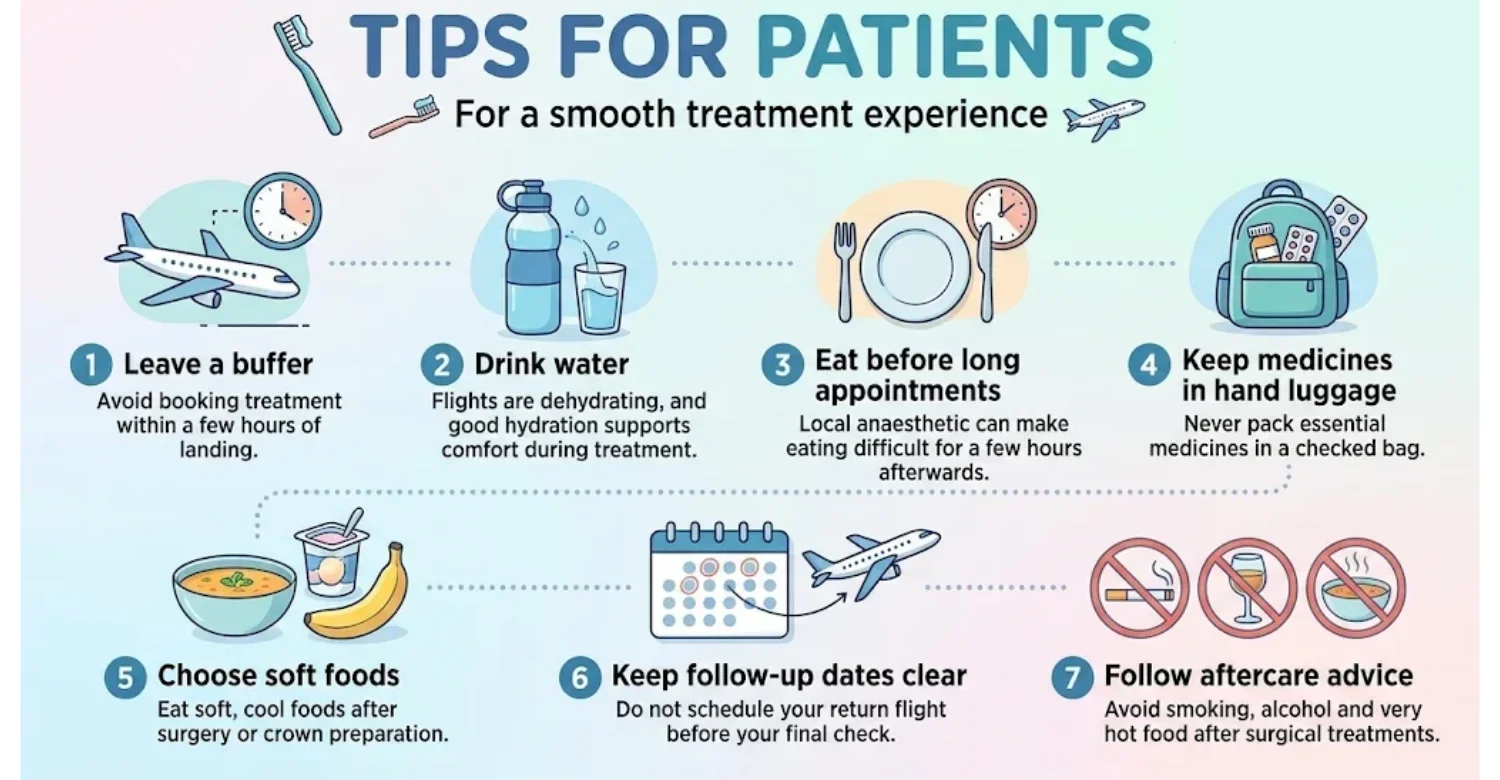
Arriving in Istanbul for dental treatment is the practical start of your clinical stay. Your body's condition on day one affects how well you tolerate treatment. Long flights cause dehydration, tiredness and stiffness. These factors can make a long session in the chair feel harder. For this reason, plan a rest period at your hotel before any long or surgical appointment. Drink water, eat properly and take your usual medicines on time. A calm arrival supports a calm first appointment and a smoother dental treatment journey in Istanbul.
Which Airport Is Closer to the Clinic?
Istanbul has two international airports. The clinic is in Başakşehir, on the European side.
Feature | Istanbul Airport (IST) | Sabiha Gökçen Airport (SAW) |
Side of the city | European side | Asian side |
Same side as the clinic | Yes | No |
Bosphorus crossing needed | No | Yes |
Typical journey to the clinic | Around 30–45 minutes in light traffic | Longer and more traffic-dependent |
How Do You Get From the Airport to the Clinic?
The trip from Istanbul airport to dental clinic appointments is roughly 25 to 30 kilometres from IST. Most patients choose one of three options at the start of their dental treatment journey in Turkey.
Option | Comfort | Best for |
Private transfer | High, door-to-door | Patients with luggage or long treatment plans |
Official taxi | Good, metered | Patients without a booked transfer |
Public transport | Lower, needs line changes | Light travellers on arrival day only |
After sedation or surgery, avoid public transport. Travel with a companion or a booked driver instead.
Stage 3: What Happens During the Clinical Examination?
The clinical examination is the most important step of your dental treatment journey in Istanbul. Every later decision depends on it. The dentist checks each tooth for decay, cracks and old fillings. The gums are measured for inflammation and pockets. The bite is checked to see how your upper and lower teeth meet. The dentist also reviews your medical history again in person. This visit focuses on understanding your mouth, not on rushing into treatment. Expect it to take one to two hours.
Digital X-rays and CBCT Scans
Digital X-rays show decay between teeth, infection at root tips and bone levels. They use a low radiation dose and give instant images. A CBCT scan goes further. It creates a 3D image of your jaw, nerves and sinuses. This scan is essential before implant surgery, because it shows bone height, width and density. It also helps locate the nerve in the lower jaw and the sinus floor in the upper jaw. These details protect you from avoidable complications during surgery and keep your dental treatment journey in Istanbul on schedule.
Intraoral Scanning and Smile Design
An intraoral scanner is a small camera that records a 3D model of your teeth. It replaces most traditional impression trays, so there is no messy putty. The digital model shows tooth shape, size and alignment in detail. For cosmetic cases, the dentist uses this model to design your new smile on screen. You can see a preview of the planned shape and length before any tooth is prepared. This step helps you and the dentist agree on realistic results early in your dental treatment journey in Turkey.
Gum and Bite Assessment
Healthy gums are the foundation of every dental treatment. The dentist measures the space between each tooth and the gum, called the pocket depth. Deep pockets and bleeding suggest gum disease. Gum disease must be treated before veneers, crowns or implants, because inflamed gums can cause restorations to fail. The bite assessment checks for grinding, clenching and uneven contacts. A patient who grinds may need a night guard to protect new veneers or crowns from chipping.
Ready to transform your smile?
Talk to our team and get a FREE treatment plan.
Stage 4: How Is Your Treatment Plan Built?
After the examination, the dentist prepares a written treatment plan. It lists each procedure, the number of visits and the expected timeline. A well-built dental treatment journey in Istanbul follows a clear medical logic. Disease is treated before cosmetic work. Function is restored before appearance is refined. The plan should also explain alternatives, such as a crown instead of a veneer, or a bridge instead of an implant. Ask the dentist to explain any change from your online assessment before you agree.
How Is the Treatment Sequence Decided?
Most dentists follow the same clinical order during a dental treatment journey in Turkey.
Pain and infection: Root canal treatment or extraction of teeth that cannot be saved.
Gum health: Deep cleaning and gum treatment where needed.
Decay: Fillings for active cavities.
Foundations: Implant placement or bone grafting, if planned.
Restorations: Crowns, bridges and veneers.
Finishing: Whitening, polishing and bite adjustments.
Whitening is often done before veneers or crowns, so the new restorations can match your whitened natural teeth.
How Long Does It Take to Get Your Teeth Done in Turkey?
It depends on how much work your mouth needs. Simple treatments, such as whitening or a few fillings, can be finished in one or two days. A full set of veneers or crowns usually takes about a week, because the lab needs time between preparation and fitting. Implants take longer. The surgery visit lasts a few days. Then the bone heals for three to six months before the final teeth are fitted. Your written plan confirms the exact number of days.
Stage 5: What Happens During the Most Common Treatments?
This stage is the core of your dental treatment journey in Istanbul. Each treatment has its own steps, healing time and aftercare. Some, such as whitening, are finished in one visit. Others, such as implants, continue for months. The sections below explain what happens during the treatments that international patients most often choose. Knowing these steps helps you understand why your plan needs a certain number of days, and why some visits cannot be combined.
Veneers
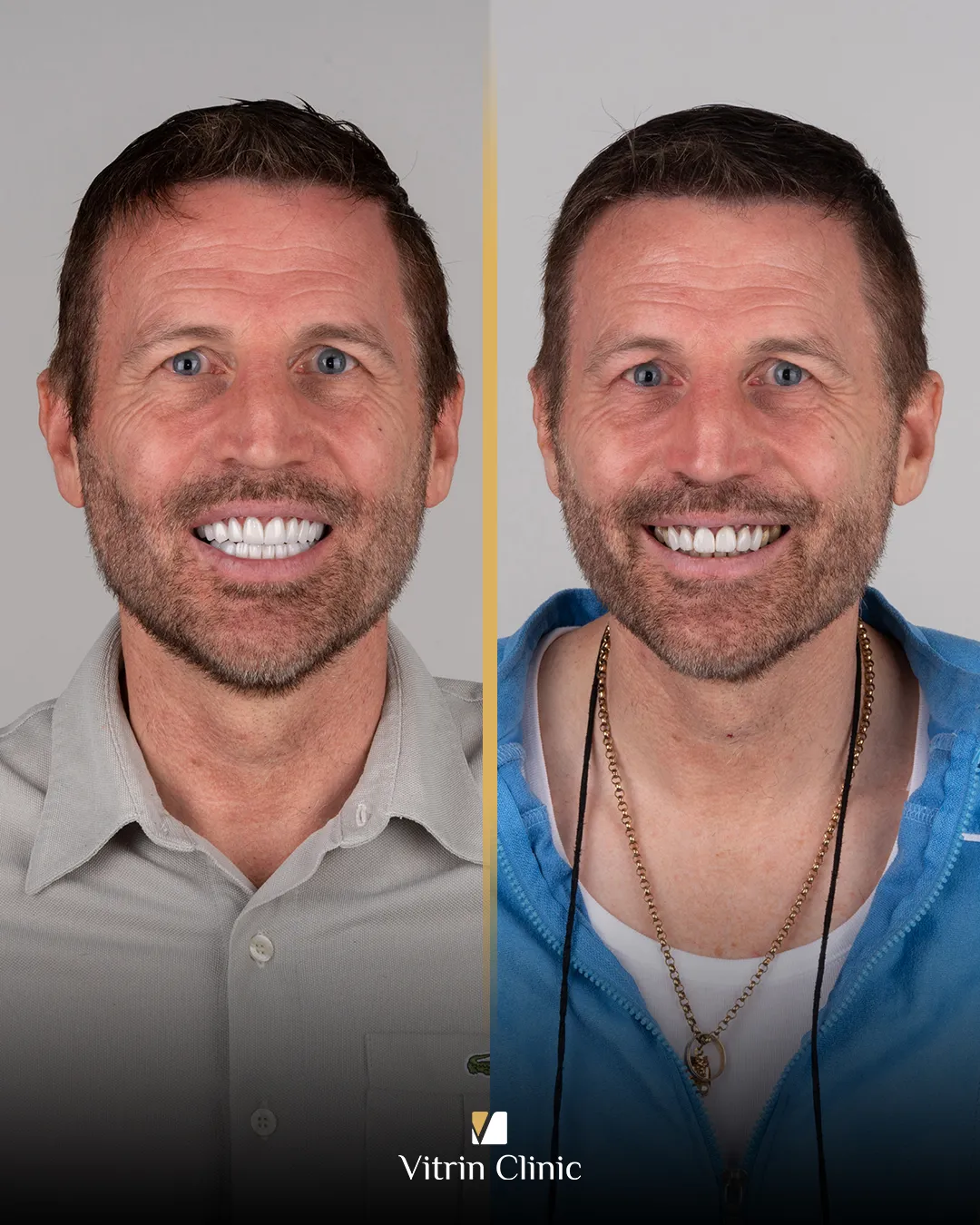
Veneers are thin ceramic shells bonded to the front of teeth. They correct stains, chips, small gaps and uneven shapes. The dentist usually removes a thin layer of enamel, often less than one millimetre, so the veneer sits naturally. Scans are sent to the dental lab, and you wear temporary veneers for a few days. At the fitting visit, the dentist checks colour, shape and bite before bonding. Veneers in Istanbul usually fit within a one-week stay. With good care, porcelain and E-max veneers can last 15 to 20 years.
Dental Crowns
A crown covers the whole tooth. It protects teeth that are broken, heavily filled or weak after root canal treatment. The dentist shapes the tooth, takes a digital scan and places a temporary crown. The final crown is made from zirconia or E-max ceramic. Zirconia is very strong and suits back teeth. E-max looks more translucent and suits front teeth. In some cases, CEREC technology allows a crown to be designed, milled and fitted on the same day.
Dental Implants
A dental implant replaces the root of a missing tooth. It is a small titanium post placed into the jawbone under local anaesthetic. Over the next three to six months, the bone bonds with the implant surface. This process is called osseointegration. For this reason, dental implants in Istanbul usually need two trips. The first trip is for surgery. The second trip is for the final crown. If bone volume is low, a bone graft or sinus lift may be needed first.
Full-Arch Implants (All-on-4 and All-on-6)
Full-arch implants replace all the teeth in one jaw. Four or six implants support a fixed bridge. Angled placement of the back implants often avoids the need for bone grafting. In many cases, a temporary fixed bridge is attached within a few days of surgery. You leave with fixed teeth rather than a removable denture. The final bridge is fitted on a second trip, after the implants have fully healed. A soft diet is essential during the first weeks. This is one of the longest forms of dental treatment journey in Istanbul.
Root Canal Treatment
Root canal treatment saves a tooth with an infected or inflamed nerve. The dentist numbs the area and removes the damaged pulp from inside the tooth. The canals are cleaned, disinfected, shaped and sealed. Laser disinfection and 3D imaging can improve accuracy, and many cases are finished in one session. Back teeth often need a crown afterwards, because a treated tooth becomes more brittle. Mild tenderness for a few days is normal. Severe or growing pain should be reported.
Gum Treatment
Gum disease is a bacterial infection of the tissues around the teeth. Early signs include bleeding, swelling and bad breath. Advanced disease causes gum recession, bone loss and loose teeth. Treatment usually starts with scaling and root planing, a deep cleaning below the gum line. Severe cases may need gum surgery or bone regeneration. Gum treatment comes before cosmetic work, because restorations placed on unhealthy gums often fail. For a gummy smile, gum reshaping can improve the balance between teeth and gums.
Teeth Whitening
Professional whitening uses a peroxide gel activated in the clinic. It lightens natural tooth colour in a single visit of about one hour. Whitening does not change the colour of existing crowns, veneers or fillings. For this reason, it is usually done before new restorations are made. Temporary sensitivity for 24 to 48 hours is common. During this time, avoid coffee, tea, red wine and other strongly coloured foods, because freshly whitened teeth absorb stains more easily.

Ready to transform your smile?
Talk to our team and get a FREE treatment plan.
Stage 6: What Should You Expect During Recovery Between Appointments?
Recovery is an active part of your dental treatment journey in Istanbul. Between appointments, your gums, bone and teeth adapt to the work done. How you rest, eat and clean your mouth affects the next visit. Most patients feel well enough to walk and sightsee lightly. After surgery, however, rest is more important than activity. Follow every aftercare instruction, even when you feel fine. The two lists below explain what is normal and what needs attention.
What Is Normal After Treatment?
Sensitivity: Mild sensitivity to hot and cold after veneers, crowns or whitening.
Tenderness: Sore gums around prepared teeth for a few days.
Swelling: Mild swelling after implants or extractions, peaking around day two or three.
Bite changes: A new feeling when teeth meet, which usually settles quickly.
Speech changes: A slight lisp with new front teeth for a few days.
Warning Signs to Report
Bleeding: Bleeding that does not stop after 30 minutes of firm pressure.
Severe pain: Pain that gets worse instead of better after three days.
Fever: A temperature, which may suggest infection.
Spreading swelling: Swelling that spreads to the eye, neck or throat.
Loose restorations: A temporary or final crown or veneer that moves.
Contact the clinic team immediately if any of these happen during your dental treatment journey in Istanbul.
Stage 7: What Happens at the Final Check Before You Fly Home?
The final check confirms that your treatment is complete and stable. The dentist examines every restoration, checks the bite and makes small adjustments where needed. Gums are checked for healing. For implant patients, the surgery site is reviewed before the healing period begins. You receive written aftercare instructions and a plan for your next visit if needed. Never book your return flight before this appointment, because it closes the clinical part of your dental treatment journey in Istanbul. Your dentist will confirm when it is safe to fly, especially after surgery.
Stage 8: How Do You Care for Your Results at Home?
The last stage of a dental treatment journey in Istanbul happens at home. Long-term success depends on daily care. Brush twice a day with a soft toothbrush and fluoride toothpaste. Clean between teeth daily with floss, interdental brushes or a water flosser. Implants and bridges need special attention around the gum line. Wear your night guard if you grind. Visit a local dentist for check-ups and cleaning every six months, and share your treatment records with them.
Clinical Note
Your travel plan should match your treatment plan. Most patients can fly soon after routine treatments such as fillings, cleaning or crown preparation. Some procedures need extra care. After a sinus lift, changes in cabin pressure can affect healing, so the surgeon will advise when flying is safe. After an extraction or implant surgery, the first 24 hours matter most for clot stability. Avoid spitting, straws and smoking during this time. A well-timed dental treatment journey in Istanbul always leaves room for healing before the flight home.
How Long Does Each Treatment Take in Istanbul?
The length of your stay depends on the treatments in your plan. Lab work, healing time and the number of visits all play a role. The table below gives typical timelines. Your dentist will confirm the exact schedule of your dental treatment journey in Istanbul after the examination.
Treatment | Typical stay | Number of trips |
Teeth whitening | 1 day | 1 |
Fillings | 1–2 days | 1 |
Root canal treatment | 1–3 days | 1 |
Veneers | 5–7 days | 1 |
Crowns | 5–7 days (same day with CEREC) | 1 |
Single implant | 3–5 days, then 3–6 months healing | 2 |
Full-arch implants | 5–7 days, then 3–6 months healing | 2 |
How Much Does Each Treatment Cost at Vitrin Clinic?
Cost is part of planning any dental treatment journey in Istanbul. The prices below are approximate. Your final cost depends on clinical findings, the number of teeth treated and the materials chosen. The dentist confirms every price in your written treatment plan before treatment begins. Sedation, if needed, is itemised separately.
Estimated Price Breakdown by Procedure
Treatment
Hollywood Smile
Dental Implants
Subperiosteal Implants
Invisalign
Veneers
Dental Crowns
Dental Bridge
Periodontics
Gingival Esthetics
Endodontics (Root Canal Treatment)
Same Visit Dentistry
Teeth Whitening
Approximate Price at Vitrin Clinic
$3,500–$5,500 per full smile makeover
$500–$865 per implant, depending on the system
Price upon request
$800–$3,500
$200–$250 per tooth
From $150 per tooth
$500–$1,200 for a traditional 3-unit bridge
Depends on gum treatment required
Price upon request
Approximately $150–$200 per tooth
Depends on the procedures included in treatment plan
Approximately $150–$350 per session
Note: Vitrin Clinic offers dental treatments at approximately 60–70% less than the average costs in the USA and UK, while maintaining high standards of dental care.
Note on Dental Sedation Costs
Conscious sedation or general anesthesia can be arranged for severe dental anxiety. These options and costs are discussed openly and itemized separately, so you know the fee before giving consent. A medical history review confirms that sedation is safe for you.
Is It Cheaper to Go to Turkey for Dental Work?
For many patients, yes. Dental work in Turkey often costs less than in the UK, Western Europe or the US. Lower clinic running costs and lab fees explain much of the difference, not cheaper materials. Many clinics use the same implant brands and ceramics found abroad. When you compare prices, add flights, hotel nights and a possible second trip for implants. Also check what the quote includes, such as scans, temporaries and follow-up visits. The lowest price is not always the best value.
How Are Pain and Anxiety Managed During Treatment?
Most treatments are done under local anaesthetic. The area is numbed, so you feel pressure but not sharp pain. Numbness usually lasts two to four hours. Patients with severe dental anxiety can ask about conscious sedation. Sedation relaxes you deeply while you keep breathing on your own. General anaesthesia is used only in selected cases. Both options require a medical history review first. Sedation is planned as part of your dental treatment journey in Istanbul, never added at the last minute. After sedation, you must not travel alone, drive or make important decisions for at least 24 hours.
Is it safe to travel to Turkey for dental work?
Yes, travelling to Turkey for dental work can be safe when you plan carefully. Choose a clinic licensed by the Turkish Ministry of Health, and ask for a written treatment plan and price before you travel. Share your full medical history, including any medicines you take, so the dentist can plan safely. Arrange your transfers in advance, and leave enough days for check-ups before your flight home. Good planning lowers the risks, both during treatment and on the journey.
How long do you have to stay in Turkey to get your teeth done?
How long you stay depends on your treatment plan. Veneers and crowns often need about five to seven days. That covers the consultation, tooth preparation, making the restorations, fitting and a final check. Implants usually need two trips a few months apart, because the jawbone needs time to bond with the implant. This process is called osseointegration. If you need bone grafting, the gap between trips may be longer. Your dentist will confirm the timeline before you book flights.
What We Notice Clinically
Dr. Rifat Alsaman, Head of the Medical Team at Vitrin Clinic, notes that travel stress often shows up in the dental chair. Patients who land late and come straight to treatment are often dehydrated and tired. This can make long sessions feel harder. Dr. Rifat Alsaman, Head of the Medical Team at Vitrin Clinic, also notices that patients sometimes forget their medicine list, especially blood thinners. These medicines can affect bleeding and must be reviewed before any surgery. Patients who rest, eat well and follow the treatment sequence usually heal faster and enjoy more stable results.
About Vitrin Clinic
Vitrin Clinic has provided comprehensive dental care in Istanbul since 2007, offering a wide range of dental treatments to meet patients’ oral health and aesthetic needs. The clinic focuses on cosmetic and restorative dentistry, including veneers, crowns, dental implants, gum treatments, and other dental procedures. It uses digital 3D diagnostics to support accurate treatment planning. The clinic is licensed by the Turkish Ministry of Health and supports international patients in 19 languages.






Book your FREE treatment plan with Vitrin Clinic and get a personalized treatment plan from our dental team.
Ready to transform your smile?
Talk to our team and get a FREE treatment plan.
References

Medically reviewed by
Dr. Rifat AlsamanDr. Rifat Alsaman has more than 5 years of clinical experience in dentistry and currently serves as the Head of the Medical Team at Vitrin Clinic. He is dedicated to providing exceptional patient care, overseeing treatment planning, and ensuring the highest clinical standards across the team. His expertise, attention to detail, and commitment to continuous professional development have helped countless patients achieve healthier, more confident smiles.
More in Preparation & Travel
View all 16 min readShould I Book My Flight Before or After Confirming My Dental Treatment Plan?Booking flights for dental treatment abroad is easier when your clinic reviews your dental records first. This helps establish realistic treatment dates and avoid unnecessary travel expenses.
 33 min readWhich Area of Istanbul Should I Stay in to Be Close to My Dental Clinic?Choosing where to stay in Istanbul for dental treatment can affect comfort, appointment planning, and travel expenses.
 13 min readDo I Need to Arrange Local Transportation for Every Clinic Appointment in Turkey?If you are planning treatment in Turkey, you may wonder how transportation to dental appointments in Istanbul works and whether you need to book a ride every time.
 23 min readHow Many Days Should I Stay in Istanbul for My Dental Treatment?If you are planning dental work in Turkey, one of the first questions is how many days in Istanbul for dental treatment you should book. Most patients need between 3 and 10 days, depending on what is in their treatment plan. Veneers, crowns and a Hollywood Smile usually fit into one trip of about a week, while dental implants usually need two shorter trips a few months apart.
Still have a question?
Our patient coordinators answer every day of the week: before, during and long after your treatment.