Dental Care Guide
July 6, 2025
Gengivas brancas: O que significam e o que deve fazer!
 Dr. Rifat Alsaman
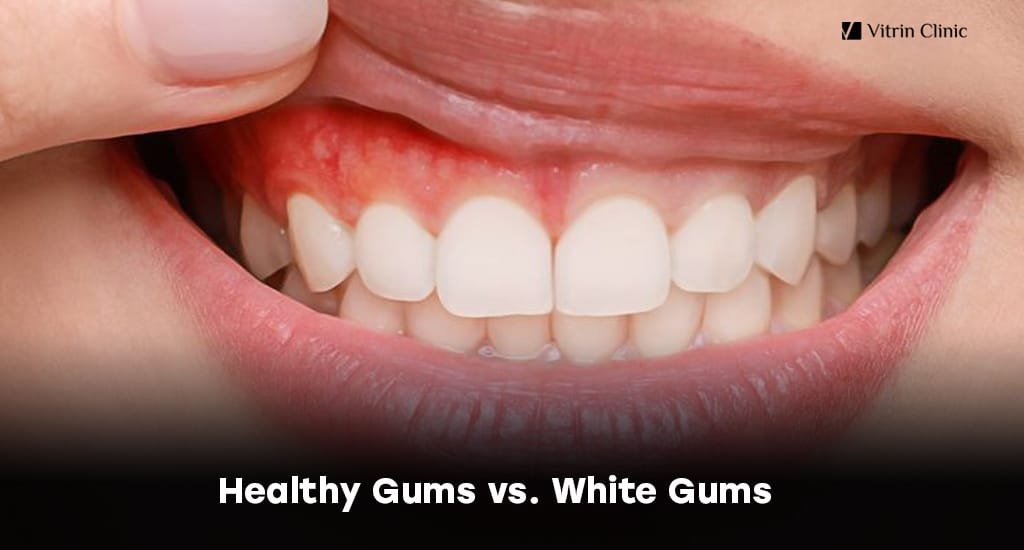
1. Gengivas Saudáveis vs. Gengivas Brancas
As gengivas saudáveis são tipicamente rosadas, firmes e úmidas, ajustando-se firmemente ao redor dos dentes. Mas, às vezes, as gengivas assumem uma aparência branca ou pálida, seja em forma de manchas ou em uma área maior.
Essa mudança de cor pode ser causada por uma variedade de problemas, alguns inofensivos, outros urgentes que você deve avaliar. Vamos explorar o que as suas gengivas podem estar tentando lhe dizer.
O Que São Gengivas Brancas?
Gengivas brancas referem-se a uma mudança na cor natural das gengivas, onde elas podem parecer pálidas, esbranquiçadas ou desenvolver manchas brancas. Embora as gengivas saudáveis sejam geralmente rosadas devido à boa circulação sanguínea, alterações na cor da gengiva às vezes podem indicar irritação, infecções, problemas de saúde bucal ou outros fatores. Compreender a razão por trás das gengivas brancas é importante para escolher o tratamento certo e manter as gengivas saudáveis.
Como as Gengivas Brancas São Diagnosticadas?
O tratamento para gengivas brancas depende do motivo por trás da mudança de cor. Um exame odontológico ajuda a identificar se o problema está relacionado a doenças gengivais, infecções, fatores de estilo de vida ou outra condição.
Exame Odontológico e Avaliação da Gengiva
O dentista avalia as gengivas, os dentes e a saúde bucal em geral para entender a causa da aparência esbranquiçada.
Identificando a Causa Antes do Tratamento
Encontrar a causa exata permite que o dentista recomende a solução mais adequada, seja ela uma limpeza, medicação, tratamento de gengiva ou outros procedimentos.
Gengivas Rosadas Saudáveis vs. Gengivas Brancas ou Pálidas
As gengivas saudáveis geralmente têm uma aparência rosada e são firmes ao redor dos dentes. Quando as gengivas ficam extraordinariamente brancas ou pálidas, isso pode estar relacionado a inflamações, infecções, alterações teciduais ou outras condições que requerem atenção.
Por Que as Gengivas Brancas Não Devem Ser Ignoradas
Embora alguns casos de gengivas brancas possam ser inofensivos, mudanças persistentes de cor, manchas brancas, dor ou inchaço devem ser avaliados por um profissional da odontologia para identificar a causa subjacente.
Opções de Tratamento para Gengivas Brancas
O tratamento para gengivas brancas varia dependendo da causa subjacente. Os cuidados odontológicos profissionais concentram-se em melhorar a saúde da gengiva e restaurar uma aparência saudável.
Limpeza Dentária Profissional e Raspagem
Se as gengivas brancas estiverem associadas ao acúmulo de placa ou a problemas na gengiva, a limpeza profissional pode ajudar a remover as bactérias e melhorar a condição da gengiva.
Tratamento de Infecções Gengivais e Condições Bucais
Em casos causados por infecções, o dentista pode recomendar tratamentos específicos para controlar o problema e restaurar a saúde bucal.
Tratamentos Estéticos da Gengiva Quando Necessário
Para alguns pacientes, procedimentos estéticos na gengiva podem ajudar a melhorar a aparência gengival e criar um sorriso mais harmonioso.
2. Causas Comuns de Gengivas Brancas
A. Gengivite e Doença Periodontal
O acúmulo de placa leva inicialmente à inflamação da gengiva (gengivite), que mais tarde pode evoluir para a doença periodontal. Com o tempo, as gengivas inflamadas podem parecer mais claras ou até esbranquiçadas.
B. Candidíase Oral (Sapinho)
Uma infecção fúngica causada por fungos (Candida) que produz manchas brancas cremosas nas gengivas, língua e bochechas. É comum em pessoas com o sistema imunológico enfraquecido, uso de bombinhas de inalação ou após o uso de antibióticos.
C. Aftas e Pequenas Lesões
Pequenas úlceras ou irritações físicas (causadas por alimentos duros ou aparelhos odontológicos) podem provocar um esbranquiçamento localizado cercado por vermelhidão.
D. Líquen Plano Oral
Uma condição autoimune que causa padrões brancos semelhantes a rendas nas gengivas e na mucosa. Pode estar associada a medicamentos ou estresse hormonal.
E. Leucoplasia
Manchas brancas espessas que não podem ser raspadas. Frequentemente desencadeadas pelo uso de tabaco ou próteses mal ajustadas. Embora na maioria das vezes sejam inofensivas, algumas manchas requerem monitoramento porque podem sinalizar alterações pré-cancerosas.
F. Deficiências Nutricionais
Gengivas pálidas ou brancas podem indicar anemia (ferro, B12) ou deficiência de vitamina K, que afetam o fluxo sanguíneo e a saúde do tecido gengival.
G. Alterações Hormonais
As flutuações hormonais (por exemplo, durante a gravidez ou menopausa) podem alterar a coloração da gengiva, tornando as gengivas mais claras ou mais sensíveis.
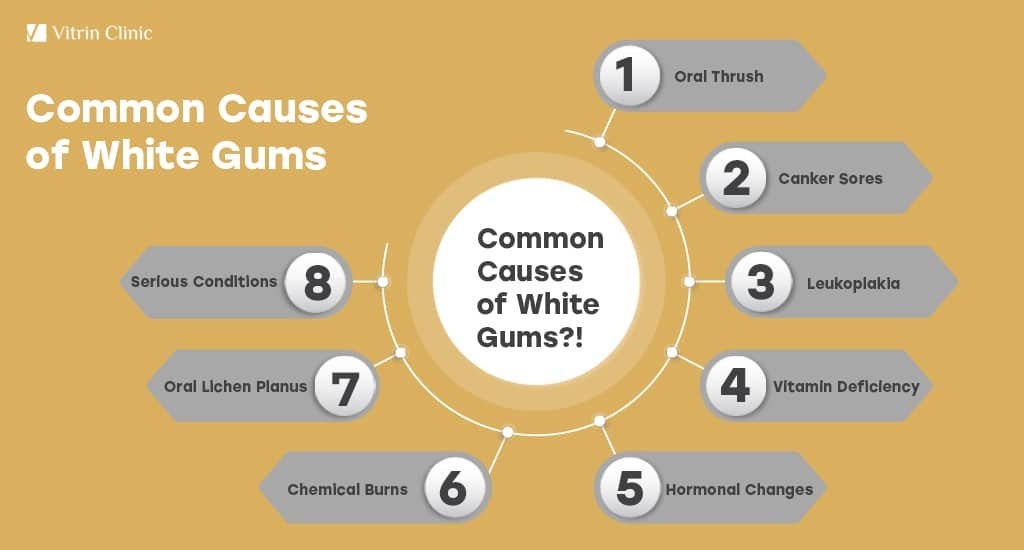
H. Irritação Gengival ou Queimaduras Químicas
Produtos de clareamento com peróxido ou escovação agressiva podem irritar as gengivas quimicamente ou mecanicamente, levando a um esbranquiçamento temporário.
I. Condições Graves
Embora mais raras, condições como câncer bucal, leucemias e distúrbios autoimunes podem se manifestar como manchas brancas persistentes. Fique atento a feridas que não cicatrizam, sangramentos inexplicáveis ou dor persistente.
Sintomas Associados às Gengivas Brancas
As gengivas brancas podem surgir com diferentes sintomas, dependendo da causa. Prestar atenção a esses sinais pode ajudar a detectar problemas de saúde bucal precocemente.
Pontos ou Manchas Brancas nas Gengivas
Pontos ou manchas brancas no tecido gengival podem ocorrer devido a irritações, infecções ou alterações nos tecidos bucais. Um dentista pode determinar se essas alterações precisam de tratamento.
Inchaço, Sensibilidade ou Irritação na Gengiva
Algumas pessoas com gengivas brancas também podem apresentar desconforto, gengivas inchadas ou sensibilidade ao comer ou escovar os dentes.
Sangramento nas Gengivas e Mau Hálito
Gengivas que sangram e mau hálito persistente às vezes podem aparecer junto com problemas na gengiva e podem indicar a necessidade de cuidados odontológicos profissionais.
3. Sinais de Alerta: Quando Entrar em Contato com um Profissional
Algumas alterações na gengiva exigem atenção imediata:
Manchas brancas que não podem ser raspadas – podem indicar leucoplasia ou câncer bucal
Aftas recorrentes ou lesões dolorosas
Gengiva esbranquiçada persistente por mais de 2 semanas
Sintomas acompanhantes: inchaço, sangramento, dor, gosto estranho ou perda de peso
Fatores de risco presentes: uso de tabaco, consumo excessivo de álcool, imunodeficiência
4. Diagnosticando Gengivas Brancas
Exame Clínico realizado por um dentista para avaliar a aparência e a distribuição.
Coleta de swab oral para testes fúngicos ou bacterianos, já que o sapinho é comum.
Biópsia (para lesões persistentes ou leucoplasia) para descartar alterações pré-cancerosas.
Exames de sangue para detectar anemia, deficiências vitamínicas ou distúrbios sanguíneos.
Revisão do histórico médico/odontológico para verificar medicamentos, alterações hormonais ou hábitos que afetam a saúde da gengiva.
5. Opções de Tratamento Baseadas na Causa
Causa | Tratamento |
Gengivite/Periodontite | Limpeza profissional (raspagem e alisamento radicular) + melhora na higiene diária |
Candidíase Oral | Enxaguantes ou comprimidos antifúngicos; tratamento do diabetes ou problemas imunológicos |
Aftas | Bochechos com água morna e sal, géis tópicos; suplementação de B12 se necessário |
Líquen Plano | Enxaguantes bucais ou cremes de corticosteroides, revisão de medicamentos |
Leucoplasia | Eliminar a irritação; biópsia e monitoramento; possível remoção cirúrgica |
Deficiências Nutricionais | Suplementos (ferro, B12, C, K) + dieta equilibrada |
Queimadura Química | Interromper o uso de produtos clareadores; usar géis protetores; permitir a cicatrização |
6. Prevenção: Mantendo as Gengivas Saudáveis e Rosadas
A. Cuidados Bucais Diários Suaves
Escove os dentes duas vezes ao dia com uma escova de cerdas macias, fazendo movimentos suaves a 45º ao longo da linha da gengiva.
Use fio dental diariamente ou um irrigador oral para limpar entre os dentes.
Enxaguante bucal antimicrobiano sem álcool pode reduzir a placa bacteriana sem irritar as gengivas.
B. Nutrição Equilibrada e Hidratação
Garanta a ingestão suficiente de ferro, vitaminas B12, C e K por meio de folhas verdes, carnes magras, leguminosas, frutas cítricas e alimentos fortificados.
Mantenha-se bem hidratado para conservar a saliva e o tecido gengival saudáveis.
C. Evite Irritantes
Modifique as rotinas de clareamento: use concentrações mais baixas e barreiras protetoras; consulte seu dentista.
Deixe o tabaco e limite o álcool, que contribuem para a leucoplasia e prejudicam a cicatrização.
Corrija aparelhos odontológicos mal ajustados e reduza o trauma de mastigar alimentos duros.
D. Consultas Odontológicas de Rotina
Visite seu dentista a cada 6 meses, ou com maior frequência se tiver fatores de risco, para limpezas e detecção precoce.
E. Cuide de Condições de Saúde
Controle condições como diabetes, anemia e doenças autoimunes que afetam a saúde bucal.
7. Por Que Gengivas Brancas Merecem Atenção
A detecção precoce reduz o risco de progressão da gengivite para a periodontite, ou da leucoplasia benigna para o câncer.
Ligação com a saúde sistêmica: A saúde da gengiva afeta o bem-estar geral — a inflamação de baixo grau afeta o coração, diabetes, gravidez e muito mais.
Qualidade de vida: Gengivas saudáveis apoiam a alimentação, o conforto, a fala e a autoconfiança.
8. Quando Visitar a Vitrin Clinic Istanbul

Se suas gengivas continuarem brancas, com manchas ou desconfortáveis — mesmo após os cuidados caseiros — é hora de agir.
Na Vitrin Clinic Istanbul, oferecemos:
Exames gengivais abrangentes
Diagnóstico preciso
Planos de tratamento personalizados em vários idiomas
Orientação preventiva e cuidados de acompanhamento
Agende uma consulta gratuita hoje mesmo — seja você um morador local ou alguém visitando a cidade para turismo odontológico, estamos aqui para apoiar o seu bem-estar bucal e geral.
Como Prevenir Gengivas Brancas?
Manter uma boa higiene bucal é uma das melhores maneiras de proteger a saúde da gengiva e evitar alterações indesejadas na coloração gengival.
Mantenha Bons Hábitos de Higiene Bucal
Escovação regular, uso de fio dental e de produtos adequados para o cuidado bucal ajudam a manter as gengivas saudáveis.
Agende Consultas Odontológicas Regulares
Visitas rotineiras ao dentista permitem a detecção precoce de problemas na gengiva antes que se tornem mais graves.
Evite o Fumo e Irritantes Gengivais
O tabagismo e certos hábitos podem afetar a aparência da gengiva e aumentar o risco de problemas de saúde bucal.
9. Resumo Rápido
Gengivas brancas nem sempre são uma urgência, mas sinalizam algo importante.
A causa pode variar desde uma simples irritação até uma infecção fúngica, deficiência nutricional ou (raramente) câncer.
A boa notícia: Muitas causas são tratáveis e evitáveis com boa higiene, nutrição e cuidados odontológicos regulares.
Seja proativo: monitore as alterações, mantenha hábitos saudáveis e procure ajuda se os sintomas persistirem.
10. Palavra Final
Gengivas brancas merecem atenção, mas não pânico. Pense nelas como um aviso amigável do seu corpo pedindo para ser avaliado.
Na Vitrin Clinic Istanbul, adotamos uma abordagem acolhedora e focada no paciente para a saúde da gengiva, orientando pacientes internacionais em direção a sorrisos confiantes e saudáveis que duram a vida toda. Pronto para uma consulta GRATUITA? Entre em contato conosco agora, porque suas gengivas e seu sorriso merecem os cuidados de que precisam.
Quando Você Deve Ir ao Dentista por Causa de Gengivas Brancas?
Você deve consultar um dentista se as gengivas brancas persistirem por muito tempo ou surgirem acompanhadas de outros sintomas. Uma avaliação precoce ajuda a evitar possíveis complicações e garante o tratamento correto.
Manchas Brancas Persistentes ou Alterações na Cor da Gengiva
Mudanças duradouras na cor da gengiva devem ser verificadas por um profissional da odontologia.
Dor, Sangramento ou Inchaço na Gengiva
Sintomas adicionais podem indicar um problema subjacente na gengiva que necessita de tratamento.
O que é leucoplasia oral?
A leucoplasia oral é uma condição que causa o aparecimento de manchas brancas e espessas nas gengivas, na língua e na parte interna das bochechas. De acordo com a literatura médica, é o tipo mais comum de Distúrbio Potencialmente Maligno da Oftalmologia (DPMO), afetando até 5% da população mundial.
Embora muitos casos de gengivas francesas lesões causadas por leucoplasia são benignas, mas algumas têm potencial para evoluir para condições mais graves ao longo do tempo. Os dados clínicos mais recentes destacam que a taxa geral de progressão dessas lesões para um estado mais grave ao longo da vida é de aproximadamente 9,5%, tornando a detecção precoce absolutamente crucial.
Principais causas de gengivas brancas
Essas manchas brancas são frequentemente uma reação da boca à irritação crônica. Os principais fatores desencadeantes incluem:
Uso de tabaco e álcool:Esses continuam sendo os fatores comportamentais mais significativos que causam alterações nos tecidos.
Atrito crônico:Irritação causada por dentes ásperos, dentaduras mal ajustadas ou mordidas constantes na bochecha.
Microbioma oral e inflamação:Pesquisas recentes sugerem que um desequilíbrio nas bactérias naturais da boca e a inflamação gengival contínua podem contribuir para o comportamento dessas lesões.
O que observamos clinicamente
"Quando um paciente chega à Clínica Vitrine Reclamando de gengivas brancas ou manchas brancas persistentes, nosso primeiro passo é uma avaliação visual e tátil meticulosa", explica Dr. Rifat Alsalman, um dentista cosmético de referência e o Chefe da equipe médica da Clínica Vitrin.
Nesta fase diagnóstica crucial,o Dr. Rifat Alsama Observa-se que nem todas as manchas brancas são iguais.
Manchas homogêneas:São planas, finas e uniformes. Geralmente apresentam baixo risco, mas ainda assim exigem monitoramento cuidadoso.
Manchas não homogêneas:Podem apresentar aspecto irregular, com manchas vermelhas ou áspero. Rifat Alsalman, como o Chefe da equipe médica da Clínica Vitrine, enfatiza que essas variações de textura acarretam um risco significativamente maior e exigem atenção diagnóstica imediata, como uma pequena biópsia.
Como dentista dedicada à estética,Dr. Rifat Alsama ressalta que alcançar uma transformação deslumbrante do sorriso sempre começa com uma base saudável. Quaisquer sinais de gengivas brancas deve ser totalmente avaliado e gerenciado pela equipe médica especializada em Clínica Vitrina Antes de iniciar tratamentos estéticos como facetas ou clareamento profissional.
Entendendo as mudanças visuais no seu sorriso
Alterações visuais como gengivas brancas são o sistema de alerta precoce da sua boca, sinalizando irritação localizada nos tecidos ou alterações subjacentes na mucosa.
De acordo com o Dr. Rifat Alsalman, um dos principais dentistas de estética e chefe da equipe médica em Clínica Vitrin Essas manchas pálidas geralmente indicam acúmulo de queratina ou leucoplasia em estágio inicial.
O Dr. Rifat Alsama ressalta que gengivas saudáveis e rosadas proporcionam a moldura essencial e harmoniosa necessária para qualquer design de sorriso estético bem-sucedido.
Abordar a causa raiz de gengivas brancas no Clínica Vitrine Garante que sua saúde bucal esteja completamente protegida antes de realizar qualquer procedimento estético.
Se você notar descoloração persistente, a equipe de especialistas liderada por Dr. Rifat Alsalman na Clínica VitrinE está aqui para fornecer exames diagnósticos precisos.
Diferenciando os tipos de gengiva branca
Ao avaliar pacientes que apresentam gengivas brancas ou manchas pálidas inexplicáveis na cavidade oral, uma inspeção visual minuciosa é a primeira linha de defesa. De acordo com o Dr. Rifat Alsalman, um dentista cosmético de referência e o Chefe da equipe médica da Clínica VitrinE essas lesões podem variar muito em textura e aparência, o que determina o nível de preocupação clínica.
Com base nas mais recentes pesquisas médicas,o Dr. Rifat Alsama Categoriza esses achados clínicos em dois tipos principais:
Lesões homogêneas:Áreas brancas, planas, uniformes e finas. Embora pareçam intimidantes, geralmente apresentam um risco menor de progressão, mas ainda exigem acompanhamento constante.
Lesões não homogêneas:Texturas salpicadas, irregulares ou ásperas.Dr. Rifat Alsalman, como o Chefe da equipe médica da Clínica Vitrin, enfatiza fortemente que essas variações de textura requerem intervenção imediata e testes diagnósticos, como uma biópsia, devido ao seu maior risco estatístico.
Como dentista especializado em estética,o Dr. Rifat Alsama lembra aos pacientes que um belo design de sorriso é impossível sem uma base livre de doenças. Portanto, abordar quaisquer alterações teciduais subjacentes como gengivas brancas é sempre a prioridade na Clínica Vitrina Antes de prosseguir com os procedimentos estéticos.
Seus próximos passos na Clínica Vitrin
Se você notar persistência gengiva branca Se você notar manchas brancas ásperas ou qualquer alteração incomum na sua boca que não desapareça em duas semanas, não ignore. Nossa equipe especializada está aqui para oferecer exames completos, diagnósticos precisos e planos de tratamento personalizados para manter seu sorriso saudável e bonito.
Cuidado proativo para a sua saúde bucal
O cuidado proativo significa abordar sinais como gengivas brancas Desde cedo, é possível evitar que pequenas irritações na mucosa se transformem em problemas de saúde mais graves.
De acordo com o Dr. Rifat Alsalman, um dentista cosmético de renome e chefe da equipe médica em Clínica VitrinA detecção precoce é a chave para manter a saúde bucal e um sorriso deslumbrante.
A Clínica VitorinO cuidado proativo envolve exames rotineiros e detalhados das gengivas e tecidos bucais para detectar alterações celulares antes que elas se agravam.
O Dr. Rifat Alsama ressalta que tratar primeiro os problemas subjacentes é vital, pois uma base saudável e livre de doenças é necessária para qualquer tratamento cosmético duradouro.
Ao agendar avaliações regulares com a equipe de especialistas da Clínica VitrinA fazer isso, você protege ativamente a estética do seu sorriso e sua saúde biológica a longo prazo.
Rastreio, diagnóstico e tratamento avançado
Se você notar persistência gengivas brancas Se houver manchas ásperas ou qualquer descoloração da mucosa que não desapareça espontaneamente em duas semanas, é fundamental agir imediatamente.Clínica VitrinCombinamos excelência estética com medicina preventiva rigorosa para garantir que seu sorriso permaneça deslumbrante e completamente saudável.
Por que escolher nossa equipe de especialistas?
Nossos protocolos de diagnóstico estão alinhados com as diretrizes internacionais mais recentes para lhe proporcionar tranquilidade. Sob a liderança de Dr. Rifat Alsalman,Chefe da equipe médica da Clínica Vitrine Oferecemos exames de tecido especializados, testes diagnósticos avançados e planos de tratamento personalizados, adaptados precisamente às suas necessidades clínicas.
Recurso:
Embora gengivas brancas sejam frequentemente associadas a condições temporárias, como irritação ou anemia, manchas brancas persistentes nunca devem ser ignoradas, pois podem sinalizar leucoplasia oral ou outros distúrbios bucais potencialmente graves. Pesquisas clínicas recentes enfatizam que a avaliação precoce, o monitoramento regular e o tratamento oportuno são essenciais para reduzir o risco de transformação maligna, tornando a avaliação odontológica imediata a abordagem mais segura para proteger sua saúde bucal a longo prazo.
https://pmc.ncbi.nlm.nih.gov/articles/PMC10858654/
FAQs
O Dr. Rifat Alsaman possui mais de 5 anos de experiência clínica em odontologia e atualmente atua como Chefe da Equipe Médica da Vitrin Clinic. Ele é dedicado a oferecer um atendimento de excelência aos pacientes, supervisionando os planos de tratamento e garantindo os mais altos padrões clínicos em toda a equipe. Sua experiência, atenção aos detalhes e compromisso com o desenvolvimento profissional contínuo têm ajudado inúmeros pacientes a conquistar sorrisos mais saudáveis e confiantes.


