Dental Care Guide
June 24, 2026
Tooth Decay vs Cavity : Differences and Treatment Options and What You Need to Know?
 Dr. Rifat Alsaman
Understanding the difference between dental problems is essential for protecting your smile and choosing the right treatment at the right time. Many people use the terms tooth decay and cavities as if they mean the same thing, but there are important differences between the process that damages teeth and the result that appears after the damage progresses.
At Vitrin Clinic, dental specialists explain that recognizing early warning signs can help prevent complex dental procedures and preserve natural teeth for longer. Tooth problems usually develop gradually, starting with changes that may not be visible before becoming more serious.
This guide explains the causes, symptoms, stages, treatment options, and prevention methods related to tooth problems. By understanding how these conditions develop, patients can make better decisions about their oral health and seek professional care before minor issues become major concerns.
What Is Tooth Decay?
Tooth decay is a gradual process where the hard structure of a tooth becomes damaged because of acids produced by bacteria inside the mouth. These acids attack the enamel, which is the protective outer layer of the tooth, and can eventually affect deeper layers if the problem is ignored.
The process usually begins when harmful bacteria combine with food particles and create dental plaque. When plaque remains on teeth for a long time, bacteria produce acids that weaken the tooth surface. This damage can continue silently before noticeable symptoms appear.
Tooth decay can affect people of all ages and may happen on different areas of the teeth, including surfaces between teeth that are difficult to clean. Early detection is important because the damage may sometimes be controlled before it develops into a more advanced condition.
At Vitrin Clinic, dentists focus on accurate diagnosis and personalized treatment plans to protect teeth and maintain long-term oral health.
How Does Tooth Decay Develop?
The development of tooth decay happens through several stages, beginning with changes in the tooth enamel. After eating carbohydrates or sugary foods, bacteria in the mouth use these substances to produce acids. These acids gradually remove minerals from the tooth surface, causing weakness.
At the beginning, the damage may appear as small white marks on the enamel. These marks indicate mineral loss, but the tooth structure may still be repairable with proper care and professional guidance.
If the process continues without treatment, the enamel can break down and create a small opening in the tooth. Over time, bacteria can move deeper into the tooth layers, affecting the dentin and eventually reaching the nerve area.
Understanding this progression helps patients know why regular dental examinations are important. Many dental issues can be treated more easily when identified early rather than waiting until pain or visible damage appears.
Main Causes of Tooth Decay
Several factors can contribute to the development of dental damage. The most common cause is the buildup of plaque, which creates an environment where bacteria can produce harmful acids. Poor brushing habits and irregular dental visits allow plaque to remain on teeth longer.
Diet also plays an important role. Frequent consumption of sugary drinks, sweets, and foods rich in carbohydrates can increase acid production in the mouth. These acids weaken the enamel and make teeth more vulnerable.
Other causes include reduced saliva production, certain medications, dry mouth conditions, and improper cleaning techniques. Saliva naturally helps protect teeth by washing away food particles and neutralizing acids, so reduced saliva can increase the risk of problems.
At Vitrin Clinic, dental professionals evaluate each patient’s oral condition to identify the main factors affecting their teeth and recommend suitable preventive or restorative solutions.
Different Stages of Tooth Decay
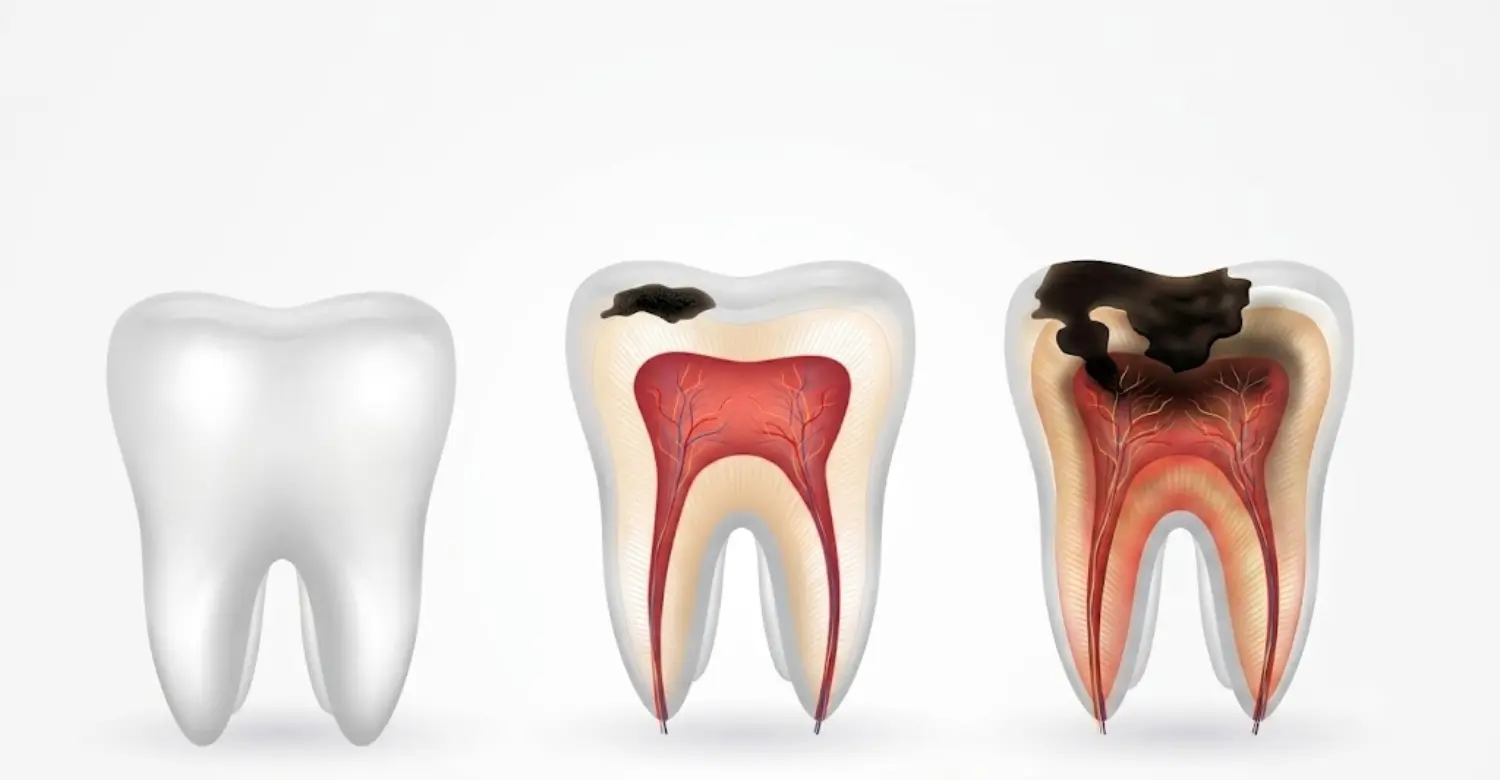
Dental damage does not happen suddenly; it usually progresses through different stages. The first stage involves enamel weakening, where minerals are lost but there may not be a visible hole in the tooth.
The second stage occurs when the enamel begins to break down and bacteria enter deeper areas. At this point, patients may start noticing sensitivity when consuming hot, cold, or sweet foods.
The third stage affects the dentin layer beneath the enamel. Since dentin is softer, damage can spread faster and may cause increased discomfort.
The final stage happens when bacteria reach the inner pulp of the tooth, where nerves and blood vessels are located. This can lead to severe pain, infection, and the need for advanced dental treatment.
Early professional evaluation can help stop progression and protect the natural tooth structure.
What Is a Cavity?
A cavity is a damaged area of a tooth that forms after the decay process creates a permanent hole or opening in the tooth structure. It is one of the most common dental problems worldwide and can affect both children and adults.
While tooth damage describes the overall process happening inside the tooth, a cavity represents the visible result of that process. Cavities can appear as small spots at first but may grow larger if bacteria continue attacking the tooth.
The appearance and severity of a cavity depend on how long the damage has been present and which part of the tooth is affected. Some cavities are small and easy to repair, while others may require more advanced treatments.
At Vitrin Clinic, dentists use modern diagnostic techniques to identify cavities early and provide treatments designed to restore both function and appearance.
How Do Cavities Form?
Cavities form when the tooth surface becomes weakened enough for bacteria to create a permanent hole. The process begins with plaque accumulation, where bacteria feed on sugars and release acids that damage the enamel.
As the protective enamel layer becomes weaker, the tooth loses its ability to defend itself against bacterial attacks. Eventually, a small opening develops, allowing bacteria to enter deeper parts of the tooth.
The formation of cavities can happen faster when oral hygiene is poor or when a person frequently consumes sugary foods and drinks. Regular brushing, flossing, and professional cleaning help reduce the chances of cavity development.
When cavities are discovered early, treatment is usually simpler and less invasive. However, delaying treatment may allow the problem to spread and affect the deeper structures of the tooth.
Common Signs and Symptoms of Cavities
Cavities may not always cause symptoms in their early stages, which is why regular dental visits are important. As the damage progresses, several signs may appear.
One common symptom is tooth sensitivity, especially when eating or drinking something hot, cold, or sweet. Some people may also experience discomfort when biting or chewing.
Visible changes can also indicate a problem, such as dark spots, white marks, or small holes appearing on the tooth surface. Bad breath or an unpleasant taste may develop when bacteria increase around damaged areas.
In advanced cases, cavities may cause persistent tooth pain, swelling, or infection. These symptoms usually indicate that the damage has reached deeper layers of the tooth.
At Vitrin Clinic, early diagnosis helps prevent unnecessary complications and supports effective treatment planning.
How Cavities Affect Your Teeth
When a cavity develops, it can gradually weaken the structure of the affected tooth. The damage usually starts from the outer enamel and may move toward the inner layers if it is not treated. As bacteria continue to attack the tooth, the cavity can become larger and affect the strength, appearance, and function of the tooth.
One important point in understanding Tooth Decay vs Cavity is that cavities represent a later result of the damage process. A small cavity may only require a simple restoration, while a deeper cavity can lead to more complex dental problems.
If bacteria reach the inner pulp of the tooth, patients may experience severe pain, inflammation, or infection. In some cases, the tooth may require root canal treatment or a dental crown to restore its structure.
At Vitrin Clinic, dentists focus on detecting cavities early and providing treatments that help preserve natural teeth while restoring a healthy and confident smile.
Tooth Decay vs Cavity: What Is the Difference?
Many people think tooth decay and cavities are two different dental problems, but they are closely connected. Tooth decay refers to the ongoing process where bacteria and acids damage the tooth structure. A cavity is the result that appears when this damage creates a hole or permanent area of destruction in the tooth.
Understanding the difference between these terms helps patients recognize why early dental care matters. The damage process can begin long before a cavity becomes visible, which means professional examinations are important even when there is no obvious pain.
In simple terms, decay is the cause, while a cavity is the outcome. However, both require attention because untreated damage can continue spreading and affect the overall health of the mouth.
At Vitrin Clinic, dental specialists explain each condition clearly and create treatment plans based on the level of damage and the patient’s individual needs.
Is Tooth Decay the Same as a Cavity?
Tooth decay and cavities are related but not exactly the same. Tooth decay is the process of tooth destruction caused by bacteria, acids, and plaque buildup. A cavity is the damaged area or hole that forms after this process continues over time.
This distinction is important because a person may have early tooth damage before a cavity develops. During the early stages, professional care and improved oral hygiene may help slow down the progression.
Once a cavity forms, the damaged tooth structure usually cannot repair itself completely and may require dental treatment. The type of treatment depends on the size and location of the cavity.
When comparing Tooth Decay vs Cavity, the main difference is that one describes the harmful process while the other describes the physical result. Regular dental checkups help identify problems before they become more serious.
The Relationship Between Tooth Decay and Cavities
The relationship between tooth decay and cavities is a continuous process. Decay begins when bacteria create acids that attack the tooth surface. If this damage continues, it can eventually create a cavity.
Many patients discover cavities only after experiencing symptoms such as sensitivity or pain. However, the damage may have started months or even years earlier without noticeable signs.
This connection explains why prevention is more effective than waiting for symptoms. Daily brushing, flossing, and professional dental cleaning help reduce bacteria and protect the enamel.
Understanding Tooth Decay vs Cavity allows patients to understand that cavities are not a sudden problem but often the result of untreated damage developing gradually.
At Vitrin Clinic, dentists use modern diagnostic methods to identify early changes and recommend appropriate care before the condition becomes advanced.
Early Tooth Decay vs Advanced Cavities
Early tooth damage and advanced cavities represent different levels of dental problems. Early stages usually involve weakening of the enamel without major structural damage. At this point, improving oral hygiene and receiving professional fluoride treatment may help protect the tooth.
Advanced cavities occur when the damage has progressed deeper into the tooth. They may involve larger holes, significant sensitivity, pain, or infection. Treatment may require fillings, crowns, or root canal procedures depending on severity.
The difference between these stages shows why early diagnosis is valuable. Treating a small problem is usually faster, easier, and more comfortable than treating advanced damage.
With proper understanding of Tooth Decay vs Cavity, patients can recognize that prevention and early intervention are key factors in maintaining long-term dental health.
What Causes Tooth Decay and Cavities?
Tooth problems develop because of multiple factors that affect the balance between harmful bacteria and natural protection inside the mouth. The most common causes include plaque buildup, poor oral hygiene, frequent sugar consumption, and lack of regular dental care.
The mouth naturally contains bacteria, but problems occur when bacteria remain on teeth for long periods. They interact with food particles and produce acids that weaken the tooth structure.
Lifestyle habits also influence dental health. Frequent snacking, sugary beverages, and irregular brushing can increase the risk of damage.
When discussing Tooth Decay vs Cavity, it is important to understand that both conditions often develop from the same causes. Preventing the early stages can reduce the chance of needing more complicated treatments later.
At Vitrin Clinic, dentists evaluate each patient’s habits and oral condition to create prevention strategies and personalized treatment recommendations.
The Role of Bacteria and Dental Plaque
Dental plaque plays a major role in the development of tooth problems. Plaque is a sticky layer that forms on teeth when bacteria combine with saliva and food particles. If it is not removed regularly, it can create an environment where harmful bacteria multiply.
These bacteria produce acids that attack the enamel and gradually weaken the tooth. Over time, this damage may progress and create cavities.
Proper brushing and flossing are essential because they help remove plaque from areas that are difficult to reach. Professional dental cleaning also helps remove hardened plaque, known as tartar, which cannot be removed through regular brushing.
Understanding Tooth Decay vs Cavity shows why plaque control is one of the most important steps in preventing both early damage and more serious dental issues.
Vitrin Clinic recommends regular dental evaluations to maintain healthy teeth and identify potential problems before they develop further.
Sugary Foods and Acid Damage
Sugar is one of the main contributors to dental damage because bacteria use sugar as a source of energy and produce acids as a result. These acids gradually weaken the enamel and increase the risk of cavities.
The frequency of sugar intake is also important. Eating sugary foods many times throughout the day exposes teeth to repeated acid attacks, making it harder for the enamel to recover.
Soft drinks, sweets, and processed snacks can increase the risk when consumed regularly without proper oral care. Choosing balanced foods and drinking enough water can support better dental health.
The connection between diet and Tooth Decay vs Cavity explains why nutrition plays a major role in preventing dental problems. A tooth-friendly diet combined with professional care can significantly reduce future risks.
At Vitrin Clinic, patients receive guidance on maintaining habits that support stronger and healthier smiles.
Poor Oral Hygiene and Dental Care Habits
Poor oral hygiene is one of the most common reasons dental problems develop. When teeth are not cleaned properly, plaque builds up and creates an ideal environment for bacteria to damage the enamel.
Skipping brushing, avoiding flossing, and delaying dental appointments can allow small problems to become larger issues. Many dental conditions progress silently, meaning patients may not notice damage until it becomes uncomfortable.
Good oral care includes brushing twice daily, cleaning between teeth, using appropriate dental products, and visiting a dentist regularly.
The topic of Tooth Decay vs Cavity highlights the importance of prevention because both conditions are strongly connected to daily dental habits.
At Vitrin Clinic, dental specialists help patients understand proper care techniques and provide treatments that support long-term oral health.
Symptoms of Tooth Decay and Cavities
Recognizing dental symptoms early can help prevent small problems from becoming serious conditions. Many dental issues develop slowly, and some people may not notice changes until the damage becomes more advanced. Symptoms can vary depending on the location of the affected tooth and how far the damage has progressed.
Some common warning signs include sensitivity, discomfort when eating, visible changes on the tooth surface, and persistent bad breath. These symptoms may indicate that bacteria have started affecting the tooth structure.
Understanding Tooth Decay vs Cavity helps patients identify that symptoms may appear at different stages. Early damage may only cause mild sensitivity, while advanced cavities may lead to stronger pain or infection.
At Vitrin Clinic, dental specialists focus on accurate diagnosis to determine the cause of symptoms and recommend the most suitable treatment to protect natural teeth and maintain a healthy smile.
Tooth Sensitivity and Pain
Tooth sensitivity is one of the earliest signs that something may be affecting the tooth structure. Patients may feel discomfort when consuming hot drinks, cold foods, sweets, or acidic products. This happens because the protective enamel becomes weaker, allowing external刺激 to reach sensitive areas inside the tooth.
As damage progresses, sensitivity may become more frequent or turn into continuous pain. Severe pain can indicate that the inner part of the tooth, where nerves and blood vessels are located, has been affected.
When looking at Tooth Decay vs Cavity, sensitivity can appear during the early stages before a visible cavity develops. This makes regular dental checkups important because dentists can detect hidden problems before they become painful.
Vitrin Clinic uses advanced examination methods to identify the source of discomfort and provide treatments designed to restore comfort and protect the tooth.
Visible Holes or Dark Spots on Teeth
Changes in the appearance of teeth can be a sign of developing dental damage. White marks, dark spots, or visible holes may indicate that the enamel has been weakened or that a cavity has already formed.
Small changes may seem harmless, but they can become larger over time if bacteria continue damaging the tooth. Dark areas may appear because of mineral loss, staining, or deeper structural damage.
The difference between Tooth Decay vs Cavity becomes clearer when observing these changes. Early decay may only affect the surface, while a cavity usually represents a more advanced stage where the tooth structure has been damaged.
At Vitrin Clinic, dentists examine visible and hidden areas of the teeth to provide accurate diagnosis and prevent further deterioration.
Bad Breath and Gum Discomfort
Persistent bad breath can sometimes be connected to bacterial buildup inside the mouth. When bacteria increase around damaged teeth or cavities, they can produce unpleasant odors and affect overall oral freshness.
Some patients may also experience gum discomfort, swelling, or irritation around affected areas. These symptoms can occur when dental problems create inflammation or allow bacteria to spread.
Although bad breath does not always mean a serious dental issue, it should not be ignored when combined with pain or visible tooth changes.
Understanding Tooth Decay vs Cavity helps patients recognize that oral problems are often connected. Untreated damage can affect not only individual teeth but also the surrounding gums and overall mouth health.
Vitrin Clinic provides comprehensive dental evaluations to identify underlying causes and create effective treatment solutions.
Tooth Decay and Cavity Treatment Options
Treatment depends on the severity of the damage and how early the problem is discovered. Minor cases can often be managed with preventive care, while advanced cases may require restorative procedures.
The goal of modern dentistry is not only to remove damage but also to preserve natural teeth, restore function, and improve appearance. Dentists choose treatment based on factors such as the size of the damaged area, tooth location, and patient needs.
Understanding Tooth Decay vs Cavity helps explain why treatment options vary. Early problems may require simple preventive methods, while larger cavities may need more advanced procedures.
At Vitrin Clinic, dental specialists create personalized treatment plans using modern techniques to provide comfortable and effective dental care.
Fluoride Treatment for Early Tooth Decay
Fluoride treatment is one of the most effective preventive methods for early dental damage. Fluoride is a natural mineral that helps strengthen enamel and improve the tooth’s resistance against acid attacks.
When early signs of enamel weakening appear, fluoride can support the process of remineralization. This means it helps restore minerals that have been lost from the tooth surface.
However, fluoride treatment is most effective when the damage has not yet created a large cavity. Once the tooth structure is permanently damaged, restorative treatment may be required.
The connection between Tooth Decay vs Cavity shows why identifying problems early is important. Early care can sometimes prevent progression and reduce the need for more complex procedures.
Vitrin Clinic offers professional dental assessments to determine whether fluoride treatment or another approach is the best option.
Dental Fillings for Cavities
Dental fillings are one of the most common treatments used to repair cavities. During this procedure, the dentist removes the damaged portion of the tooth and fills the space with a restorative material.
Fillings help restore the shape, strength, and function of the tooth while preventing bacteria from entering the damaged area again. Modern filling materials can also provide a natural appearance that blends with surrounding teeth.
The type of filling depends on factors such as the location of the cavity and the patient’s aesthetic preferences.
In Tooth Decay vs Cavity, fillings are usually associated with cavities because they repair the physical damage created after decay progresses.
At Vitrin Clinic, dentists carefully design restorations that protect the tooth while maintaining a natural and attractive smile.
Root Canal Treatment for Severe Tooth Damage
When dental damage reaches the inner pulp of the tooth, root canal treatment may become necessary. This happens when bacteria enter the area containing nerves and blood vessels, causing infection or severe inflammation.
During a root canal procedure, the dentist removes the infected tissue, cleans the inside of the tooth, and seals it to prevent further infection. This allows patients to keep their natural tooth instead of removing it.
Pain, swelling, and sensitivity that do not improve may indicate that the problem has progressed.
The progression explained in Tooth Decay vs Cavity shows why untreated cavities can eventually affect deeper structures of the tooth.
Vitrin Clinic provides advanced restorative treatments designed to relieve discomfort and restore damaged teeth with professional care.
Dental Crowns for Restoring Damaged Teeth
Dental crowns are used when a tooth has lost significant structure and requires additional protection. A crown covers the entire visible part of the tooth, restoring its strength, shape, and appearance.
Crowns are often recommended after root canal treatment or when a large cavity has weakened the tooth. They help prevent further fractures and improve long-term durability.
The need for crowns depends on the amount of damage present and the condition of the remaining tooth structure.
Understanding Tooth Decay vs Cavity helps patients see how untreated problems may progress from simple damage to situations requiring stronger restoration methods.
At Vitrin Clinic, dental crowns are planned carefully to match the patient’s bite, smile appearance, and overall dental needs.
Can Tooth Decay Be Reversed?
The possibility of reversing dental damage depends on how early the problem is discovered. In the beginning stages, when the enamel has only started losing minerals, the process may be slowed or improved with proper care. Strong oral hygiene habits, fluoride treatments, and professional dental guidance can help strengthen the tooth surface.
However, once the tooth structure has been destroyed and a permanent cavity has formed, the damage cannot fully repair itself naturally. At that stage, restorative treatment is usually needed to rebuild the affected area and prevent further complications.
Understanding Tooth Decay vs Cavity helps explain why early detection is extremely important. The earlier the problem is identified, the more options patients may have to protect their natural teeth.
At Vitrin Clinic, dentists focus on prevention, early diagnosis, and minimally invasive treatments whenever possible to maintain healthy and strong smiles.
Treating Early Signs of Tooth Decay
Early dental damage requires a different approach compared with advanced cases. When the enamel is weakened but no major hole has developed, treatment often focuses on stopping progression and strengthening the tooth.
Dentists may recommend fluoride applications, improved brushing techniques, better dietary habits, and regular professional monitoring. These steps can help support enamel health and reduce the chance of the problem becoming more serious.
Patients often do not notice early changes because there may be no pain or visible damage. This is why regular dental examinations are important.
The concept of Tooth Decay vs Cavity shows that prevention can be more effective when problems are discovered before they develop into cavities.
Vitrin Clinic provides detailed evaluations to identify early risks and create personalized plans that protect long-term oral health.
When Professional Dental Treatment Is Needed
Professional dental treatment becomes necessary when damage progresses beyond what daily care can manage. If a cavity develops, the tooth may require a filling, crown, or other restorative procedure depending on the severity.
Signs that professional care is needed include persistent pain, increased sensitivity, visible holes, broken tooth surfaces, or swelling around the affected area. Delaying treatment may allow bacteria to spread deeper and create more complicated problems.
Understanding Tooth Decay vs Cavity helps patients recognize that waiting until severe symptoms appear may result in more extensive treatment.
At Vitrin Clinic, dental specialists use modern technology and detailed examinations to determine the most suitable treatment approach for each patient while focusing on comfort and long-term results.
How to Prevent Tooth Decay and Cavities?
Prevention is one of the most effective ways to maintain healthy teeth and avoid complex dental procedures. Many dental problems can be reduced through consistent oral care, regular professional visits, and healthy lifestyle choices.
A strong prevention routine includes brushing correctly, cleaning between teeth, reducing frequent sugar intake, and attending regular dental checkups. These habits help remove harmful bacteria and protect the enamel from damage.
The relationship explained in Tooth Decay vs Cavity shows that cavities often develop after a longer process of untreated damage, meaning prevention should begin before symptoms appear.
At Vitrin Clinic, dentists educate patients about preventive strategies that support a healthy smile and reduce future dental risks.
Maintaining Proper Oral Hygiene
Good oral hygiene is the foundation of preventing dental problems. Brushing twice daily helps remove plaque and food particles, while flossing cleans areas between teeth that toothbrushes cannot reach.
Using proper brushing techniques is also important because brushing too aggressively can damage the gums, while brushing incorrectly may leave plaque behind. Choosing suitable dental products and maintaining consistent habits improves overall protection.
Regular cleaning prevents bacteria from building up and reduces the chance of acid attacks on the enamel.
The connection between Tooth Decay vs Cavity highlights how daily care can influence whether early damage develops into a more serious condition.
Vitrin Clinic encourages patients to follow personalized oral care routines based on their dental condition and needs.
Regular Dental Checkups and Professional Cleaning
Regular dental visits allow dentists to identify problems before they become advanced. Many dental issues can develop without noticeable symptoms, making professional examinations essential.
During checkups, dentists evaluate the condition of teeth and gums, identify early signs of damage, and provide professional cleaning to remove plaque and tartar buildup.
Professional cleaning is especially important because hardened tartar cannot be removed through normal brushing at home.
Understanding Tooth Decay vs Cavity helps explain why prevention and early diagnosis are connected. Finding problems early can reduce treatment complexity and help preserve natural teeth.
At Vitrin Clinic, regular dental evaluations are designed to support long-term oral health and provide patients with confidence in their smile.
Choosing a Tooth-Friendly Diet
Diet has a major impact on dental health. Foods and drinks high in sugar can increase bacterial activity and create more acid attacks on teeth. Reducing frequent sugar exposure helps protect enamel and lowers the risk of damage.
A tooth-friendly diet includes foods rich in minerals, vegetables, dairy products, and enough water. Drinking water helps wash away food particles and supports saliva production, which naturally protects teeth.
Balanced nutrition works together with proper oral hygiene to maintain stronger teeth.
The connection between Tooth Decay vs Cavity demonstrates that lifestyle choices can influence how quickly dental problems develop.
Vitrin Clinic helps patients understand how daily habits contribute to oral health and provides guidance for maintaining a healthier smile.
Why Choose Vitrin Clinic for Tooth Decay and Cavity Treatment?
Choosing the right dental clinic is an important step in receiving effective treatment and maintaining long-term oral health. A professional dental team combines experience, technology, and personalized care to achieve reliable results.
Dental conditions vary from one patient to another, which means treatment should be customized based on individual needs. Accurate diagnosis helps dentists select the most suitable procedure while protecting as much natural tooth structure as possible.
The approach used at Vitrin Clinic focuses on patient comfort, advanced solutions, and comprehensive dental care.
Understanding Tooth Decay vs Cavity allows patients to recognize why professional evaluation matters. Different stages require different treatments, and choosing the right approach can improve outcomes.
Vitrin Clinic provides modern dental services designed to restore function, improve confidence, and support lifelong oral health.
Advanced Dental Technology and Diagnosis
Modern dental technology helps dentists detect problems more accurately and provide better treatment planning. Advanced diagnostic tools allow professionals to identify hidden issues that may not be visible during a basic examination.
Early detection plays an important role because many dental problems can be treated more easily before they become severe. Technology also improves patient comfort by making procedures more precise and predictable.
Accurate diagnosis is especially important when evaluating conditions connected to Tooth Decay vs Cavity, because the treatment depends on the exact stage and condition of the tooth.
At Vitrin Clinic, advanced equipment is combined with professional expertise to deliver high-quality dental care focused on patient needs.
Personalized Treatment Plans
Every patient has unique dental conditions, goals, and concerns. A personalized treatment plan ensures that care is designed according to the patient’s specific situation rather than using a one-size-fits-all approach.
Dentists consider factors such as the level of damage, oral health condition, lifestyle habits, and desired results when creating treatment recommendations.
A customized plan can include preventive care, restorative procedures, or cosmetic improvements depending on the patient’s needs.
The understanding of Tooth Decay vs Cavity supports the importance of personalized care because different stages require different solutions.
At Vitrin Clinic, specialists focus on creating comfortable treatment experiences while helping patients achieve healthier and more confident smiles.
Experienced Dental Specialists and Patient Care
The experience and knowledge of dental specialists play an important role in achieving successful treatment results. Dental conditions can vary greatly from one patient to another, which is why professional evaluation and careful planning are essential.
Experienced dentists understand how to identify different stages of dental problems, recommend suitable solutions, and provide treatments that focus on preserving natural teeth whenever possible. A comfortable patient experience is also an important part of modern dental care.
When comparing Tooth Decay vs Cavity, professional expertise helps determine whether a patient needs preventive care, restoration, or more advanced treatment. Correct diagnosis prevents unnecessary procedures and supports better long-term outcomes.
At Vitrin Clinic, patient care is built around communication, comfort, and advanced dental solutions. The team focuses on helping patients understand their condition and feel confident throughout their treatment journey.
Conclusion: Protect Your Smile with Early Tooth Decay Treatment at Vitrin Clinic
Maintaining a healthy smile requires understanding how dental problems develop and why early treatment matters. Tooth damage often begins silently, and waiting until pain appears can allow the condition to become more complicated.
The difference explained through Tooth Decay vs Cavity shows that tooth damage is a gradual process, while cavities are often the result of untreated progression. Recognizing early signs, maintaining good oral hygiene, and attending regular dental visits can significantly reduce future risks.
Modern dentistry offers many effective solutions, from preventive treatments and fillings to advanced restorative procedures. The right treatment depends on the condition of the tooth and the level of damage present.
At Vitrin Clinic, patients receive professional diagnosis, personalized treatment plans, and modern dental care designed to protect natural teeth and restore confidence. Early action can help preserve your smile and support long-term oral health.
What We Notice Clinically
Expert clinical evaluations emphasize the importance of identifying sub-surface structural changes before permanent enamel damage takes place. Modern diagnostic methodologies ensure that subtle mineral deficiencies are identified and corrected promptly. This preventative clinical overview outlines the standard protocols used to monitor Tooth Decay vs Cavity.
Clinical Insights from Dr. Rifat Alsaman – Head of the Medical Team at Vitrin Clinic
At Vitrin Clinic, Dr. Rifat Alsaman, Head of the Medical Team at Vitrin Clinic and a cosmetic dentist, highlights key clinical observations:
Dr. Rifat Alsaman explains that most tooth decay cases begin with silent enamel demineralization without noticeable pain.
Dr. Rifat Alsaman emphasizes that early detection can prevent the need for fillings or root canal treatment.
Dr. Rifat Alsaman notes that timely intervention preserves natural tooth structure and reduces extraction cases.
According to Dr. Rifat Alsaman, patient awareness and routine checkups at Vitrin Clinic are essential in preventing advanced dental decay and controlling Tooth Decay vs Cavity.
Vitrin Clinic Approach to Tooth Decay Treatment
Bespoke dental care combines cutting-edge diagnostic infrastructure with highly conservative, patient-centered treatment plans. Prioritizing long-term structural health ensures that every restoration preserves maximum natural enamel. Discover the specialized cosmetic and therapeutic methods used to resolve Tooth Decay vs Cavity.
Advanced Diagnostic Technology
The diagnostic team utilizes high-definition digital imaging and transillumination technology to locate microscopic mineral deficiencies early. This early detection ensures that structural weaknesses are identified before breaking the surface, optimizing the management of Tooth Decay vs Cavity.
Personalized Treatment Plans
Every patient receives a customized preventative strategy designed specifically around their unique oral microbiome, dietary habits, and structural risk profile. This customized care addresses the root causes of enamel erosion, ensuring targeted success against Tooth Decay vs Cavity.
Preserving Natural Teeth Whenever Possible
The core medical philosophy focuses heavily on conservative interventions that maximize the preservation of your natural enamel. By prioritizing non-invasive therapies, the clinical team successfully minimizes the need for extensive drilling when resolving Tooth Decay vs Cavity.
Cosmetic and Restorative Dentistry Solutions at Vitrin Clinic
For advanced structural damage, the clinic provides premium, biocompatible restorations that perfectly replicate the natural translucency of your dentition. These lifelike materials restore complete biomechanical function, providing beautiful, long-lasting outcomes for patients dealing with Tooth Decay vs Cavity.
Reference
In conclusion, the difference between tooth decay and a cavity is that decay is a gradual process that begins with enamel demineralization, while a cavity is its advanced stage. Reports from the National Institute of Dental and Craniofacial Research (NIDCR) and MouthHealthy emphasize that this condition can be prevented or even stopped with fluoride and good oral hygiene. Understanding this distinction helps with early intervention and prevents decay from progressing into cavities that require treatment.
https://www.nidcr.nih.gov/health-info/tooth-decay
https://www.nidcr.nih.gov/health-info/tooth-decay/more-info/tooth-decay-process
FAQs
Dr. Rifat Alsaman has more than 5 years of clinical experience in dentistry and currently serves as the Head of the Medical Team at Vitrin Clinic. He is dedicated to providing exceptional patient care, overseeing treatment planning, and ensuring the highest clinical standards across the team. His expertise, attention to detail, and commitment to continuous professional development have helped countless patients achieve healthier, more confident smiles.


