Dental Care Guide
June 30, 2026
Inlay Onlay Fillings : Complete Guide to Tooth Restoration, Benefits, Procedure, and Cost
 Dr. Rifat Alsaman
Dental restoration has become more advanced, allowing dentists to repair damaged teeth while preserving as much natural structure as possible. Inlay Onlay Fillings are considered a modern restorative solution designed for teeth that need more support than a traditional filling but do not always require a full dental crown.
These restorations are custom-made to fit the exact shape of the damaged tooth, providing improved strength, durability, and a natural appearance. They can be created from materials such as ceramic, porcelain, or other dental materials depending on the patient’s needs.
The treatment process usually includes examination, tooth preparation, digital scanning or impressions, fabrication of the restoration, and final bonding. The goal is to restore chewing function, protect the tooth, and maintain a healthy smile.
At Vitrin Clinic, treatment decisions are based on detailed evaluation and personalized planning. Dr. Rifat Alsaman, Head of the Medical team at Vitrin Clinic and cosmetics dentist, explains that successful restoration is not only about repairing damage but also about choosing the right solution that supports long-term oral health.
The average cost of Inlay Onlay Fillings is approximately $300–$1,500 per tooth, depending on the material used, complexity of the case, and the required dental procedures.
Introduction
Dental restoration has developed significantly over the years, giving patients more options to repair damaged teeth while maintaining a natural appearance and strong function. Modern dentistry focuses not only on treating damage but also on preserving as much healthy tooth structure as possible. One of the advanced solutions used for restoring teeth with moderate damage is Inlay Onlay Fillings, which provide a balance between traditional fillings and full dental crowns.
Many patients experience tooth decay, cracks, or structural weakness that cannot always be solved with a simple filling. In these cases, dentists may recommend a stronger and more precise restoration designed to protect the remaining tooth. At Vitrin Clinic, treatment planning focuses on accurate diagnosis, aesthetic results, and long-term oral health.
According to Dr. Rifat Alsaman, Head of the Medical team at Vitrin Clinic and cosmetics dentist, choosing the right restoration depends on the amount of tooth damage, bite pressure, tooth location, and the patient’s expectations. A personalized approach helps achieve both durability and a natural smile appearance.
Understanding the available restoration options allows patients to make informed decisions about their dental care and choose the most suitable treatment for their needs.
What Are Inlay Onlay Fillings?
Inlay Onlay Fillings are indirect dental restorations created outside the mouth and then bonded to the prepared tooth. Unlike regular fillings that are placed directly inside the tooth, these restorations are custom-made to fit the exact shape and size of the damaged area.
They are commonly used when a tooth has too much damage for a traditional filling but does not require a complete crown. This makes them a conservative option because they preserve more natural tooth structure while improving strength and appearance.
These restorations can be made from different materials, including ceramic, porcelain, and other durable dental materials. The choice depends on factors such as tooth position, aesthetic needs, and functional requirements.
At Vitrin Clinic, dentists evaluate each case carefully to determine whether this treatment is the best solution. Dr. Rifat Alsaman explains that precision is one of the most important factors in successful restorative dentistry because even small differences in fit can affect comfort and longevity.
What Are Inlay and Onlay Fillings?
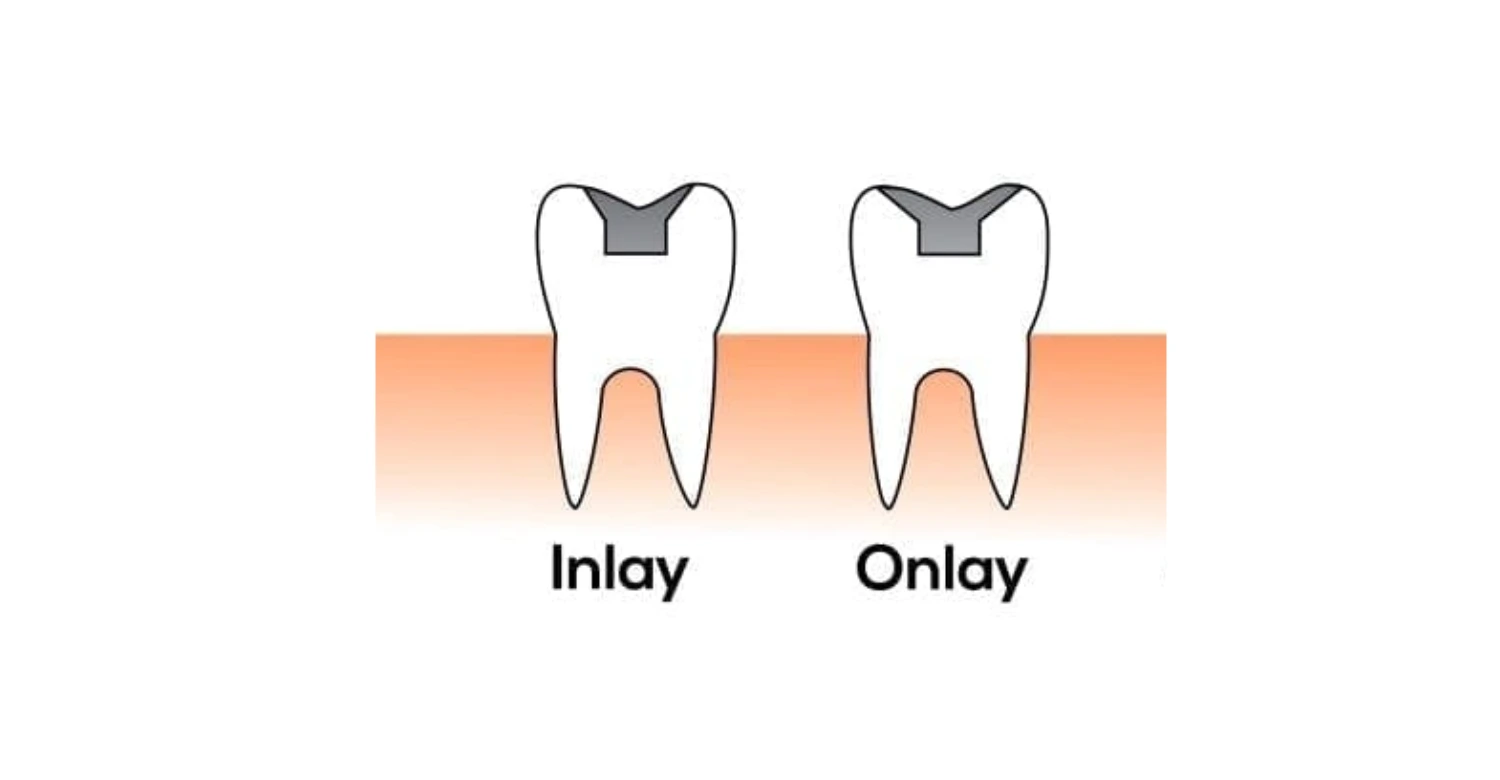
Inlays and onlays are custom-made restorations designed to repair damaged areas of teeth. An inlay fits within the grooves of the tooth without covering the outer cusps, while an onlay extends over one or more cusps when additional protection is needed.
They are considered an advanced alternative to large traditional fillings because they provide better strength, improved durability, and a more natural appearance. The restoration is designed based on the individual tooth structure, creating a precise fit.
Inlays are usually recommended for moderate cavities or internal damage, while onlays are often used when the damage affects a larger part of the tooth. Both options aim to restore function while reducing the need for more invasive procedures.
Types of Inlay Onlay Fillings
Different materials can be selected depending on the patient’s needs. Each type has unique advantages related to strength, appearance, and compatibility with the tooth.
Inlay Filling
An inlay filling is a restoration placed inside the tooth without covering the chewing surface edges. It is often used when decay or damage is too extensive for a normal filling but the tooth structure is still strong enough to be preserved.
This option provides a precise fit because it is manufactured according to the shape of the prepared tooth. It can also offer better resistance compared with large direct fillings.
Onlay Filling
An onlay filling provides additional coverage by extending over one or more chewing surfaces of the tooth. It is commonly recommended when a tooth needs extra reinforcement but does not require a full crown.
Onlays helps distribute chewing forces and reduce the risk of further cracks. They are especially useful for back teeth that experience stronger biting pressure.
Porcelain Inlay
A porcelain inlay is a popular aesthetic option because it closely matches the natural color and appearance of teeth. It is commonly chosen for visible teeth where maintaining a natural smile is important.
Porcelain restorations can provide excellent cosmetic results while offering reliable strength when properly designed and placed.
Porcelain Onlay
A porcelain onlay combines strength with aesthetic benefits. It covers a larger damaged area while maintaining a natural appearance similar to surrounding teeth.
Many patients prefer porcelain because it blends well with the smile and provides a highly aesthetic restoration option.
Ceramic Inlay
A ceramic inlay is another tooth-colored restoration option known for its appearance and biocompatibility. Ceramic materials are commonly selected when patients want a natural-looking result.
Modern ceramic technology allows dentists to create accurate restorations with excellent adaptation to the tooth.
Ceramic Onlay
A ceramic onlay provides extended protection for teeth that require more coverage than an inlay. It is designed to restore both appearance and chewing function.
At Vitrin Clinic, material selection is based on professional evaluation, considering tooth condition, bite forces, and the patient’s desired outcome.
When Are Inlays Better Than Fillings?
Inlays are usually recommended when the damage inside the tooth is too large for a traditional filling but the tooth still has enough healthy structure to avoid a crown.
Traditional fillings are placed directly inside the cavity, making them suitable for smaller areas of decay. However, larger fillings may weaken the tooth over time because they do not provide the same level of customized support.
Inlay Onlay Fillings offer a more precise alternative because the restoration is created outside the mouth and designed specifically for the patient’s tooth shape. This allows better adaptation, improved strength, and a more natural appearance.
Dentists may recommend an inlay when a patient has moderate decay, a damaged old filling, or a tooth that needs additional reinforcement.
At Vitrin Clinic, dentists carefully examine the tooth condition before recommending treatment. Dr. Rifat Alsaman believes that preserving natural tooth structure should always be considered when selecting a restorative option.
The average cost of this treatment is around $300–$1,500 per tooth, depending on whether ceramic, porcelain, or another material is selected.
Inlay vs Filling
Traditional fillings are placed directly into the cavity during one dental appointment. They are effective for small to moderate cavities, but larger fillings may become weaker over time because they rely on the remaining tooth structure for support.
Inlays are created outside the mouth and provide a more customized fit. They can be a better choice when the damaged area is larger and requires stronger reinforcement.
The decision between an inlay and a filling depends on the condition of the tooth. A dentist examines the amount of remaining healthy structure before recommending the appropriate option.
When Dentists Recommend an Inlay
Dentists may recommend an inlay when a tooth has moderate damage, large decay, or previous restoration failure. It is often considered when a regular filling may not provide enough strength.
Dr. Rifat Alsaman highlights that preserving natural teeth is a major goal in restorative dentistry. When possible, treatments that protect existing tooth structure can support better long-term results.
How Do Onlays Protect Teeth?
Onlays protect weakened teeth by covering damaged areas and helping the tooth handle daily chewing forces. They act as a reinforcement while keeping more natural tooth structure compared with a crown.
They are often recommended for molars because these teeth receive significant pressure during chewing.
Why Onlays Strengthen Teeth
Onlays strengthen teeth by restoring missing areas and reducing stress concentration. A properly fitted restoration helps protect against cracks and further damage.
The customized design allows the restoration to work together with the natural tooth instead of simply covering it.
Onlay vs Crown
A crown covers the entire visible part of a tooth, while an onlay only covers the damaged sections that need protection. Crowns are usually recommended when the tooth has extensive structural loss.
Onlays are more conservative because they preserve more natural enamel. The best option depends on the severity of damage and the remaining strength of the tooth.
What We Notice Clinically
From a clinical perspective, many patients delay dental treatment until the damage becomes more advanced. Early diagnosis often allows dentists to choose more conservative solutions and protect natural teeth for longer.
Dr. Rifat Alsaman, Head of the Medical team at Vitrin Clinic and cosmetics dentist, explains that one of the most important factors in restorative dentistry is understanding the individual needs of every tooth. The same treatment may not be suitable for every patient because tooth strength, bite pressure, and damage level are different in each case.
Clinically, dentists often notice that patients achieve better results when they follow recommended maintenance after treatment. Good oral hygiene, regular checkups, and avoiding excessive pressure on restored teeth can improve longevity.
Inlay Onlay Fillings are commonly chosen when patients need a balance between strength, aesthetics, and preservation of natural tooth structure.
At Vitrin Clinic, the focus is on combining modern technology with personalized care to provide accurate and predictable restorative results.
The average cost generally ranges between $300 and $1,500 per tooth, depending on the restoration type, material, and treatment complexity.
Dr. Rifat Alsaman's Clinical Experience
Dr. Rifat Alsaman, Head of the Medical team at Vitrin Clinic and cosmetics dentist, explains that many patients delay treatment until tooth damage becomes more advanced. Early evaluation can often allow dentists to choose conservative solutions that protect natural teeth.
From a clinical perspective, successful restoration depends on accurate diagnosis, proper material selection, and careful bonding techniques. Each tooth has different requirements, so treatment should never be based only on appearance.
Common Mistakes Patients Make
One common mistake is choosing a treatment only based on price without considering long-term dental health. Another mistake is delaying treatment until discomfort becomes severe.
Regular dental examinations help detect problems earlier and increase the chance of using less invasive restoration methods.
Dr. Rifat Alsaman's Recommendation
Dr. Rifat Alsaman recommends that patients focus on preserving their natural teeth whenever possible. A restoration should not only repair the current problem but also support future oral health.
At Vitrin Clinic, the goal is to provide treatments based on detailed examination, modern technology, and personalized care.
Inlay vs Onlay: What's the Difference?
Understanding the difference between these two restorations helps patients choose the right solution for their damaged teeth. Both options are designed to restore strength, improve appearance, and protect natural tooth structure, but the coverage area is different.
Inlay Onlay Fillings are customized restorations, and the choice between an inlay and an onlay depends mainly on how much of the tooth has been affected. An inlay repairs damage inside the tooth structure, while an onlay provides wider coverage when the damage reaches the chewing surface.
At Vitrin Clinic, dentists evaluate the tooth condition carefully before recommending treatment. Dr. Rifat Alsaman, Head of the Medical team at Vitrin Clinic and cosmetics dentist, explains that choosing the correct restoration is not only about repairing damage but also about maintaining tooth strength and achieving long-term stability.
Difference Between Inlay and Onlay
The main difference between an inlay and an onlay is the amount of tooth coverage they provide.
An inlay is placed within the tooth’s natural grooves and does not cover the tooth cusps. It is usually suitable for moderate cavities or internal damage where the surrounding structure remains healthy.
An onlay covers a larger area and may extend over one or more cusps. It is often recommended when the tooth requires additional protection from chewing pressure.
Both treatments are made to fit the tooth precisely, helping improve function and appearance compared with larger traditional fillings.
Inlay vs Onlay Comparison Table
Feature | Inlay | Onlay |
Coverage | Inside the tooth | Covers part of the tooth surface |
Damage Level | Moderate damage | Moderate to larger damage |
Tooth Protection | Good reinforcement | Higher protection against cracks |
Common Area | Molars and premolars | Mainly back teeth under pressure |
Material Options | Ceramic, porcelain, composite | Ceramic, porcelain, strong dental materials |
Tooth Preservation | Preserves natural structure | Preserves more structure than a crown |
Who Needs Inlay Onlay Fillings?
Not every damaged tooth requires the same type of restoration. The right treatment depends on the size of damage, tooth location, bite pressure, and overall oral health.
Inlay Onlay Fillings are commonly recommended for patients who need stronger restoration than a traditional filling but do not require a complete dental crown.
A professional examination helps determine whether this option can provide the needed protection.
Ideal Candidates
Ideal candidates are patients with:
Moderate tooth decay
Large cavities that cannot be repaired effectively with regular fillings
Cracked or weakened tooth areas
Old fillings that need replacement
Healthy enough tooth structure to support restoration
Patients who want a natural-looking dental solution may also benefit from ceramic or porcelain options because they blend well with natural teeth.
When Another Tooth Restoration Option Is Better
Sometimes another treatment may provide a better result. If the tooth is severely damaged, has extensive cracks, or has lost significant structure, a crown may be more suitable.
For minor cavities, a traditional filling may be enough. Dentists choose the least invasive option that can provide reliable protection.
Dr. Rifat Alsaman emphasizes that proper diagnosis is the foundation of successful dental restoration because unnecessary treatment should always be avoided.
Are Inlay Onlay Fillings Worth It?
Many patients consider durability, appearance, and long-term value when deciding on dental restoration. These restorations are often chosen because they offer a balance between aesthetics and strength.
Inlay Onlay Fillings can be a valuable investment when they help preserve a natural tooth and prevent the need for more extensive procedures later.
Benefits of Inlay and Onlay Fillings
The main benefits include:
Stronger support compared with large fillings
Better resistance to chewing pressure
Natural appearance with tooth-colored materials
Precise customized fit
Preservation of healthy tooth structure
Long-lasting results with proper care
Ceramic and porcelain options are especially popular for patients who want a restoration that looks similar to natural enamel.
Possible Disadvantages
Although restorations have many benefits, patients should understand possible limitations.
Some disadvantages may include:
Higher cost compared with traditional fillings
Usually requires more than one appointment
Requires professional preparation and bonding
Not suitable for every type of tooth damage
A consultation at Vitrin Clinic helps determine whether this treatment matches the patient’s needs.
How Long Do Inlays and Onlays Last?
The lifespan of dental restorations depends on several factors, including oral hygiene, bite habits, material quality, and regular dental care.
When properly maintained, Inlay Onlay Fillings can provide many years of reliable function and protection.
Average Lifespan
On average, inlays and onlays can last around 10 to 20 years, and some may last longer with excellent care.
The durability depends on the restoration material and how much pressure the tooth receives during daily chewing.
Patients who maintain good oral hygiene and attend regular dental checkups usually achieve better long-term results.
Factors That Affect Longevity
Several factors influence how long the restoration remains effective:
Daily brushing and flossing habits
Avoiding excessive biting on hard objects
Regular professional dental cleaning
Proper bite alignment
Quality of dental materials
Accuracy of placement
Dr. Rifat Alsaman explains that long-term success is not only related to the restoration itself but also to patient care after treatment.
Which Material Is Best for Inlays?
Choosing the right material depends on the location of the tooth, cosmetic expectations, and functional needs.
Modern dentistry provides several material options designed to offer strength and aesthetic results.
Ceramic Inlay vs Porcelain Inlay
Ceramic and porcelain inlays are both popular because they provide a natural appearance.
Ceramic materials are known for strength and durability, while porcelain is widely used for its excellent aesthetic qualities.
The best choice depends on the patient’s individual situation and dentist recommendation.
Ceramic Onlay vs Porcelain Onlay
Both ceramic and porcelain onlays can provide excellent protection for weakened teeth.
Ceramic onlays may offer strong resistance against chewing forces, while porcelain onlays are valued for their aesthetic appearance.
The dentist considers tooth location and functional demands before selecting the material.
Other Materials for Dental Inlays and Onlays
Other materials may include:
Composite resin
Gold alloys
Advanced dental ceramics
Each material has different advantages. Some prioritize strength, while others focus more on appearance.
At Vitrin Clinic, material selection is based on clinical evaluation and the desired final result.
Inlay Onlay Cost
The cost of treatment varies depending on several factors, including material choice, tooth condition, clinic location, and the complexity of the procedure.
In general, the average cost of Inlay Onlay Fillings can range approximately from $300 to $1,500 per tooth internationally.
Ceramic and porcelain restorations are usually more expensive because they require advanced manufacturing techniques and provide higher aesthetic results.
At Vitrin Clinic, the final price is determined after examination because every patient requires a personalized treatment plan.
Factors That Affect the Cost
The main factors include:
Type of restoration selected
Material used
Number of teeth treated
Tooth preparation requirements
Digital technology and laboratory process
Dentist expertise
A detailed consultation helps patients understand the complete treatment plan and expected investment.
Is It Worth the Investment?
For many patients, this treatment can be worthwhile because it protects the natural tooth and may reduce the chance of needing more invasive procedures later.
Dr. Rifat Alsaman explains that the value of restoration should be measured by durability, function, and maintaining oral health, not only by the initial cost.
How Is the Inlay Onlay Procedure Done?
The treatment process involves several carefully planned steps to ensure the restoration fits accurately and functions naturally. Inlay Onlay Fillings require detailed preparation because the restoration is custom-made according to the exact shape of the damaged tooth.
At Vitrin Clinic, the procedure focuses on accuracy, comfort, and long-term results. Dr. Rifat Alsaman, Head of the Medical team at Vitrin Clinic and cosmetics dentist, explains that successful restorative treatment depends on combining proper diagnosis, advanced technology, and precise clinical techniques.
Initial Consultation
The first step is a complete dental examination to evaluate the tooth condition. The dentist checks the amount of damage, remaining healthy tooth structure, bite pressure, and surrounding tissues.
Digital X-rays or other diagnostic tools may be used to understand the internal condition of the tooth. This helps determine whether an inlay, onlay, filling, or another restoration option is the most suitable choice.
During the consultation, patients can discuss their expectations, material preferences, and treatment timeline.
Tooth Preparation
After deciding on the treatment plan, the dentist prepares the damaged tooth by removing decay or weakened areas.
Unlike some traditional restorations, the preparation process aims to preserve as much healthy tooth structure as possible. The dentist creates a precise space where the custom restoration will fit securely.
The amount of preparation depends on the size and location of the damage.
Digital Scan or Dental Impression
A digital scan or traditional dental impression is taken to create an accurate model of the tooth.
Modern digital scanning technology allows dentists to capture detailed information about the tooth shape, improving the fit and comfort of the final restoration.
At Vitrin Clinic, digital methods support precise treatment planning and help achieve predictable aesthetic results.
Fabrication of the Restoration
The restoration is manufactured in a dental laboratory using the selected material, such as ceramic, porcelain, or other durable options.
The restoration is designed to match the tooth shape, bite position, and natural appearance of the patient’s smile.
This customized approach is one of the reasons why Inlay Onlay Fillings can provide better adaptation compared with larger direct restorations.
Final Bonding and Adjustment
Once the restoration is ready, the dentist places it on the tooth and checks the fit, bite, and appearance.
After making any necessary adjustments, the restoration is permanently bonded using dental cement or adhesive materials.
The final result should feel natural, restore chewing ability, and protect the tooth from future damage.
Tooth Restoration Options
Modern dentistry offers multiple solutions for repairing damaged teeth. Choosing the correct option depends on the level of damage, cosmetic goals, and long-term protection needed.
Inlay Onlay Fillings are one of several restoration methods that help repair teeth while maintaining a conservative approach.
At Vitrin Clinic, treatment decisions are based on a complete evaluation rather than choosing a solution based only on appearance.
Inlays vs Fillings
Traditional fillings are commonly used for small cavities and minor tooth damage. They are placed directly into the tooth during the appointment.
Inlays are recommended when the damaged area is larger and requires more strength and precision.
The main difference is that fillings are shaped inside the mouth, while inlays are custom-made outside the mouth before placement.
Onlays vs Crowns
Crowns cover the entire visible portion of a tooth, while only cover the damaged areas that need reinforcement.
A crown may be necessary when a tooth has severe damage or significant structural weakness. However, an onlay can be a more conservative choice when enough healthy tooth structure remains.
Dr. Rifat Alsaman explains that preserving natural tooth structure is an important goal whenever clinically possible.
Other Restorative Dentistry Options
Other options may include:
Dental fillings
Dental crowns
Dental veneers
Dental bonding
Dental implants
Each treatment has a specific purpose. The correct choice depends on the patient’s oral condition and desired outcome.
Common Mistakes Patients Make
One common mistake is waiting until pain becomes severe before seeking dental advice. Some patients also choose treatments based only on low cost without considering durability and long-term results.
Another mistake is ignoring regular maintenance after restoration. Even a high-quality restoration requires proper oral hygiene and professional follow-up.
Patients should understand that prevention and early diagnosis are important parts of maintaining healthy teeth.
Dr. Rifat Alsaman's Recommendation
Dr. Rifat Alsaman recommends evaluating every tooth individually because no two cases are exactly the same.
He believes the best restoration is the one that balances strength, aesthetics, comfort, and preservation of natural tooth structure.
At Vitrin Clinic, patients receive customized recommendations based on detailed examination and modern restorative dentistry principles.
Why Choose Vitrin Clinic for Inlay Onlay Fillings?
Choosing the right dental clinic plays an important role in achieving successful restorative results.
Vitrin Clinic combines advanced technology, professional expertise, and personalized treatment planning to provide high-quality dental care.
Patients looking for Inlay Onlay Fillings benefit from a treatment approach focused on precision and natural-looking results.
Advanced Restorative Dentistry
Advanced restorative dentistry focuses on repairing damaged teeth while maintaining their natural function and appearance.
The team at Vitrin Clinic uses modern techniques to create restorations that fit comfortably and support long-term oral health.
Digital Technology and Precision
Digital dentistry improves accuracy during diagnosis, planning, and restoration design.
Technology such as digital scanning allows dentists to create highly accurate restorations with better comfort and predictable results.
Personalized Treatment by Dr. Rifat Alsaman
Under the guidance of Dr. Rifat Alsaman, Head of the Medical team at Vitrin Clinic and cosmetics dentist, each treatment plan is designed according to the patient’s specific needs.
The goal is not only repairing the tooth but also creating a result that supports confidence and long-term dental health.
Your Treatment Journey at Vitrin Clinic
The patient experience includes several steps designed to make treatment clear and comfortable.
From the first consultation to follow-up care, the focus remains on achieving stable and natural results.
Consultation and Diagnosis
The journey begins with examination and discussion of the patient’s concerns.
The dentist evaluates the tooth condition and explains available treatment options.
Customized Treatment Plan
After diagnosis, a personalized plan is created. This includes selecting the suitable restoration type, material, and expected timeline.
The average cost of Inlay Onlay Fillings at Vitrin Clinic can vary depending on the material and case complexity, but international average prices are commonly around $300–$1,500 per tooth.
Long-Term Follow-Up and Care
After placement, regular dental visits help maintain the restoration and monitor oral health.
Good hygiene habits, professional cleaning, and avoiding harmful chewing habits can extend the lifespan of the restoration.
Additional Guide: Maintaining Your Restoration After Treatment
After completing dental restoration, proper care plays an important role in protecting the result and extending the lifespan of the treatment. Inlay Onlay Fillings can provide long-lasting support, but daily habits and regular dental visits are essential for maintaining healthy teeth.
Patients should follow good oral hygiene routines, including brushing twice daily, flossing, and attending professional dental checkups. Avoiding habits such as chewing hard objects or using teeth as tools can also help prevent unnecessary pressure on restored teeth.
At Vitrin Clinic, patients are guided through proper aftercare instructions to help maintain their dental restorations. Dr. Rifat Alsaman, Head of the Medical team at Vitrin Clinic and cosmetics dentist, highlights that successful treatment does not end after placement; maintaining the restoration is part of achieving long-term oral health.
The average cost of this type of restoration remains approximately $300–$1,500 per tooth, depending on the material selected, case complexity, and treatment requirements.
How to Prepare Before Getting a Dental Restoration
Preparing for treatment starts with understanding the condition of your tooth and discussing your expectations with your dentist. A detailed examination helps identify whether the tooth requires a filling, inlay, onlay, or another restoration method.
Patients should share information about sensitivity, previous dental treatments, and any concerns about appearance or function. This allows the dentist to create a more accurate treatment plan.
Inlay Onlay Fillings are customized solutions, meaning preparation and planning are important steps for achieving a comfortable and natural-looking result.
At Vitrin Clinic, advanced diagnostic methods help dentists evaluate each case carefully before beginning treatment.
Are Dental Restorations Safe for Long-Term Use?
Dental restorations are designed to improve tooth strength, restore function, and protect damaged areas. When properly placed and maintained, they can provide reliable results for many years.
The safety and success of Inlay Onlay Fillings depend on several factors, including proper diagnosis, high-quality materials, accurate placement, and patient care after treatment.
Dr. Rifat Alsaman explains that choosing the right restoration at the right time can help protect natural teeth and reduce the need for more complex procedures in the future.
The average investment remains around $300–$1,500 per tooth, although the exact cost varies based on the selected material and individual dental needs.
Why Early Treatment Matters
Many dental problems become more complicated when treatment is delayed. A small area of damage can develop into a larger issue that may require more extensive procedures.
Early evaluation allows dentists to consider conservative options that preserve natural tooth structure. This is one reason many patients benefit from modern restorative approaches.
Inlay Onlay Fillings may be recommended when the goal is to strengthen a damaged tooth while avoiding unnecessary removal of healthy structure.
Vitrin Clinic focuses on early diagnosis, personalized planning, and professional care to support long-term dental health.
Conclusion
Choosing the right dental restoration depends on understanding the condition of the tooth, the amount of damage, and the expected long-term results. Modern dentistry provides different solutions that can repair damaged teeth while protecting natural structure and improving appearance.
Inlay Onlay Fillings are considered a reliable restorative option for patients who need more strength than traditional fillings but do not require a full dental crown. They provide a balance between durability, aesthetics, and conservative tooth treatment.
At Vitrin Clinic, every case is evaluated individually to create a treatment plan based on patient needs. Dr. Rifat Alsaman, Head of the Medical team at Vitrin Clinic and cosmetics dentist, emphasizes that successful dental restoration depends on accurate diagnosis, quality materials, and precise clinical techniques.
A healthy smile requires more than fixing a damaged tooth. It requires maintaining function, preventing future problems, and choosing treatments that support long-term oral health.
Reference
Inlay Onlay Fillings refers to custom-made dental restorations used to repair damaged or decayed teeth while preserving more natural tooth structure than traditional fillings. Understanding Inlay Onlay Fillings includes learning about dental inlays, dental onlays, materials, procedure steps, benefits, costs, and the differences between inlays, onlays, fillings, and crowns for restoring a healthy smile.
FAQs
Dr. Rifat Alsaman has more than 5 years of clinical experience in dentistry and currently serves as the Head of the Medical Team at Vitrin Clinic. He is dedicated to providing exceptional patient care, overseeing treatment planning, and ensuring the highest clinical standards across the team. His expertise, attention to detail, and commitment to continuous professional development have helped countless patients achieve healthier, more confident smiles.


