Dental Bridges in Turkey
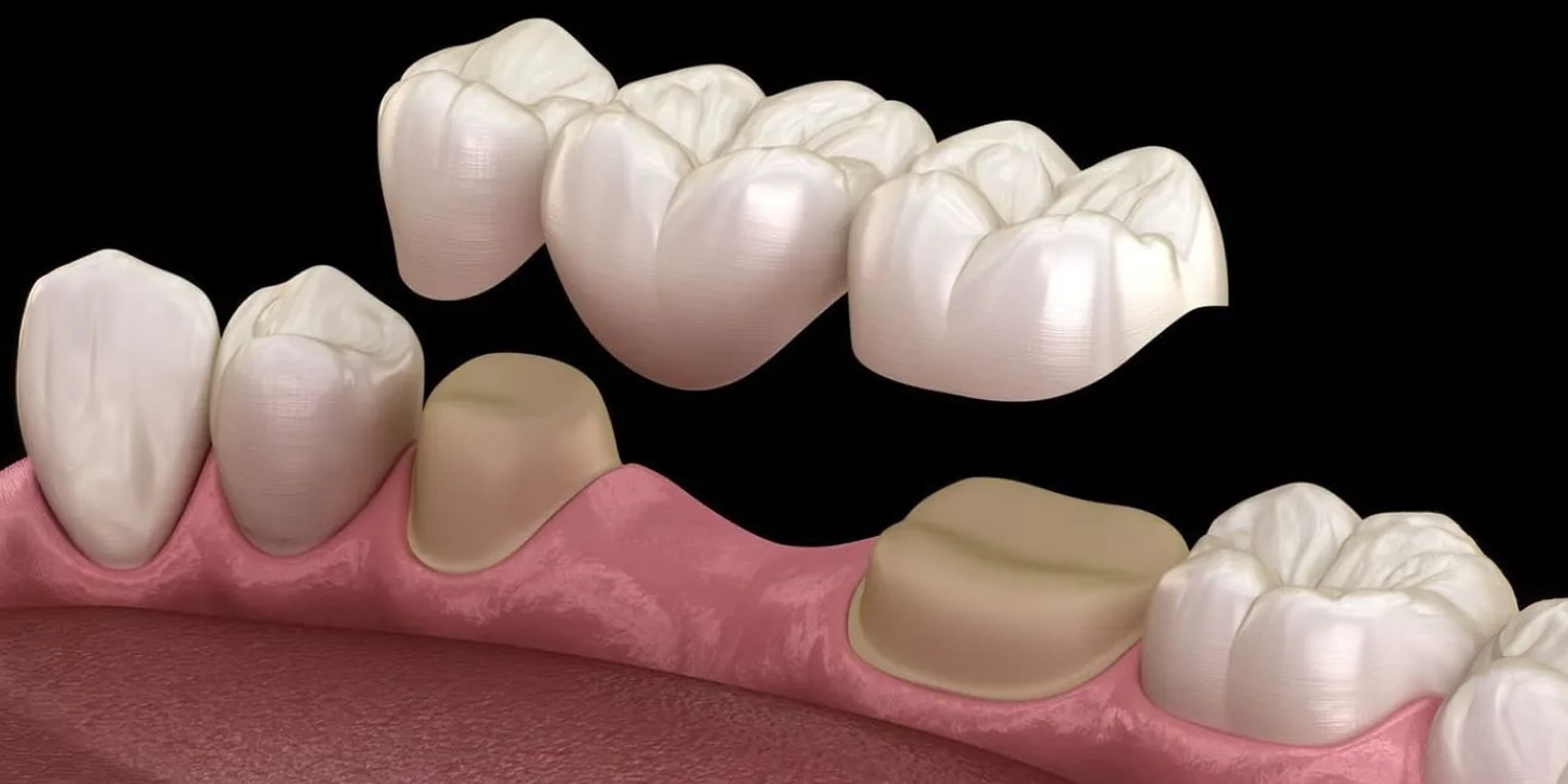
What is a dental bridge? A dental bridge is a fixed dental restoration used to replace one or more missing teeth. It consists of one or more artificial teeth supported by natural teeth or dental implants. Depending on your oral health, the position of the missing tooth, and your aesthetic and functional needs, different types of dental bridges may be suitable. At our Istanbul clinic in Turkey, each bridge is planned and customized to provide a stable, functional, and natural-looking result.
Treatment Process
A clear step-by-step overview of how the treatment is planned and performed, from the initial consultation to the final results, ensuring comfort, safety, and predictable outcomes.
01
Free Consultation & Assessment
Your journey begins with a comprehensive evaluation. We perform digital scans and X-rays to assess your teeth, gums, and jaw, and explain all your treatment options clearly before any commitment is made.
02
Tooth Preparation
For a traditional bridge, the adjacent teeth are gently reshaped to accommodate dental crowns. For an implant-supported bridge, implants are surgically placed first and given adequate healing time before proceeding.
03
Impressions & Temporary Bridge
Detailed digital impressions are taken to design a bridge that precisely matches your natural teeth in shape, size, and color. A temporary bridge is placed while your permanent restoration is crafted in our partner laboratory.
04
Permanent Bridge Placement
Once ready, the permanent bridge is carefully fitted and cemented into place. Final adjustments are made to ensure complete comfort, proper bite alignment, and a natural appearance.
05
Final Check & Aftercare
A follow-up appointment confirms fit, function, and your satisfaction. Our team provides full aftercare instructions and remains available for any questions or support after your return home.
What Is a Dental Bridge?
A dental bridge is a fixed prosthetic restoration that replaces one or more missing teeth by spanning the gap between adjacent natural teeth or implants. It consists of one or more artificial teeth called pontics held in place by crowns cemented onto the teeth or implants on either side of the space.
Dental bridges can be supported by natural teeth or dental implants, with the appropriate design depending on the number and location of missing teeth, the condition of the supporting teeth, bone health, and your overall treatment goals.
Unlike removable dentures, a bridge is permanently fixed in the mouth and does not require removal for cleaning.
Dental bridges have been a clinical standard for tooth replacement for over a century, with an extensive peer-reviewed evidence base covering survival rates, complication profiles, and long-term outcomes.
A landmark systematic review from the University of Bern one of the most cited studies in fixed prosthodontics analysed the survival of tooth-supported fixed partial dentures across prospective and retrospective cohort studies, reporting 10-year survival rates of 89.1% for conventional bridges and providing the clinical benchmarks against which modern bridge outcomes are still measured.
A bridge is not always the most appropriate tooth replacement option.
The choice between a bridge, an implant-supported crown, and a removable prosthesis depends on the number and location of missing teeth, the condition of the adjacent teeth, the volume and quality of the alveolar bone, and the patient's systemic health and treatment preferences.
For patients considering dental treatment abroad, dental bridges in Turkey are available in several designs and materials, with treatment planned according to individual clinical needs rather than a one-size-fits-all approach.
At Vitrin Clinic, the recommendation is made based on a thorough clinical assessment not a default toward any single modality.
When Is a Bridge the Right Choice?
A dental bridge is indicated in a specific set of clinical circumstances. Understanding the situations where a bridge offers the best long-term outcome and those where an implant or alternative is more appropriate is essential to honest treatment planning. Choosing a dental bridge in Turkey should follow the same clinical principles used for tooth replacement anywhere: the condition of the supporting teeth, number and position of missing teeth, available bone, oral hygiene, and the patient's preferences all influence the recommendation.
At Vitrin Clinic, the recommendation is driven by what the clinical evidence and the individual patient's presentation support, not by a preference for one modality.
When Is a Dental Bridge Recommended?
the adjacent teeth are already heavily restored or require crowns for other clinical reasons in which case preparing them as bridge abutments adds no additional biological cost; when implant surgery is medically contraindicated or the patient declines surgical treatment; when the treatment timeline requires a faster restoration without a 3 to 6 month osseointegration period; or when bone volume at the extraction site is insufficient for an implant and the patient declines bone grafting.
A bridge requires more careful consideration when
the adjacent teeth are intact and healthy in which case preparing them as abutments involves irreversible removal of sound tooth structure from two teeth that did not previously require any restoration; when multiple consecutive teeth are missing, increasing the span and the biomechanical demands on the abutments; or when the patient is young and the long-term impact of abutment preparation across decades of use must be factored into the decision.
A systematic review and meta-analysis comparing 3-unit tooth-supported and implant-supported bridges found that both modalities performed with statistically equivalent prosthesis survival rates confirming that for the right patient and clinical presentation, a conventional bridge is an evidence-based and clinically reliable tooth replacement option.
Dental Bridge vs. Implant Crown vs. Partial Denture
The appropriate tooth replacement depends on the number of missing teeth, the condition of adjacent teeth, bone volume, and patient preference.
The following comparison is based on peer-reviewed clinical evidence and systematic review data.
Criterion | Conventional Bridge | Implant Crown | Resin-Bonded Bridge | Removable Partial Denture |
|---|---|---|---|---|
Adjacent Teeth Prepared | Yes full crown preparation required | No standalone restoration | Minimal bonded wings only | Minor clasps on adjacent teeth |
Surgery Required | No non-surgical | Yes implant placement surgery | No non-surgical | No non-surgical |
Treatment Timeline | 2 visits, 5–7 days | 3–9 months including osseointegration | 2 visits, 5–7 days | 2–4 weeks |
Alveolar Bone Preservation | No bone resorbs under pontic | Yes implant stimulates bone | No bone resorbs under pontic | No bone loss continues |
10-Year Survival Rate | 89.1% (University of Bern systematic review) | >95% comparable or superior long-term | 84–88% at 5 years (meta-analysis) | Variable frequent adjustment needed |
Cleaning & Maintenance | Floss threader or interdental brush under pontic required | Brush and floss same as natural tooth | Similar to conventional bridge | Daily removal, soaking, clasps need cleaning |
Stability & Comfort | Fixed no movement or removal | Fixed fully integrated into jaw | Fixed debonding risk with high loading | Removable may shift or require adhesive |
Best Indicated When | Adjacent teeth already compromised or requiring crowns | Adjacent teeth intact, adequate bone, surgical consent | Anterior single tooth, young patient, minimal prep priority | Multiple missing teeth, insufficient bone, cost priority |
Compiled from: University of Bern — Survival and Complication Rates of Fixed Partial Dentures, Systematic Review (PubMed PMID 15533127) · PubMed — 3-Unit Bridges on Teeth vs. Implants: Systematic Review and Meta-Analysis, PMID 28940725 · PubMed — 5-Year Success Rate of Resin-Bonded Fixed Partial Dentures: Systematic Review, PMID 30302909.
Dental Bridge or Implant: Which Is Better?
There is no universally superior option. The appropriate treatment depends on:
adjacent teeth
bone
surgery
treatment time
cost
aesthetics
long-term maintenance
patient preference
Why Clinical Approach Matters
A dental bridge is one of the most technically straightforward fixed restorations in dentistry but the clinical decisions made before preparation begins determine whether it performs well for a decade or develops biological complications within years.
The two most critical variables are abutment tooth selection and pontic design.
The condition of the abutment teeth is the most important determinant of bridge longevity. The University of Bern systematic review identified loss of pulp vitality in abutment teeth as the most common biological complication of conventional bridges occurring in 19.1% of cases over 10 years and caries at the abutment crown margin as the second most frequent.
Both complications are largely preventable: pulp vitality loss is reduced by minimising preparation depth and heat generation during preparation; caries is prevented by accurate marginal fit, correct cement selection, and effective patient oral hygiene under the bridge margins.
A bridge placed on periodontally compromised abutments or teeth with poor oral hygiene has a predictably shorter lifespan.
Pontic design particularly the shape of the surface contacting or approaching the edentulous ridge directly affects hygiene access, soft tissue health, and the patient's ability to maintain a clean environment beneath the bridge.
An ovoid or modified ridge-lap pontic design provides good aesthetics while allowing effective cleaning.
A flat or saddle pontic traps plaque and leads to chronic soft tissue inflammation and caries at the adjacent margins.
At Vitrin Clinic, pontic design is specified to the laboratory as part of the bridge prescription not left to default laboratory shaping.
What the research shows
89.1% | 19.1% | Equal |
|---|---|---|
10-year survival rate of conventional tooth-supported fixed partial dentures the benchmark survival figure from the University of Bern systematic review, one of the most cited studies in fixed prosthodontics, covering prospective and retrospective cohort studies with minimum 5-year follow-up. | Rate of abutment tooth pulp vitality loss at 10 years the most common biological complication of conventional bridges, driven by the extent of preparation and thermal damage during tooth reduction. This finding underscores the clinical importance of conservative preparation technique and adequate irrigation during preparation. | Prosthesis survival rates between 3-unit tooth-supported and implant-supported bridges no statistically significant difference found in systematic review and meta-analysis confirming that both modalities are clinically reliable and that treatment selection should be based on clinical indication rather than assumed superiority of either option. |
University of Bern School of Dental Medicine Systematic Review of FPD Survival and Complications, PubMed PMID 15533127 | University of Bern School of Dental Medicine — Survival and Complication Rates of FPDs, PubMed PMID 15533127 | PubMed — 3-Unit Bridges on Teeth vs. Implants: Systematic Review and Meta-Analysis, PMID 28940725 |
Vitrin Clinic Standard
Implant alternative is always discussed where it applies
If your adjacent teeth are intact, the long-term cost of preparing them as bridge abutments is explained honestly and the implant alternative is presented with equal weight.
The choice is yours, with full information.
Abutment health confirmed before preparation begins
The periodontal and restorative condition of the planned abutment teeth is assessed and any active disease treated before bridge preparation.
A bridge on compromised abutments has a predictably shorter lifespan.
Marginal fit verified before cementation no exceptions
Every bridge is tried in and marginal fit at each abutment is verified before cement is applied.
A bridge with a poor margin is corrected before it is permanently placed not cemented and managed later.
Provisional bridge on the day no unprotected preparations
You leave your preparation appointment with a provisional bridge in place, shaped to the planned design.
No abutment tooth is left unprotected during the laboratory fabrication period.
Dental Bridge Cost in Turkey
The cost of dental bridges in Turkey depends on the type of bridge, material, number of units, condition of the supporting teeth, and whether additional treatments are required. At Vitrin Clinic in Istanbul, dental bridge treatment is planned after a clinical examination and digital assessment, allowing the final treatment plan and price to be tailored to your individual needs.
Dental Bridge Cost: Vitrin Clnic vs. UK vs. USA
The cost of a dental bridge varies considerably by country, bridge type, and material selection.
The following table provides a transparent comparison of average treatment costs across the United Kingdom, United States, and Vitrin Clinic in Istanbul allowing patients to evaluate their options with accurate financial context before committing to a treatment plan.
Bridge type | 🇬🇧 UK | 🇺🇸 USA | 🇹🇷 Turkey |
|---|---|---|---|
Conventional bridge Traditional 3-unit, tooth-supported | $950 – $3,050 | $2,500 – $5,500 | From $350 / unit |
Resin-bonded bridge Maryland bridge, minimal prep | $445 – $1,270 | $1,000 – $2,300 | From $200 / unit |
Implant-supported bridge 2 implants + 3-unit bridge | $4,450 – $8,250 | $4,000 – $9,000 | From $1,000 / unit |
Cantilever bridge Single abutment, one-sided support | $890 – $2,285 | $2,000 – $4,500 | From $300 / unit |
Consultation & scans | Charged separately | Charged separately | Free & included |
Estimated saving | — | — | Up to 70% less |
* Prices are averages for reference only and may vary based on individual case requirements, number of units, material selection, and treatment complexity. A personalised quote is provided following your free consultation.
What Is Included in the Dental Bridge Price?
Clinical consultation
Digital scans / X-rays where required
Treatment planning
Tooth preparation where clinically indicated
Temporary restoration where required
Laboratory fabrication
Final bridge fitting
Follow-up assessment
Types of Dental Bridges in Turkey
Dental bridges in Turkey are available in several designs, and the most suitable option depends on the number and location of missing teeth, the condition of the supporting teeth, your bite, oral health, and your aesthetic goals. The main types include traditional, Maryland, cantilever, and implant-supported bridges.
Traditional Dental Bridge
A traditional dental bridge is one of the most commonly used options for replacing one or more missing teeth. It consists of one or more artificial teeth, known as pontics, supported by dental crowns placed over the natural teeth on either side of the gap. Traditional bridges can be made from materials such as zirconia, ceramic, or porcelain-fused-to-metal, depending on the clinical and aesthetic requirements.
Maryland Dental Bridge
A Maryland bridge, also called a resin-bonded bridge, uses small wings that attach to the back surfaces of the neighboring teeth rather than requiring full crowns. Because it generally requires less alteration of the supporting teeth, it can be a conservative option for replacing certain missing front teeth. However, its suitability depends on the patient's bite, tooth position, and the strength of the supporting teeth.
Cantilever Dental Bridge
A cantilever dental bridge is supported by a crown or crowns on only one side of the missing tooth. It may be considered when there is only one suitable adjacent tooth available for support. However, because the restoration places additional forces on its supporting tooth, careful assessment of the bite and supporting structures is important before treatment.
Implant-Supported Dental Bridge
An implant-supported dental bridge is anchored to dental implants rather than natural teeth. It can be used when several adjacent teeth are missing and provides a fixed alternative to a removable partial denture. The number and position of implants required depend on the patient's bone volume, oral health, and the planned bridge design. Implant placement and healing can also make the overall treatment timeline longer than that of a conventional bridge.
Dental Bridge Materials
Dental bridges can be made from several different materials, and the most appropriate choice depends on the location of the missing tooth, the condition of the supporting teeth, bite forces, aesthetic expectations, and long-term maintenance needs. Common dental bridge materials include zirconia, ceramic, porcelain-fused-to-metal, and resin-based materials.
Zirconia Dental Bridges
Zirconia is a strong, tooth-colored ceramic material commonly used for fixed dental restorations. Zirconia dental bridges can provide a combination of strength, durability, and a natural-looking appearance, making them suitable for both anterior and posterior restorations when clinically appropriate.
Zirconia may be particularly useful when a bridge needs to withstand higher chewing forces while maintaining an aesthetic appearance. However, the specific zirconia formulation and bridge design should be selected according to the individual case rather than assuming that zirconia is the best option for every patient.
Ceramic Dental Bridges
All-ceramic or porcelain-based bridges are designed to closely resemble natural teeth. Their ability to reproduce the appearance of natural enamel makes them an option for patients who place a high priority on aesthetics, particularly when replacing visible front teeth.
The suitability of a ceramic bridge depends on factors such as the restoration's design, thickness, position in the mouth, and the forces placed on it during chewing.
Porcelain-Fused-to-Metal Bridges
Porcelain-fused-to-metal (PFM) bridges combine a metal substructure with a porcelain outer layer. The metal provides structural support, while the porcelain is used to create a tooth-like appearance.
PFM bridges have been used extensively in restorative dentistry and can provide reliable function when properly planned and maintained. However, the aesthetic characteristics may differ from newer all-ceramic materials, particularly around the gum line in some cases.
Resin-Bonded Bridge Materials
Resin-bonded bridges, commonly known as Maryland bridges, typically use a tooth-colored artificial tooth attached to a framework or wings that bond to the adjacent teeth. They are generally more conservative because they may require less preparation of the supporting teeth than conventional bridges.
Their use is highly case-dependent, as factors such as the patient's bite, tooth position, enamel condition, and the amount of available bonding surface can affect their suitability and longevity.
Which Dental Bridge Material Is Best?
There is no single dental bridge material that is best for every patient. Zirconia, ceramic, porcelain-fused-to-metal, and resin-bonded bridges each have different characteristics, and the choice should be based on the clinical situation rather than material popularity alone.
During a dental bridge consultation in Turkey, the dentist should assess the supporting teeth, gums, bite, location of the missing tooth or teeth, and aesthetic requirements before recommending the appropriate material and bridge design. This individualized approach helps ensure that the restoration is selected for both function and appearance.
How Long Does Dental Bridge Treatment Take in Turkey?
The time required for dental bridge treatment in Turkey depends on the type of bridge, the number of missing teeth being replaced, the condition of the supporting teeth, and whether any additional dental treatment is needed before the bridge is placed. A conventional dental bridge can often be completed over a few appointments, provided the supporting teeth are healthy and no additional procedures are required.
Dental Bridge Treatment Timeline
A typical conventional bridge treatment may involve the following stages:
Initial consultation and assessment: The dentist examines the teeth and gums and may use digital scans or X-rays to assess the area and plan the restoration.
Tooth preparation: When a traditional bridge is indicated, the supporting teeth are prepared to accommodate the crowns.
Digital impressions and laboratory fabrication: Impressions or digital scans are used to create the permanent bridge according to the planned design.
Temporary restoration: A temporary bridge may be placed when necessary to protect prepared teeth while the final restoration is being fabricated.
Final fitting: The permanent bridge is checked for fit, bite, appearance, and comfort before it is permanently secured.
For patients traveling to Turkey specifically for dental treatment, the overall stay should be planned around the clinic's laboratory workflow and the complexity of the case. Simple conventional dental bridges may require fewer appointments, while more complex cases or treatments involving implants, gum treatment, root canal therapy, or other procedures may require additional time.
How Many Visits Are Needed for a Dental Bridge in Turkey?
The number of appointments varies according to the bridge design and individual treatment plan. A conventional tooth-supported bridge commonly requires more than one appointment because the supporting teeth must be prepared and the permanent restoration needs to be fabricated and fitted.
An implant-supported dental bridge follows a different timeline. Implant placement may require a healing period before the final bridge can be attached, so treatment can take considerably longer than a conventional bridge.
Before traveling, patients should receive an individualized treatment plan that explains the expected number of appointments, procedures involved, and estimated treatment timeline. This helps international patients organize their trip while allowing the clinical team to adjust the schedule if additional treatment is required.
Clinical Evidence & References
University of Bern, School of Dental Medicine, Switzerland
A Systematic Review of the Survival and Complication Rates of Fixed Partial Dentures After an Observation Period of at Least 5 Years
Journal of Dental Research / Clinical Oral Implants Research · 2004Pjetursson BE, Tan K, Lang NP et al. · PubMed PMID: 15533127 · Electronic MEDLINE + manual search · 13 studies met inclusion criteria
Key finding: 10-year estimated survival rate of conventional fixed partial dentures: 89.1%. Cantilever bridges: 81.8%. Most common biological complication: loss of pulp vitality in abutment teeth (19.1%). Most common technical complication: loss of retention (16.1%). This landmark systematic review established the clinical benchmarks for bridge survival still referenced in contemporary prosthodontic literature.
University of São Paulo, School of Dentistry of Ribeirão Preto, Brazil
Implant-Supported Cantilever Fixed Partial Dentures in the Posterior Region Systematic Review and Meta-Analysis
Materials (MDPI) · October 2025Vieira FL et al. · DOI: 10.3390/ma18204704 · PMC12566088 · PROSPERO CRD42024606201 · 10 databases, 2142 records
Key finding: Implant-supported cantilever bridges in the posterior region show a low implant and prosthesis failure rate of 1%, but prosthetic and abutment complications occur in 14% of cases and loss of retention in 13% confirming that cantilever extension design in high-loading posterior sites requires careful case selection and biomechanical planning.
Have a question about this treatment?
Send us your questions or photos. Our doctors and patient coordinators reply every day of the week with a personal treatment plan.
Frequently Asked Questions
Answers to common questions about the treatment, including suitability, procedure details, recovery, and long-term care — helping you feel informed and confident before moving forward.
Yes, a dental bridge in Turkey at Vitrin Clinic is one of the most popular treatments for international patients. For a traditional dental bridge in Istanbul, most patients complete the full procedure within 3–5 days. For implant-supported bridges, an initial placement visit and a return visit after healing are required. Our international patient coordinators manage all logistics to make your experience smooth and stress-free with savings of 60–70% vs Western prices.


