Periodontics
October 20, 2026
Antimicrobial Mouthwash and Blood Pressure: Can It Raise Your Reading?
 Dr. Rifat Alsaman

The link between antimicrobial mouthwash and blood pressure surprises many patients. Most people see mouthwash as a harmless final step after brushing. Yet research shows some antiseptic rinses may disturb a small chemical pathway. That pathway helps blood vessels relax and keeps pressure stable. The effect appears modest, but it matters for people already living with hypertension. Worldwide, about 1.3 billion adults aged 30 to 79 have high blood pressure. Nearly half of them do not know they have it. This guide explains the science, the studies, the side effects, and the costs.
Quick Facts
Quick Facts | Details |
Rinses studied most | Strong antiseptic mouthwashes |
Usual prescribed course | 1 to 4 weeks |
Change seen in short studies | About 2 to 3.5 mmHg systolic |
Typical price range | About $5 to $15 (US), $3 to $6 (UK) |
Ready to transform your smile?
Talk to our team and get a personal FREE treatment plan.
What Is the Connection Between Antimicrobial Mouthwash and Blood Pressure?
The connection between antimicrobial mouthwash and blood pressure runs through bacteria living on the tongue. These bacteria convert dietary nitrate into nitrite. The body then turns nitrite into nitric oxide, which widens blood vessels. Strong antiseptic rinses can kill many of these helpful bacteria. When that happens, nitrite levels in saliva and blood may fall. Some small studies then recorded slightly higher systolic readings. The changes were usually only a few millimetres of mercury. Such a shift is small for one person in one day. Across a whole population, however, small shifts can add up. Large analyses link a 2 mmHg lower average systolic pressure with about 10% fewer stroke deaths. So the topic deserves calm attention rather than alarm. Hypertension already affects about one in three adults worldwide. That scale explains why researchers study even small, everyday influences on readings.
What Is Antimicrobial Mouthwash and How Does It Work?
Antimicrobial mouthwash is a rinse designed to reduce bacteria in the mouth. Common active ingredients include cetylpyridinium chloride and essential oils, alongside stronger prescription antiseptics. Some products also contain alcohol, hydrogen peroxide, or povidone-iodine. The strongest antiseptics bind to teeth, gums, and the tongue for several hours. Dentists call this lasting effect substantivity. It explains why these rinses control plaque so effectively. Dentists often prescribe them after gum surgery, extractions, or deep cleaning. Cosmetic mouthwashes are different, because they mainly freshen breath. Fluoride rinses also differ, because they strengthen enamel rather than kill bacteria. Knowing which type you use is the first useful step. It helps you judge any possible link between antimicrobial mouthwash and blood pressure. Mouthwash is now one of the most widely used oral care products. Many buyers never check which active ingredient their bottle contains.
Can Mouthwash Raise Blood Pressure?
Mouthwash can raise blood pressure slightly in some people, according to short controlled studies. The effect seems strongest with potent antiseptic rinses used twice daily. In a 2013 study, healthy volunteers rinsed with an antiseptic mouthwash for seven days. Their systolic pressure rose by about 2 to 3.5 mmHg. Their oral nitrite levels dropped by roughly 90%. Plasma nitrite also fell by about 25% in the same trial. However, not every study found the same result. Some trials in people already taking blood pressure medicine showed no clear change. The honest answer, therefore, is "possibly, and modestly." Mouthwash is rarely the main cause of a high reading. Weight, salt, stress, sleep, and genetics usually play much larger roles. For context, a 2 to 3 mmHg shift is smaller than normal daily variation. Readings often swing 10 mmHg or more across one ordinary day.
.jpg)
.jpg)
.jpg)
.jpg)
What Does the Latest Research Say About Mouthwash and Hypertension Risk?
Research now includes laboratory work, short clinical trials, and longer population studies. Together, they suggest a plausible biological pathway. They do not yet prove that mouthwash causes lasting hypertension. A frequently cited cohort followed several hundred overweight adults in Puerto Rico. Those using over-the-counter mouthwash at least twice daily had about 85% higher hypertension risk. The follow-up period lasted roughly three years. People rinsing less often showed no clear increase. Still, observational studies cannot exclude other explanations. Heavy mouthwash users may differ in diet, smoking, or gum health. Reviewers consistently call for larger and longer randomised trials. For now, evidence on antimicrobial mouthwash and blood pressure is suggestive rather than final. Interest in antimicrobial mouthwash and blood pressure has grown steadily since these early findings. New studies now examine longer exposure and different rinse types.
Findings From Human Clinical Studies
Human trials have mostly been small, short, and carefully controlled. Most measured saliva nitrite, plasma nitrite, and blood pressure together. The table below summarises three widely discussed findings. Sample sizes were often below 50 people. Larger trials would give firmer answers about who is most affected.
Study type | Participants | Duration | Main finding |
Crossover trial (2013) | Healthy adults | 7 days | Systolic rose about 2 to 3.5 mmHg |
Crossover trial (2015) | Treated hypertensive adults | 3 days | Nitrite fell, no clear pressure change |
Cohort study | Overweight adults | About 3 years | About 85% higher risk with twice-daily use |
The pattern is fairly consistent for nitrite. Strong antiseptic rinses nearly always lower oral nitrite sharply. Blood pressure results are less consistent across groups. Medication, diet, and study length may explain these differences.
Does the Evidence Prove a Long-Term Cardiovascular Risk?
The evidence does not prove a long-term cardiovascular risk. Most trials lasted between three days and two weeks. That window is too short to measure heart attacks or strokes. Population studies run longer, but they show association rather than cause. They also rely on people reporting their own mouthwash habits. Self-reported data can be inaccurate or incomplete. On the other hand, the biological mechanism is well described. It is not a random statistical finding. A sensible reading sits between dismissal and fear. Short prescribed courses appear low risk for most patients. Long, unnecessary, twice-daily use deserves a closer look. Your dentist can help decide which group you fall into. Insight: absence of proof is not proof of absence. Patients should treat antimicrobial mouthwash and blood pressure findings as a reason for moderation.
How Do Oral Bacteria and Nitric Oxide Affect Blood Pressure?
Oral bacteria form one link in a pathway called the entero-salivary nitrate cycle. You eat nitrate in leafy greens, beetroot, and other vegetables. Your gut absorbs it into the bloodstream. Around 25% of circulating nitrate is then taken up by the salivary glands. Saliva can contain nitrate at levels many times higher than blood. Tongue bacteria convert this nitrate into nitrite. You swallow the nitrite, and much of it enters the blood. There, it can become nitric oxide, especially in low-oxygen tissues. Nitric oxide relaxes artery walls and lowers resistance to blood flow. Humans lack the enzymes to perform the first conversion efficiently. That is why oral bacteria matter so much in this cycle. Insight: this cycle explains why diet and oral hygiene interact. Neither works in isolation when it comes to vascular health.
What Is the Oral Bacteria and Blood Pressure Connection?
The oral bacteria and blood pressure connection depends on specific nitrate-reducing species. Researchers often name Veillonella, Neisseria, Rothia, and Actinomyces. These bacteria live mostly in deep grooves on the back of the tongue. They thrive in low-oxygen pockets that brushing rarely reaches. A healthy tongue microbiome can process large amounts of dietary nitrate. When these bacteria fall in number, the cycle slows. Less nitrite reaches the blood, and less nitric oxide forms. Interestingly, the composition of oral bacteria varies widely between people. Diet, smoking, gum health, and medicines all shape it. This variation may explain why antimicrobial mouthwash and blood pressure responses differ between individuals. Some people show clear changes, while others show almost none. Some studies report fewer nitrate-reducing species in people with hypertension than in people with normal pressure.
Can Antibacterial Mouthwash Reduce Nitric Oxide Production?
Antibacterial mouthwash can reduce one route of nitric oxide production. It does this by killing the nitrate-reducing bacteria on the tongue. Strong antiseptic rinses are especially effective at suppressing these species. In trials, salivary nitrite often dropped by 80% to 90% within days. However, the body has a second, independent route for nitric oxide. Cells lining the blood vessels produce it from the amino acid L-arginine. This route continues working when you use mouthwash. That partly explains why the blood pressure effect stays modest. Bacteria also tend to recover after rinsing stops. Several studies suggest recovery begins within days and continues over weeks. So the reduction is real, but usually partial and reversible. Insight: frequent rinsing matters because bacteria have less time to rebuild between doses. Twice-daily antiseptic use keeps their numbers persistently low.
Why Does Nitric Oxide Matter for Blood Pressure Regulation?
Nitric oxide matters because it tells artery walls to relax. Relaxed arteries widen, and blood flows with less resistance. Lower resistance means lower pressure inside the vessels. The importance of this molecule earned a Nobel Prize in Medicine in 1998. Poor nitric oxide signalling is common in hypertension and diabetes. It is also linked to stiff arteries and aging. Diet studies support the role of the nitrate pathway. Meta-analyses show nitrate-rich beetroot juice can lower systolic pressure by about 4 mmHg. That benefit shrinks when oral bacteria are suppressed. This finding links the issue of antimicrobial mouthwash and blood pressure directly to everyday nutrition. Vegetables help most when your mouth bacteria can process them. Insight: the nitrate pathway works best as part of a balanced diet. Beetroot juice is never a substitute for prescribed medicine.
Does Mouthwash Affect Cardiovascular Health Beyond Blood Pressure?
Mouthwash may affect cardiovascular health beyond blood pressure, but evidence is limited. The same Puerto Rico cohort examined blood sugar outcomes. Twice-daily users had about 55% higher risk of prediabetes or diabetes. Nitric oxide also influences insulin sensitivity and exercise performance. Some sports studies found strong antiseptic rinses blunted the benefit of nitrate supplements. On the other hand, gum disease itself harms the heart. Periodontitis is linked to inflammation, atherosclerosis, and cardiovascular events. Severe periodontal disease affects about 19% of adults worldwide. Treating gum disease well therefore protects general health. The goal is not avoiding mouthwash completely. The goal is using the right product, for the right reason, for the right time. Insight: protecting gum health and the nitrate pathway together is the balanced approach.
Does Chlorhexidine Mouthwash Affect Blood Pressure?
Chlorhexidine affects the nitrate pathway more strongly than most other rinses, which is why most studies on mouthwash and blood pressure used it. It is a broad-spectrum antiseptic that binds to teeth, gums, and the tongue for up to 12 hours. This makes it excellent for treating gum inflammation, but also the rinse most likely to suppress nitrate-reducing tongue bacteria. In healthy adults, a week of twice-daily use cut oral nitrite by roughly 90% and raised systolic pressure by about 2 to 3.5 mmHg. In treated hypertensive patients, results were mixed, and one short trial showed no significant change despite lower nitrite. When rinsing stopped, nitrite levels recovered and readings returned toward baseline.
Concentration and duration also matter. In the US, chlorhexidine is usually sold at 0.12% and used as 15 ml for 30 seconds, twice daily. In the UK and Europe, 0.2% products are common, used as 10 ml for one minute, twice daily. Most labels advise no longer than two to four weeks of use. Short, purposeful courses after gum treatment appear low risk, while years of habitual twice-daily use deserve review.
What Are the Most Common Chlorhexidine Mouthwash Side Effects?
The most common chlorhexidine mouthwash side effects involve appearance and taste. Brown staining on teeth, fillings, and the tongue is very common, and tea, coffee, and red wine make it worse. Food may taste bitter or salty for several hours. Some patients notice more tartar, mild burning, peeling of the mouth lining, or dryness during longer courses. These effects usually fade within days of stopping, and professional cleaning removes most stains.
To reduce side effects, wait 30 minutes after rinsing before eating or drinking. Leave at least five minutes between brushing and rinsing, because toothpaste can weaken chlorhexidine. Very rarely, chlorhexidine can trigger a severe allergic reaction, and the UK medicines regulator has issued warnings about this risk. Stop at once and call emergency services if you notice swelling of the lips, tongue, face, or throat, breathing difficulty, a widespread rash, or dizziness.
Note: Chlorhexidine is a medical antiseptic. Always consult your dentist or doctor before using it, especially if you have high blood pressure, heart disease, or any allergies. Do not start, extend, or stop a chlorhexidine course without professional advice.
Is There a Difference Between Antiseptic and Fluoride Mouthwash?
There is a clear difference between antiseptic and fluoride mouthwash. Antiseptic rinses aim to kill bacteria. Fluoride rinses aim to strengthen enamel and prevent decay. Fluoride at typical rinse levels has little antibacterial action. It is therefore unlikely to disturb nitrate-reducing bacteria significantly. Daily fluoride rinses typically contain about 0.05% sodium fluoride. Reviews show regular fluoride rinsing reduces decay in children by roughly one quarter.
Mouthwash type | Main purpose | Likely effect on nitrite |
Prescription-strength antiseptic | Gum disease, post-surgery care | Strong reduction |
Cetylpyridinium chloride | Plaque and breath control | Possible moderate reduction |
Essential oils | Plaque and breath control | Less studied, possible reduction |
Fluoride | Decay prevention | Minimal expected effect |
Cosmetic | Fresh breath only | Minimal expected effect |
For patients worried about antimicrobial mouthwash and blood pressure, fluoride rinses are often a sensible daily option.
Ready to transform your smile?
Talk to our team and get a personal FREE treatment plan.
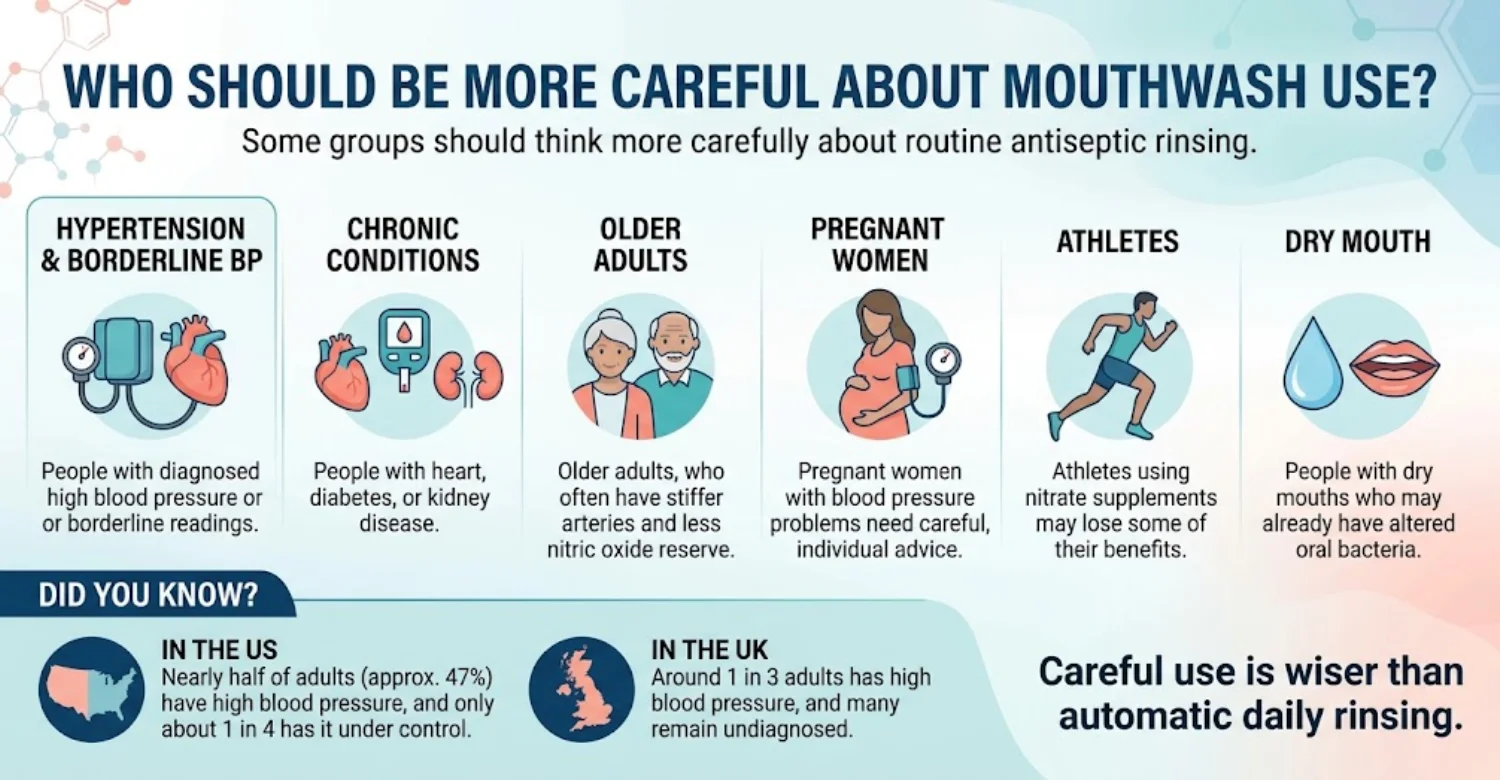
Is Antimicrobial Mouthwash Safe for Patients With Hypertension?
Antimicrobial mouthwash is generally safe for patients with hypertension when used as prescribed. A short course after gum treatment rarely causes problems. The concern is mainly about long, unnecessary, twice-daily use. Patients with hypertension should tell their dentist about their diagnosis. They should also mention their medicines and recent readings. The dentist can then decide whether an antiseptic rinse is truly needed. Sometimes better brushing and interdental cleaning achieve the same goal. If a strong antiseptic is needed, a defined end date is helpful. Home monitoring during the course adds reassurance. Discussing antimicrobial mouthwash and blood pressure openly helps both clinicians. Your dentist and doctor can then work from the same information. Insight: for most hypertensive patients, taking medicines consistently matters far more than mouthwash choice. Missed doses raise pressure much more than any rinse.
What Should Patients With Heart Disease Consider Before Using Antiseptic Mouthwash?
Patients with heart disease should balance two competing concerns. Untreated gum disease raises inflammation, which can harm blood vessels. Long antiseptic use may slightly reduce nitric oxide availability. Treating active gum infection usually comes first. A short, targeted antiseptic course is often worthwhile. Patients should share their cardiac history at every dental visit. This includes stents, valve problems, heart failure, and blood thinners. Some patients need antibiotic cover before certain dental procedures. Others need extra care with bleeding after deep cleaning. Patients should avoid adding over-the-counter antiseptic rinses without advice. They should also avoid stopping prescribed heart medicines for any dental reason. Coordinated care keeps both risks low. Insight: cardiovascular disease remains the leading cause of death worldwide. Small, sensible precautions in daily routines are therefore worthwhile.
Can Daily or Long-Term Antimicrobial Mouthwash Use Be a Concern?
Daily or long-term antimicrobial mouthwash use can be a concern for some people. The cohort data linked risk to rinsing at least twice daily. Many people use strong antiseptic rinses for years without dental advice. They often do so for fresh breath rather than gum disease. Bad breath frequently comes from the tongue coating or gum pockets. Tongue cleaning and professional treatment often solve it better. Long-term antiseptic use can also cause staining and taste changes. It may shift the oral microbiome in less helpful directions. Occasional use is very different from habitual heavy use. If you rinse twice daily for months, review the reason. A dentist can suggest a gentler long-term plan. Insight: habits formed for fresh breath often continue for decades. A yearly review of your oral care products is a simple safeguard.
What Other Factors Can Raise Blood Pressure Readings?
Many everyday factors raise blood pressure readings more than mouthwash does. A full bladder can add around 10 to 15 mmHg. Talking during a reading can add a similar amount. Sitting without back support may add 5 to 10 mmHg. Crossed legs can add a few more points. A cuff that is too small can overestimate pressure noticeably. Caffeine, nicotine, and exercise within 30 minutes also raise readings. Stress, pain, and poor sleep have strong effects. Some people show higher readings only in clinics, called white-coat hypertension. Salt, alcohol, and certain painkillers matter over the longer term. Check these factors before blaming antimicrobial mouthwash and blood pressure changes on one product. Insight: correcting measurement errors can change a reading by more than 10 mmHg. That shift is far larger than mouthwash effects.
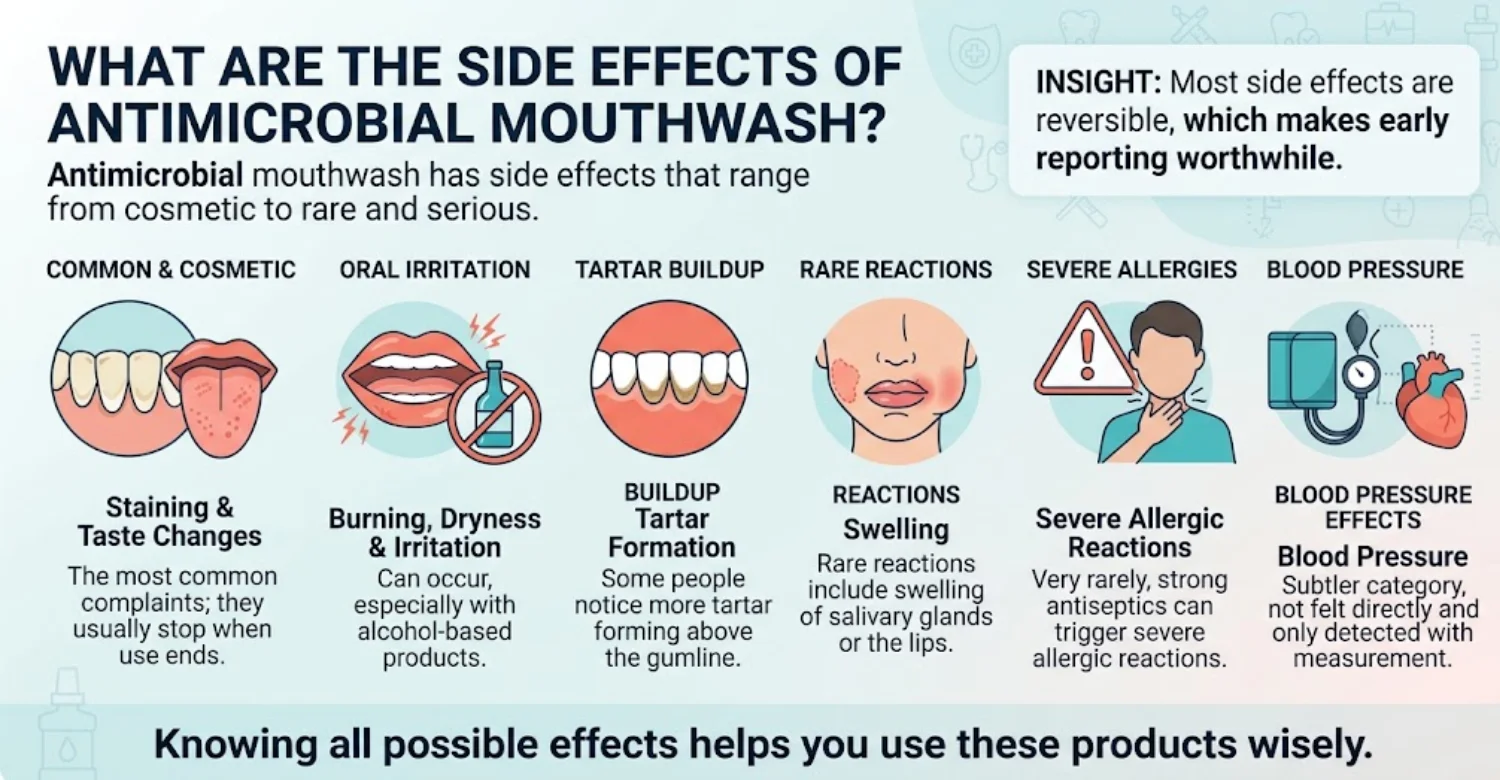
Can Antiseptic Mouthwash Cause Side Effects on Blood Pressure?
Antiseptic mouthwash can cause small side effects on blood pressure in some people. This effect is indirect rather than toxic. The rinse does not act on the heart or arteries directly. It acts by reducing nitrate-reducing bacteria in the mouth. The resulting change is usually small and temporary. Most people will never notice any symptoms from it. Patients with well-controlled hypertension may see no measurable shift. Patients with borderline readings may see a few extra points. That small shift might move someone across a diagnostic threshold. This is why home readings during a course can help. Understanding antimicrobial mouthwash and blood pressure in this way keeps the risk in proportion. Insight: a temporary shift is very different from permanent hypertension. Readings in trials generally returned toward baseline after rinsing stopped.
How Can You Get Relief From Mild Mouthwash Side Effects?
You can relieve most mild mouthwash side effects with simple steps. Wait at least 30 minutes after rinsing before eating or drinking. This reduces staining and improves the rinse's effect. Limit tea, coffee, and red wine during an antiseptic course. Use a straw for dark drinks if needed. Brush gently with a fluoride toothpaste at a separate time. Choose alcohol-free versions if you feel burning or dryness. Drink water regularly to support saliva flow. Book a scale and polish after the course to remove stains. Insight: most mild side effects ease within one to two weeks after finishing a course.
When Can Mouthwash Side Effects Become Urgent?
Mouthwash side effects become urgent when signs of allergy appear. Watch for swelling of the lips, tongue, face, or throat. Difficulty breathing, wheezing, or a widespread rash also need emergency care. Dizziness or collapse after rinsing is a medical emergency. Call emergency services immediately in these situations. Stop the product and tell every future clinician about the reaction. Blood pressure readings of 180/120 mmHg or higher also need prompt attention. Seek emergency care if such readings come with chest pain or breathlessness. Severe headache, confusion, or vision changes are also warning signs. Weakness on one side of the body suggests a possible stroke. These situations are rare, but quick action saves lives. Insight: allergic reactions to antiseptic rinses are rare, but they can escalate quickly.

How Is a Possible Mouthwash-Related Blood Pressure Change Evaluated?
A possible mouthwash-related change is evaluated through careful, repeated measurement. One single high reading proves very little. Clinicians first confirm whether blood pressure is truly raised. They then look for common causes and contributing habits. Mouthwash becomes one item on a broader checklist. Timing is important in this assessment. A rise that started with a new rinse is worth noting. A rise that predates the rinse points elsewhere. Some clinicians may suggest pausing an unnecessary rinse for two weeks. Readings during that pause can then be compared fairly. This structured approach avoids both panic and dismissal. It turns the question of antimicrobial mouthwash and blood pressure into measurable data. Insight: two weeks of paired readings usually reveal more than months of occasional checks.
How Do Doctors Confirm High Blood Pressure?
Doctors confirm high blood pressure with repeated readings over time. US guidelines define stage 1 hypertension as 130/80 mmHg or higher. UK guidance uses 140/90 mmHg as the clinic threshold. UK doctors usually confirm the diagnosis with out-of-office monitoring. Ambulatory monitoring records readings every 30 to 60 minutes for a full day. Home monitoring involves twice-daily readings over about one week. An average of 135/85 mmHg or higher at home suggests hypertension. These methods reduce white-coat effects and random variation. Doctors also check kidney function, cholesterol, and blood sugar. An ECG may assess the heart's response to pressure. Only then do they decide on lifestyle changes or medicines. Insight: out-of-office readings often differ from clinic readings by several points. This is why confirmation matters before starting treatment.
How Can a Dentist Assess Whether Mouthwash May Be Contributing to a Concern?
A dentist assesses mouthwash use by taking a detailed oral care history. They ask which product you use, how often, and for how long. They check whether the rinse was prescribed or self-selected. They then examine your gums, tongue, and plaque levels. This shows whether an antiseptic is still clinically justified. Many dental clinics also take a chairside blood pressure reading. A raised reading may lead to a referral to your doctor. The dentist may suggest switching to a fluoride or gentler rinse. They may also recommend improved brushing and interdental cleaning. Dentists cannot diagnose hypertension alone. They can, however, spot patterns and coordinate with medical colleagues. Insight: many patients see their dentist more often than their doctor. That makes dental visits a useful screening opportunity.
What Information Should Patients Record Before Their Appointment?
Recording a few details makes your appointment far more useful. Write down the exact name and strength of your mouthwash. Note how often you rinse each day and for how long. Record the date you started and any breaks in use. List all medicines, including painkillers, decongestants, and supplements. Keep a home blood pressure log for at least seven days. Measure twice in the morning and twice in the evening. Note your caffeine, alcohol, and sleep habits on those days. Record any symptoms such as headaches or dizziness. Photos of staining or mouth irritation can also help. Bring your blood pressure monitor if possible. Clinicians can then check its accuracy against theirs. Insight: a structured log turns vague worries about antimicrobial mouthwash and blood pressure into clear evidence.
When Should You Seek Medical Advice About a High Reading?
Seek medical advice when home readings stay at or above 135/85 mmHg. This applies especially when the pattern lasts more than one week. Book a routine appointment if readings are raised without symptoms. Seek urgent same-day advice for readings around 180/110 mmHg. Call emergency services if very high readings come with warning symptoms. These include chest pain, breathlessness, severe headache, or confusion. Vision changes, weakness, or speech problems also need emergency help. Do not stop prescribed blood pressure medicines without medical guidance. Do not assume mouthwash is the cause of a high reading. Treat the reading first, then investigate possible contributors. Your doctor can decide whether antimicrobial mouthwash and blood pressure concerns need further review. Insight: hypertension often causes no symptoms at all. Regular measurement is the only reliable way to detect it.
.jpg)
.jpg)
.jpg)
.jpg)
What Should You Do if You Think Mouthwash Is Affecting Your Blood Pressure?
If you suspect your mouthwash affects your blood pressure, start with measurement. Keep a home log for one week while using the rinse. Then speak to your dentist about whether the rinse is still needed. Do not change several things at once. Changing diet, rinse, and sleep together makes results hard to interpret. If your dentist agrees, pause or switch the rinse for two weeks. Continue measuring during this period. Compare the average readings from both weeks. A clear drop may suggest the rinse played a role. No change suggests other causes deserve attention. Share the results with your doctor at your next visit. This simple method gives you reliable answers. Insight: comparing weekly averages smooths out random daily swings. Single readings rarely support firm conclusions.
Should You Stop Using Antimicrobial Mouthwash Immediately?
You should not always stop antimicrobial mouthwash immediately. A prescribed antiseptic rinse after surgery protects healing tissue from infection. Stopping early may increase the risk of complications. Contact your dentist before ending a prescribed course early. They can weigh the infection risk against your blood pressure concern. Many courses last only one to two weeks anyway. Over-the-counter rinses used for fresh breath are different. You can usually pause these safely while you seek advice. Continue brushing twice daily and cleaning between your teeth. If you experience allergy symptoms, stop at once and seek help. For most patients, a planned decision works better than sudden changes. Your oral and heart health both benefit. Insight: infection after oral surgery carries clearer, more immediate risks than a small temporary pressure change.
What Are the Safest Ways to Maintain Oral Hygiene Without Unnecessary Antiseptic Use?
The safest oral hygiene routine relies on mechanical cleaning. Brush twice daily for two minutes with a fluoride toothpaste. Adults usually benefit from toothpaste containing about 1,450 ppm fluoride. Spit after brushing, but avoid rinsing with water immediately. This keeps fluoride on the teeth for longer. Clean between your teeth daily with floss or interdental brushes. Interdental cleaning reaches surfaces that toothbrushes miss. Brush or scrape your tongue gently to reduce coating and odour. Limit sugary snacks and drinks between meals. Drink water to support healthy saliva flow. Visit your dentist and hygienist at recommended intervals. This routine controls plaque well without long-term antiseptic exposure. Insight: roughly 40% of tooth surfaces face neighbouring teeth. Toothbrushes alone clean these areas poorly.
Can Changing Mouthwash Help Reduce a Possible Risk?
Changing mouthwash can help reduce a possible risk for some patients. Fluoride rinses protect enamel without strongly targeting oral bacteria. Alcohol-free formulas reduce dryness and irritation. Some patients may use antiseptic rinses only once daily rather than twice. Others may limit them to short courses during gum flare-ups. Your dentist can match the product to your exact need. For gum inflammation, professional cleaning often matters more than any rinse. For bad breath, tongue cleaning and treating gum pockets often work better. Avoid switching between many strong products without guidance. Keep notes on any change you make. Thoughtful product choice keeps the question of antimicrobial mouthwash and blood pressure manageable. Insight: small, deliberate changes are easier to evaluate than sudden overhauls.
Ready to transform your smile?
Talk to our team and get a personal FREE treatment plan.
What We Notice Clinically
In everyday dental practice, mouthwash habits vary widely between patients. Some patients never use mouthwash at all. Others rinse two or three times daily with strong antiseptics. Many choose products based on advertising rather than dental advice. Few patients know that rinses differ in purpose and strength. Fewer still have heard about antimicrobial mouthwash and blood pressure research. Patients with hypertension rarely mention their diagnosis unless asked directly. That is why medical history questions matter at every visit. We also see many patients using rinses to hide bad breath. Often the underlying cause is untreated gum disease or tongue coating. Addressing the cause usually reduces the need for constant rinsing. Insight: asking one extra question about mouthwash takes seconds. It can reveal habits that patients never thought to mention.
Common Patient Patterns and Misconceptions
Several misconceptions appear repeatedly in dental clinics. Many patients believe a stronger burning sensation means better cleaning. In reality, burning usually comes from alcohol, not stronger antibacterial action. Some patients think mouthwash can replace brushing or flossing. It cannot remove sticky plaque from tooth surfaces. Others believe prescribed antiseptic rinses are suitable for permanent daily use. Most guidance supports short, defined courses only. Some patients assume natural products are always gentle. Certain herbal and essential oil rinses still have antibacterial effects. Another misconception is that all mouthwashes affect blood pressure equally. Evidence mostly concerns strong antiseptics used frequently. Correcting these beliefs helps patients make calmer and more informed choices. Insight: clear explanations reduce both overuse and anxious avoidance of useful rinses.
How Can Clinicians Distinguish Oral Side Effects From a Blood Pressure Concern?
Clinicians distinguish oral side effects from blood pressure concerns by their pattern. Oral side effects are visible or felt directly in the mouth. These include staining, taste change, burning, and dryness. Blood pressure concerns are silent and only appear on measurement. Headaches, dizziness, or nosebleeds are not reliable signs alone. Timing also helps separate the two problems. Oral effects usually begin within days of starting a rinse. Blood pressure effects, if present, also appear quickly but need repeated readings. Clinicians compare readings before, during, and after the rinse. They also check for other new medicines or habits. This careful comparison avoids wrongly blaming or excusing a product. Insight: symptoms in the mouth point to local effects. Changes on a cuff point to systemic effects.
Clinical Note
Clinicians should ask about mouthwash type, frequency, and duration in every new patient. Ask specifically whether the patient has hypertension or cardiovascular disease. When prescribing an antiseptic rinse, give a clear start and end date. Explain staining and taste effects in advance to improve compliance. For hypertensive patients, suggest home readings during longer courses. Reassess the need for antiseptic rinses at each review visit. Prefer mechanical plaque control for long-term maintenance. Record any chairside blood pressure reading in the dental notes. Refer patients with persistently raised readings to their doctor. Avoid presenting antimicrobial mouthwash and blood pressure findings as settled facts. Present them as emerging evidence with practical, balanced implications. Balanced communication about antimicrobial mouthwash and blood pressure builds trust and improves adherence.
How Much Does Antimicrobial Mouthwash Cost in the US, UK, and Turkey?
The cost of antimicrobial mouthwash varies by country, active ingredient, brand, bottle size, and prescription rules. In the US, the strongest antiseptic rinses are generally prescription-only. In the UK, a 0.2% antiseptic mouthwash is available over the counter. In Turkey, strong antiseptics are often sold in combination gargles containing benzydamine, so these products are not always directly comparable.
The following table provides average estimated retail costs for 2026. Prices may vary by pharmacy, discounts, exchange rates, and product formulation.
US
$15
Prescription antiseptic rinse 0.12%
Avg. cost per bottle: $15
Bottle size: 473 ml
Concentration: 0.12%
Turkey
$2.84
Antiseptic + benzydamine gargle
Avg. cost per bottle: $2.84
Bottle size: 200 ml
Type: antiseptic + benzydamine
UK
$3.64
Antiseptic mouthwash 0.2%
Avg. cost per bottle: $3.64
Bottle size: 300 ml
Concentration: 0.2%
These are representative prices for specific products, not countrywide averages for every antimicrobial mouthwash. The UK figure is the NHS indicative price, which may differ from the retail price. The Turkish figure is an approximate average of selected listed products. US dollar conversions are approximate and depend on the exchange rate at the time of purchase.
What Is the Average Retail Cost of Antiseptic Mouthwash?
Antiseptic mouthwash is generally an affordable dental product, although the total cost depends on the prescribed concentration, bottle size, and duration of treatment. In the US, a 473 ml bottle of a 0.12% prescription antiseptic rinse has a reported average retail price of approximately $15.
Country | Typical bottle size | Average estimated cost | Main pricing consideration |
United States | 473 ml | $15 | Prescription and pharmacy discounts |
United Kingdom | 300 ml | $4.80 | Brand and retailer |
Turkey | 200 ml | $3 | Formulation and regulated medicine pricing |
A bottle's size and dosing instructions determine how long it lasts. A two-week course is common in some dental situations, but the actual duration should follow the dentist's instructions. Generic products may cost less than branded versions, but confirm that the active ingredients and concentrations are appropriate before switching. The cheapest product is not necessarily the right product for every dental condition.
Average Antimicrobial Mouthwash Cost in the United States
In the US, prescription-strength antiseptic rinses are commonly prescribed for managing gingivitis and certain dental conditions. A standard 473 ml bottle has a reported average retail price of approximately $15, although the actual cash price may be higher or lower depending on the pharmacy.
Product or purchase option | Average estimated cost |
Prescription antiseptic rinse 0.12%, 473 ml | $15 per bottle |
Prescription antiseptic rinse 0.12%, 118 ml | $10 per bottle |
Over-the-counter antiseptic mouthwash | $5 per bottle |
The smaller-bottle and over-the-counter figures are approximate planning estimates, not verified national averages.
Prescription coverage, pharmacy discount cards, and generic availability can affect the final price. Over-the-counter rinses containing cetylpyridinium chloride or essential oils are different formulations and should not automatically be considered substitutes for a prescribed antiseptic.
Cost insight: Compare the final price after discounts and the cost per millilitre, rather than relying on the advertised bottle price alone.
Average Antimicrobial Mouthwash Cost in the United Kingdom
In the UK, 0.2% antiseptic mouthwash is widely available without a prescription. The NHS indicative price for a 300 ml branded bottle was $3.64 in March 2026, while individual pharmacy and supermarket prices may differ.
Product or purchase option | Average estimated cost |
Branded antiseptic mouthwash 0.2%, 300 ml | $3.64 (about $4.80) per bottle |
Generic antiseptic mouthwash 0.2%, 300 ml | $2.55 (about $3.40) per bottle |
Branded mint antiseptic mouthwash 0.2%, 600 ml | $5.32 (about $7.10) per bottle |
These figures represent listed medicine prices, not a comprehensive survey of UK retail prices. A larger bottle may offer better value per millilitre, but only if the product is appropriate and can be used within its recommended period.
Cost insight: Compare the concentration, active ingredient, and bottle size before choosing between branded and generic mouthwash.
Average Antimicrobial Mouthwash Cost in Turkey
In Turkey, antiseptic mouthwash is frequently combined with benzydamine, an ingredient used to relieve pain and inflammation. These formulations differ from single-ingredient antiseptic rinses and should not be treated as clinically interchangeable.
Selected 200 ml combination gargles had listed prices ranging from approximately $111 to $181 in 2026, depending on the brand.
Product or purchase option | Average estimated cost |
Lower-priced 200 ml combination gargle | $110 per bottle |
Typical 200 ml combination gargle | $135 per bottle |
Higher-priced 200 ml combination gargle | $180 per bottle |
These figures are rounded estimates based on selected Turkish price listings, not an official national average. Prices may change, and prescription or reimbursement rules vary by product. For international patients, the equivalent cost in another currency will depend on the exchange rate at the time of purchase.
Cost insight: Check whether the product contains a single antiseptic or a combination of active ingredients. A combination gargle may have different indications, precautions, and side effects.
What Factors Affect the Cost of Antimicrobial Mouthwash?
Several factors influence the cost of antimicrobial mouthwash across the US, UK, and Turkey.
Cost factor | How it affects the price |
Active ingredient | Prescription antiseptics, cetylpyridinium chloride, and essential oils are different formulations with different uses. |
Concentration | Products with different concentrations may have different prices and instructions. |
Brand versus generic | Generic versions may cost less than branded products. |
Bottle size | Larger bottles may offer a lower cost per millilitre. |
Prescription requirements | Prescription status can affect access, insurance coverage, and discounts. |
Combination ingredients | Products containing pain-relieving or anti-inflammatory ingredients may have different prices. |
Pharmacy and retailer | Local pricing, promotions, and delivery fees can change the final cost. |
Currency and regulation | Exchange rates and national medicine-pricing policies affect international comparisons. |
When comparing prices, calculate the cost per millilitre and check the product's concentration. For a prescription antiseptic, ask the pharmacist about an appropriate generic alternative if cost is a concern. However, do not switch products solely because they are cheaper, particularly when the mouthwash has been prescribed following dental surgery or for a specific gum condition.
Should You Choose Mouthwash Based on Cost or Blood Pressure Concerns?
You should choose antimicrobial mouthwash based on your dental needs, medical history, and the advice of your dentist, not price alone. A strong antiseptic may be recommended for specific gum conditions or short-term use after certain dental procedures, but it is not necessary for everyone. Prolonged use can cause tooth staining, changes in taste, and increased tartar accumulation.
Blood pressure concerns also deserve consideration. Some observational studies have investigated a possible association between regular use of certain antimicrobial mouthwashes and blood pressure, potentially through effects on oral bacteria involved in nitrate metabolism. However, this does not establish that all antimicrobial mouthwashes cause hypertension or that every user will experience a blood pressure change.
Your main concern | Practical approach |
Gum inflammation or a dental procedure | Ask your dentist whether an antiseptic rinse is appropriate and how long to use it. |
High blood pressure | Discuss regular antiseptic mouthwash use with your dentist or healthcare professional, especially if you have concerns about your blood pressure. |
Tooth decay prevention | Consider a fluoride mouthwash when appropriate; it serves a different purpose from antiseptic rinses. |
Fresh breath | An appropriate cosmetic mouthwash may be sufficient if there is no underlying dental problem. |
Cost savings | Compare equivalent formulations and ask about suitable generic options. |
The best value comes from using the right product for the right reason, for the recommended duration. If you have persistent gum bleeding, swelling, or bad breath, a dental assessment can help identify the underlying cause rather than relying on mouthwash alone.
.jpg)
.jpg)
Tips for Patients
A few practical habits protect both your mouth and your circulation. Use antiseptic mouthwash only when you have a clear reason. Follow the course length your dentist recommends. Measure your blood pressure at home if you have hypertension. Eat plenty of nitrate-rich vegetables such as spinach, rocket, and beetroot. Keep brushing and interdental cleaning as your daily foundation. Tell your dentist about every medical condition and medicine. Ask questions whenever a product's purpose seems unclear. Remember that research on antimicrobial mouthwash and blood pressure is still developing. Sensible use matters more than fear or avoidance. The sections below give more specific, step-by-step advice. Insight: no single habit decides your cardiovascular risk. Our tips cover antimicrobial mouthwash and blood pressure alongside everyday oral care.
What Should You Check Before Using Antimicrobial Mouthwash?
Before using antimicrobial mouthwash, check the active ingredient on the label. Confirm whether it is a strong prescription antiseptic, cetylpyridinium chloride, or essential oils. Check whether it contains alcohol if you have a dry mouth. Read the recommended dose, frequency, and maximum duration. Look for warnings about allergies, pregnancy, and children. Ask yourself why you need the rinse. Fresh breath, gum bleeding, and post-surgery care need different approaches. Check whether your dentist actually recommended this product. Review your medical history, especially hypertension and heart disease. Check for any previous reactions to antiseptic products. If anything is unclear, ask a pharmacist or dentist first. A two-minute check prevents many avoidable problems. Insight: reading one label for one minute can prevent weeks of avoidable side effects.
How Can Patients With Hypertension Monitor Their Health Safely?
Patients with hypertension can monitor safely with a validated upper-arm device. Choose a cuff that fits your arm properly. Sit quietly for five minutes before measuring. Keep your back supported and feet flat on the floor. Rest your arm at heart level on a table. Avoid caffeine, smoking, and exercise for 30 minutes beforehand. Empty your bladder before starting. Take two readings one minute apart, morning and evening. Record every result rather than only the highest or lowest. Share the log with your doctor and dentist. Track readings during any new mouthwash course. This approach gives clear answers about antimicrobial mouthwash and blood pressure in your own case. Insight: validated home monitors are widely recommended for long-term hypertension care. National heart organisations publish lists of validated devices.
How Can You Reduce the Risk of Mouthwash Side Effects?
You can reduce mouthwash side effects with careful, simple habits. Use only the measured dose shown on the label. Do not swallow the rinse. Keep antiseptic courses as short as your dentist allows. Avoid eating or drinking for 30 minutes after rinsing. Reduce dark drinks during treatment to limit staining. Choose alcohol-free products if your mouth feels dry or sore. Stop and seek help immediately if swelling or breathing problems appear. Book professional cleaning after longer courses. These steps keep side effects mild and temporary. Insight: following label directions prevents most avoidable mouthwash problems.
What Medical Tips Can Help Protect Both Oral and Cardiovascular Health?
Several medical tips protect both oral and cardiovascular health together. Do not smoke, because smoking damages gums and arteries. Keep salt intake below about 5 grams daily, as WHO recommends. Eat vegetables, fruit, whole grains, and lean proteins. Stay active for at least 150 minutes weekly. Limit alcohol and sugary drinks. Manage diabetes carefully, because high sugar worsens gum disease. Treat gum inflammation promptly rather than masking it. Sleep seven to nine hours where possible. Take prescribed blood pressure medicines consistently. Attend regular dental and medical check-ups. Each of these habits supports the mouth, the heart, and healthy blood vessels. Insight: lowering salt intake by a few grams daily can reduce systolic pressure by several points. These gains far exceed any mouthwash-related shift.
How Does Vitrin Clinic Personalize Your Periodontal Treatment?
At Vitrin Clinic, our periodontics treatment begins with assessing your gum health, oral hygiene habits, medical history, and current medications. We recommend antiseptic mouthwash only when clinically appropriate and explain how to use it safely. For patients concerned about antimicrobial mouthwash and blood pressure, we discuss the available evidence and provide personalized guidance. Our goal is to treat gum disease effectively while avoiding unnecessary long-term antiseptic use.
How Can a Dental Assessment Help Identify the Need for Antimicrobial Mouthwash?
A dental assessment shows whether an antimicrobial rinse is truly necessary. The dentist checks gum bleeding, pocket depths, and plaque levels. Dental X-rays may show bone loss around the teeth. These findings separate mild gingivitis from more advanced gum disease. Mild gingivitis often improves with better brushing alone. Moderate inflammation may benefit from a short antiseptic course. Advanced disease needs professional deep cleaning first. The dentist also checks for mouth ulcers, thrush, or denture problems. Each condition may need a different product or none at all. This targeted approach avoids routine long-term antiseptic use. It also protects patients from side effects they do not need. Insight: correct diagnosis prevents both overtreatment and undertreatment of gum problems.
Which Dental Treatments May Be Relevant to Patients With Gum Inflammation?
Several dental treatments may help patients with gum inflammation. Professional scaling and polishing removes hardened tartar above the gums. Deep cleaning, or root surface debridement, removes deposits below the gumline. Periodontal maintenance visits keep results stable over time. Replacing faulty fillings or crowns removes plaque traps. Orthodontic alignment can make crowded teeth easier to clean. Gum surgery may help in advanced cases with deep pockets. Short antiseptic courses often support healing after these treatments. Personalised hygiene instruction is equally important. Patients learn the correct size of interdental brush for each space. Combined care treats the cause, not only the symptoms. It also reduces reliance on daily antiseptic rinses. Insight: professional cleaning remains the most effective first step for most gum inflammation.
When Should Patients Be Referred for Medical Evaluation?
Patients should be referred for medical evaluation in several situations. Repeated chairside readings at or above 140/90 mmHg justify a doctor's review. Very high readings need same-day medical attention. Symptoms such as chest pain or breathlessness need urgent assessment. Severe gum disease with unexplained bleeding may suggest blood disorders. Rapidly worsening gum disease may suggest undiagnosed diabetes. Frequent mouth ulcers or thrush may reflect immune problems. Any suspected allergic reaction to an antiseptic rinse needs documentation and advice. Patients on several heart medicines may need doctor input before surgery. Clear referral letters help doctors understand the dental findings. Good communication between dentists and doctors protects patient safety. Insight: dentists who measure blood pressure may detect undiagnosed hypertension early.
How Vitrin Clinic Supports Your Treatment Journey
Vitrin Clinic supports patients from first contact through long-term maintenance. The journey begins with a consultation and medical history review. A full examination and digital diagnostics follow. We then build an individual treatment plan with clear stages. Every product we recommend has a defined purpose. We coordinate with your doctor when medical conditions affect dental care. Follow-up visits check healing, comfort, and gum stability. We also review home care habits at each stage. This includes any questions about antimicrobial mouthwash and blood pressure. Our team explains each step in plain language. Patients always know what happens next and why. Insight: a clear journey reduces anxiety and missed appointments. Patients understand each stage before it begins.
Personalized Consultation and Medical History Review
Your first consultation focuses on understanding your goals and health. We ask about your dental concerns and previous treatments. We review your medical history in detail. This includes blood pressure, heart conditions, diabetes, and allergies. We record every medicine and supplement you take. We also ask about your mouthwash and oral care products. Many patients are surprised by these questions. Yet they help us avoid treatments that clash with your health needs. We may take a blood pressure reading before treatment. If readings are high, we explain the next steps clearly. This careful start makes every later decision safer. Insight: a detailed history often prevents complications more effectively than any later intervention.
Appropriate Dental Examination and Digital Diagnostics
A thorough examination identifies the real causes of your symptoms. We check teeth, gums, tongue, and soft tissues carefully. Gum pocket measurements show the depth of any inflammation. Digital X-rays reveal bone levels and hidden decay. Panoramic imaging gives an overview of the whole mouth when needed. Intraoral scans and photographs record your current condition. These images help you see what the dentist sees. They also allow accurate comparisons at future visits. We assess plaque levels and bleeding points objectively. This tells us whether an antiseptic rinse is genuinely needed. Diagnostics turn guesswork into a clear, evidence-based plan. Insight: objective measurements make progress visible to both patient and dentist.
Individualized Treatment Planning and Coordination
Your treatment plan reflects your oral condition and general health. We explain each recommended procedure, its purpose, and its timing. We also explain any alternatives and their limitations. If an antiseptic rinse is needed, we set a clear duration. Patients with hypertension may receive additional monitoring advice. When necessary, we coordinate with your doctor or cardiologist. This is especially important before surgery or for patients on blood thinners. We plan visits to reduce stress and treatment time. Clear written instructions accompany every stage. You always receive the reasoning behind each choice. Coordinated planning keeps dental care safe and predictable. Insight: coordinated care reduces duplicated tests and conflicting advice.
Follow-Up and Ongoing Oral Health Support
Follow-up care keeps treatment results healthy over time. We review healing after deep cleaning or surgery. We check whether gum bleeding and inflammation have reduced. We stop antiseptic rinses once their purpose is achieved. We remove any staining with professional polishing. Hygienist visits are scheduled based on your gum risk level. Some patients need visits every three months, others less often. We update your medical history at each appointment. This includes any new blood pressure diagnosis or medicine. Patients can ask about antimicrobial mouthwash and blood pressure concerns at any visit. Ongoing support turns short-term treatment into lasting oral health. Insight: regular maintenance visits help prevent gum disease from returning.




Key Takeaways
Antiseptic mouthwash is a useful dental tool when used correctly. It can, however, influence a small blood pressure pathway. The effect works through tongue bacteria and nitric oxide. Short studies show modest, reversible changes in some people. Long-term risk is suggested but not proven. Product type, frequency, and duration all appear to matter. Patients with hypertension should use these rinses thoughtfully. Mechanical cleaning remains the foundation of good oral health. Accurate measurement beats guesswork when concerns arise. Dentists and doctors work best when they share information. The summary below gathers the most important points on antimicrobial mouthwash and blood pressure. Insight: calm, informed choices protect both oral and cardiovascular health.
What Patients Should Remember About Antimicrobial Mouthwash and Blood Pressure
These points summarise what patients should remember about antimicrobial mouthwash and blood pressure:
Strong antiseptic rinses can reduce oral nitrite by up to about 90%.
Short antiseptic trials showed systolic rises of about 2 to 3.5 mmHg.
One cohort linked twice-daily use with about 85% higher hypertension risk.
Observational links do not prove cause and effect.
Fluoride and cosmetic rinses are unlikely to affect this pathway much.
Prescribed courses should usually be short and clearly defined.
Never stop a prescribed rinse early without speaking to your dentist.
Home monitoring gives the clearest personal answer.
Brushing, interdental cleaning, and tongue cleaning remain essential.
Seek urgent help for allergy signs or very high readings.
Treating gum disease properly protects general health too.
How Does Vitrin Clinic Treat Gum Disease Beyond Antimicrobial Mouthwash?
At Vitrin Clinic, our periodontics treatment focuses on treating gum disease at its source through professional cleaning, scaling and root planing when needed. We assess your medical history, recommend antiseptic rinses only when clinically appropriate, and address concerns about antimicrobial mouthwash and blood pressure to help protect your gums and teeth.
IMPORTANT :
This article is for general information and does not replace a personal assessment by a qualified dentist. Prices are approximate 2026 averages, with UK and Turkey figures converted to US dollars, and may vary by clinic and case.
Not sure whether a bridge or an implant is right for you? Book your free consultation with Vitrin Clinic and get a personalized assessment and treatment plan from our dental team.
Reference
FAQs
Dr. Rifat Alsaman has more than 5 years of clinical experience in dentistry and currently serves as the Head of the Medical Team at Vitrin Clinic. He is dedicated to providing exceptional patient care, overseeing treatment planning, and ensuring the highest clinical standards across the team. His expertise, attention to detail, and commitment to continuous professional development have helped countless patients achieve healthier, more confident smiles.


