Periodontics
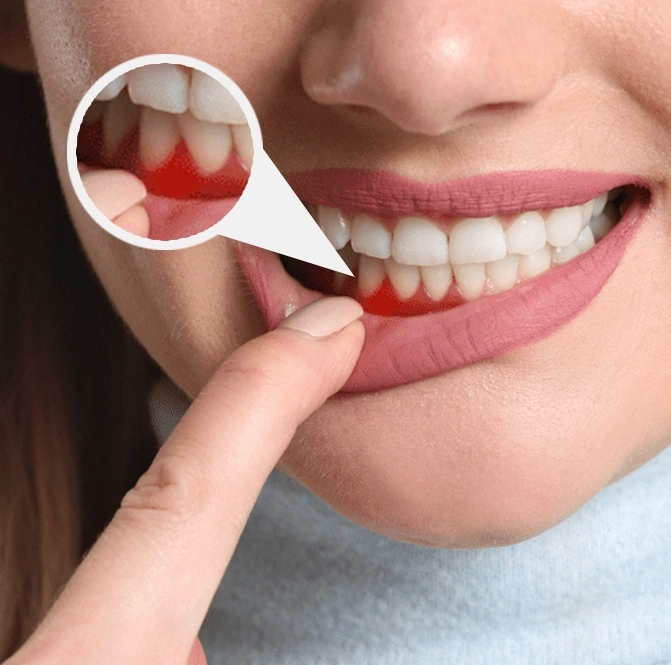
At Vitrin Clinic, we believe a confident smile begins beneath the surface with healthy, resilient gums. Our specialist periodontal team treats gum disease, recession, and bone loss with precision and personalized care. Using advanced laser and surgical techniques, we restore strength, stability, and long-term confidence.
Treatment Process
A clear step-by-step overview of how the treatment is planned and performed, from the initial consultation to the final results, ensuring comfort, safety, and predictable outcomes.
01
Gum Pocket Measurement
We gently check the space between your teeth and gums using a periodontal probe. Healthy pockets are shallow with deeper measurements indicate the presence and severity of gum disease.
02
Digital X-Rays & 3D Imaging
Our digital radiographs and 3D imaging visualize bone levels, detect hidden infections, and reveal any structural changes invisible to the naked eye all with low radiation and high clarity.
03
Risk Assessment
We discuss your lifestyle habits, systemic health conditions, and any medications that may be influencing your gum health. Factors like smoking, diabetes, and stress all play a significant role in periodontal disease progression and understanding them is essential to lasting treatment success.
04
Personalised Treatment Plan
Based on your assessment, we develop a customised plan non-surgical or surgical matched to the severity of your condition, your budget, and your goals. Nothing begins until you fully understand and approve every step.
05
Ongoing Maintenance
Once treated, regular maintenance keeps bacteria under control and prevent recurrence. We also coach you through an effective at-home oral care routine tailored to your lifestyle.
What Is Periodontics?
Periodontics is the branch of dentistry concerned with the prevention, diagnosis, and treatment of diseases affecting the supporting structures of the teeth the gingiva (gums), periodontal ligament, cementum, and alveolar bone. These structures form the foundation on which every tooth depends for its stability and long-term survival.
When they are compromised by disease, even technically excellent restorations crowns, veneers, or implants are undermined.
Periodontal health is not a preliminary consideration in dental treatment; it is a prerequisite for all of it.
Periodontal disease is one of the most prevalent chronic conditions affecting adults globally.
A 2025 narrative review from Ewha Womans University College of Medicine confirms that periodontitis affects between 7.4% and 11.2% of adults worldwide, with prevalence increasing substantially with age.
A separate NIH/PMC review reports that severe periodontitis now affects 1.1 billion individuals globally making it more prevalent than cardiovascular disease.
Despite this, it remains largely underdiagnosed and undertreated because its early stages are often painless and its consequences accumulate silently over years.
The clinical objective of periodontal treatment is to arrest the disease process eliminating the bacterial biofilm driving the destructive inflammatory response, reducing pocket depths to maintainable levels, and where possible regenerating lost bone and attachment.
Successful periodontal treatment requires both high-quality clinical intervention and a structured maintenance programme, as periodontitis is a chronic condition that does not resolve with a single course of treatment.
~11%Adults Severe Periodontitis | 1.1BPeople Affected Globally | 6+Systemic Conditions Linked | ReversibleGingivitis Stage |
|---|---|---|---|
Stages of Periodontal Disease
Periodontal disease exists on a spectrum from early, fully reversible gingival inflammation to advanced attachment and bone loss that threatens the long-term survival of the affected teeth.
The 2018 World Workshop on the Classification of Periodontal and Peri-Implant Diseases established a staging and grading system that guides clinical diagnosis and treatment planning, and is used at Vitrin Clinic for every periodontal assessment.
Gingivitis
Gingivitis is inflammation of the gingiva caused by the accumulation of bacterial plaque at and below the gum margin.
It is characterised by redness, swelling, and bleeding on probing but crucially, no attachment loss or bone destruction has yet occurred.
Gingivitis is fully reversible with professional debridement and improved patient oral hygiene.
It is the only stage of periodontal disease that resolves completely without permanent structural consequences making early intervention the highest-value clinical action in periodontics.
Mild to Moderate Periodontitis
Once attachment loss and radiographic bone loss are detectable, the disease has progressed to periodontitis a stage at which the tissue destruction is not reversible, but is arrestable with treatment.
Mild to moderate periodontitis is characterised by pocket depths of 4 to 6 mm, clinical attachment loss of 1 to 4 mm, and radiographic bone loss confined to the coronal or middle third of the root.
Non-surgical treatment thorough subgingival debridement and patient education is the first-line intervention and achieves significant clinical improvement in the majority of cases.
Severe Periodontitis
Severe periodontitis is defined by pocket depths of 6 mm or more, clinical attachment loss exceeding 5 mm, bone loss extending to the middle or apical third of the root, and in Stage IV, tooth loss directly attributable to periodontitis.
Furcation involvement disease entering the area between the roots of multi-rooted teeth substantially increases treatment complexity.
Severe cases often require a combination of non-surgical and surgical periodontal therapy, and carry a more guarded prognosis for affected teeth depending on residual bone support and patient compliance with maintenance.
Peri-Implant Disease
Peri-implantitis the implant equivalent of periodontitis is inflammation and bone loss around an osseointegrated implant.
Like periodontitis, it is driven by bacterial biofilm and progresses silently in its early stages.
Patients with a history of periodontitis are at significantly elevated risk of peri-implantitis, which is why periodontal health must be established and maintained before implant placement and why ongoing monitoring of implants within a structured maintenance programme is essential for their long-term survival.
Periodontitis Is Not Just a Dental Problem
The inflammatory mediators produced in an active periodontitis lesion do not remain confined to the gum tissue.
Periodontal pathogens and their products enter the systemic circulation, driving low-grade chronic inflammation at distant organ sites.
A 2023 consensus report confirmed that periodontitis is independently associated with cardiovascular disease, type 2 diabetes, COPD, and obstructive sleep apnea.
A bidirectional relationship exists with diabetesuntreated periodontitis worsens glycaemic control, and successful periodontal treatment measurably reduces HbA1c levels. Treating periodontal disease is treating the whole patient, not just the mouth.
Necrotising Periodontal Disease
Necrotising gingivitis and necrotising periodontitis are acute, rapidly progressing presentations characterised by necrosis and ulceration of the interdental papillae, pain, bleeding, and in some cases systemic symptoms including fever and lymphadenopathy.
They are associated with significant psychological stress, malnutrition, immunosuppression, and systemic disease.
Prompt professional debridement, patient education, and in some cases systemic antimicrobials are required. These presentations should not be managed with self-treatment and require immediate clinical assessment.
Non-Surgical vs. Surgical Periodontal Treatment
The choice between non-surgical and surgical approaches depends on the severity and distribution of disease, patient compliance, anatomical factors, and the re-evaluation findings following non-surgical treatment.
The following comparison is based on evidence from systematic reviews and clinical guidelines.
Criterion | Non-Surgical Therapy (SRP) | Surgical Therapy | No Treatment |
|---|---|---|---|
First-Line Indication | Yes, all stages of periodontitis | Second-line when SRP is insufficient | Disease progresses to tooth loss |
Invasiveness | Non-surgical no incision, local anaesthesia only | Surgical flap elevation, sutures, healing period | None but disease consequence is severe |
Pocket Depth Reduction | Significant 1–2 mm average PPD reduction (systematic review) | Greater improved access to deep sites | Pockets deepen over time |
Bone Regeneration | Limited arrests bone loss, minimal regeneration | Yes, guided bone regeneration in suitable defects | Progressive bone loss continues |
Effective For Deep Pockets | Good for pockets up to ~6mm reduced access beyond | Superior access for pockets >6mm and furcations | Pockets worsen progressively |
Patient Recovery | Minimal mild sensitivity, normal function maintained | Post-surgical discomfort and healing period 2–4 weeks | None, but at cost of progressive disease |
Long-Term Outcome | Excellent with maintenance disease arrested in most cases | Excellent for appropriate cases superior pocket elimination | Progressive attachment loss and eventual tooth loss |
Maintenance Required After | Yes, lifelong every 3–6 months | Yes , same lifelong maintenance requirement | No maintenance undertaken disease continues |
Compiled from: University of Bern Periodontal Therapy Outcomes Systematic Review · NIH/PMC Effects of Maintenance Protocols on Periodontal Outcomes · University of Salamanca Periodontal Treatment in Patients with Periodontitis and Diabetes, PMC11431200, 2024.
Why Clinical Approach Matters
Periodontal treatment is one of the most protocol-dependent procedures in dentistry its outcomes are directly determined by the thoroughness of the debridement performed, the accuracy of the diagnosis and staging, the patient's compliance with oral hygiene and maintenance, and the clinician's ability to identify and manage the systemic and local risk factors that influence treatment response.
The single most important predictor of long-term periodontal treatment success is maintenance compliance. Research from systematic reviews of post-interventional maintenance protocols consistently confirms that patients who attend regular periodontal maintenance appointments maintain significantly better clinical parameters over time than those who do not regardless of the quality of the active treatment they received.
An excellent course of non-surgical therapy followed by no maintenance is a temporary benefit, not a lasting one.
The systemic dimension further elevates the importance of clinical rigour in periodontal treatment.
A patient with diabetes and periodontitis who receives thorough periodontal treatment and achieves disease control receives a measurable improvement in HbA1c alongside their dental benefit confirmed across multiple systematic reviews and meta-analyses from international research groups.
The Karolinska Institute in Stockholm has specifically documented this bidirectional relationship, confirming that treating periodontitis lowers blood glucose in diabetic patients.
Periodontal treatment is systemic treatment, and it should be delivered with that understanding.
Vitrin Clinic Standard
Full-mouth charting at every assessment not a spot-check
Your periodontal status is measured at all six sites of every tooth. Disease that is not measured is not managed and at Vitrin Clinic, it is always measured.
Debridement under local anaesthesia thorough, not superficial
Non-surgical treatment at Vitrin Clinic is performed under local anaesthesia so the full depth of every pocket is treated without patient discomfort limiting access.
Thoroughness determines outcomes.
No restorative treatment until periodontal health is confirmed
Crowns, veneers, and implants are not placed until your gum health is assessed and stable. Restorations placed into active periodontal disease are placed into an unstable foundation.
Maintenance is part of treatment not an optional extra
Your long-term maintenance schedule is discussed and planned as part of your active treatment plan. Periodontal disease reactivates without maintenance and at Vitrin Clinic we plan for the long term from the outset.
Periodontal Treatment Cost: Vitrin Clinic vs. UK vs. USA
The cost of periodontal treatment varies significantly depending on the stage of disease, the procedures required, and the country of treatment. The following table provides a transparent comparison of average costs across the United Kingdom, United States, and Vitrin Clinic in Istanbul from non-surgical deep cleaning to advanced surgical intervention allowing patients to understand the full financial scope of their treatment before their consultation.
Treatment type | 🇬🇧 UK | 🇺🇸 USA | 🇹🇷 Turkey |
|---|---|---|---|
Scaling & root planing (SRP) Non-surgical deep cleaning, full mouth | $510 – $1,015 | $800 – $1,200 | From $150 |
Periodontal flap surgery Surgical pocket reduction, per quadrant | $1,270 – $3,810 | $1,000 – $3,000 | From $300 |
Bone graft Regenerative, per site | $635 – $1,525 | $200 – $1,200 | From $200 |
Periodontal maintenance Ongoing recall visit, per session | $115 – $255 | $150 – $300 | From $50 |
Consultation & 3D imaging | Charged separately | Charged separately | Free & included |
Estimated saving | — | — | Up to 70% less |
* Prices are averages for reference only and may vary based on disease severity, number of teeth or quadrants affected, and individual treatment requirements. A personalised quote is provided following your free consultation.
Clinical Evidence & References
Ewha Womans University College of Medicine, Seoul, South Korea
Relationship Between Periodontitis and Systemic Health Conditions — Narrative Review
EMJ · April 2025Kim M-Y, Pang E-K · DOI: 10.12771/emj.2025.00101 · PMC12277508
Key finding: Periodontitis affects 7.4% to 11.2% of adults globally and is associated with cardiovascular disease, diabetes, chronic kidney disease, IBD, rheumatoid arthritis, respiratory disease, adverse pregnancy outcomes, cancer, neurodegenerative disease, and autoimmune conditions mediated by dysbiotic oral biofilms, chronic systemic inflammation, and dissemination of periodontal pathogens.
University of Pennsylvania, Department of Periodontics, USA
Periodontal Disease: A Contributing Factor to Adverse Outcome in Diabetes
Journal of Diabetes Investigation · 2025El Chaar E · DOI: 10.1111/1753-0407.70136 · PMC12319149
Key finding: Periodontitis is a prevalent chronic inflammatory condition with strong, evidence-based associations with cardiovascular disease, diabetes mellitus, rheumatoid arthritis, IBD, Alzheimer's disease, and various cancers mediated by systemic dissemination of periodontal pathogens and immune mediators exacerbating distant organ inflammation.
Karolinska Institute, Stockholm, Sweden
The Oral-Systemic Link: Oral Infection/Inflammation and the Relation to General Health
Annals of Medicine · 2021Klinge B · DOI: 10.1080/07853890.2021.1896879 · PMC8480777
Key finding: Increasing evidence supports an independent association between periodontitis and cardiovascular disease, type 2 diabetes, and rheumatoid arthritis. Successful treatment of periodontitis lowers blood glucose levels (HbA1c) in diabetic patients confirming a bidirectional, clinically significant relationship between oral and systemic health.
University of Salamanca & Biomedical Research Institute of Salamanca (IBSAL), Spain
Effect of Periodontal Treatment in Patients with Periodontitis and Diabetes Review of Systematic Reviews with Meta-Analyses
Healthcare (MDPI) · September 2024López-Valverde N, Blanco Rueda JA · DOI: 10.3390/healthcare12181844 · PMC11431200
Key finding: Comprehensive review of 18 meta-analyses covering 16,247 subjects confirms that periodontal treatment in patients with type 2 diabetes produces statistically significant improvements in probing pocket depth, clinical attachment level, bleeding on probing, and glycated haemoglobin — reinforcing the systemic benefit of effective periodontal treatment beyond the oral cavity.
NIH / PubMed Central Systemic Perspective Review
Periodontal Disease: A Systemic Condition
NIH/PMC · November 2024PMC11579822 · Prevalence data, comorbidity associations, and multimorbidity analysis
Key finding: Severe periodontitis now affects approximately 23.6% of the adult population globally a prevalence substantially higher than estimates from 1990 to 2010. Periodontitis is increasingly recognised as a condition associated with multimorbidity, sharing environmental, lifestyle, genetic, and immunopathological risk factors with multiple chronic non-communicable diseases.
NIH / PubMed Central Clinical Evidence Review
The Impact of Periodontitis on Cardiovascular Disease: Mechanisms, Evidence, and Therapeutic Implications
NIH/PMC · 2025PMC12398414 · Mechanistic review of periodontal-cardiovascular pathways
Key finding: Strengthening prevention strategies for periodontitis has the potential to prevent or ameliorate cardiovascular conditions. The review identifies atherosclerosis promotion, endothelial dysfunction, and systemic pro-inflammatory cytokine elevation as the primary mechanistic pathways linking periodontal infection to cardiovascular disease risk.
NIH / PubMed Central Systematic Review
Influence of Different Post-Interventional Maintenance Concepts on Periodontal Outcomes
NIH/PMC · 2016PMC4949770 · Evaluation of three systematic reviews: SRP, SRP + antibiotics, regenerative surgery maintenance
Key finding: Post-interventional maintenance care is a decisive determinant of long-term periodontal outcomes across all treatment modalities non-surgical, antibiotic-adjunctive, and regenerative. Patients receiving regular maintenance maintain significantly better clinical parameters over time. Without maintenance, active treatment gains are progressively lost.
NIH / PubMed Central Narrative Review
The Root of the Matter: Linking Oral Health to Chronic Disease Prevention
NIH/PMC · February 2025PMC11891740 · Cardiovascular disease, diabetes, rheumatoid arthritis, and Alzheimer's
Key finding: Periodontitis is not merely a localised oral condition but a significant contributor to systemic inflammation affecting cardiovascular, metabolic, musculoskeletal, and neurological health. Early diagnosis, regular professional maintenance, and proper oral hygiene significantly reduce the risk of both periodontitis and its systemic consequences.
Have a question about this treatment?
Send us your questions or photos. Our doctors and patient coordinators reply every day of the week with a personal treatment plan.
Frequently Asked Questions
Answers to common questions about the treatment, including suitability, procedure details, recovery, and long-term care — helping you feel informed and confident before moving forward.
Absolutely. Our Istanbul periodontal treatment service is trusted by patients from all over the world with savings of up to 70% compared to equivalent care in the UK ,US & EU . Periodontal treatment Turkey at Vitrin Clinic includes full dental tourism support hotel recommendations, private VIP transfers, multilingual staff, and a clear post-treatment care plan to follow at home.
.webp&w=3840&q=75)


