
Full Mouth Dental Implants Cost in Turkey. Turkey is a top destination for dental tourism, offering high-quality full mouth dental implants at up to 70% less than Western countries with full set costs ranging between $1,400 and $3,000 ($550 for a single tooth).
Full Mouth Dental Implants
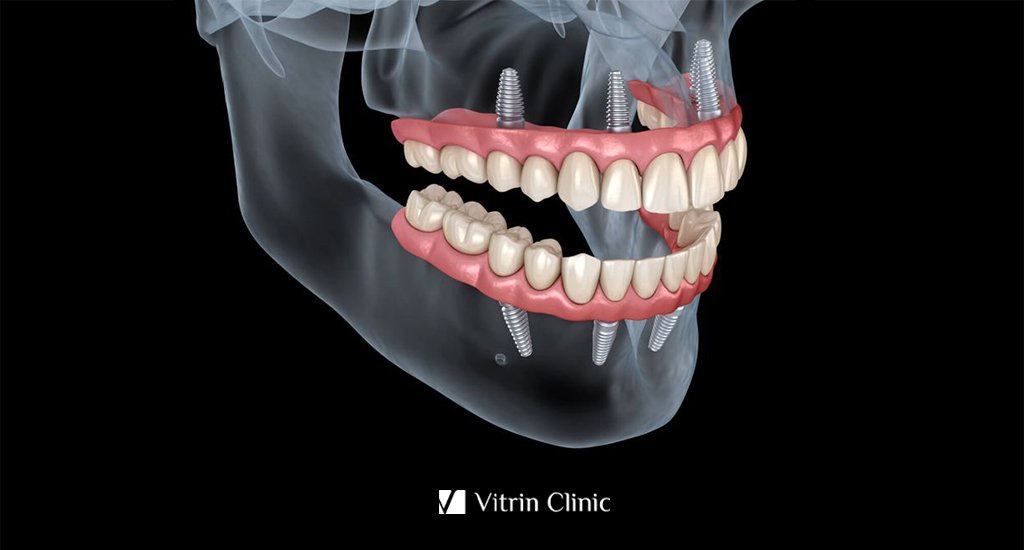
Full mouth dental implants are permanent, jawbone-anchored restorations that replace most or all missing teeth with a strong, natural-looking functional smile.
Prosthetic Material Decisions: Zirconia vs. Acrylic Hybrid Dentures
Choosing the right prosthetic material is one of the most important decisions in full mouth dental implant treatment. At Vitrin Clinic, the final restoration is selected according to the patient's oral condition, aesthetic expectations, bite force, and long-term goals.
Zirconia vs Acrylic Hybrid Dentures: What Is the Difference?
Zirconia Dentures: A premium ceramic choice offering superior durability, stain resistance, and a natural, translucent look.
Acrylic Hybrid Dentures: A cost-effective alternative using acrylic teeth over a metal framework that provides good functionality and easy repairability.
The Bottom Line: Rather than choosing based on price alone, experts recommend selecting a material based on individual bone strength, bite force, budget, and aesthetic preferences.
Zirconia Implant Prosthetics
Zirconia is a top-tier choice for full-mouth dental implants because it is exceptionally strong, durable, fracture-resistant, and closely mimics the appearance of natural teeth.
Acrylic Hybrid Dentures
Acrylic hybrid dentures are a budget-friendly, repairable implant option that offers good look and function for the right candidate.
Acrylic hybrids offer a cost-effective, easily repairable implant denture option with reliable aesthetics and function.
Cost & Repair: Cheaper than premium options and easier to fix.
Performance: Delivers good appearance and daily chewing function.
Best For: Patients balancing budget, habits, and expectations.
Zirconia vs Acrylic Hybrid Dentures Cost Considerations
Cost Factors: The price difference between zirconia and acrylic hybrid dentures varies based on the number/brand of implants, lab technology, and level of customization.
Patient Guidance: Vitrin Clinic provides customized treatment plans detailing each option's pros, cons, and lifespan to help patients decide.
Denture costs depend on materials and technology, and Vitrin Clinic helps patients pick the best option through personalized consultations.
Clinical Note : Dr. Rifat Alsaman’s Opinion
Dr. Rifat Alsaman emphasizes that dental material selection should be customized based on each patient's aesthetic, functional, and comfort needs balancing durability and appearance rather than price alone.
Are you in a Good Health to Receiving a Dental Implant
Dental implants aren't suitable for everyone, so certain criteria must be met to determine if you're a candidate.
To receive a dental implant, you must meet the following requirements:
Be in good oral and general health.
Have healthy gums, free from infection or periodontal disease.
Ensure your jawbone is of good quality and size to properly support the implant.
What Are Full Mouth Dental Implants Cost in Turkey?
Full mouth dental implants are a permanent, stable alternative to dentures that replace missing teeth by anchoring prosthetic arches directly into the jawbone to restore natural appearance and function.
Why does Turkey have a higher Success rate for Dental Implants?
Turkey is a popular global destination for full-mouth dental implants because it offers high-quality care from skilled professionals at a significantly lower cost.
Mechanical Retentive Systems: Screw-Retained vs. Cement-Retained Implant Prosthetics
The connection method between dental implants and the final prosthetic teeth plays an important role in maintenance, stability, and long-term success.
Screw-Retained Dental Implants
Screw-retained prosthetics are attached directly to the implants using screws. This system allows easier removal and maintenance because dentists can access the restoration without damaging it.
Advantages of Screw-Retained Implant Prosthetics:
Easier maintenance and future adjustments
Reduced risk of cement-related complications
More predictable long-term management
Preferred option in many full mouth rehabilitation cases
Cement-Retained Dental Implants
Cement-retained restorations use dental cement to attach the prosthetic structure to an implant-supported abutment.
This option can provide excellent aesthetics because it allows dentists more flexibility in positioning the restoration.
However, remaining cement around implants may increase the risk of gum irritation if not properly managed
Screw Retained vs Cement Retained Dental Implants: Which Is Better?
Implant selection isn't one-size-fits-all; Vitrin Clinic specialists evaluate each patient's unique anatomy, aesthetics, and bite forces to choose the best retention system.
What We Notice Clinically
At Vitrin Clinic, Dr. Rifat Alsaman emphasizes that successful implant treatment requires careful planning, which provides easier long-term maintenance and monitoring for patients with complex cases or high-risk dental needs.
The Cost of Full Mouth Dental Implants in Turkey
Full mouth dental implants in Turkey typically cost between $3,000 and $10,000, which is significantly cheaper than the $25,000 to $50,000+ charged in the US, UK, and Europe.
Read More: Dental Implant Alternatives
Why Choose Dental Implants Cost in Turkey?
Turkey is internationally recognized for advanced dental procedures, state-of-the-art clinics, and experienced implantologists. Patients choose Turkey for:
High-quality care by internationally trained dentists
Modern technology and sterile surgical environments
Lower costs without compromising on safety or results
All-inclusive dental tourism packages (consultation, accommodation, airport transfer, etc.)
At Vitrin Clinic, we specialize in full mouth restorations and provide luxurious service at competitive prices, making your dental journey smooth and rewarding.
Full Mouth Dental Implants Cost in Turkey (2026 Update)
The cost of full mouth dental implants in Turkey varies based on the complexity of your case, materials used, and clinic reputation. On average:
Full mouth implants (All-on-4 or All-on-6): $3,000 – $10,000
Single dental implant: From $550
Premium package (consultation, treatment, stay): Customized based on your needs
This is significantly lower than in the UK or US, where full mouth implants can cost anywhere from $25,000 to $50,000.
Why Are Prices Lower in Turkey?
The lower cost is due to:
Lower overhead and labor costs
Government support for medical tourism
High patient volume allowing clinics to optimize resources
Despite the lower prices, Turkish dental clinics adhere to strict international standards for hygiene, safety, and materials.
The Periodontitis Caveat: Eradicating Active Gum Disease Before Implant Placement
Patients with missing teeth caused by advanced gum disease need special preparation before receiving full mouth dental implants.
Why Treating Periodontitis Before Dental Implants Is Important
Active periodontitis can affect gum tissues and supporting bone around implants. If infection and inflammation are not controlled before surgery, it may increase the risk of implant complications.
Before implant placement, dentists usually evaluate:
Gum health
Bone density
Infection levels
Periodontal pocket depth
Oral hygiene habits
Can Patients With Gum Disease Get Full Mouth Dental Implants?
Yes, many patients with a history of gum disease can receive implants after proper periodontal treatment.
At Vitrin Clinic, treatment planning may include gum therapy, professional cleaning, laser treatment when needed, and bone evaluation before implant surgery.
Factors That Affect the Cost
Several elements influence the final price of full mouth dental implants in Turkey:
1. Type of Implants Used
Endosteal Implants: The most common type, placed directly into the jawbone.
Subperiosteal Implants: For patients with insufficient bone, placed on top of the jawbone.
Zygomatic Implants: Anchored into the cheekbone when jawbone volume is low.
2. Materials
High-quality implants (e.g., titanium) and porcelain crowns may increase costs slightly but ensure better durability and aesthetic results.
3. Additional Procedures
Bone grafting, sinus lifts, or tooth extractions can add to the total cost depending on your oral health condition.
4. Clinic Reputation
Well-established clinics with experienced surgeons and international accreditations may charge more but provide higher success rates and premium service.
What to Expect from the Procedure
The treatment typically follows a multi-stage process:
1. Consultation and Planning
Your dentist conducts X-rays or 3D scans to assess bone structure, plan implant placement, and prepare a treatment roadmap.
2. Implant Surgery
Under local anesthesia or sedation, the implants are placed into your jawbone. Temporary teeth may be fitted immediately or after healing begins.
3. Healing Phase
A 3 to 6-month healing period allows the implants to fuse with your bone (osseointegration), ensuring long-term stability.
4. Final Restoration
Once healing is complete, custom-made prosthetic teeth are attached, restoring full function and aesthetics to your smile.
Factors That Affect the Cost of Full Mouth Dental Implants in Turkey
Materials Used: The type of materials used for the implants and crowns will affect the overall cost. High-quality titanium implants and porcelain crowns are often more expensive.
Complexity of the Case: If there are complications, such as bone grafting or sinus lifts, the cost may increase.
Clinic Reputation and Location: Prices can vary depending on the clinic’s location, reputation, and the experience of the dental team.
Are Dental Implants in Turkey Really Affordable?
Turkey is a top choice for dental tourism because it offers high-quality, low-cost dental implants alongside affordable travel and accommodation.
Before and After Pictures Full Mouth Implants Turkey
At Vitrin Clinic, our cases of full mouth implants in Turkey show stunning smile transformations. These real patient results highlight our expert care and the life-changing impact of full mouth restorations.
Is It Worth to do a Full Mouth Dental Implants in Turkey
Turkey offers high-quality, long-lasting full mouth dental implants in modern facilities at a significantly lower cost than many other countries.
Long-Term Financial Realities: A 10-Year Cost Comparison Between Implants and Dentures
When comparing treatment options, patients should consider long-term value rather than only the initial price.
Full Mouth Dental Implants vs Dentures Cost Over 10 Years
Traditional dentures usually require:
Regular adjustments
Replacement due to wear
Adhesive products
Possible discomfort caused by bone changes
Full mouth dental implants usually have a higher initial investment. They can provide improved stability, chewing ability, and long-term function.
Why Dental Implants Can Be a Long-Term Investment
Implant-supported restorations may reduce future replacement costs because they are designed for durability when properly maintained.
At Vitrin Clinic, patients receive transparent treatment planning that explains both immediate costs and long-term expectations.
What to Expect During the Treatment Process
The process for receiving full mouth dental implants in Turkey typically involves:
Consultation and Planning: Your first appointment will include a thorough examination and treatment planning.
Implant Placement: After preparing the jawbone, the dental implants will be placed.
Healing and Recovery: The implants will need time to fuse with the bone, typically 3 to 6 months.
Final Restoration: Once the implants are fully integrated, your dentist will place the crowns, giving you a fully restored smile.
Dental Tourism in Turkey with Vitrin Clinic
Your Path to Affordable Full Mouth Implants
Vitrin Clinic is a top choice for dental tourism particularly full-mouth implants offering world-class care and advanced technology at a fraction of Western prices.
Your Dental Trip to Vitrin Clinic
Vitrin Clinic provides online consultations, allowing you to discuss your treatment plan before you arrive. Their team will also assist with travel and accommodation arrangements, ensuring you have everything you need for a smooth experience.
Why Vitrin Clinic Is a Top Choice
Vitrin Clinic in Istanbul has earned a reputation for excellence in full mouth restorations, combining personalized care with modern technology.
What sets us apart:
Multilingual medical team
Free online consultations
Tailored treatment plans
Comfortable accommodations & VIP transfers
Hundreds of successful smile makeovers
We understand the needs of international patients and offer complete support from the first consultation to the final result.
Is It Safe to Travel for Dental Treatment?
Vitrin Clinic offers safe, high-quality care backed by international standards and positive patient reviews.
What We Notice Clinically
Patients choose Vitrin Clinic and Dr. Rifat Alsaman for full mouth dental implants to regain their smile, chewing function, and confidence through personalized care and precision treatment.
How much do dental implants cost in Turkey in 2026?
In 2026, the average cost of a complete single dental implant in Turkey ranges from $400 to $1,500 (approximately £350 to £900). This is roughly 60% to 80% cheaper than equivalent treatments in the US, UK, or Canada, where a single implant often exceeds $3,000 to $5,000.
The exact cost depends heavily on the implant brand, crown materials, and the clinic you choose. Below is a breakdown of what you can expect to pay.
Single Dental Implants (Including Post, Abutment, and Crown)
• Budget Tier (such as Osstem, NTA, or MegaGen): $400 to $600 per tooth.
• Premium Tier (such as Straumann or Nobel Biocare): $600 to $900 per tooth.
• Note on pricing: Be cautious of clinics advertising implants for under $300. These entry-level prices often only cover the titanium implant fixture (the screw itself) and exclude the connector abutment and final crown.
Full-Arch and Full-Mouth Restorations
For those requiring extensive dental work, full-mouth packages provide significant savings:
• All-on-4 (per jaw): $2,500 to $7,600 (roughly £3,500 to £4,500).
• All-on-6 (per jaw): $3,900 to $9,700.
• Full-mouth restoration (both jaws): $6,000 to $16,000. By comparison, a full-mouth restoration in North America can easily cost between $50,000 and $90,000.
Additional Surgical Procedures
If your jaw requires preparation before implant placement, you may encounter these extra fees:
• Bone graft: $200 to $500 per site.
• Sinus lift: $380 to $800.
What is Included in Turkey Dental Packages?
Most reputable clinics cater to international patients by offering all-inclusive packages. These packages generally bundle the treatment costs with:
• Free initial consultations and 3D CT scans.
• Luxury hotel accommodation for your stay.
• Private airport and clinic transfers.
• Temporary crowns or bridges while your implants heal.
The Timeline
Keep in mind that getting dental implants is a two-step journey. Your first visit involves the surgical placement of the implants and the fitting of temporary teeth. You will then need to return to Turkey 3 to 6 months later—once the implants have fully fused to your jawbone—to receive your permanent, custom-made zirconia or porcelain crowns.
Clinical Note
At Vitrin Clinic, Dr. Rifat Alsaman and his team use advanced digital planning to evaluate bone structure, implant positioning, and aesthetics prior to full mouth dental implant surgery, ensuring the highest rate of treatment success.
Tips for Patients Before Getting Full Mouth Dental Implants in Turkey
Choosing full mouth dental implants in Turkey requires careful research, but individualized consultations and digital planning from experienced clinics ensure long-term success tailored to your needs.
Choose an Experienced Dental Implant Team
One-Sentence Summary: The success of full mouth dental implants relies on expert specialists, advanced technology, and thorough planning all of which Vitrin Clinic provides to ensure accurate, predictable results.
What matters: Implant success depends on specialist experience, modern technology, and precise treatment planning.
Patient advice: Choose a clinic based on team expertise, past results, and patient care.
Vitrin Clinic’s solution: Combines experienced specialists and advanced diagnostic tools for accurate placement and reliable results.
Choose a Clinic With Experienced Implant Specialists
Patients should review the medical team's experience, technology, and previous implant cases before selecting a clinic.
Ask About Implant Brands and Prosthetic Materials
Understanding options such as premium dental implant brands in Turkey, zirconia restorations, and hybrid dentures helps patients make informed decisions.
Maintain Excellent Oral Hygiene
Even after implant treatment, daily cleaning and regular dental visits are essential for protecting gums and implants.
Follow Your Dentist’s Aftercare Instructions
Following professional recommendations improves healing and supports long-term implant stability.
At Vitrin Clinic, patients receive personalized guidance throughout every stage of treatment, from consultation to long-term follow-up care.
Conclusion: Is Full Mouth Dental Implants in Turkey the Right Choice for You?
Full mouth dental implants in Turkey, such as those provided by Dr. Rifat Alsaman at Vitrin Clinic, offer a durable, natural-looking solution for missing teeth when backed by expert planning, quality materials, and personalized care.
Dental Implant Costs in Turkey 2026: Vitrin Clinic Outline
Cost Factors in Turkey
Explain that implant brand, crown material, and jaw condition affect total dental implant cost in Turkey in 2026. Mention that packages may vary by clinic and treatment plan.
Comparing Dental Tourism Providers
Describe how patients can compare dental tourism in Turkey providers by checking included services and follow-up care. Include Vitrin Clinic as a provider offering dental tourism in Turkey.
Getting 2026 Pricing from Vitrin Clinic
Encourage readers to request a personalized 2026 dental implant cost estimate from Vitrin Clinic. Note that final pricing depends on individual assessment and treatment plan.
Reference
Full Mouth Dental Implants Cost in Turkey refers to the investment required for replacing all missing teeth with a complete implant-supported restoration. :
FAQs

Dr. Rifat Alsaman has more than 5 years of clinical experience in dentistry and currently serves as the Head of the Medical Team at Vitrin Clinic. He is dedicated to providing exceptional patient care, overseeing treatment planning, and ensuring the highest clinical standards across the team. His expertise, attention to detail, and commitment to continuous professional development have helped countless patients achieve healthier, more confident smiles.


