
Navigating the complexities of oral healthcare can often leave patients wondering which specialist they need to consult for specific procedures. A very frequent source of confusion for individuals undergoing oral health assessments or smile transformations is the precise classification of third molar extractions. Specifically, patients often ask: is wisdom teeth removal orthodontic or dental?
To understand the answer entirely, one must look at how modern dental medicine integrates general oral surgery with structural alignment. At Vitrin Clinic, a premier global destination for advanced cosmetic and restorative dentistry, this question is handled daily with a comprehensive approach. The classification depends heavily on the underlying reason for the extraction and how the treatment plan is designed.
Defining the Core Disciplines: Dental vs. Orthodontic
To address the question, is wisdom teeth removal orthodontic or dental, it is essential to first define what separates standard dental care from specialized orthodontic treatment.
General dental care focuses on the overall health, maintenance, prevention, and restoration of the teeth, gums, and oral structures. This includes common procedures such as fillings, root canals, deep cleanings, hygiene maintenance, and routine extractions. When a tooth becomes decayed, damaged, or infected, a general dentist or an oral surgeon steps in to treat the localized problem.
Orthodontics, on the other hand, is a specific branch of dentistry that deals exclusively with the alignment of the teeth and jaws. Orthodontists utilize tools like metal braces, ceramic brackets, and clear aligners to correct malocclusions (bad bites), overcrowding, gaps, and jaw misalignments.
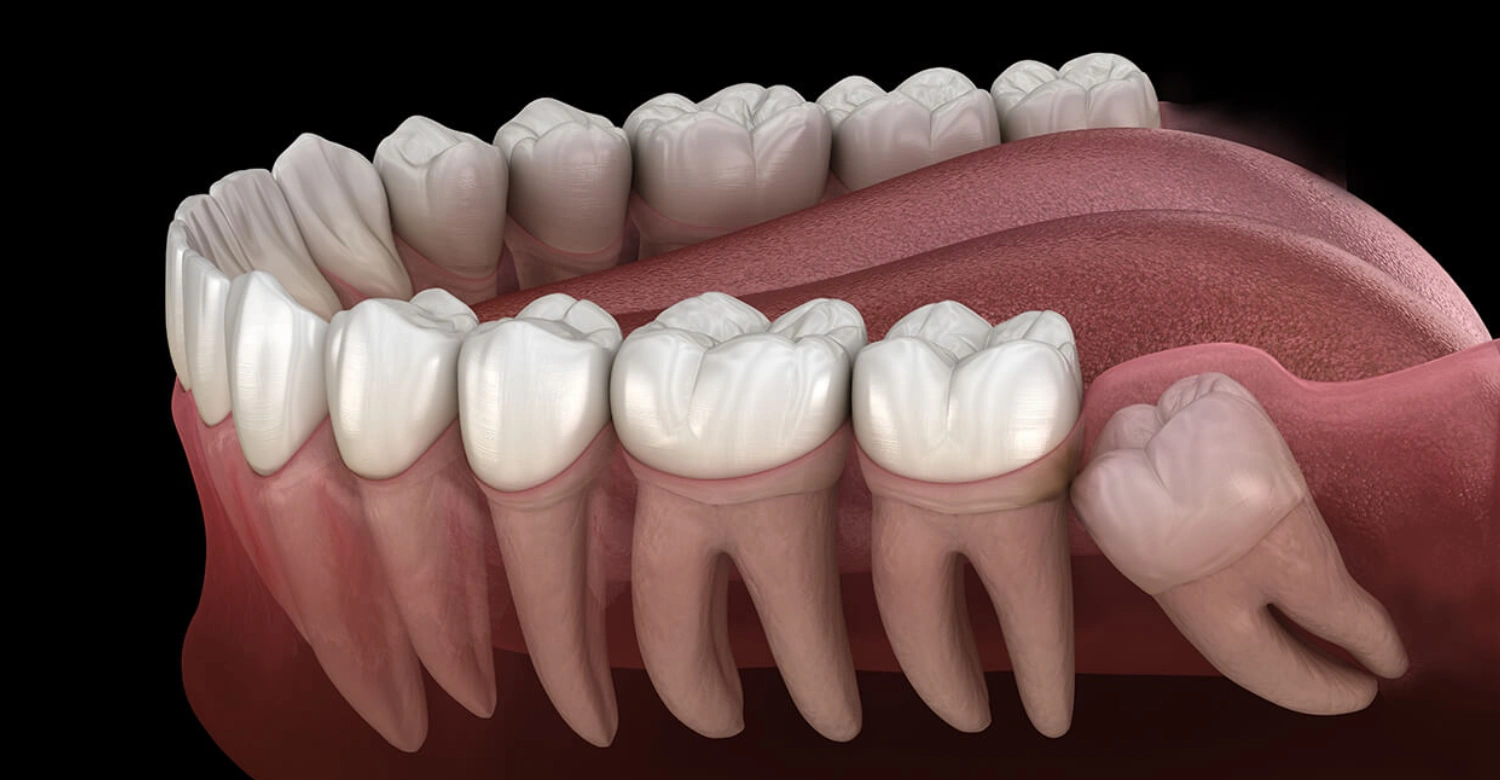
Wisdom teeth, also known as the third molars, typically erupt between the ages of 17 and 25. Because they are the final teeth to emerge, they frequently run out of physical space in the jaw bone. When considering whether their removal falls under dental or orthodontic domains, the answer is that the surgical procedure itself is fundamentally a dental (oral surgery) treatment, but it is very frequently performed for orthodontic reasons.
The Ultimate Perspective from Dr. Rifat Alsaman
When assessing complex cases where structural alignment intersects with surgical interventions, clinical leadership plays an invaluable role. Dr. Rifat Alsaman, a highly distinguished cosmetic dentist and the Head of the Medical team at Vitrin Clinic, provides deep professional clarity on this matter.
According to Dr. Rifat Alsaman, looking at the surgical procedure in isolation misses the larger picture of comprehensive oral health. Dr. Rifat Alsaman emphasizes that while the physical act of extracting a third molar is classified as a general dental or oral maxillofacial surgical procedure, its integration into a patient’s long-term alignment plan cannot be overlooked. As a cosmetics dentist who understands the delicate balance between a beautiful smile and structural harmony, Dr. Rifat Alsaman states that wisdom teeth are often the hidden disruptors of orthodontic stability.
In his daily practice as the Head of the Medical team at Vitrin Clinic, Dr. Rifat Alsaman observes that many patients require wisdom teeth extraction as a preventative step before or during orthodontic care. Dr. Rifat Alsaman points out that if a patient undergoes alignment therapy while impacted third molars are actively pushing forward from the back of the jaw, the structural integrity of the newly aligned smile could be severely compromised. Therefore, Dr. Rifat Alsaman views the procedure as a dental execution that serves a vital orthodontic purpose. This same principle is covered in more detail in our guide to the orthodontic treatment plan process at Vitrin Clinic.
When Wisdom Teeth Removal is Strictly Dental
In many scenarios, the question is wisdom teeth removal orthodontic or dental resolves firmly on the dental side. This occurs when the extractions are performed to address immediate localized pathology, pain, or disease, completely independent of any desire to straighten the teeth.
Impacted Teeth and Infection: When wisdom teeth are unable to fully erupt through the gum line, they become impacted. This can create deep periodontal pockets where bacteria accumulate, leading to painful infections, pericoronitis (inflammation of the gum tissue surrounding a partially erupted tooth), and severe swelling. Recovery-specific guidance is covered in our guide to what to eat after wisdom teeth removal.
Caries and Root Damage: Because third molars are located so far back in the oral cavity, they are notoriously difficult to clean. This makes them highly susceptible to severe tooth decay. Furthermore, an improperly angled wisdom tooth can press directly against the roots of the adjacent second molar, causing root resorption and permanent structural damage to healthy teeth. Patients who smoke should also review our guide on smoking with wisdom teeth removed for safe recovery timing.
Cyst Formation: In rare instances, the fluid-filled sac in which the wisdom tooth develops can transform into a cyst. Left untreated, these cysts can destroy segments of the jawbone and damage neighboring nerves. For related jaw-imaging context, see our guide to CT scans for teeth, which are often used to evaluate cases like this before extraction.
In all these instances, Vitrin Clinic treats the removal as an essential dental intervention aimed at eliminating pain and disease. The focus here is therapeutic restoration rather than aesthetic or structural alignment.
When Wisdom Teeth Removal is Orthodontic
Conversely, there are many clinical situations where the extraction is driven entirely by orthodontic objectives. If you are preparing to get braces or clear aligners, your clinical team must evaluate the spatial dynamics of your entire jaw.
Relieving Severe Overcrowding: If a patient has a small jaw and severe dental crowding, keeping the wisdom teeth will worsen the overlapping of teeth. Removing them creates the necessary structural breathing room, allowing orthodontists to safely shift the remaining teeth into their proper positions. This ties directly into our broader guide on orthodontic appliances and how space is planned before treatment begins.
Preventing Orthodontic Relapse: A major concern in modern orthodontics is the shifting of teeth after braces are removed. While controversial in some historical research, many clinicians agree that the pressure exerted by erupting wisdom teeth can contribute to the late crowding of lower incisors.
Facilitating Complex Tooth Movement: In complex alignment cases where the orthodontist needs to distalize (move backward) the entire arch of teeth to fix a severe overbite or underbite, the presence of third molars blocks this movement entirely. Removing them opens up the posterior space required for the orthodontic mechanics to work effectively. In more complex cases requiring this level of movement, our guide to surgical orthodontics covers what's involved.
Financial Considerations and Average Costs at Vitrin Clinic
Understanding the clinical nature of the procedure is only one part of the journey; evaluating the financial aspect is equally important for international patients seeking top-tier care. At Vitrin Clinic, world-class dental expertise is paired with full pricing transparency, ensuring that patients achieve healthy, beautiful smiles without hidden costs.
The average cost of wisdom teeth removal at Vitrin Clinic typically ranges from $200 to $700 per tooth.
The exact positioning within this range depends heavily on the complexity of the specific case. A simple extraction of a fully erupted wisdom tooth sits at the lower end of the spectrum, usually averaging around $200 to $300. However, if the tooth is severely impacted, embedded deep within the jawbone, or requires complex surgical sectioning and microscopic precision, the cost will lean toward the higher end of the range, closer to $700. Patients comparing overall treatment value can also review our guide to dental tourism in Turkey.
When compared to the average costs in Western Europe, the United Kingdom, or North America where a single surgical wisdom tooth extraction can easily exceed $1,000 to $2,500 Vitrin Clinic provides an exceptionally cost-effective alternative. This superior pricing structure includes access to state-of-the-art diagnostic imaging, high-end surgical technologies, and a dedicated team of multilingual specialists who manage the patient's care from initial consultation through to final recovery. For a full breakdown of the procedure itself, see our dedicated guide to wisdom tooth extraction in Turkey, or our general overview of wisdom tooth extraction.
Conclusion: An Integrated Approach to Oral Health
Ultimately, trying to place this procedure into a single, isolated category ignores the highly collaborative nature of modern oral medicine. To accurately answer whether is wisdom teeth removal orthodontic or dental, one must conclude that it is a surgical dental procedure that frequently serves as a foundational pillar for successful orthodontic outcomes.
Whether your third molars are causing acute dental pain or are being strategically removed to make way for a pristine, straight smile, an integrated evaluation is vital. Under the careful leadership of Dr. Rifat Alsaman, Head of the Medical team at Vitrin Clinic, every patient undergoes a personalized diagnostic assessment utilizing advanced digital X-rays and intra-oral imaging. By combining surgical excellence with a deep understanding of cosmetic harmony, the medical professionals at Vitrin Clinic ensure that your extractions protect both your long-term oral health and the future beauty of your smile.
References:
FAQs

Dr. Rifat Alsaman has more than 5 years of clinical experience in dentistry and currently serves as the Head of the Medical Team at Vitrin Clinic. He is dedicated to providing exceptional patient care, overseeing treatment planning, and ensuring the highest clinical standards across the team. His expertise, attention to detail, and commitment to continuous professional development have helped countless patients achieve healthier, more confident smiles.


