.webp&w=3840&q=75)
Are all on 4 dental implants removable? No, they are not. Once placed and restored, they stay fixed in your mouth. This is a key reason they are popular. They feel secure and natural. You don't remove them like dentures. A dentist can take out parts for maintenance or repair. But you cannot do it yourself.
To understand this better, let's look at how they work. We'll also see why they are fixed. And what happens when a dentist needs access.
Are All on 4 Dental Implants Removable and How Do They Work
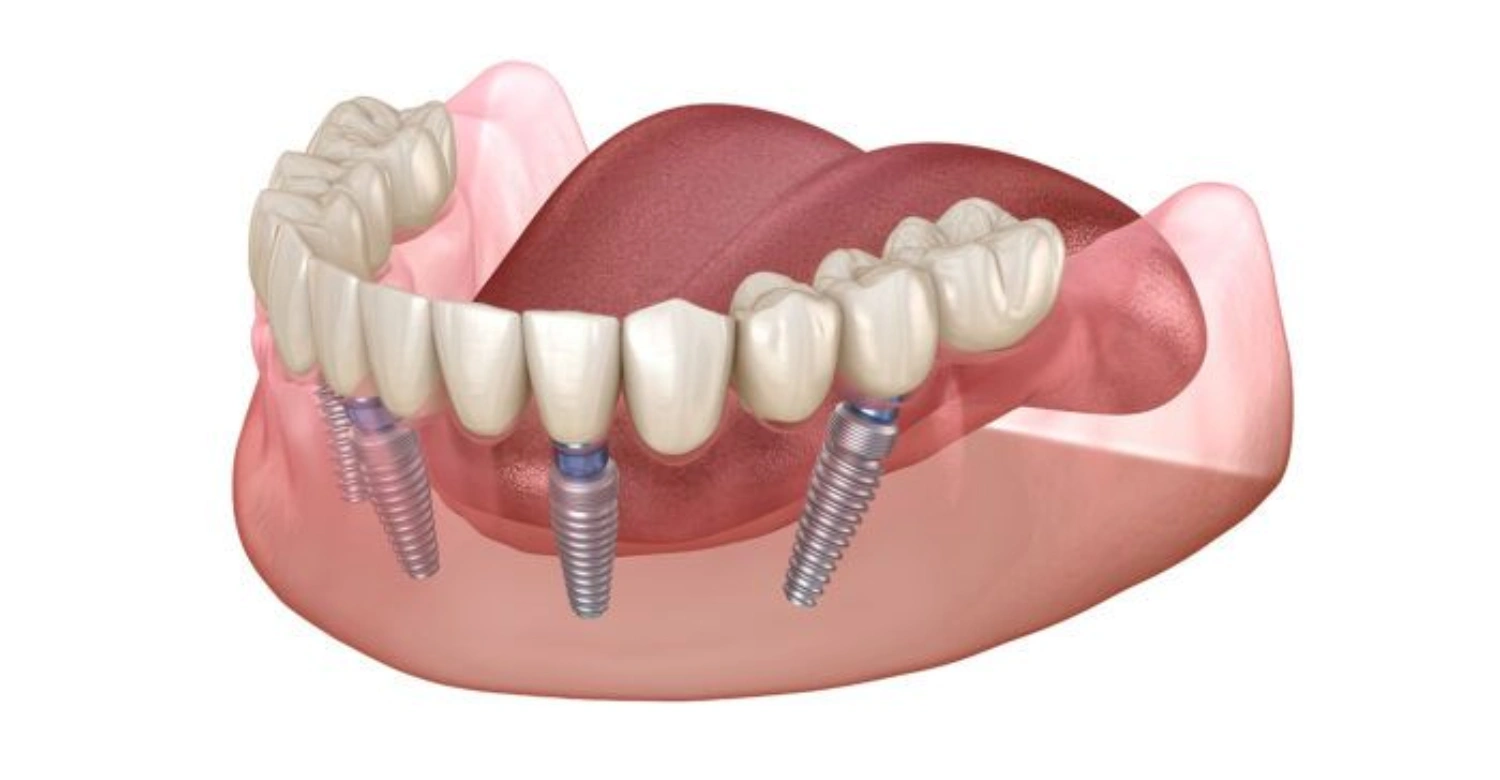
All-on-4 uses four titanium implants in the jawbone. They support a full arch of teeth. Two implants go in the front. They are vertical. Two go in the back at an angle. This angled placement maximizes bone contact. It often avoids bone grafting. That is a big advantage over older methods.
After placement, the implants heal. They fuse with the bone. This is called osseointegration. The bone grows around the titanium. It locks them firmly in place.
Then a full arch of prosthetic teeth is attached. It is an implant-supported bridge. It is fixed with screws. It does not snap in and out. This strong connection feels stable. You can eat and speak with confidence. No need to remove them at night. No adhesives required.
Are all on 4 dental implants removable or permanent
This confuses many people. In daily use, they are permanent. You cannot remove them at home. They are not designed for daily removal. This fixed nature boosts comfort. It eliminates slipping and embarrassment. That is a big plus over removable dentures.
But "permanent" does not mean sealed forever. A dentist can remove the bridge. In rare cases, the implants may need attention. So the precise answer is:
The implants (titanium posts): They stay in the jawbone for life. This is after successful osseointegration.
The prosthetic bridge (visible teeth): It is fixed for everyday use. But a dentist can remove it for maintenance, repair, or replacement.
This makes All-on-4 both stable and serviceable. It is not like a nightly-removal denture. But it is also not a "set it and forget it" restoration.
Are All on 4 Dental Implants Removable by a Dentist
Yes, a dentist can remove parts. What gets removed depends on the issue.
The bridge/prosthesis: It is usually screwed in. A dentist can unscrew it. This is routine. It allows deep cleaning, inspection, or repair. It does not harm the implants.
The implants themselves: This is not routine. They are removed only for specific problems. Examples include implant failure or persistent infection. If this happens, the dentist checks the bone. They decide if replacement is possible.
In short, bridge removal is normal maintenance. Implant removal is for complications.
Are All on 4 Dental Implants Removable Options
All-on-4 is popular and effective. But it is not the only fixed option. For some patients, All-on-6 uses six implants per arch. This gives extra support. It helps with longer spans or when more stability is needed. In severe upper jaw bone loss, zygomatic implants may work. They anchor into the cheekbone. These alternatives are discussed during a consultation. The goal is to find the best fit for your anatomy and needs.
Are All on 4 Dental Implants Removable or Fixed
Patients considering full-arch tooth replacement often compare fixed dental implants like All-on-4 with traditional removable dentures or implant-retained overdentures. Here's how they stack up:
Feature | All-on-4 (Fixed) | Traditional Removable Dentures |
Daily removal | Not removable by the patient | Removed daily for cleaning and overnight |
Stability | Anchored to implants; no shifting or slipping | Can shift, click, or loosen while eating or speaking |
Chewing force | Close to natural bite force | Reduced chewing efficiency (often 20–40% of natural bite) |
Speech | Minimal impact once adjusted to | Can affect speech, especially early on |
Bone preservation | Implants stimulate the jawbone, helping prevent bone loss | Jawbone continues to shrink (resorb) over time |
Adhesives needed | No | Often yes |
Maintenance | Professional cleanings; occasional bridge repair/replacement | Nightly cleaning, adhesive reapplication, periodic relining |
Feel | Closer to natural teeth | Feels more like an appliance |
Cost | Higher upfront investment | Lower upfront cost |
Longevity | Implants can last decades; prosthesis often lasts 10–20 years | Typically needs replacing every 5–8 years |
For patients weighing fixed implant dentures against removable options, the trade-off usually comes down to upfront cost versus long-term stability, comfort, and bone health.
Are All on 4 Dental Implants Removable and What Are the Drawbacks
All-on-4 offers major advantages, but it's not without limitations. Patients should go in with realistic expectations:
Irreversible tooth extraction: The procedure typically requires removing any remaining natural teeth in the arch. This is a permanent decision.
Surgical risks: As with any implant surgery, there are risks of infection, nerve irritation, or implant failure. Rates are low when performed by experienced clinicians.
Bite and speech adjustment period: Patients often need time to adapt to chewing patterns and speech with the new prosthesis.
Wear and tear on the prosthesis: Materials like acrylic, porcelain, or zirconia can chip, stain, or wear down from chewing forces over years of use. This sometimes requires repair or full replacement.
Cost: All-on-4 is a significant financial investment compared to removable dentures. It's not always covered by dental insurance.
Ongoing hygiene requirements: While easier to clean than some alternatives, the area under the bridge still requires daily attention. Special brushes or floss threaders help avoid gum disease and peri-implantitis.
Not reversible in the same way as removable options: Because natural teeth are extracted and implants are surgically placed, this isn't a treatment patients can simply "undo" if they change their minds.
Discussing these drawbacks candidly with a dentist or prosthodontist before treatment helps set accurate expectations.
Are All on 4 Dental Implants Removable and How to Maintain Them
Long-term success depends heavily on how well the restoration is maintained—both at home and professionally.
At-Home Care
Brush at least twice daily, including under and around the bridge. Use implant-safe brushes or interdental brushes.
Use floss threaders, water flossers, or superfloss to clean beneath the prosthesis. A normal floss strand can't reach there.
Consider an antimicrobial or alcohol-free mouth rinse to reduce bacterial buildup around the implants.
Avoid excessively hard or sticky foods that can stress the prosthesis or dislodge components.
Professional Cleaning
Regular dental visits—typically every three to six months—allow the dentist or hygienist to:
Remove plaque and calculus buildup that home care can't fully reach. This is especially important around the implant-gum interface.
Check the fit and torque of the screws securing the bridge.
Assess gum health and monitor for early signs of peri-implantitis. This is a leading cause of implant complications.
Take periodic X-rays to track bone levels around each implant.
Repairs
Because the bridge is screwed rather than cemented in place, a dentist can remove it chairside to address:
Chipped or fractured prosthetic teeth
Loose or worn screws
Stained or discolored acrylic or resin components
Minor bite (occlusal) adjustments as the jaw settles or shifts over time
Replacement
Even with excellent care, the prosthetic bridge is a wear item. Depending on the materials used and the patient's habits (such as grinding or clenching), the bridge may need replacement roughly every 10 to 20 years. The titanium implants themselves, by contrast, are designed to last decades—often a lifetime—when osseointegration is successful and peri-implant health is maintained.
Lifestyle factors also affect longevity. Smoking reduces blood flow and slows healing, increasing the risk of implant failure. Bruxism (teeth grinding) places extra mechanical stress on the prosthetic teeth and can accelerate wear or damage. Neither factor typically makes the implants removable by the patient, but both can shorten how long the system lasts before repair or replacement is needed. Patients researching cost alongside function often start with our full All-on-4 dental implants price guide before deciding between fixed and removable options.
When Should You Contact Your Dentist?
Patients with All-on-4 implants should reach out to their dentist promptly if they notice:
Looseness, movement, or a "clicking" feeling in the bridge
Persistent bad breath or an unusual taste that doesn't improve with cleaning
Bleeding, swelling, or tenderness in the gums around the implants
A chipped, cracked, or visibly worn section of the prosthesis
Difficulty biting down evenly, or a sudden change in how the teeth meet
Pain that persists beyond normal post-adjustment soreness
Any visible gap forming between the bridge and the gum tissue
Catching these issues early gives the best chance of a simple fix. Waiting for a scheduled checkup can lead to more invasive repairs. For patients who need extra stability due to lower bone density, All-on-6 dental implants use two additional implants per arch to distribute chewing forces more evenly.
What We Notice Clinically
Dr. Rifaat Al-Samman, Director of the Medical Team at Vitrin Clinic, brings extensive experience in implant dentistry. He has planned and supervised thousands of complex cases. One common misunderstanding he sees is that All-on-4 works like a removable denture. "Patients are often surprised they won't be taking their new teeth out at night," he notes. "Once they understand the bridge is fixed, it changes how confident they feel."
Dr. Al-Samman also points out that maintenance is frequently underestimated. "The implants themselves do very well long-term when placed correctly," he explains. "But the prosthetic bridge is still a wear item. We see the best outcomes in patients who keep up with professional cleanings. They also come in promptly if something feels off."
Clinically, early signs like slight looseness or mild gum irritation are easier to resolve. Problems left untreated for months become more costly. This is why Vitrin Clinic emphasizes patient education from the first consultation. Patients know exactly what to watch for and when to reach out.
Procedure Timeline and Recovery
The All-on-4 procedure typically involves two main phases. The first phase includes consultation, imaging, and treatment planning. Then the implants are placed and a temporary fixed prosthesis is attached. This can often be completed in a single day. It is sometimes called "teeth in a day."
After surgery, some swelling and discomfort are normal. Pain medication and ice packs help manage this. A soft-food diet is recommended for the first few weeks. This allows proper healing. After about four to six months, the implants integrate with the bone. Then the final permanent prosthesis is placed. Most patients return to normal activities within a few days. Full recovery and adjustment may take a few months.
Why Choose Vitrin Clinic for Your All-on-4 Treatment
Getting a reliable result from All-on-4 depends on precise implant placement and careful prosthetic design. Ongoing follow-up care is also key. Vitrin Clinic guides patients through every stage. This includes initial evaluation, CBCT imaging, implant placement, and final bridge.
Treatment planning starts with a detailed assessment of jawbone density. This confirms All-on-4 is the right fit. Our team uses digital scanning and angled-implant positioning. This maximizes bone contact and reduces the need for bone grafting.
Beyond surgery, we emphasize maintenance. Regular follow-up visits and professional cleaning are important. We also address any looseness or discomfort promptly. Combined with transparent pricing, this makes Vitrin Clinic a practical option. Patients compare full-mouth implant treatment both locally and abroad.
If you're weighing All-on-4 against removable dentures, our team can help. A personalized consultation will guide you to the most stable, cost-effective solution. Seeing real outcomes helps set expectations. Our All-on-4 implants before and after gallery shows the full range of starting conditions and final results.
The Bottom Line
All-on-4 dental implants are not removable by the patient. They are designed to remain fixed for everyday use. They function much like natural, permanent teeth. At the same time, a dentist can remove the prosthetic bridge for cleaning or repair. In rare cases, the implants themselves can be addressed. This balance of fixed function and professional serviceability makes All-on-4 a practical solution. It is a meaningful upgrade over traditional removable dentures. If a patient experiences persistent looseness or infection, understanding dental implant complications helps clarify when professional intervention is needed.
References
American Dental Association. Implants MouthHealthy Oral Health Information. ADA. mouthhealthy.org/all-topics-a-z/implants
Sailer I, et al. "The all-on-four treatment concept: a systematic review." Clinical Oral Implants Research, 2013. pubmed.ncbi.nlm.nih.gov/23560986
"The all-on-four treatment concept: Systematic review." Journal of Clinical and Experimental Dentistry, 2017. ncbi.nlm.nih.gov/pmc/articles/PMC5347302
"The All-on-four concept for fixed full-arch rehabilitation of the edentulous maxilla and mandible: a longitudinal study... with 3–17-year follow-up." International Journal of Implant Dentistry, 2023. ncbi.nlm.nih.gov/pmc/articles/PMC10632321
International Team for Implantology (ITI). Treatment Guides Full-Arch and Peri-Implant Care Resources. iti.org/resources/treatment-guides
American Dental Association. The ADA Practical Guide to Dental Implants. engage.ada.org
FAQs

Dr. Rifat Alsaman has more than 5 years of clinical experience in dentistry and currently serves as the Head of the Medical Team at Vitrin Clinic. He is dedicated to providing exceptional patient care, overseeing treatment planning, and ensuring the highest clinical standards across the team. His expertise, attention to detail, and commitment to continuous professional development have helped countless patients achieve healthier, more confident smiles.


