Laser Dentistry
March 2, 2026
Dental Laser Treatment: A Complete Guide to Modern Laser Dental Care
 Dr. Rifat Alsaman
Understanding dental laser treatment is essential for anyone seeking modern, minimally invasive dental care with superior outcomes. This innovative approach uses focused light energy to perform precise procedures with enhanced comfort and reduced recovery time. Learning about dental laser treatment empowers patients to make informed decisions about their oral health and embrace cutting-edge technology transforming dental experiences today.
Exploring this advanced technology reveals how it revolutionizes traditional dental procedures. Dental laser treatment offers alternatives to drills, scalpels, and other conventional instruments through advanced light-based methods. Whether you’re curious about dental laser treatment for gums or general procedures, this comprehensive guide explains everything about this cutting-edge technology and its applications across modern dentistry.
The advancement of dental laser treatment represents one of the most significant innovations in dental care over the past few decades. This technology has evolved from experimental methods to mainstream practice, offering patients unprecedented comfort and precision. This comprehensive exploration will help you understand why so many patients and dentists are embracing laser technology for improved oral health outcomes.
Please note:
This article is for informational purposes only.
Vitrin Clinic does not currently offer laser treatments but provides alternative treatment options based on each patient’s individual needs.
Chech out our treatments
What Is Dental Laser Treatment and How Does It Work?
What is laser dental treatment involves using concentrated beams of light energy to perform various dental procedures with precision and minimal discomfort. Clear explanation begins with understanding that lasers can interact with both soft tissues like gums and hard tissues like teeth. The technology allows dentists to target specific areas without affecting surrounding healthy tissue structures.
How lasers interact with teeth, gums, and soft tissues depends on wavelength and energy settings optimized for specific procedures. The difference between traditional dentistry and laser methods includes reduced bleeding, less pain, faster healing, and greater precision. Understanding this technology helps patients appreciate the advancement improving modern dental care experiences significantly. If you want to achieve a healthier smile, starting with understanding laser dentistry can provide the necessary guidance and insight for your journey.
The science involves photonic energy that can cut, vaporize, or reshape dental tissues with remarkable precision. When dentists perform procedures, they control the wavelength, duration, and intensity of the laser beam to achieve desired results. This level of control makes lasers far more precise than traditional instruments, reducing collateral damage to surrounding healthy tissues.
Types of Dental Laser Treatments
Overview of soft tissue versus hard tissue lasers explains the different types available in modern practices. Soft tissue applications excel at gum procedures, while hard tissue lasers effectively treat tooth enamel and dentin. Common technologies used in modern clinics include diode lasers, CO2 lasers, and erbium lasers for various applications.
Each type serves specific purposes, optimized for particular wavelengths and energy levels. Understanding the variety helps patients recognize which technology suits their specific needs. These diverse options enable comprehensive care across multiple dental specialties. When considering advanced dental procedures, taking the time to read about laser cavity detection will help you prepare for your upcoming appointment.
Diode lasers represent the most common type used in dental practices for soft tissue procedures. CO2 lasers offer exceptional precision for soft tissue surgeries, while erbium lasers work effectively on both hard and soft tissues. Nd:YAG lasers provide deep tissue penetration ideal for certain periodontal treatments. Understanding these different laser types helps patients appreciate the sophistication of modern technology.
Advanced Laser Dental Treatments Explained
Precision-focused care characterizes advanced laser dental treatments that push beyond basic laser applications. How advanced laser dental treatments improve outcomes includes better tissue targeting, controlled energy delivery, and enhanced healing responses. These sophisticated procedures represent the cutting edge of dental technology, offering superior results for complex cases.
The sophistication of advanced laser dental treatments enables minimally invasive approaches to traditionally challenging dental problems. These advanced options provide predictable outcomes with reduced complications. Understanding these applications helps patients seek practices offering the most modern technology available.
Advanced procedures incorporate computer-aided design and real-time feedback systems that optimize treatment delivery. These sophisticated systems allow dentists to customize laser parameters for each individual patient and procedure. The precision means less healthy tissue removal, faster healing times, and better long-term outcomes compared to conventional methods.
Dental Laser Treatment for Gums and Oral Health
Core benefits of dental laser treatment for gums include reduced pain, minimal bleeding, and faster healing compared to traditional gum surgery. Why lasers are ideal for periodontal procedures relates to their precise tissue interaction and bacterial reduction capabilities. This approach represents one of the most successful applications of laser technology in dentistry.
The effectiveness makes it the preferred choice for many periodontal procedures. Understanding this specialized care helps patients recognize optimal treatment options for gum disease and cosmetic gum procedures. These specialized applications transform periodontal care through improved comfort and outcomes. To ensure you receive the best possible care, we suggest looking into whitening your teeth for a comprehensive overview of the treatment.
Gum health affects overall oral health and even systemic health throughout the body. Laser methods address periodontal disease more effectively than traditional approaches by targeting bacteria deep within periodontal pockets. The laser energy also stimulates tissue regeneration, promoting better healing and stronger gum attachment to teeth.
Dental Gum Laser Treatment Procedures
Gum disease treatment using dental gum laser treatment removes infected tissue while preserving healthy gum structures effectively. Gum contouring and reshaping through dental gum laser treatment creates aesthetically pleasing smile lines without traditional scalpels. Infection control and healing support represent key benefits for comprehensive periodontal care.
The versatility enables various procedures addressing both functional and aesthetic gum concerns. These dental laser gum treatment procedures offer superior results with enhanced patient comfort. Understanding options helps patients pursue optimal periodontal care.
Gingivectomy procedures remove excess gum tissue precisely, creating ideal gum contours. Frenectomy procedures address restrictive tissue attachments without traditional surgery. Crown lengthening exposes more tooth structure for restorative procedures. These diverse applications demonstrate versatility across periodontal and cosmetic needs.
Dental Laser Gum Treatment vs Traditional Gum Surgery
Pain, bleeding, and recovery comparison favors laser methods significantly over conventional surgical approaches. Long-term results show improved tissue quality and reduced disease recurrence. The advantages versus traditional surgery make laser technology the preferred choice for modern periodontal care.
Patients experiencing this approach report substantially better comfort and satisfaction compared to traditional gum surgery. These comparisons validate methods as superior approach for periodontal procedures. Understanding these differences helps patients choose optimal outcomes.
Traditional gum surgery often requires scalpels, sutures, and extended healing periods with significant discomfort. In contrast, laser procedures typically involve no cutting instruments, minimal to no sutures, and dramatically reduced post-operative pain. The laser’s ability to seal blood vessels means less bleeding during and after procedures. Patients can often return to normal activities the same day, whereas traditional surgery may require several days of recovery. Many individuals find that learning more about aesthetic gum procedures significantly reduces their anxiety and helps them make informed healthcare choices.
Dental Deep Cleaning Laser Treatment
Laser-assisted scaling and root planing through dental deep cleaning laser treatment enhances traditional deep cleaning procedures. Improved bacterial reduction represents major advantage over conventional methods alone. This combination approach provides superior periodontal disease management.
The enhanced effectiveness of dental deep cleaning laser treatment makes it valuable for moderate to severe gum disease cases. Patients benefit through better infection control and healing. Understanding this approach helps patients recognize advanced periodontal care options.
During procedures, the laser energy penetrates deep into periodontal pockets, eliminating bacteria that manual instruments cannot reach. The thermal effect promotes blood clotting and tissue regeneration. Many patients experience less sensitivity and discomfort compared to traditional deep cleaning methods. The laser’s ability to target specific bacteria makes this approach particularly effective for chronic periodontal infections.
Common Uses of Laser Dental Treatments
Medical and cosmetic applications demonstrate the versatility across diverse dental specialties. Growing popularity reflects patient demand for comfortable, minimally invasive procedures. These common applications address both functional dental problems and aesthetic concerns effectively.
The expanding applications continue growing as technology advances and dentists gain expertise. Understanding common uses helps patients recognize when this technology benefits their specific dental needs. These diverse applications improve outcomes across preventive, restorative, and cosmetic dentistry.
Cavity detection and preparation represent important applications for restorative care. Tooth desensitization helps patients suffering from temperature sensitivity. Teeth whitening enhanced with lasers accelerates the bleaching process for faster results. Biopsy procedures enable tissue sampling with minimal discomfort. These varied applications showcase how technology benefits virtually every aspect of modern dental practice.
Laser Treatment for Dental Implants
Role of lasers in implant preparation through laser treatment for dental implants includes precise site preparation and tissue management. Soft tissue management around implants benefits significantly from this technology. This specialized approach enhances implant success rates through improved tissue healing.
The precision enables optimal implant placement and surrounding tissue health. Understanding this application helps patients appreciate advanced implant dentistry technology. These applications represent cutting-edge implant care.
Lasers assist in creating ideal soft tissue contours around implant restorations. During second-stage implant surgery, lasers precisely expose the implant without traumatizing surrounding tissues. Treatment of peri-implantitis removes infected tissue and bacteria around failing implants. The precision and bacterial reduction capabilities make this invaluable for both implant placement and long-term maintenance.
Dental Laser Treatment for Sleep Apnea
Laser-assisted airway treatments through dental laser treatment for sleep apnea address soft tissue obstructions causing breathing problems. When dentists recommend this option depends on specific anatomical factors and severity. This application offers minimally invasive alternative to traditional surgeries.
The effectiveness provides new options for patients seeking breathing disorder solutions. Understanding this specialized application helps patients explore comprehensive treatment approaches. This represents innovative application of laser technology. Before scheduling your next clinic visit, taking a moment to research dental laser technology can clarify what to expect during your procedure.
Uvulopalatoplasty performed reshapes soft palate tissues to reduce airway obstruction. Tongue reduction procedures address macroglossia contributing to sleep-disordered breathing. These laser-assisted procedures typically involve less pain and faster recovery than traditional surgical approaches. While not appropriate for all sleep apnea cases, this offers valuable alternatives for patients with anatomical obstructions.
Dental Laser Cold Sore Treatment
Pain relief and faster healing characterize dental laser cold sore treatment for oral herpes outbreaks. Reduction of outbreak duration represents significant benefit for patients experiencing frequent episodes. This application provides immediate symptom relief and accelerated healing.
The therapeutic benefits make it valuable for managing recurrent oral lesions. Patients appreciate dental laser cold sore treatment for quick pain reduction and shortened outbreak duration. Understanding this option helps patients seek effective management for oral herpes.
Low-level laser therapy stimulates cellular healing and reduces viral replication. When applied at the first sign of outbreak, treatment can prevent lesion development or significantly reduce severity. Many patients report immediate pain relief lasting several hours. Regular treatment during prodromal stages may reduce outbreak frequency over time. This non-invasive approach makes it attractive for patients seeking alternatives to topical medications.
Clinical Safety and Risks: Understanding Dental Laser Side Effects
Dental laser treatment can be safe and effective when the appropriate laser system, wavelength, energy settings, and clinical technique are selected for the specific procedure. However, like any dental technology, lasers can have potential side effects or complications when used incorrectly. Understanding dental laser side effects helps patients make informed decisions and recognize why practitioner training and proper safety protocols matter.
At Vitrin Clinic, laser treatment is planned according to the patient's oral condition, treatment goals, and the type of tissue being treated. The goal is to use laser energy precisely while protecting surrounding healthy tissues.
Potential Risks: Hard Laser Thermal Effects on Tooth Pulp
Hard-tissue lasers can interact with enamel and dentin during procedures such as cavity preparation. Because laser energy can generate heat, inappropriate settings, excessive exposure time, or insufficient cooling may increase the risk of thermal damage to the tooth pulp.
The risk of hard laser tooth pulp injury depends on factors such as wavelength, energy level, pulse duration, exposure time, cooling, and the thickness of remaining tooth structure. Proper treatment planning and controlled energy delivery are therefore essential.
Dr. Rifat Alsaman, Head of the Medical Team at Vitrin Clinic and a cosmetic dentist, emphasizes that laser dentistry should never be treated as simply "using a laser." The dentist must understand how the selected wavelength interacts with dental tissues and adjust the parameters according to the individual clinical situation.
At Vitrin Clinic, the focus is on controlled and conservative treatment, with laser settings selected according to the procedure rather than using the same approach for every patient.
Managing Soft Tissue Hazards and Gum Injury Risks
Soft-tissue lasers can provide excellent precision for gum procedures, but excessive energy or incorrect positioning can cause unwanted tissue damage. Possible complications may include temporary discomfort, irritation, delayed healing, or excessive tissue removal.
Dental laser safety protocols are therefore essential. Protective eyewear, appropriate laser settings, controlled movement, adequate clinical assessment, and trained operators all contribute to safer treatment.
Dr. Rifat Alsaman, Head of the Medical Team at Vitrin Clinic, explains that successful laser treatment depends on balancing precision with tissue preservation. The objective is not to remove as much tissue as possible, but to treat the targeted area while maintaining healthy surrounding structures.
At Vitrin Clinic, each laser procedure is evaluated individually so that the treatment approach matches the patient's anatomy and clinical requirements.
What We Notice Clinically
What We Notice Clinically: Patients sometimes assume that because laser dentistry is minimally invasive, it is automatically risk-free. In clinical practice, laser technology still requires accurate diagnosis, appropriate settings, and experienced handling.
Dr. Rifat Alsaman, Head of the Medical Team at Vitrin Clinic and a cosmetic dentist, notes that the safest laser treatment begins with determining whether laser therapy is actually appropriate for the patient's condition. The technology should support sound clinical decision-making rather than replace it.
Practitioner Expertise: Why Using a Certified Laser Practitioner Is Critical
The effectiveness and safety of dental laser treatment depend heavily on the clinician's knowledge and experience. Owning advanced equipment does not automatically mean that a practitioner has the skills required to use it safely.
A dentist should understand laser physics, tissue interaction, wavelength selection, energy settings, safety procedures, and the clinical indications and limitations of each laser system. Patients should therefore consider certified laser dentist training and practical experience when choosing a provider.
At Vitrin Clinic, laser dentistry is incorporated into individualized treatment planning rather than being used as a replacement for conventional dentistry in every situation. The dental team considers the patient's diagnosis and selects the most appropriate technique.
Dr. Rifat Alsaman, Head of the Medical Team at Vitrin Clinic and a cosmetic dentist, believes that technology delivers its greatest value when it is combined with clinical judgment and experience. Proper training allows dentists to understand when a laser can improve treatment and when another technique may be more appropriate.
What Should Patients Ask a Laser Dentist?
Before treatment, patients can ask:
What type of laser will be used?
What is the laser being used to treat?
What training and experience does the dentist have with this laser?
Are there conventional alternatives?
What side effects or risks should I expect?
What will my recovery and aftercare involve?
These questions can help patients understand the treatment instead of choosing a procedure based only on the word "laser."
Clinical Note
Clinical Note: Laser technology is a tool, not a treatment by itself. The appropriate procedure depends on the diagnosis, tissue involved, treatment objective, and dentist's clinical judgment.
According to Dr. Rifat Alsaman, Head of the Medical Team at Vitrin Clinic, patients should prioritize the dentist's clinical expertise and treatment planning rather than choosing a clinic simply because it advertises laser technology.
Limitations and Clinical Considerations of Laser Dentistry
Although dental lasers have many applications, they are not suitable for every dental procedure. Understanding the limitations of dental lasers helps patients develop realistic expectations and understand why conventional techniques may sometimes remain necessary.
Laser dentistry can complement traditional dentistry, but it does not eliminate the need for dental drills, ultrasonic instruments, hand instruments, scalpels, sutures, or other conventional approaches.
Situations Where Traditional Drills or Scalpels Are Still Required
Certain procedures may require conventional instruments because of the location, depth, density, or amount of tissue involved.
For example, some extensive restorations may require a traditional dental handpiece for efficient removal of tooth structure. Certain surgical procedures may also require a scalpel, particularly when the treatment requires access, tissue manipulation, or techniques that a laser cannot perform effectively.
The choice should therefore be based on the clinical situation rather than assuming that laser treatment is always superior.
Dr. Rifat Alsaman, Head of the Medical Team at Vitrin Clinic and a cosmetic dentist, emphasizes that modern dentistry is not about choosing laser technology over traditional dentistry. It is about selecting the technique that provides the safest and most predictable outcome for the patient.
What We Notice Clinically
What We Notice Clinically: Patients often ask whether a laser can replace the dental drill completely. The answer is no. Some laser systems can reduce or replace the use of conventional instruments for selected procedures, but they cannot perform every dental function.
At Vitrin Clinic, the treatment method is selected according to the patient's diagnosis, anatomy, and desired outcome rather than using laser technology simply because it is newer.
Tips for Patients
When considering laser dentistry:
Ask which specific laser system will be used.
Ask why laser treatment is recommended for your condition.
Ask whether a conventional procedure may provide a better option.
Follow all post-treatment instructions carefully.
Maintain regular brushing, flossing, and professional dental examinations.
Do not choose treatment based on the technology alone; consider the dentist's experience and treatment plan.
Dr. Rifat Alsaman, Head of the Medical Team at Vitrin Clinic, recommends that patients focus on the complete treatment plan, including diagnosis, technique, expected results, maintenance, and follow-up.
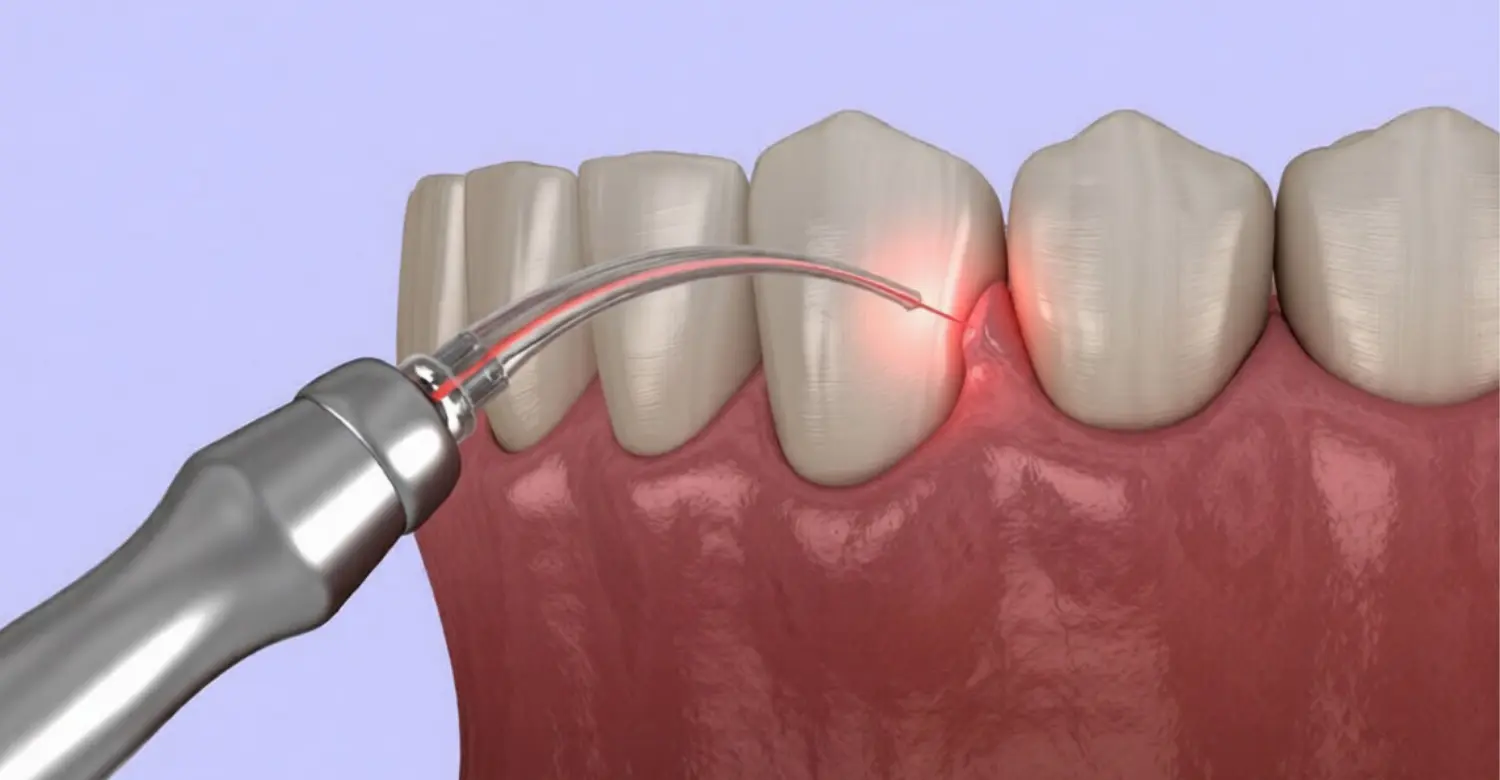
Integrative Protocols: Combining Lasers with Conventional Dental Procedures
Modern dentistry increasingly focuses on combining technologies rather than treating laser and conventional dentistry as competing approaches. Combining lasers with traditional dentistry can allow dentists to use the advantages of each technique within the same treatment plan.
For example, laser technology may be used for soft-tissue management or bacterial reduction while conventional instruments are used for restorative preparation or other parts of the procedure.
This integrated approach allows treatment to be customized according to the patient's specific needs. The laser is used where it provides a clinical advantage, while conventional techniques remain available when they offer better access, efficiency, or control.
At Vitrin Clinic, treatment planning considers the complete clinical picture. The objective is not to use a laser simply because it is available, but to incorporate it when it can contribute to a precise, comfortable, and appropriate treatment approach.
How Laser and Conventional Dentistry Can Work Together
A combined approach may involve:
Laser-assisted gum treatment followed by conventional restorative treatment.
Laser soft-tissue management during implant-related procedures.
Laser-assisted periodontal treatment alongside scaling and root planing.
Laser gum contouring combined with cosmetic treatments such as veneers or crowns.
Conventional restorative procedures supported by laser soft-tissue management when clinically appropriate.
Dr. Rifat Alsaman, Head of the Medical Team at Vitrin Clinic and a cosmetic dentist, explains that combining technologies can provide flexibility during treatment. The dentist can use the most appropriate instrument for each stage instead of forcing an entire procedure into a single technology.
Tips for Patients
Patients considering a combined laser and conventional treatment should ask their dentist:
Which part of my treatment will use the laser?
Which parts will use conventional techniques?
Why is each technique being selected?
What should I expect during recovery?
How will the different stages work together?
Understanding the treatment plan can help patients feel more confident and avoid unrealistic expectations about what dental lasers can accomplish.
Cosmetic and Laser Assisted Dental Treatments
Enhancing smiles with precision laser care demonstrates cosmetic applications of laser assisted dental treatments. These advanced techniques combine laser technology with traditional cosmetic procedures for optimal aesthetic results. Understanding these methods helps patients recognize modern cosmetic dentistry options.
The integration in aesthetic dentistry enables superior cosmetic outcomes with enhanced comfort. These procedures support various smile enhancement procedures effectively. Recognizing these applications helps patients pursue comprehensive cosmetic dental care.
Smile design has become increasingly sophisticated enabling precise modifications. Laser assisted dental treatments allow dentists to reshape gums, whiten teeth, and prepare teeth for veneers with minimal discomfort. The precision ensures symmetrical, natural-looking results that enhance facial aesthetics. Many cosmetic dentistry procedures now incorporate laser technology as standard protocol for superior outcomes.
Laser Assisted Dental Treatments in Aesthetic Dentistry
Gum contouring for smile design through laser assisted dental treatments creates harmonious smile proportions precisely. Support for veneers and crowns represents another application in cosmetic work. These procedures enable comprehensive smile makeovers with minimally invasive approaches.
The precision enhances cosmetic dentistry outcomes significantly. Understanding these aesthetic applications helps patients achieve optimal smile transformations. These advanced procedures represent modern cosmetic dentistry standards.
Laser technology enables “gummy smile” corrections by reshaping excessive gum tissue and recontouring bone when necessary. Black triangle elimination addresses unsightly gaps between teeth at the gumline. Laser-assisted crown lengthening procedures expose more tooth structure for optimal veneer or crown placement. The ability to control tissue removal precisely makes technology essential for creating beautiful, symmetrical smiles with predictable results.
Cosmetic Dental Treatments Las Vegas and Laser Integration
Why cosmetic clinics use lasers for high-end results relates to precision and comfort advantages. Cosmetic dental treatments Las Vegas often incorporate laser technology for superior aesthetic outcomes. Comfort-focused cosmetic dentistry trends in cosmetic dental treatments Las Vegas emphasize patient experience alongside results.
The integration of lasers in cosmetic dental treatments Las Vegas reflects commitment to advanced technology. Understanding cosmetic dental treatments Las Vegas with laser capabilities helps patients seek premium aesthetic care. These modern practices represent cutting-edge smile design.
Las Vegas has become a destination for advanced cosmetic dentistry, with many practices specializing in cosmetic dental treatments Las Vegas that incorporate the latest laser technology. High-end cosmetic dental treatments Las Vegas clinics invest in multiple laser systems to address diverse aesthetic needs. Patients seeking cosmetic dental treatments Las Vegas benefit from dentists experienced in combining traditional cosmetic techniques with advanced laser capabilities for superior smile transformations.
Dental Laser Treatment Locations and Local Search Intent
Understanding location-based searches for laser dentistry helps patients find qualified providers offering dental laser treatment near me. Patients increasingly search for dental laser treatment near me seeking convenient access to advanced technology. These location-specific searches reflect growing demand for laser dentistry.
The popularity of dental laser treatment near me searches demonstrates patient awareness of technology benefits. Understanding search intent helps patients locate qualified providers. These searches indicate strong patient interest in modern dental care.
Geographic accessibility influences dental care decisions, making searches increasingly common. Patients want advanced technology without traveling excessive distances. The prevalence of these searches shows that patients prioritize both technology and convenience when selecting dental providers.
Dental Laser Treatment Near Me What to Look For
Choosing the right clinic when searching dental laser treatment near me involves evaluating technology, expertise, and patient reviews. Dentist experience and technology represent critical factors when selecting options. These considerations ensure quality care when pursuing searches.
Evaluating providers found through searches requires assessing credentials and equipment. Understanding what distinguishes quality options helps patients make informed choices. These criteria ensure optimal provider selection.
When searching dental laser treatment near me, investigate the specific laser types available at each practice. Not all lasers are equalsome practices may have only basic laser systems while others invest in multiple advanced platforms. Verify dentist training and certification in laser dentistry when evaluating results. Read patient reviews focusing on laser procedure experiences. Contact practices directly to discuss specific laser capabilities when researching options.
Laser Dental Treatment in Major Cities
Laser dental treatment Brooklyn offers advanced dental care in one of New York’s most populous boroughs. Dental laser treatment NYC provides cutting-edge technology in America’s largest metropolitan area. Laser dental treatment Thousand Oaks serves patients in Southern California’s Conejo Valley. Laser dental treatment Westlake Village offers advanced care in neighboring California communities.
These location-specific services reflect widespread laser technology adoption. Understanding availability helps patients find local providers offering advanced care.
Major metropolitan areas typically offer more options for advanced dental technologies. Practices benefit from the competitive dental market, driving technology adoption. Clinics often invest in the latest laser systems to attract discerning patients. Providers in affluent communities serve patients with high expectations for advanced care. These regional differences affect technology availability and pricing.
Dental Laser Treatment Cost, Insurance, and Value
Pricing factors and technology differences affect dental laser treatment cost across procedures and providers. Understanding costs helps patients budget for advanced dental care. Pricing varies based on procedure complexity and equipment sophistication.
Multiple factors influence costs including geographic location and provider expertise. Recognizing what affects pricing enables informed financial planning. Understanding cost considerations helps patients evaluate treatment value.
Dental Laser Treatment: What We Notice Clinically
What We Notice Clinically: Dental laser technology can improve precision and patient comfort in carefully selected procedures, but its success depends on diagnosis, appropriate equipment, correct settings, and practitioner expertise.
At Vitrin Clinic, we view laser dentistry as one component of modern dental care rather than a universal replacement for traditional techniques.
Dr. Rifat Alsaman, Head of the Medical Team at Vitrin Clinic and a cosmetic dentist, emphasizes that patient safety and predictable clinical outcomes should remain the priority. Laser technology can be highly useful when it is applied to the right indication and integrated into a well-planned treatment protocol.
Patients should therefore ask not only, "Does the clinic use dental lasers?" but also, "Is laser treatment appropriate for my specific dental problem?"
Dental Laser Treatment: Clinical Tips for Patients
Dental laser treatment can be an effective option for selected procedures, but patients still play an important role in achieving and maintaining good oral health.
Tips for Patients Before Laser Treatment
Before treatment:
Complete a dental examination and diagnosis.
Tell your dentist about medications, allergies, and relevant medical history.
Ask which laser will be used and why.
Discuss expected benefits, limitations, and possible side effects.
Ask about alternatives, including conventional treatment.
Follow any preparation instructions provided by your dentist.
Tips for Patients After Laser Treatment
After treatment:
Follow your dentist's aftercare instructions carefully.
Keep the treated area clean according to professional instructions.
Avoid foods or activities that may irritate the treated tissues during the recommended recovery period.
Maintain regular oral hygiene unless your dentist advises temporary modifications.
Attend follow-up appointments when recommended.
Contact your dental provider if you experience unusual pain, swelling, bleeding, or other unexpected symptoms.
Dr. Rifat Alsaman, Head of the Medical Team at Vitrin Clinic, recommends that patients treat aftercare as part of the treatment itself. Good oral hygiene and appropriate follow-up can support healing and long-term oral health.
Dental Laser Treatment at Vitrin Clinic: A Personalized Clinical Approach
At Vitrin Clinic, dental laser treatment is incorporated into personalized treatment planning based on each patient's dental condition and goals. Laser technology may support gum procedures, periodontal care, implant-related treatment, and selected cosmetic dental procedures when clinically appropriate.
Rather than applying the same laser protocol to every patient, the dental team evaluates the tissues involved, the treatment objective, and the most suitable technique.
Dr. Rifat Alsaman, Head of the Medical Team at Vitrin Clinic and a cosmetic dentist, focuses on combining modern technology with careful diagnosis and individualized treatment planning. His approach emphasizes using laser technology where it can provide a meaningful clinical benefit while retaining conventional techniques when they are more appropriate.
For patients considering dental laser treatment, a professional assessment is the best starting point. A personalized treatment plan can determine whether laser dentistry, conventional dentistry, or a combination of both is most suitable.
Dental Laser Treatment Cost Breakdown
What affects pricing in dental laser treatment cost includes equipment investment, procedure complexity, and dentist expertise. Procedure complexity and equipment used significantly influence cost ranges. Understanding breakdown helps patients appreciate pricing factors.
The variation reflects differences in technology and provider qualifications. Comprehensive assessment considers multiple pricing variables. These factors determine final procedure pricing.
Equipment costs for dental practices represent significant investments that influence pricing. Premium laser systems can cost $50,000 to $150,000 or more, requiring practices to recoup these investments through procedure fees. Continuing education and certification add to costs through training expenses. Geographic location dramatically affects pricing, with urban practices typically charging more than rural providers. Understanding these factors helps patients evaluate whether costs represent fair value.
How Much Does Dental Laser Treatment Cost?
Average cost ranges for how much does dental laser treatment cost vary from $200 to $3,000 depending on procedure type. Single procedure versus full treatment plans significantly affects overall costs. Understanding pricing helps patients plan financially.
The answer depends on specific procedures and provider pricing. Researching costs enables budget preparation. These estimates guide financial planning.
Simple procedures like cavity preparation may cost $200-$500. Gum contouring procedures typically range $300-$3,000 depending on extent. Comprehensive periodontal therapy may cost $1,000-$5,000 for full-mouth treatment. Always request detailed estimates before proceeding to understand exactly how much procedures will cost for your specific needs.
Dental Code for Laser Treatment
How laser procedures are coded through dental code for laser treatment affects insurance billing and reimbursement. Why codes vary by treatment type relates to specific procedure classifications. Understanding coding helps patients navigate insurance processes.
The specific dental code for laser treatment determines how procedures are billed and covered. Recognizing variations helps patients understand insurance documentation. These classifications affect claim processing.
Common dental code for laser treatment includes D4249 for clinical crown lengthening with hard tissue excision. Soft tissue crown lengthening uses dental code for laser treatment D4249 or D4240. Frenectomy procedures employ dental code for laser treatment D7960 (maxillary) or D7963 (lingual). Understanding proper coding ensures accurate billing and appropriate insurance submission. Some procedures may use the same codes whether performed with laser or traditional methods, while others have specific laser-related codes.
Does Delta Dental Cover Laser Treatment?
Insurance coverage considerations when asking does Delta Dental cover laser treatment vary by plan and procedure type. When treatments may be partially covered addresses does Delta Dental cover laser treatment questions based on medical necessity. Understanding coverage helps patients verify benefits.
The answer to does Delta Dental cover laser treatment depends on specific plan provisions and procedure codes. Researching does Delta Dental cover laser treatment before procedures enables financial planning. These considerations affect out-of-pocket costs.
When investigating does Delta Dental cover laser treatment, understand that coverage often depends on whether the procedure is deemed medically necessary versus cosmetic. Periodontal treatments using lasers may be covered if traditional treatment would also be covered. Cosmetic procedures typically aren’t covered. Always verify coverage by calling Delta Dental directly with specific procedure codes before assuming coverage for your situation.
Is Dental Laser Treatment Worth It?
Patient comfort versus cost comparison helps answer is dental laser treatment worth it through value assessment. Long-term oral health benefits demonstrate why this investment makes sense for many patients. Who benefits the most clarifies is dental laser treatment worth it for specific cases.
The answer to is dental laser treatment worth it depends on individual priorities and dental needs. Evaluating value involves weighing comfort, outcomes, and costs. Understanding benefits helps patients make informed decisions.
For patients with dental anxiety, the answer is often yes due to reduced stress and improved treatment acceptance. Those prioritizing faster healing may find the investment worthwhile for enabling quicker return to normal activities. Patients with bleeding disorders benefit significantly through reduced bleeding risk. When evaluating value, consider both immediate comfort and long-term health outcomes.
Laser Dental Treatment Trends
Growing demand for minimally invasive dentistry drives current laser dental treatment trends toward expanded applications. Future of laser technology in dental care suggests laser dental treatment trends will continue advancing. These laser dental treatment trends reflect patient preferences for comfortable, effective care.
Understanding laser dental treatment trends helps patients recognize evolving dental technology. Current trends emphasize patient comfort and treatment efficiency. These developments indicate the direction of modern dentistry.
Current trends show increasing adoption of diode lasers for soft tissue procedures in general practices. Developments indicate growing use of erbium lasers for cavity preparation as more dentists gain training. Future trends point toward integration with digital dentistry and AI-guided laser delivery. Emerging trends include use of lasers for root canal disinfection and photodynamic therapy for oral infections. These developments suggest lasers will become standard equipment in dental practices within the next decade.
Dental Laser Treatment at Vitrin Clinic
Use of cutting-edge laser technology at Vitrin Clinic ensures patients receive comprehensive benefits. Expertise in gum, implant, and cosmetic laser procedures demonstrates our capabilities. Patient-focused, minimally invasive treatment approach characterizes Vitrin Clinic’s philosophy.
Emphasis on comfort, precision, and fast recovery defines Vitrin Clinic’s services. Our commitment to excellence ensures optimal patient outcomes. Vitrin Clinic’s investment in technology reflects dedication to modern care.
Vitrin Clinic maintains multiple laser systems to address diverse patient needs. Our team receives regular training on the latest laser protocols. We customize approaches based on individual patient anatomy and treatment goals. Vitrin Clinic’s comprehensive methodology ensures every patient receives optimal care using the most appropriate laser technology for their specific situation.
Expert Tips Before Choosing Dental Laser Treatments
Questions to ask your dentist before procedures include inquiring about training, experience, and specific laser types available. How to know if you’re a suitable candidate involves discussing dental needs and health history. Preparing for laser procedures ensures optimal outcomes.
Understanding candidacy helps patients determine appropriate care options. Proper preparation enhances results through informed participation. These considerations ensure successful experiences.
Before scheduling laser procedures, ask how many similar treatments the dentist has performed. Inquire about specific laser brands and models used, as equipment quality affects outcomes. Request to see before-and-after photos of previous laser cases. Discuss realistic expectations for your specific procedure. Understand post-treatment care requirements and potential side effects. These questions help ensure you receive quality care and achieve desired results.
How Much Does Dental Laser Treatment Cost? A Quote Checklist With Vitrin Clinic
What the Cost Usually Covers
Ask whether the quote includes consultation, laser procedure, anesthesia, follow-up, and any lab work. A clear breakdown makes dental laser treatment cost easier to compare.
Factors That Change the Quote
The total can vary with treatment area, number of sessions, clinic location, and clinician experience. Request a written estimate that separates required fees from optional add-ons.
How to Compare a Clinic Quote
Use the same treatment details when requesting prices from each clinic, including Vitrin Clinic as a research option. Confirm what is included before you judge the dental laser treatment cost.
What Procedures Can Dental Lasers Be Used For? A Quick Guide With Vitrin clinic as a Research Option
Soft-tissue and gum procedures
Dental lasers are commonly discussed for soft-tissue tasks like gum contouring, frenectomy, and some periodontal procedures. They may also be mentioned for treating oral lesions or ulcers.
Tooth and restorative uses
Dental lasers can be listed for some cavity preparation, endodontic support, and tooth-whitening discussions. Suitability depends on the case, so a clinician should confirm what is appropriate.
Choosing a clinic and research option
If you are comparing dental tourism in Turkey, Vitrin clinic can be included as one research option for laser-related questions. Ask which laser procedures the clinic offers and who performs them.
Conclusion
Dental laser treatment represents a revolutionary advancement in modern dentistry, offering patients unprecedented comfort, precision, and outcomes. Throughout this comprehensive guide, we’ve explored the diverse applications from periodontal care to cosmetic procedures. The benefits including reduced pain, minimal bleeding, faster healing, and enhanced precision make it an attractive option for patients seeking modern dental care.
Understanding this technology empowers you to make informed decisions about your oral health. Whether you’re considering procedures for gums, exploring cosmetic applications, or simply seeking more comfortable dental procedures, laser technology offers compelling advantages over traditional methods. The investment often proves worthwhile through improved treatment experiences and superior long-term outcomes.
As trends continue evolving, more patients will benefit from expanding capabilities. Vitrin Clinic remains committed to offering state-of-the-art dental laser treatment through advanced equipment, skilled practitioners, and patient-centered care. We invite you to explore how this technology can transform your dental care experience and improve your oral health.
Reference
FAQs
Dr. Rifat Alsaman has more than 5 years of clinical experience in dentistry and currently serves as the Head of the Medical Team at Vitrin Clinic. He is dedicated to providing exceptional patient care, overseeing treatment planning, and ensuring the highest clinical standards across the team. His expertise, attention to detail, and commitment to continuous professional development have helped countless patients achieve healthier, more confident smiles.


