Periodontics
October 18, 2026
How Long Does Healing After Scaling and Root Planing Take? Recovery Timeline, Relief, and Aftercare
 Dr. Rifat Alsaman

Healing after scaling and root planing usually takes one to two weeks for gum comfort to return. Deeper tissue changes continue for four to eight weeks after treatment. Most patients notice tenderness, mild bleeding, and some tooth sensitivity during the first few days. These symptoms usually fade as inflammation settles and the gums tighten around the teeth. At Vitrin Clinic, we guide each patient through recovery with clear aftercare and planned follow-up visits. This guide explains the recovery timeline, normal side effects, relief options, and warning signs. It also compares treatment costs in the US, UK, and Turkey, so you can plan with confidence.
Gum comfort returns: 1 to 2 weeks Deeper tissue healing: 4 to 8 weeks, sometimes up to 3 months Reassessment visit: 4 to 8 weeks after treatment Treatment sessions: 1 to 4 visits, depending on the number of quadrants Price in Turkey: from approximately $150
Book a free consultation with Vitrin Clinic to discuss your gum health and recovery plan.
Ready to transform your smile?
Talk to our team and get a personal FREE treatment plan.
What Is Healing After Scaling and Root Planing?
Healing after scaling and root planing is the recovery of gum tissue after a deep periodontal cleaning. The treatment removes plaque and tartar from above and below the gumline. It also smooths the root surfaces, so bacteria find it harder to reattach. Once the infection is removed, the body starts repairing the inflamed gum tissue. The gums gradually become firmer, pinker, and tighter around each tooth. Understanding this process helps you know which changes are normal and which need attention.
What Happens to Your Gums During Periodontal Deep Cleaning?
During deep cleaning, the dentist first numbs the area with a local anaesthetic. Special hand instruments and ultrasonic scalers then reach below the gumline. They remove hardened tartar, bacterial biofilm, and toxins from the root surfaces. The dentist then planes the roots to create a smooth and clean surface. This work disturbs the inflamed pocket lining, which causes temporary tenderness afterwards. The gums are not cut, but they are handled closely during treatment. A full-mouth deep cleaning is usually completed in two to four quadrant sessions. Some clinics complete the whole mouth in one or two longer visits instead.
Why Do Gums Need Time to Heal After Scaling and Root Planing?
Inflamed tissue cannot tighten until bacteria and tartar are fully removed from the pocket. After treatment, a new layer of epithelial cells forms along the clean root surface. Research shows this new attachment, called a long junctional epithelium, forms within about one to two weeks. The connective tissue underneath continues to mature for two to three months. Swelling shrinks gradually throughout this period, and pockets slowly become shallower. That is why the final results of healing after scaling and root planing are measured weeks later. Your dentist will not judge the outcome on the day of treatment.
How Is Scaling and Root Planing Different From Routine Dental Cleaning?
A routine cleaning, also called prophylaxis, removes plaque and tartar above or near the gumline. It is a preventive treatment for people whose gums are already healthy. Scaling and root planing works deeper, inside periodontal pockets that measure 4 mm or more. It treats an active infection rather than simply preventing one. It usually needs local anaesthetic and more time for each quadrant of the mouth. Recovery is also different, because routine cleaning rarely causes soreness lasting more than one day. Deep cleaning is therefore a therapeutic procedure, not a cosmetic polish.
Who Needs Scaling and Root Planing for Gum Disease?
Scaling and root planing is recommended for patients diagnosed with periodontitis. Typical signs include pockets of 4 mm or more, bleeding on probing, and bone loss on X-rays. Gum disease is far more common than many people think. The US Centers for Disease Control and Prevention reports that about 42% of adults aged 30 and over have periodontitis. Around 7.8% of these adults have the severe form of the disease. The World Health Organization estimates that severe periodontal disease affects about 19% of adults worldwide. That equals more than one billion cases globally. Smokers, people with diabetes, and those with a family history face a higher risk.
.jpg)
.jpg)
.jpg)
.jpg)
.jpg)
.jpg)
.jpg)
.jpg)
Scaling and Root Planing Recovery Timeline: What to Expect ?
Every mouth heals at its own pace, but most patients follow a predictable pattern. Knowing the stages of healing after scaling and root planing helps you understand what is normal. The table below summarises the typical recovery timeline for most healthy adults.
Time After Treatment | What You May Notice |
First 24 hours | Numbness, tenderness, mild bleeding |
Days 2 to 3 | Peak soreness, sensitivity to cold |
Days 4 to 7 | Less swelling, lighter bleeding |
Weeks 2 to 4 | Firmer and pinker gums |
Weeks 4 to 8 | Shallower pockets, reassessment visit |
Months 2 to 3 | Connective tissue matures fully |
What Happens During the First 24 Hours After Deep Cleaning?
The local anaesthetic usually wears off within two to four hours. Avoid eating until feeling returns fully, so you do not bite your cheek or tongue. Mild aching and tenderness often begin as the numbness fades. Light bleeding or pink saliva is common, especially when you brush. Many patients describe their gums as feeling slightly bruised. Over-the-counter pain relief, taken as your dentist advises, usually controls this discomfort well. Rest, soft foods, and lukewarm drinks make the first evening much easier. Avoid smoking and alcohol completely during this first day.
What Should You Expect During Days 2–3 of Gum Healing?
Days two and three are often the most tender part of healing after scaling and root planing. The gums may feel puffy, and teeth may react sharply to cold drinks. This happens because inflammation peaks before it starts to settle. Bleeding, however, should already be decreasing during this stage. Warm saltwater rinses and gentle brushing help keep the treated areas clean. Most patients can return to work and normal routines without any problem. If pain is increasing rather than stable, contact your dental team for advice.
How Do Your Gums Change During the First Week?
By the end of the first week, most soreness has eased noticeably. The gums often look less red and less swollen than before treatment. Bleeding while brushing usually becomes lighter and less frequent. Some patients notice small gaps between their teeth as the swelling shrinks. Tooth sensitivity may continue, but it is usually milder than on day two. Clinically, the gum surface has largely closed over by days seven to ten. Most patients feel confident returning to their usual diet by this point.
How Long Does Periodontal Tissue Healing Take Over the Following Weeks?
Between weeks two and eight, healing moves deeper below the gum surface. Collagen fibres rebuild, and the tissue becomes firmer and tighter around each tooth. Pocket depths gradually reduce as the inflammation disappears. A widely cited review by Cobb examined these changes closely. It found average reductions of 1.29 mm in moderate pockets of 4 to 6 mm. Deeper pockets of 7 mm or more reduced by about 2.16 mm on average. These figures show that the deepest pockets often improve the most. They also explain why dentists reassess gums four to eight weeks after treatment.
How Long Do Gums Take to Heal After Scaling and Root Planing?
Surface comfort usually returns within one to two weeks for most healthy patients. Full healing after scaling and root planing takes longer, usually four to eight weeks. Connective tissue may continue maturing for up to three months. Patients with deep pockets, diabetes, or a smoking habit often need extra time. Your dentist confirms healing by measuring the pockets, not by how your gums feel. Feeling comfortable is a good sign, but it is not the final measure of success.
Which Factors Can Slow Down Gum Healing?
Several factors can slow healing after scaling and root planing. Smoking is the strongest one, because it reduces blood flow and oxygen to the gums. Studies show smokers usually achieve less pocket reduction than non-smokers after the same treatment. Uncontrolled diabetes also delays tissue repair and raises the risk of infection. Poor plaque control at home allows bacteria to return quickly to the pockets. Other factors include stress, some medications, hormonal changes, and very deep starting pockets. Missing follow-up visits can also allow problems to go unnoticed for months.
Signs of Healing After Scaling and Root Planing
Knowing the positive signs helps you feel confident during recovery. Many improvements become visible within the first two weeks. Others, such as shallower pockets, can only be measured by your dentist.
How Can You Tell if Your Gums Are Healing Properly?
Healthy healing shows steady improvement from one day to the next. Pain should decrease rather than increase after the third day. The gums should change from dark red to a lighter, healthier pink. Swelling should shrink, and the gum edges should look firmer and sharper. Bad breath often improves as bacterial levels fall. Bleeding should become less frequent while brushing and cleaning between teeth. When these signs appear gradually, healing after scaling and root planing is usually on track.
Does Reduced Gum Bleeding Mean Periodontal Treatment Is Working?
Reduced bleeding is one of the clearest signs that treatment is working. Bleeding on probing reflects active inflammation inside the periodontal pocket. In Cobb's review, scaling and root planing reduced bleeding on probing by about 57% on average. A large drop in bleeding usually means bacteria are under better control. However, bleeding alone does not tell the full story of your gum health. Your dentist still needs to measure pocket depths and attachment levels. Together, these numbers show how well each site has responded.
Why May Gum Swelling and Redness Gradually Decrease?
Swelling and redness are caused by inflammation triggered by bacteria under the gums. Once deep cleaning removes these bacterial deposits, the immune response calms down. Enlarged blood vessels shrink back to normal size, and excess fluid drains away. As a result, the gums lose their puffy and shiny appearance. This change usually becomes noticeable within one to two weeks. It continues gradually as healing after scaling and root planing progresses below the surface. Pale pink, firm gums with a matte texture are a sign of healthy tissue.
Is It Normal for Gums to Look Different After Deep Cleaning?
Yes, it is normal for gums to look different after deep cleaning. Swollen gums often covered part of the tooth before treatment. As the swelling shrinks, the gum line may sit slightly lower than before. Teeth can look longer, and small spaces may appear between them. The gums may also look paler and tighter than you remember. These changes usually reflect healthier tissue rather than damage from treatment. Your dentist can explain any change that worries you at your follow-up visit.
Can Gum Pockets Become Shallower After Scaling and Root Planing?
Yes, pockets often become shallower as the inflammation resolves. This happens through gum shrinkage and a small gain in clinical attachment. Cobb's review reported average attachment gains of 0.55 mm in moderate pockets. Deeper pockets showed average attachment gains of about 1.19 mm. In practice, a 5 mm pocket may reduce to 3 or 4 mm after treatment. Pockets of 3 mm or less are generally much easier to keep healthy at home. Shallow pockets also allow your toothbrush and interdental brushes to reach further.
Common Symptoms During Gum Healing After Deep Cleaning
Most symptoms after deep cleaning are mild and short-lived. Understanding them helps you avoid unnecessary worry during healing after scaling and root planing. The following sections explain the most common symptoms and how long each one usually lasts.
Tooth Sensitivity After Scaling and Root Planing
Tooth sensitivity is the symptom patients report most often after deep cleaning. Clinical studies suggest that more than half of patients notice increased root sensitivity during the first week. This sensitivity usually fades within a few weeks of healing after scaling and root planing. It rarely causes long-term problems when it is managed correctly. Simple steps at home can make a clear difference to your comfort.
Why Can Teeth Become Sensitive to Hot and Cold?
Before treatment, tartar and swollen gums often covered parts of the tooth root. Once they are removed, these root surfaces are exposed to the mouth. Roots are covered by a thin layer called cementum, not by hard enamel. Beneath it lies dentin, which contains thousands of tiny fluid-filled tubules. Hot, cold, or sweet triggers move the fluid inside these tubules. That movement stimulates the nerve and creates a short, sharp pain. Scientists call this the hydrodynamic theory of tooth sensitivity.
How Long Does Tooth Sensitivity Usually Last?
For most patients, sensitivity peaks during the first week after treatment. It then decreases steadily over the following two to four weeks. Minerals from saliva slowly block the exposed dentin tubules over time. Desensitizing toothpaste speeds up this natural process for many people. A smaller group may notice sensitivity for longer, especially where recession is significant. Long-lasting sensitivity should always be checked by your dentist. Effective in-office treatments, such as fluoride varnish, are available when home care is not enough.
When Does Tooth Sensitivity Require Dental Assessment?
Contact your dentist if sensitivity becomes worse instead of better. Seek advice if pain lingers for more than a few seconds after a trigger. Spontaneous throbbing pain, especially at night, can signal a problem with the nerve. Sensitivity in one single tooth that lasts beyond four weeks also needs checking. These signs may point to decay, a cracked tooth, or inflammation of the pulp. Early assessment usually means simpler and less costly treatment.
Gum Soreness and Swelling After Deep Cleaning
Soreness and mild swelling are expected parts of the healing process. They result from the instruments working carefully inside inflamed pockets. In most cases, both settle within the first week of healing after scaling and root planing.
What Causes Tender or Swollen Gums After Treatment?
In periodontal disease, the pocket lining is often ulcerated and fragile. Instruments gently disturb this lining while removing deposits from the roots. The body then sends extra blood and immune cells to repair the area. This natural repair response causes tenderness and temporary swelling. Areas with the deepest pockets often feel the most sore afterwards. Treating several quadrants in one visit can also increase overall soreness. This reaction is a normal part of recovery, not a sign of damage.
How Long Should Gum Discomfort Last?
Most gum discomfort lasts between two and five days. It usually peaks within the first 48 hours after treatment. By day seven, most patients feel only mild tenderness when brushing. Discomfort should follow a clear downward trend over this period. Pain that returns or increases after day three is not typical. It should be reported to your dental team so they can examine the area.
When Can Persistent Swelling Indicate a Problem?
Swelling that lasts longer than one week may suggest a problem. A localised, firm, or painful lump could indicate a periodontal abscess. Abscesses sometimes form when small tartar fragments remain trapped in a deep pocket. Swelling that spreads to the cheek, jaw, or neck needs urgent attention. Fever or difficulty swallowing alongside swelling is also a serious warning sign. Your dentist can drain an abscess and clean the area again if needed.
Bleeding Gums During Deep Cleaning Recovery
Light bleeding is common during the first days after deep cleaning. It usually reduces quickly during healing after scaling and root planing. Knowing the difference between normal and excessive bleeding helps you respond correctly.
Is Mild Bleeding Normal After Scaling and Root Planing?
Yes, mild bleeding is normal during the first two to three days. You may notice pink saliva or a little blood when brushing. Inflamed gum tissue contains many fragile blood vessels that bleed easily. As the tissue heals, these vessels shrink and bleeding becomes less frequent. Most patients notice a clear reduction in bleeding by the end of the first week. Continued improvement is one of the best signs of healing after scaling and root planing.
How Can You Manage Minor Gum Bleeding Safely?
Keep brushing gently, because stopping allows plaque to irritate the gums further. Use a soft-bristled toothbrush with light pressure along the gum line. Rinse with warm salt water after meals to keep the area clean. If one area bleeds, press a clean, damp gauze gently against it. Hold the pressure for ten to fifteen minutes without checking. Avoid alcohol, smoking, and very hot drinks during the first day. These steps control most minor bleeding at home.
When Is Bleeding Excessive or Concerning?
Bleeding is concerning if it continues heavily for more than a few hours. Contact your dentist if firm gauze pressure does not stop it. Bleeding that restarts days later without an obvious cause also needs assessment. Patients taking blood thinners should inform their dentist before treatment begins. Never stop prescribed anticoagulant medication without your doctor's advice. Your dental team can plan treatment safely around these medications.
Gum Recession and Changes in Tooth Appearance
Some patients notice that their teeth look longer after deep cleaning. This happens because swollen gums shrink back to their true position. Studies report average gum recession of around 0.5 to 1 mm after treatment, mainly at deeper pockets. In most cases, the bone loss behind this recession already existed before treatment. Swelling simply hid it from view. Small dark triangles may also appear between teeth where swollen gums once filled the space. If the appearance concerns you, cosmetic options can be discussed once the gums are stable.
Temporary Discomfort When Chewing After Periodontal Treatment
Teeth may feel slightly tender when biting for a few days after treatment. The ligament that holds each tooth can become mildly inflamed during healing. Chewing hard or crunchy foods increases pressure on this ligament. Choose soft foods and chew on the more comfortable side when possible. This discomfort usually disappears within one week. Persistent biting pain on one tooth should be checked by your dentist. It may indicate a bite problem, a crack, or an infection that needs attention.
Relief After Scaling and Root Planing: What Helps With Discomfort?
Most discomfort after deep cleaning is easy to manage at home. Simple steps can make healing after scaling and root planing much more comfortable. Always follow the specific advice your own dentist gives you.
How to Relieve Gum Pain After Deep Dental Cleaning
Start with simple measures during the first 48 hours. Rinse gently with warm salt water two to three times each day. Choose soft, lukewarm foods and avoid spicy or acidic meals. A cold compress on the cheek for ten to fifteen minutes can reduce swelling. Rest helps your body direct its energy toward tissue repair. Take pain relief only as advised by your dentist or pharmacist. Most patients find these steps are enough to stay comfortable.
Can Desensitizing Toothpaste Help With Tooth Sensitivity?
Yes, desensitizing toothpaste helps many patients after deep cleaning. Products containing potassium nitrate calm the nerve response inside the tooth. Others with stannous fluoride or arginine help block the exposed dentin tubules. Results usually appear after two to four weeks of twice-daily use. You can also dab a small amount on sensitive areas before bedtime. Avoid rinsing straight afterwards, so the active ingredients stay on the tooth surface. Consistent use during healing after scaling and root planing matters more than the brand.
Which Pain Relief Options May Be Appropriate After Treatment?
Over-the-counter painkillers are usually enough after deep cleaning. Ibuprofen helps reduce both pain and inflammation in many patients. Paracetamol, also called acetaminophen, suits people who cannot take ibuprofen. Always follow the dose on the label or your dentist's instructions. Check with your doctor first if you have stomach, kidney, or heart conditions. Avoid aspirin unless it is prescribed, because it may increase bleeding. Pregnant patients should always ask before taking any medication.
Can Warm Saltwater Rinses Help Soothe Tender Gums?
Warm saltwater rinses are a simple and effective home remedy. Dissolve half a teaspoon of salt in a cup of warm water, about 240 ml. Swish gently for thirty seconds, then let the water fall from your mouth. Repeat two to three times daily, especially after meals. Salt water helps clean the area and soothes irritated tissue. It is gentle enough to use throughout the first week of healing after scaling and root planing. Avoid forceful swishing, which can disturb tender gum tissue.
Should You Use an Antiseptic Mouthwash During Recovery?
Your dentist may recommend an antiseptic mouthwash for a short period. Chlorhexidine 0.12% is the most commonly prescribed rinse after periodontal treatment. It lowers bacterial levels while brushing still feels uncomfortable. However, longer use can stain teeth and alter taste temporarily. Most dentists recommend it for one to two weeks only. Avoid alcohol-based mouthwashes, as they may sting healing gums. A mouthwash supports cleaning, but it never replaces brushing and interdental care.
When Might a Dentist Recommend Prescription Medication?
Prescription medication is not needed for most patients after deep cleaning. Your dentist may prescribe stronger pain relief if discomfort is unusually severe. Antibiotics may be considered for aggressive disease, abscesses, or specific medical conditions. Some dentists place local antimicrobial gels or chips into very deep pockets. These choices depend on your diagnosis, medical history, and response to treatment. Your dentist will explain the reason for any medication they prescribe.
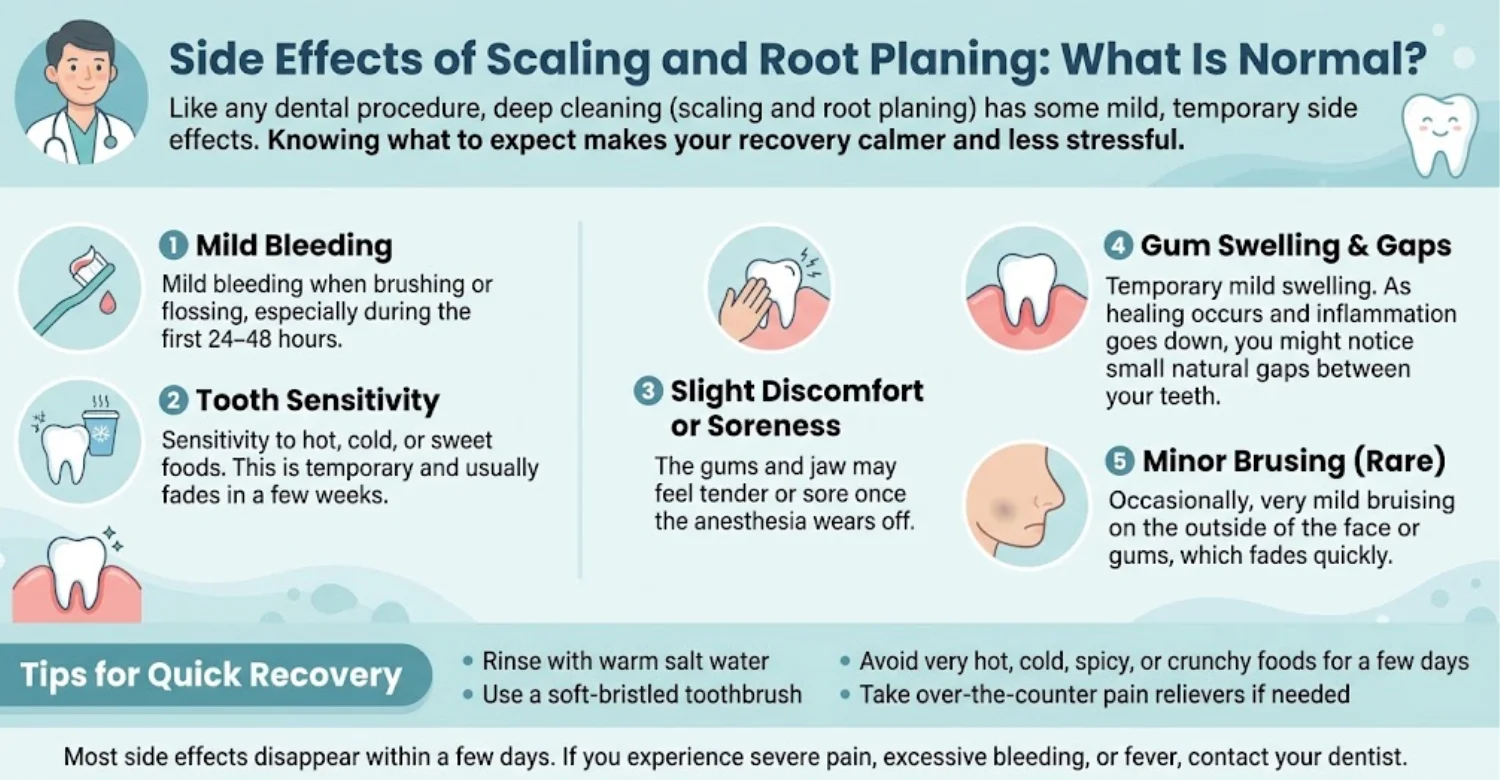
Common Short-Term Side Effects After Periodontal Deep Cleaning
The most common side effects include tenderness, mild swelling, and light bleeding. Sensitivity to cold, heat, and sweet foods is also very common. Some patients notice a dull jaw ache from keeping the mouth open for a long time. Temporary changes in taste may occur when chlorhexidine is used. Teeth may feel slightly loose for a few days in areas with bone loss. Most of these effects resolve within one to two weeks.
Tooth Sensitivity, Gum Tenderness, and Temporary Bleeding
These three symptoms often appear together during early recovery. Sensitivity relates to root surfaces exposed after tartar removal. Tenderness reflects the gum tissue repairing itself after instrumentation. Bleeding comes from fragile blood vessels that are still healing. All three usually improve steadily during healing after scaling and root planing. A gradual daily improvement is the key sign that recovery is normal. If any of them gets worse after day three, contact your dentist.
Why Teeth May Appear Longer After Gum Inflammation Decreases
Inflamed gums swell and cover more of each tooth than healthy gums do. After deep cleaning, the swelling reduces and the gum margin settles lower. This reveals root surfaces that bone loss had already exposed beneath the gum. The tooth therefore looks longer, even though treatment did not remove any gum. This change is a sign of healthier tissue, not a complication. Explaining this before treatment helps patients avoid unnecessary worry.
Less Common Complications That Need Professional Assessment
Serious complications after deep cleaning are uncommon. A periodontal abscess can occur if a small deposit remains in a deep pocket. Infection may develop more easily in patients with weakened immune systems. Severe, long-lasting sensitivity affects a small number of patients. Bacteria briefly enter the bloodstream during treatment, which matters for some heart conditions. Your dentist reviews your medical history to manage these risks safely. Patients with artificial heart valves should always mention them before treatment.
How to Distinguish Expected Recovery Symptoms From Warning Signs
Expected symptoms are mild, improve each day, and stay limited to treated areas. Warning signs become stronger over time or spread beyond the gums.
Expected Symptoms | Warning Signs |
Mild soreness for 2 to 5 days | Pain increasing after day 3 |
Light bleeding when brushing | Heavy bleeding that will not stop |
Sensitivity to cold drinks | Throbbing pain at night |
Slight puffiness | Swelling of the face or neck |
Gums turning pinker | Pus, fever, or a lasting bad taste |
When in doubt, contacting your dentist is always the safest choice.
Ready to transform your smile?
Talk to our team and get a personal FREE treatment plan.
How to Speed Up Healing After Deep Dental Cleaning
You cannot rush biology, but you can remove the obstacles to recovery. Good daily habits support smoother healing after scaling and root planing. The following steps make the biggest difference for most patients.
Aftercare Tips for Periodontal Deep Cleaning
Aftercare focuses on keeping the area clean without irritating tender tissue. Patients who follow aftercare instructions closely usually report fewer complications. Consistency matters far more than any single product. The tips below cover the most important daily habits during recovery.
Brush Gently With a Soft-Bristled Toothbrush
Use a soft-bristled manual or electric toothbrush twice every day. Angle the bristles at 45 degrees toward the gum line. Use small circular movements with light pressure. Spend about two minutes cleaning every surface of every tooth. Avoid hard scrubbing, which can irritate healing gums and worsen recession. Electric toothbrushes with pressure sensors help prevent brushing too hard. Replace your toothbrush every three months or when the bristles splay.
Clean Between Teeth Without Injuring Tender Gums
Cleaning between teeth is essential, because brushing misses about a third of tooth surfaces. Restart gently within a day or two, unless your dentist advises otherwise. Interdental brushes work well where small spaces have opened after treatment. Choose a size that fits snugly without forcing it into the gap. Floss works better in tight contacts when used with a careful curved motion. A water flosser on a low setting is another comfortable option for tender gums.
Follow Your Dentist's Instructions for Mouth Rinses and Medication
Use any prescribed mouthwash exactly as directed by your dentist. Chlorhexidine works best about 30 minutes after brushing. Some toothpaste ingredients can reduce its effect if used together. Take antibiotics for the full course if they are prescribed. Do not combine different painkillers without checking with a pharmacist first. Write down your instructions so you can follow them accurately at home. Ask questions before leaving the clinic if anything is unclear.
Avoid Smoking and Tobacco During Gum Healing
Smoking is one of the biggest barriers to gum healing. Nicotine narrows blood vessels and reduces oxygen delivery to the tissue. The CDC reports that smokers have about twice the risk of gum disease compared with non-smokers. Research also shows smokers respond less well to deep cleaning than non-smokers. Avoid smoking for at least 72 hours, and ideally stop completely. Vaping and chewing tobacco can also irritate healing gums. Your dentist or doctor can recommend support services to help you quit.
Stay Hydrated and Maintain Good Oral Hygiene
Saliva protects the gums and helps remineralise sensitive root surfaces. Drinking enough water keeps saliva flowing and the mouth fresh. Limit sugary and acidic drinks, which feed bacteria and increase sensitivity. Continue brushing and interdental cleaning every day, even when gums feel tender. A balanced diet rich in vitamin C and protein also supports tissue repair. Good hydration matters even more if you take medicines that cause a dry mouth.
What to Eat After Scaling and Root Planing
Food choices can make early recovery much more comfortable. Soft, lukewarm meals reduce pressure on tender teeth and gums. Most patients return to their usual diet within a few days.
Soft Foods That May Be Comfortable During Early Recovery
The following foods are gentle on healing gums and still provide good nutrition:
Yogurt, smoothies, and soft dairy products.
Scrambled eggs and soft omelettes.
Mashed potatoes and well-cooked vegetables.
Lukewarm soups and broths.
Pasta, rice, and soft fish.
Oatmeal and soft bread without hard crusts.
These foods provide protein and nutrients while placing little pressure on the gums. Protein is especially useful, because the body needs it to rebuild tissue.
Foods and Drinks to Avoid When Gums Are Tender
Avoid hard, crunchy, and sharp foods for the first few days. Chips, nuts, seeds, and popcorn can lodge in healing pockets. Spicy and acidic foods, such as citrus and tomato sauce, may sting the gums. Very hot or very cold drinks can trigger tooth sensitivity. Alcohol may irritate the tissue and interact with prescribed medication. Sugary snacks feed the same bacteria that treatment is trying to control. Fizzy drinks combine acid and sugar, so they are best avoided for now.
When Can You Return to Your Normal Diet?
Most patients return to a normal diet within three to five days. Reintroduce firmer foods gradually as the tenderness fades. Chew on the less sensitive side if one area still feels sore. Wait about one week before eating seeds, nuts, or popcorn. If chewing remains painful after one week, mention it to your dentist. A slow return to normal eating protects the healing tissue.
What Activities Should You Avoid After Deep Cleaning?
Most daily activities can continue as normal after deep cleaning. Avoid strenuous exercise for 24 hours if you notice significant bleeding. Do not smoke or vape, especially during the first three days. Avoid eating until the anaesthetic has fully worn off. Skip alcohol on the first day, particularly if you take painkillers. Contact sports should wait until your gums feel comfortable again. Wear a mouthguard when you return to these sports.
Can You Brush and Floss Normally After Scaling and Root Planing?
Yes, you should keep brushing and cleaning between your teeth. Plaque control is the most important factor in healing after scaling and root planing. Brush gently on the evening of treatment, avoiding forceful scrubbing. Resume interdental cleaning within one or two days, using a light touch. Within one week, most patients can return to their full routine. Stopping oral hygiene allows plaque to build up and slows recovery.
Should You Change Your Oral Hygiene Routine During Recovery?
Small adjustments help during the first one to two weeks. Switch to a soft toothbrush and a desensitizing toothpaste if needed. Add warm saltwater or prescribed rinses for a short period. Interdental brushes may now fit better as the swelling reduces. Ask your hygienist to show you the correct sizes and techniques. These improved habits should become part of your long-term routine. Many patients find their gums feel healthier than they have for years.
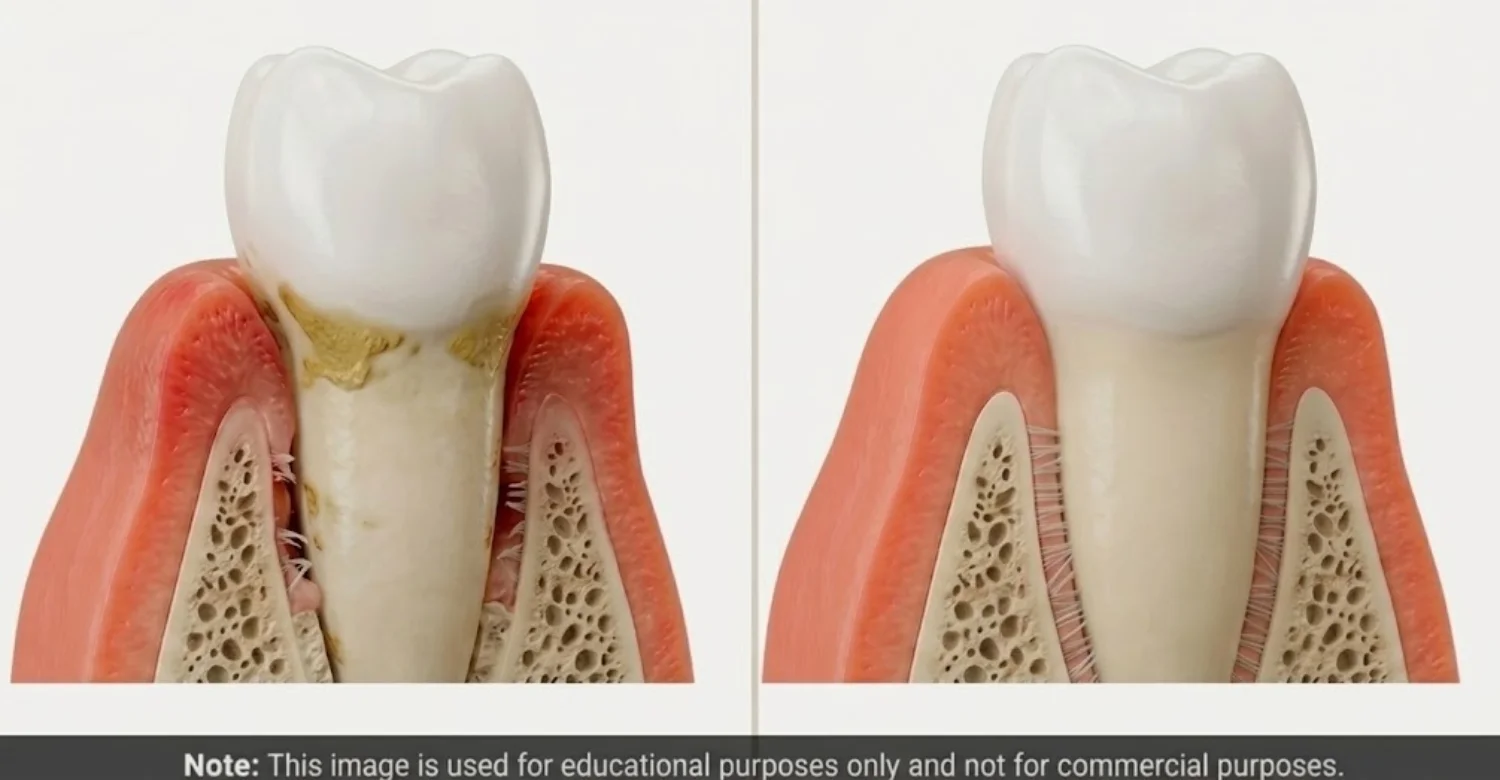
Note : All images used are for editorial and illustrative purposes only and may not originate from the original news provider or associated company.
What We Notice Clinically
Our team at Vitrin Clinic treats many patients with gum disease every year. Over time, we see clear patterns during healing after scaling and root planning. These observations help patients set realistic expectations before treatment begins.
Common Patient Patterns During Periodontal Recovery
In our experience, most patients feel noticeably better within five to seven days. Bleeding often drops faster than patients expect. Sensitivity is usually the last symptom to settle completely. Patients who start interdental cleaning early tend to show better results at reassessment. Smokers and patients with uncontrolled diabetes often heal more slowly. Those who attend every follow-up visit usually keep their results for longer. Motivation and consistency make a visible difference in the final outcome.
Why Symptom Relief Does Not Always Mean Gum Disease Has Resolved
Feeling better does not always mean the disease is fully controlled. Periodontitis is often painless, even when pockets remain deep. A pocket may stop bleeding at the surface but still hold bacteria below. Only clinical measurements can confirm whether healing is complete. This is why reassessment is essential, even when patients feel completely well. Skipping this visit is one of the most common reasons disease returns.
How Reduced Inflammation Can Reveal Existing Gum Recession
Many patients are surprised to see recession after treatment. In most cases, the bone and attachment loss existed before deep cleaning. Swollen gums simply hid the damage from view. Once the inflammation resolves, the gums settle at their true level. We explain this before treatment, so patients are not alarmed afterwards. Healthy, slightly receded gums are far better than swollen, infected gums.
Why Home Care and Professional Maintenance Both Matter
Deep cleaning removes established tartar, but new plaque forms within 24 hours. Daily home care controls this new plaque between dental visits. Professional maintenance removes deposits that brushing cannot reach. Research shows harmful bacteria can recolonise treated pockets within weeks to a few months. That is why many patients need maintenance visits every three months at first. Neither home care nor professional care works well on its own. Together, they protect the results of your treatment.
Clinical Note: Dr. Rifat Alsaman on Gum Healing After Deep Cleaning
Dr. Rifat Alsaman reviews periodontal cases at Vitrin Clinic. He shares his clinical view on what truly shapes a successful recovery. His approach focuses on measurement, education, and long-term follow-up.
Why Individualized Periodontal Assessment Matters More Than Symptoms Alone
According to Dr. Alsaman, symptoms often mislead both patients and clinicians. Some patients feel no pain despite pockets of 6 mm or more. Others report strong sensitivity even when their healing is excellent. A full assessment combines pocket charting, bleeding scores, X-rays, and medical history. This approach reveals the real disease activity behind each symptom. It also allows treatment to be tailored to every individual mouth.
Why Follow-Up Measurements Help Evaluate Treatment Response
Dr. Alsaman recommends comparing pocket charts before and after treatment. Measurements show exactly which sites improved and which still need attention. A reduction of 1 to 2 mm across many sites usually signals a good response. Sites that remain at 5 mm or deeper with bleeding may need further care. Objective numbers guide decisions far better than how the gums feel. They also help patients see their own progress clearly.
When Should You See a Dentist After Scaling and Root Planing?
Most recovery happens smoothly at home without any problems. However, some symptoms need professional attention. Recognising these signs early protects your healing after scaling and root planing.
Warning Signs That Need Prompt Dental Assessment
Contact your dentist promptly if your symptoms worsen instead of improving. The signs below should never be ignored during recovery. Early assessment usually makes any additional treatment simpler and faster.
Persistent or Increasing Pain and Swelling
Pain should ease after the first two to three days. Pain that increases after this point may suggest infection or a trapped deposit. Swelling that grows larger or feels firm also needs checking. Throbbing pain that disturbs your sleep is another reason to call your dentist. Do not wait for your planned review if pain keeps getting worse.
Bleeding That Is Heavy, Persistent, or Difficult to Control
Light bleeding is normal, but heavy bleeding is not. Call your dentist if bleeding continues despite firm pressure for fifteen minutes. Large clots or a constant flow of blood need prompt assessment. This is especially important for patients who take blood-thinning medication. Your dentist may apply a local agent to stop the bleeding.
Pus, Fever, or Other Signs of Possible Infection
Pus from the gum line suggests a bacterial infection. Other signs include a persistent bad taste, swollen glands, or feeling generally unwell. A temperature above 38°C, or 100.4°F, alongside gum symptoms needs prompt attention. Your dentist may drain the area, clean it again, or prescribe antibiotics. Infections respond best when they are treated early.
New Tooth Mobility or Worsening Symptoms
Teeth may feel very slightly loose for a short time after treatment. This usually improves as the gums tighten around the teeth. New or increasing looseness is not expected and should be checked. It may indicate infection, a bite problem, or advanced bone loss. Your dentist may recommend splinting or bite adjustment in some cases.
When Should You Seek Urgent Medical Care?
Seek urgent medical care if swelling spreads toward the eye, jaw, or neck. Difficulty breathing or swallowing is a medical emergency. High fever, chills, or feeling very unwell also need immediate attention. These signs are rare, but they can indicate a spreading infection. Go to the nearest emergency department if you cannot reach your dentist. Tell the medical team that you recently had deep dental cleaning.
What Should You Do if Your Gums Are Not Healing as Expected?
First, review your home care routine honestly and carefully. Check that you brush twice daily and clean between all your teeth. Note your symptoms, their location, and how long they have lasted. Then book an earlier appointment with your dentist. Bring a list of your medications, as some can affect healing. Your dentist can identify the cause and adjust your treatment plan.
Diagnosis and Follow-Up After Scaling and Root Planing
Follow-up visits measure the true results of your treatment. They confirm whether healing after scaling and root planing is complete at every site. They also guide the next stage of your periodontal care.
How Does a Dentist Check Whether Your Gums Are Healing?
Your dentist examines the colour, shape, and firmness of your gums. They record bleeding points and plaque levels around each tooth. Pocket depths are measured at six points around every tooth. Tooth mobility and gum recession are also recorded carefully. These results are then compared with your original periodontal chart. This comparison shows exactly how your gums responded to treatment.
What Are Periodontal Pocket Measurements?
A periodontal probe is a thin instrument marked in millimetres. The dentist gently slides it into the space between the gum and the tooth. Healthy pockets usually measure between 1 and 3 mm. Pockets of 4 mm or more often indicate active gum disease. Bleeding during probing shows inflammation at that specific site. Comparing measurements over time tracks how your gums respond to care. The process takes only a few minutes and is usually comfortable.
When Are Dental X-Rays Needed to Assess Periodontal Disease?
X-rays show the bone that supports your teeth. They help confirm the severity and pattern of bone loss. Most dentists take X-rays before deep cleaning to plan treatment accurately. Repeat X-rays are usually taken at longer intervals, often every one to two years. They may be taken sooner if a specific problem is suspected. Modern digital X-rays use a very low dose of radiation.
How Soon Should You Return for a Periodontal Reassessment?
Most dentists reassess the gums four to eight weeks after deep cleaning. The European Federation of Periodontology recommends reassessment after this initial phase of therapy. This timing allows healing after scaling and root planing to progress and tissues to stabilise. Measuring too early may underestimate the true improvement. Measuring too late may delay care for sites that did not respond. Your dentist will usually book this visit before you leave the clinic.
What Happens if Deep Gum Pockets Remain After Treatment?
Some pockets may remain deep despite good treatment and home care. Pockets of 5 mm or more that bleed usually need further attention. Pockets of 6 mm or deeper carry a higher risk of disease progression. Options include repeat cleaning, local antimicrobials, or periodontal surgery. Your dentist chooses based on pocket depth, location, and your general health. Residual pockets do not mean treatment failed, only that more care is needed.
Ready to transform your smile?
Talk to our team and get a personal FREE treatment plan.
Treatment Options if Your Gums Do Not Heal as Expected
Not every case responds fully to the first round of treatment. This is common with very deep pockets or complex risk factors. Fortunately, several effective options can help control the disease.
When Is Additional Scaling and Root Planing Necessary?
Repeat deep cleaning may be needed at sites with remaining bleeding pockets. It tends to work best for pockets of around 4 to 5 mm. The dentist targets only the areas that did not respond well. Improving home care before repeat treatment often improves the result. Repeat cleaning is usually quicker and more comfortable than the first session.
Can Periodontal Maintenance Help Control Recurring Gum Disease?
Yes, maintenance is the cornerstone of long-term gum health. These visits include measurements, professional cleaning, and hygiene coaching. Long-term studies show patients who attend regular maintenance lose far fewer teeth. Patients who skip maintenance show more disease recurrence and tooth loss over time. Most patients need visits every three to four months at first. Intervals may later be extended if the gums remain stable.
When Might Periodontal Surgery Be Considered?
Surgery may be considered when deep pockets remain after non-surgical treatment. It is usually discussed for pockets of 6 mm or more. Flap surgery allows the dentist to clean the roots under direct vision. Regenerative procedures may help rebuild lost bone in suitable cases. Gum grafts can cover exposed roots and reduce sensitivity. A periodontist usually performs these more advanced procedures.
Are Antibiotics or Medicated Mouth Rinses Always Necessary?
No, antibiotics are not routinely needed after deep cleaning. Current European guidelines advise against routine antibiotic use for most patients. This approach helps reduce the global risk of antibiotic resistance. Antibiotics may be considered for specific patients with rapidly progressing disease. Medicated rinses may help for short periods, but they cannot replace mechanical cleaning. Your dentist will explain whether any medication suits your case.
How Is Ongoing Periodontal Treatment Personalized?
Every treatment plan reflects your pocket depths, risk factors, and personal goals. Smokers and patients with diabetes may need closer monitoring. Patients with stable gums may space their visits further apart. Home care instructions are tailored to your teeth, gaps, and hand dexterity. Plans are reviewed and updated after each reassessment. This flexible approach keeps treatment effective as your needs change.
Average Cost of Scaling and Root Planing in the US, UK, and Turkey
The cost of periodontal deep cleaning varies by country, clinic, and treatment needs. The following figures are general estimates for full-mouth treatment. Your final price depends on your diagnosis, the severity of gum disease, and your personalised treatment plan.
What Is the Average Cost of Periodontal Deep Cleaning in the United States?
In the United States, scaling and root planing is usually charged per quadrant of the mouth. The estimated costs are shown below.
Treatment Scope | Average Estimated Cost (USD) |
One quadrant | 200–300 |
Two quadrants | 400–600 |
Three quadrants | 600–900 |
Four quadrants (full mouth) | 800–1,200 |
Prices may be higher in major cities or specialist periodontal practices. Dental insurance may cover part of the treatment, depending on the policy. Examinations, X-rays, and locally administered antimicrobials may incur additional charges.
How Much Does Scaling and Root Planing Cost in the United Kingdom?
In the UK, private periodontal deep cleaning typically costs approximately $510–$1,015 for full-mouth treatment. Fees vary according to the clinic, the number of appointments, and the clinician's experience.
Eligible NHS patients may receive periodontal treatment under Band 2 when appropriate, subject to applicable NHS charges and eligibility rules. Access to specific periodontal services can vary by location and clinical need.
What Is the Average Cost of Scaling and Root Planing in Turkey?
In Turkey, periodontal deep cleaning starts at approximately $150 at some clinics. The final price depends on the extent of gum disease, the number of sessions, and whether diagnostic imaging or additional treatment is necessary.
Lower operating costs can contribute to lower treatment prices, but patients should assess clinical quality, treatment scope, and aftercare rather than price alone. Vitrin Clinic provides personalised quotes following an assessment of the patient's needs.
US vs UK vs Turkey: Comparing Periodontal Deep Cleaning Costs
The table below summarises the estimated full-mouth treatment costs in each country.
Country | Estimated Full-Mouth Cost | Typical Pricing Method |
United States | 800–1,200 | Usually charged per quadrant |
United Kingdom | $510–$1,015 | Per quadrant, appointment, or full-mouth treatment |
Turkey | From approximately $150 | Full-mouth package or per session, depending on the clinic |
Note: These are approximate estimates, not guaranteed prices. The figures use different currencies and may reflect different treatment scopes, so they should not be interpreted as directly equivalent quotes.
What Additional Costs Can Affect the Total Price?
The advertised treatment price may not include every service required throughout the treatment process. Check the following items before comparing clinic quotes.
Cost Component | What to Confirm | Possible Effect on the Total |
Periodontal assessment | Whether the initial examination and gum measurements are included | May add a separate consultation fee |
Dental X-rays | Whether the necessary imaging is included | May increase the initial cost |
Local anaesthesia | Whether anaesthesia is included when required | May add to the treatment fee |
Local antimicrobials or medication | Whether additional products or treatments are necessary | May increase the overall cost |
Follow-up appointments | Whether reassessment and maintenance visits are included | May create additional future expenses |
Number of quadrants or sessions | Whether the quote covers the entire mouth | More extensive treatment may cost more |
What Factors Affect the Total Cost of Scaling and Root Planing?
Several factors influence the final treatment price. The number of affected quadrants, periodontal pocket depth, and the amount of tartar can affect the time and complexity of treatment. The clinician's qualifications, clinic location, diagnostic requirements, and follow-up schedule may also influence the total.
Does the Price Include Periodontal Assessment, X-Rays, and Follow-Up Visits?
Not always. Some clinics include the initial assessment and X-rays in their quoted fee, while others charge separately. Reassessment visits, maintenance cleanings, medication, and aftercare products may also be billed separately. Request an itemised written quote before booking.
Why Should Patients Compare Treatment Scope Rather Than Price Alone?
A lower advertised price may cover fewer services or only part of the required treatment. Compare whether each quote includes periodontal charting, appropriate imaging, treatment for all affected areas, and follow-up care.
The best value comes from an appropriate treatment plan, transparent pricing, and suitable aftercare not simply the lowest advertised cost.
At Vitrin Clinic Pricicng
The cost of periodontal treatment varies significantly depending on the stage of disease, the procedures required, and the country of treatment. The following table provides a transparent comparison of average costs across the United Kingdom, United States, and Vitrin Clinic in Istanbul from non-surgical deep cleaning to advanced surgical intervention allowing patients to understand the full financial scope of their treatment before their consultation.
Treatment type | 🇬🇧 UK | 🇺🇸 USA | 🇹🇷 Turkey |
|---|---|---|---|
Scaling & root planing (SRP) Non-surgical deep cleaning, full mouth | $510 – $1,015 | $800 – $1,200 | From $150 |
Periodontal flap surgery Surgical pocket reduction, per quadrant | $1,270 – $3,810 | $1,000 – $3,000 | From $300 |
Bone graft Regenerative, per site | $635 – $1,525 | $200 – $1,200 | From $200 |
Periodontal maintenance Ongoing recall visit, per session | $115 – $255 | $150 – $300 | From $50 |
Consultation & 3D imaging | Charged separately | Charged separately | Free & included |
Estimated saving | — | — | Up to 70% less |
* Prices are averages for reference only and may vary based on disease severity, number of teeth or quadrants affected, and individual treatment requirements. A personalised quote is provided following your free consultation.






Preventing Gum Disease From Returning After Deep Cleaning
Periodontitis is a chronic condition that can return without ongoing care. Long-term success depends on daily habits and regular professional visits. Healing after scaling and root planing is only the first step toward lasting gum health.
How Daily Oral Hygiene Supports Long-Term Periodontal Health
Plaque starts forming on the teeth within hours of brushing. Classic research showed gingivitis can develop within 10 to 21 days without cleaning. Brushing twice daily with fluoride toothpaste removes most surface plaque. Daily interdental cleaning reaches the areas a toothbrush cannot. Together, these habits keep bacterial levels low between professional visits. Small daily efforts protect the investment you made in treatment.
How Often Should You Schedule Periodontal Maintenance Visits?
Most patients start with maintenance visits every three months. This interval matches the time harmful bacteria need to rebuild their colonies. Patients with stable results may later extend visits to four or six months. Higher-risk patients, such as smokers, may need to remain on a three-month schedule. Your dentist sets the interval based on your reassessment results. Regular visits make small problems easier and cheaper to manage.
How Do Smoking, Diabetes, and Other Risk Factors Affect Gum Health?
Smoking doubles the risk of gum disease and weakens the healing response. Diabetes raises the risk of periodontitis, especially when blood sugar is poorly controlled. The relationship between diabetes and gum disease works in both directions. A Cochrane review found periodontal treatment lowered HbA1c by about 0.4% in people with diabetes. Stress, genetics, pregnancy, and some medications can also affect gum health. Managing these risk factors improves the long-term success of treatment.
Can Regular Professional Cleaning Help Prevent Further Gum Damage?
Yes, regular professional cleaning helps prevent further gum damage. Hygienists remove hardened tartar that home care cannot remove. They also measure your pockets to detect early changes. Catching small changes early allows simpler and less invasive treatment. Combined with good home care, maintenance helps protect bone and gum attachment. It also keeps your breath fresher and your smile cleaner.
Why Long-Term Monitoring Matters After Periodontal Treatment
Gum disease often progresses silently, without any pain. Regular monitoring detects changes before symptoms appear. Pocket charts, bleeding scores, and X-rays track stability over many years. Monitoring also shows whether risk factors, such as smoking, are improving. This long-term view protects both your natural teeth and any future dental work. Consistent monitoring is the best way to keep the results of healing after scaling and root planing.
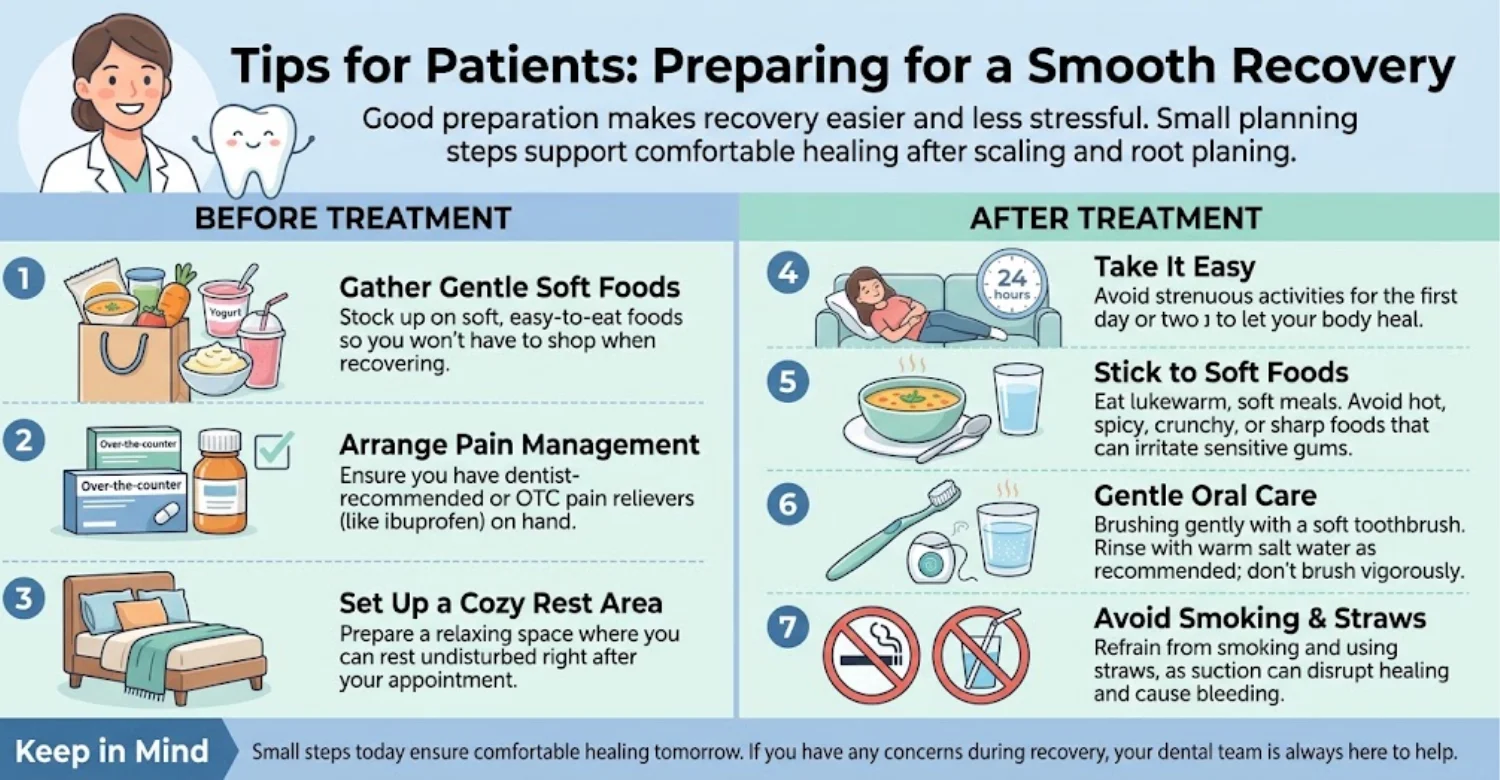
What to Ask Your Dentist Before and After Deep Cleaning
Asking the right questions helps you understand your treatment and recovery:
How many sessions will my treatment need?
Which areas have the deepest pockets?
What symptoms should I expect, and for how long?
Which pain relief is safe for my health conditions?
When is my reassessment visit?
How often will I need maintenance cleanings?
Writing your questions down before the appointment helps you remember them.
How to Track Changes in Gum Pain, Bleeding, and Sensitivity
A simple recovery diary can be very helpful. Rate your pain each day on a scale from zero to ten. Note when bleeding happens and how heavy it is. Record which teeth feel sensitive and what triggers them. Take photos of your gums every few days in good light. Share this information with your dentist at your follow-up visit. Clear records help your dentist see patterns that one visit might miss.
How to Follow Medication Instructions Safely
Read every label and instruction carefully before taking any medication. Take painkillers at regular intervals rather than waiting for severe pain. Never exceed the maximum daily dose shown on the packet. Complete any antibiotic course exactly as prescribed. Tell your dentist about all medicines and supplements you already take. Ask your pharmacist if you are unsure about possible interactions.
How to Maintain Oral Hygiene Without Irritating Healing Gums
Use a soft brush and gentle pressure along the gum line. Choose a mild, low-abrasion toothpaste during the first few weeks. Use interdental brushes that fit easily without forcing. Avoid whitening toothpastes, which may increase sensitivity. Rinse with lukewarm water rather than cold water if your teeth feel sensitive. Gentle consistency always works better than aggressive cleaning.
When to Request an Earlier Follow-Up Appointment
Request an earlier appointment if symptoms worsen after the third day. Book sooner if sensitivity lasts longer than four weeks. Contact your dentist about any new swelling, pus, or loose teeth. An earlier review is also wise if one site keeps bleeding. It is always better to check early than to wait and worry.
At Vitrin Clinic: Personalized Periodontal Assessment and Care
At Vitrin Clinic, every gum treatment begins with a detailed assessment. We focus on understanding the cause and extent of your gum disease. This approach supports predictable healing after scaling and root planing for each patient.
Evaluating Gum Inflammation, Periodontal Pockets, and Oral Health
Our dentists complete a full periodontal chart at your first visit. We record pocket depths, bleeding points, recession, and tooth mobility. We also review plaque levels, existing restorations, and bite problems. Medical conditions and lifestyle habits are discussed in detail. Together, this information shows the full picture of your oral health. It allows us to plan treatment based on facts rather than assumptions.
Selecting Appropriate Periodontal Treatment Based on Clinical Findings
Treatment is selected based on clinical evidence, not a fixed template. Mild cases may need only professional cleaning and hygiene coaching. Moderate to severe cases usually require scaling and root planing. Some patients benefit from additional treatments for specific deep sites. We explain each option clearly before any treatment begins. You always have time to ask questions and decide with confidence.
Understanding When Deep Cleaning May Need Additional Treatment
Deep cleaning works well for most patients, but not for every site. Very deep pockets, root furcations, or bone defects may need further care. We identify these sites carefully at your reassessment visit. When needed, we discuss surgical or regenerative options with you. Patients always receive clear information to make informed decisions.
Supporting Patients With Individualized Oral Hygiene and Aftercare Guidance
We show each patient how to clean their own teeth effectively. Our team selects suitable interdental brush sizes for each gap. We provide written aftercare instructions for you to take home. Patients can contact us with questions at any point during recovery. This support helps patients feel confident throughout healing after scaling and root planing.
How Vitrin Clinic Supports Your Treatment Journey
Our patient journey is designed to be clear and well organised. Each step focuses on comfort, safety, and long-term results. Here is what you can expect from your first visit to your follow-up care.
Initial Consultation and Review of Your Dental History
Your journey begins with a consultation with our dental team. We discuss your concerns, symptoms, and treatment goals. We also review your dental history, medications, and medical conditions. This conversation helps us plan safe and suitable treatment. It is also a chance for you to ask any questions you may have.
Clinical Assessment and Digital Imaging When Indicated
Next, we carry out a full clinical examination and periodontal charting. Digital X-rays are taken when needed to assess your bone levels. Digital imaging generally uses less radiation than traditional film X-rays. We explain the results clearly using images of your own mouth. Seeing your own images helps you understand your diagnosis.
Personalized Treatment Planning Based on Periodontal Findings
We create a written treatment plan based on your clinical findings. It includes the number of sessions, expected recovery, and estimated costs. We also explain any additional treatments that may be needed later. You can ask questions before agreeing to the plan. Nothing proceeds until you feel informed and comfortable.
Treatment Coordination and Clear Aftercare Instructions
Treatment sessions are scheduled to suit your availability. Local anaesthesia keeps you comfortable throughout each session. After treatment, you receive both verbal and written aftercare instructions. We explain normal symptoms and warning signs before you leave. You also receive contact details in case questions arise at home.
Follow-Up Planning to Monitor Gum Healing and Long-Term Stability
We book your reassessment for four to eight weeks after treatment. At this visit, we compare new measurements with your original chart. We then plan maintenance visits based on your individual results. Long-term follow-up helps keep your gums healthy and stable for years.
Ready to transform your smile?
Talk to our team and get a personal FREE treatment plan.
Key Takeaways
Here is a short summary of the most important points from this guide.
The Typical Recovery Timeline and Signs of Healthy Gum Healing
Most soreness settles within one week, and surface healing takes one to two weeks. Healing after scaling and root planing continues below the surface for four to eight weeks. Less bleeding, less swelling, and pinker gums are all positive signs.
The Most Effective Aftercare Steps for Comfort and Recovery
Brush gently, clean between your teeth daily, and avoid smoking. Use warm saltwater rinses and desensitizing toothpaste when needed. Choose soft foods during the first few days.
Common Side Effects, Relief Options, and Warning Signs
Sensitivity, tenderness, and mild bleeding are common and temporary. Over-the-counter pain relief usually controls the discomfort well. Increasing pain, pus, fever, or spreading swelling need prompt assessment.
When Professional Reassessment or Additional Treatment Is Needed
A reassessment at four to eight weeks confirms your results. Deep or bleeding pockets may need repeat cleaning or surgery. Regular maintenance helps prevent gum disease from returning.
Understanding Treatment Costs and the Importance of Personalized Care
Full-mouth treatment costs about $800 to $1,200 in the US. UK prices range from $510 to $1,015, while Turkey starts from about $150. Compare the treatment scope and follow-up care, not just the price.
How Vitrin Clinic Helps You Maintain Healthy Gums
Gum problems can look different from one patient to another, so the first step is understanding what your gums need. At Vitrin Clinic, we assess your gum health and recommend the right care, whether that means professional cleaning or periodontal treatment. If you need scaling and root planing, we’ll explain what to expect and arrange follow-up visits to check your recovery. We’ll also guide you on caring for your gums at home to help maintain the results. Contact Vitrin Clinic to book your consultation and discuss your treatment options.
Reference
FAQs
Dr. Rifat Alsaman has more than 5 years of clinical experience in dentistry and currently serves as the Head of the Medical Team at Vitrin Clinic. He is dedicated to providing exceptional patient care, overseeing treatment planning, and ensuring the highest clinical standards across the team. His expertise, attention to detail, and commitment to continuous professional development have helped countless patients achieve healthier, more confident smiles.


