
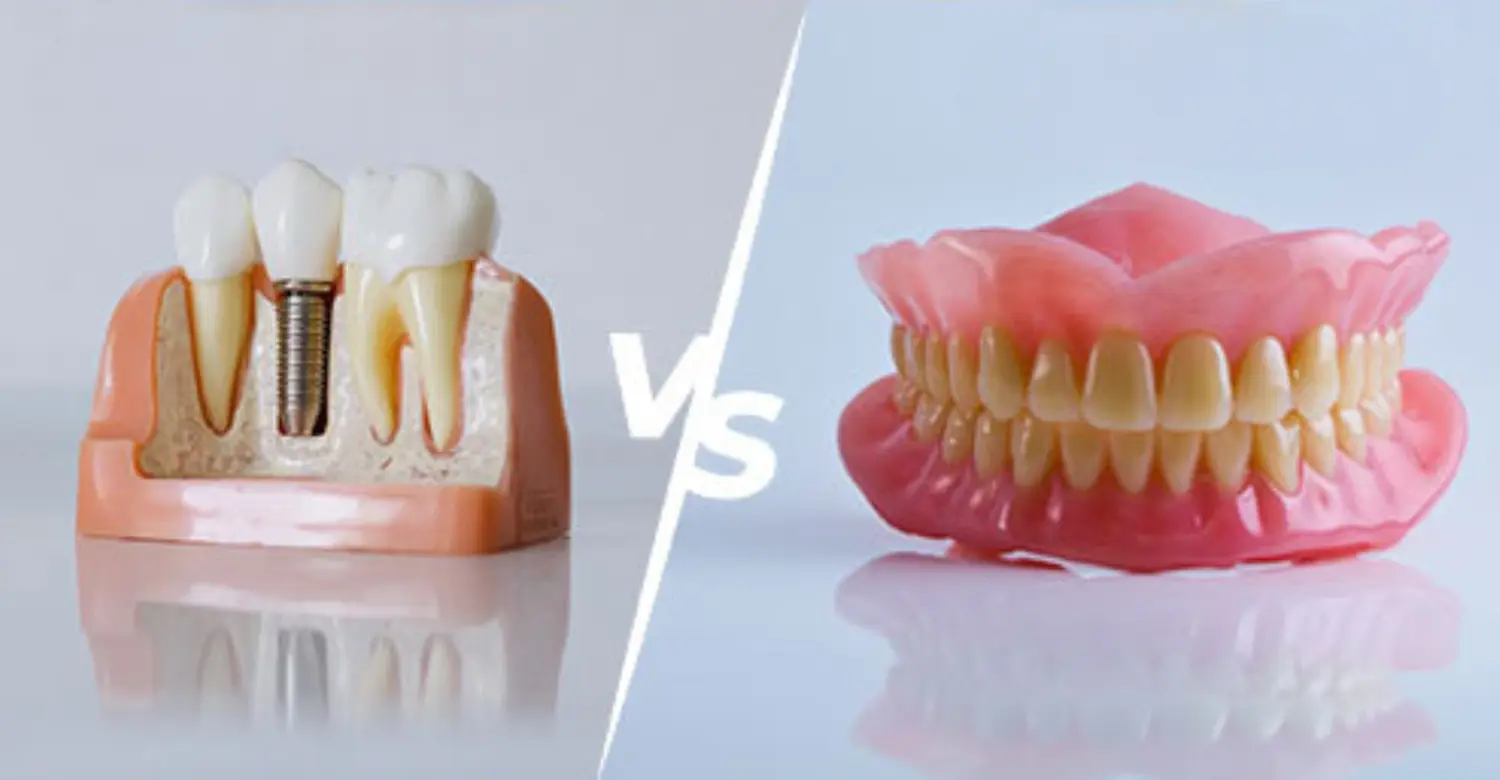
If you're wondering how much are dental implants vs dentures, it's important to consider more than just the price tag. Dental implants and dentures are two widely used solutions for replacing missing teeth. However, they differ greatly in cost, procedure, comfort, durability, and long-term value. Understanding these differences is essential for choosing the right treatment based on your oral health needs and budget.
How Much Are Dental Implants vs Dentures? General Cost Overview
Dental implants are considered a permanent, advanced solution for tooth replacement. They involve placing a titanium post into the jawbone. This post acts just like a natural tooth root. A crown is then attached on top to restore both appearance and function. Because of the surgical procedure, high-grade materials, and multi-step process, implants are more expensive than dentures.
On average, the global cost of a single dental implant ranges from $1,500 to $6,000 per tooth. This price varies depending on the country, clinic, and case complexity. Full mouth solutions like All-on-4 or All-on-6 can cost between $10,000 and $30,000+ per jaw. If you are considering this procedure, learning about dental implants cost in Turkey 2026 is highly recommended for everyone.
Dentures are removable prosthetic teeth and are much more affordable upfront. They do not require surgery, which significantly reduces the cost.
Basic dentures: $300 to $1,500 per arch
High-quality custom dentures: $1,500 to $3,000+ per arch
Implant-supported dentures: $6,000 to $12,000+
Dentures are cheaper initially, but they usually need replacement every 5–8 years. In contrast, implants can last 15–25 years or longer with proper care. The implant process requires surgically placing a titanium post into the jawbone. A healing period of several months follows, which contributes to the higher initial cost.
Average Cost at Vitrin Clinic
At Vitrin Clinic, dental implant pricing is far more affordable compared to many Western countries. This is due to regional cost differences and dental tourism pricing models. To ensure optimal oral health, you should understand how implants after dentures impacts your daily recovery.
Based on the clinic’s published 2026 estimates:
Single dental implant: $500 – $700
Implant-supported crown: $700 – $900
All-on-4 (one arch): $3,500 – $7,500
All-on-6 (one arch): $4,000 – $9,000
Full mouth implants (both jaws): $7,000 – $15,000 total
These prices often include multiple stages like consultation, implant placement, crown fabrication, and follow-up care. However, extra procedures such as bone grafting or sinus lifting may increase the final cost.
Key Difference in Cost and Value
Dentures: Lower initial cost and fully removable. However, they are less stable and require periodic replacement.
Dental implants: Higher initial cost, but offer a fixed solution, natural feel, and long-term durability. Many patients ask us about this topic, and Vitrin Clinic's top implant choices can provide the answers you need.
While dentures are more budget-friendly, dental implants are often a long-term investment in your oral health and daily comfort. Beyond cost, each option has distinct advantages. Implants provide a stable, permanent fix that prevents bone loss and feels natural. Dentures are non-invasive and easy to adjust, but they may slip and accelerate bone loss over time.
When comparing long-term expenses, look beyond the initial price. Dental implants require standard cleanings and occasional routine checks. Dentures, however, need regular relines, adhesives, and full replacement every 5–8 years. Over a decade, total denture maintenance can nearly match implant costs.
Insurance coverage also varies. Many plans cover dentures but only pay for part of an implant procedure. Fortunately, clinics like Vitrin Clinic offer affordable packages and flexible financing to make implants accessible. For instance, a patient from the UK noted, "I can eat apples again and laugh without worrying." Another from Canada said, "The result exceeded my expectations."
10-Year Cost and Value Analysis: Upfront vs. Long-Term Financial Impact
Dental implants generally carry a higher initial cost than traditional dentures. However, the financial comparison shifts when you evaluate treatment over a 10-year period. Dentures require replacement, relining, adjustments, adhesives, and ongoing upkeep. Implants typically only require routine professional care and occasional restorative checks.
The true long-term cost depends on several factors: your oral health, the number of teeth replaced, the restoration type, and any extra procedures. At Vitrin Clinic, treatment planning considers both the initial investment and expected long-term function. This helps patients compare options based on individual needs rather than price alone.
Calculating the True Cost of Maintenance, Adhesives, and Replacements Over a Decade
The initial price tag of dentures does not represent their complete long-term cost. Traditional dentures often require periodic relining as your jawbone and gum tissues reshape over time. They also require full replacement when worn down, alongside ongoing purchases of adhesive products.
Implants also need maintenance, professional cleanings, and occasional prosthetic adjustments over time. Therefore, a true 10-year cost comparison must include the original treatment, maintenance, replacements, adjustments, and extra procedures. Vitrin Clinic evaluates these factors during initial consultations so patients understand the potential financial impact of each choice.
Is It Cheaper to Start with Dentures and Switch to Implants Later?
Starting with dentures reduces your immediate financial burden, but switching to implants later is not always cheaper. Long-term denture use can cause progressive changes in the supporting jawbone. This often impacts future implant planning.
Some patients eventually require additional procedures, such as bone grafting, before implants can be placed safely. According to Dr. Rifat Alsaman, Head of the Medical Team at Vitrin Clinic and a cosmetic dentist, the best approach is to evaluate your bone volume, oral health, functional needs, and long-term goals before choosing between a temporary or permanent solution.
Functional & Quality of Life Comparison: Implants vs. Dentures
Cost is only one part of the decision between dental implants and dentures. Stability, chewing efficiency, speech, comfort, confidence, and daily convenience significantly influence your quality of life. Traditional dentures are removable and serve as a practical choice for many. However, their stability varies depending on your anatomy and the denture design.
Dental implants are securely anchored into the jawbone, providing superior stability. At Vitrin Clinic, clinicians assess both functional and aesthetic requirements to determine whether conventional dentures, implant-retained dentures, or fixed implant restorations are right for you.
Bite Force Restoration, Eating Restrictions, and Dietary Freedom
Dental implants offer substantially greater stability during chewing because they are anchored directly within the jawbone. Traditional dentures rest on the gums and can shift while eating, especially as their fit changes over time. This makes hard, sticky, or chewy foods challenging for some denture wearers.
Implant-supported solutions improve chewing stability, allowing patients to enjoy a wider range of foods. However, the level of functional improvement depends on the number of implants, restoration design, bone condition, and individual adaptation. Vitrin Clinic evaluates these factors before recommending any implant-supported plan.
Daily Maintenance Realities: Cleaning Protocols and Adhesive Requirements
Traditional dentures must be removed and cleaned daily. Many patients also rely on denture adhesives to improve retention. Dentures must always be handled carefully according to professional instructions.
Dental implants are not maintenance-free either. Patients still need daily brushing, flossing, and regular professional checkups. Implant-supported dentures require thorough cleaning around the implant posts and underneath the prosthesis. Dr. Rifat Alsaman emphasizes that long-term success depends heavily on consistent oral hygiene and professional follow-up care at Vitrin Clinic.
Biological Factors and Clinical Considerations
The biological condition of your mouth is a critical factor when choosing between implants and dentures. Dental implants require adequate bone support and healthy surrounding tissue. Dentures, on the other hand, do not require surgical placement.
However, dentures cannot replicate the function of a natural tooth root. Patient age, bone volume, gum health, medical history, oral hygiene, and treatment expectations must all be evaluated. Vitrin Clinic relies on thorough clinical assessments and diagnostic imaging to craft individualized treatment plans, rather than recommending implants based solely on appearance or budget.
Bone Preservation vs. Long-Term Facial Structure Changes
When natural teeth are lost, the jawbone no longer receives stimulation from tooth roots and begins to resorb. Traditional dentures replace visible teeth, but they cannot replicate natural tooth roots or stop bone loss.
Dental implants are placed directly into the jawbone, providing functional stimulation around the implant site. This helps preserve long-term facial structure and support. Long-term bone changes directly influence facial aesthetics and how well traditional dentures fit. Vitrin Clinic carefully evaluates bone levels with modern imaging prior to initiating implant therapy.
Patient Age, Systemic Health, and Candidacy Requirements
Age alone does not disqualify someone from getting dental implants. Far more important factors include overall health, oral hygiene, gum condition, bone availability, smoking habits, medications, and aftercare commitment.
Some patients require periodontal treatment or bone augmentation prior to placement. Dentures are often recommended when surgery is medically unsuitable or when a patient simply prefers a non-invasive treatment. At Vitrin Clinic, candidacy is determined through individual clinical evaluation rather than age.
When Would a Dentist NOT Recommend Implants?
A dentist may not recommend implants when there is insufficient bone support without a suitable augmentation option, uncontrolled periodontal disease, inadequate oral hygiene, certain uncontrolled systemic health problems, or an inability to maintain the required follow-up care. Heavy smoking and some medications may also affect treatment planning and healing. Importantly, being unsuitable for implants at one point does not always mean implants are permanently impossible. Dr. Rifat Alsaman, Head of the Medical Team at Vitrin Clinic and a cosmetic dentist, recommends identifying and addressing modifiable risk factors whenever clinically appropriate before reconsidering implant treatment.
Insurance, Financing, and Payment Considerations
The financial decision between implants and dentures should include insurance coverage, payment options, treatment phases, and possible additional procedures. Dental insurance policies differ considerably, and some plans provide more coverage for dentures than implant treatment. Patients should ask for a detailed treatment estimate that separates implant placement, prosthetic components, diagnostic imaging, bone grafting, temporary restorations, and follow-up care when applicable. Vitrin Clinic can help international patients understand the components of their proposed treatment and plan their dental care according to their clinical needs and available budget.
Navigating Dental Insurance Coverage, Out-of-Pocket Costs, and Payment Plans
Before beginning treatment, patients should check whether their dental insurance covers implants, implant-supported dentures, dentures, extractions, bone grafting, or related diagnostic procedures. Insurance may cover part of a treatment rather than the complete cost. Patients should also ask about waiting periods, annual limits, exclusions, and replacement provisions. For patients considering treatment abroad, such as at Vitrin Clinic, it is particularly important to understand what is included in the treatment plan and which services are covered separately. A transparent treatment breakdown helps patients avoid unexpected expenses.
Switching from Dentures to Implants: What You Need to Know
Patients who have worn dentures for years may still be candidates for dental implants. However, the clinical assessment can be different from that of a patient who recently lost teeth. Long-term tooth loss may result in reduced bone volume, changes in gum tissues, and altered facial support. Depending on the patient's anatomy, implants may require bone grafting or another preparatory procedure. Vitrin Clinic evaluates the existing denture, oral tissues, bone condition, and desired final restoration before creating a personalized transition plan.
Is It Too Late to Switch After Decades of Wearing Dentures?
It is not necessarily too late to consider implants after decades of denture use. The main question is whether sufficient bone and healthy tissues are available for predictable implant placement. If bone volume is inadequate, additional procedures may sometimes make implant treatment possible. However, candidacy must be assessed individually using clinical examination and diagnostic imaging. Dr. Rifat Alsaman explains that the length of time a patient has worn dentures is only one factor; bone anatomy, oral health, general health, and treatment expectations are equally important when planning implant therapy at Vitrin Clinic.
What Happens to Your Existing Dentures During Treatment Transition?
Existing dentures may sometimes be modified or used temporarily during the transition to implant treatment, depending on their condition and the planned procedure. They may help maintain appearance and basic function while implants heal. In some cases, a new temporary or provisional prosthesis may be necessary. Once healing is complete and the implants are ready to support the definitive restoration, the final prosthesis can be fabricated. Vitrin Clinic plans the transition according to the patient's surgical and prosthetic requirements so that each stage is coordinated with the next.
Implant-Retained Dentures vs. Traditional Dentures: Which Is More Stable?
Traditional dentures rely primarily on the gums and underlying tissues for support, while implant-retained dentures use dental implants to improve retention and stability. Implant-retained dentures can therefore reduce movement during speaking and eating for appropriately selected patients. They are still generally removable, unlike fixed full-arch implant restorations. The best choice depends on bone availability, functional expectations, budget, hygiene ability, and overall health. Vitrin Clinic can assess whether a traditional denture, implant-retained denture, All-on-4, All-on-6, or another restoration is appropriate for the individual patient.
What We Notice Clinically
From a clinical perspective, the decision between dentures and implants should never be based on cost alone. Dentists consider bone volume, periodontal health, occlusion, oral hygiene, facial structure, functional expectations, and the patient's ability to maintain long-term care. Patients who have worn dentures for many years may present with changes in ridge anatomy that affect retention and implant planning.
Dr. Rifat Alsaman, Head of the Medical Team at Vitrin Clinic and a cosmetic dentist, emphasizes that every case requires individual assessment. In his clinical approach, the goal is not simply to replace missing teeth but to select a solution that provides appropriate function, stability, oral health, and aesthetics for the patient's specific circumstances.
Clinical Note
Long-term tooth loss can lead to progressive changes in the supporting jawbone, which may affect denture fit and future implant planning. A loose denture is not always simply a problem with the prosthesis itself; changes in the underlying tissues can contribute to reduced retention.
A clinical examination and appropriate diagnostic imaging can help determine whether the patient has sufficient bone volume for implant placement and whether additional treatment may be required. At Vitrin Clinic, these findings are considered before deciding between traditional dentures, implant-retained dentures, and fixed implant-supported restorations.
Dr. Rifat Alsaman, Head of the Medical Team at Vitrin Clinic and a cosmetic dentist, stresses the importance of evaluating the underlying oral structures rather than focusing only on the appearance of the replacement teeth.
Tips for Patients
Do not compare treatments based only on the initial price. Consider maintenance, replacements, adjustments, and potential additional procedures over time.
Maintain excellent oral hygiene. Natural teeth, gums, implants, and implant-supported restorations all require consistent daily care.
Attend regular dental examinations. Professional monitoring can identify gum inflammation, implant complications, bone changes, or denture-related problems early.
Clean dentures correctly. Follow your dentist's instructions for cleaning and storing removable dentures.
Do not rely excessively on denture adhesive. If your denture becomes increasingly loose, have its fit evaluated rather than simply increasing adhesive use.
Ask about bone levels before choosing implants. Diagnostic imaging can help determine whether bone augmentation or another preparatory treatment is needed.
Tell your dentist about your medications and health conditions. These factors can influence implant candidacy and healing.
Discuss your long-term goals. Tell your dental team whether your priority is lower initial cost, stability, chewing function, aesthetics, or a long-term fixed solution.
Get an individualized treatment plan. Vitrin Clinic can assess your oral condition and explain which tooth-replacement options are appropriate for your case.
Follow professional aftercare instructions. Dr. Rifat Alsaman recommends consistent follow-up because long-term treatment success depends on both clinical treatment and patient maintenance.
Dr. Rifat Alsaman's Clinical Perspective
Dr. Rifat Alsaman, Head of the Medical Team at Vitrin Clinic and a cosmetic dentist, emphasizes that dental implants and dentures should not be viewed as simply a choice between an expensive treatment and a cheaper treatment. The more important question is which solution is clinically appropriate and sustainable for the patient.
For some patients, traditional dentures remain a practical and effective option. For others, implant-retained or fixed implant-supported restorations may provide greater stability and functional benefits. According to Dr. Rifat Alsaman, treatment planning should consider bone condition, gum health, general health, oral hygiene, aesthetics, function, and the patient's long-term expectations.
At Vitrin Clinic, these factors are assessed together to create a personalized treatment pathway rather than applying the same solution to every patient.
Reference
FAQs

Dr. Rifat Alsaman has more than 5 years of clinical experience in dentistry and currently serves as the Head of the Medical Team at Vitrin Clinic. He is dedicated to providing exceptional patient care, overseeing treatment planning, and ensuring the highest clinical standards across the team. His expertise, attention to detail, and commitment to continuous professional development have helped countless patients achieve healthier, more confident smiles.


