
Does Coffee Stain Veneers or Crowns? In short, yes, but not always in the way people expect. Natural teeth, porcelain and ceramic restorations, and composite materials each respond to coffee differently. That's because staining depends heavily on surface texture and porosity. Porcelain veneers and many crown materials resist pigment far better than natural enamel. Composite is more porous, so it picks up coffee's tannins more readily. This guide walks through whether coffee stains veneers, whether it stains crowns, and how coffee and veneers interact over months and years of daily drinking. By the end, you'll know what to realistically expect from your own restorations.
Does Coffee Stain Veneers or Crowns?
In general, porcelain is highly stain-resistant thanks to its smooth, non-porous surface. Composite absorbs pigments more easily because of its higher porosity. Even with porcelain, mild staining can appear around the margins or on surrounding natural teeth over time. The bottom line: no material is completely stain-proof, but daily care and regular professional cleanings significantly reduce the effect.
Does Coffee Stain Veneers?
Whether coffee stains veneers depends heavily on the material. It's one of the first questions people ask when weighing this question for their own smile. Porcelain veneers are highly stain-resistant because their glazed surface is smooth and essentially non-porous. That gives coffee pigments far less surface to adhere to. Composite veneers, by contrast, are more porous and absorb pigments more easily. This makes them noticeably more vulnerable to gradual discoloration from daily coffee drinking.
Does Coffee Stain Crowns?
Coffee stains crowns in a similar pattern to veneers, which is a natural extension of the topic for anyone with restorative work. Porcelain, zirconia, and porcelain-fused-to-metal crowns generally resist staining quite well, thanks to their smooth, glazed surfaces. However, the crown material itself may stay resistant while surrounding natural teeth continue to darken. Over time, that can create a visible mismatch between the crown and the rest of the smile.
Can Veneers Stain From Coffee?
Whether veneers stain from coffee ultimately comes down to surface staining versus true material discoloration. Coffee residue can build up on the surface, or it can settle into margins and bonding areas around a veneer. In many cases, the veneer material itself stays largely unaffected. This distinction matters, because surface deposits are usually removable, while true material staining is not.
Can Crowns Stain From Coffee?
Whether crowns stain from coffee is closely tied to where the discoloration actually appears. Coffee often affects the area around a crown — the margin, the cement line, or the surrounding gum tissue — more than the crown material itself. Understanding this difference helps explain why a crown can look "stained" even when its core material hasn't changed color.
Why Does Coffee Cause Stains on Teeth and Veneers?
Understanding this question requires a look at the actual chemistry behind coffee stains on teeth and veneers.
How Coffee Affects Natural Teeth
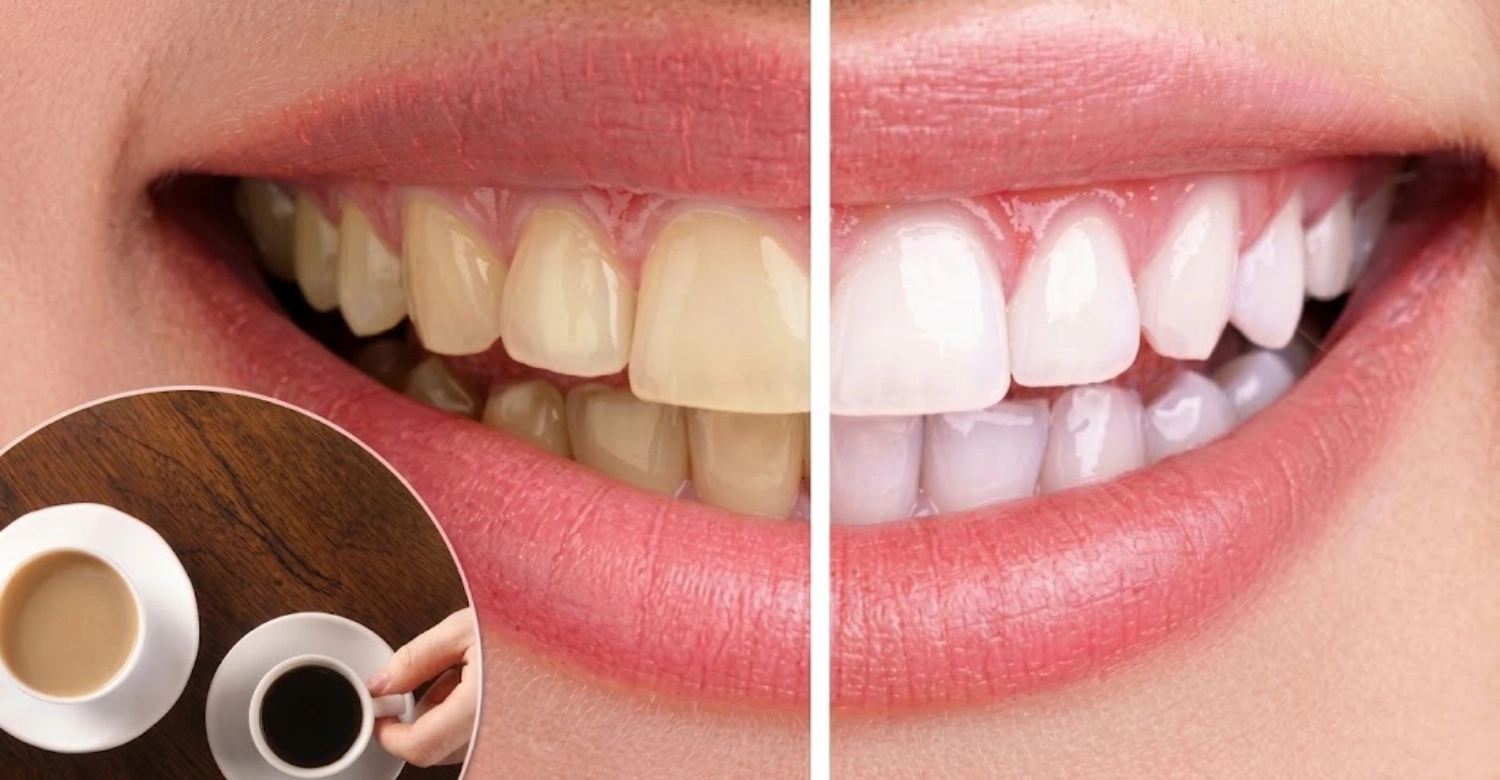
Coffee contains polyphenolic compounds, particularly tannins, which have strong chromogenic potential. These compounds can adsorb onto tooth surfaces over repeated exposure. On natural enamel, these pigments settle into microscopic surface irregularities. When combined with ongoing plaque buildup, repeated coffee consumption gradually deepens the discoloration over months and years.
Coffee Stains on Veneers vs Natural Teeth
Coffee stains on veneers differ from stains on natural teeth mainly because of surface porosity. Composite resin is more porous than porcelain, so it absorbs pigments more easily. This happens through water sorption and surface roughness that lets hydrophilic chromogens penetrate the polymer. Good oral hygiene helps in both cases, but it can't fully offset the underlying material difference.
Does the Type of Veneer Matter?
The type of veneer matters quite a bit for coffee-related discoloration. Porcelain veneers offer the strongest stain resistance thanks to their glazed, non-porous surface. Emax veneers perform similarly well, while offering a slightly different balance of strength and translucency. Composite veneers, being more porous, require more frequent maintenance. They're generally more prone to visible staining over time.
Tips for the Patients
Rinsing with water after coffee helps limit how long pigments sit on veneer surfaces. Maintaining consistent brushing and daily flossing keeps plaque from compounding the staining effect. Scheduling routine professional cleanings removes surface buildup before it has a chance to set into visible discoloration.
Coffee and Veneers: What Happens Over Time?
This section looks at coffee and veneers, and coffee and dental crowns, from a long-term perspective rather than a one-time snapshot.
Does Daily Coffee Drinking Stain Veneers?
A controlled lab study found that coffee staining produced statistically significant color changes in both natural tooth specimens and composite resin specimens. This confirms coffee's discoloring effect is measurable, not just anecdotal. Daily coffee drinking gradually builds surface deposits over time. That's exactly why maintenance matters more than trying to avoid coffee completely.
Coffee and Dental Crowns: What Happens Over Time?
Over the long term, coffee and dental crowns interact primarily at the margins and surrounding tooth structure, rather than within the crown material itself — a nuance worth remembering whenever this topic comes up. Crown material generally holds its color well. The condition of surrounding teeth can still shift, though, which makes regular professional checkups important for catching any developing mismatch early.
Can Coffee Change the Color of Veneers or Crowns?
Coffee can contribute to extrinsic staining, which sits on the surface. In composite materials, it can also cause some intrinsic discoloration that becomes part of the material itself. Professional whitening generally won't change the color of existing veneers or crowns. That's why matching the restoration to surrounding teeth matters so much at the time it's placed.
Tips for the Patients
Choosing lighter roasts can reduce the intensity of pigment exposure with each cup. Drinking coffee through a straw limits direct contact with front teeth and visible restoration surfaces. Keeping up with routine dental visits ensures any early staining gets addressed before it becomes more noticeable.
How to Prevent Coffee Stains on Veneers
This is where the question becomes genuinely practical: how do you actually prevent coffee stains on veneers day to day?
How to Prevent Coffee Stains on Veneers?
Several strategies help limit coffee staining on both porcelain and composite restorations. Rinsing with water right after drinking coffee is a simple first step. Maintaining consistent brushing and flossing matters just as much. Avoid letting coffee sit on the teeth for long periods, choose lighter roasts when you can, and keep up with regular professional cleanings. Together, these habits remove surface stains before they set.
Should You Use a Straw for Iced Coffee?
Using a straw can meaningfully reduce contact between coffee and the front teeth, where veneers are most visible. This tip is especially relevant for iced coffee. Cold drinks are often sipped slowly over a longer period, which extends how long pigments stay in contact with restoration surfaces.
Should You Brush Your Teeth Immediately After Coffee?
Rinsing with water first is generally more helpful than brushing right away. Coffee is mildly acidic, and it can temporarily soften enamel and some restorative surfaces. Waiting a short period before brushing, then following your normal routine, offers a more balanced approach to protecting both natural teeth and restorations.
How to Keep Veneers White While Drinking Coffee
Knowing how to keep veneers white is one of the most practical parts of this whole topic.
How to Keep Veneers White?
Maintaining good oral hygiene forms the foundation of keeping veneers white over time. Scheduling professional dental cleanings on a consistent basis removes buildup that daily brushing alone can miss. Limiting frequent coffee exposure, avoiding smoking and other staining habits, and using dentist-recommended oral-care products round out an effective, sustainable routine.
Can You Whiten Veneers After They Stain?
Dental veneers, crowns, and composite bonding don't respond to conventional teeth-whitening gels the way natural enamel does. That's because bleaching agents act on enamel's internal structure, not on restorative material. A professional assessment can determine whether polishing is enough to restore shine, or whether replacement is the more appropriate long-term solution.
Which Veneers and Crowns Are Most Resistant to Coffee Stains?
Answering Does Coffee Stain Veneers or Crowns? often comes down to material choice — some options simply hold up better than others.
Are Porcelain Veneers Resistant to Coffee Stains?
Porcelain veneers are meaningfully more stain-resistant than composite, thanks to their smooth, glazed, non-porous surface. That makes them a common recommendation for coffee drinkers. Even so, porcelain resists staining rather than being fully immune to it. With proper maintenance and routine professional care, porcelain veneers can maintain their appearance remarkably well over years of regular coffee drinking.
Are Emax Veneers Resistant to Coffee?
Emax and other ceramic veneers are commonly selected partly for their aesthetics and partly for their strong stain resistance. That resistance closely mirrors traditional porcelain. Proper care — including regular cleanings and sensible coffee habits — helps preserve their appearance and keeps them looking consistent with surrounding natural teeth.
Is Zirconia Resistant to Coffee Stains?
Zirconia crowns resist surface discoloration quite well, similar to porcelain, thanks to their dense, smooth structure. That said, surrounding natural teeth can still stain from coffee even when a zirconia crown itself holds its color. Over time, that can create a visible difference in shade between the crown and neighboring teeth.
Composite Veneers vs Porcelain Veneers for Coffee Drinkers
For coffee drinkers specifically, porcelain generally offers stronger stain resistance and lower long-term maintenance than composite. Composite tends to need more frequent polishing to stay looking fresh. Porcelain also tends to hold up longer overall, though composite remains a reasonable option for some patients. Material selection should ultimately be based on individual needs, budget, and aesthetic goals.
Does Coffee Stain Veneers or Crowns More Than Other Drinks?
Comparing coffee with other common beverages adds useful context, since staining risk isn't unique to coffee alone.
Coffee vs Tea
Both coffee and tea contain staining pigments, though their chromogenic profiles differ slightly. Tea, particularly darker varieties, can be just as concerning for veneers and crowns as coffee. Frequent consumption of either beverage tends to produce a similar, gradual buildup of surface discoloration over time.
Coffee vs Red Wine
Red wine is often considered even more pigment-intensive than coffee, due to its deep chromogens and its frequent evening use alongside food. Patients who drink both coffee and red wine regularly may notice combined staining effects. Those effects are often more pronounced than either beverage alone.
Coffee vs Soft Drinks
Soft drinks introduce a separate concern alongside staining: acidity. Darker soft drinks can still contribute to surface discoloration. Their acidic content also raises questions about enamel erosion, which makes them a somewhat different risk profile compared with coffee's primarily pigment-driven effect.
What Drinks Should You Limit After Veneers or Crowns?
After getting veneers or crowns, it helps to be mindful of coffee, tea, and red wine, since all three carry strong staining pigments. Dark-colored soft drinks and other highly pigmented beverages deserve similar attention. The goal isn't to eliminate them entirely, but to pair them with sensible habits like rinsing afterward and keeping up with professional care.
How to Care for Veneers and Crowns If You Drink Coffee
This section pulls together daily habits for people who don't plan on giving up coffee.
Daily Oral Hygiene
Brushing twice daily forms the baseline for keeping both natural teeth and restorations looking their best. Flossing, or using appropriate interdental cleaning tools, helps reach areas a toothbrush can miss — particularly around veneer and crown margins. Keeping plaque under control supports every other staining-prevention habit on this list.
Coffee Drinking Habits
Reducing coffee frequency when possible naturally limits total pigment exposure over time. Avoid continuous sipping throughout the day; drinking a cup in one sitting shortens how long teeth stay in contact with staining compounds. Drinking water afterward, and considering a straw for iced coffee, both add extra layers of protection.
Professional Maintenance
Scheduling regular dental examinations allows early staining to be caught before it becomes noticeable. Having restorations professionally evaluated and cleaned when appropriate helps remove surface buildup that daily habits alone can't fully address. Addressing any staining around restoration margins early keeps small issues from becoming larger cosmetic concerns.
Tips for the Patients
Sticking to a consistent oral hygiene routine makes the biggest overall difference for coffee drinkers with veneers or crowns. Pairing that routine with sensible coffee habits and regular professional visits creates a realistic, sustainable approach rather than requiring patients to give up coffee entirely to protect their smile.
When Should You See a Dentist About Staining?
Knowing when staining warrants a dental visit matters too, since not every discoloration is simple surface staining.
Staining Around Veneers
Discoloration around a veneer may point to plaque accumulation, calculus buildup, staining at the margin, or another underlying issue — not just simple surface pigment. Because these causes need different solutions, any changes around a veneer are worth having evaluated rather than assumed to be ordinary coffee staining.
Staining Around Crowns
Changes in appearance around a crown should be assessed by a dental professional rather than assumed to be coffee staining by default. Margin issues, gum changes, or shifts in surrounding tooth color can all resemble surface staining while actually pointing to a different underlying concern.
When Veneers or Crowns May Need Attention
Persistent discoloration that doesn't respond to normal cleaning is one clear sign restorations may need professional attention. Rough or damaged surfaces, visible gaps, or changes at the margins are other important indicators. New sensitivity, discomfort, or noticeable changes in the surrounding natural teeth are all good reasons to schedule an evaluation sooner rather than later.
Coffee and Veneers at Vitrin Clinic
Vitrin Clinic takes a cosmetic dentistry approach to Does Coffee Stain Veneers or Crowns?, helping patients weigh material choice against their daily coffee habits. Patients considering veneers can discuss material selection and overall smile aesthetics, including options such as porcelain or Emax veneers where appropriate for their goals. Vitrin Clinic can also assess existing veneers, crowns, natural teeth, and overall smile aesthetics, with an emphasis on personalized treatment planning rather than assuming one material suits every patient equally.
What We Notice Clinically
Clinically, the team at Vitrin Clinic frequently hears concerns from coffee-drinking patients. They want to know how their cosmetic restorations will hold up over time. The emphasis is consistently on choosing suitable materials upfront and maintaining proper hygiene afterward, rather than promising that any material will never stain with daily coffee exposure.
Clinical Note
Veneers and crowns should be evaluated based on their material, condition, margins, and surrounding teeth rather than assumptions alone. Staining around a restoration does not necessarily mean the restoration itself has changed color. A professional evaluation at Vitrin Clinic can determine whether cleaning, polishing, or another solution is the appropriate next step.
Tips for the Patients
Rinsing with water after coffee, keeping up daily brushing and flossing, and avoiding excessive coffee consumption all support long-term results. Attending regular dental checkups and following the maintenance instructions provided after receiving veneers or crowns rounds out a routine that keeps restorations looking their best for years.
Resource:
So, does coffee stain veneers or crowns? Yes — prolonged coffee exposure can cause some color changes, though the degree depends on the ceramic material and cement used. A study published in Scientific Reports found that lithium disilicate veneers showed greater resistance to coffee staining than some zirconia-based materials. This highlights the importance of choosing suitable restorative materials and maintaining good oral hygiene to preserve a bright smile.
https://pmc.ncbi.nlm.nih.gov/articles/PMC9772217/
FAQs

Dr. Rifat Alsaman has more than 5 years of clinical experience in dentistry and currently serves as the Head of the Medical Team at Vitrin Clinic. He is dedicated to providing exceptional patient care, overseeing treatment planning, and ensuring the highest clinical standards across the team. His expertise, attention to detail, and commitment to continuous professional development have helped countless patients achieve healthier, more confident smiles.


