Dental Equipment
June 9, 2026
Intraoral Scanner: How Is It Transforming Modern Dentistry?
 Dr. Rifat Alsaman
Intraoral Scanner technology has revolutionized modern dentistry over the past decade by transforming how clinicians capture accurate digital impressions of a patient's teeth, gums, and bite alignment. This compact, wand-shaped digital device replaces messy, uncomfortable putty impressions with a fast and comfortable scanning process. As the scanner glides along the dental arches, it captures thousands of images per second to create a highly detailed three-dimensional model of the entire mouth. The resulting digital dental scan is faster, more precise, and more comfortable than conventional impression methods. Whether planning clear aligners, crowns, dental implants, or orthodontic treatment, the intraoral scanner has become an essential tool in modern dental care. It enhances clinical precision, improves the patient experience, and sets a new global standard for digital dentistry. This blog explores everything you need to know about this groundbreaking technology.
A Dentist's Perspective: Why Digital Dentistry Is No Longer Optional
From a professional standpoint, embracing digital dentistry is no longer optional. This is especially true for the intraoral scanner. Patients today arrive better informed and more demanding. They are fully aware of the superior experience that cutting-edge technology can deliver. Traditional impression workflows are serviceable, but they introduce unnecessary variables. These include material distortion, lab shipping delays, and real patient discomfort. Dental professionals who adopt digital tools gain both clinical and competitive advantages. The teeth scan technology enables real-time oral cavity visualization. This lets dentists immediately share findings with patients and collaborating specialists. Digital workflows also shorten treatment timelines and reduce costly remakes. The transition to digital is not simply about following trends. It reflects a genuine commitment to superior clinical outcomes, better communication, and a more efficient, patient-centered model of care.
The Shift from Traditional Impressions to Intraoral Scanning
For generations, dental professionals relied on alginate or polyvinyl siloxane materials to capture molds of patients' teeth. These methods were functional, but they came with drawbacks. These include patient discomfort, material shrinkage, and slow transport to external laboratories. The advent of intraoral scanning has completely transformed this process. A modern dental 3d scanner captures a full 3d mouth scan within just a few minutes. It produces a digital file that can be sent instantly to any laboratory worldwide. Chairside efficiency has improved significantly. Fewer appointments are required, and remakes from impression inaccuracies have dropped dramatically. Intraoral scanning is also more environmentally sustainable. It eliminates the considerable waste tied to impression trays and traditional materials. The shift from conventional to digital impressions is one of the most meaningful advancements in clinical dentistry. It benefits both practitioners and patients in measurable, lasting ways.
Understanding the Intraoral Scanner: Technology Behind the Smile
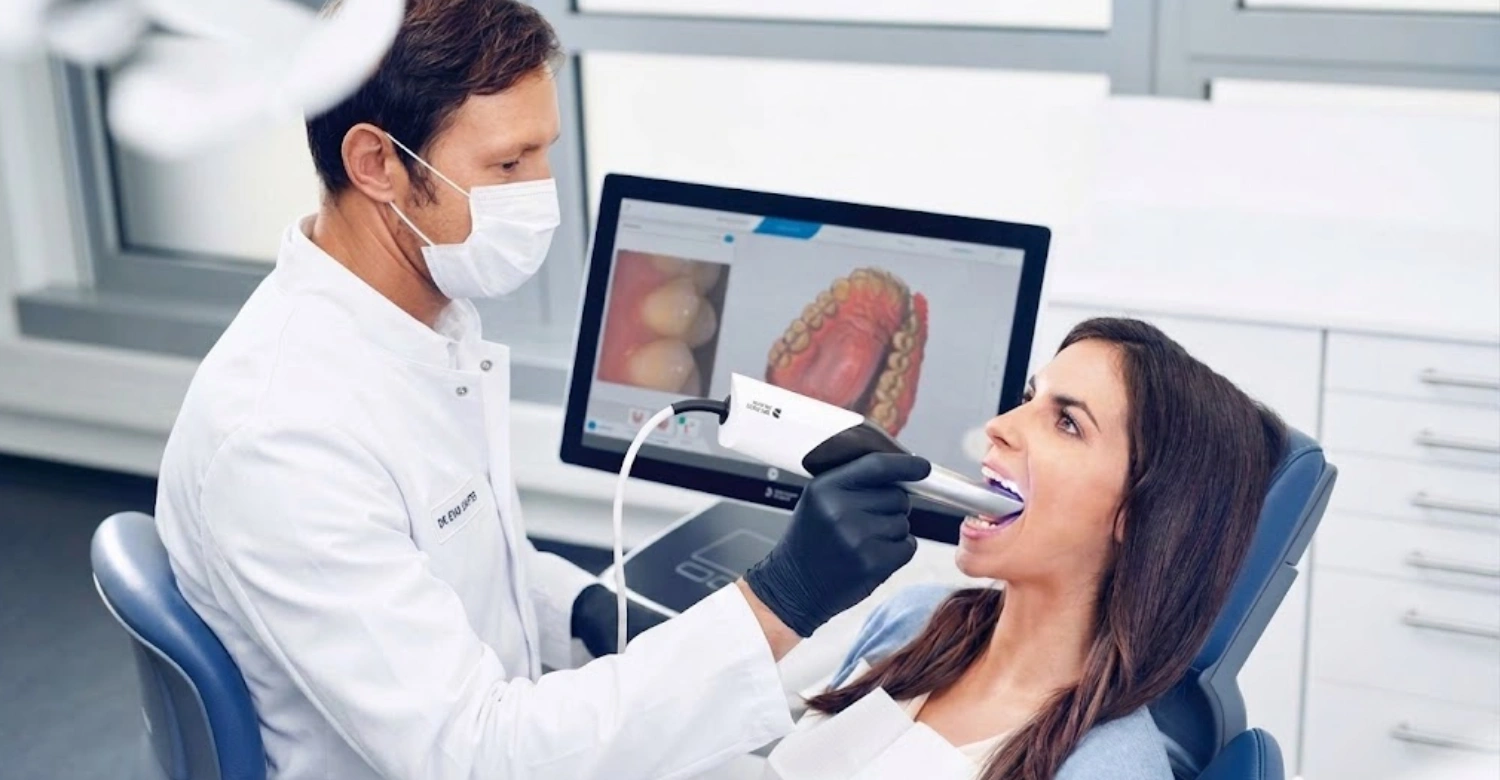
To truly appreciate the impact of digital dentistry, it helps to understand the technology behind it. The intraoral scanner is a precision optical instrument. It's housed in a compact, ergonomic wand. Its scanning tip is small enough to move comfortably within the oral cavity. It captures thousands of images per second using advanced camera systems. These images are processed in real time by sophisticated software. The software constructs a detailed, dimensionally accurate 3D model of the teeth and gums. Different intraoral scanning models use varying optical technologies. These include structured light projection, laser triangulation, and confocal imaging. All share the same core objective: replacing physical impressions with accurate digital data. The 3d teeth scan produced is immediately visible on screen. This enables instant visualization for both the dentist and the patient. This technology forms the foundation of modern restorative, orthodontic, and cosmetic dental workflows.
What Is a Digital Intraoral Scanner and How Does It Work?
A digital intraoral scanner is a handheld optical device. It captures precise three-dimensional data from inside the oral cavity. As the clinician moves the scanning wand across the dental arches, the device continuously photographs tooth surfaces, gum tissue, and occlusal relationships. Proprietary software stitches these images together in real time. This produces a complete teeth scanner model that can be rendered, rotated, and analyzed on screen. The output, typically in STL or OBJ format, is sent digitally to dental laboratories, CAD/CAM milling systems, or 3D printers. The accuracy of digital intraoral scanning routinely surpasses traditional impression materials, particularly for full-arch cases. It is now the preferred clinical tool for crowns, veneers, bridges, implant planning, clear aligners, and orthodontic appliances worldwide. It delivers results with a consistency that conventional methods simply cannot achieve.
Common Patient Concerns About Dental Impressions
Despite advances in dentistry, many patients still associate the word "impression" with discomfort and anxiety. The thick, cold putty in a tray, difficulty breathing, and an overwhelming gag sensation are common memories. These experiences have kept countless patients from seeking necessary dental care. These concerns are widely documented and clinically significant. A large share of adult patients report real anxiety around the traditional impression process. Some delay treatment specifically because of this fear. This anxiety has real consequences for long-term oral health. Fortunately, the widespread adoption of the intraoral scanner has addressed most of these concerns. A modern tooth scan is non-invasive, gag-reflex friendly, and completed within minutes. Understanding what digital scanning involves, and how different it is from traditional impressions, helps reduce patient anxiety. It also improves treatment uptake.
Discomfort, Gag Reflex, and Accuracy Issues with Traditional Methods
Traditional dental impressions require placing material-loaded trays into the patient's mouth. The tray must stay steady for several minutes while the material sets. During this time, excess material can trigger a strong gag reflex and difficulty breathing. This can create real psychological distress, particularly in pediatric patients or those with dental phobia. Beyond comfort, traditional methods also introduce accuracy concerns. Impression materials can shift slightly before fully setting. This introduces dimensional errors that affect the fit of restorations. Even minor discrepancies can result in poorly fitting crowns, uncomfortable aligners, or orthodontic appliances that need multiple adjustments. The intraoral scanner eliminates all of these issues at once. There is no tray, no material, no waiting time, and no gag-reflex stimulus. Intraoral scanning captures accurate dental 3d scan data instantly and comfortably. This makes it a clear improvement over every traditional impression method in use today.
Sensory Comfort: Does an Intraoral Scan Cause Any Pain or Discomfort?
An intraoral scanner is built for comfort. The honest answer to whether it hurts is no. The scanning wand is smooth and lightweight. Every edge is rounded. There is no cutting, no pressure, and no heat. Patients often compare it to a dentist looking around with a small camera. Unlike traditional putty impressions, an Oral Scanner never sits in the mouth long enough to trigger a gag reflex. There is no setting time to endure. Mild sensitivity can occur only if a patient already has an exposed nerve or a recent extraction site. Even then, the scanner tip itself adds no extra irritation. For anxious patients, this pain-free workflow is often the deciding factor. It's why many now choose digital scanning over conventional molds.
Applications of Intraoral Scanners in Dentistry
The clinical applications of intraoral scanners span virtually every dental specialty. In restorative dentistry, they replace traditional impressions for crowns, bridges, and inlays. In orthodontics, they enable precise aligner fabrication and bracket placement without uncomfortable molds. In implantology, they support accurate planning and surgical guide fabrication. In periodontics, they document soft tissue changes over time for disease monitoring. In pediatric dentistry, they dramatically reduce procedural anxiety and duration. Intraoral scanning is equally valuable as an educational tool. Patients can view their own dental 3d model in real time, making treatment needs far easier to understand. From single-tooth restorations to full-mouth rehabilitations, and from aligner therapy to implant-supported prosthetics, the intraoral scanner supports consistent, predictable results across all dental disciplines. Its clinical versatility is unmatched by any single instrument in the modern clinical arsenal.
Restorative Dentistry: Crowns, Bridges, and Veneers
Restorative dentistry is one of the biggest beneficiaries of intraoral scanning technology. When fabricating crowns, bridges, or veneers, the precision of the impression determines the quality of the final restoration. Traditional impression materials are prone to distortion, especially in longer-span bridge cases. A digital dental scanner eliminates this risk. It captures sub-micron-level surface detail across the entire prepared area. The resulting digital model is fed directly into CAD/CAM software. Technicians or on-site milling units then produce restorations with exceptional accuracy. Patients benefit from better-fitting, longer-lasting restorations that need fewer chairside adjustments. For veneers especially, the fine marginal detail captured by a digital impression scanner ensures a seamless aesthetic result. Traditional impressions simply cannot reliably guarantee this. Vitrin Clinic uses advanced dental digital impression scanners in every restorative case, aiming for the highest standard of precision and patient satisfaction.
Beyond Restorations: Fabricating Sleep Apnea Appliances and Nightguards
Most patients link an intraoral scanner to crowns and aligners. But its role now reaches beyond restorative dentistry. Sleep apnea appliances and nightguards both need an exact digital model of the upper and lower arches. They also need an accurate bite relationship. Intraoral scanning for sleep apnea appliances has become the preferred method at forward-thinking practices. A precise scan captures jaw position at the exact protrusive setting a sleep physician recommends. This lets laboratories fabricate a mandibular advancement device that fits without adjustment visits. Nightguards benefit the same way. A digital intraoral scanner records occlusal contacts with detail that plaster models often miss. The result is fewer remakes and faster delivery. Patients can wear these appliances comfortably from the very first night, without the bulk or inaccuracy sometimes tied to mold-based devices.
Types of Dental Scanners and How to Choose the Best One
The market for dental scanners has expanded significantly. Numerous manufacturers now offer competitive products for clinical practices. Choosing the best dental scanner means weighing several key criteria. These include scanning accuracy, ease of use, software integration, scanning speed, color capability, and total cost of ownership. Accuracy is measured by trueness (closeness to the real object) and precision (consistency across repeated scans). Speed matters in busy clinical environments. Software integration determines how seamlessly scan data flows into lab workflows, aligner systems, and CAD/CAM platforms. For many practices, the best intraoral scanner is the one that balances all of these factors. It should match the clinic's case volume and treatment mix. Consulting with peers, reviewing independent studies, and trialing devices before purchase are all important steps. Intraoral scanners are also sometimes judged by compatibility with specific digital lab networks. This can affect case turnaround times.
Overview of Dental Scanner Brands and Technologies
The landscape of dental scanner brands includes established names and innovative newcomers. Together they offer a diverse range of technologies, price points, and clinical capabilities. Each leading brand has built a proprietary software ecosystem. These integrate with specific lab workflows, aligner platforms, and prosthetic systems. When evaluating dental scanner brands, clinicians should look beyond the hardware. Software reliability, customer support quality, and the breadth of compatible partner labs all matter. Some platforms offer open file format output, giving freedom to work with any laboratory. Others operate within closed ecosystems. The dental scanner price range varies considerably depending on features. Entry-level scanners may be accessible at lower investment thresholds. Premium devices with full-arch color scanning and real-time occlusion analysis command higher prices. The best dental scanners today combine clinical accuracy with intuitive workflows and long-term manufacturer support.
The Intraoral Scanning Procedure: What Patients Should Expect
Patients who have never had a digital scan often wonder what the procedure involves. The good news is that intraoral scanning is straightforward, quick, and entirely comfortable. It involves no needles, no drills, no impression materials, and no waiting periods. Patients simply sit comfortably in the dental chair. The clinician moves a small wand-shaped intraoral scanner around the teeth and gums. A real-time 3D model builds on the screen as scanning progresses. Patients are often invited to watch their own dental 3d scan take shape. The entire process typically takes five to fifteen minutes, depending on the scope of the scan. For full-arch or full-mouth cases, it may take slightly longer. Even these cases remain within a comfortable time frame. Understanding the process in advance significantly reduces pre-appointment anxiety for first-time patients.
Step-by-Step Guide to the Intraoral Scanning Process
The intraoral scanning process follows a systematic sequence. It is designed to capture all necessary dental anatomy with maximum accuracy. First, the dentist or trained auxiliary calibrates the intraoral scanner. They select the scanning protocol: upper arch, lower arch, bite registration, or a specific region. The scanning tip is covered with a single-use disposable sleeve for strict hygiene. The clinician then passes the scanning wand along the buccal, occlusal, and lingual surfaces of each arch. This is done in a smooth, continuous motion. Real-time screen feedback confirms coverage and flags any areas needing a rescan. Once both arches and the bite are captured, the software automatically generates a complete 3d teeth scan model. The dentist reviews the scan for completeness and accuracy. It is then saved and sent digitally to the laboratory or treatment planning software. The entire process is efficient, comfortable, and transparent for the patient.
Clinical Note
Every case is different. Dr. Rifat Alsaman, Head of the Medical Team at Vitrin Clinic and a cosmetic dentist, notes that most patients are excellent candidates for digital scanning. A few groups may need extra care during the appointment.
This includes patients with very limited mouth opening, certain movement disorders, or heavy salivation. In these cases, the clinical team simply adjusts pacing between passes. There is no need to switch back to a traditional mold. Dr. Rifat Alsaman says this flexibility is one reason digital workflows have become the default at Vitrin Clinic.
Benefits of Intraoral Scanners for Patients and Dentists
The benefits of adopting an intraoral scanner are tangible for both clinical teams and patients. For patients, the most immediate advantages are comfort, speed, and transparency. Digital scanning eliminates gagging and reduces chairside time. It also lets patients actively see and understand their dental situation through real-time visualization. For dentists, the benefits extend to clinical precision, operational efficiency, and competitive edge. Digital workflows reduce lab communication errors and minimize restoration remakes. They also help facilitate faster case completion. Intraoral scanning enhances documentation too. Every scan creates a permanent, detailed 3D record that supports treatment planning, medicolegal documentation, and long-term monitoring. Overall, practices that invest in intraoral scanning consistently report higher patient satisfaction. They also see reduced overhead from impression material costs and stronger clinical outcomes across all treatment categories. The return on investment, both clinically and operationally, is well established and widely documented.
Improved Accuracy and Better Treatment Outcomes
Clinical accuracy is the cornerstone of successful dental treatment. The intraoral scanner delivers measurable improvements over traditional impression methods. Research has consistently shown that digital dental scanners achieve superior trueness and precision. This holds especially true for full-arch and implant cases. This accuracy translates directly into better-fitting crowns and more precisely seated veneers. It also means aligners that track as designed, and implant prosthetics that achieve passive fit. Fewer adjustments are needed at delivery appointments, cutting chair time and material costs. Better-fitting restorations also last longer, giving patients greater value. The precision of intraoral scanning is especially critical in complex full-mouth rehabilitation cases. Even minor errors compound across multiple units in these cases. By eliminating impression variability, intraoral scanning gives both the dentist and the patient confidence in the final result. That confidence defines excellent modern dental care.
Calculating the Financial ROI: How Digital Scanners Cut Long-Term Practice Overhead
Many practice owners want to see the numbers before switching. The intraoral scanner return on investment roi calculation is more favorable than most expect. Traditional impressions carry recurring costs. Material, trays, shipping, and remakes all add up. These costs disappear almost entirely once a practice moves to digital workflows. A single digital scanner acquisition center workstation typically pays for itself within twelve to twenty-four months. This applies to a practice with average case volume. The main savings come from fewer remakes and shorter laboratory turnaround. Same-day, single visit chairside restorations cut overhead further still. They eliminate a second appointment, a temporary crown, and a separate lab fee. Add in reduced material spend and stronger patient retention, and an Oral Scanner becomes one of the fastest-paying-back investments a practice can make.
Preventive Dentistry and Patient Education Through Digital Scanning
Beyond restorative and orthodontic treatment, the intraoral scanner has become a valuable tool in preventive dentistry and patient education. When patients can interact with a real-time 3D model of their own mouth, their understanding of their oral health improves dramatically. Seeing an accurate 3d dental scan on screen makes abstract concepts concrete. Enamel wear, gum recession, and dental crowding all become easy to understand. This visual engagement motivates treatment acceptance and better home care habits. Clinicians can also use sequential dental scans to track changes in tooth wear, gum health, and bone levels over time. This enables data-driven preventive care before conditions become serious. The educational power of the intraoral scanner is increasingly seen as key to better long-term oral health outcomes. It also helps build trust between patients and their care teams.
How Intraoral Scanning Improves Early Detection of Dental Issues
One of the most significant, and often underappreciated, benefits of the intraoral scanner is early detection. High-resolution 3D models let dentists spot subtle changes in tooth morphology. This includes early enamel erosion, micro-fractures, and incipient decay that the naked eye might miss. Some advanced dental intraoral scanners include software for automated surface analysis between appointments. This flags areas of concern for clinical review. It transforms routine check-ups into proactive monitoring sessions. Early detection means earlier intervention, simpler treatments, lower costs, and better long-term prognoses. The role of the intraoral scanner in preventive care is set to expand further. Artificial intelligence integration will enable smarter, automated analysis of scan data collected at each appointment throughout a patient's dental journey.
What We Notice Clinically
Dr. Rifat Alsaman is Head of the Medical Team at Vitrin Clinic and a cosmetic dentist. He shares what daily use of an intraoral scanner has revealed inside the clinic. "What we notice clinically is that patients relax the moment they see there is no tray and no putty," says Dr. Rifat Alsaman. "An Oral Scanner also lets us catch small issues early, like wear or a hairline crack, long before a patient would feel them." Dr. Rifat Alsaman, Head of the Medical Team at Vitrin Clinic, says the biggest shift has been in patient trust. When someone watches their own 3D scan appear on screen, they ask more questions. They also follow through on treatment more consistently. According to Dr. Rifat Alsaman, this visible confidence often turns a hesitant consultation into a committed treatment plan.
How Vitrin Clinic Uses the Latest Digital Intraoral Scanners
Vitrin Clinic uses advanced digital intraoral scanners integrated with comprehensive CAD/CAM and laboratory workflows. This ensures seamless digital treatment pathways for every patient. From the moment a patient is scanned, their digital dental data is processed through precision software. It's then shared directly with laboratory partners for fabrication of crowns, aligners, implant components, and restorations. The intraoral scanning at Vitrin Clinic captures submicron-level detail across full dental arches. This ensures even complex multi-unit cases are executed with exceptional accuracy. Patients benefit from shorter chairside appointments, faster restoration delivery, and greater confidence in their outcomes. The clinic's adoption of the latest intra-oral scanner technology means every patient, regardless of case complexity, gets a comfortable, efficient, and outstanding dental experience. Digital precision is not an added extra at Vitrin Clinic. It is the foundational standard of every appointment.
Combining Experience with Cutting-Edge Dental Digital Scanners
At Vitrin Clinic, clinical excellence comes from two inseparable factors. These are the expertise of the dental team and the capabilities of the technology they use. The dental digital scanners at the clinic are among the best currently available. They offer high accuracy, full-color scanning, and seamless software integration. But technology alone does not create exceptional outcomes. It is the trained eye, clinical judgment, and patient empathy of the Vitrin Clinic team that turns digital scan data into meaningful treatment plans. This blend of human expertise and technological precision is what sets Vitrin Clinic apart. It's a destination for patients seeking the highest standard of dental care. Whether for cosmetic enhancement, restorative rehabilitation, or preventive monitoring, the synergy of advanced scanners and skilled professionals consistently delivers results that exceed patient expectations.
Personalized Treatment Planning with Scanner 3D Intraoral Technology
One of the most transformative benefits of scanner 3d intraoral technology at Vitrin Clinic is genuinely personalized treatment planning. Traditional impression-based planning relies on physical models that can distort over time. A digital intraoral scanner instead produces an infinitely replicable, measurement-accurate 3D record of a patient's oral anatomy. This data is used to simulate treatment outcomes and design restorations with precise anatomical fit. It also helps plan orthodontic tooth movement with predictable accuracy. Patients can review proposed outcomes visually before treatment begins. This enables truly informed consent and realistic expectations. The intraoral scanner also enables easy comparison of pre- and post-treatment models. This provides objective documentation of clinical progress. For every patient at Vitrin Clinic, this technology means a treatment journey that is fully tailored, transparent, and grounded in measurable, data-driven planning from start to finish.
Tips for Patients
Preparing for a digital appointment is simple. A few small habits make it even smoother. Brush before the visit. This helps the intraoral scanner capture a clean, accurate surface. Mention any strong gag reflex in advance. The team can adjust scanning speed and start where patients tolerate best. Stay relaxed and breathe normally. The scanning wand never blocks the airway the way a loaded impression tray can. If a temporary crown or filling is present, tell the dentist. The scan can be repeated once the permanent restoration is placed. Finally, ask to see the live 3D model on screen. It's one of the most reassuring parts of the visit. Patients who understand what an Oral Scanner is capturing tend to feel far more confident in their treatment plan.
About Vitrin Clinic
Vitrin Clinic is an Istanbul-based dental clinic. It welcomes patients from around the world for cosmetic, restorative, and general dental care. The clinic runs a fully digital workflow. This includes intraoral scanner technology, CAD/CAM design, and in-house laboratory coordination. The clinical team is led by Dr. Rifat Alsaman, Head of the Medical Team at Vitrin Clinic. Every patient journey starts with a free consultation. It moves through transparent digital treatment planning. Multilingual staff support international patients through travel, accommodation, and aftercare. Vitrin Clinic invests in modern equipment, from digital scanners to advanced imaging. This reflects a broader commitment. Genuine clinical expertise paired with the right technology makes treatment faster, more comfortable, and more predictable for every patient who walks through the door.
Advanced Technology and Expertise at Vitrin Clinic
At Vitrin Clinic, the intraoral scanner is part of everyday clinical practice. This reflects a deep commitment to precision, comfort, and innovation. The clinical team understands that superior outcomes only happen when advanced technology pairs with genuine clinical expertise. Every patient receives access to state-of-the-art dental digital scanners. This ensures every diagnosis, treatment plan, and restorative procedure begins with the most accurate data available. The digital-first approach eliminates guesswork and reduces treatment timelines. It also gives patients transparent, real-time information about their oral health. From simple crowns to complex full-mouth rehabilitations, the dental 3d scan technology at Vitrin Clinic supports exceptional outcomes across every category. It sets a benchmark for modern dental care, showing what's possible when world-class equipment meets expert clinical hands.
Ready to Experience a Smile Transformation? Book Your FREE Consultation Today
If you've been considering improving your smile, addressing dental concerns, or exploring what modern dentistry can offer, there's never been a better time to take the first step. Vitrin Clinic offers complimentary consultations. Here, patients can experience the intraoral scanner firsthand and receive a comprehensive digital dental scanner evaluation. You'll also discuss personalized treatment options with the clinical team. Whether you're interested in veneers, teeth whitening, clear aligners, implants, or a complete smile makeover, the digital-first approach at Vitrin Clinic ensures your journey begins with precision, clarity, and comfort. Don't settle for outdated, uncomfortable impression methods. A state-of-the-art 3d teeth scan is available to you today. Your smile transformation begins with a single appointment. Contact Vitrin Clinic now to book your FREE consultation and take the first confident step toward the smile you deserve.
References:
FAQs
Dr. Rifat Alsaman has more than 5 years of clinical experience in dentistry and currently serves as the Head of the Medical Team at Vitrin Clinic. He is dedicated to providing exceptional patient care, overseeing treatment planning, and ensuring the highest clinical standards across the team. His expertise, attention to detail, and commitment to continuous professional development have helped countless patients achieve healthier, more confident smiles.
.webp&w=3840&q=75)


.webp&w=3840&q=75)

