
The question of whether a night guard is an essential component of a smile transformation is one that many patients face when considering overall dental health. When people ask, is a night guard considered orthodontic, they are often trying to figure out how this highly specific protective appliance aligns with broader orthodontic or aesthetic treatments. Understanding the distinction between dynamic dental shifting and structural enamel protection is crucial for maintaining a healthy mouth.
At Vitrin Clinic, located in the heart of Istanbul, Turkey, providing clarity on these structural dental differences is a primary focus for international and local patients alike. A night guard, scientifically referred to as an occlusal splint, serves a distinct purpose in the dental ecosystem. While it is frequently prescribed alongside comprehensive cosmetic and alignment treatments, its core mechanics differ fundamentally from traditional orthodontic care. For patients who grind their teeth and are also considering alignment treatment, our guide to orthodontic braces in Turkey explains how bruxism factors into treatment planning
Defining the Night Guard Versus True Orthodontics
To thoroughly answer the question, is a night guard considered orthodontic, one must look at the mechanical intention of the dental device. Orthodontics is a specialized branch of dentistry focused explicitly on correcting misaligned teeth, modifying jaw growth, and altering structural bites. Devices like traditional metal braces, ceramic brackets, and advanced clear aligners (such as Invisalign) apply continuous, calibrated mechanical pressure to teeth. This physical force remodels the surrounding alveolar bone, allowing the teeth to physically migrate into a more favorable, harmonious position over a prolonged timeline.
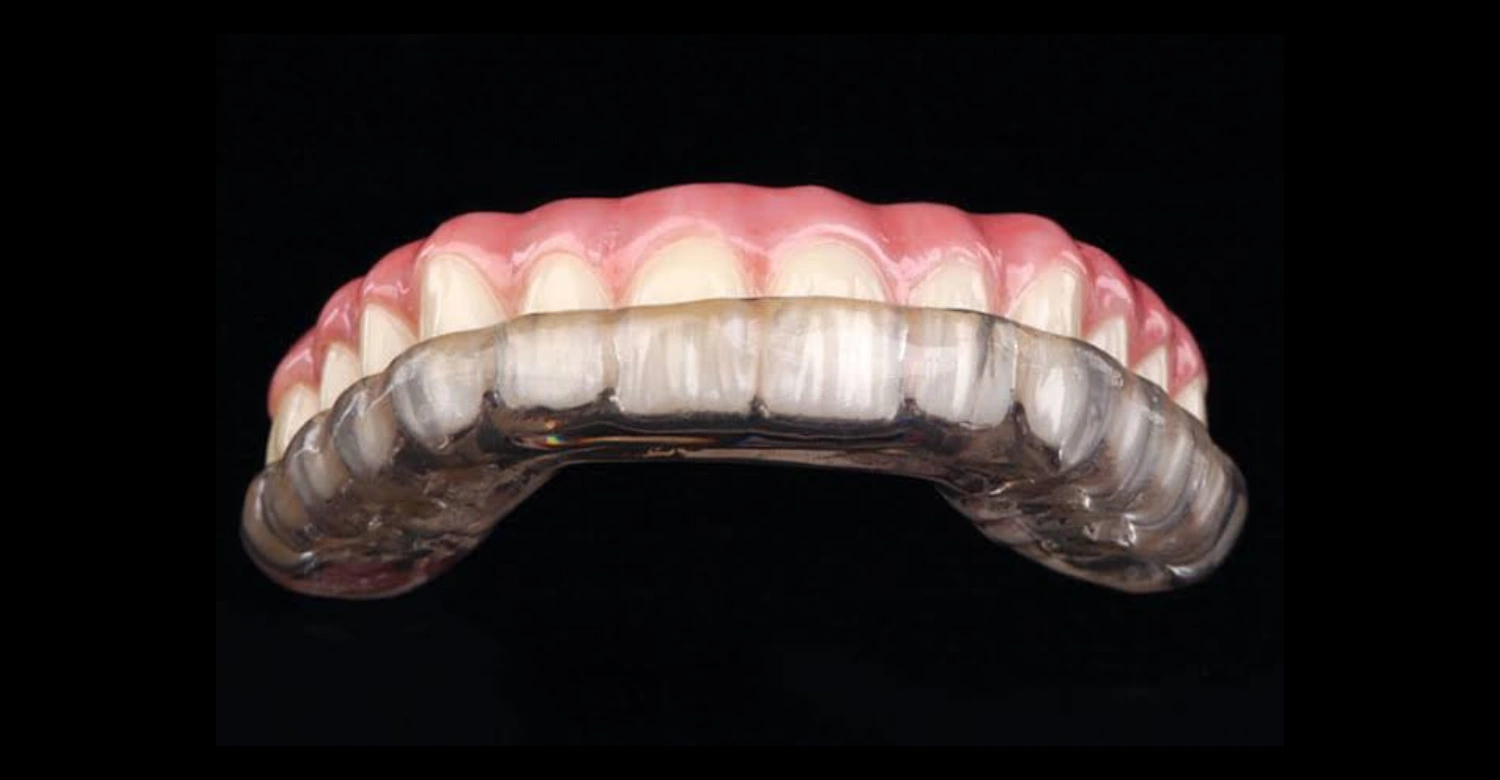
Conversely, a standard custom night guard is classified as a prosthetic or preventative maxillofacial appliance. Its primary function is not to move the teeth, but rather to protect them from the destructive forces of bruxism the unconscious act of grinding or clenching the teeth during sleep. Made from durable medical-grade acrylics, a custom night guard acts as a physical, shock-absorbing barrier between the upper and lower dental arches. When a patient clenches their jaw at night, the guard diffuses the vertical forces, protecting the natural enamel or porcelain restorations from chipping, fracturing, or wearing down over time. Therefore, while both aligners and night guards are removable oral appliances that sit over the dental arch, a night guard is generally not considered an active orthodontic appliance because its core engineering does not aim to reposition the teeth. If clear aligners are being considered instead of a fixed retainer, our guide to Invisalign in Turkey covers eligibility, cost, and how aligners differ mechanically from a protective night guard
Dr. Rifat Alsaman Opinion on Protective Dental Devices
When exploring the structural overlap of these treatments, the medical expertise of seasoned specialists becomes invaluable. Dr. Rifat Alsaman, the esteemed Head of the Medical team at Vitrin Clinic, offers a profound professional perspective on this matter. As a highly sought-after cosmetics dentist, Dr. Rifat Alsaman frequently encounters patients who confuse protective mouthpieces with tooth-moving aligners.
According to Dr. Rifat Alsaman, a night guard is primarily a protective shield, not a tool for movement. However, Dr. Rifat Alsaman emphasizes that its role in supporting the long-term success of orthodontic and cosmetic work is absolutely undeniable. As the Head of the Medical team at Vitrin Clinic, Dr. Rifat Alsaman regularly treats patients who have invested significantly in their smiles through custom veneers, porcelain crowns, or complex orthodontic alignment. Dr. Rifat Alsaman points out that intense nighttime grinding forces can exert up to 250 pounds of pressure per square inch on the dentition, which is more than enough force to ruin expensive cosmetic work or cause teeth to shift out of alignment due to muscular trauma.
Furthermore, Dr. Rifat Alsaman, in his capacity as a cosmetics dentist, explains that a night guard can sometimes be integrated into a broader therapeutic orthodontic plan. For instance, when a patient suffers from severe temporomandibular joint (TMJ) disorders, an orthodontist or cosmetic specialist might use a specialized stabilization splint to relax the jaw muscles before or after teeth alignment. In these specific therapeutic contexts, Dr. Rifat Alsaman notes that the line between preventative care and orthodontic stabilization blurs. Yet, the main takeaway from Dr. Rifat Alsaman, Head of the Medical team at Vitrin Clinic, is clear: if the primary goal of the appliance is solely to protect the surfaces from friction rather than shifting the roots, it remains firmly in the realm of preventative and restorative dentistry. For patients weighing which alignment approach fits their case, our article on whether Invisalign is the right choice compares it directly against traditional braces
The Average Cost of Care at Vitrin Clinic
When planning comprehensive oral rehabilitation or protecting an investment in a new smile, financial transparency is highly valued by global patients. At Vitrin Clinic, the cost of dental services is structured to offer premium, luxury-tier medical care at a fraction of the prices typically found across Western Europe, the United Kingdom, or North America.
For patients requiring custom-fabricated protective appliances or seeking answers to is a night guard considered orthodontic, the clinical path begins with advanced 3D intraoral scanning. A premium, laboratory-processed custom hard night guard at Vitrin Clinic generally averages between $150 to $300 USD, depending on the specific material density required for the patient's level of bruxism.
When comparing this to advanced structural orthodontic care at the branding facility, a full-case Invisalign treatment or specialized aesthetic alignment typically ranges from $2,500 to $4,500 USD. This price difference highlights the clinical distinction between a preventative appliance and a major structural alignment intervention. By making these high-end, custom-fit protective guards accessible, Vitrin Clinic ensures that every patient can safeguard their smile design investment against the nocturnal forces of stress and grinding. Since bruxism can also threaten cosmetic work, our guide to crowns for teeth grinding explains which restorative materials hold up best under nighttime clenching
How Night Guards Intersect with Post-Orthodontic Care
An important nuance arises when looking at how these appliances interact during the phase immediately following active teeth straightening. Once a patient completes an orthodontic journey using clear aligners or braces, the teeth naturally possess a high degree of mobility. The bone surrounding the roots requires months to completely calcify and lock the teeth into their new permanent positions. During this critical stabilization window, a standard night guard cannot be worn interchangeably with an orthodontic retainer.
If a patient who severely grinds their teeth wears a standard, flexible over-the-counter night guard instead of a rigid orthodontic retainer, their teeth will likely relapse and shift back to their original misaligned positions. This is because a traditional night guard lacks the rigid operational retention boundaries needed to hold teeth firmly in place against mesial drift (the natural tendency of teeth to move forward over time).
To solve this dilemma, the specialized laboratory teams at Vitrin Clinic craft hybrid appliances for post-orthodontic patients. These specialized devices combine the hard, rigid containment properties of a traditional orthodontic retainer with the thickened, reinforced occlusal surface of a heavy-duty night guard. This hybrid approach ensures that the patient’s teeth remain perfectly straight while simultaneously buffering the jaw joint and protecting the enamel from wear. It bridges the gap between active orthodontic preservation and daily preventative neuromuscular care. Once veneers are in place, protecting that investment matters just as much as placing them, and our guide to Hollywood Smile maintenance covers long-term care including nightguard use
References:
FAQs

Dr. Rifat Alsaman has more than 5 years of clinical experience in dentistry and currently serves as the Head of the Medical Team at Vitrin Clinic. He is dedicated to providing exceptional patient care, overseeing treatment planning, and ensuring the highest clinical standards across the team. His expertise, attention to detail, and commitment to continuous professional development have helped countless patients achieve healthier, more confident smiles.


