What Should You Consider Before Agreeing to Irreversible Dental Treatment?
Agreeing to Irreversible Dental Procedures requires careful consideration because certain procedures permanently change natural teeth.

Agreeing to Irreversible Dental Procedures requires careful consideration because certain procedures permanently change natural teeth. Crowns, root canal treatment, extractions, and dental implants can have lasting effects. Some procedures address genuine clinical problems, while others involve optional aesthetic changes. Understanding their benefits, limitations, alternatives, and long-term consequences supports informed decisions. The main consideration is whether the proposed procedure addresses an identifiable dental condition. Preserving healthy natural structures should remain a priority whenever clinically appropriate. This guide explains when permanent treatment may be justified and which alternatives deserve consideration. It also explores potential complications, treatment costs, international dental care, and Vitrin Clinic's approach to individual treatment planning.
Key Takeaways
Irreversible dental procedures permanently alter or remove natural structures, including enamel, dental pulp, teeth, or supporting jawbone.
Crowns, root canal treatment, extractions, dental implants, and some veneer treatments involve permanent biological changes.
Enamel cannot regenerate after removal, making unnecessary tooth preparation an important long-term concern.
Irreversible treatment may be justified when decay, infection, fractures, or structural damage cannot be adequately managed conservatively.
Alternatives such as fillings, onlays, monitoring, preventive care, and vital pulp therapy may preserve more natural tooth structure in suitable cases.
Patients should request tooth-specific diagnoses and understand the proposed tissue removal, expected benefits, complications, maintenance, and future costs.
A second clinical opinion can help clarify extensive, elective, or irreversible treatment recommendations before consent.
Vitrin Clinic emphasises individual clinical planning, conservative treatment where appropriate, transparent quotations, and aftercare coordination for international patients.
Ready to transform your smile?
Talk to our team and get a personal FREE treatment plan.
What Are Irreversible Dental Procedures?
Irreversible dental procedures permanently remove, alter, or replace natural dental structures. They may restore damaged teeth, manage infection, or replace missing teeth. However, their biological effects vary considerably. Understanding these differences helps patients evaluate treatment recommendations before consenting.
What Makes a Dental Procedure Irreversible?
A Irreversible Dental Procedures becomes irreversible when it permanently changes natural tissues or removes structures that cannot regenerate. Examples include enamel removal, tooth extraction, and dental pulp removal. Some procedures also involve permanent changes to the supporting jawbone. These effects cannot simply be reversed by removing a restoration or stopping treatment. Therefore, patients should understand the clinical reason before accepting permanent dental changes.
How Are Permanent and Reversible Dental Procedures Different?
The main difference concerns how much natural structure remains after treatment. Conservative approaches generally preserve more original tissue, while irreversible procedures permanently alter it.
Reversible or conservative approaches | Irreversible procedures |
Professional cleaning | Tooth extraction |
Fluoride treatment | Conventional crown preparation |
Monitoring selected early lesions | Root canal treatment |
Temporary restorations | Dental implant placement |
Preventive care | Permanent enamel removal |
Can a Permanent Dental Restoration Recreate Your Original Natural Tooth?
No restoration can completely recreate an original natural tooth. Fillings and crowns replace missing structures using artificial materials. They can restore appearance, shape, and chewing function. However, they cannot regenerate removed enamel or reproduce every biological property. Restored teeth may also require maintenance, monitoring, and eventual replacement. Patients should understand these limitations before choosing extensive restorative treatment.
Why Cannot Removed Enamels Grow Back?
Enamel cannot regenerate because it contains no living cells capable of rebuilding its original structure. Once removed through decay, erosion, or dental preparation, that enamel is permanently lost. Dentine has different biological characteristics but cannot replace missing enamel. This makes preventive care particularly important. Avoiding unnecessary enamel removal can preserve natural protection and future treatment options.
Are All Irreversible Dental Procedures Equally Invasive?
No, irreversible procedures differ significantly in their biological impact. A small restoration generally removes less tissue than extensive crown preparation. Root canal treatment removes affected pulp while retaining the tooth. Extraction removes the entire natural tooth. Implant placement also involves surgery within the jawbone. Therefore, patients should consider both the permanence and invasiveness of each procedure.
What Are the Types of Dental Procedures?
Dental procedures are generally grouped according to their clinical purpose. Some categories are mainly reversible, while others permanently change natural teeth or supporting tissues.
Preventive procedures: Examinations, professional cleaning, fluoride treatment, and fissure sealants.
Restorative procedures: Fillings, inlays, onlays, and crowns that repair damaged teeth.
Endodontic procedures: Root canal treatment and vital pulp therapy for the dental pulp.
Periodontal procedures: Scaling, root surface debridement, and gum surgery.
Prosthodontic procedures: Bridges, dentures, and implant-supported restorations that replace missing teeth.
Oral surgery: Extractions, implant placement, and bone grafting.
Orthodontic procedures: Braces and clear aligners that move teeth.
Cosmetic procedures: Whitening, veneers, and tooth reshaping.
One treatment plan may combine several categories. Each procedure should still have its own clinical justification.
What Are the 12 Dental Specialties?
The American Dental Association recognises 12 dental specialties. Each focuses on a specific area of advanced dental care:
Dental anesthesiology.
Dental public health.
Endodontics.
Oral and maxillofacial pathology.
Oral and maxillofacial radiology.
Oral and maxillofacial surgery.
Oral medicine.
Orofacial pain.
Orthodontics and dentofacial orthopedics.
Pediatric dentistry.
Periodontics.
Prosthodontics.
Recognised specialties can differ between countries. Complex irreversible treatment may involve several specialists working together.
.jpg)
.jpg)
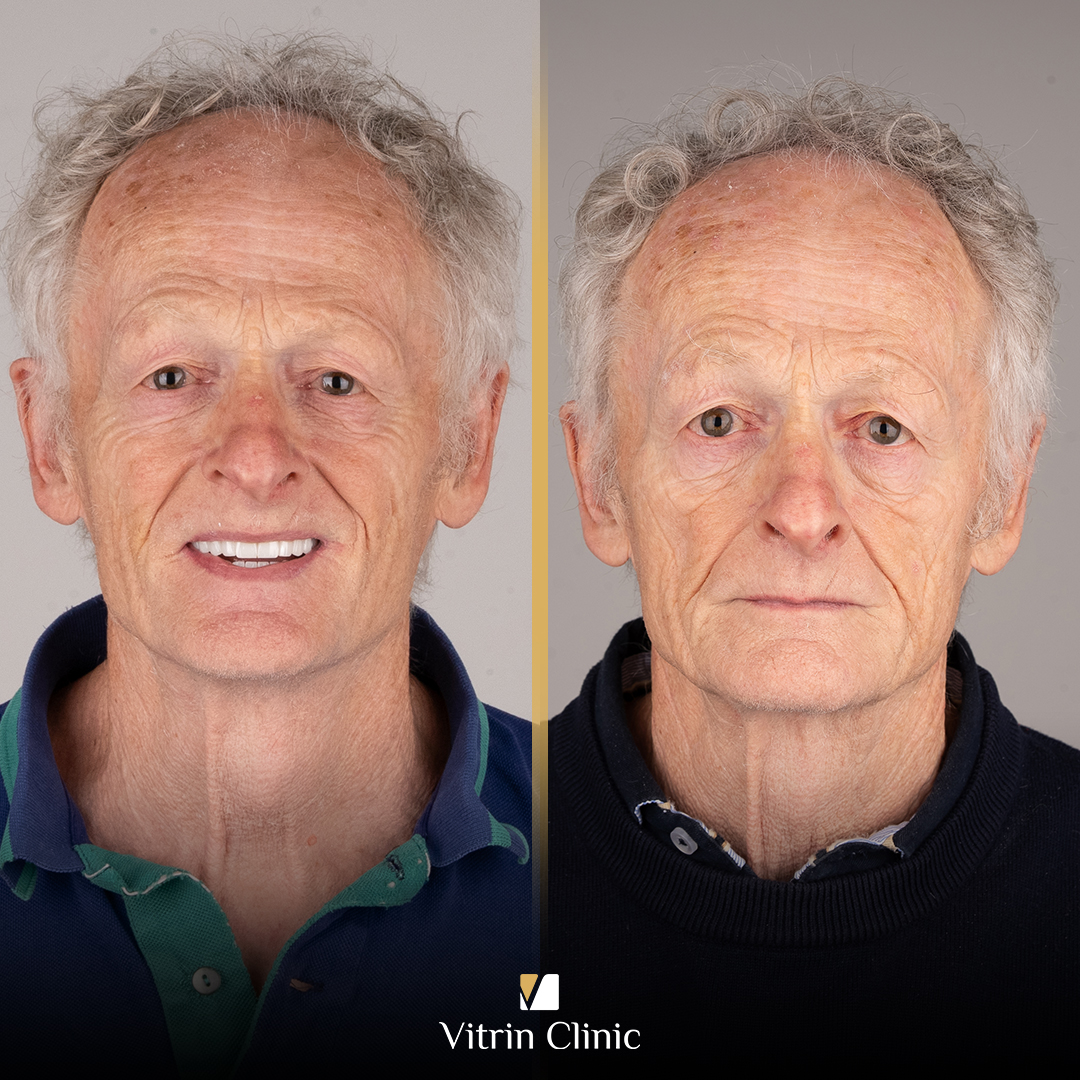
Which Dental Procedures Can Permanently Change Your Natural Teeth?
Several restorative, surgical, and cosmetic procedures can permanently alter natural teeth. Their clinical purposes and long-term implications depend on the original dental condition. Understanding these differences helps patients compare treatment options more carefully.
Are Dental Crowns Considered Irreversible?
Yes, conventional crown preparation is generally irreversible because it requires removing natural tooth structure. The prepared tooth receives a restoration designed to cover and protect it. Crowns may help restore teeth weakened by extensive decay, fractures, or previous restorations. However, preparation requirements depend on the tooth's condition and restoration design.
Advantages
Restores the shape of damaged teeth.
Can protect weakened tooth structure.
Helps restore chewing function.
Covers extensive structural damage.
Disadvantages
Requires permanent tooth preparation.
May increase future restorative requirements.
Can develop marginal or structural complications.
May require repair or replacement.
How Much Natural Tooth Structure Is Removed for Dental Crowns?
The amount depends on tooth position, existing damage, and crown design. Preparation usually involves reducing several surfaces to accommodate the restoration. Some teeth require more removal than others. At Vitrin Clinic, crown recommendations should reflect each tooth's structural condition. Patients should ask whether an onlay or another conservative restoration could preserve more tissue.
Do Dental Veneers Permanently Change Natural Teeth?
Some veneer treatments require permanent enamel removal, while others may involve minimal preparation. Requirements depend on tooth position, existing enamel, bite relationships, and aesthetic objectives. Veneers are not automatically conservative treatments. Patients should understand the amount of preparation before accepting treatment. Removing healthy enamel for cosmetic purposes deserves particularly careful consideration.
Does Root Canal Treatment Permanently Change a Tooth?
Yes, root canal treatment permanently changes the internal structure of a tooth. The dentist removes affected pulp, cleans the root canals, and seals them. This treatment aims to retain a tooth that might otherwise require extraction. The remaining tooth can continue functioning, although its restorative needs depend on structural support.
Advantages
Can preserve a natural tooth.
Removes affected pulp tissue.
Addresses infection within the root canal system.
Maintains the tooth's position.
Disadvantages
Permanently removes dental pulp.
Requires appropriate restoration and monitoring.
May involve multiple appointments.
Complications can require additional treatment.
Why Is Tooth Extraction Considered Irreversible?
Extraction permanently removes a natural tooth from its socket. The original tooth cannot grow back. Extraction may be appropriate when severe damage, infection, or structural problems prevent predictable preservation. However, missing teeth can affect chewing, neighbouring teeth, and supporting bone. Replacement options should therefore be discussed before planned extraction.
Do Dental Implants Involve Permanent Changes to the Jawbone?
Yes, implant placement involves surgically preparing the jawbone for an artificial implant. The implant acts as a replacement tooth root. Some patients require bone grafting when existing bone is insufficient. Implant treatment does not restore the original natural root. Instead, it replaces the missing structure with an artificial component.
Advantages
Supports a replacement tooth.
Can restore chewing function.
Usually avoids preparing adjacent teeth for an individual implant crown.
Can support fixed dental restorations.
Disadvantages
Requires surgical intervention.
Healing and integration take time.
Infection or implant complications can occur.
Requires long-term maintenance and monitoring.
What Is the Most Complicated Dental Procedure?
No single procedure is the most complicated for every patient. However, full-mouth rehabilitation and full-arch implant reconstruction are among the most complex treatments in dentistry. They may combine extractions, bone grafting, sinus lift procedures, implant placement, and fixed prostheses across the whole arch. Zygomatic implants and jaw surgery are also highly complex surgical procedures. Complexity depends on bone condition, medical history, bite relationships, and the number of stages involved. These treatments require detailed planning, appropriate imaging, and often several specialists.
Can Orthodontic Extractions Permanently Affect Your Dental Arch?
Yes, orthodontic extractions permanently remove teeth and change available space. They may be recommended for significant crowding or specific bite problems. However, extraction should follow a comprehensive orthodontic diagnosis. Tooth position, facial profile, jaw relationships, and alternative treatments all matter. Patients should understand the reasons before accepting permanent tooth removal.
What Happens to Natural Teeth During Irreversible Dental Treatment?
Permanent dental procedures can affect enamel, dentine, pulp, and surrounding supporting tissues. Their consequences depend on the treatment performed and the original tooth condition. Understanding these changes helps patients recognise why conservative planning matters.
What Happens When Enamel Is Permanently Removed?
Removing enamel exposes deeper dental tissues to the oral environment. Depending on preparation depth, this may increase sensitivity. The prepared surface also requires suitable protection. Ordinary brushing, remineralisation, and routine maintenance cannot rebuild removed enamel. This makes unnecessary enamel removal an important concern during restorative planning.
How Does Dentine Exposure Affect Tooth Sensitivity?
Dentine contains microscopic tubules connected to the dental pulp. Temperature changes and other stimuli can trigger fluid movement within these tubules. This may produce short, sharp sensitivity. Symptoms vary according to exposure, inflammation, and individual response. Persistent or worsening discomfort requires dental examination.
Can Dental Preparation Affect the Pulp?
Yes, extensive preparation can irritate the dental pulp. Heat, mechanical pressure, existing inflammation, and preparation depth may contribute. A previously healthy pulp can become inflamed following treatment. However, pulp complications are not inevitable. Appropriate diagnosis, preparation techniques, and restorative planning help manage potential risks.
Why Can Extensive Tooth Preparation Increase Future Restorative Needs?
Extensive preparation reduces the natural structure available to withstand chewing forces. A larger restoration may then become necessary for protection. Future complications could require additional procedures. This is one reason conservative preparation deserves consideration. The dentist should explain how much structure will remain after treatment.
Can Repeated Dental Procedures Weaken Natural Teeth?
Repeated preparation and restoration replacement can progressively remove additional tooth structure. Existing restorations may also develop fractures, leakage, or recurrent decay. Each replacement therefore requires careful evaluation. Maintaining a sound restoration may sometimes be preferable to replacing it unnecessarily.
Clinical insight
The long-term condition of a restored tooth depends on remaining structure, bite forces, oral hygiene, and restoration integrity. Treatment decisions should consider these factors rather than restoration age alone.
When Is Irreversible Dental Treatment Actually Necessary?
Permanent treatment may be justified when conservative approaches cannot adequately address the underlying condition. Decisions should consider disease severity, structural damage, symptoms, and realistic alternatives. Irreversibility alone does not make a procedure inappropriate. The key is whether its expected benefits justify the permanent changes.
Do Severely Decayed Teeth Always Need Dental Crowns?
No, extensive decay does not automatically require a crown. Treatment depends on remaining tooth structure and the location of damage. Smaller defects may need fillings, while larger defects may benefit from onlays or crowns. If decay reaches the pulp, additional treatment may become necessary. Clinical findings determine the most appropriate option.
When Does a Fractured Tooth Require Extensive Restoration?
A fractured tooth may require extensive restoration when damage compromises structural integrity. However, not every crack needs a crown. Dentists evaluate crack depth, location, symptoms, and pulp involvement. Some fractures can be monitored or managed conservatively. Vertical root fractures may have a considerably poorer prognosis.
When Is Root Canal Treatment Clinically Necessary?
Root canal treatment may be indicated when the pulp is irreversibly inflamed or infected. Diagnosis requires more than pain descriptions alone. Dentists consider symptoms, pulp testing, percussion, clinical findings, and appropriate imaging. Selected cases may qualify for vital pulp therapy instead. Treatment depends on diagnosis and individual circumstances.
How to Identify Irreversible Pulpitis?
Irreversible pulpitis is identified through a combination of symptoms and clinical tests. It occurs when pulp inflammation is unlikely to heal without treatment. Common signs include:
Spontaneous toothache without an obvious trigger.
Lingering pain after hot or cold stimuli is removed.
Pain that disturbs sleep or worsens when lying down.
Pain that is difficult to locate precisely.
Tenderness when biting in more advanced cases.
Dentists confirm the diagnosis using thermal and electric pulp tests, percussion, examination of decay or fractures, and dental X-rays. Some cases cause few symptoms, so clinical testing is essential. A diagnosis of irreversible pulpitis usually leads to root canal treatment or, in selected cases, vital pulp therapy.
How Long Can You Have Irreversible Pulpitis?
Irreversible pulpitis does not heal on its own, so it lasts until the tooth is treated. The pain may come and go for days or weeks. In some cases, it stops suddenly because the pulp has died, not because the problem has been resolved. Without treatment, the tooth can then become infected and form an abscess. If you have lingering or spontaneous toothache, arrange a dental examination promptly rather than waiting for the pain to settle.
When Is Tooth Extraction the Only Reasonable Option?
Extraction may be appropriate when a tooth cannot be predictably restored or maintained. Examples include severe structural destruction, certain root fractures, and advanced supporting tissue damage. However, extraction should not be recommended solely for convenience. Patients should receive an explanation of preservation possibilities and replacement implications.
What Teeth Cannot Be Pulled?
Almost any tooth can be removed, but some extractions are more complex and carry higher risks. These include:
Impacted wisdom teeth lying close to a nerve
Upper back teeth with roots near the sinus
Teeth with curved, long, or fused roots
Teeth in bone that has received radiotherapy
Teeth in patients taking certain bone medicines
In these cases, the dentist may need extra imaging, a surgical approach, or a specialist referral. Sometimes keeping the tooth is the safer option.
At What Point Is a Tooth Not Savable?
A tooth may not be savable when the remaining structure or supporting tissues cannot predictably support a restoration. Common situations include:
Decay extending well below the gum line or into the root.
Vertical root fractures or cracks extending deep into the root.
Advanced bone loss causing significant tooth mobility.
Insufficient sound tooth structure to retain a restoration.
Repeated root canal failure that cannot be managed predictably.
The decision depends on clinical examination and appropriate imaging. Some teeth that seem unsavable may still be preserved through endodontic, periodontal, or surgical treatment. The dentist should explain the expected prognosis of each option before recommending extraction.
Can Damaged Natural Teeth Be Preserved Instead of Extracted?
Sometimes, damaged teeth can be preserved through root canal treatment, periodontal care, or restorative procedures. Selected surgical approaches may also help retain natural teeth. Suitability depends on remaining structure, bone support, infection, and overall prognosis. Preservation is not always possible. However, extraction should follow clear clinical justification.
When Might Cosmetic Treatment Justify Permanent Tooth Alteration?
Cosmetic treatment may be considered when patients understand its permanent biological changes and alternatives. However, appearance alone does not establish clinical necessity. Healthy teeth should not undergo extensive preparation without careful discussion. Expected aesthetic benefits should be weighed against tissue loss, maintenance, and future replacement.
Ready to transform your smile?
Talk to our team and get a personal FREE treatment plan.
When Should You Question a Dentist's Recommendation for Permanent Treatment?
Patients should request clarification whenever proposed treatment involves substantial permanent changes. This is particularly important when clinical explanations, alternatives, or expected outcomes remain unclear. Asking questions supports informed consent and helps patients understand their options.
Should Healthy Teeth Be Prepared for Cosmetic Improvements?
Preparing healthy teeth solely for appearance requires careful consideration. Natural enamel provides valuable protection, and removing it creates a permanent restorative commitment. Patients should discuss less invasive alternatives and future replacement requirements. Cosmetic preferences should be balanced against biological preservation.
Is Removing Healthy Enamel Necessary for Every Veneer?
No, preparation requirements vary between patients and treatment designs. Some cases allow minimal preparation, while others require greater reduction. Tooth position, existing restorations, bite relationships, and aesthetic objectives influence the decision. The dentist should explain why the proposed enamel removal is appropriate.
Should You Accept Multiple Crowns Without Individual Clinical Justification?
No, every tooth should have an individual clinical reason for treatment. A full-mouth plan should identify each tooth's condition and restorative requirements. Healthy teeth should not automatically receive crowns because neighbouring teeth need restoration. Request tooth-specific explanations and supporting diagnostic findings.
What Should You Do If a Dentist Does Not Explain Alternative Treatments?
Ask for a clear explanation before agreeing to treatment. Request information about conservative options, expected longevity, complications, and maintenance. You should also understand the consequences of postponing treatment. Informed consent requires meaningful discussion rather than simply receiving a treatment recommendation.
Should You Seek a Second Opinion Before Extensive Dental Work?
A second opinion can be valuable before extensive or elective treatment. It is particularly useful when multiple teeth require permanent preparation or extraction. Another clinician can independently review diagnostic records and proposed procedures. This does not automatically mean the original recommendation was incorrect.
What Warning Signs Suggest That a Treatment Plan Needs Further Discussion?
Consider requesting clarification when:
No tooth-specific diagnosis is provided.
Conservative alternatives are not discussed.
Permanent enamel removal remains unexplained.
Costs and additional procedures are unclear.
Treatment begins before meaningful consent.
Expected maintenance is not explained.
These concerns do not automatically indicate inappropriate treatment. However, they identify issues that deserve further discussion.
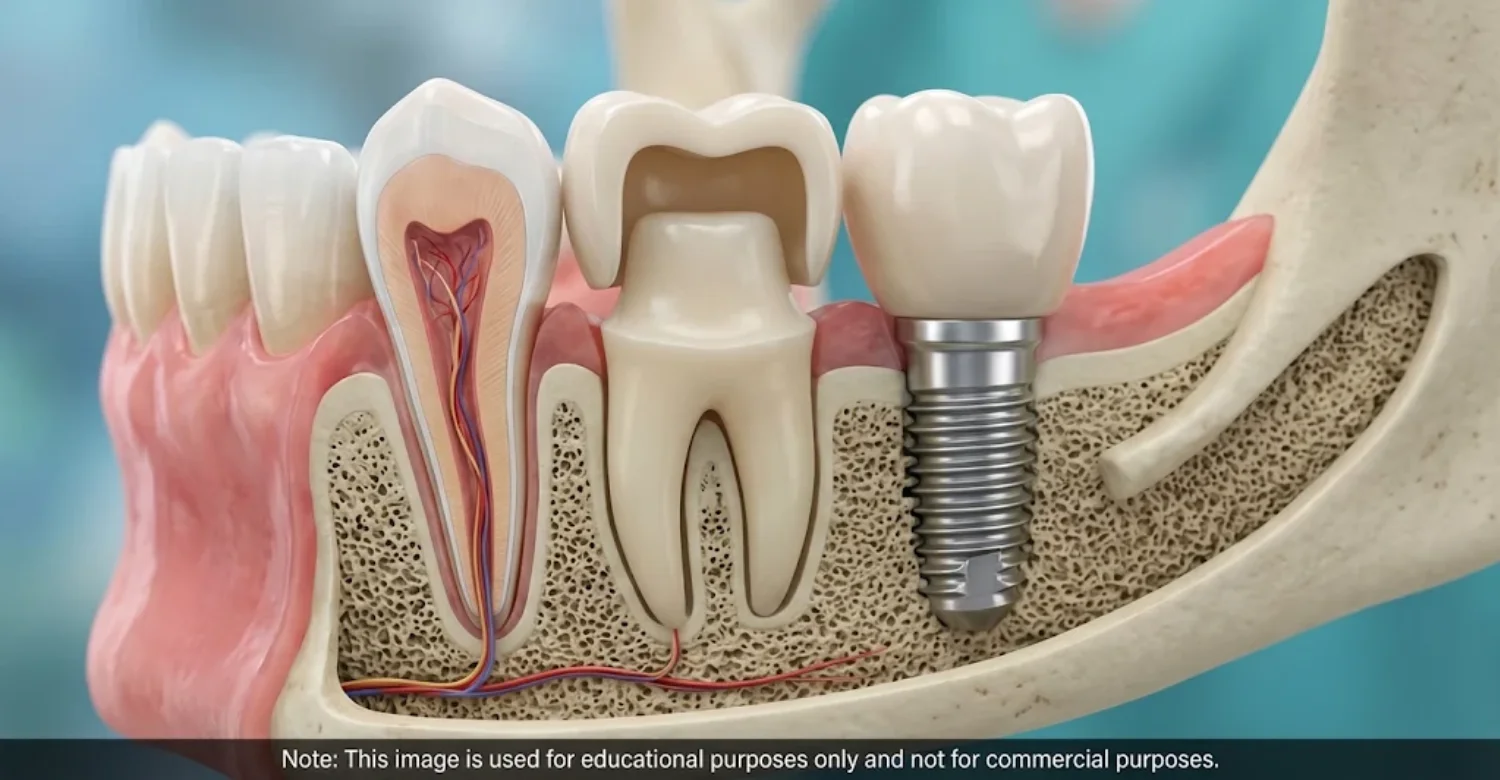
What Alternatives Can Help Preserve Your Natural Teeth?
Conservative dentistry aims to control disease and restore function while preserving healthy structures. The appropriate alternative depends on the condition being treated. Early diagnosis can sometimes reduce the need for extensive restorative procedures.
Can Early Tooth Decay Be Managed Without Extensive Restoration?
Yes, selected early lesions may be managed without drilling. Fluoride, dietary changes, improved oral hygiene, and monitoring can help control early decay. However, established cavities involving structural breakdown generally require restoration. Clinical examination determines whether preventive management remains suitable.
Are Dental Fillings More Conservative Than Crowns?
Generally, fillings require less removal of healthy tooth structure than conventional crowns. They restore local defects without covering the entire tooth. However, large fillings may not adequately protect severely weakened teeth. Remaining tooth structure and bite forces determine suitability.
When Can Inlays or Onlays Replace Full Dental Crowns?
Inlays and onlays may restore moderate damage while preserving more natural tissue. An inlay fits within the tooth's cusps, while an onlay covers one or more cusps. These restorations may suit teeth with sufficient remaining structure. Their suitability depends on defect size, tooth condition, and bite forces.
Can Minimally Invasive Dentistry Reduce Permanent Tooth Alteration?
Yes, minimally invasive dentistry focuses on preserving healthy tissues. It involves early diagnosis, preventive care, selective caries removal, and conservative restorations. The objective is avoiding unnecessary tissue removal. However, minimal intervention must still control disease and provide adequate structural protection.
Can Vital Pulp Therapy Help Preserve a Living Tooth?
Yes, selected vital pulp treatments can preserve living pulp tissue. Options include direct pulp capping and partial or complete pulpotomy. Suitability depends on pulp condition, diagnosis, bleeding control, and restorative sealing. These approaches are not suitable for every case. A qualified dentist should determine eligibility.
What Is the New Procedure Instead of a Root Canal?
The most discussed alternative is vital pulp therapy, particularly full pulpotomy using bioceramic materials. Instead of removing all pulp tissue, the dentist removes only the inflamed portion and seals the healthy remaining pulp. Recent studies suggest pulpotomy can be effective for selected mature teeth with irreversible pulpitis. Regenerative endodontic procedures may also be considered for young patients with immature roots. However, these approaches are not suitable for every tooth. Infection, necrotic pulp, or uncontrolled bleeding usually still require conventional root canal treatment.
When Is Monitoring Safer Than Immediate Dental Intervention?
Monitoring may be appropriate when a finding is stable and requires no immediate intervention. Examples include selected early enamel lesions and certain asymptomatic cracks. Regular reviews help identify changes. However, monitoring should follow a documented clinical plan. It must never delay treatment for active infection or progressive damage.
When Are Conservative Alternatives No Longer Suitable?
Conservative treatment may become unsuitable when structural damage is extensive or disease progresses. Advanced decay, certain fractures, and severe infection can require more extensive intervention. The dentist should explain why preservation is unlikely to provide an acceptable outcome.
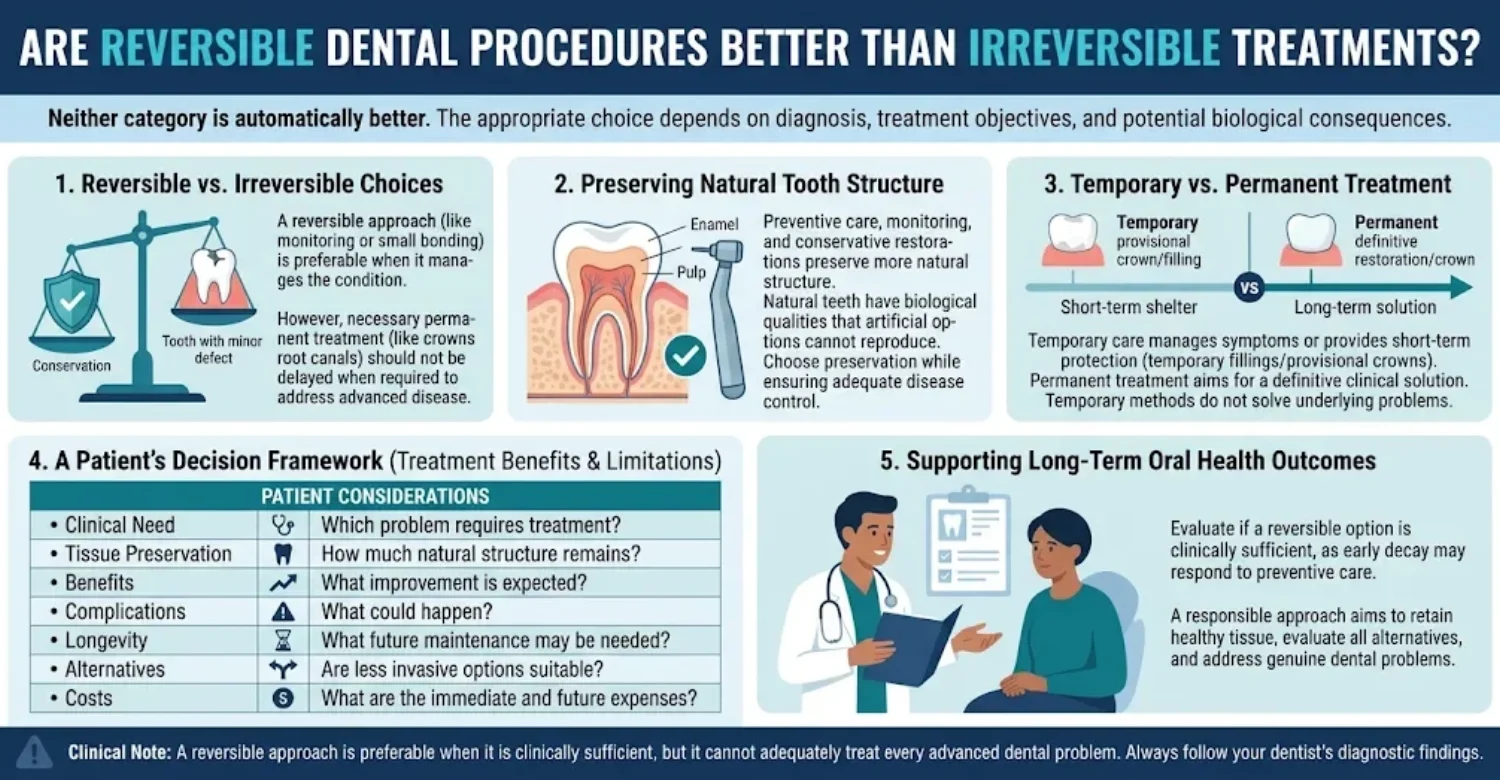
Are Reversible Dental Procedures Better Than Irreversible Treatments?
Neither category is automatically better for every patient. The appropriate choice depends on diagnosis, treatment objectives, and potential biological consequences. A reversible approach is preferable when it adequately manages the condition. However, necessary treatment should not be delayed simply to avoid permanent intervention.
Which Dental Procedures Preserve More Natural Tooth Structure?
Preventive care, monitoring, fluoride treatments, and selected small restorations generally preserve more natural structure. Conservative restorative techniques can also limit unnecessary preparation. However, preservation should never compromise adequate disease control or structural protection.
What Is the Difference Between Temporary and Permanent Dental Treatment?
Temporary treatment provides short-term protection or symptom management. Permanent treatment aims to provide a definitive restoration or clinical solution. Temporary fillings, dressings, and provisional crowns may support staged treatment. However, temporary procedures do not necessarily resolve the underlying problem.
Can a Reversible Treatment Provide Sufficient Clinical Results?
Yes, reversible treatment can work when the underlying condition allows conservative management. Early decay may respond to preventive care. Minor defects may require only limited intervention. However, reversible approaches cannot adequately treat every advanced dental problem. Clinical findings determine whether they provide sufficient results.
How Should Patients Compare Treatment Benefits and Limitations?
Patients should compare clinical need, tissue preservation, expected benefits, and possible complications. Future maintenance and costs also deserve attention.
Consideration | What patients should understand |
Clinical need | Which problem requires treatment? |
Tissue preservation | How much natural structure remains? |
Benefits | What improvement is expected? |
Complications | What could happen? |
Longevity | What future maintenance may be needed? |
Alternatives | Are less invasive options suitable? |
Costs | What are the immediate and future expenses? |
Why Should Preserving Natural Teeth Influence Treatment Decisions?
Natural teeth contain biological structures that artificial restorations cannot completely reproduce. Preserving healthy enamel, dentine, and pulp can maintain natural tooth function. However, preservation should not mean leaving disease untreated. Responsible treatment aims to retain healthy tissue while addressing genuine dental problems.
What Are the Long-Term Consequences of Irreversible Dental Procedures?
Long-term consequences vary according to procedure type, preparation depth, oral health, and maintenance. Understanding potential complications helps patients prepare for future care. It also highlights why permanent treatment requires appropriate planning and follow-up.
Can Irreversible Dental Treatment Cause Long-Term Sensitivity?
Sensitivity may develop after restorative preparation, particularly when dentine becomes exposed. Some symptoms improve as the tooth settles. Persistent, spontaneous, or worsening pain requires investigation. Possible causes include pulp inflammation, bite problems, restoration leakage, or other dental conditions.
Can Prepared Teeth Become More Vulnerable to Fractures?
Yes, removing substantial tooth structure can reduce structural strength. However, fracture risk depends on remaining walls, tooth position, and chewing forces. Appropriate restorations can provide protection. Existing cracks and previous treatment also influence the tooth's prognosis.
How Often Might Dental Crowns Need Repair or Replacement?
There is no universal replacement interval for every crown. Longevity depends on material, fit, oral hygiene, bite forces, and individual circumstances. Crowns may require repair or replacement following fracture, recurrent decay, or gum-related changes. Regular dental reviews help identify problems.
Can Dental Restorations Cause Gum-Related Problems?
Poorly fitting or overcontoured restorations can make cleaning difficult. This may contribute to plaque accumulation and gum inflammation. Gum health also depends on hygiene and existing periodontal conditions. Proper restoration design and regular maintenance remain important.
How Can Repeated Restoration Replacement Affect Natural Teeth?
Each replacement may require additional adjustment or removal of existing material. This can progressively reduce remaining natural structure. A tooth may eventually require more extensive restoration. Therefore, replacement should follow clinical findings rather than age alone.
What Happens When an Existing Restoration Can No Longer Be Maintained?
Further treatment depends on remaining tooth structure and the underlying condition. Options may include repair, replacement, root canal treatment, or extraction. The dentist should review the restoration, supporting tissues, and alternatives before recommending intervention.
How Can Patients Maintain Dental Restorations Long Term?
Good maintenance helps protect restored teeth and surrounding tissues. Patients should:
Brush twice daily using fluoride toothpaste.
Clean between teeth every day.
Attend regular dental examinations.
Follow individual periodontal care instructions.
Avoid using teeth to open hard objects.
Discuss grinding or clenching symptoms.
Seek care for pain or restoration movement.
How Much Do Irreversible Dental Procedures Cost at Vitrin Clinic Compared With the USA and UK?
The cost of irreversible dental procedures varies between countries and individual treatment plans. Prices depend on tooth condition, treatment complexity, materials, and additional procedures. Patients considering Vitrin Clinic in Istanbul can compare indicative prices with private dental care abroad.
However, advertised prices do not always include identical treatment components. A meaningful comparison should consider the complete procedure, not just its starting price. The following figures provide preliminary guidance rather than guaranteed quotations. All prices are shown in US dollars.
How Do Dental Treatment Prices at Vitrin Clinic Compare With the USA and UK?
Private dental treatment in the USA and UK can involve substantial costs. The following table compares broad private-treatment estimates with indicative Vitrin Clinic prices.
UK
From 300
UK private dental benchmark
Root canal treatment: 300–1,200
Zirconia dental crown: 550–1,200
Three-unit dental bridge: 1,500–3,500
Single dental implant with crown: 1,800–3,500
All-on-4 treatment, per jaw: 10,000–18,000
All-on-6 treatment, per jaw: 12,000–25,000
Vitrin Clinic, Turkey
From 150.
Vitrin Clinic treatment benchmark
Zirconia dental crown: 150–250
Root canal treatment: 150–200
Single dental implant with crown: 500–700
Three-unit dental bridge: 500–1,200
All-on-4 treatment, per jaw: 3,500–7,500
All-on-6 treatment, per jaw: 4,000–9,000
US
From 700
US private dental benchmark
Root canal treatment: 700–1,600
Zirconia dental crown: 1,000–2,500
Three-unit dental bridge: 2,000–5,000
Single dental implant with crown: 3,000–6,000
All-on-4 treatment, per jaw: 18,000–30,000
All-on-6 treatment, per jaw: 24,000–38,000
Vitrin Clinic's published implant information lists a single implant with its abutment and crown at approximately 500–700. Its published full-arch ranges are 3,500–7,500 for All-on-4 and 4,000–9,000 for All-on-6. These figures remain subject to clinical requirements and package inclusions.
How Much Could Patients Potentially Save at Vitrin Clinic?
The following table calculates illustrative differences between the price ranges above. It compares the lower endpoints and upper endpoints separately.
Potential Saving vs UK
Illustrative saving: Save 50%–83.3%
UK market comparison
Single dental implant: 1,300–2,800 (72.2%–80%)
Zirconia crown: 400–950 (72.7%–79.2%)
Root canal treatment: 150–1,000 (50%–83.3%)
Three-unit dental bridge: 1,000–2,300 (65.7%–66.7%)
All-on-4, per jaw: 6,500–10,500 (58.3%–65%)
All-on-6, per jaw: 8,000–16,000 (64%–66.7%)
Potential Saving vs US
Illustrative saving: Save 75%–90%
US market comparison
Single dental implant: 2,500–5,300 (83.3%–88.3%)
Zirconia crown: 850–2,250 (85%–90%)
Root canal treatment: 550–1,400 (78.6%–87.5%)
Three-unit dental bridge: 1,500–3,800 (75%–76%)
All-on-4, per jaw: 14,500–22,500 (75%–80.6%)
All-on-6, per jaw: 20,000–29,000 (76.3%–83.3%)
Full-Arch & Package Value
Maximum single-jaw saving: Up to $29,000
Procedure comparison
All-on-6 saves $20,000–$29,000 vs US / $8,000–$16,000 vs UK
Consultations, 3D CBCT scans & temporary bridges included
Full-arch & multi-unit cases retain 50–70%+ net savings after travel
Why Can Irreversible Dental Procedures Cost Less in Turkey?
Dental treatment prices vary between countries because operating costs and healthcare markets differ. Several factors can influence the final quotation:
Clinic Operating Costs
Rent, utilities, and general business expenses vary between countries.
Staff Costs
Salaries and employment expenses influence clinic pricing.
Laboratory Fees
Dental laboratory costs can affect crowns, bridges, and implant restorations.
Local Economic Conditions
Currency values and purchasing power influence treatment costs.
Exchange Rates
Currency fluctuations can affect the final amount paid by international patients.
Turkey offers different dental treatment prices, but lower costs do not guarantee quality. Compare materials, clinical expertise, treatment planning, and aftercare. At Vitrin Clinic, recommendations are based on clinical needs, clear benefits, and suitable alternatives.
What Factors Can Increase the Final Cost of Irreversible Dental Treatment?
The initial quotation may change when additional clinical requirements become apparent. The final cost depends on the diagnosis and procedures needed.
Common factors include:
Additional X-rays or CBCT imaging when clinically indicated.
Extensive decay requiring more complex restoration.
Root canal treatment before crown placement.
Bone grafting or sinus lift procedures for selected implant cases.
Temporary restorations during multi-stage treatment.
More complex surgical extraction requirements.
Additional laboratory work or restoration materials.
Follow-up appointments and necessary adjustments.
At Vitrin Clinic, patients should receive an explanation of any proposed additional procedure. Updated costs should be discussed before elective treatment continues.
Does Vitrin Clinic Offer Fixed Prices for Every Irreversible Dental Procedure?
No, Vitrin Clinic does not apply one fixed price to every patient. We provide indicative prices for selected treatments, while complex procedures require individual clinical planning.
For example, implant treatment costs may vary depending on:
Jawbone condition and available bone volume.
Implant system and components selected.
Required restoration type and design.
Whether additional surgical procedures are necessary.
Similarly, crown and bridge costs depend on the number of teeth, selected materials, and preparation requirements.
We recommend requesting a written quotation based on your clinical needs. Your quotation should clearly specify the proposed procedures, materials, included services, and exclusions. This helps you understand the expected costs before making a treatment decision.
What Should Patients Check Before Accepting a Low Dental Treatment Quote?
A low starting price may exclude important parts of the treatment. Patients should check the following details before making a decision:
Does the implant price include the implant fixture only?
Are the abutment and final crown included?
Which crown or restoration material is proposed?
Are diagnostic images included in the quotation?
Are temporary restorations charged separately?
Could bone grafting or other surgery increase the cost?
Are follow-up appointments and adjustments included?
What aftercare support is available after returning home?
At Vitrin Clinic, patients should request clarification about every item. A detailed quotation makes comparisons more accurate and transparent.
Is Dental Treatment in Turkey Still More Affordable After Travel Expenses?
Dental treatment in Turkey may remain more affordable after travel expenses, depending on your treatment needs and travel arrangements. However, comparing treatment prices alone does not show the complete cost.
Your total budget may include:
Flights: Return tickets and any additional trips required.
Accommodation: Hotel stays during treatment and recovery.
Local Transport: Transfers between the airport, hotel, and clinic.
Daily Expenses: Meals and other personal costs.
Additional Appointments: Extra visits for clinical reviews or adjustments.
Future Treatment Trips: Some implant procedures require another visit after the healing period.
At Vitrin Clinic, we help international patients coordinate practical travel arrangements according to their agreed package. Ask our team to confirm whether accommodation, airport transfers, and local transport are included. Comparing the complete treatment and travel costs helps you make a more informed financial decision.
How Can Patients Calculate Their Actual Savings at Vitrin Clinic?
Patients should compare equivalent written treatment plans from each destination. The calculation should include all treatment components and necessary travel expenses.
Actual savings = Comparable overseas treatment cost − Total Vitrin Clinic treatment and travel cost.
For example, a patient comparing implant treatment should include the implant, abutment, crown, and any required grafting. Comparing an implant-only price with a complete implant restoration would produce a misleading result.
Overseas Treatment
From $3,000
Cost component
Main dental procedure: 3,000–6,000
Additional surgery, if required: 0–3,000
Flights: 0–500
Accommodation: 0–500
Local transport: 0–150
Follow-up or additional visit: 0–300
Vitrin Clinic Journey
From $600
Cost component
Main dental procedure: 500–700
Additional surgery, if required: 0–700
Flights: 100–600
Accommodation: 0–500
Local transport: 0–100
Follow-up or additional visit: 0–300
Net Journey Comparison
Combined all-in estimate: $600–$2,900 vs. $3k–$10.45k
Cost component
Vitrin total range: $600–$2,900 (inc. travel & prep)
Overseas total range: $3,000–$10,450
Free consultation & 3D CT scan included at Vitrin
Why Should Patients Request a Personalised Price Plan From Vitrin Clinic?
Every patient's dental condition and treatment needs are different. A personalized price plan helps identify suitable procedures, materials, and expected costs rather than relying on standard packages.
At Vitrin Clinic, we can review your photographs and available dental records to discuss preliminary treatment options. An in-person examination confirms the final recommendations, with X-rays or CBCT imaging when clinically indicated.
You should receive an itemised quotation outlining:
Recommended procedures and materials.
Estimated costs for each treatment.
Suitable alternatives, where available.
Any additional services or potential charges.
This helps you understand your options, compare costs, and make an informed decision before providing consent..
Is Choosing Vitrin Clinic Based on Price Alone a Good Decision?
No, price should not be the only factor when choosing a dental clinic. Irreversible procedures require careful consideration of the diagnosis, treatment alternatives, materials, potential risks, and long-term maintenance.
At Vitrin Clinic, we encourage patients to understand every proposed procedure before proceeding. The decision should balance clinical needs, long-term function, transparent pricing, and personal expectations. Lower costs should never mean accepting unnecessary treatment.
How Should Patients Compare Irreversible Dental Treatment Costs?
Comparing dental prices requires more than looking at the lowest advertised figure. Patients should check treatment scope, materials, additional procedures, and aftercare before accepting a quotation.
Vitrin Clinic provides indicative prices for selected treatments in Istanbul. A personalised clinical review and itemised quotation can help patients understand the expected costs. Patients should make their decision based on clinical suitability, transparent pricing, and long-term considerations not price alone.
Ready to transform your smile?
Talk to our team and get a personal FREE treatment plan.
What Should You Ask Before Agreeing to Irreversible Dental Treatment?
Ask direct questions about diagnosis, tissue removal, alternatives, complications, and long-term costs. These discussions help establish whether proposed treatment matches your clinical needs. They also support meaningful consent before permanent changes occur.
Why Does Each Tooth Need the Proposed Treatment?
Ask the dentist to explain the diagnosis for every affected tooth. Request details about decay, fractures, pulp condition, and supporting tissues. A treatment plan should identify individual findings rather than rely on general descriptions.
How Much Natural Tooth Structure Will Be Removed?
Ask which surfaces require preparation and why. Find out whether healthy enamel can remain untouched. Understanding the planned reduction helps you compare restorative alternatives. It also clarifies the permanent consequences of treatment.
Are There Less Invasive Treatment Alternatives?
Ask whether fillings, onlays, monitoring, or vital pulp therapy could be suitable. Not every alternative works for every condition. The dentist should explain why each option is appropriate or unsuitable.
What Are the Possible Complications?
Discuss sensitivity, pulp inflammation, infection, fractures, restoration failure, and gum problems where relevant. Ask which complications apply to your proposed procedure. Also clarify how potential complications would be managed.
What Happens If the Restoration Fails?
Ask whether repair or replacement may be possible. Find out whether failure could require root canal treatment or extraction. Understand the associated costs and follow-up requirements.
How Much Maintenance Will the Treatment Require?
Discuss hygiene, dental reviews, bite monitoring, and possible repairs. Ask whether special cleaning techniques or additional maintenance appointments are recommended. Understanding these responsibilities helps patients plan for long-term care.
Should You Obtain a Second Clinical Opinion?
A second opinion is reasonable when treatment is extensive, elective, or difficult to understand. Provide the reviewing dentist with examination findings and imaging. An independent review can clarify treatment necessity and available alternatives.
.jpg)
.jpg)
.jpg)
How Does Vitrin Clinic Help Patients Avoid Unnecessary Irreversible Dental Procedures?
At Vitrin Clinic, treatment recommendations should begin with identifying the cause of each dental problem. Our clinical team considers whether the condition requires permanent treatment or a more conservative approach. Not every damaged tooth automatically needs a crown or extraction. Some conditions may be managed with fillings, repairs, or monitoring. The appropriate option depends on the remaining tooth structure and clinical findings. Patients can discuss the advantages and limitations of each suitable approach. This helps ensure proposed treatment has a clear clinical purpose.
Does Vitrin Clinic Recommend Crowns for Every Damaged Tooth?
No, a damaged tooth does not automatically require a dental crown. At Vitrin Clinic, the recommendation depends on the extent of damage and remaining natural structure. Smaller defects may be suitable for more conservative restorations. Extensive fractures or weakened teeth may require greater protection. The dentist should explain why a crown is appropriate for each tooth. Patients should also understand how much natural structure preparation may remove. This supports informed decisions before permanent tooth preparation begins.
How Does Vitrin Clinic Decide Between Saving and Extracting a Tooth?
Tooth extraction should depend on whether the tooth can be predictably restored and maintained. At Vitrin Clinic, the dentist considers decay, fractures, root condition, gum support, and surrounding tissues. Root canal treatment or restorative procedures may preserve some affected teeth. However, extraction may become necessary when damage is too extensive. Patients should understand the expected benefits and limitations of each suitable option. Implant treatment should not automatically replace a tooth that can be predictably preserved.
Can Vitrin Clinic Explain the Long-Term Consequences Before Irreversible Treatment?
Yes, patients should understand the long-term implications before agreeing to permanent dental changes. At Vitrin Clinic, treatment discussions should cover expected benefits, possible complications, and future maintenance. Crown preparation permanently removes some natural tooth structure. Root canal treatment changes the internal condition of the treated tooth. Extraction permanently removes the natural tooth. Patients should also understand possible future restoration repairs or replacements. These explanations help patients consider more than the immediate appearance or short-term result.
What Should Vitrin Clinic Explain Before Removing Healthy Tooth Structure?
Before preparing a tooth, the dentist should explain the reason for removing the natural structure. Patients should understand the planned preparation and the expected restorative result. The discussion should also cover suitable alternatives and their limitations. At Vitrin Clinic, patients should have time to ask questions before consenting. Permanent preparation should only proceed when the clinical justification is clear. Patients can request clarification if they do not understand why the procedure is necessary.
Can Patients Ask Vitrin Clinic for a Second Opinion Before Permanent Treatment?
Patients can request another clinical opinion before accepting irreversible treatment. This may be useful when recommendations involve several crowns, multiple extractions, or extensive tooth preparation. At Vitrin Clinic, patients can share existing records and explain previous recommendations. Our team can discuss possible treatment considerations based on the available information. A definitive opinion may still require an in-person clinical examination. Comparing explanations can help patients understand their options more clearly.
How Does Vitrin Clinic Protect Patients' Natural Teeth During Treatment Planning?
Preserving healthy natural tooth structure should remain an important treatment consideration. At Vitrin Clinic, the dentist evaluates the condition of each tooth before recommending restorative work. Treatment should address the actual problem without unnecessary preparation. The clinical plan may differ between teeth, even within the same smile. Some teeth may need restoration, while others require monitoring or no intervention. Individual planning helps avoid treating every tooth according to one standard approach.
Does Vitrin Clinic Evaluate Every Tooth Separately Before Full-Mouth Treatment?
Yes, extensive treatment should involve individual consideration of each affected tooth. At Vitrin Clinic, the clinical examination reviews tooth condition, existing restorations, gum health, and bite relationships. A full-mouth treatment proposal should explain the reason for each procedure. Not every tooth necessarily requires the same restoration. Patients should receive a clear explanation of which treatments are essential. This distinction helps prevent unnecessary procedures during extensive dental rehabilitation.
How Does Vitrin Clinic Consider Bite Function Before Recommending Restorations?
Bite relationships can influence restoration design, comfort, and long-term function. At Vitrin Clinic, the dentist considers how the teeth meet during biting and chewing. Existing wear, uneven contacts, and functional concerns may affect treatment decisions. Digital scans can support the evaluation of tooth positions and restorative planning. However, scanning alone cannot diagnose every bite-related condition. Clinical findings should guide any proposed changes to the teeth.
What Should Patients Ask Vitrin Clinic Before Agreeing to Irreversible Dental Procedures Treatment?
Patients should understand the diagnosis and purpose of every proposed procedure. Before treatment, they can ask Vitrin Clinic:
Which clinical finding makes this procedure necessary?
Can the natural tooth be preserved?
Is a less invasive alternative suitable?
How much natural tooth structure will be removed?
What complications should I understand?
Will the treatment require future maintenance?
Are additional procedures included in the written quotation?
Could the treatment plan change after examination?
Clear answers help patients make informed decisions. Patients should receive sufficient time to consider the proposed treatment before providing consent.
How Does Vitrin Clinic Manage Changes to a Treatment Plan During a Patient's Visit?
Clinical findings during an in-person examination may differ from preliminary records. At Vitrin Clinic, newly identified problems should be explained before changing the treatment plan. The dentist should clarify why the original recommendation needs adjustment. Patients should also receive information about alternatives, additional costs, and timing. Elective irreversible procedures should not proceed without appropriate discussion and consent. Urgent problems may require prompt care, depending on their severity. Patients should understand any significant change before treatment continues.
Can Vitrin Clinic Patients Decline or Postpone a Proposed Procedure?
Patients can discuss declining or postponing a proposed procedure with the clinical team. At Vitrin Clinic, the dentist should explain the possible consequences of delaying necessary care. Some conditions may remain stable temporarily, while others can worsen. Patients should understand the risks and available alternatives before deciding. Declining one procedure does not necessarily mean declining all dental care. The treatment plan may be reviewed around the patient's informed preferences and clinical needs.
What Information Can Vitrin Clinic Provide After Completing Irreversible Dental Treatment?
Patients should receive relevant information about completed procedures and future care. At Vitrin Clinic, this may include treatment details, available radiographs, and aftercare instructions. Patients should understand which teeth received treatment and what materials were used. Follow-up recommendations should reflect the procedures performed. International patients should also know whom to contact if problems develop after returning home. Keeping these records supports communication with future dental professionals.
Can Vitrin Clinic Help International Patients Prepare Records for Their Local Dentist?
Patients should request copies of relevant treatment records before leaving Istanbul. These may include available radiographs, treatment summaries, and restoration details. Vitrin Clinic can help patients understand which records are available for continuity of care. Patients can share these documents with their local dentist. This is particularly useful after extensive restorative or implant treatment. Follow-up needs should be discussed before travelling home.
How Does Vitrin Clinic Help International Patients Control Their Dental Treatment Costs?
Planning dental treatment abroad requires a clear understanding of expected expenses. At Vitrin Clinic, international patients can share available photographs and dental records before travelling. This supports an initial discussion about possible procedures and estimated costs. Patients can also request an itemised treatment plan explaining proposed treatments separately. The final quotation depends on clinical examination and confirmed treatment requirements. Our team can help patients understand appointment arrangements and relevant package details. This preparation makes it easier to organize a realistic travel budget. It also helps patients identify potential additional expenses before committing to treatment.
Can Vitrin Clinic Provide an Itemised Quotation Before Patients Travel?
Vitrin Clinic can discuss preliminary treatment possibilities using available dental records. Patients can request estimated costs for the procedures being considered. However, photographs cannot confirm every diagnosis or treatment requirement. The final quotation may change after clinical examination or additional imaging. Patients should ask which procedures, materials, and laboratory costs are included. Any exclusions or possible additional charges should be explained clearly. This helps international patients compare treatment plans more accurately.
How Does Vitrin Clinic Help Patients Understand Treatment Package Inclusions?
Patients should understand exactly what their agreed treatment package includes. At Vitrin Clinic, patients can ask about clinical procedures, temporary restorations, final restorations, and relevant follow-up arrangements. Travel-related services may depend on the selected package. Airport transfers and hotel coordination should never be assumed without confirmation. Patients should request written details before booking their flights. Clear package information helps prevent unexpected expenses during the visit.
Why Is Individualised Dental Treatment Planning Important for Saving Money at Vitrin Clinic?
The lowest advertised price does not always produce the lowest long-term cost. Unnecessary procedures can increase expenses and permanently affect healthy tooth structure. At Vitrin Clinic, treatment planning should begin with the condition of each tooth. The dentist considers whether a restoration, repair, or more extensive procedure is clinically appropriate. This avoids treating every tooth according to one standard package. Individual planning also helps patients understand which procedures are necessary now. Other treatments may be monitored or postponed when clinically suitable. This supports more informed financial decisions and responsible long-term dental care.
Can Conservative Dental Treatment Reduce Future Expenses?
Conservative treatment may help preserve natural tooth structure and avoid more extensive procedures. For example, a suitable filling may address limited decay without requiring full crown preparation. However, the correct option depends on the remaining tooth structure and clinical findings. At Vitrin Clinic, the dentist should explain when conservative treatment is appropriate. Patients should also understand its limitations and possible future maintenance. Choosing a smaller procedure is not always suitable when significant damage exists. The priority should remain predictable treatment rather than the lowest immediate price.
How Does Vitrin Clinic Help Patients Plan for Future Dental Maintenance?
Dental treatment costs do not always end when the procedure is completed. Crowns, bridges, and implant restorations require ongoing care and professional monitoring. At Vitrin Clinic, patients should receive aftercare instructions relevant to their treatment. These instructions can help patients understand oral hygiene requirements and recommended reviews. International patients should also obtain available treatment records before returning home. Sharing these records with a local dentist supports continuity of care. Planning for maintenance helps patients understand the longer-term financial responsibilities of restorative treatment.
Ready to transform your smile?
Talk to our team and get a personal FREE treatment plan.
How Can You Make an Informed Decision About Irreversible Dental Procedures at Vitrin Clinic?
Choosing Irreversible Dental Procedures requires careful consideration of clinical needs, long-term effects, and financial implications. Patients should understand the diagnosis before agreeing to permanent changes. Conservative alternatives should be discussed whenever clinically appropriate. Comparing treatment costs also requires reviewing materials, included procedures, and aftercare arrangements.
At Vitrin Clinic, treatment planning focuses on individual dental conditions and clinical findings. International patients can share available records before travelling and discuss preliminary treatment possibilities. An in-person clinical examination confirms the final recommendations and costs. Our team also helps coordinate appointments and explain relevant treatment arrangements.
Ultimately, the right decision should protect oral health and preserve natural tooth structure whenever possible. Patients should feel informed about every proposed procedure before providing consent.
Reference

Medically reviewed by
Dr. Rifat AlsamanDr. Rifat Alsaman has more than 5 years of clinical experience in dentistry and currently serves as the Head of the Medical Team at Vitrin Clinic. He is dedicated to providing exceptional patient care, overseeing treatment planning, and ensuring the highest clinical standards across the team. His expertise, attention to detail, and commitment to continuous professional development have helped countless patients achieve healthier, more confident smiles.
More in Discovery & Decision
View all 17 min readCan You Receive a Preliminary Dental Treatment Plan Before Travelling?Can you get a dental treatment plan before travelling? Yes. Most dental tourism patients can receive a preliminary dental treatment plan from home, before booking flights or accommodation.
 19 min readHow Can You Verify the Brands and Manufacturers of Dental Materials Used in Your Treatment?How can you verify dental implant and crown manufacturers before your treatment starts? Ask your clinic for the exact manufacturer, product line and reference number in writing.
 20 min readWhat Should You Know About the Dental Laboratory That Makes Your Restorations?What should you know about a dental laboratory before choosing a clinic? Many patients planning treatment abroad compare dentists, hotels, and prices. Few ask who actually builds their new teeth.
 16 min readWhat Should You Check in a Dental Clinic's Cancellation and Refund Policy Before Booking?A dental treatment cancellation policy is one of the first documents worth reading, even before you compare prices. Most patients focus on the treatment plan, the materials, and the final cost.
Still have a question?
Our patient coordinators answer every day of the week: before, during and long after your treatment.