What Medical Conditions and Medications Should I Tell My Dentist About Before Travelling to Turkey?
Your medical history can influence dental diagnosis, anaesthesia, treatment choices, and recovery.

Your medical history can influence dental diagnosis, anaesthesia, treatment choices, and recovery. Sharing your medical history before dental treatment helps identify potential risks before procedures begin. This matters particularly when travelling abroad for implants, extractions, or extensive restorative treatment. Your dentist needs accurate information about existing conditions, previous operations, allergies, and current medicines. Even conditions unrelated to your teeth may influence clinical decisions. This guide explains what to disclose and how to prepare.
Key Takeaways
Share all medical conditions, medications, allergies, surgeries, and previous dental complications.
Medical history can affect bleeding, infection risk, healing, anaesthesia, and treatment choices.
Diabetes, heart disease, clotting disorders, and immune conditions may require additional precautions.
Never stop prescribed medication before dental treatment without medical advice.
Some patients need physician consultation, additional tests, or adjusted treatment timing.
Prepare updated medical records and test results before travelling for dental care.
Vitrin Clinic reviews medical information alongside clinical examination and necessary imaging.
Confirm treatment costs, medical tests, and follow-up arrangements before accepting a plan.
Ready to transform your smile?
Talk to our team and get a personal FREE treatment plan.
Why Is Your Medical History Important Before Dental Treatment?
A complete medical history helps dentists plan treatment around your health and individual risk factors. It can identify conditions requiring precautions, investigations, or communication with your physician. The information should be reviewed before treatment and updated whenever your health changes.
How Can Your General Health Influence Dental Treatment?
Your general health can affect bleeding, infection risk, healing, and tolerance of dental procedures. Diabetes, cardiovascular disease, immune conditions, and organ disorders may influence treatment planning. Some conditions also affect medication choices and anaesthesia precautions. Your dentist considers these factors alongside your oral examination.
Can Your Medical History Change Your Recommended Dental Procedure?
Yes, medical information can change the timing, setting, or type of dental procedure. A simple extraction may require additional planning for someone with a bleeding disorder. Extensive implant surgery may need physician input for certain medical conditions. The safest option depends on clinical findings and medical stability.
Why Should You Disclose Previous Medical Problems?
Previous medical problems can reveal ongoing risks, even after symptoms disappear. A history of unusual bleeding, fainting, hospitalisation, or anaesthetic reactions remains relevant. Some illnesses require continued monitoring after recovery. Explain what happened, when it happened, and whether treatment continues.
What Is the Difference Between Medical History and Dental History?
Medical history covers general health, diagnoses, medicines, allergies, and previous operations. Dental history covers previous procedures, oral complications, and current symptoms. Both records help the dentist understand your needs. Previous implant problems, difficult extractions, and anaesthetic reactions deserve specific attention.
What Are the Four Components of a Medical History?
There is no single official list, but a medical history is commonly organised into four parts:
Current health and presenting concerns: symptoms and the reason for your visit.
Past medical history: diagnoses, previous illnesses, operations, and hospital admissions.
Medications and allergies: current and recent medicines, supplements, and known reactions.
Family and social history: inherited conditions and lifestyle factors such as smoking and alcohol use.
In dentistry, a dental history is usually recorded alongside these components.
What Information Should Be Included in a Patient's Medical Record?
A dental patient record usually includes:
Personal and contact details
Medical history, medications, and allergies
Dental history and current concerns
Examination findings and charting
X-rays, scans, and other test results
Diagnosis and treatment plan
Signed consent forms
Notes on each treatment and follow-up
Records should be accurate, dated, and updated whenever your health or treatment changes.
.jpg)
.jpg)
What Information Should You Share With Your Dentist Before Treatment?
Your medical history before dental treatment should include:
Diagnoses
Previous illnesses
Medicines
Allergies
Operations
Relevant symptoms
Give complete answers rather than deciding which details seem important. Your dentist can identify which information affects the proposed procedure.
Which Existing Medical Conditions Should You Disclose?
Disclose diagnosed conditions, even when they are stable or controlled. Include:
Heart disease
Diabetes
High blood pressure
Asthma
Kidney disease
Liver disease
Mention:
Autoimmune disorders
Bleeding conditions
Cancer treatment
Immune suppression
Also report previous strokes, seizures, fainting episodes, sleep disorders, and significant anxiety.
Should You Tell Your Dentist About Every Medication You Take?
Yes, provide a complete and current medication list. Include:
Prescriptions
Non-prescription products
Vitamins
Supplements
Injections
Occasional medicines
Record each dose and frequency when possible. Mention recent changes and medicines stopped recently. Bring original packaging or a reliable medication list.
Why Should You Mention Previous Surgeries and Hospitalisations?
Previous surgery may reveal anaesthetic reactions, bleeding problems, infections, or healing difficulties. Tell your dentist about hospital admissions and major operations. Include the reason, approximate date, and any complications. Mention implanted medical devices and ongoing specialist follow-up.
Which Medication and Dental Material Allergies Should You Report?
The report confirmed allergies and suspected serious reactions. Include reactions to:
Medicines
Local anaesthetic
Latex
Adhesives
Metals
Dental materials
Describe what happened and how quickly symptoms appeared. Distinguish an allergy from nausea, discomfort, or another side effect whenever possible.
Should You Disclose Previous Dental Complications?
Yes, previous dental complications can influence future treatment planning. Mention:
Prolonged bleeding
Dry socket
Severe swelling
Infection
Delayed healing
Report previous implant complications and reactions to dental anaesthesia. Explain whether you needed emergency care or additional treatment.
Why Are Pregnancy and Breastfeeding Relevant to Dental Treatment?
Pregnancy and breastfeeding can influence medication selection, imaging decisions, and treatment timing. Tell your dentist if you are pregnant, planning pregnancy, or breastfeeding. Necessary dental treatment should not automatically be delayed. The American Dental Association supports necessary preventive, diagnostic, and restorative care during pregnancy.
Which Medical Conditions Can Affect Your Dental Treatment?
Certain medical conditions can change dental precautions, healing expectations, and medical coordination. A diagnosis does not automatically prevent treatment. The condition's severity, stability, medicines, and proposed procedure all matter.
Can Diabetes Affect Dental Surgery and Healing?
Diabetes can affect infection control and wound healing, particularly when glucose is poorly controlled. Tell your dentist about your diagnosis, treatment, and recent glucose or HbA1c results. Implant treatment may remain possible when diabetes is appropriately managed. Poor control may justify stabilisation before elective surgery.
How Can Heart Disease and High Blood Pressure Affect Dental Procedures?
Heart conditions may influence anaesthesia choices, stress management, and treatment settings. Disclose:
Previous heart attacks
Angina
Heart surgery
Rhythm disorders
Implanted devices
Report your usual blood pressure and prescribed treatment. Some cardiac conditions require specific precautions before invasive procedures.
Can Blood Clotting Disorders Increase Surgical Risks?
Yes, clotting disorders can increase bleeding or affect clot formation. Tell your dentist about diagnosed conditions, unusual bruising, and previous surgical bleeding. Provide recent specialist advice or relevant test results when available. The dental team may coordinate with your treating physician.
How Do Autoimmune Diseases Affect Dental Treatment?
Autoimmune diseases can affect oral tissues, inflammation, infection risk, and healing. Some treatments suppress immune activity or alter blood cell levels. Explain your diagnosis and current treatment. Your dentist may need medical advice before extensive surgery.
Can Kidney or Liver Disease Change Your Dental Treatment Plan?
Kidney and liver disorders can affect medicine processing and bleeding control. Tell your dentist about the diagnosis, severity, and specialist follow-up. Some pain-relief or antimicrobial choices may require adjustment. Never change prescribed treatment without your physician's advice.
Can Osteoporosis Medications Affect Dental Implant Surgery?
Some osteoporosis medicines are associated with medication-related osteonecrosis of the jaw. Risk depends on the:
Medicine
Dose
Route
Duration
Medical indication
Tell your dentist about current and previous treatment. Never stop these medicines independently before dental surgery.
How Can Respiratory Conditions Affect Dental Anaesthesia?
Asthma, chronic lung disease, sleep apnoea, and breathing difficulties can influence sedation planning. Tell your dentist about:
Inhalers
Oxygen use
Recent flare-ups
Hospital admissions
Mention previous breathing problems during anaesthesia. Additional monitoring or another treatment setting may be appropriate.
Which Medications Should You Report Before Dental Surgery?
Your medical history before dental treatment must include medicines affecting bleeding, immunity, healing, or anaesthesia. The dental team needs the exact product, dose, and schedule. Never stop or reduce prescribed medicine without the prescribing clinician's advice.
Can Blood Thinners Increase Bleeding During Dental Surgery?
Blood-thinning medicines can increase bleeding during or after some procedures. However, stopping them can increase serious blood-clot risks. The American Dental Association states that most patients do not need routine medication changes before dental procedures. Local bleeding-control measures may be sufficient for many treatments. Any medication change must involve the prescribing physician.
Why Should You Disclose Bisphosphonates Before Dental Implants?
These medicines affect bone remodelling and are associated with medication-related osteonecrosis of the jaw. Risk varies with treatment history and individual factors. Tell your dentist the medicine's:
Name
Purpose
Dose
Duration
Implant suitability requires an individual clinical review.
Can Steroids and Immunosuppressants Affect Healing?
These medicines may influence immune response, inflammation, and wound healing. Risk depends on the medicine, dose, duration, and underlying condition. Do not stop treatment before dental surgery without medical advice. Your dentist may request physician input for complex procedures.
How Can Diabetes Medications Influence Dental Surgery Preparation?
Diabetes medicines may affect preparation when fasting, sedation, or surgery is planned. Changes to meals or medication schedules can create risks. Tell your dentist about your usual routine and recent glucose readings. Your diabetes clinician should advise on necessary adjustments.
Should You Report Antibiotics, Painkillers, and Supplements?
Yes, report current and recently used medicines, including supplements and herbal products. Some products can affect bleeding, sedation, or interactions with prescribed treatment. Tell your dentist about previous reactions and why you take them. Non-prescription products can also be medically relevant.
Is It Safe to Stop Medication Before Dental Treatment Without Medical Advice?
No, stopping prescribed medication independently can be dangerous. It may worsen the underlying condition or cause serious complications. Contact the prescribing clinician if a change seems necessary. Your dentist and physician can coordinate an appropriate plan.
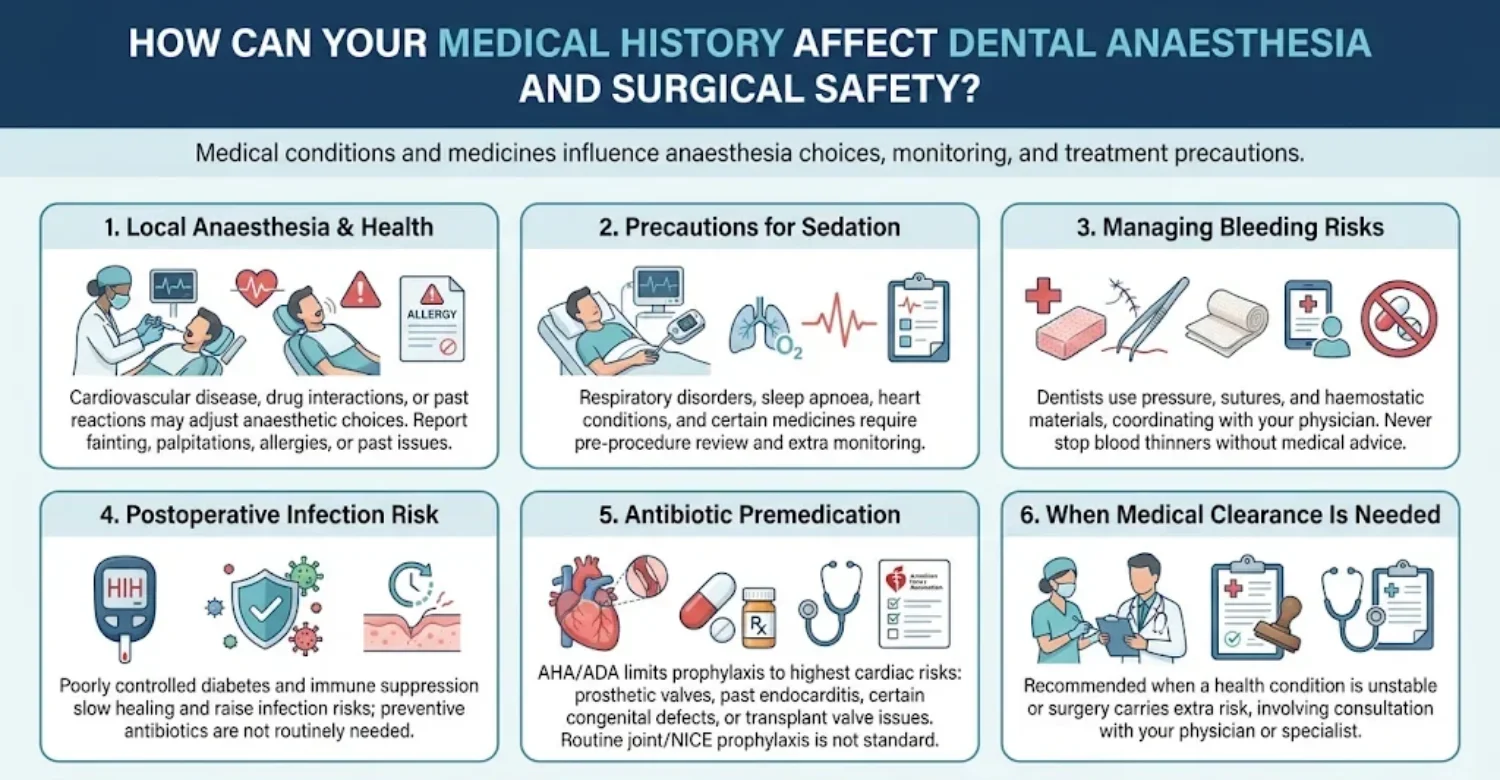
How Can Your Medical History Affect Dental Anaesthesia and Surgical Safety?
Medical conditions and medicines can influence anaesthesia choices, monitoring, and treatment settings. Your dentist should review relevant risks before obtaining consent. Additional precautions depend on your health and the procedure's complexity.
Can Existing Medical Conditions Affect Local Anaesthesia?
Some conditions may influence the choice or amount of local anaesthetic. Previous reactions, cardiovascular disease, and medication interactions are relevant. Tell your dentist about:
Fainting
Palpitations
Allergies
Previous anaesthetic problems
The clinician selects an approach using your medical information.
When Do Patients Need Additional Precautions for Sedation?
Sedation may require extra precautions for patients with significant medical conditions. Respiratory disorders, sleep apnoea, cardiovascular disease, and certain medicines can affect sedation safety. A pre-procedure review determines whether consultation or additional monitoring is needed. Not every patient suits every sedation method.
How Do Dentists Manage Bleeding Risks During Dental Surgery?
Dentists consider the procedure, medical history, and medicines affecting clotting. Local measures may include pressure, sutures, and suitable haemostatic materials. Some patients need coordination with their physician. Never change blood-thinning treatment without medical direction.
Can Medical Conditions Increase the Risk of Postoperative Infection?
Some conditions and treatments can increase infection risk or slow recovery. Poorly controlled diabetes and immune suppression require careful review. The dentist considers the procedure and current health status. Preventive antibiotics are not automatically necessary for every patient.
What Medical Conditions Require Premedication Before Dental Treatment?
Premedication usually means taking antibiotics before certain dental procedures to reduce the risk of infective endocarditis. American Heart Association and ADA guidance limits this to patients at the highest cardiac risk, including those with:
Prosthetic heart valves or prosthetic material used for valve repair
A previous episode of infective endocarditis
Certain congenital heart conditions
A heart transplant with a valve problem
For most patients with joint replacements, routine antibiotic premedication is not recommended, although an individual decision may be made with the orthopaedic surgeon. In the UK, NICE does not recommend routine antibiotic prophylaxis for dental procedures. Some patients may also receive anxiety-related premedication before treatment. Never start or stop medication without advice from your dentist or physician.
When Is Medical Clearance Required Before Dental Surgery?
Medical clearance may be appropriate when a condition is unstable or surgery carries additional risk. The dentist may request advice from your physician or specialist. This is not a routine requirement for every patient. The decision depends on clinical circumstances and planned treatment.

How Does Vitrin Clinic Review Your Medical History Before Treatment?
At Vitrin Clinic, medical history review helps identify relevant precautions before confirming treatment plans. International patients can share diagnoses, medication lists, allergies, and available reports before travelling. This supports preliminary planning but cannot replace clinical examination or medical clearance when required.
What Medical Information Does Vitrin Clinic Request From International Patients?
The team may request:
Current conditions
Medication lists
Allergies
Previous operations
Relevant reports
Patients considering implants should disclose previous implant complications and bone-related treatment. Share recent test results when they relate to existing conditions. Do not treat incomplete or outdated information as a final medical record.
How Does Vitrin Clinic Review Existing Diagnoses and Medications?
The clinical team reviews your information against the proposed dental procedures. Relevant issues may require clarification or additional documents. Medication decisions remain coordinated with the prescribing clinician. Preliminary review cannot confirm surgical suitability without the necessary clinical examination.
When Are Digital X-Rays, CBCT, or 3D Scans Clinically Necessary?
Digital dental X-rays help investigate tooth roots, bone levels, and local dental problems. CBCT provides three-dimensional information when conventional imaging cannot answer a specific clinical question. It may support complex implant planning. Imaging should follow clinical needs rather than routine preference.
How Does the Clinical Team Identify Potential Treatment Risks?
The team considers medical records alongside symptoms, examination findings, and imaging. Relevant factors include:
Bleeding
Infection
Healing
Medication interactions
Anaesthesia
Unclear information may require clarification before treatment. This supports an individual plan rather than a standard approach.
When Might Vitrin Clinic Recommend Consultation With Your Physician?
Physician input may be needed when a condition is unstable or medication changes are considered. It may also be appropriate for complex surgery, significant bleeding risks, or sedation concerns. The purpose is to clarify medical precautions. It does not guarantee treatment will proceed.
How Is Your Treatment Plan Adjusted to Your Medical Needs?
The plan may change in procedure choice, timing, anaesthesia, or follow-up. Some patients may need additional tests or medical coordination. Others may proceed with routine precautions. The final plan should reflect clinical findings and documented medical advice.
Ready to transform your smile?
Talk to our team and get a personal FREE treatment plan.
Can Your Medical History Prevent or Delay Dental Treatment?
A medical condition may delay elective treatment when risks are not sufficiently controlled. This does not mean every patient with a chronic illness must avoid dental care. Urgent dental problems still require timely professional attention.
Which Medical Conditions May Require Treatment Postponement?
Unstable cardiovascular symptoms, poorly controlled blood pressure, uncontrolled diabetes, and acute respiratory illness may require review. Recent hospitalisation or unexplained bleeding can also affect timing. The decision depends on severity and urgency. Emergency dental care may require a different pathway.
What Is a Red Flag for a Dentist?
When reviewing a medical history, a red flag is information suggesting a higher risk that needs attention before treatment. Examples include:
Uncontrolled diabetes or high blood pressure
A recent heart attack, stroke, or unstable chest pain
Unexplained or prolonged bleeding and easy bruising
Use of blood thinners, bisphosphonates, or immunosuppressants
Previous severe allergic or anaesthetic reactions
Current or recent cancer treatment, particularly head and neck radiotherapy
Pregnancy
Unexplained weight loss, persistent mouth ulcers, or lumps
A red flag does not automatically stop treatment, but it may require further questions, tests, physician advice, or a change in timing.
Can Patients With Diabetes Still Receive Dental Implants?
Many patients with diabetes can be considered for dental implants. Good glucose management supports more predictable healing. The dentist may review recent HbA1c results and other clinical factors. Poorly controlled diabetes can increase complications and justify postponement.
Can Patients With Heart Conditions Undergo Dental Surgery?
Some patients with heart conditions can undergo dental surgery with suitable precautions. The specific condition and its stability are important. Certain patients may need preventive measures or medical coordination. Not every heart diagnosis requires antibiotics.
When Can Dental Treatment Proceed With Additional Precautions?
Treatment may proceed when the medical condition is stable and precautions are available. These may include local bleeding control, modified scheduling, or additional monitoring. The dentist considers urgency and procedural complexity. Your physician may contribute to the decision.
What Happens If a Medical Concern Is Discovered Before Surgery?
The team should explain the concern and identify missing information. Treatment may be adjusted, postponed, or referred for medical advice. You should receive a clear explanation of the next steps. Avoid travelling for elective surgery while significant concerns remain unresolved.
How Much Does Medical Evaluation Before Dental Treatment Cost in Turkey?
Medical review fees vary by clinic and required investigations. The 2027 Turkish guide lists a dental examination at TRY 1,650. The following figures are reference dental costs, not a Vitrin Clinic quotation.
UK (Private & NHS)
From 13
Private & NHS band benchmarks.
Examination: 30–235 / $28 NHS
X-rays: 13–197 private
Filling: 98–365 / $77 NHS
Root canal: 233–1,174 / $77 NHS
Extraction: 117–381 / $77 NHS
Abscess treatment: 130–650
Turkey 2027 Guide
From 10
Turkish national tariff benchmark
Examination: 33–60
X-rays: 10–40
Filling: 42–105
Root canal: 91–205
Extraction: 49–98
Abscess treatment: 100–300
US
From 25
US private dental benchmark
Examination: 50–200
X-rays: 25–150
Filling: 100–400
Root canal: 500–1,500
Extraction: 75–500
Abscess treatment: 150–800
Is Medical History Review Included in Vitrin Clinic's Treatment Planning?
Preliminary treatment planning uses the information patients provide. Confirm whether separate consultation or medical review fees apply. Ask what the written quotation includes. Do not assume external physician consultations or laboratory tests are included.
Are Additional Medical Tests Charged Separately?
Additional tests may involve separate charges from laboratories or medical specialists. Their need depends on your health and proposed procedure. Ask who orders each test and receives the results. Confirm costs before arranging investigations.
How Much Can Blood Tests and Additional Investigations Cost?
There is no single price for all medical tests in Turkey. Costs depend on the:
Test
Laboratory
Urgency
Specialist involvement
Request an itemised estimate before testing. Avoid investigations without a clear clinical reason.
Can Medical Conditions Increase the Overall Dental Treatment Cost?
Yes, some conditions may require consultations, tests, monitoring, or another treatment setting. Complex surgery may also need extra appointments. These costs depend on individual clinical needs. They should be explained before treatment whenever possible.
Does Medical Clearance From Your Physician Involve Additional Costs?
A physician may charge for reviewing records or providing a medical report. Fees vary by country, specialty, and healthcare system. Ask about charges and expected timing. Send the dentist any relevant written recommendations.
What Should You Check in Vitrin Clinic's Written Treatment Quotation?
Check:
Procedures
Materials
Number of teeth
Imaging
Temporary restorations
Follow-up arrangements
Confirm whether medical tests or specialist consultations are excluded. Ask about payment terms and possible changes after examination. Request clarification before accepting the plan.
.jpg)
.jpg)
.jpg)
How Should International Patients Prepare Their Medical History Before Travelling to Turkey?
Prepare your medical history before dental treatment well before booking flights or surgery. Accurate documents help identify questions requiring clarification. This is particularly important for extensive procedures and patients with chronic conditions.
Which Medical Documents Should You Prepare Before Travelling?
Prepare:
A current medication list
Allergy information
Diagnoses
Relevant specialist reports
Include recent test results related to your condition. Bring details of previous operations and hospital admissions. Keep copies accessible during travel.
Should You Bring Previous Medical Reports and Test Results?
Yes, bring relevant reports and recent results. Examples include blood tests, cardiac reports, and diabetes monitoring results. Your dentist can decide whether they are sufficient. Older results may not reflect your current health.
How Can You Prepare an Accurate Medication and Allergy List?
Write each medicine's:
Name
Strength
Dose
Frequency
Include supplements and medicines used only when needed. Describe allergies and their reactions. Update the list shortly before travelling.
When Should You Request a Medical Report From Your Physician?
Request a report when your dentist identifies a specific medical concern. Allow enough time for your physician to review your condition. Ask the report to address precautions for the proposed procedure. Avoid requesting generic clearance without explaining the treatment.
Can You Share Your Medical Records With Vitrin Clinic Before Arrival?
Ask the clinic how to submit relevant records securely. Send clear, complete documents and explain recent changes. Confirm that the files were received and can be reviewed. Keep original reports with you during travel.
Why Should Medical Concerns Be Reviewed Before Booking Your Trip?
Early review can identify missing information and possible treatment restrictions. It may prevent avoidable changes to travel arrangements. It also allows time for physician consultation when needed. Preliminary online planning is not final surgical approval.
What Does the Medical Review and Dental Treatment Journey at Vitrin Clinic Look Like?
A structured journey helps international patients understand each treatment stage. Medical review should inform scheduling rather than become a last-minute formality. The exact steps depend on the procedure and individual health needs.
Step 1: Share Your Medical History Before Travelling
Provide Vitrin Clinic with the following information:
Diagnoses
Current medicines
Allergies
Relevant medical reports
Include previous dental complications and planned medical appointments. Inform the team about recent health changes. Ask how to submit sensitive documents securely.
Step 2: Vitrin Clinic Reviews Your Medical Information
The team checks your information against the proposed dental treatment. They may request clarification or additional documents. Medical concerns can be referred to your physician. This review supports treatment planning but cannot replace a clinical examination.
Step 3: Complete Your Initial Clinical Examination
The dentist examines your teeth, gums, bite, and relevant oral tissues. Digital X-rays or other imaging may be recommended when clinically justified. The dentist compares these findings with your medical information. Further tests may be needed before complex treatment.
Step 4: Receive Your Individual Treatment Plan
The plan reflects your oral findings, medical needs, and treatment goals. It should explain:
Recommended procedures
Available alternatives
Treatment limitations
Expected appointments
Any medical precautions should be documented. You should have enough time to ask questions before providing consent.
Step 5: Include Medical Considerations in Treatment Scheduling
Scheduling may depend on medical stability, medication instructions, and required consultations. Complex procedures may need additional recovery time. Travel dates should allow time for planned reviews. The team should explain any uncertainties before confirming appointments.
Step 6: Proceed With Your Dental Treatment
The clinical team follows the agreed plan and relevant safety precautions. Inform the team immediately if your health or medication changes. Report new symptoms before treatment begins. The dentist may revise the plan if new clinical findings emerge.
Step 7: Arrange Aftercare and Follow-Up With Vitrin Clinic
Before departure, request written aftercare instructions and information about warning signs. Confirm whom to contact if a problem develops. Ask which reviews can happen remotely. Local follow-up may still be necessary after returning home..
Why Choose Vitrin Clinic for International Dental Treatment?
Choosing a clinic abroad requires clear communication, documented planning, and realistic expectations. Patients should understand who reviews their records and how medical concerns are handled. The clinic should explain treatment limitations and follow-up arrangements.
How Does Individual Medical Review Support Treatment Planning?
An individual review connects your health information with proposed dental procedures. It helps identify questions before treatment begins. It also supports physician coordination when needed. No preliminary review can guarantee suitability.
How Does the Clinical Team Coordinate Complex Dental Treatment?
Complex cases may involve several procedures and different clinical considerations. Clear records help coordinate treatment sequencing and appointments. Medical questions should be resolved before elective surgery. Patients should receive an understandable written plan.
How Does Digital Dentistry Support Clinical Decision-Making?
Digital X-rays and scans provide information about teeth, roots, and supporting bone. Three-dimensional imaging may help when a specific clinical question requires it. Digital tools support, but do not replace, clinical judgement. Imaging should suit the individual case.
How Does Vitrin Clinic Support Patients Travelling From Abroad?
International patients need clear appointment schedules and communication before arrival. They should receive written details about treatment, expected visits, and aftercare. Travel arrangements should allow necessary clinical reviews. Discuss medical concerns before booking flights.
What Follow-Up Information Should International Patients Receive Before Returning Home?
Request:
A treatment summary
Records
Medication instructions
Follow-up recommendations
Ask about symptoms requiring urgent review. Confirm how to contact the clinic after returning home. Arrange local dental care when ongoing monitoring is necessary.
How Does Medical History Affect All-on-6 Dental Implants in Turkey?
All-on-6 treatment replaces a full dental arch using six implants supporting a fixed restoration. Medical suitability depends on:
Bone anatomy
Gum health
General health
Surgical planning
Six implants do not remove the need for individual clinical review.
Which Medical Conditions Matter Before All-on-6 Surgery?
Diabetes control, cardiovascular stability, immune conditions, and bleeding risks require review. Kidney or liver disease may influence medicine selection. Previous cancer treatment and bone-related medication also matter. The team considers the combined effect of these factors.
How Can Blood-Thinning Medication Affect All-on-6 Surgery?
Full-arch surgery involves multiple surgical sites and requires careful bleeding planning. The dentist reviews the medicine and its prescribed purpose. The prescribing physician may need to advise on management. Patients must never stop medication independently.
Can Patients Taking Osteoporosis Medication Have All-on-6 Implants?
Some patients may be considered, but medication history requires careful evaluation. The dentist reviews the:
Drug
Route
Duration
Medical indication
Bone-related risks and alternatives should be discussed. Treatment decisions should never rely on the medicine name alone.
Can Diabetes Affect Healing After All-on-6 Implant Placement?
Poor glucose control can increase delayed healing and complication risks. The team may request recent HbA1c results. Implant placement may be considered when diabetes is stable. The final decision depends on overall health and clinical findings.
What Should an All-on-6 Treatment Plan Include?
Planning element | What should be clarified |
Medical review | Diagnoses, medicines, allergies, and physician advice |
Imaging | Panoramic X-ray or CBCT when indicated |
Implant plan | Six positions, bone availability, and anatomical limits |
Additional procedures | Extractions, grafting, or sinus treatment if needed |
Temporary teeth | Timing, design, and suitability |
Final bridge | Material, design, and delivery schedule |
Aftercare | Hygiene, reviews, maintenance, and local follow-up |
How Do All-on-6 Treatment Packages Compare Between Turkey, the UK, and the USA?
Package prices are not directly comparable without confirmed clinic quotations. A written comparison should identify the same implant system, restoration, imaging, and additional procedures.
UK
From 30
UK private dental benchmark
Consultation and imaging: 30–235
Six implants and surgery: 9,000–20,000
Temporary restoration: 800–2,500
Final fixed bridge: 2,500–6,000
Grafts and extractions: 400–3,500
Follow-up: 80–400
Vitrin Clinic, Turkey
From 30
Full-arch All-on-6 package breakdown
Consultation and imaging: 30–150
Six implants and surgery: 3,600–5,400
Temporary restoration: 300–800
Final fixed bridge: $4,200
Grafts and extractions: 150–1,500
Follow-up: Included or confirm
USA
From 50
US private dental benchmark
Consultation and imaging: 50–350
Six implants and surgery: 12,000–25,000
Temporary restoration: 1,000–3,000
Final fixed bridge: 3,000–8,000
Grafts and extractions: 500–5,000
Follow-up: 100–500
How Much Could You Save by Choosing All-on-6 Treatment in Turkey?
A reliable saving percentage requires equivalent written quotations from each country. No verified Vitrin package price is available here for a like-for-like calculation. Use this formula after receiving comparable quotes:
Saving (%) = (UK or USA quote − Vitrin quote) ÷ UK or USA quote × 100
Vitrin vs UK
Estimated potential saving (USD): 3,000–15,000+
Comparison
Estimated potential saving (USD): 3,000–15,000+
Substantial savings vs. private UK multi-implant fees
Up to ~60%–70% lower clinical fees than UK private rates
Vitrin vs USA
Estimated potential saving (USD): 4,000–20,000+
Comparison
Estimated potential saving (USD): 4,000–20,000+
✓Largest net reductions on full-arch implant restorations
Free online consultation & itemized written quote
Full-Arch Value Overview
Typical clinical fee reduction: Up to 70%
Comparison
All-on-6 per arch at Vitrin: $4,000–$9,000
Transfers & hotel nights often bundled in packages
Confirm final scope & travel budget before booking
What Should You Do If Your Medical History Changes Before or After Dental Treatment?
Tell your dental team about significant health changes as soon as possible. New diagnoses, medicines, or hospital visits can affect treatment decisions. Previously approved plans may no longer be suitable.
Should You Inform Your Dentist About Newly Prescribed Medication?
Yes, report new medicines before your next appointment. Include the reason, dose, and prescribing clinician. Some medicines can affect bleeding, healing, or anaesthesia. The dentist can decide whether your plan needs review.
What Should You Do After a New Diagnosis or Hospitalisation?
Contact the clinic and explain what changed. Share updated medical reports when available. Ask whether planned treatment needs postponement or modification. Seek urgent medical care for acute symptoms.
When Should Your Medical Information Be Reviewed Again?
Review it whenever your health, medication, or treatment changes. Confirm details before surgery and sedation. Update the record during follow-up appointments. Regular updates help prevent decisions based on outdated information.
How Often Should Medical History Be Updated in a Dental Office?
Many dental practices ask patients to confirm their medical history at every visit and complete a full update at least once a year. A full review is also needed before surgery or sedation, and whenever you have a new diagnosis, medication change, pregnancy, or hospital admission.
How Should You Manage Medical Concerns After Returning Home?
Follow the written aftercare plan and arrange local review when advised. Contact the treating clinic if symptoms worsen or instructions are unclear. Seek emergency help for breathing or swallowing difficulties or rapidly spreading swelling. Do not rely on remote messages during emergencies.
.jpg)
.jpg)
.jpg)
What Should You Remember About Medical History Before Dental Treatment?
Accurate health information helps dentists make decisions based on your clinical circumstances. It supports safer planning, appropriate precautions, and clearer communication. Patients travelling abroad should resolve important medical questions before elective treatment.
Why Is Accurate Medical Disclosure Essential for Safer Treatment Planning?
Complete information helps identify relevant risks and medication considerations. It also supports appropriate physician consultation. Withholding information can lead to unsuitable planning. Tell the team about conditions even when they seem unrelated.
How Can Early Medical Review Help Avoid Unnecessary Treatment Delays?
Early review allows time to clarify diagnoses and obtain missing reports. It can identify whether additional consultations are needed. This makes travel planning more realistic. It cannot guarantee the original treatment schedule will remain unchanged.
Why Should Every Dental Treatment Plan Consider Your Overall Health?
Dental procedures affect more than teeth alone. General health can influence:
Anaesthesia
Bleeding
Infection
Healing
Recovery
An individual plan should consider oral findings and medical needs. Share updates and ask questions before consenting.
Clinical Note
Medical information should be reviewed by the treating dental professional. Physician consultation may be necessary for complex or unstable conditions. This article does not replace individual medical or dental advice.
Relief and Preparation
Keeping an updated medical record can make appointments more organised. It also helps patients explain their needs clearly. It does not replace examination, diagnosis, or professional care.
Advantages of Sharing Complete Information
Complete information supports better-informed planning, relevant precautions, and clearer communication between clinicians.
Disadvantages of Incomplete Information
Missing records may delay treatment, require further testing, or change the proposed plan.
Possible Side Effects and Risks
Dental procedures may involve:
Pain
Bleeding
Swelling
Infection
Medicine-related reactions
Individual risks depend on the procedure and patient's health.
Clinical Perspective for Dr. Rifat Alsaman
Medical history should be considered alongside oral examination and imaging. Treatment selection should follow the identified dental problem and patient's overall health. Any patient-specific clinical opinion must be reviewed and approved by Dr. Rifat before publication.
Why Choose Vitrin Clinic for Dental Treatment in Turkey?
Why Should International Patients Consider Vitrin Clinic?
Vitrin Clinic provides coordinated dental treatment planning for international patients in Istanbul. The process considers medical history, oral health, treatment requirements, and individual circumstances. Patients can discuss their needs before arranging their visit. Treatment recommendations follow clinical findings rather than standardised packages.
How Does Vitrin Clinic Prioritise Patient Safety?
The clinical team reviews relevant medical information before planning procedures. This includes:
Existing conditions
Medication use
Allergies
Previous complications
Additional medical advice may be requested when necessary. Treatment proceeds according to clinical findings and appropriate precautions.
Does Vitrin Clinic Provide Individual Treatment Plans?
Yes, treatment plans are prepared around each patient's dental condition and medical needs. The clinical examination helps confirm the proposed procedures. Digital imaging may support diagnosis when clinically indicated. Patients receive an explanation of recommended treatment and relevant alternatives.
How Does Vitrin Clinic Support Patients Throughout Their Stay?
Vitrin Clinic coordinates appointments and treatment-related arrangements for international patients. Support may include airport transfers, accommodation coordination, and patient assistance. Patients can also access the clinic's facilities, including Vitrin Cafe and its terrace. Specific arrangements should be confirmed before travelling.
Can You Discuss Your Medical History With Vitrin Clinic Before Travelling?
Yes, patients can share relevant medical information before arrival. This allows the team to identify questions requiring clarification. Additional reports or physician recommendations may be requested. Remote review supports preparation but does not replace an in-person clinical examination.
What Makes Clear Communication Important When Choosing Vitrin Clinic?
Clear communication helps patients understand procedures, limitations, costs, and follow-up requirements. It also allows medical concerns to be discussed before travelling. Patients should receive written treatment details and ask questions before providing consent.
Can Vitrin Clinic Help You Understand Your Dental Treatment Costs Before Travelling?
Yes, patients can request a preliminary treatment plan and estimated costs before travelling. The proposed estimate depends on available dental records, photographs, and medical information. The final price may change after clinical examination or additional imaging. Patients should request an itemised written quotation explaining procedures, included services, and potential additional costs.
Does Vitrin Clinic Explain the Risks and Limitations of Dental Procedures?
Treatment discussions should cover potential complications, expected recovery, and clinical limitations. The dentist explains relevant alternatives and factors that may affect results. Patients can ask questions before consenting to treatment. No dental procedure should be presented as completely risk-free or guaranteed.
What Facilities Can International Patients Access at Vitrin Clinic?
Vitrin Clinic provides facilities designed to support the patient experience during dental visits. These include Vitrin Cafe, a terrace, and a photo studio. The clinic also coordinates patient-related arrangements, including transportation and accommodation support. Availability and specific arrangements should be confirmed before the visit.
What Is the Patient Journey at Vitrin Clinic?
The patient journey at Vitrin Clinic begins with an initial consultation and preliminary treatment planning. Patients share their dental concerns, medical history, and available records before travelling. The team reviews this information and discusses possible treatment options. After arriving in Istanbul, patients undergo an in-person clinical examination and any necessary diagnostic imaging. The dentist then confirms the final treatment plan, explains the procedures, costs, and precautions, and obtains informed consent. Treatment follows the agreed schedule, with aftercare instructions and follow-up guidance provided before departure.
Step 1: How Do You Start Your Dental Treatment Journey With Vitrin Clinic?
Your journey begins by sharing your dental concerns and treatment goals. Provide relevant medical conditions, medicines, allergies, and previous dental records. The team can explain the information needed for preliminary planning.
Step 2: What Happens After You Submit Your Medical History?
The team reviews the information alongside your proposed dental treatment. They may request additional reports or clarification. Medical concerns requiring specialist advice should be addressed before elective procedures.
Step 3: How Do You Receive Your Preliminary Treatment Plan?
The team uses your available information to discuss possible treatment options. Preliminary recommendations may change after clinical examination. You should clarify estimated costs, treatment stages, and what the proposed plan includes.
Step 4: What Happens When You Arrive at Vitrin Clinic?
Your visit includes an in-person clinical examination. The dentist reviews your teeth, gums, bite, and relevant oral tissues. Digital X-rays or CBCT may be recommended when clinically necessary. Your medical history is considered alongside these findings.
Step 5: How Is Your Final Dental Treatment Plan Confirmed?
The dentist reviews examination findings and any necessary imaging. The final plan explains suitable procedures, alternatives, and relevant precautions. Any unresolved medical concerns should be discussed before treatment begins.
Step 6: What Happens During Your Dental Treatment?
The clinical team carries out the agreed procedures according to your treatment plan. Tell the team about any new symptoms or medication changes. Treatment may be adjusted if clinical findings change.
Step 7: What Aftercare Does Vitrin Clinic Provide Before You Return Home?
Before departure, request written aftercare instructions and medication guidance. The team should explain warning signs and recommend follow-up. Confirm how to contact the clinic if concerns develop after returning home.
Can You Continue Your Follow-Up After Returning to Your Country?
Remote communication may help clarify instructions and discuss recovery updates. However, some concerns require an in-person examination. Arrange local dental follow-up when recommended by your treating clinician.
How Long Should You Stay in Istanbul for Dental Treatment?
Your required stay depends on the procedure, clinical findings, and treatment stages. Some treatments require only a few appointments, while implant procedures may involve separate surgical and restorative visits. Healing periods can extend beyond the initial trip. Vitrin Clinic can discuss a preliminary schedule, but patients should confirm travel dates after receiving their final treatment plan.
What Documents Should You Bring to Vitrin Clinic?
Bring your:
Medical records
Current medication list
Allergy information
Previous dental reports
Include recent X-rays or CBCT scans when available. Physician letters may also be necessary for certain medical conditions. Having these documents ready helps the dentist review your medical background and identify additional precautions.
What Happens If Your Medical Condition Changes Before Your Appointment?
Inform the clinic if you develop a new illness, receive a diagnosis, or start medication. Changes may affect:
Anaesthesia
Bleeding risk
Infection precautions
Healing
The dentist may request updated medical information or advice from your physician. Treatment should be reconsidered when new findings affect patient safety.
Ready to transform your smile?
Talk to our team and get a personal FREE treatment plan.
Why Should You Share Your Medical History Before Dental Treatment?
Sharing your medical history helps dentists identify health factors that may affect dental procedures, anaesthesia, and recovery. Conditions such as diabetes, cardiovascular disease, bleeding disorders, and allergies may require additional precautions. Certain medications can also influence bleeding, infection risk, and healing. Providing accurate information allows the clinical team to evaluate potential complications and determine whether additional medical advice is necessary. At Vitrin Clinic, reviewing your medical history supports individual treatment planning and helps the dentist make informed decisions about your dental care.
Why Is Your Medical History Essential Before Starting Dental Treatment?
Your medical history helps dentists understand factors that may influence treatment and recovery. Accurate disclosure supports appropriate precautions and clinical decisions. Include every relevant condition, medicine, allergy, and previous complication.
How Can Preparing Your Medical Records Make Dental Treatment Abroad Easier?
Preparing documents early gives the clinical team time to review important details. It can identify missing information before travel. This supports more realistic scheduling and treatment discussions.
What Should You Do Before Confirming Dental Treatment at Vitrin Clinic?
Share your medical information and ask about any required investigations. Discuss treatment options, costs, and possible additional precautions. Confirm the written plan before arranging your final travel schedule.
What Is the Most Important Thing to Remember About Medical History Before Dental Treatment?
Never withhold medical information because it seems unrelated to your teeth. Your overall health can influence:
Anaesthesia
Bleeding
Infection
Healing
An individual clinical review helps determine the appropriate treatment approach.
Can You Receive Dental Treatment Without Disclosing Your Full Medical History?
You should never intentionally withhold relevant medical information before dental treatment. Even conditions that appear unrelated to oral health may influence medication choices, anaesthesia, bleeding, or recovery. Missing information can prevent the clinical team from identifying important risks. If you are unsure whether a condition matters, disclose it and allow the dentist to decide its relevance.
Why Should You Avoid Confirming Dental Treatment Before a Clinical Review?
A preliminary treatment recommendation cannot confirm every clinical requirement. The dentist needs to examine your oral tissues, review relevant imaging, and consider your medical history. This helps identify unexpected problems and possible treatment alternatives. Confirming the final procedures after this review reduces misunderstandings about costs, treatment stages, and clinical expectations.
Your health should always be part of your dental treatment plan. At Vitrin Clinic, informed planning begins with understanding your medical history and individual dental needs.
Reference

Medically reviewed by
Dr. Rifat AlsamanDr. Rifat Alsaman has more than 5 years of clinical experience in dentistry and currently serves as the Head of the Medical Team at Vitrin Clinic. He is dedicated to providing exceptional patient care, overseeing treatment planning, and ensuring the highest clinical standards across the team. His expertise, attention to detail, and commitment to continuous professional development have helped countless patients achieve healthier, more confident smiles.
More guides
View all 16 min readWhat Should I Pack When Travelling to Turkey for Dental Treatment?What to pack for dental treatment abroad comes down to three groups: documents that get you to the clinic, health items that keep treatment safe, and comfort items that make recovery easier.
 19 min readCan Gum Disease Treatment Be Combined with Implant Preparation?Yes, gum disease treatment and implant preparation can be combined in one plan. The gum infection is treated first, and steps like removing hopeless teeth or grafting bone can run alongside it. The implants themselves are placed once the gums are healthy and stable.
 18 min readShould I Inform the Clinic If My Health or Medication Changes Before My Appointment?Health changes before dental appointment dates should always be shared with your clinic. The short answer is yes: tell the clinic if your health or medication changes after you book.
 32 min readDental Emergency Before Your Turkey Trip? What Should You Do Before Flying?A dental emergency before travelling for treatment needs attention before you confirm your flight or elective dental appointments.
Still have a question?
Our patient coordinators answer every day of the week: before, during and long after your treatment.