General Dentistry
September 17, 2025
O que é cárie e como ela pode ser tratada na Turquia em 2026?
 Dr. Rifat Alsaman
O que é a cárie e por que ela é uma preocupação odontológica grave?
A cárie, comumente conhecida como deterioração dentária ou cavidade, é uma doença dentária progressiva que danifica a estrutura do dente. Se não for tratada, a cárie pode causar dor, infecção e até a perda do dente, tornando-se uma preocupação séria para a saúde bucal em todo o mundo.
O que causa a cárie?
Formação de placa bacteriana
Bactérias nocivas se acumulam nos dentes, formando uma placa pegajosa.
Ingestão de açúcar e carboidratos
As bactérias se alimentam de açúcares e carboidratos, produzindo ácidos.
Produção de ácido
Os ácidos das bactérias dissolvem o esmalte do dente, levando à deterioração.
Má higiene bucal
A escovação e o uso do fio dental infrequentes permitem o acúmulo de placa.
Boca seca (saliva reduzida)
A saliva ajuda a neutralizar os ácidos; menos saliva aumenta o risco.
Beliscar e beber constantemente
A exposição constante a açúcares e ácidos impede a recuperação do esmalte.
Esmalte fraco ou fino
Algumas pessoas têm naturalmente um esmalte menos resistente.
Deficiência de flúor
O flúor fortalece o esmalte e ajuda a prevenir a deterioração.
Factores genéticos
A genética pode influenciar a suscetibilidade às cáries.
Patologia Clínica: Compreendendo as 4 Zonas da Cárie Dentária
A cárie dentária não é apenas um buraco no dente; é um processo biológico progressivo que se desenvolve através de diferentes estágios microscópicos. Compreender as 4 zonas da cárie dentária ajuda os dentistas a avaliar o quanto a deterioração progrediu e a decidir se são necessários cuidados preventivos, remineralização ou tratamento restaurador.
Na Clínica Vitrin, os dentistas analisam cuidadosamente a condição de cada dente para determinar se a lesão está ativa, estável ou se requer intervenção. De acordo com o Dr. Rifat Alsaman, Chefe da Equipe Médica da Clínica Vitrin e dentista estético, identificar o estágio exato da cárie permite que os dentistas preservem o máximo possível da estrutura dentária saudável, alcançando uma saúde bucal a longo prazo.
A Zona Translúcida (A Fronte Avançada de Desmineralização)
A zona translúcida é considerada a área mais precoce afetada durante o desenvolvimento da cárie dentária. Ela representa a linha de frente onde os minerais começam a deixar o esmalte devido aos repetidos ataques ácidos das bactérias. Embora esta zona seja geralmente invisível durante um exame dentário normal, ela indica que o processo de deterioração começou abaixo da superfície.
Na Clínica Vitrin, o diagnóstico precoce permite aos dentistas controlar essas alterações antes que se tornem cavidades maiores. O Dr. Rifat Alsaman, Chefe da Equipe Médica da Clínica Vitrin e dentista estético, explica que a detecção precoce da perda mineral dá aos pacientes uma chance melhor de proteger seus dentes naturais por meio de abordagens preventivas, em vez de esperar até que um tratamento extenso seja necessário.
A Zona Escura (Onde a Remineralização e a Destruição Tecidual Competem)
A zona escura representa uma área onde ocorrem ciclos de perda e reparação mineral. Ela contém pequenos espaços criados por alterações minerais anteriores, enquanto alguns minerais podem retornar através da exposição à saliva e ao flúor. Esta zona mostra que o desenvolvimento da cárie nem sempre é um processo de via única; as lesões iniciais podem, às vezes, ser controladas se detectadas no momento certo.
Na Clínica Vitrin, os dentistas avaliam se a deterioração está ativa ou paralisada antes de recomendar o tratamento. O Dr. Rifat Alsaman, Chefe da Equipe Médica da Clínica Vitrin e dentista estético, destaca que um diagnóstico preciso evita procedimentos desnecessários e apoia a odontologia minimamente invasiva sempre que possível.
O Corpo da Lesão (A Maior Área de Perda Mineral)
O corpo da lesão é a maior parte de uma lesão de cárie de esmalte e contém a maior quantidade de perda mineral. À medida que a deterioração avança nesta área, a estrutura do dente torna-se mais fraca e vulnerável à fratura. Sem um manejo adequado, a lesão pode continuar progredindo em direção às camadas mais profundas do dente.
Na Clínica Vitrin, as decisões de tratamento são baseadas na profundidade e na atividade da cavidade, e não apenas na aparência. O Dr. Rifat Alsaman, Chefe da Equipe Médica da Clínica Vitrin e dentista estético, enfatiza que a preservação da estrutura dentária natural é sempre uma prioridade ao planejar o tratamento da cárie.
A Zona Superficial (A Camada Externa do Esmalte Relativamente Intacta)
A zona superficial é a camada externa do esmalte que pode permanecer relativamente intacta, apesar das alterações minerais subjacentes. Isso explica por que algumas cáries em estágio inicial são difíceis de notar sem um exame profissional ou exames de imagem odontológicos.
Consultas odontológicas regulares na Clínica Vitrin ajudam a identificar cáries ocultas antes que atinjam estágios avançados. O Dr. Rifat Alsaman, Chefe da Equipe Médica da Clínica Vitrin e dentista estético, aconselha os pacientes a não confiarem apenas em buracos visíveis ou na dor, porque a cárie pode se desenvolver silenciosamente sob a superfície do esmalte.
Os 4 Fatores Etiológicos do Desenvolvimento da Cárie (As Causas Interligadas)
A cárie dentária se desenvolve através de uma combinação de vários fatores, e não por uma única causa. Os clássicos 4 fatores etiológicos da cárie explicam como a estrutura dentária, as bactérias, a dieta e o tempo interagem para criar um ambiente onde a deterioração pode se desenvolver.
Na Clínica Vitrin, os dentistas consideram todos os fatores durante o diagnóstico, pois a prevenção bem-sucedida da cárie exige a compreensão do motivo por trás da deterioração. O Dr. Rifat Alsaman, Chefe da Equipe Médica da Clínica Vitrin e dentista estético, explica que identificar a causa ajuda a criar recomendações personalizadas em vez de tratar apenas a cavidade visível.
O Hospedeiro Suscetível (Estrutura Dentária e Composição da Saliva)
Um hospedeiro suscetível refere-se à condição dos dentes e do ambiente bucal do paciente. A qualidade do esmalte dentário, o fluxo salivar, o conteúdo mineral e os mecanismos naturais de proteção influenciam a facilidade com que a cárie pode se desenvolver.
Pacientes com produção reduzida de saliva ou esmalte mais fraco podem ter um risco maior de cavidades. Na Clínica Vitrin, os dentistas avaliam os fatores de risco individuais antes de criar estratégias de prevenção. O Dr. Rifat Alsaman, Chefe da Equipe Médica da Clínica Vitrin e dentista estético, acredita que o cuidado preventivo personalizado é essencial para manter os dentes saudáveis e reduzir problemas dentários futuros.
Microrganismos Cariogênicos (A Rede de Bactérias da Placa)
Os microrganismos cariogênicos são bactérias que contribuem para a deterioração dos dentes ao produzir ácidos quando consomem açúcares de alimentos e bebidas. Essas bactérias fazem parte da placa bacteriana, que pode danificar gradualmente o esmalte se não for controlada por uma higiene bucal adequada.
Na Clínica Vitrin, os dentistas orientam os pacientes sobre técnicas de controle da placa, pois evitar o acúmulo bacteriano é uma das formas mais eficazes de reduzir o risco de cárie. O Dr. Rifat Alsaman, Chefe da Equipe Médica da Clínica Vitrin e dentista estético, recomenda combinar o atendimento odontológico profissional com hábitos diários consistentes de higiene para obter resultados mais fortes a longo prazo.
Carboidratos Fermentáveis (O Substrato Alimentar e Combustíveis)
Carboidratos fermentáveis, especialmente o consumo frequente de açúcar, fornecem combustível para as bactérias que produzem ácidos prejudiciais ao esmalte. A frequência da exposição ao açúcar muitas vezes importa tanto quanto a quantidade total consumida, porque os ataques ácidos repetidos impedem a recuperação da boca.
Na Clínica Vitrin, os dentistas ajudam os pacientes a entender como pequenas mudanças na dieta podem reduzir significativamente o risco de cavidades. O Dr. Rifat Alsaman, Chefe da Equipe Médica da Clínica Vitrin e dentista estético, recomenda focar em hábitos alimentares equilibrados, juntamente com cuidados odontológicos profissionais, para manter sorrisos mais saudáveis.
O Fator Tempo (Duração e Frequência da Exposição ao Ácido)
O tempo desempenha um papel importante no desenvolvimento da cárie porque os dentes precisam de exposição repetida e prolongada a condições ácidas antes que ocorram danos significativos. Beliscar com frequência ou beber bebidas açucaradas ao longo do dia pode aumentar o número de ataques ácidos ao esmalte.
Na Clínica Vitrin, os dentistas consideram os hábitos de estilo de vida ao avaliar o risco de cárie. O Dr. Rifat Alsaman, Chefe da Equipe Médica da Clínica Vitrin e dentista estético, explica que o controle dos hábitos diários pode ser tão importante quanto receber tratamento odontológico na prevenção de cavidades futuras.
Quando você deve consultar um dentista por causa de cárie dentária?
Muitos pacientes esperam até sentir dor antes de visitar um dentista, mas a cárie geralmente começa sem sintomas perceptíveis. Exames odontológicos precoces podem identificar a deterioração antes que ela se torne mais complicada ou exija uma restauração extensa.
Você deve agendar uma consulta odontológica se notar sensibilidade, manchas escuras visíveis, retenção de alimentos, superfícies dentárias ásperas, desconforto persistente ou alterações na sua mordida. Na Clínica Vitrin, o diagnóstico precoce permite que os dentistas ofereçam tratamentos conservadores e protejam os dentes naturais sempre que possível.
O Dr. Rifat Alsaman, Chefe da Equipe Médica da Clínica Vitrin e dentista estético, aconselha os pacientes que os exames regulares são uma das formas mais eficazes de detectar problemas antes que eles afetem o conforto e a estética do sorriso.
Como a formação da placa leva à cárie?
A placa é uma película pegajosa de bactérias que se forma nos dentes. Quando não é removida, ela produz ácidos que corroem o esmalte, iniciando o processo da cárie.
Que papel desempenham as bactérias bucais no desenvolvimento da cárie?
Bactérias nocivas metabolizam os açúcares em ácidos, que desmineralizam a superfície dura do dente, levando à deterioração.
Como os alimentos açucarados e ácidos contribuem para a cárie?
O consumo frequente de alimentos açucarados e ácidos alimenta as bactérias e reduz o pH da boca, acelerando a destruição do esmalte.
A má higiene bucal pode ser a principal causa da cárie?
Sim. Negligenciar a escovação e o uso do fio dental permite o acúmulo de placa, aumentando o risco de cárie.
Como a escovação e o uso do fio dental infrequentes aumentam o risco?
Isso permite que as bactérias proliferem, criando um ambiente ácido que ataca os dentes.
O que acontece se os exames odontológicos forem ignorados?
As cáries em estágio inicial podem passar despercebidas e piorar sem o diagnóstico e a intervenção profissional.
A genética e o histórico familiar estão ligados à cárie?
A genética pode influenciar a resistência do esmalte e a composição da saliva, afetando a suscetibilidade à cárie.
Quais são os diferentes tipos de cárie?
Cárie de fóssulas e fissuras
Ocorre nas superfícies de mastigação dos dentes posteriores (molares e pré-molares)
Comum em áreas com sulcos profundos ou fóssulas
Cárie de superfície lisa
Encontrada nas laterais planas e lisas dos dentes
Frequentemente se desenvolve entre os dentes, onde o fio dental é esquecido
Cárie radicular
Afeta as superfícies das raízes dos dentes, especialmente em pessoas com recessão gengival
Mais comum em adultos mais velhos
Cárie recorrente (secundária)
Desenvolve-se ao redor de restaurações existentes, coroas ou outras próteses dentárias
Causada por margens deficientes ou placa residual
Cárie rampante
Deterioração generalizada e de rápida progressão
Frequentemente vista em crianças ou adultos com má higiene bucal, alta ingestão de açúcar ou boca seca
Cárie na primeira infância (cárie de mamadeira)
Afeta bebês e crianças pequenas, especialmente devido à alimentação prolongada com mamadeira contendo líquidos açucarados
O que é a cárie de fóssulas e fissuras?
Estas ocorrem nos sulcos das superfícies de mastigação, onde a comida tende a ficar presa.
O que é a cárie de superfície lisa?
Deterioração que aparece nas superfícies planas dos dentes, frequentemente entre os dentes.
O que é a cárie radicular?
Deterioração que afeta as raízes expostas, comum em adultos mais velhos com recessão gengival.
Como a cárie recorrente difere da cárie primária?
A cárie recorrente desenvolve-se em torno de restaurações ou coroas existentes, ao contrário da cárie primária, que se trata de novas lesões.
Quais são os primeiros sinais e sintomas da cárie?
Manchas brancas nos dentes
Desmineralização inicial do esmalte
Sensibilidade dentária
Especialmente a alimentos e bebidas quentes, frios, doces ou ácidos
Dor de dente leve ou desconforto
Dor ocasional ou espontânea sem causa clara
Buracos ou fóssulas visíveis nos dentes
Pequenas aberturas na superfície do dente
Descoloração
Áreas marrons, pretas ou brancas como giz no dente
Mau hálito ou gosto desagradável
Causado pela atividade bacteriana nas áreas em deterioração
Rugosidade na superfície do dente
Alteração na textura sentida com a língua ou ao escovar
Como a sensibilidade pode indicar a presença de cárie?
A deterioração precoce frequentemente causa uma sensibilidade leve a estímulos quentes, frios ou doces.
Quais são os sinais visíveis de cárie nos dentes?
Manchas brancas, descoloração marrom ou preta, ou pequenos buracos na superfície do dente.
O mau hálito pode ser causado por cárie?
Sim, a atividade bacteriana em dentes cariados pode causar mau hálito persistente.
Como as cáries são diagnosticadas por dentistas na Turquia
Método de Diagnóstico | Objetivo e Uso |
|---|---|
Exame Visual-Táctil | Detecção inicial de lesões visíveis ou defeitos no esmalte |
Exame com Sonda (explorador rombo) | Identifica áreas aderentes ou amolecidas sem causar danos |
Radiografia Panorâmica | Ferramenta comum de imagem extraoral para visão geral ampla |
Radiografias Periapicais / Interproximais (Bite-wing) | Detecção direcionada, particularmente para cáries interproximais precoces |
Câmera Intraoral | Imagens de alta resolução para detecção em estágio inicial e educação do paciente |
TCFC (Imagem 3D) | Usada em casos complexos para avaliação anatômica detalhada |
Diagnóstico apoiado por IA | Ferramentas emergentes para aumentar a precisão e a velocidade de detecção |
Que papel desempenham as radiografias dentárias na detecção de cáries?
As radiografias revelam a deterioração entre os dentes e sob restaurações invisíveis a olho nu.
A fluorescência a laser pode ser usada para detecção de cárie?
Sim, ela detecta a deterioração precoce medindo as alterações na fluorescência do dente.
Como os dentistas diferenciam manchas de cáries?
Exames clínicos e ferramentas de diagnóstico ajudam a distinguir manchas inofensivas de deterioração real.
Como as cáries podem ser prevenidas?
Hábitos de Higiene Bucal
Escove duas vezes ao dia com pasta de dente com flúor
Use fio dental diariamente para limpar entre os dentes
Use enxaguante bucal com conteúdo antibacteriano ou flúor
Dieta e Nutrição
Limite alimentos e bebidas açucarados e ácidos
Evite beliscar com frequência
Beba bastante água, especialmente água fluoretada
Uso de Flúor
Use pasta de dente e enxaguante bucal com flúor
Considere tratamentos profissionais com flúor aplicados pelo dentista
Selantes Dentários
Revestimentos protetores aplicados nos dentes posteriores (molares) para evitar a deterioração
Especialmente recomendado para crianças e adolescentes
Consultas Odontológicas Regulares
Exames e limpezas de rotina (a cada 6 meses ou conforme orientação)
Detecção precoce de deterioração ou fatores de risco
Controlar a Boca Seca
Mantenha-se hidratado e evite tabaco ou álcool
Use substitutos de saliva se necessário
Abordar Fatores de Risco
Discuta o histórico familiar, condições médicas e medicamentos com seu dentista
Trate quaisquer condições como refluxo ácido ou bruxismo que possam impactar a saúde dentária
Como a escovação e o uso do fio dental regulares previnem as cáries?
Eles removem a placa e as partículas de alimentos, reduzindo a produção de ácido.
Que tipo de pasta de dente funciona melhor contra as cáries?
A pasta de dente que contém flúor fortalece o esmalte e combate a deterioração.
Com que frequência você deve substituir sua escova de dentes?
A cada 3 meses ou antes, se as cerdas estiverem gastas.
Como os tratamentos com flúor ajudam a prevenir as cáries?
As aplicações profissionais de flúor remineralizam o esmalte e tornam os dentes mais resistentes ao ácido.
Os selantes dentários podem proteger contra as cáries?
Sim, os selantes cobrem os sulcos e fissuras para bloquear bactérias e restos de alimentos.
Como uma dieta equilibrada reduz o risco de cárie?
Comer alimentos ricos em nutrientes apoia dentes saudáveis e limita a ingestão de açúcar.
Quais são as opções de tratamento para as cáries?
Tratamento com Flúor
Fornecido para a desmineralização do esmalte em estágio inicial
Ajuda a remineralizar a superfície do dente
Restaurações Dentárias (Obturações)
Para cavidades pequenas a moderadas
A deterioração é removida e preenchida com materiais como resina composta ou amálgama
Inlays e Onlays
Usados para cavidades maiores que não requerem uma coroa completa
Restaurações feitas sob medida e coladas ao dente
Coroas Dentárias
Para deterioração extensa ou dentes enfraquecidos
Uma capa cobre e protege o restante do dente
Tratamento de Canal Radicular (Endodontia)
Necessário quando a deterioração atinge a polpa do dente (nervo)
Envolve a limpeza, desinfecção e selamento do canal radicular
Extração Dentária
Feita quando o dente está excessivamente danificado para ser salvo
Pode ser seguida por um implante dentário ou ponte
Medidas Preventivas Pós-Tratamento
Aplicações de flúor, selantes e instruções de higiene bucal para evitar a recorrência
Como as restaurações são usadas para tratar as cáries?
O tecido deteriorado é removido e a cavidade é preenchida com resina ou amálgama para restaurar a integridade do dente.
Quando o tratamento de canal é necessário para as cáries?
Quando a deterioração atinge a polpa do dente, causando infecção ou dor intensa.
As coroas podem ser uma solução para cáries graves?
As coroas protegem e fortalecem os dentes com deterioração extensa ou após o tratamento de canal.
Quais são os tratamentos cirúrgicos para cáries avançadas?
A extração ou a apicectomia podem ser necessárias se o dente não puder ser salvo.
Quais tratamentos avançados de cárie estão disponíveis na Turquia?
Tipo de Tratamento | Destaques das Técnicas Avançadas |
|---|---|
Odontologia a Laser | Remoção da deterioração sem toque, menos dor, forte desinfecção |
Restaurações Adesivas (Inlay/Onlay) | Preserva mais o dente, estética e funcional |
Terapia do Pulpar Vital / Tratamento de Canal | Preservação da polpa sempre que possível; canal radicular quando necessário |
Tratamentos Preventivos | FDP (Cariostático), selantes de fissuras, verniz de alto flúor, pastas de hidroxiapatita |
Serviços da Clínica Vitrin | Odontologia a laser, endodontia, restaurações cosméticas conservadoras |
Como as clínicas odontológicas turcas usam a odontologia a laser para cáries?
Os lasers permitem uma remoção precisa e minimamente invasiva da deterioração, com menos dor e cicatrização mais rápida.
Os tratamentos minimamente invasivos são populares na Turquia?
Sim, abordagens como a abrasão a ar e a remineralização são cada vez mais favorecidas.
Quão acessíveis são os tratamentos de cárie na Turquia em comparação com a Europa?
A Turquia oferece cuidados de alta qualidade por uma fração dos custos europeus, tornando-se um destino popular de turismo odontológico.
Que complicações podem resultar de cáries não tratadas?
A cárie dentária não tratada pode levar a várias complicações graves, incluindo:
Dor e Sensibilidade Dentária
Desconforto persistente ou que piora gradualmente
Interfere no comer, beber e falar
Infecção Dentária (Abscesso)
A infecção bacteriana se espalha para a polpa do dente
Pode levar ao aparecimento de pus, inchaço e dor intensa
Pode exigir canal radicular ou extração
Disseminação da Infecção
A infecção pode se estender para o osso mandibular, pescoço ou corrente sanguínea
Em casos graves, pode causar sepse — uma condição potencialmente fatal
Fratura ou Perda do Dente
A deterioração extensa enfraquece a estrutura do dente
O dente pode quebrar ou exigir extração se não for tratado a tempo
Doença Gengival (Periodontite)
As cáries podem contribuir para o acúmulo de placa e inflamação da gengiva
Leva à retração gengival, perda óssea e mobilidade dentária
Problemas para Mastigar e Comer
A dor ou a perda de dentes afeta a nutrição e a digestão
Dificuldades na Fala
Especialmente se a deterioração afetar os dentes da frente ou múltiplos dentes
Impacto Estético e Social
Deterioração visível ou ausência de dentes podem afetar a autoestima e a confiança
Problemas de Saúde Sistêmica
Infecções bucais crônicas estão ligadas a:
Doenças cardíacas
Complicações do diabetes
Infecções respiratórias
Parto prematuro (em gestantes)
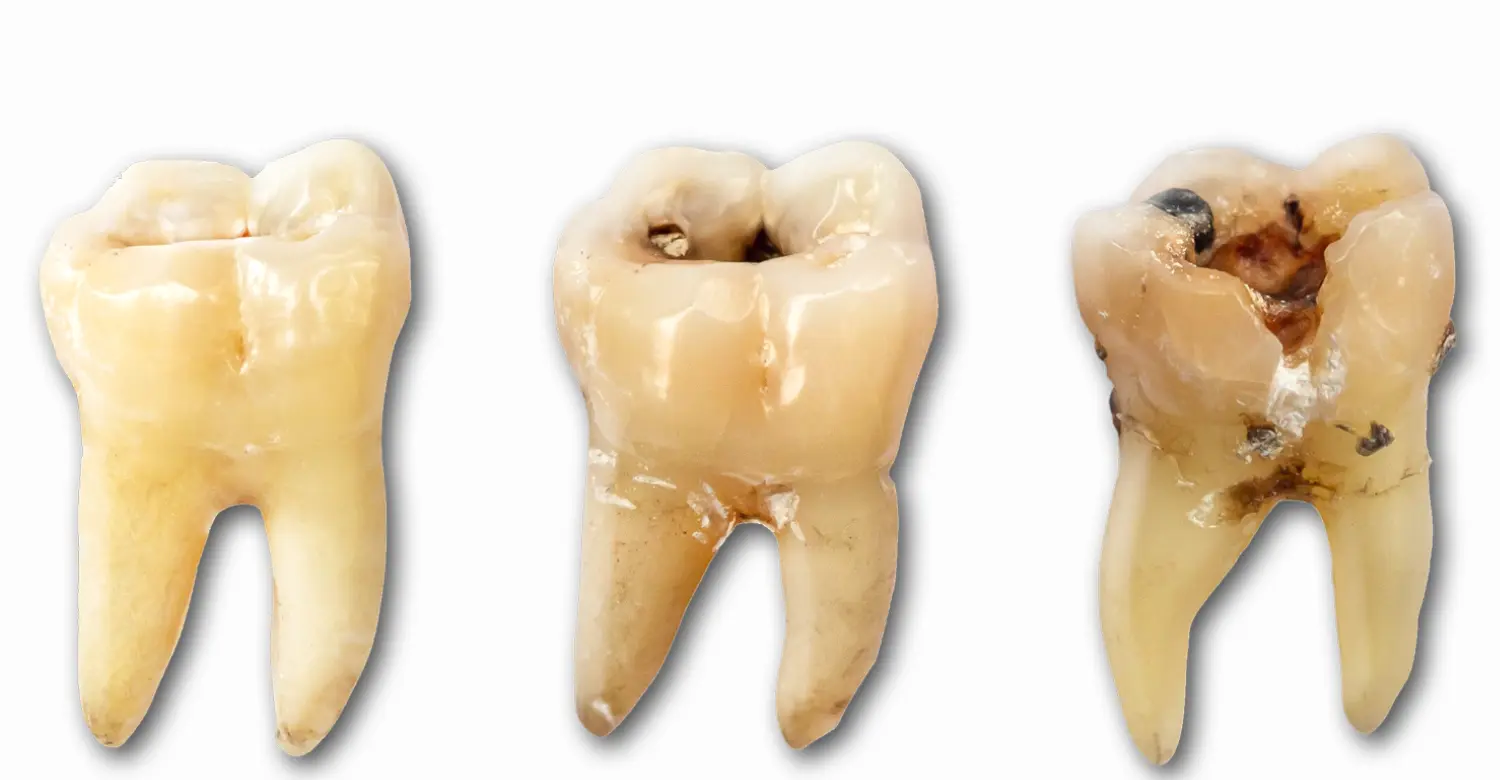
A cárie pode levar à perda do dente?
Sim. A deterioração não tratada pode destruir a estrutura do dente, levando à necessidade de extração.
Como a cárie afeta a saúde bucal geral?
Ela pode causar infecções, doenças gengivais e afetar a mastigação e a fala.
Cáries não tratadas podem levar a problemas de saúde sistêmica?
Infecções graves podem se espalhar e impactar a saúde do coração, o controle do diabetes e muito mais.
Como as crianças e os adultos vivenciam as cáries de maneira diferente?
Fator | Crianças | Adultos |
|---|---|---|
Espessura do Esmalte | Fino → Deterioração rápida | Mais espesso → Progressão mais lenta |
Tipo de Dente | Dentes de leite (decíduos) | Dentes permanentes |
Tipo de Cárie Comum | CPI, cárie de fóssulas e fissuras | Cárie radicular, cárie recorrente |
Fatores Contribuintes | Dieta, má higiene, uso de mamadeira | Boca seca, restaurações, gengivas envelhecidas |
Foco do Tratamento | Prevenção e educação | Reparação, restauração, cuidados a longo prazo |
Por que a cárie na infância é uma preocupação comum?
Os dentes das crianças são mais suscetíveis devido ao esmalte mais fino e aos hábitos alimentares.
Como a cárie progride de forma diferente em adultos?
Os adultos podem apresentar cáries radiculares e uma progressão mais lenta devido a alterações na saliva.
A cárie nos dentes de leite pode afetar os dentes permanentes?
Sim, a deterioração grave nos dentes de leite pode impactar o desenvolvimento e o alinhamento dos dentes permanentes.
Que papel desempenha a dieta no desenvolvimento da cárie?
A ingestão de açúcar alimenta as bactérias
Os açúcares (especialmente a sacarose) são fermentados pelas bactérias bucais
Isso produz o ácido que desmineraliza o esmalte do dente
A frequência importa mais do que a quantidade
Beliscar ou beber com frequência dá às bactérias mais tempo para produzir ácido
A exposição constante impede que o esmalte se repare sozinho
Alimentos pegajosos e processados são de alto risco
Balas, frutas secas, salgadinhos e doces aderem aos dentes por mais tempo
Aumenta o tempo de exposição ao ácido
Bebidas Açucaradas e Ácidas
Refrigerantes, sucos e bebidas energéticas corroem o esmalte e alimentam as bactérias
Até mesmo refrigerantes zero açúcar podem prejudicar os dentes devido à acidez
A má nutrição afeta a saúde bucal
A falta de vitaminas e minerais (como cálcio, fósforo e vitamina D) enfraquece o esmalte
Afeta a produção de saliva e a saúde das gengivas
A água ajuda a proteger os dentes
A água fluoretada fortalece o esmalte
Beber água ajuda a limpar as partículas de alimentos e os ácidos
Hábitos Alimentares Protetores
Escolha alimentos integrais e frescos (vegetais, laticínios, proteínas magras)
Limite os lanches entre as refeições
Termine as refeições com queijo ou nozes para neutralizar o ácido
Masque chicletes sem açúcar para estimular o fluxo de saliva
Como os lanches e bebidas açucaradas aumentam o risco de cárie?
A ingestão frequente de açúcar alimenta bactérias nocivas que produzem ácidos corroedores do esmalte.
Beliscar com frequência pode contribuir para as cáries?
Sim, o hábito constante de beliscar mantém os níveis de acidez elevados, aumentando o risco de deterioração.
Como a fluoretação da água ajuda a prevenir as cáries?
A água fluoretada fortalece o esmalte e reduz a incidência de cáries nas populações.
Como as escolhas de estilo de vida influenciam o risco de cárie?
Tabagismo e Uso de Tabaco
Reduz o fluxo salivar e altera o equilíbrio das bactérias bucais
Aumenta o acúmulo de placa e o risco de doenças gengivais
Leva a uma maior incidência de cáries, especialmente as radiculares
Consumo de Álcool
O álcool pode ressecar a boca (xerostomia), reduzindo a proteção da saliva
Muitas bebidas alcoólicas são açucaradas ou ácidas, aumentando a erosão do esmalte
Hábitos de Má Higiene Bucal
Escovação e uso do fio dental irregulares permitem que placas e bactérias proliferem
Aumenta a produção de ácido e o risco de deterioração
Escolhas Alimentares
O consumo frequente de alimentos e bebidas açucarados, pegajosos ou ácidos alimenta as bactérias causadoras da cárie
Sono e Estresse
O estresse pode levar à negligência dos cuidados bucais ou ao bruxismo (ranger de dentes), que danifica o esmalte
O sono inadequado afeta a resposta imunológica, aumentando potencialmente o risco de infecções
Uso de Medicamentos
Certos medicamentos causam boca seca, reduzindo os efeitos protetores da saliva
Aumento da suscetibilidade às cáries devido a uma menor limpeza e tamponamento naturais
Saúde Geral e Atividade Física
Uma boa saúde geral apoia a defesa imunológica e a reparação dos tecidos bucais
O estilo de vida sedentário e a má nutrição podem aumentar indiretamente o risco de cárie
Escolhas de Estilo de Vida Positivas para Reduzir o Risco de Cárie
Mantenha uma rotina consistente de higiene bucal
Evite o tabaco e limite o álcool
Tenha uma dieta equilibrada e com baixo teor de açúcar
Mantenha-se hidratado
Controle o estresse e durma adequadamente
Faça visitas regulares ao dentista
O fumo e o álcool podem aumentar o risco de cáries?
Ambos ressecam a boca e prejudicam a cicatrização, promovendo a deterioração.
Como o estresse afeta a saúde bucal e as cáries?
O estresse pode reduzir o fluxo salivar e enfraquecer a resposta imunológica, aumentando a vulnerabilidade.
Bebidas esportivas e energéticas podem levar a maiores taxas de cárie?
Seus altos níveis de açúcar e acidez aumentam a erosão do esmalte e o risco de deterioração.
Qual é o futuro do tratamento e da prevenção da cárie?
Cuidados Minimamente Invasivos e Preventivos
Ênfase na detecção precoce e no tratamento da cárie antes que as cavidades se formem
Uso de vernizes fluoretados, selantes e agentes remineralizantes para reverter a deterioração inicial
Ferramentas Avançadas de Diagnóstico
Dispositivos de imagem e detecção óptica baseados em IA para identificar a deterioração mais cedo e com maior precisão
Ferramentas portáteis e de consultório para diagnóstico em tempo real
Odontologia Regenerativa
Pesquisas em terapias com células-tronco e biomateriais para regenerar estruturas dentárias danificadas
Potencial para o crescimento de dentina ou esmalte para reparar os dentes naturalmente
Materiais Dentários Inteligentes
Desenvolvimento de materiais restauradores bioativos e antibacterianos que ajudam a prevenir a cárie recorrente
Materiais que liberam flúor ou outros agentes protetores ao longo do tempo
Laser e Terapia Fotodinâmica
Uso mais difundido de tratamentos a laser para remover a deterioração sem dor e desinfetar os dentes
Terapia fotodinâmica para atingir bactérias com agentes ativados por luz
Cuidados Bucais Personalizados
Uso de perfil genético e do microbioma para personalizar planos de prevenção e tratamento
Produtos de higiene bucal sob medida baseados em fatores de risco individuais
Teleodontologia e Monitoramento Remoto
Consultas virtuais e monitoramento remoto da saúde bucal
Maior acesso aos cuidados e intervenção precoce, especialmente em áreas carentes
Inovações em Saúde Pública e Educação
Campanhas de conscientização aprimoradas e programas comunitários
Integração da saúde bucal com iniciativas de saúde geral
Como a IA é usada na detecção de cáries?
A IA ajuda a analisar radiografias para a detecção precoce de cáries com alta precisão.
A odontologia regenerativa pode reparar dentes danificados por cáries?
Técnicas emergentes visam regenerar o esmalte e a dentina de forma natural.
A nanotecnologia e os biomateriais estão mudando o tratamento da cárie?
Sim, eles oferecem terapias direcionadas para a reparação do esmalte e prevenção da deterioração.
O que observamos clinicamente
Do ponto de vista clínico, os dentistas costumam notar que muitos pacientes procuram tratamento apenas após a deterioração ter progredido significativamente. No entanto, as cáries em estágio inicial geralmente podem ser controladas com mais facilidade quando detectadas durante os exames de rotina.
Segundo o Dr. Rifat Alsaman, Chefe da Equipe Médica da Clínica Vitrin e dentista estético, uma das observações clínicas mais importantes é que cada cavidade apresenta um padrão diferente dependendo da higiene bucal, dieta, função salivar e histórico dentário anterior.
Na Clínica Vitrin, o foco não está apenas em remover a deterioração, mas também em entender por que ela se desenvolveu, a fim de ajudar os pacientes a alcançarem sorrisos mais saudáveis, fortes e com resultados previsíveis a longo prazo.
Dicas para os pacientes: Como reduzir o risco de cáries
Prevenir as cáries exige hábitos diários consistentes combinados com cuidados odontológicos profissionais. Os pacientes podem reduzir o seu risco escovando os dentes duas vezes ao dia com pasta de dente com flúor, limpando entre os dentes, limitando a ingestão frequente de açúcar, bebendo água suficiente e mantendo exames odontológicos regulares.
Na Clínica Vitrin, os dentistas fornecem orientações personalizadas com base na condição bucal e no estilo de vida de cada paciente. O Dr. Rifat Alsaman, Chefe da Equipe Médica da Clínica Vitrin e dentista estético, recomenda focar na prevenção, pois proteger os dentes naturais é sempre melhor do que tratar danos avançados.
Lista de Verificação de Prevenção do Paciente
Escovar os dentes duas vezes ao dia.
Usar fio dental ou ferramentas de limpeza interdentária.
Evitar lanches açucarados frequentes entre as refeições.
Agendar exames odontológicos regulares.
Tratar os primeiros sinais de deterioração antes da progressão.
Manter uma boa hidratação para apoiar a função da saliva.
Conclusão: Compreender a cárie ajuda a proteger o seu sorriso
A cárie dentária é uma condição progressiva influenciada por múltiplos fatores, incluindo bactérias, dieta, estrutura dentária e tempo. Compreender as 4 zonas da cárie dentária e os 4 fatores etiológicos do desenvolvimento da cárie ajuda os pacientes a reconhecer por que a deterioração ocorre e por que o diagnóstico precoce é essencial para proteger os dentes naturais.
Na Clínica Vitrin, cada caso de cárie é avaliado cuidadosamente para determinar a abordagem mais adequada, quer envolva cuidados preventivos, remineralização ou tratamento restaurador. O objetivo é sempre preservar a estrutura dentária saudável ao mesmo tempo em que se restaura a função e a estética.
Segundo o Dr. Rifat Alsaman, Chefe da Equipe Médica da Clínica Vitrin e dentista estético, o manejo bem-sucedido da cárie não consiste apenas em tratar a cavidade em si, mas também em identificar as causas por trás dela para evitar problemas futuros.
Com exames odontológicos regulares, higiene bucal adequada e orientação profissional personalizada, os pacientes podem manter um sorriso mais saudável e evitar complicações causadas pela deterioração não tratada. A Clínica Vitrin oferece cuidados odontológicos abrangentes, projetados para apoiar a saúde bucal a longo prazo e sorrisos confiantes.
Referência
Cárie é o termo científico para a deterioração dentária, uma doença bucal comum causada pela interação de bactérias, açúcares da dieta e superfícies dentárias, levando à destruição gradual do esmalte e da dentina. O diagnóstico precoce e o tratamento oportuno são essenciais para evitar que as cavidades progridam para dor, infecção ou perda do dente. As seguintes referências fornecem mais informações sobre a cárie dentária, suas causas, fatores de risco, estratégias de prevenção, diagnóstico e opções de tratamento:
FAQs
O Dr. Rifat Alsaman possui mais de 5 anos de experiência clínica em odontologia e atualmente atua como Chefe da Equipe Médica da Vitrin Clinic. Ele é dedicado a oferecer um atendimento de excelência aos pacientes, supervisionando os planos de tratamento e garantindo os mais altos padrões clínicos em toda a equipe. Sua experiência, atenção aos detalhes e compromisso com o desenvolvimento profissional contínuo têm ajudado inúmeros pacientes a conquistar sorrisos mais saudáveis e confiantes.


