Dental Bridge
December 22, 2025
Dental Bridge: Complete Guide to Types, Costs, Procedure & Benefits

A dental bridge offers effective tooth replacement, restoring function, aesthetics, and oral health for missing teeth. This guide covers types, costs, procedures, materials, and maintenance. Discover how Vitrin Clinic in Istanbul, Turkey delivers affordable, high-quality prosthetic solutions with expert care for beautiful, confident smiles.
What Is a Dental Bridge and How Does It Work
An implant-supported restoration connects prosthetic teeth to implants surgically placed in the jawbone. These implants act as artificial roots, providing a stable foundation for the bridge. The number of implants depends on how many teeth are missing and the condition of the surrounding bone.
In clinical practice at Vitrin Clinic, detailed 3D scans plan implant placement precisely. This ensures the final bridge distributes bite pressure evenly, preventing complications. According to Dr. Rifat Alsaman, correct angulation and spacing of implants are essential for long-term success and natural aesthetics.
What Are Implant-Supported Dental Bridges?
An implant-supported restoration is a fixed dental prosthetic that replaces multiple missing teeth using implants placed in the jawbone. Unlike traditional bridges that rely on adjacent teeth, this solution anchors directly into the bone. It offers superior stability and longevity. The structure typically includes two or more implants supporting a set of artificial teeth. They mimic natural teeth in appearance and function.
At Vitrin Clinic, implant bridges are customized based on bone structure, smile design, and patient needs. This ensures both functional strength and aesthetic harmony. Clinically, Dr. Rifat Alsaman emphasizes that implant bridges help preserve bone density while restoring chewing efficiency. This makes them one of the most reliable long-term solutions in modern dentistry.
What Does Fixed Bridge Treatment Mean?
Fixed bridge treatment refers to the comprehensive process of designing, fabricating, and placing a fixed prosthetic device to replace missing teeth. The fixed bridge procedure involves preparing supporting teeth, taking impressions, and creating custom restorations in a dental laboratory. The bridge is then permanently cemented in place. This treatment restores chewing ability, prevents tooth movement, and improves smile appearance significantly.
Fixed Bridge vs Implant: Which Is Right for You?
Fixed bridges and implants each offer distinct advantages depending on individual circumstances and priorities. Bridges provide faster treatment without surgery, lower initial costs, and utilize existing teeth for support. Implants offer independent tooth replacement without affecting adjacent teeth, superior longevity, and bone preservation. The best choice depends on bone quality, budget, timeline, adjacent tooth condition, and patient preferences for optimal results.
How an Implant-Supported Bridge Replaces Missing Teeth
An implant-supported bridge replaces missing teeth by anchoring artificial crowns to strategically placed implants. Once the implants integrate with the bone, a permanent bridge is attached on top. This restores both appearance and function.
At Vitrin Clinic, this process is carefully staged to ensure biological healing and structural stability. Dr. Rifat Alsaman notes that implant-supported bridges help patients regain nearly 90–95% of natural chewing ability. Unlike removable dentures, they remain fixed, offering comfort and confidence in daily life.
What Are the Types of Dental Bridges
Fixed bridges come in several types, each designed for specific clinical situations and patient needs. This section examines traditional bridges, cantilever bridges, Maryland bridges, and implant-supported bridges. Understanding the differences helps patients and dentists select the most appropriate restoration. The choice depends on location, function, aesthetics, and long-term success in various tooth replacement scenarios.
What Is a Traditional Fixed Dental Bridge
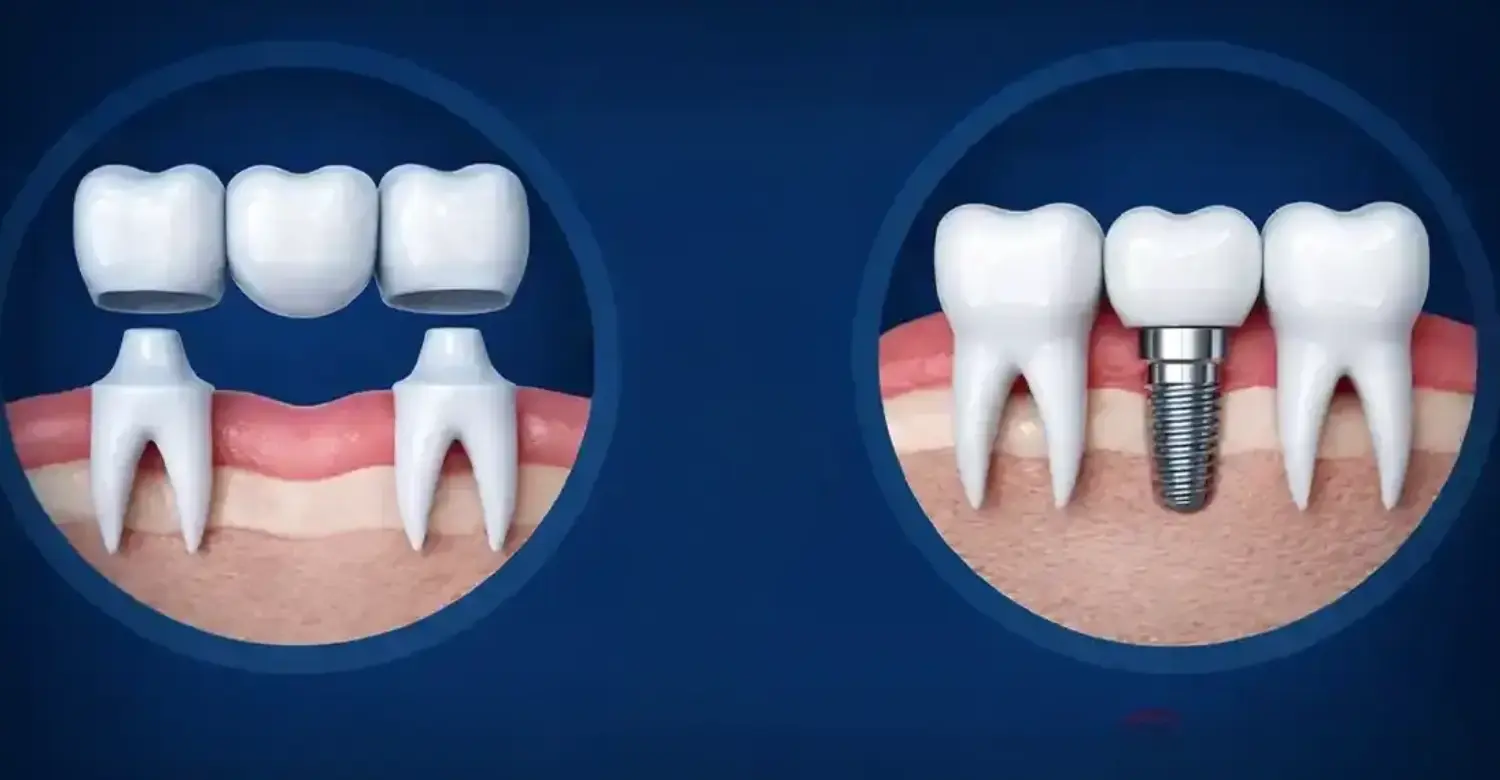
Traditional fixed bridges represent the most common type of fixed tooth replacement restoration used in dentistry. A traditional fixed bridge consists of one or more pontics (artificial teeth). These are held in place by dental crowns cemented onto adjacent natural teeth on both sides of the gap. This proven design provides excellent strength, durability, and function for replacing missing teeth in most areas of the mouth.
What is a traditional fixed bridge?
A traditional fixed bridge is a fixed restoration featuring artificial teeth anchored by crowns on adjacent natural teeth. The supporting teeth (abutments) are prepared by removing enamel to accommodate crowns that hold the pontic in place. Traditional fixed bridges offer superior strength for replacing multiple teeth and handling significant chewing forces. They are ideal for both front and back teeth with reliable long-term success.
When is a traditional bridge recommended?
A traditional bridge is recommended when replacing one to three consecutive missing teeth with healthy adjacent teeth on both sides. This bridge type works excellently for back teeth requiring maximum strength for chewing forces. Traditional bridges are ideal when adjacent teeth already need crowns or have large fillings. They are the gold standard when implants aren't suitable due to bone loss, medical conditions, or budget constraints.
Cantilever Bridges
Cantilever bridges offer unique solutions for specific tooth replacement scenarios. They work when support exists on only one side. A cantilever bridge uses adjacent teeth on just one side of the gap for support. This design works when only one natural tooth neighbors the missing tooth area. However, it is less common due to biomechanical considerations. It can also stress supporting teeth.
Why Many Patients Prefer Implant Bridges Over Traditional Bridges
Traditional bridges rely on grinding down healthy adjacent teeth for support. This can weaken natural tooth structure over time. In contrast, implant-supported restorations are independent of surrounding teeth. They preserve their integrity and reduce long-term dental complications.
At Vitrin Clinic, specialists often recommend implant-based solutions. They suit patients seeking a more conservative and durable approach. According to Dr. Rifat Alsaman, this method is especially beneficial for patients with multiple missing teeth. It distributes force evenly across implants instead of stressing natural teeth.
Patients also prefer this option because it offers better longevity, improved comfort, and a more natural chewing experience. Unlike traditional bridges, implant-supported restorations help maintain jawbone health. They are a more advanced and preventive solution in modern dentistry.
How does a cantilever bridge work?
A cantilever bridge works by anchoring the pontic (artificial tooth) to one or more adjacent teeth on only one side of the gap. The supporting teeth receive crowns that hold the pontic. The pontic extends outward like a cantilever beam. This design creates leverage that places additional stress on supporting teeth. So careful case selection and bite evaluation are essential for successful outcomes and longevity.
Pros and cons of cantilever bridges
Cantilever bridge advantages include replacing teeth when support exists on only one side. They also preserve teeth on the other side of the gap. Disadvantages include increased stress on supporting teeth, potentially causing damage. They also have higher failure rates compared to traditional bridges. They are unsuitable for back teeth with heavy chewing forces. Cantilever bridges work best for front teeth with lighter bite forces and limited alternative options.
Maryland (Resin-Bonded) Bridges
Maryland bridges provide the most conservative tooth replacement option. They require minimal preparation of adjacent teeth. A Maryland bridge uses thin metal or ceramic wings bonded to the back of adjacent teeth rather than full crowns. This resin-bonded bridge preserves natural tooth structure while effectively replacing missing front teeth. It is popular for young adults and patients seeking minimally invasive restoration options.
What is a Maryland bridge?
A Maryland bridge is a conservative fixed restoration featuring an artificial tooth attached to thin metal or ceramic wings. These wings bond to the lingual (tongue-side) surfaces of adjacent teeth using adhesive cement. The Maryland bridge requires minimal tooth preparation—just slight etching—preserving healthy tooth structure. This type works best for replacing single front teeth in patients with healthy adjacent teeth.
Is a Maryland bridge permanent?
A Maryland bridge is considered a permanent fixed restoration cemented in place and not removable by patients. However, it’s not permanent in the absolute sense since debonding can occur requiring re-cementation or replacement after 5-15 years. The minimal tooth preparation means the procedure is reversible. The restoration can be removed by dentists without significantly damaging supporting teeth, unlike traditional bridges requiring permanent crown preparation. A 2020 systematic review in the Journal of Prosthodontics reports a 10-year survival rate of 71% for resin-bonded bridges.
Are Implant-Supported Bridges Worth It?
The value of this treatment depends on long-term benefits rather than initial cost alone. The upfront investment may be higher than dentures or fixed bridges. However, the durability and reduced need for future replacements make it highly cost-effective over time. Compared to dentures, implant-supported bridges provide superior stability and help maintain jawbone density.
At Vitrin Clinic, patients are guided through a detailed consultation process to understand expected outcomes, treatment longevity, and financial planning. The clinic holds a 4.8-star rating on Google with over 300 reviews, reflecting high patient satisfaction. From a clinical standpoint, Dr. Rifat Alsaman highlights that implant-supported solutions significantly reduce long-term complications, with a 10-year survival rate exceeding 95% according to a 2020 systematic review in the Journal of Prosthodontics. This makes them one of the most reliable restorative options available today.
Patients often find that improved comfort, chewing ability, and aesthetics justify the investment, especially when considering lifetime oral health benefits.
Implant-Supported Bridges
Implant-supported restorations are the most stable and durable tooth replacement option. They use implants placed in the jawbone as anchors. Unlike traditional options, they do not require preparing adjacent teeth. They preserve jawbone and provide superior strength. This makes them ideal for multiple missing teeth.
How are implant-supported bridges different?
These bridges use titanium implants surgically placed in the jawbone. This design preserves adjacent teeth without any preparation. Implants integrate with bone, providing a stable foundation. They prevent bone loss through chewing stimulation. They also distribute forces directly to bone.
Are implant bridges more durable?
Yes, they are more durable than traditional bridges. They last over 15-20 years or more. The implants fuse with the jawbone and will not decay. They withstand higher forces and do not stress adjacent teeth. At Vitrin Clinic, the 5-year success rate for implant-supported bridges exceeds 95%. The 10-year implant survival rate surpasses 97%. These figures reflect rigorous patient selection and advanced planning.
Implant-Supported Bridge Procedure Step by Step
The procedure begins with a detailed consultation. This includes X-rays and 3D scans to assess bone structure and oral health. If the patient is suitable, the implants are surgically placed into the jawbone under local anesthesia. After placement, a healing period is required. This allows integration between the bone and implants.
At Vitrin Clinic, each stage is customized based on patient needs. Dr. Rifat Alsaman explains that careful surgical planning reduces complications and improves healing outcomes. Once the implants are stable, impressions are taken. A custom bridge is designed to match the patient's natural teeth in shape, color, and alignment.
Finally, the permanent bridge is fixed onto the implants. It restores full chewing function and a natural-looking smile.
Healing, Osseointegration, and Final Bridge Placement
After implant surgery, the healing phase known as osseointegration is essential. During this period, the jawbone naturally fuses with the titanium implants. This creates a strong foundation for the final bridge. The process typically takes several weeks to a few months. It depends on bone quality and patient health.
At Vitrin Clinic, patients are closely monitored throughout healing to ensure proper integration. According to Dr. Rifat Alsaman, successful osseointegration is the most critical factor in long-term success. It determines implant stability and durability.
Once healing is complete, the final bridge is securely attached. It restores full function and aesthetics. Patients can then enjoy a natural biting experience similar to real teeth.
For instance, Dr. Rifat Alsaman treated a 55-year-old male with missing teeth #14, #15, and #16. He placed two implants and restored them with a 3-unit zirconia bridge. The patient healed well and reported excellent function and appearance. At 18 months, bone levels were stable, and no complications occurred. This case illustrates the reliability of implant-supported bridges.
What Makes Implant-Supported Bridges Different?
This treatment stands out because it combines the stability of implants with the functional design of a bridge. Unlike traditional methods that depend on natural teeth for support, this solution is anchored directly into the jawbone. It offers superior strength and long-term reliability. It also helps preserve bone structure by stimulating the jaw through chewing forces.
At Vitrin Clinic, each case is designed using digital planning tools to ensure precise fit and natural aesthetics. Dr. Rifat Alsaman explains that the biggest difference lies in independence from natural teeth. This reduces the risk of damage to surrounding structures.
Implant Bridge vs Traditional Bridge
A traditional bridge requires grinding down adjacent healthy teeth to support the replacement structure. This can weaken natural teeth over time. In contrast, implant-supported solutions rely on artificial roots placed in the bone. They eliminate the need to alter healthy teeth.
At Vitrin Clinic, implant-based solutions are often preferred for long-term cases. According to Dr. Rifat Alsaman, the main advantage is that implants distribute chewing forces directly into the jawbone. This improves stability and preserves natural tooth structure.
Comparing Stability, Function, and Appearance
From a functional perspective, implant-supported restorations offer superior stability. Patients can chew more comfortably and confidently. Aesthetically, they are designed to closely match natural teeth in shape, color, and alignment. This provides a seamless smile restoration.
At Vitrin Clinic, advanced materials and digital design ensure natural-looking results. Dr. Rifat Alsaman notes that patients often report improved speech, chewing efficiency, and self-confidence compared to traditional solutions.
Are Implant Bridges Right for You?
This treatment is suitable for many patients, but not everyone is an immediate candidate. Suitability depends on factors such as bone density, gum health, medical history, and oral hygiene habits. A detailed clinical evaluation is required to determine whether implants can be safely placed and successfully integrated.
At Vitrin Clinic, patients undergo comprehensive assessments before treatment planning. Dr. Rifat Alsaman explains that careful diagnosis ensures predictable outcomes and reduces the risk of complications.
Factors Your Dentist Will Evaluate
Dentists evaluate bone volume, gum condition, bite alignment, and overall oral health before recommending treatment. Medical conditions such as uncontrolled diabetes or heavy smoking may affect healing and require additional planning.
Dr. Rifat Alsaman earned his DDS from Izmir Katip Celebi University. He specializes in aesthetic and restorative dentistry. His expertise ensures evidence-based clinical guidance.
At Vitrin Clinic, digital imaging and 3D scans are used to assess every detail. Dr. Alsaman emphasizes that precise evaluation is essential for creating a safe and effective treatment plan tailored to each patient.
Bone Density, Oral Health, and Lifestyle Considerations
Bone density plays a crucial role in determining implant stability, while healthy gums are essential for long-term success. Lifestyle habits such as smoking or poor oral hygiene can negatively affect healing and implant integration.
At Vitrin Clinic, patients receive guidance on improving oral conditions before treatment begins. According to Dr. Alsaman, optimizing these factors significantly increases the success rate and longevity of implant-supported restorations.
What Should You Know About Implant-Supported Restorations?
Understanding this treatment fully helps patients set realistic expectations. It is a multi-stage procedure with surgery, healing, and final prosthetic placement. The outcome is a stable, natural-looking replacement for missing teeth. Proper oral hygiene and follow-up care are essential for long-term success.
At Vitrin Clinic, every patient receives a detailed treatment roadmap before starting. According to Dr. Alsaman, education is a key part of treatment success. Informed patients follow aftercare instructions and achieve better outcomes.
Implant Restoration Recovery, Risks, and Aftercare
Recovery after implant surgery varies. Mild swelling or discomfort is normal in the first few days. Most patients return to normal activities quickly. The healing phase allows implants to integrate with bone.
At Vitrin Clinic, aftercare protocols support healing and reduce complications. Dr. Alsaman highlights that following post-operative instructions is essential. Maintaining oral hygiene and attending follow-up visits minimize risks such as infection or implant failure.
What to Expect Before and After Treatment
Before treatment, patients undergo diagnostic scans, impressions, and a detailed consultation. After surgery, a healing period is required before the final bridge is attached. Temporary restorations may be provided for comfort and aesthetics.
At Vitrin Clinic, patient comfort is prioritized throughout every stage. According to Dr. Alsaman, most patients notice significant improvement in chewing ability and confidence once the final restoration is placed. This makes the process highly rewarding.
Can Implant-Supported Restorations Transform Your Smile?
Yes, this treatment can significantly transform both appearance and function. Missing teeth often affect facial structure, speech, and confidence. Implant-supported restorations restore balance and natural aesthetics. The final result closely resembles natural teeth in shape, color, and alignment.
At Vitrin Clinic, smile design is customized using digital planning tools. Dr. Alsaman explains that restoring harmony between teeth, lips, and facial structure is a key goal. This is a core principle of modern implant dentistry.
Dental Bridge Services at Vitrin Clinic
Vitrin Clinic in Istanbul, Turkey offers comprehensive tooth replacement services. Expert dentists, advanced technology, and affordable pricing are key. This section explains the types of bridges available, same-day options, and why choosing Vitrin Clinic ensures exceptional results. Our commitment to quality, patient care, and value makes us a premier destination for bridge treatment and international dental tourism.
Overview of Bridge Services in Istanbul
Vitrin Clinic provides comprehensive bridge services in Istanbul, Turkey. We serve international patients seeking affordable, high-quality tooth replacement. Our dental team offers all bridge types: traditional, cantilever, Maryland, and implant-supported restorations. We use advanced digital technology for precise diagnosis and treatment planning. Vitrin Clinic delivers exceptional care at costs 60-70% lower than Western countries.
What types of bridges are offered?
Vitrin Clinic offers all major bridge types for diverse patient needs. Traditional bridges replace multiple teeth with maximum strength. Cantilever bridges work for specific scenarios. Maryland bridges are used for conservative front tooth replacement. Implant-supported restorations offer superior durability without affecting natural teeth. Our dentists evaluate each case individually. They recommend optimal solutions based on location, function, aesthetics, and budget.
Are same-day bridges available?
Yes, Vitrin Clinic offers same-day bridges using CAD/CAM technology for eligible cases. Digital impressions and in-house milling allow design, fabrication, and placement in one appointment. Same-day bridges work best for single-tooth replacements and specific clinical situations. Most complex cases still require two visits. This ensures optimal fit, aesthetics, and long-term success.
Bridge Codes and Insurance
Understanding bridge codes and insurance coverage helps patients plan financially. This section explains how coding systems work and typical coverage details. Knowing these administrative aspects enables informed decisions. It also helps patients navigate insurance processes effectively. This ensures access to needed tooth replacement care without unexpected expenses.
How bridge insurance codes work
Bridge insurance codes use standardized CDT (Current Dental Terminology) codes. These codes identify specific procedures for billing and coverage. Traditional bridge codes include D6240-D6245 for pontics. Retainer crowns use D6740-D6752 depending on materials and tooth location. Maryland bridges use D6545 codes. Insurance companies use these codes to determine coverage levels. They typically classify bridges as major services. Coverage is usually 50% after deductibles within annual maximums.
Does insurance cover bridges?
Most dental insurance plans provide partial coverage for bridges. They typically cover 50-80% of costs after deductibles are met. Coverage falls under major restorative services. Annual maximum limits usually range from $1,000 to $2,000. Some plans require waiting periods of 6-12 months for major services. Pre-authorization is often necessary before treatment. Coverage varies significantly by plan type. Review your specific policy details. Discuss with your insurance provider before proceeding.
Why Choose Vitrin Clinic for Bridges
Vitrin Clinic stands out as an exceptional choice for bridge treatment. We combine expertise, technology, affordability, and patient-centered care. Our experienced dentists bring years of specialized training in restorative dentistry and prosthodontics. We use state-of-the-art digital technology for precise treatment planning and fabrication. Vitrin Clinic offers costs 60-70% lower than Western countries without compromising quality. This makes excellent dental care accessible and affordable.
How Vitrin Clinic customizes bridge dental treatment
Vitrin Clinic customizes bridge dental treatment through comprehensive evaluation. This includes clinical examination, digital imaging, bite analysis, and detailed discussion of patient goals and concerns. We assess tooth condition, bone structure, gum health, aesthetic requirements, and budget considerations thoroughly. Our dentists explain all options with honest recommendations tailored to individual needs. Digital treatment planning allows visualization of expected results before proceeding. This ensures satisfaction and optimal personalized outcomes.
Advanced technology used for bridge placement
Vitrin Clinic employs advanced technology for bridge placement. Digital impressions eliminate uncomfortable traditional molds. 3D imaging provides precise diagnosis and planning. CAD/CAM systems ensure accurate bridge design and fabrication. Digital smile design software allows visualization of final results. Computer-guided preparation ensures precision and minimal invasiveness. High-strength ceramic milling machines create durable, aesthetic restorations. These technologies enhance accuracy, comfort, efficiency, and outcomes significantly.
Who Needs a Bridge?
Determining whether you need a bridge involves understanding common indications, benefits, and suitability factors. This section explores the most frequent reasons for getting bridges. It covers how they improve appearance and confidence. It also covers their role in restoring function and age considerations. Knowing who benefits most helps patients recognize when this option is appropriate. It is suitable for their oral health and quality of life.
What Are the Most Common Reasons for Getting Bridges?
The most common reasons for getting bridges include replacing missing teeth. Tooth loss may result from decay, gum disease, trauma, or congenital absence. Bridges prevent remaining teeth from shifting into gaps. This shifting can cause bite problems and jaw pain. They restore chewing ability, enabling proper nutrition and digestion. They improve speech affected by tooth loss. They also restore smile aesthetics, boosting confidence and social interactions. Many patients choose bridges for affordability compared to implants.
Can Bridges Improve Smile Appearance and Confidence?
Yes, bridges significantly improve smile appearance and confidence. They fill gaps left by missing teeth. Custom-designed pontics match surrounding natural teeth in color, shape, and size. This creates seamless, beautiful smiles. Bridges restore facial structure, preventing the sunken appearance that follows tooth loss. Patients report increased confidence in social and professional situations. They smile freely without embarrassment. Improved aesthetics positively impact self-esteem, relationships, and overall quality of life.
Can Bridges Restore Chewing and Speech?
Yes, bridges effectively restore chewing ability and speech impaired by missing teeth. Properly designed bridges distribute chewing forces evenly. This allows patients to eat diverse foods comfortably without difficulty. They prevent remaining teeth from shifting, which can compromise bite function. Bridges restore proper tooth contact necessary for clear speech. They eliminate whistling or slurring sounds caused by gaps. Functional restoration improves nutrition, digestion, and communication significantly.
Are Bridges Suitable for All Ages?
Bridges are suitable for most ages, though specific considerations apply for different groups. Adults and seniors commonly receive bridges for tooth loss from decay or gum disease. Teenagers may receive bridges after permanent tooth eruption for congenitally missing teeth or trauma. Young children typically wait until growth completes. Elderly patients benefit from a bridge when implant surgery isn’t advisable. Age itself doesn’t disqualify candidates. Overall oral health and individual circumstances determine suitability.
Materials Used in Bridges
Material selection significantly impacts bridge aesthetics, strength, durability, biocompatibility, and cost. This section examines common materials including porcelain, zirconia, and metal-fused options. It helps patients understand differences and choose appropriately. Material knowledge enables informed decisions based on location, functional demands, aesthetic requirements, and budget constraints. This leads to optimal long-term satisfaction and success with bridge restorations.
What Materials Are Commonly Used in Bridges?
Common materials used in bridges include porcelain (ceramic), zirconia, porcelain-fused-to-metal (PFM), gold alloys, and composite resin for different clinical situations. Porcelain offers excellent aesthetics mimicking natural tooth translucency perfectly. Zirconia provides superior strength with good aesthetics for both front and back teeth. PFM combines metal strength with porcelain aesthetics though metal may show at gum lines. Material selection depends on location, bite forces, aesthetic priorities, and budget.
Porcelain
Porcelain bridges offer superior aesthetics with natural translucency and color matching that blend seamlessly with surrounding teeth. All-ceramic bridges contain no metal providing excellent appearance especially for front teeth visible when smiling. Modern porcelain materials like lithium disilicate offer improved strength compared to older ceramics while maintaining beautiful aesthetics. Porcelain is biocompatible, stain-resistant, and durable though slightly less strong than zirconia for back teeth with heavy forces.
Zirconia
Zirconia bridges combine excellent strength with good aesthetics making them versatile for both front and back teeth. This advanced ceramic material offers superior durability withstanding heavy chewing forces without fracturing. Zirconia bridges can be tooth-colored or layered with porcelain for enhanced aesthetics. The material is biocompatible, metal-free, and less prone to chipping than traditional porcelain. Zirconia represents the ideal balance between strength, aesthetics, and longevity for most bridge applications.
Metal-fused options
Metal-fused bridges (porcelain-fused-to-metal or PFM) combine metal substructure strength with porcelain veneer aesthetics. The metal framework provides excellent durability for back teeth withstanding high chewing forces reliably. Porcelain covers visible surfaces creating natural tooth appearance. However, metal may show as dark lines at gum margins especially if gums recede. Gold alloy bridges offer exceptional durability and biocompatibility though lack natural aesthetics, making them suitable for back teeth only.
How to Choose Between Metal, Ceramic, and Zirconia Bridges
Choosing between metal, ceramic, and zirconia bridges depends on location, functional demands, aesthetic priorities, and budget considerations. For front teeth where appearance matters most, choose all-ceramic or zirconia bridges for optimal aesthetics without metal show-through. For back teeth requiring maximum strength, zirconia or PFM bridges withstand heavy chewing forces reliably. Consider biocompatibility if metal sensitivities exist. Budget impacts choices since all-ceramic and zirconia cost more than PFM options.
Are Metal-Free Bridge Options Available?
Yes, metal-free bridge options are widely available using all-ceramic materials like porcelain or zirconia exclusively. These metal-free bridges eliminate concerns about metal show-through, allergies, or taste sensitivity. All-ceramic bridges offer superior aesthetics with natural translucency matching surrounding teeth perfectly. Modern ceramic materials provide adequate strength for most applications including some back teeth. Metal-free options particularly benefit patients with metal allergies or those prioritizing natural appearance for visible restorations.
Bridge Procedure and Recovery
Understanding the bridge procedure and recovery process helps patients prepare mentally and physically for treatment. This section provides a step-by-step explanation of the procedure, treatment timeline, pain considerations, and recovery expectations. It also covers potential complications. Knowledge of what to expect reduces anxiety. It enables patients to follow post-treatment instructions properly for optimal healing, comfort, and long-term success with their bridge restoration.
What Is the Step-by-Step Process for Getting a Bridge?
The bridge process begins with a comprehensive examination including X-rays and impressions for diagnosis and treatment planning. The first appointment involves preparing abutment teeth. This includes removing enamel to accommodate crowns, taking precise impressions, selecting shade, and placing a temporary bridge. Laboratory fabrication takes 2-3 weeks creating a custom permanent bridge. The final appointment involves removing the temporary. Then trying on the permanent bridge, checking fit and bite, making adjustments, and permanently cementing the restoration.
How Long Does It Take to Get This Restoration?
Getting this restoration typically requires two to three appointments over 2-4 weeks for traditional procedures. The initial visit involves consultation, tooth preparation, impressions, and temporary placement taking 1-2 hours. Laboratory fabrication requires approximately 2-3 weeks for custom prosthesis creation. The final appointment involves permanent restoration placement. This takes about one hour. Some clinics offer same-day restorations using CAD/CAM technology. This completes treatment in one visit. However, most complex cases still require traditional multi-visit approaches.
Is Getting This Restoration Painful?
Getting this restoration involves minimal pain. Local anesthesia numbs the treatment area completely during tooth preparation and placement. Most patients feel no discomfort during procedures. They only feel pressure sensations. Mild soreness may occur after anesthesia wears off. It typically resolves within a few days with over-the-counter pain relievers. Temporary tooth sensitivity to temperature or pressure is normal initially. It subsides quickly. Overall, these restoration procedures are well-tolerated with minimal patient discomfort.
What Is Recovery Like After Placement of This Restoration?
Recovery after placement of this restoration is generally quick and straightforward. It causes minimal disruption to daily activities. Expect mild sensitivity to hot, cold, or pressure for a few days. Your bite may feel different initially but normalizes within weeks. Eat soft foods for 24 hours while cement fully hardens. Avoid hard or sticky foods initially. Most patients resume normal activities immediately. Full adaptation occurs within 1-2 weeks.
Are There Risks or Complications With This Restoration?
Risks of this restoration are relatively uncommon. They include tooth sensitivity and decay on abutment teeth. Recurrent decay under the crown can occur with poor hygiene. Gum disease around the restoration is possible. For implant-supported restorations, peri-implantitis may develop. This inflammatory condition can cause bone loss. Abutment teeth may fracture under increased stress. Cement failure can lead to loosening. Porcelain restorations may chip or fracture. Gum recession and food trapping are additional concerns. Nerve damage during preparation is rare. Poorly fitting restorations cause bite problems or jaw joint issues. Most complications are preventable through proper design, placement, and diligent oral hygiene. Regular dental checkups identify problems early. Dr. Al-Samman advises patients to monitor for pain, mobility, or gum inflammation.
Restoration Cost and Maintenance
Understanding restoration costs and maintenance requirements helps patients budget appropriately and care for their restorations properly. This section examines pricing factors, insurance coverage, cost without insurance, daily care routines, and longevity expectations. Knowledge of financial and maintenance aspects enables informed decision-making. It helps patients maximize their investment through proper care. This ensures long-lasting, functional, beautiful results from their restoration treatment.
How Much Does This Restoration Cost?
How much this restoration costs varies significantly based on type, materials, location, and complexity. In the United States, prices range from $1,500 to $16,000. Traditional restorations cost $2,000-$5,000 per tooth. Maryland restorations cost $1,500-$2,500. Cantilever restorations cost $2,000-$5,000. Implant-supported restorations cost $5,000-$16,000. How much does this restoration cost at Vitrin Clinic in Istanbul, Turkey? It is 60-70% lower, approximately $600-$2,500. It maintains exceptional quality standards and expert care for affordable excellence.
How Much Would This Restoration Cost Without Insurance?
How much this restoration costs without insurance depends on restoration type and materials. Traditional restorations cost $2,000-$5,000 per tooth out-of-pocket in the US. The cost of this restoration without insurance includes all procedures, consultation, preparation, impressions, laboratory fabrication, and placement. At Vitrin Clinic, the cost of this restoration without insurance is significantly more affordable, at $600-$2,500. This makes quality dental care accessible without insurance coverage through international dental tourism savings.
Price of Bridgework: What Affects the Cost?
The price of bridgework varies based on multiple factors. These factors require careful consideration. The number of missing teeth significantly impacts the cost. Replacing more teeth requires larger restorations. Materials affect costs. All-ceramic and zirconia options cost more than PFM. Bridge type influences the price. Implant-supported restorations cost the most. Maryland bridges cost the least. Geographic location, dentist expertise, and laboratory quality also affect pricing substantially.
Number of teeth
The number of teeth being replaced directly impacts costs. Larger restorations require more materials and time. Replacing one tooth costs less than multi-tooth options. Three-unit bridges cost $2,000-$5,000. Larger spans cost proportionally more. Each additional pontic increases expenses. Complex cases may need multiple restorations or alternatives like implants or dentures.
Materials
Materials significantly affect costs. All-ceramic and zirconia options cost more than PFM. PFM bridges range from $1,500 to $3,500 per unit. All-ceramic or zirconia bridges cost between $2,000 and $5,000 per unit. Gold alloy bridges cost a lot due to metal content. They offer excellent durability. Composite resin costs the least but lasts less. Material selection balances aesthetic requirements, functional demands, and budget constraints for optimal value.
Type of bridge
Bridge type dramatically impacts costs. Maryland bridges cost $1,000-$2,500. Traditional bridges cost $2,000-$5,000 per unit. Implant-supported bridges cost $5,000-$16,000. A three-unit bridge on two implants costs $6,000-$15,000. Traditional bridges require crown preparation. Implant-supported bridges include surgical implant placement, abutments, and custom fabrication. Cantilever bridges cost similarly to traditional bridges. Complex cases may need additional procedures like bone grafting. These increase expenses substantially. Careful financial planning is required.
How Do I Care for My Restoration Daily?
Care for your restoration daily. Brush twice with a soft toothbrush and fluoride toothpaste. Clean all surfaces thoroughly. Floss carefully using specialized tools. Clean under the pontic and around abutment teeth. Plaque accumulates there. Use an antibacterial mouthwash to reduce bacteria. Avoid hard foods like ice or hard candies that could damage the restoration. Maintain regular dental checkups every six months for professional cleaning and examination.
How Long Do Bridges Last With Proper Care?
Bridges last 5-15 years on average with proper care. Many function 15-20+ years when well maintained. Traditional bridges last 10-15 years. Maryland bridges last 5-15 years. Implant-supported bridges last 15-20+ years. Lifespan depends on oral hygiene quality, regular dental visits, material selection, bite forces, and harmful habits like grinding. Excellent daily care, professional maintenance, and addressing problems early maximize bridge longevity and investment value.
Choosing the Right Dental Bridge at Vitrin Clinic
Selecting the optimal restoration requires expert evaluation, comprehensive treatment planning, and patient education. This section explains how Vitrin Clinic determines the best bridge for each patient, discusses replacement and upgrade options, and describes strategies for ensuring long-term comfort and durability. Our personalized approach combines clinical expertise with patient priorities, ensuring each person receives the ideal restoration for their unique needs and circumstances.
How Does Vitrin Clinic Determine the Best Restoration for You?
Vitrin Clinic determines the best restoration through comprehensive evaluation. This includes detailed clinical examination, digital X-rays, 3D imaging, bite analysis, and thorough discussion of your goals, concerns, and budget. Our experienced dentists assess tooth condition, bone structure, gum health, bite relationships, aesthetic requirements, and functional needs carefully. We explain all suitable options with honest recommendations tailored specifically to you. Digital treatment planning allows visualization of expected results, ensuring informed decisions and satisfaction. For international patients, all-inclusive packages include travel and accommodation. These often reduce overall costs by 40-60% compared to US prices.
What Are Alternatives to Bridges?
Alternatives to bridges include removable partial dentures and single dental implants. Partial dentures are less expensive and non-invasive. They offer lower stability and comfort. Dental implants alone replace each missing tooth with a surgically placed post and crown. They provide the highest success and longevity but require surgery and higher upfront cost. For multiple adjacent missing teeth, a bridge may be more cost-effective than multiple single implants. The choice depends on bone quality, abutment health, budget, and patient preference.
Can I Replace or Upgrade My Restoration Later?
Yes, bridges can be replaced or upgraded later when necessary due to wear, damage, or desire for improved aesthetics or function. Bridges typically last 10-15 years before replacement becomes necessary. Upgrading from traditional bridges to implant-supported bridges is possible though requires implant placement surgery and healing time. Maryland bridges can be replaced with traditional bridges or implants. Vitrin Clinic evaluates existing restorations, recommending optimal solutions when replacement or upgrades become appropriate.
How Can I Ensure Long-Term Comfort and Durability?
Ensure long-term comfort and durability of your restoration through excellent oral hygiene. This includes thorough brushing, daily flossing with specialized tools, and regular professional cleanings every six months. Avoid hard foods, ice-chewing, nail-biting, or using teeth as tools that stress restorations. Wear nightguards if you grind teeth during sleep. Address any discomfort, looseness, or damage immediately rather than waiting. Choose quality materials and experienced dentists like those at Vitrin Clinic, ensuring proper initial design and placement.
Lifestyle and Function With a Dental Bridge
Living with a dental bridge involves some adjustments and considerations for optimal function and longevity. This section addresses common lifestyle questions about eating, speech, taste, confidence, and activity restrictions. Understanding these practical aspects helps patients adapt quickly to their restoration. It also helps them maintain it properly for years of comfortable, confident use. Such a restoration should enhance rather than limit your lifestyle when properly designed and cared for.
Can I Eat Normally With a Fixed Prosthesis?
Yes, you can eat most foods normally after the initial adjustment period. Some precautions optimize longevity. Avoid extremely hard foods like hard candies, ice, nutshells, or bones. These could fracture porcelain or damage the restoration. Cut hard fruits and vegetables into smaller pieces rather than biting directly. Avoid excessively sticky foods like caramels or taffy that may stress cement bonds. Otherwise, enjoy balanced diets including meats, vegetables, grains, and most snacks comfortably.
Will a Restoration Affect Speech or Taste?
These restorations typically don’t significantly affect speech or taste after brief adjustment periods. Initial awareness may cause temporary speech changes for several days. Your tongue adapts to the restoration and learns new positioning. Most patients adapt within one week and speak normally. They don’t cover taste buds, so taste remains unaffected. Proper design minimizes bulk, ensuring comfort and natural function. Any persistent speech difficulties warrant evaluation for possible adjustment needs.
Can a Tooth Replacement Improve Confidence and Social Life?
Yes, such restorations significantly improve confidence and social life. They restore complete, beautiful smiles without embarrassing gaps. Patients report feeling more confident in professional settings, social gatherings, and intimate relationships after tooth replacement. They eliminate self-consciousness about appearance. This enables people to smile, laugh, and speak freely without covering mouths. The restored function allows enjoying meals comfortably in restaurants. Improved aesthetics and function positively impact self-esteem, relationships, career opportunities, and overall quality.
Are There Food or Activity Restrictions After Treatment?
After treatment, eat soft foods for 24 hours while cement fully hardens. Avoid hard or chewy items initially. After this period, most normal activities resume without restrictions. However, permanent precautions include avoiding extremely hard foods, ice-chewing, or using teeth as tools. If you play contact sports, wear custom mouthguards protecting both natural teeth and the restoration from trauma. Otherwise, no significant activity restrictions exist. You can fully participate in work, exercise, and recreational activities.
Finding a Reliable Provider Near You
Finding reliable prosthesis providers near you involves considering accessibility, expertise, technology, and quality of care. This section explores how to locate trustworthy providers and why local expertise matters for prosthetic treatment success. Whether seeking care in your immediate area or considering dental tourism abroad, understanding selection criteria helps ensure you receive excellent treatment. This ensures optimal outcomes and convenient access.
How to Find a Reliable Prosthesis Provider
Finding a reliable provider requires researching qualified professionals through online reviews, credentials, photos, and personal recommendations. Search online for local options. Then evaluate dentist qualifications including prosthodontic training, years of experience, and continuing education. Visit clinic websites examining technology used, services offered, and patient testimonials. Schedule consultations with multiple providers comparing treatment approaches, costs, and rapport. Consider dental tourism options like Vitrin Clinic for exceptional quality at affordable prices.
Why Local Expertise Matters for Prosthetic Treatment
Local expertise matters for prosthetic treatment because convenient access facilitates regular appointments, adjustments, and emergency care when needed. Established relationships with local dentists ensure continuity of care and familiarity with your dental history. However, “local” can extend globally through dental tourism. Vitrin Clinic in Istanbul offers world-class expertise with coordinated travel arrangements, making international treatment convenient. The most important factors are dentist qualifications, experience, technology, and quality standards. Proximity alone is not the priority for optimal outcomes.
What We Notice Clinically
From a clinical standpoint, long-term success depends on two things. First, the implant must integrate well with the bone. Second, bite forces must spread evenly across the restoration. Small planning errors in implant positioning can affect aesthetics, comfort, and durability. That is why detailed diagnostics and prosthetic-driven planning are essential before any surgical step begins.
At Vitrin Clinic, clinical protocols focus on precision from the very beginning. According to Dr. Rifaat Al-Samman, long-term success is not only about placing implants. It is about designing a biologically and mechanically balanced restoration. This restoration must work harmoniously with the patient’s bite and facial structure.
This article is reviewed by Dr. Rifaat Al-Samman, Director of the Medical Team at Vitrin Clinic. He has over a decade of clinical experience. His training includes Izmir Katip Celebi University Hospital. His expertise covers fixed and removable prosthodontics, implant rehabilitation, and full-mouth reconstruction. Disclosure: This content reflects clinical experience at Vitrin Clinic. The clinic is not a sponsor. Patients should always seek multiple opinions.
Dr. Rifat Alsaman's Clinical Perspective on Implant-Supported Bridges
Dr. Rifat Alsaman notes that implant-based rehabilitation depends on three pillars. These are accurate implant positioning, healthy bone and gum support, and prosthetic precision. When all three elements align, the result is stable and functional. It can last for many years.
At Vitrin Clinic, he emphasizes a prosthetic-driven approach. The final bridge design determines implant placement. This ensures that aesthetics, function, and biomechanics are balanced. He also notes that patient-specific planning is essential. This is especially true in complex multi-tooth cases.
Common Success Factors, Smile Design Principles, and Long-Term Outcomes According to Dr. Rifat Alsaman, Head of the Medical Team at Vitrin Clinic and Cosmetic Dentist
Dr. Rifat Alsaman says several key factors influence long-term outcomes. These include bone quality, implant stability, occlusal balance, and patient hygiene habits. He also highlights that modern smile design principles go beyond replacing teeth. They focus on facial harmony, lip support, and natural proportions.
At Vitrin Clinic, these principles are applied using digital tools and interdisciplinary planning. Dr. Rifat Alsaman explains that when these factors are respected, implant restorations function well. They also deliver highly natural and aesthetic results. These significantly improve patient quality of life.
Implant-Supported Bridge Cost in Turkey
Treatment cost in Turkey is generally affordable. Compared to many European countries and the United States, it is cheaper. Clinical standards remain high. Prices vary depending on the number of implants, the materials used for the bridge, and the complexity of the case. Additional procedures such as bone grafting may also influence the final cost.
At Vitrin Clinic, patients receive transparent treatment planning. A detailed cost breakdown is provided before starting. Dr. Rifat Alsaman says the goal is affordability and long-term value. This ensures patients receive durable, high-quality results that minimize future expenses.
What Influences Implant Bridge Cost?
Several factors determine the final price. These include the number of implants, implant system, and materials (zirconia or porcelain). Additional procedures like sinus lifting or bone grafting also affect cost. The experience of the dental team and technology used can also affect pricing.
At Vitrin Clinic, treatment plans are customized based on clinical needs. They are not fixed packages. Dr. Rifat Alsaman explains that accurate diagnosis ensures patients pay only for what is necessary. This avoids unnecessary procedures and maintains high success rates.
Number of Implants, Materials, Laboratory Work, and Treatment Complexity
The number of implants directly impacts cost. More implants require additional surgical and prosthetic steps. High-quality materials such as zirconia tend to cost more. They offer better aesthetics and durability. Laboratory work also plays a key role in shaping the final bridge. Precision and customization are essential.
At Vitrin Clinic, premium materials and advanced digital laboratories are used. This ensures long-lasting results. Dr. Rifat Alsaman says treatment complexity must be evaluated carefully. Each case requires a unique combination of surgical and prosthetic planning.
Encourage Readers to Schedule a Consultation at Vitrin Clinic
Schedule a consultation at Vitrin Clinic to explore personalized treatment options tailored to your unique needs, goals, and budget. Our expert team in Istanbul, Turkey provides comprehensive evaluation, honest recommendations, and exceptional care. Prices are 60-70% lower than in Western countries. Contact Vitrin Clinic today to discuss traditional bridges, Maryland bridges, or implant-supported bridges. Begin your journey toward a complete, beautiful, healthy smile with confidence and outstanding results.
CONCLUSION
A dental implant bridge is an advanced solution for replacing multiple missing teeth. It combines strength, aesthetics, and long-term stability. The result closely mimics natural teeth. Treatment requires careful planning and a healing period. Yet the long-term benefits in function, appearance, and confidence are significant.
At Vitrin Clinic, every case is designed with precision and comfort. Long-term success is the main goal. Dr. Rifat Alsaman highlights the key to excellent outcomes. It lies in combining advanced technology with personalized clinical expertise. Reliable external resources provide additional verification. These include the American Dental Association (ada.org) and the National Institutes of Health (pubmed.ncbi.nlm.nih.gov). Detailed treatment guides are also available on the Vitrin Clinic website (vitrinclinic.com).
Reference
Implant-supported bridges are a modern restorative dental solution. They replace multiple missing teeth by combining the strength of dental implants with the structure of a fixed bridge. They offer long-term stability, function, and natural aesthetics. The following references provide more information about their procedure, benefits, cost, and clinical outcomes :
FAQs
What is a dental bridge?
A dental bridge is a fixed prosthetic device replacing one or more missing teeth. It anchors to adjacent natural teeth or implants. The bridge consists of artificial teeth (pontics) held by crowns. These crowns cement onto abutment teeth. Bridges restore chewing, maintain facial structure, and prevent shifting.
Types of Bridges
Traditional bridge: most common; uses crowns on surrounding teeth.
Cantilever bridge: supported by one adjacent tooth only.
Maryland bridge: uses a metal or porcelain framework bonded to adjacent teeth.
Implant-supported bridge: anchored by dental implants for maximum stability.
Material options: porcelain-fused-to-metal, all-ceramic (e.g., zirconia, lithium disilicate), and gold alloy.
Average lifespan: 5–15 years depending on maintenance and material.
How much does this restoration cost?
Costs vary significantly by type, materials, location, and complexity. In the United States, traditional bridges cost $2,000-$5,000 per tooth. Maryland bridges cost $1,500-$2,500. Implant-supported bridges cost $5,000-$16,000. At Vitrin Clinic in Istanbul, Turkey, costs are 60-70% lower. They range from $600 to $2,500 with quality standards. Insurance typically covers 50-80% of costs depending on your plan.
How much would it cost without insurance?
Without insurance, costs range $2,000-$5,000 per tooth for traditional bridges. Patients pay full out-of-pocket. Maryland bridges cost $1,500-$2,500. Implant-supported bridges cost $5,000-$16,000. At Vitrin Clinic in Istanbul, costs without insurance are significantly lower. They offer $600-$2,500 for comparable quality. This makes international dental tourism attractive for uninsured patients.
How long does this restoration last?
This restoration lasts 5-15 years on average with proper care. Many function 15-20+ years with good hygiene and regular visits. Traditional bridges last 10-15 years. Maryland bridges last 5-15 years. Implant-supported bridges last 15-20+ years. Lifespan depends on oral hygiene, bite forces, material, and habits like grinding. Excellent care maximizes longevity.
Are they better than dentures?
Bridges and dentures each have advantages. Bridges provide a fixed, stable restoration that stays in place. They offer superior comfort and function like natural teeth. Dentures are removable and cheaper for many missing teeth. They don't need adjacent tooth preparation. Bridges feel more natural and don't affect speech or eating. The best choice depends on missing teeth count, bone condition, budget, and preferences.
Can bridges prevent teeth from shifting?
Yes, bridges effectively prevent teeth from shifting into gaps. Lost teeth cause adjacent and opposing teeth to drift. This leads to bite misalignment, jaw pain, and functional problems. Bridges fill gaps and maintain tooth positions. Prevention protects remaining teeth from excessive wear. It also reduces risk of TMJ disorders and maintains function and aesthetics.
Are there metal-free bridge options?
Yes, metal-free options are widely available. They use all-ceramic materials like porcelain or zirconia. These eliminate metal show-through, allergies, or metallic taste. All-ceramic bridges offer superior aesthetics with natural translucency. Modern ceramics like zirconia provide adequate strength for most applications. They deliver beautiful, biocompatible restorations.
How do I clean under a bridge?
Clean under your bridge daily. Use floss threaders, super floss, interdental brushes, or water flossers. Access the space between pontic and gums. Thread floss under and slide it back and forth. Interdental brushes clean thoroughly. Water flossers flush debris from hard-to-reach areas. Regular cleaning prevents gum disease and decay on supporting teeth.
Is a bridge permanent?
A bridge is a permanent fixed restoration. It is cemented and not removable by patients. However, it is not permanent forever. Bridges last 10-15 years before needing replacement. Dentists can remove it for repair or replacement. Abutment teeth undergo permanent alteration from crown preparation. This process is irreversible unlike Maryland bridge options.

Dr. Rifat Alsaman has more than 5 years of clinical experience in dentistry and currently serves as the Head of the Medical Team at Vitrin Clinic. He is dedicated to providing exceptional patient care, overseeing treatment planning, and ensuring the highest clinical standards across the team. His expertise, attention to detail, and commitment to continuous professional development have helped countless patients achieve healthier, more confident smiles.


