General Dentistry
September 15, 2025
O que é má oclusão e por que ela é importante para a saúde bucal?
 Dr. Rifat Alsaman
A Má oclusão é uma condição dentária em que os dentes e os maxilares não se alinham devidamente quando a boca está fechada. Este desalinhamento afeta a saúde oral, causando problemas na mastigação, na fala, na higiene oral e na função mandibular. Se não forem tratados, os dentes tortos podem levar ao desgaste dentário, a doenças gengivais e a dores na mandíbula. Também tem impacto na estética, afetando o seu sorriso e a sua confiança.
Quais São as Principais Causas da Má Oclusão?
A Má oclusão pode ser causada por uma combinação de fatores genéticos e ambientais. A genética pode determinar o tamanho e a forma da mandíbula, bem como o tamanho dos dentes, enquanto hábitos como chuchar no dedo ou a interposição lingual, dentes ausentes ou supranumerários e diferenças no tamanho da mandíbula também desempenham um papel.
Os dentes tortos são genéticos ou herdados?
Sim, a Má oclusão é frequentemente herdada dos pais, porque os genes influenciam o desenvolvimento da mandíbula e dos dentes.
Que genes estão associados ao alinhamento dos maxilares e dos dentes?
Genes como o MSX1 e o PAX9 estão associados ao crescimento do osso maxilar e à formação dos dentes, afetando o modo como estes se alinham.
Os dentes tortos podem saltar gerações?
Sim, as características genéticas para a Má oclusão podem saltar gerações, o que significa que uma criança pode herdar o desalinhamento mesmo que os pais não o apresentem.
O ato de chuchar no dedo pode causar Má oclusão?
Sim, o hábito prolongado de chuchar no dedo pode exercer pressão sobre os dentes e maxilares, provocando desalinhamento.
Com que idade é que o hábito de chuchar no dedo se torna prejudicial?
Chuchar no dedo torna-se prejudicial se continuar após os 3-4 anos de idade, quando os dentes definitivos começam a nascer.
Que tipos de dentes tortos são causados por chuchar no dedo de forma prolongada?
Causa frequentemente mordida aberta anterior e dentes incisivos superiores projetados (sobremordida horizontal).
Como é que o tamanho da mandíbula afeta a Má oclusão?
O tamanho da mandíbula afeta o modo como os dentes encaixam na boca. Uma incompatibilidade entre o tamanho do maxilar superior e inferior pode causar Má oclusão.
Uma mandíbula pequena pode causar apinhamento?
Sim, uma mandíbula pequena pode não ter espaço suficiente, levando ao apinhamento dos dentes.
Por que razão uma mandíbula grande leva a problemas de espaçamento?
Uma mandíbula grande pode criar espaço extra, provocando diastemas (espaços) entre os dentes.
A falta de dentes ou dentes extra levam à Má oclusão?
Sim, a falta de dentes faz com que os dentes vizinhos se desloquem; dentes extra podem provocar apinhamento ou empurrar os dentes fora do alinhamento.
De que forma é que os dentes do juízo contribuem para a Má oclusão?
Os dentes do siso Inclusos podem empurrar os molares adjacentes para a frente, provocando apinhamento.
Os dentes supranumerários podem empurrar outros dentes para fora do alinhamento?
Sim, os dentes extra ocupam espaço necessário para os dentes normais, provocando desalinhamento.
Como é que hábitos como a interposição lingual contribuem para a Má oclusão?
A interposição lingual exerce pressão sobre os dentes, empurrando-os para a frente e afetando o desenvolvimento da oclusão.
De que modo a posição da língua afeta o desenvolvimento da oclusão?
Uma posição inadequada da língua pode impedir o encerramento correto dos dentes, causando mordida aberta ou outros desalinhamentos.
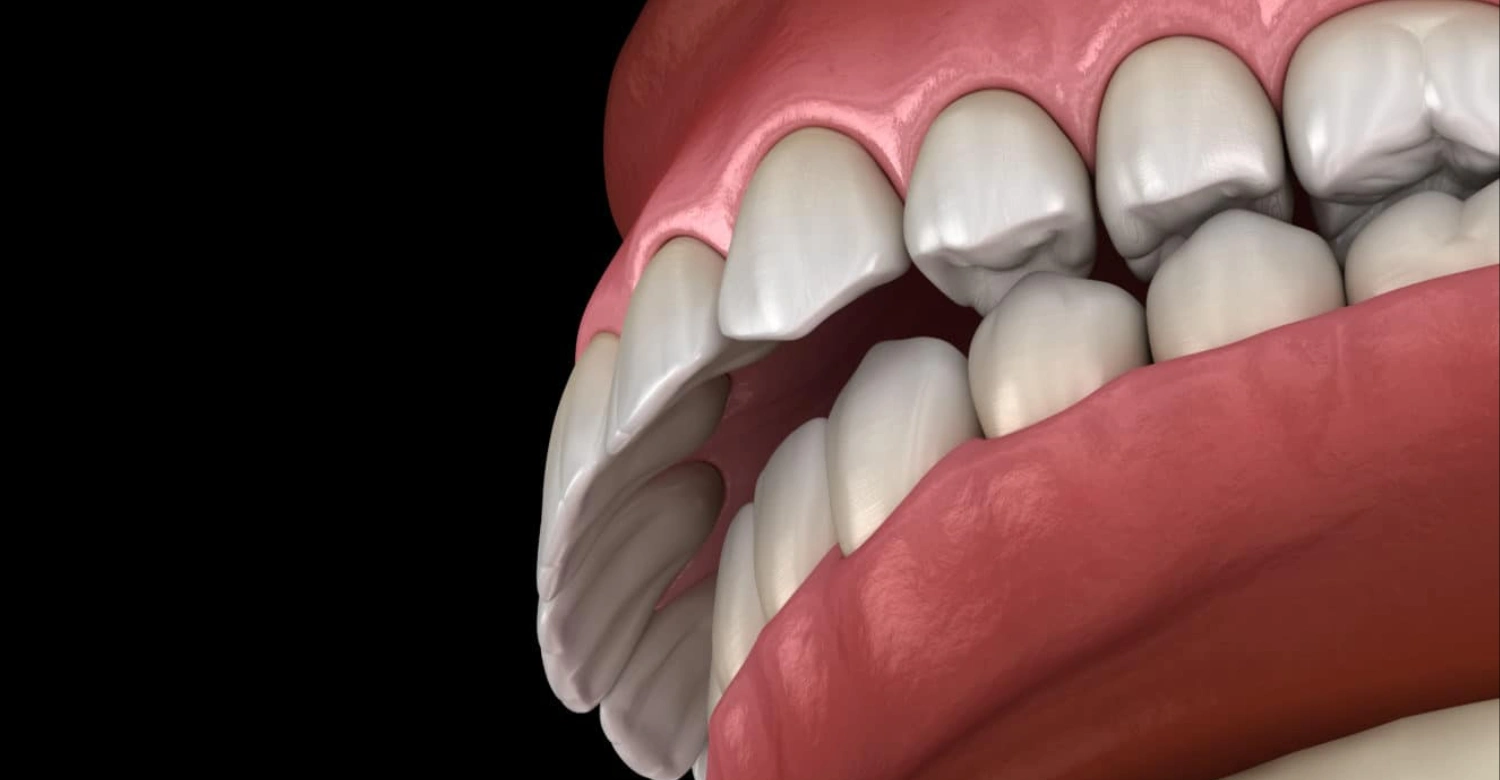
Quais São os Diferentes Tipos de Má Oclusão?
Tipo | Descrição |
Classe I | Oclusão normal, mas os dentes estão desalinhados ou apinhados |
Classe II | Sobremordida – o maxilar superior/dentes estão projetados |
Classe III | Prognatismo – a mandíbula/dentes inferiores estão projetados |
Mordida Cruzada | Os dentes superiores articulam por dentro dos dentes inferiores |
Mordida Aberta | Os dentes da frente não se tocam ao morder |
Mordida Profunda | Os dentes anteriores superiores cobrem excessivamente os dentes inferiores |
Apinhamento | Espaço insuficiente para um alinhamento correto |
Espaçamento | Espaços ou lacunas entre os dentes |
Dentes Inclusos | Dentes presos no osso ou na gengiva |
O que é a Má oclusão de Classe I?
A Classe I ocorre quando a oclusão é normal, mas existem dentes tortos, apinhamento ou espaçamento.
O que é a Classe II (sobremordida)?
A Classe II ocorre quando os dentes superiores se sobrepõem significativamente aos dentes inferiores.
Quais são os subtipos da Má oclusão de Classe II?
Divisão 1: Os dentes anteriores superiores estão projetados para fora.
Divisão 2: Os dentes anteriores superiores estão inclinados para trás.
O que é a Classe III (prognatismo)?
A Classe III ocorre quando os dentes inferiores se projetam para além dos dentes superiores, causando mordida invertida.
Por que motivo a Classe III é mais complexa de tratar?
Porque frequentemente envolve discrepâncias no osso maxilar que exigem cirurgia além da ortodontia.
O que é uma mordida aberta e por que razão acontece?
Uma mordida aberta ocorre quando os dentes anteriores ou posteriores não se tocam ao morder. Acontece devido a hábitos ou problemas de crescimento maxilar.
Quais são as diferenças entre mordida aberta anterior e posterior?
A mordida aberta anterior envolve os dentes da frente sem toque; a mordida aberta posterior envolve os dentes de trás sem contacto.
O que é uma mordida cruzada?
Uma mordida cruzada ocorre quando os dentes superiores assentam por dentro dos dentes inferiores, em vez de ficarem por fora. Pode afetar apenas um dente, vários dentes ou um lado inteiro da boca. As mordidas cruzadas podem levar a desgaste irregular, problemas gengivais e desconforto na mandíbula se não forem tratadas.
Qual é a diferença entre mordida cruzada unilateral e bilateral?
A mordida cruzada unilateral afeta dentes em apenas um lado da boca, enquanto a mordida cruzada bilateral afeta ambos os lados. Os casos unilaterais causam frequentemente um crescimento assimétrico da mandíbula, ao passo que as mordidas cruzadas bilaterais podem afetar de forma mais ampla a função e o alinhamento geral da mordida.
O que é uma mordida profunda?
Uma mordida profunda ocorre quando os dentes anteriores superiores cobrem excessivamente os dentes anteriores inferiores no sentido vertical. Esta condição pode causar irritação nas gengivas, desgaste dentário e até tensão na mandíbula. Mordidas profundas severas também podem afetar a aparência e levar a problemas funcionais ao mastigar.
O que é o apinhamento e o espaçamento na Má oclusão?
O apinhamento acontece quando não há espaço suficiente na mandíbula, fazendo com que os dentes se sobreponham ou torçam. O espaçamento é o oposto, onde existem lacunas excessivas entre os dentes. Ambas as situações são complicações nos dentes tortos que podem afetar a mastigação, a estética e a saúde dentária em geral.
Nota Clínica
As cáries em fase inicial frequentemente não causam dor nem alterações visíveis, pelo que passam despercebidas nas autoavaliações em casa. Um exame dentário com radiografias deteta a cárie entre os dentes e sob o esmalte antes de atingir a fase em que o paciente a sentiria.
Quais São os Sintomas Comuns da Má Oclusão?
Os sintomas comuns incluem dentes tortos ou apinhados, dificuldade em mastigar, problemas na fala, dentadas frequentes nas bochechas, dor na mandíbula e dores de cabeça. Alguns pacientes também notam desgaste dentário irregular e insatisfação com o seu sorriso. Os sintomas variam consoante a gravidade e o tipo de Má oclusão.
De que modo a Má oclusão afeta a mastigação?
A Má oclusão pode tornar a mastigação ineficiente ao desalinhando os dentes, impedindo que se encontrem corretamente. Isto leva a uma pressão desigual, trituração incompleta dos alimentos e esforço digestivo. Casos graves também podem causar desconforto ou fadiga na mandíbula ao comer alimentos mais duros.
Os dentes desalinhados podem causar dificuldade em morder os alimentos?
Sim. Quando os dentes estão desalinhados, os dentes da frente podem não se tocar devidamente, dificultando o ato de morder alimentos como maçãs ou sanduíches. Sobremordidas, mordidas invertidas ou mordidas abertas causam frequentemente este problema, afetando tanto a função como o conforto ao comer.
Os dentes tortos podem causar problemas de fala?
Sim. Os dentes tortos podem interferir com o posicionamento da língua e o fluxo de ar durante a fala. Isto pode provocar ceceio, pronúncia imperfeita ou dificuldade com certos sons. A Má oclusão grave pode tornar a comunicação um desafio e ter impacto na confiança em situações de fala.
Que fonemas são afetados pela Má oclusão?
Os sons que exigem uma coordenação precisa da língua e dos dentes são os mais afetados, especialmente "s", "z", "t", "d" e "th". A Má oclusão pode causar ceceio ou distorção, uma vez que a língua não consegue contactar devidamente com os dentes ou com o palato, levando a uma produção de fala pouco clara ou alterada.
Por que razão a Má oclusão leva a dores na mandíbula ou dores de cabeça?
A Má oclusão sobrecarrega os músculos da mandíbula e a articulação temporomandibular (ATM). Com o tempo, este desequilíbrio causa tensão, levando a dor na mandíbula, estalidos e dores de cabeça. O apertar crónico dos dentes ou a pressão mastigatória desigual pioram ainda mais o desconforto em pacientes com Má oclusão.
Os dentes tortos podem causar preocupações estéticas?
Sim. Os dentes tortos resultam frequentemente em dentes desalinhados, projetados ou irregulares, afetando a aparência do sorriso. Também pode alterar o equilíbrio facial, fazendo com que a linha da mandíbula pareça assimétrica. Muitos pacientes procuram tratamento não apenas pela função, mas também para melhorar a estética e a confiança.
De que modo a Má oclusão afeta a simetria do sorriso?
Dentes desiguais ou tortos criam um sorriso desequilibrado.
Como é que a Má oclusão afeta a higiene oral?
Dentes apinhados ou tortos retêm restos de comida e placa bacteriana, dificultando a limpeza.
Por que motivo o apinhamento dentário é mais difícil de limpar?
Dentes sobrepostos criam áreas de difícil acesso onde a placa se acumula.
Como É Diagnosticada a Má Oclusão?
O diagnóstico envolve exames clínicos, exames de imagem e, por vezes, análises especializadas.
Qual o papel dos exames dentários no diagnóstico?
Os dentistas avaliam a oclusão, o alinhamento e o movimento da mandíbula durante os exames.
Como são utilizadas as radiografias na avaliação da Má oclusão?
As radiografias revelam a estrutura óssea, a posição dos dentes e dentes inclusos.
O que é a análise cefalométrica?
Uma radiografia especializada que mede as relações maxilares e os padrões de crescimento.
O que revela a análise cefalométrica sobre o crescimento maxilar?
Mostra o tamanho, o ângulo e as tendências de crescimento da mandíbula, fundamentais para o planeamento do tratamento.
Os escaneamentos digitais podem ajudar a identificar a Má oclusão?
Sim, os escaneamentos digitais em 3D fornecem imagens precisas dos dentes e maxilares.
Qual é a precisão dos escaneamentos digitais 3D em comparação com as moldagens tradicionais?
Os escaneamentos 3D são mais precisos, mais rápidos e menos desconfortáveis do que os moldes tradicionais.
Quais São os Melhores Tratamentos para a Má Oclusão?
O tratamento depende da gravidade e do tipo, mas envolve principalmente ortodontia e, por vezes, cirurgia.
Como é que os aparelhos ortodônticos corrigem a Má oclusão?
Os aparelhos aplicam uma pressão contínua para mover gradualmente os dentes para a posição correta.
Que tipos de aparelhos estão disponíveis atualmente?
Metálicos, cerâmicos, linguais e alinhadores invisíveis.
Como se comparam os aparelhos metálicos aos aparelhos cerâmicos?
Os aparelhos metálicos são mais duráveis; os aparelhos cerâmicos são menos visíveis, mas mais frágeis.
Qual o papel dos alinhadores transparentes (Invisalign)?
Os alinhadores alinham os dentes de forma discreta e são removíveis.
Os alinhadores são eficazes para casos graves de Má oclusão?
Funcionam melhor para casos leves a moderados; casos graves podem necessitar de aparelho fixo ou cirurgia.
A contenção ortodôntica ajuda a corrigir a Má oclusão?
A contenção serve principalmente para manter os dentes na posição após o tratamento; pequenas correções são possíveis.
Quando é necessária cirurgia ortodôntica para a Má oclusão?
A cirurgia é necessária quando discrepâncias no osso maxilar causam problemas graves de oclusão.
Quanto tempo demora habitualmente o tratamento da Má oclusão?
O tratamento varia de 6 meses a 3 anos, dependendo da complexidade.
Quais São as Opções Cirúrgicas para a Má Oclusão Grave?
Procedimento Cirúrgico | Objetivo | Utilizado Para | Notas |
Osteotomia Maxilar | Reposiciona o maxilar superior (maxila) | Sobremordida, mordida aberta, mordida cruzada, deficiência do terço médio da face | Muitas vezes melhora a simetria facial e o fluxo de ar nasal |
Osteotomia Mandibular | Reposiciona o maxilar inferior (mandíbula) | Prognatismo, queixo/mandíbula retraídos | Pode causar dormência temporária no lábio inferior e no queixo |
Osteotomia Bimaxilar | Ajusta ambos os maxilares (superior e inferior) simultaneamente | Má oclusão complexa de Classe III, assimetria grave | A mais abrangente; tempo de recuperação mais longo |
Genioplastia | Remodela ou reposiciona o queixo | Deficiência ou excesso de queixo; equilíbrio facial | Muitas vezes combinada com outras cirurgias ortognáticas |
ERAG (Expansão Rápida da Maxila Assistida Cirurgicamente) | Alarga o maxilar superior | Mordida cruzada, apinhamento grave, arcada superior estreita | Utilizado quando as suturas ósseas já fundiram (principalmente em adultos) |
Distração Osteogénica | Aumenta gradualmente o osso maxilar através de um dispositivo mecânico | Subdesenvolvimento grave da mandíbula, defeitos congénitos | Processo mais lento, mas evita enxertos ósseos |
Extração Dentária Cirúrgica | Remove dentes inclusos ou sobrepostos | Preparação para tratamento ortodôntico ou para aliviar o apinhamento | Muitas vezes realizada antes do aparelho ou de cirurgia ortognática |
O que é a cirurgia ortognática?
A cirurgia ortognática corrige irregularidades nos maxilares para melhorar a oclusão e a aparência facial.
Como é realizada a cirurgia ortognática passo a passo?
Ortodontia pré-cirúrgica e planeamento
Reposicionamento cirúrgico dos ossos maxilares
Fixação com placas e parafusos
Ortodontia pós-cirúrgica e cicatrização
Como é que a cirurgia maxilofacial corrige a Má oclusão?
Reposicionando os maxilares para um alinhamento e oclusão adequados.
Quando é necessária a extração dentária no tratamento da Má oclusão?
A extração cria espaço para que os dentes apinhados se alinhem corretamente.
De que Forma a Má Oclusão Afeta Crianças e Adultos de Forma Diferente?
Aspeto | Crianças | Adultos |
Potencial de Crescimento Maxilar | Os ossos maxilares ainda estão em crescimento, permitindo uma correção mais fácil com ortodontia | O crescimento terminou, limitando as opções não cirúrgicas |
Benefícios da Intervenção Precoce | Aparelhos ortodônticos podem guiar o desenvolvimento maxilar | A falta de tratamento precoce pode exigir cirurgia em casos graves |
Problemas na Erupção Dentária | A Má oclusão pode causar ou resultar da erupção dentária atrasada ou desalinhada | Podem apresentar dentes inclusos, desgastados ou ausentes devido a problemas de longo prazo |
Opções de Tratamento | Envolve frequentemente ortodontia interceptiva (ex.: expansores, tração extrabucal) | Exige aparelhos fixos completos, alinhadores ou correção cirúrgica |
Adesão ao Tratamento | Pode precisar de maior envolvimento e motivação por parte dos pais | Os adultos são tipicamente mais consistentes, mas podem ter limitações de tempo/trabalho |
Impacto Psicossocial | Pode levar a bullying, problemas de fala ou problemas de autoestima | Afeta a confiança, as interações profissionais ou causa ansiedade social |
Problemas Funcionais | Pode causar problemas na mastigação, na fala ou no desenvolvimento facial | Pode causar dor na mandíbula (ATM), dores de cabeça, desgaste dentário ou doença gengival |
Hábitos que a Influenciam | Chuchar no dedo, uso de chupeta, interposição lingual | Bruxismo (ranger os dentes), perda de dentes ou restaurações dentárias mal ajustadas |
Tempo de Tratamento e Custo | Geralmente mais curto e menos dispendioso se tratado precocemente | Mais longo e mais dispendioso; os seguros podem nem sempre cobrir o tratamento em adultos |
Qual a frequência da Má oclusão nas crianças?
Muito comum; a deteção precoce é importante para obter os melhores resultados.
Qual é a melhor idade para tratar a Má oclusão?
O tratamento começa frequentemente por volta dos 7 anos, quando os dentes definitivos começam a nascer.
Quais são os benefícios da intervenção ortodôntica precoce?
Guia o crescimento maxilar, previne o agravamento e encurta o tratamento posterior.
A Má oclusão pode desenvolver-se em adultos?
Sim, a Má oclusão pode desenvolver-se ou agravar-se na idade adulta.
Quais são os riscos de não tratar a Má oclusão nos adultos?
Os riscos incluem desgaste dentário, doença gengival, perturbações da ATM e problemas estéticos.
Quais São os Riscos para a Saúde da Má Oclusão Não Tratada?
Aumento do risco de cárie dentária e doença gengival devido à higiene oral deficiente.
Dor na mandíbula e perturbações da ATM resultantes de uma pressão de oclusão desequilibrada.
Dificuldades na mastigação e na fala que afetam a nutrição e a comunicação.
Excesso de desgaste dentário, fraturas ou até perda de dentes ao longo do tempo.
Impacto negativo na autoestima e no bem-estar mental.
A Má oclusão pode causar cárie dentária e doença gengival?
Sim, porque os dentes apinhados retêm placa bacteriana que é mais difícil de remover.
De que modo a Má oclusão afeta a digestão?
Uma má mastigação leva a uma trituração inadequada dos alimentos, prejudicando a digestão.
A Má oclusão pode levar à disfunção da articulação temporomandibular (ATM)?
Sim, a Má oclusão sobrecarrega a ATM, provocando dor e disfunção.
Quais são os sinais precoces de disfunção da ATM causados pela Má oclusão?
Dor na mandíbula, estalidos, dores de cabeça e dificuldade em abrir a boca.
De que modo a Má oclusão afeta a estética facial e a confiança?
Pode causar assimetria facial e redução da autoestima devido a um sorriso pouco atrativo.
Como Prevenir ou Controlar a Má Oclusão?
Consultas dentárias precoces - As visitas regulares ajudam a detetar e a gerir precocemente problemas de alinhamento dos maxilares ou dentes.
Eliminar hábitos orais precocemente - Parar de chuchar no dedo, usar chupeta (após os 2–3 anos), interposição lingual ou roer as unhas.
Higiene oral adequada - Previne a perda precoce de dentes por cárie, o que poderia levar ao desvio dos dentes restantes.
Avaliação ortodôntica oportuna - As crianças devem ser avaliadas até aos 7 anos para identificar problemas enquanto a mandíbula ainda está em crescimento.
Uso de mantenedores de espaço ou expansores - Estes dispositivos guiam o crescimento correto do maxilar e a erupção dentária quando os dentes de leite são perdidos precocemente.
Prevenir riscos de lesões - Utilizar protetores bucais durante a prática de desporto para evitar traumatismos que possam desalinhara a mandíbula.
Evitar o uso prolongado de biberão - O uso prolongado de biberão ou uma postura incorreta na amamentação podem afetar o desenvolvimento da oclusão.
Tratar problemas dentários de imediato - Cáries ou infeções não tratadas podem levar à perda de dentes e ao desalinhamento.
A intervenção ortodôntica precoce pode prevenir a Má oclusão?
Sim, o tratamento precoce orienta o desenvolvimento maxilar e reduz a gravidade do problema.
Como podem os pais ajudar a prevenir a Má oclusão nas crianças?
Monitorizando os hábitos e garantindo consultas dentárias regulares.
Que hábitos infantis devem os pais vigiar?
Chuchar no dedo, uso prolongado da chupeta, interposição lingual e respiração bucal.
Interromper os hábitos orais reduz o risco de Má oclusão?
Sim, parar com os hábitos nocivos permite o desenvolvimento normal dos maxilares e dos dentes.
As consultas dentárias regulares podem controlar o desenvolvimento da Má oclusão?
A deteção precoce durante os exames permite uma intervenção no momento certo.
Como Tratam as Clínicas Turcas a Má Oclusão?
Tipo de Tratamento | Descrição e Utilização |
Aparelho Metálico Tradicional | Tratamento padrão e eficaz que utiliza brackets e arcos metálicos. Muito potente e económico. |
Aparelho Cerâmico (Estético) | Brackets da cor do dente ou translúcidos oferecem uma aparência mais discreta. Eficácia comparável à do aparelho metálico. |
Aparelho Lingual | Brackets colocados na superfície interna dos dentes ficam completamente escondidos. Ideal para quem procura estética, embora seja mais difícil de higienizar. |
Aparelho Autoligável (ex.: Damon) | Utiliza mecanismos de deslize para reduzir o atrito e, potencialmente, encurtar o tempo de tratamento. |
Alinhadores Transparentes (ex.: Invisalign, ClearCorrect) | Goteiras removíveis e quase invisíveis que são muito populares entre adolescentes e adultos. Confortáveis e de fácil manutenção. |
Disjuntores Palatinos e Aparelhos Funcionais | Utilizados maioritariamente em crianças em crescimento para alargar o maxilar superior ou modificar o posicionamento mandibular (ex.: aparelhos twin-block). |
Cirurgia Ortognática (Maxilofacial) | Indicada para Má oclusão esquelética grave, exigindo colaboração entre ortodontistas e cirurgiões maxilofaciais para realinhar os ossos. |
Que tratamentos ortodônticos estão disponíveis na Turquia?
Aparelhos fixos, alinhadores transparentes, cirurgia ortodôntica e planeamento digital do tratamento.
Qual a acessibilidade do tratamento da Má oclusão na Turquia em comparação com a Europa?
O tratamento na Turquia é geralmente 40 a 70% mais barato, mantendo padrões de elevada qualidade.
Por que razão os pacientes internacionais escolhem a Turquia para cuidados ortodônticos?
Custos mais reduzidos, médicos experientes, tecnologia avançada e cuidados de saúde abrangentes.
Que tecnologias avançadas usam as clínicas turcas para a Má oclusão?
Imagens digitais em 3D, tecnologia CAD/CAM, tratamentos a laser e cirurgia guiada por computador.
As clínicas turcas utilizam exames de imagem 3D para o planeamento do tratamento?
Sim, a imagem 3D é amplamente utilizada para diagnósticos precisos e tratamentos personalizados.
Conselhos para os Pacientes
Utilize uma pasta de dentes com 1.450 ppm de flúor e, após a escovagem, cuspa em vez de enxaguar com água, para que o flúor permaneça mais tempo nos dentes. Se comer algo açucarado, faça-o durante uma refeição em vez de ir comendo doces ao longo do dia, uma vez que é a frequência dos ataques ácidos, e não a quantidade total, que causa cáries dentárias.
Perspetivas e Prognóstico: O Que Posso Esperar a Longo Prazo com a Má Oclusão Dentária?
O prognóstico da Má oclusão depende fortemente do momento em que a condição é identificada e tratada. Nas crianças, mover a mandíbula enquanto esta ainda está em crescimento leva habitualmente a um resultado estável e duradouro, uma vez que o osso pode ser guiado para uma posição mais saudável. Nos adultos, a mandíbula já parou de crescer, pelo que o tratamento depende mais da movimentação ortodôntica dos dentes ou, em casos esqueléticos, de uma correção cirúrgico-ortodôntica combinada. A Má oclusão leve a moderada que é tratada corretamente raramente reaparece, desde que o paciente use a contenção conforme indicado. Os casos graves ou não tratados tendem a progredir: o apinhamento torna-se mais severo, a pressão de oclusão fica menos uniforme e o risco de desgaste dentário, recessão gengival e tensão na articulação da mandíbula aumenta com a idade. O prognóstico a longo prazo é perfeitamente controlável em quase todas as fases, mas quanto mais cedo o caso for abordado, mais curto e previsível tende a ser o percurso do tratamento.
Orientação nas Suas Consultas Clínicas: Quando Deve Consultar o Seu Profissional de Saúde?
A maioria dos casos de Má oclusão não necessita de cuidados de urgência, mas certos sinais exigem uma consulta o mais rapidamente possível. Consulte o seu dentista ou ortodontista se notar alterações repentinas na sua mordida, dificuldade em fechar a boca completamente, bloqueios ou estalidos novos na mandíbula, ou dores que não passam ao fim de alguns dias. As crianças que apresentem perda precoce dos dentes de leite, respiração bucal ou uma mandíbula visivelmente recuada também devem ser avaliadas sem demora, uma vez que a intervenção precoce costuma simplificar o tratamento futuro. Os adultos que desenvolvam sintomas agravados de ATM, desgaste dentário inexplicável ou deslocamento dos dentes após anos de estabilidade não devem esperar pela próxima consulta de rotina.
Perguntas Diagnósticas Fundamentais a Fazer ao Seu Ortodontista Antes do Tratamento
Ir preparado com as perguntas certas ajuda a compreender o alcance total do seu plano de tratamento antes de se comprometer com ele:
Qual é a classe ou o tipo de Má oclusão que tenho e qual a sua gravidade?
O tratamento envolverá apenas a movimentação dos dentes ou será necessária cirurgia maxilofacial?
Que exames de imagem, como radiografias, análise cefalométrica ou escaneamentos 3D, serão utilizados para planear o tratamento?
Qual é a duração prevista do tratamento e que fatores poderão prolongá-lo?
Quais são os riscos de reabsorção radicular, descalcificação ou recidiva com este plano específico?
Que plano de contenção será utilizado após a conclusão do tratamento ativo?
Como será acompanhada a minha evolução ao longo do tratamento?
Protocolos de Classificação Clínica e Dados Epidemiológicos de Distribuição
A Má oclusão é classificada através de protocolos padronizados que permitem aos clínicos comparar casos de forma consistente entre populações. A classificação de Angle (Classe I, II e III) permanece como o sistema de referência, refinado com índices como o Index of Orthodontic Treatment Need e o Peer Assessment Rating, que pontuam a gravidade e a prioridade do tratamento. Os dados epidemiológicos mostram que a Má oclusão afeta uma grande percentagem da população mundial em algum grau, sendo as apresentações de Classe I as mais comuns, seguidas pelas de Classe II. A distribuição varia consoante a região e é influenciada pela genética, hábitos de alimentação na infância e acesso a cuidados ortodônticos precoces. Reconhecer em que categoria um caso se enquadra dentro destes sistemas ajuda a determinar tanto a urgência como o protocolo de tratamento mais adequado.
Modelos de Medição para Má Oclusão, Traumatismos Orais e Anomalias Congénitas
Os clínicos utilizam modelos de medição estruturados para classificar a Má oclusão juntamente com condições associadas, como traumatismos orais e anomalias congénitas. Estes modelos avaliam fatores como sobremordida horizontal, sobremordida vertical, apinhamento e desvio da linha média em escalas padronizadas, permitindo comparações consistentes entre pacientes e ao longo do tempo. Quando existe um traumatismo ou uma anomalia maxilar congénita, os modelos de medição são adaptados para ter em conta a assimetria, a perda óssea ou a restrição de crescimento, oferecendo uma visão mais completa do que apenas as pontuações de alinhamento dentário.
Complicações Traumáticas: Análise de TC Pós-Operatória da Mandíbula Após Traumatismo Facial
Quando um traumatismo facial afeta a mandíbula, a tomografia computorizada (TC) pós-operatória é utilizada para confirmar se o maxilar cicatrizou no alinhamento correto e se o material de fixação está devidamente posicionado. A análise por TC pode revelar complicações como consolidação viciosa, deslocamento do material de fixação ou uma lesão traumática do côndilo mandibular que não tenha sido totalmente corrigida, qualquer uma das quais pode originar uma nova Má oclusão ou agravar uma pré-existente após a cicatrização. Os exames de imagem de acompanhamento são habitualmente agendados a intervalos fixos após a cirurgia para detetar estes problemas enquanto são mais fáceis de corrigir.
Desenvolvimento Neonatal e Pediátrico: Padrões Científicos Neonatais e Subdesenvolvimento do Maxilar Infantil
O desenvolvimento maxilar começa antes do nascimento e vários padrões neonatais podem preparar o terreno para uma futura Má oclusão. O subdesenvolvimento da mandíbula no bebé, por vezes associado à postura de amamentação, anquiloglossia (freio lingual curto) ou uso prolongado de biberão, pode restringir o espaço disponível para a erupção dos dentes. Os odontopediatras monitorizam estes padrões durante as consultas de rotina nos primeiros meses de vida, uma vez que guiar o crescimento maxilar na infância é muito mais eficaz do que corrigir um desalinhamento completamente formado mais tarde.
Patologias Secundárias: Negligência Dentária em Crianças e o Seu Impacto na Gravidade da Má Oclusão
A negligência dentária, ou seja, a falha consistente em atender às necessidades básicas de saúde oral de uma criança, está diretamente associada a quadros de Má oclusão mais graves no futuro. Cáries infantis não tratadas podem provocar a perda precoce de dentes de leite, permitindo que os dentes vizinhos se desloquem e reduzindo o espaço disponível para os dentes definitivos. A inflamação gengival crónica decorrente de uma má higiene também pode afetar o osso que suporta os dentes em desenvolvimento. As crianças que faltam às consultas dentárias de rotina têm maior probabilidade de chegar à adolescência com uma Má oclusão que exige aparelhos, expansores ou, em casos graves, correção cirúrgica, em vez das intervenções mais simples disponíveis quando os problemas são detetados precocemente.
O Que Notamos Clinicamente
O Dr. Rifat Alsaman, Diretor da Equipa Médica da Vitrin Clinic e dentista estético, nota que os casos de Má oclusão que observa mais frequentemente na Vitrin Clinic dizem respeito a pacientes que adiaram o tratamento até à idade adulta por acreditarem que o desalinhamento era meramente estético. O Dr. Rifat Alsaman explica que, quando estes pacientes procuram cuidados médicos, o desgaste irregular e a recessão gengival já se iniciaram frequentemente, o que pode prolongar o tempo de tratamento. O Dr. Rifat Alsaman recomenda que os pacientes encarem a consulta de avaliação como um passo de diagnóstico e não como um compromisso com a cirurgia, uma vez que muitos casos com aspeto grave respondem bem apenas à ortodontia quando devidamente avaliados.
Sobre a Vitrin Clinic
A Vitrin Clinic é uma clínica de estética dentária em Istambul, Turquia, que recebe pacientes internacionais de todo o mundo. A clínica combina clínicos experientes, tecnologia de diagnóstico digital e uma equipa de apoio multilingue para tornar os cuidados dentários e ortodônticos acessíveis a quem viaja do estrangeiro. Todos os planos de tratamento na Vitrin Clinic, incluindo o tratamento para a Má oclusão, são supervisionados pelo Diretor da Equipa Médica, Dr. Rifat Alsaman, garantindo padrões clínicos consistentes desde a primeira consulta até ao acompanhamento pós-tratamento.
Referências:
FAQs
O Dr. Rifat Alsaman possui mais de 5 anos de experiência clínica em odontologia e atualmente atua como Chefe da Equipe Médica da Vitrin Clinic. Ele é dedicado a oferecer um atendimento de excelência aos pacientes, supervisionando os planos de tratamento e garantindo os mais altos padrões clínicos em toda a equipe. Sua experiência, atenção aos detalhes e compromisso com o desenvolvimento profissional contínuo têm ajudado inúmeros pacientes a conquistar sorrisos mais saudáveis e confiantes.


