General Dentistry
August 13, 2025
Erosão do esmalte dentário: Tratamentos na Turquia (Guia 2026)
 Dr. Rifat Alsaman
A erosão do esmalte dentário desenvolve-se frequentemente de forma silenciosa. Não há dor no início, razão pela qual muitas pessoas não a percebem até que os danos já tenham começado. O seu sorriso diz muito sobre si. É uma das primeiras coisas que as pessoas notam. Mantê-lo saudável vai muito além da escovagem regular. Um problema comum, mas frequentemente negligenciado, é a erosão do esmalte dentário, e este pode danificar silenciosamente os seus dentes ao longo do tempo.
Mesmo que os seus dentes pareçam brancos e limpos, a erosão do esmalte dentário pode causar desconforto e sensibilidade. Se não for tratada, leva a danos a longo prazo. A boa notícia? Com a deteção precoce e os cuidados profissionais, pode proteger o seu esmalte. O seu sorriso pode manter-se forte durante muitos anos.
Neste artigo, vamos guiá-lo por tudo o que precisa de saber sobre a erosão do esmalte dentário. Abordamos o que é, como reconhecê-la e o que a causa. Também explicaremos como a tratamos na Vitrin Clinic, em Istambul.
O Que É o Esmalte Dentário e Por Que Razão É Importante?
O esmalte dentário é a camada fina e exterior que cobre a parte visível dos seus dentes. É a substância mais dura do corpo humano, ainda mais forte do que o osso. A sua função principal é proteger as camadas internas dos seus dentes. Protege contra a cárie, o desgaste e a sensibilidade à temperatura.
Ao contrário de outros tecidos do corpo, o esmalte não se regenera depois de perdido. É por isso que é tão importante compreender como cuidar dele. Também precisa de saber o que fazer se a erosão do esmalte dentário começar a desgastá-lo.
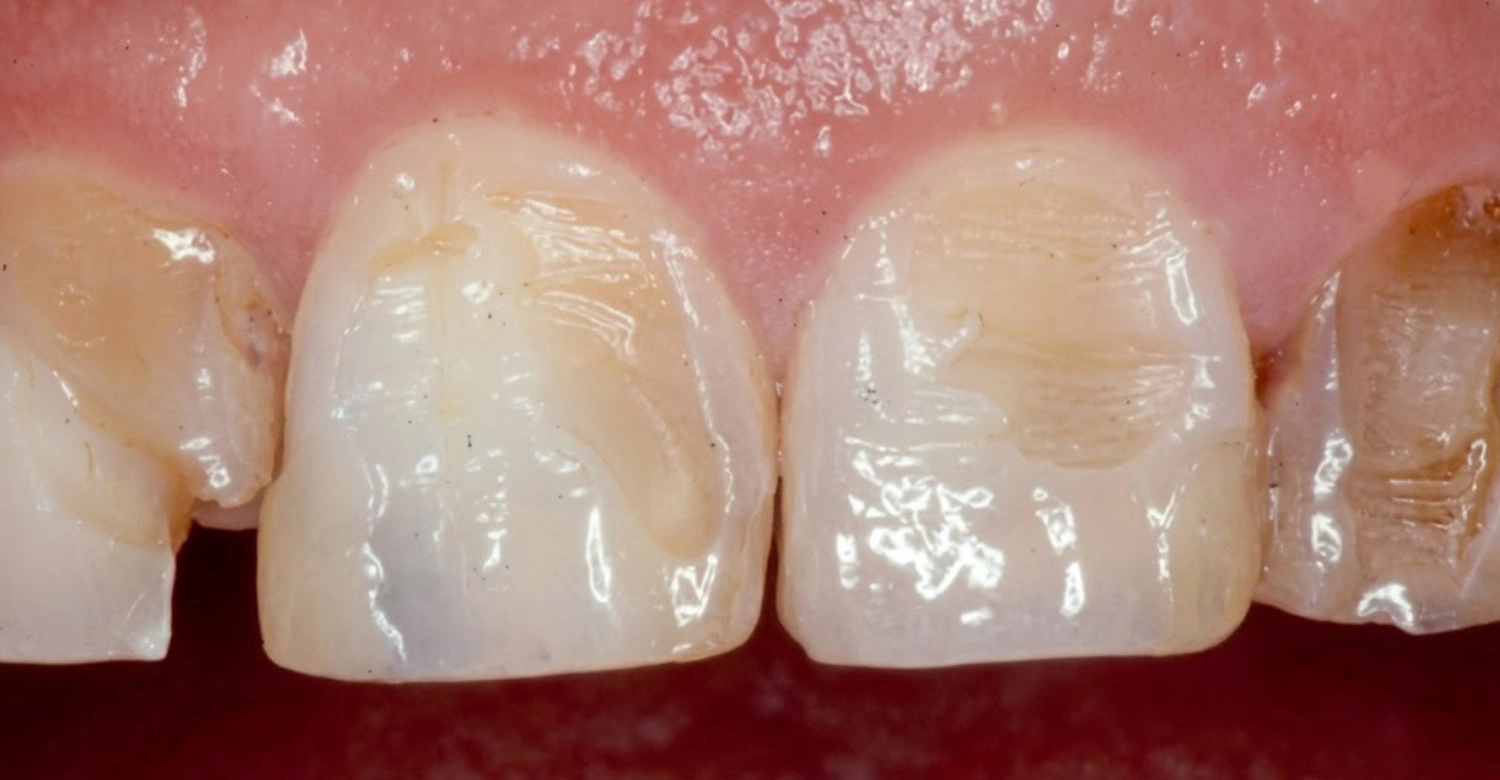
O Que É a Erosão do Esmalte Dentário?
A erosão do esmalte dentário ocorre quando a superfície protetora do esmalte se desgasta gradualmente. Isto expõe a camada interna mais macia e sensível do dente, chamada dentina. Os seus dentes tornam-se mais vulneráveis a cáries, fraturas e sensibilidade a alimentos e bebidas quentes ou frios.
É um processo lento. Os efeitos da erosão do esmalte dentário podem tornar-se graves se não forem abordados precocemente.
A Erosão do Esmalte Dentário É Reversível?
Muitos pacientes perguntam-nos diretamente: a erosão do esmalte dentário é reversível? A resposta clínica honesta é não, não depois de o esmalte se ter desgastado fisicamente. O esmalte não tem células vivas, pelo que não pode regenerar-se nem reconstruir-se naturalmente.
O que é possível é a remineralização de pontos fracos microscópicos e muito precoces. Isto acontece antes que ocorra uma verdadeira perda estrutural. O flúor e o cálcio podem endurecer novamente o esmalte amolecido nessa fase inicial. Além desse ponto, a perspetiva passa da prevenção para a gestão. A terapia com flúor, a adesão direta ou as restaurações protegem o dente e impedem que a erosão do esmalte dentário progrida mais.
O Que É o Esmalte Dentário?
O esmalte dentário é a camada dura e translúcida que cobre cada dente. É o tecido mais forte do corpo humano, ainda mais duro do que o osso. O esmalte forma um escudo protetor em redor da dentina e da polpa subjacentes. Protege-as contra bactérias, alterações de temperatura e a pressão diária da mastigação.
O esmalte não tem células vivas, pelo que não se pode reparar a si próprio como a pele ou o osso. Assim que uma secção se desgasta, perde-se para sempre. É por isso que compreender a erosão do esmalte dentário logo de início é tão importante para a saúde oral a longo prazo. A erosão do esmalte dentário é tratada como uma condição progressiva, não como um evento único.
Importância do Esmalte Dentário
O esmalte faz mais do que proteger a superfície de um dente. Também dá aos dentes a sua forma e suporta uma oclusão confortável. Mantém as terminações nervosas no interior do dente isoladas de gatilhos de dor. Um esmalte forte significa menos cáries, menos sensibilidade e um sorriso que se mantém brilhante sem manchas profundas.
Quando o esmalte enfraquece, o dente perde esta armadura natural. Os hábitos diários, como comer ou beber, podem começar a parecer desconfortáveis. Prevenir a erosão do esmalte dentário é muito mais simples do que restaurar um dente após o aparecimento dos sintomas.
Sinais e Sintomas da Erosão do Esmalte Dentário
A erosão do esmalte dentário acontece gradualmente. A maioria dos pacientes nota um padrão de pequenas alterações em vez de um único evento óbvio. Fique atento a uma mistura de sensibilidade, alterações na textura e mudanças na aparência dos seus dentes. Identificar dois ou três destes sinais em conjunto é um sinal mais forte do que qualquer sintoma isolado.
Sinais e Sintomas da Erosão do Esmalte Dentário
Está a perguntar-se se o seu esmalte está a começar a desgastar-se? Aqui estão os sintomas mais comuns a ter em conta:
Sensibilidade Dentária: O aumento da sensibilidade a alimentos quentes, frios ou doces é frequentemente um dos primeiros sinais da erosão do esmalte dentário.
Alteração de Cor: À medida que o esmalte fica mais fino, a dentina amarelada por baixo pode tornar-se mais visível. Os dentes podem parecer opacos ou manchados.
Bordos Arredondados: Os dentes podem começar a parecer mais lisos ou mais arredondados ao longo dos bordos.
Fissuras ou Mossa na Superfície: Podem desenvolver-se pequenas pequenas cavidades ou áreas ásperas na superfície do dente.
Transparência nos Bordos: As pontas dos dentes frontais podem parecer translúcidas à medida que a erosão do esmalte dentário avança.
Mesmo que não sinta dor, vale a pena mencionar estes sinais visíveis ao seu médico dentista durante a sua próxima consulta.
Conselhos para os Pacientes
Utilize uma pasta de dentes com 1450 ppm de flúor. Após a escovagem, cuspa em vez de enxaguar com água, para que o flúor permaneça nos dentes por mais tempo. Se comer algo açucarado, faça-o juntamente com uma refeição em vez de distribuir os doces ao longo do dia. É a frequência dos ataques ácidos, e não a quantidade total, que favorece a erosão do esmalte dentário e a cárie.
Quando Visitar o Médico Dentista por Perda Repentina de Esmalte
Nem toda a perda de esmalte se desenvolve lentamente. Por vezes, uma lasca, um bordo áspero repentino ou uma nova sensibilidade surgem em poucos dias. Saber quando visitar o médico dentista pode evitar que um pequeno caso de erosão do esmalte dentário se transforme num problema maior.
Marque uma consulta se notar uma sensibilidade repentina a alimentos frios ou doces. Fique atento também a um sulco ou entalhe visível perto da linha da gengiva, ou a um dente que pareça subitamente mais transparente. Uma dor aguda após ranger os dentes ou uma lesão é outro sinal de aviso. As alterações repentinas raramente são resolvidas apenas com cuidados caseiros. Um exame dentário na mesma semana permite-nos detetar os sintomas da erosão do esmalte dentário antes que a dentina fique exposta às bactérias.
Causas da Erosão do Esmalte Dentário
A erosão do esmalte dentário raramente provém de um único hábito. É geralmente uma combinação de dieta, técnica de higiene oral e fatores de saúde subjacentes. Estes desgastam a superfície gradualmente ao longo de meses ou anos. A lista abaixo detalha os seis fatores mais comuns que vemos na Vitrin Clinic. Eles variam desde bebidas ácidas diárias até condições como o refluxo ácido e a boca seca.
O Que Causa a Erosão do Esmalte Dentário?
O esmalte dentário pode desgastar-se devido a uma mistura de hábitos de estilo de vida, dieta, condições médicas e genética. Aqui estão algumas das causas mais comuns para a erosão do esmalte dentário:
Alimentos e Bebidas Ácidos: Citrinos, refrigerantes, vinho, alimentos à base de vinagre e bebidas energéticas podem desencadear a erosão do esmalte dentário ao longo do tempo. Estes ácidos amolecem o esmalte, tornando-o mais fácil de ser escovado ou desgastado.
Escovar com Muita Força: Usar uma escova de dentes com cerdas duras ou escovar de forma demasiado agressiva pode desgastar lentamente o esmalte, especialmente ao longo da linha da gengiva.
Ranger dos Dentes (Bruxismo): Apertar ou ranger os dentes, especialmente à noite, coloca uma pressão extrema sobre o esmalte. Isto faz com que ele se desgaste de forma irregular.
Refluxo Ácido ou DGER: Os ácidos estomacais que sobem para a boca durante episódios de refluxo podem causar uma grave erosão do esmalte dentário ao longo do tempo.
Boca Seca (Xerostomia): A saliva desempenha um papel fundamental na neutralização dos ácidos na sua boca. A redução da produção de saliva aumenta o risco de erosão do esmalte dentário e cáries.
Maus Hábitos Alimentares ou Dietas da Moda: Dietas extremamente baixas em nutrientes ou ricas em alimentos ácidos ou açucarados podem contribuir para uma degradação mais rápida do esmalte.
Nota Clínica
As cáries precoces frequentemente não causam dor nem alterações visíveis. Elas são ignoradas durante as autoavaliações em casa. Um exame dentário com radiografias deteta a cárie entre os dentes e sob o esmalte. Ele identifica os problemas antes que atinjam a fase em que o paciente os sentiria.
O Esmalte Dentário Pode Ser Restaurado?
Infelizmente, uma vez perdido o esmalte, ele não volta a crescer. No entanto, isso não significa que toda a esperança esteja perdida. Com cuidados dentários profissionais e algumas alterações na sua rotina, podemos fortalecer o seu esmalte existente. Também podemos prevenir a erosão do esmalte dentário futura e restaurar a aparência e a função do seu sorriso.
Métodos de Tratamento para a Erosão do Esmalte Dentário
O tratamento para a erosão do esmalte dentário é adaptado à quantidade de superfície que já foi perdida. Não é tratado da mesma forma para todos os pacientes. Os casos ligeiros respondem habitualmente apenas ao flúor e a mudanças no estilo de vida. O desgaste mais avançado necessita de adesão direta, coroas ou facetas para restaurar tanto a função como a aparência. O detalhe completo dos métodos que usamos na Vitrin Clinic encontra-se abaixo.
Opções de Tratamento para a Erosão do Esmalte Dentário
Na Vitrin Clinic, oferecemos uma gama de soluções modernas e eficazes para tratar a erosão do esmalte dentário. A escolha da solução recomendada depende da gravidade do seu caso.
Cuidados Preventivos e Ajustes no Estilo de Vida: Nas fases iniciais, os nossos médicos dentistas podem recomendar ajustes simples. Estes incluem mudar para uma escova de dentes de cerdas macias, usar pasta e elixir com flúor, reduzir a ingestão de alimentos e bebidas ácidos e beber mais água. Estas mudanças ajudam a proteger o esmalte restante e a abrandar a progressão do problema.
Tratamentos com Flúor: As aplicações profissionais de flúor ajudam a fortalecer o esmalte e a reduzir a sensibilidade. Este tratamento não invasivo é ideal para travar a erosão do esmalte dentário ligeira a moderada.
Goteiras de Relaxamento para o Bruxismo: Se o ranger dos dentes estiver a danificar o seu esmalte, faremos uma goteira de relaxamento à medida para proteger os seus dentes enquanto dorme.
Adesão Dentária ou Restaurações: Para dentes com danos visíveis ou sensibilidade, os materiais de adesão da cor do dente podem preencher as áreas desgastadas. Eles protegem a dentina exposta por baixo.
Coroas ou Facetas: Se a erosão estiver mais avançada, as coroas dentárias ou as facetas de porcelana podem restaurar a estrutura, a função e a aparência dos seus dentes. Estas restaurações integram-se perfeitamente no seu sorriso natural e duram muitos anos com os cuidados adequados.
Opções de Tratamento da Sensibilidade para Dentes com Erosão
Quando a erosão do esmalte dentário torna a superfície fina, a sensibilidade é frequentemente a primeira queixa que os pacientes nos trazem. Uma aplicação tópica de flúor, aplicada diretamente nos dentes afetados, é geralmente a primeira linha de tratamento da sensibilidade. Ela endurece a superfície e bloqueia os pequenos canais que transmitem os sinais de dor.
Para um desgaste mais profundo, as restaurações preventivas podem selar a dentina exposta antes que a cárie se instale. Não há necessidade de esperar que se forme uma cavidade. A pasta de dentes dessensibilizante, usada diariamente em casa, adiciona uma camada extra de alívio entre as visitas clínicas. A maioria dos pacientes nota uma diferença real poucas semanas após o início do tratamento.
Como Prevenir a Erosão do Esmalte Dentário a Longo Prazo
A melhor forma de gerir a erosão do esmalte dentário é evitar que ela aconteça em primeiro lugar. Aqui estão as nossas principais dicas:
Escove suavemente duas vezes por dia com pasta de dentes com flúor
Evite escovar imediatamente após refeições ácidas - enxague com água em vez disso
Use uma palhinha ao beber bebidas ácidas para reduzir o contacto com os dentes
Mantenha-se hidratado para apoiar a produção de saliva
Visite o seu médico dentista regularmente para limpezas e check-ups
O Que Notamos Clinicamente
De acordo com o Dr. Rifat Alsaman, Chefe da Equipa Médica da Vitrin Clinic e médico dentista estético, a maioria dos pacientes que lidam com a erosão do esmalte dentário chega depois de a sensibilidade já se ter tornado incómoda. Eles raramente vêm quando o primeiro sintoma apareceu. O Dr. Rifat Alsaman nota que os bordos finos e transparentes dos dentes frontais são frequentemente a pista que os próprios pacientes ignoram. A mudança acontece demasiado gradualmente para ser notada num espelho.
Na experiência do Dr. Rifat Alsaman, os pacientes que mencionam o ranger dos dentes ou o hábito de merendar frequentemente no início da consulta são muito mais fáceis de tratar de forma conservadora. O flúor e as mudanças no estilo de vida ainda podem fazer uma diferença real antes que as restaurações se tornem necessárias.
Sorria com Confiança com a Vitrin Clinic
Na Vitrin Clinic em Istambul, compreendemos o quão importante é o seu sorriso. Importa não apenas pela sua aparência, mas por como se sente. A nossa equipa simpática e experiente está aqui para o ajudar a manter dentes fortes e saudáveis para toda a vida.
Quer esteja a lidar com a erosão do esmalte dentário, sensibilidade, ou simplesmente queira um sorriso mais brilhante, criaremos um plano de tratamento personalizado só para si. Utilizando ferramentas de diagnóstico avançadas e uma abordagem focada no paciente, tornamos os cuidados dentários confortáveis, modernos e eficazes.
Pronto para proteger o seu sorriso? Marque a sua consulta com a Vitrin Clinic hoje mesmo. Vamos dar o primeiro passo juntos em direção a dentes mais fortes e saudáveis.
Sobre a Vitrin Clinic
A Vitrin Clinic é uma clínica dentária estética localizada em Istambul, Turquia. Acolhemos pacientes de todo o mundo para tratamentos estéticos e restauradores. A clínica combina tecnologia de diagnóstico moderna com uma equipa multilingue. Os pacientes internacionais podem discutir a erosão do esmalte dentário, a sensibilidade ou qualquer outra preocupação confortavelmente na sua própria língua.
Todos os planos de tratamento na Vitrin Clinic são revistos sob a supervisão clínica do Dr. Rifat Alsaman, Chefe da Equipa Médica. Isto mantém os padrões consistentes em cada caso assumido pela clínica.
References:
FAQs
O Dr. Rifat Alsaman possui mais de 5 anos de experiência clínica em odontologia e atualmente atua como Chefe da Equipe Médica da Vitrin Clinic. Ele é dedicado a oferecer um atendimento de excelência aos pacientes, supervisionando os planos de tratamento e garantindo os mais altos padrões clínicos em toda a equipe. Sua experiência, atenção aos detalhes e compromisso com o desenvolvimento profissional contínuo têm ajudado inúmeros pacientes a conquistar sorrisos mais saudáveis e confiantes.


