Audience FAQs
June 16, 2026
Are Hollywood Smiles Fake? The Clinical Truth Behind Natural-Looking Smile Makeovers
 Dr. Rifat Alsaman
The short answer is: no, a Hollywood Smile does not have to look fake. While the term often conjures up images of blindingly white, chicklet-like teeth, modern cosmetic dentistry focuses on mimicking natural dental anatomy. An artificial look is never the fault of the procedure itself; rather, it is the result of poor material choices, aggressive over-preparation, or a lack of customization. When executed by an experienced cosmetic dentist using high-quality materials and digital design tools, a Hollywood Smile looks completely indistinguishable from naturally flawless, healthy teeth.
Why Do Some Hollywood Smiles Look Fake?
A Hollywood Smile looks fake when the design ignores the small imperfections of natural teeth, excessive whiteness, identical tooth shapes, and opaque or bulky restorations are the main causes. When shade, shape, and translucency are customized to the patient instead, most people can't tell veneers or crowns are present at all. Modern cosmetic dentistry focuses on mimicking natural dental anatomy, and understanding what a Hollywood Smile really involves is the first step toward realistic expectations.
Common Causes of an Artificial Appearance
An artificial-looking smile makeover is almost always the result of a "one-size-fits-all" approach to cosmetic dentistry. When a practitioner fails to evaluate the unique facial proportions, lip dynamics, and natural anatomy of the patient, the final outcome looks detached from the individual's face. True cosmetic artistry requires a deep understanding of dental morphology, light physics, and facial symmetry. Without this meticulous customization, the restorations lack harmony and immediately signal to the viewer that the teeth are artificial. For better dental health and to avoid pain, we highly recommend that you explore hollywood smile bruxism right now.
Excessive Whiteness and Uniform Shape
One of the most frequent mistakes in cosmetic dentistry is selecting a shade that is unnaturally bright, such as monochromatic bleach shades that do not exist in nature. Natural teeth possess a gradient of color, where the gingival third is warmer and the biting edges are more translucent. Furthermore, if every tooth is shaped exactly the same without the subtle, natural variations in length, line angles, and surface texture that differentiate a central incisor from a lateral incisor or canine the smile appears blocky, aggressive, and highly unnatural.
Opaque or Bulky Restorations
Natural enamel is inherently translucent, meaning light penetrates the surface and reflects off the deeper dentin layer. When dental restorations are crafted without this depth, they appear chalky, dense, and lifeless. Additionally, if a dentist does not properly prepare the teeth or if the dental technician fabricates veneers that are too thick, the restorations will look bulky. These oversized teeth push the lips outward unnaturally and create dark shadows at the corners of the mouth, ruining the overall facial aesthetic. Patients seeking proper treatment should take a moment to carefully read our guide on hollywood smile cost UK today.
What Makes a Hollywood Smile Look Natural?
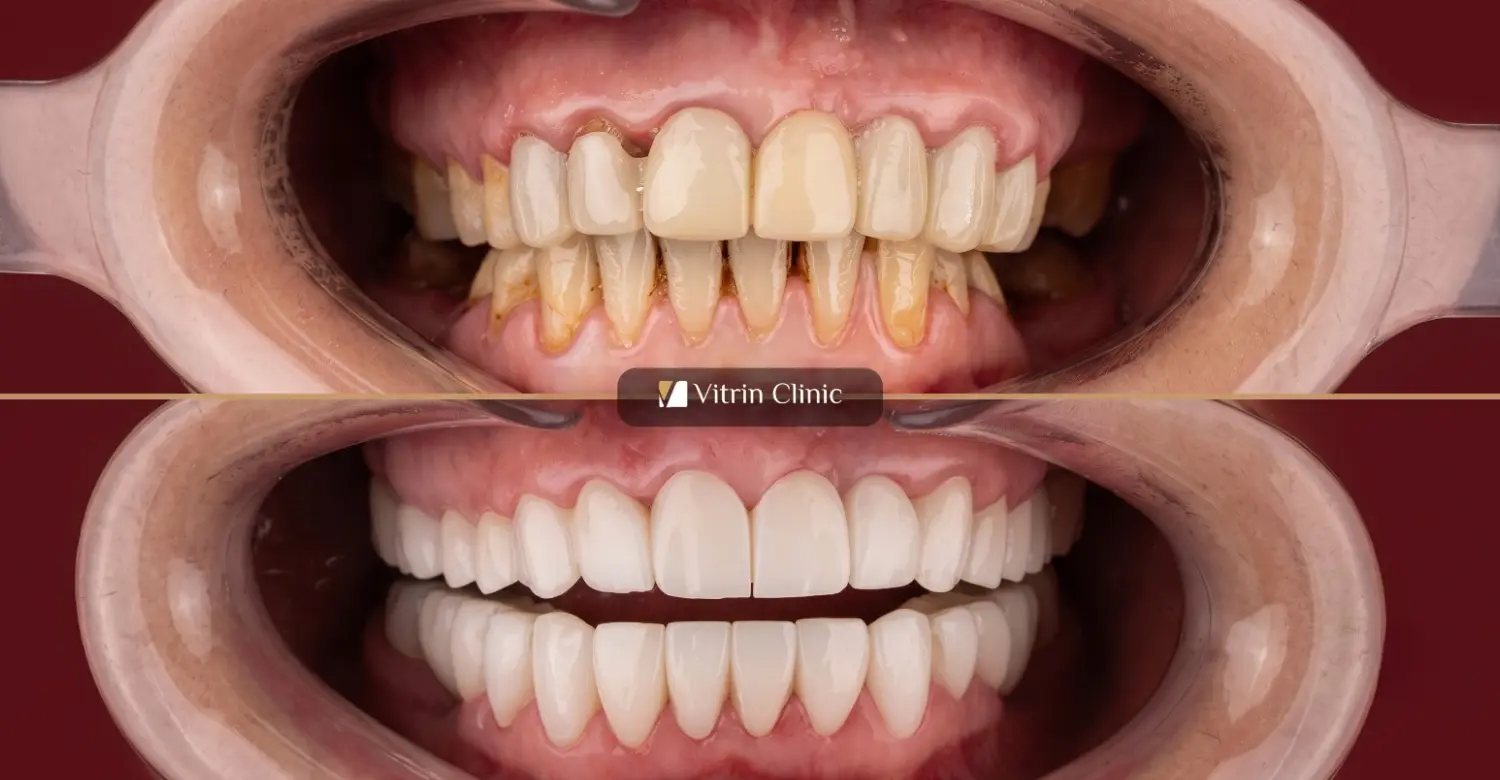
A natural-looking smile makeover relies on replicating the optical properties and anatomical nuances of real teeth. Expert cosmetic dentists study how light interacts with natural dentition, ensuring that the final restorations feature proper surface texture, micro-grooves, and incisal halos. By meticulously incorporating these subtle imperfections and characteristic traits, the dentist ensures the teeth look alive. A truly successful smile makeover does not look like a set of generic veneers; it looks like the absolute best possible version of your own natural teeth.
Customized Tooth Shape and Proportion
To achieve a seamless look, tooth shapes must be customized according to the patient’s gender, age, personality, and facial contours. For instance, rounded incisal edges often convey a softer, more feminine appearance, while squared edges provide a more masculine or strong look. Dentists utilize the Golden Proportion ($1.618:1:0.618$) to determine the ideal width-to-length ratio of the front teeth. This mathematical harmony ensures that the smile integrates perfectly with the patient’s facial canvas, looking completely organic when they laugh or speak.
Realistic Shade and Translucency
A natural smile is never a single, flat color. The incisal edges of natural teeth feature a high degree of translucency, sometimes appearing slightly blue or clear against a dark background. To replicate this, master ceramists layer different ceramic powders, creating a multi-dimensional restoration. The shade must transition smoothly from a richer, warmer hue near the gum line to a lighter, more transparent shade at the edge. This complex interplay of depth and light reflection prevents the restoration from looking like painted plastic.
Can a Hollywood Smile Damage Natural Teeth?
It can, but only if preparation is more aggressive than necessary and cuts into dentin instead of staying within enamel. With minimally invasive, conservative preparation, the risk to the natural tooth is low, and a well-planned Hollywood Smile can protect the tooth structure underneath rather than weaken it. A truly natural result depends heavily on Hollywood Smile veneers that are customized in shade, shape, and translucency rather than mass-produced.
How Tooth Preparation Affects Long-Term Enamel Health
The impact of a smile makeover on your long-term dental health depends entirely on the conservative nature of the tooth preparation process. Enamel is the outermost protective shield of your teeth, and preserving as much of it as possible is paramount for maintaining structural integrity. When a dentist removes only a microscopic layer of enamel, the tooth remains structurally sound, and the bond between the porcelain and the remaining enamel is exceptionally strong. However, aggressive preparation that cuts too deep compromises the tooth's underlying vitality. If you want to maintain a perfect smile permanently, it is crucial to understand hollywood smile vs veneers completely.
Enamel Reduction Reversible vs Irreversible
Traditional veneer preparation requires the removal of approximately $0.5\text{ mm}$ to $0.7\text{ mm}$ of surface enamel to accommodate the thickness of the porcelain. Because enamel cannot regenerate, this reduction is completely irreversible, meaning the tooth will always require a restoration to protect it. Modern advancements have introduced ultra-thin prepless or minimal-prep options requiring just $0.1\text{ mm}$ to $0.3\text{ mm}$ of reduction. Understanding this distinction is vital, as saving enamel directly correlates with reduced post-operative sensitivity and a significantly lower risk of future complications.
Minimally Invasive vs Traditional Veneer Preparation
Minimally invasive dentistry prioritizes the maximum preservation of healthy tooth structure. By utilizing advanced microscopy and ultra-thin ceramic materials, dentists can achieve stunning aesthetic transformations with little to no drilling. Traditional preparation, while still necessary for severely misaligned or deeply discolored teeth, carries a slightly higher biological cost. The modern clinical consensus heavily favors the minimally invasive route whenever possible, protecting the tooth’s natural defense mechanisms while still achieving an elite, red-carpet cosmetic result.
When Over-Preparation Becomes a Risk
When a dentist over-prepares a tooth by drilling past the enamel layer and deep into the underlying dentin, the structural integrity of the entire tooth is severely threatened. Bonding restorations directly to dentin is clinically weaker than bonding to enamel, increasing the likelihood of veneer de-bonding or fracture over time. Furthermore, over-preparation exposes the delicate internal dental pulp to thermal and chemical irritants. This can lead to chronic nerve inflammation, severe post-operative pain, and the ultimate need for root canal therapy to salvage the tooth. Before making any major medical decisions, please consult your dentist and thoroughly review avoiding after hollywood smile for safety.
Does Everyone Get Veneers?
No. A Hollywood Smile is a result, not a single procedure: veneers, crowns, whitening, and composite bonding are all used depending on each tooth's condition. Dentists decide tooth-by-tooth based on structural integrity, discoloration, and alignment, rather than applying the same treatment across the whole smile.
When Crowns, Bonding, or Whitening Are Used Instead
A comprehensive Hollywood Smile makeover is rarely limited to a single dental treatment modality. While porcelain veneers remain the most popular choice for an aesthetic overhaul, they are not universally appropriate for every single tooth in a patient's mouth. Experienced cosmetic dentists utilize a diverse toolset including full-coverage crowns, composite bonding, and medical-grade teeth whitening to resolve specific structural and cosmetic issues. This multi-faceted approach ensures that each individual tooth receives the exact type of therapeutic intervention it needs to look and function perfectly.
Matching Treatment to Tooth Condition
The choice of dental treatment is tightly coupled with the current structural state of the target tooth. For instance, a tooth that has been severely weakened by large cavities or a root canal requires a full-coverage crown to restore its physical strength. Conversely, a minor chip on an otherwise healthy incisor can be effortlessly corrected with conservative composite bonding. Meanwhile, teeth that are anatomically perfect but lack luster can be addressed via laser whitening, ensuring no unnecessary structural removal takes place during the process. Comparing the two approaches side by side, Hollywood Smile vs. natural smile comes down to how much brightness and symmetry a patient wants versus subtle, individualized enhancement.
How Dentists Decide Which Treatment Fits Each Tooth
Determining the correct treatment plan requires a meticulous clinical and radiographic evaluation during the initial consultation. The cosmetic dentist must analyze several critical variables, including the patient's bite alignment, the volume of remaining healthy enamel, periodontal health, and any underlying functional habits like teeth grinding. By mapping these findings, the dentist develops a highly strategic, tooth-by-tooth master plan that guarantees long-term functional success while achieving the overarching aesthetic goals of the Hollywood Smile makeover.
Case-by-Case Evaluation Criteria
The primary clinical criteria used to select individual tooth treatments involve assessing structural loss and mechanical stress. Dentists analyze the percentage of healthy enamel left on the facial surface of the tooth to see if a veneer can properly bond. If the structural integrity is compromised by more than $50\%$, a dental crown becomes the standard recommendation. Additionally, for minor aesthetic flaws where budget or time is limited, direct composite bonding is often favored due to its non-invasive, single-visit execution.
What Materials Create the Most Natural Appearance?
Porcelain and lithium-disilicate ceramics like E-max create the most natural appearance because their translucency mimics how light passes through real enamel. Zirconia is stronger but historically more opaque, so it's used more selectively typically on back teeth or reinforced for visible front teeth.
Porcelain vs E-max vs Zirconia Light Reflection & Translucency
Choosing the right dental material is paramount to striking the perfect balance between exceptional physical durability and lifelike aesthetics. Traditional feldspathic porcelain offers unmatched artistic detail but is relatively fragile. Lithium disilicate, popularly known as E-max, represents the gold standard for natural aesthetics due to its incredible light transmission and glass-like qualities. Zirconia, on the other hand, provides unparalleled structural strength, making it ideal for the high-pressure posterior regions of the mouth or for masking heavily discolored underlying teeth.
Why Translucency Matters More Than Whiteness
In cosmetic dentistry, the success of a restoration is measured by its translucency rather than its level of whiteness. Natural teeth are semi-transparent, allowing a certain amount of ambient light to pass through the enamel and bounce off the dentin layer beneath. If a dental material is completely solid and lacks translucency, it looks chalky, flat, and artificial under natural daylight. High-quality materials like E-max precisely mimic this internal light refraction, giving the teeth a brilliant, three-dimensional depth that looks completely real. To ensure your restorations last as long as possible, you must learn more about crown sensitivity on molar immediately.
Why Material Choice Affects the "Fake" Look
The material selected for your restorations directly dictates how your new smile interacts with ambient lighting. Low-grade or improperly handled dental materials fail to absorb or scatter light naturally. When a clinic uses outdated ceramics, the teeth absorb light poorly, causing them to stand out aggressively against your surrounding oral tissues. Choosing advanced, multi-layered blocks ensures that your smile retains its realistic characteristics across all environments, whether you are under direct studio lights or sitting in a dimly lit restaurant.
Opacity as the Main Cause of Artificial Appearance
High opacity is the single greatest culprit behind the dreaded "fake veneer" look. When a restoration blocks $100\%$ of light transmission, it resembles a piece of polished plastic or white plaster rather than natural human bone structure. Monochromatic, highly opaque materials completely hide the subtle internal details that make human teeth look authentic. To combat this, modern cosmetic laboratories use premium, variable-density ceramics that transition gracefully from an opaque core for structural masking to a highly translucent incisal edge for premium realism.
How Dentists Choose Tooth Shade
Dentists match shade to the patient's skin tone, age, and facial features rather than defaulting to the whitest option available, often using digital shade-matching tools for greater accuracy than a traditional shade guide under variable room lighting. Because enamel cannot regenerate once removed, understanding the potential side effects of a Hollywood Smile helps patients set realistic expectations before committing to treatment.
Matching Shade to Skin Tone, Age, and Facial Features
Selecting the perfect color for a Hollywood Smile is an intricate process that blends medical science with visual artistry. A master cosmetic dentist never selects a shade in isolation; they evaluate the patient’s skin tone complexion, the whites of their eyes (sclera), age, and facial topography. The ultimate clinical goal is to find a shade that rejuvenates the face without overwhelming it. For instance, more mature patients look more natural with a slightly warmer white, as hyper-bright teeth create an immediate aesthetic disconnect.
Why One Shade Doesn't Fit All Patients
Every human face possesses a unique color palette, meaning a tooth shade that looks dazzlingly natural on one individual can look blindingly fake on another. Skin undertones whether cool, warm, or neutral/heavily influence how a tooth shade is perceived by the human eye. Placing a bright bleach shade against a very dark or highly pale complexion can produce an aggressive, high-contrast look that betrays the dental work. True personalization demands custom shade blends that respect these individual biological boundaries.
Digital Shade-Matching Tools vs Traditional Shade Guides
To identify the absolute best tooth color, modern clinics have moved beyond relying solely on the human eye. Traditional ceramic shade guides, like the VITA system, are still used as a physical reference point, but they are increasingly supported by high-fidelity digital shade-matching spectrophotometers. These advanced digital instruments analyze light wavelengths reflected from the tooth surface, eliminating human error caused by ambient clinic lighting or operator eye fatigue. This synthesis ensures flawless color consistency across the entire smile.
Accuracy Differences Between the Two Methods
While traditional manual shade matching relies heavily on the dentist's subjective perception and the lighting conditions of the treatment room, digital shade matching offers pure, mathematical objectivity. Spectrophotometers isolate the tooth from external light contamination, measuring color values across three distinct dimensions: hue, value, and chroma. This provides the dental laboratory with an exact digital recipe, eliminating guesswork and significantly reducing the need for multiple manual color adjustments or time-consuming restoration remakes.
How Digital Smile Design Prevents Fake-Looking Smiles
Digital Smile Design lets patients preview and approve their result before treatment begins, mapping facial proportions and lip dynamics across natural expressions rather than a single static photo significantly reducing the risk of a mismatched or artificial-looking outcome. Many of the concerns people raise about an artificial look are actually common Hollywood Smile myths rather than accurate reflections of modern cosmetic dentistry.
Previewing the Result Before Treatment Begins
Digital Smile Design (DSD) is a revolutionary technological framework that removes all unpredictability from cosmetic dental makeovers. By taking high-resolution 3D facial scans, intraoral digital impressions, and specialized video recordings, the dentist creates a comprehensive digital clone of the patient's mouth. This allows the practitioner to precisely plan the entire transformation on a computer screen before a single tooth is touched. Patients actively participate in modifying their future smile, ensuring total alignment between their expectations and the clinical reality.
How the Preview Process Works
The DSD preview process transitions seamlessly from a virtual 3D rendering to a tangible, real-world experience. Once the digital blueprint is finalized, the software guides a high-precision 3D printer to create a physical model of the proposed smile. From this model, a temporary resin "mock-up" is fabricated and placed directly over the patient's natural teeth without any drilling. This allows the patient to walk out, see their future teeth in real-world lighting, and test their speech and lip movements.
Facial Proportion Mapping and Lip Dynamics
A primary reason why Digital Smile Design guarantees an incredibly natural result is its intense focus on facial proportion mapping. The software calculates the exact relationship between the dental midline, the interpupillary line of the eyes, and the horizontal plane of the face. Furthermore, it tracks dynamic movements such as full laughter, subtle smiling, and resting speech to ensure the teeth fit into the natural frame created by the lips, avoiding any stiff or robotic appearance.
Why Lip Line Affects Final Appearance
The position of your lips during rest and speech determines exactly how much tooth structure and gum tissue are displayed to the world. Patients with a high lip line expose their entire tooth length along with a portion of the gingiva, requiring flawless margin placement to look natural. Conversely, a low lip line conceals the upper third of the teeth, shifting the aesthetic focus down to the incisal biting edges. DSD maps these lip movements precisely so the restorations never feel disproportionate.
Celebrity Smiles vs Real Patients
Celebrity smiles often look more dramatic than real-life results because of professional lighting, camera filters, and photo retouching, not just dentistry. A well-designed Hollywood Smile is built to look natural and consistent in everyday daylight, not only under a camera flash.
What Media Photos and Lighting Don't Show
The blindingly flawless celebrity smiles broadcasted across social media, television screens, and magazine covers often distort our perception of clinical reality. In the real world, human teeth are subject to shifting shadows, varying moisture levels, and changing environmental lighting. On-screen, these subtle variations are easily masked by expensive production equipment, strategic camera angles, and professional diffusers. Understanding this difference is essential for any patient undergoing a smile makeover, as true beauty lies in how the smile performs in daily life.
Camera Filters, Lighting, and Retouching
A vast majority of the "perfect" Hollywood smiles seen online are heavily augmented by digital manipulation rather than dental artistry alone. High-contrast ring lights eliminate the natural shadows between teeth, making them look flatter and whiter than they truly are. Furthermore, real-time video filters and photo retouching software systematically erase the microscopic textures, subtle lines, and natural translucencies engineered into high-end ceramic work. When seeking a makeover, relying on unedited clinical before-and-after portfolios is always best.
Setting Realistic Expectations for Real-World Results
Achieving a successful Hollywood Smile requires establishing grounded, realistic expectations during your initial clinical consultation. A truly world-class, natural-looking result should look healthy, vibrant, and radiantly clean, rather than appearing like an unblemished, solid block of white porcelain. The goal of modern aesthetic dentistry is to enhance your natural facial beauty and boost your self-confidence, not to give you a generic, cookie-cutter smile that completely strips away your individual facial character and unique anatomical identity.
What a Natural Result Actually Looks Like Day-to-Day
In normal day-to-day settings, a naturally designed Hollywood Smile exhibits a brilliant play with ambient light. When you step into natural sunlight, the incisal edges of the teeth show a delicate transparency, while the body of the tooth reveals subtle, lifelike vertical textures. The teeth sit comfortably against your lower lip line, and your gums remain a healthy, coral-pink color without any signs of swelling or dark edges. It looks like you were simply blessed with genetically perfect dental anatomy.
Are Veneers Responsible for the "Fake" Look?
Not necessarily. High-quality porcelain veneers are designed to replicate natural enamel's light behavior. Poor outcomes usually come from rushed planning, low-grade materials, or an overly dramatic shade choice not from veneers themselves as a treatment option.
What High-Quality Porcelain Veneers Can Correct
Porcelain veneers are incredibly versatile cosmetic tools capable of resolving an extensive spectrum of severe aesthetic and structural dental flaws. When masterfully crafted, these ultra-thin ceramic shells can permanently mask deep intrinsic tetracycline discoloration, close wide gaps (diastemas), repair jagged or chipped edges, and correct mild tooth misalignment without orthodontic braces. Because high-quality porcelain mimics the physical and optical properties of natural enamel so perfectly, it serves as the ultimate material for creating a fresh, pristine smile canvas.
Discoloration, Gaps, Chips, and Mild Misalignment
For patients suffering from chronic enamel erosion, severe staining, or developmental defects, veneers offer a transformative second chance. They fit seamlessly over the front surface of the teeth, instantly correcting irregular shapes and filling in gaps that accumulate food or cause speech impediments. By gently re-aligning the visual smile zone, veneers bring immediate balance and symmetry to the mouth, drastically improving light reflection across the teeth and providing a clean, healthy, and highly youthful appearance.
Where the Problem Really Comes From
When a smile makeover looks noticeably artificial, the blame should never be pinned on the porcelain veneers themselves. The root cause of a substandard, fake-looking result is invariably traced back to flawed diagnostic planning, substandard laboratory fabrication, or a fundamental lack of artistic vision from the clinical team. Veneers are simply a medium; the final appearance is entirely dependent on the skill of the cosmetic dentist and the master ceramist who sculpts, stains, and bakes the dental porcelain.
Planning and Material Quality, Not the Veneer Itself
An artificial outcome is typically born in the initial planning phases. If a clinic cuts corners by utilizing generic, monochromatic ceramic blocks or rushes past the digital design phase, the final smile will look uninspired and blocky. Achieving absolute realism requires investing in premium materials like E-max or multi-layered zirconia, combined with a clinician who takes the time to manually refine the shape, margins, and textures of each individual restoration to match the patient’s face.
Can People Tell If You Have a Hollywood Smile?
In most well-planned cases, no. People may notice the smile looks healthier and brighter without being able to identify why. Results become more noticeable only when patients choose extremely white shades or oversized restorations that don't match their facial proportions.
Why a Well-Designed Smile Goes Unnoticed
A masterfully designed Hollywood Smile will never broadcast itself as a piece of cosmetic dental work. Instead, it works quietly to enhance your overall facial attractiveness, prompting people to compliment your glowing appearance, your radiant energy, or your youthful eyes without ever realizing your teeth have been structurally altered. By respecting the natural rules of dental anatomy, the transitions between your real tissue and the ceramic remain completely invisible, allowing your smile to blend perfectly into your face.
Enhancement vs Obvious Transformation
There is a massive clinical chasm between enhancing a patient's natural smile and forcing an obvious, aggressive transformation upon their face. True enhancement respects the subtle asymmetries and unique characteristics of your original smile, simply elevating the brightness, correcting structural damage, and optimizing proportions. An obvious transformation, by contrast, obliterates your original dental identity, replacing it with an overly standardized, hyper-white arch that looks completely foreign to your facial expressions and natural lip movements.
When Results Become More Noticeable
Your dental restorations will only become glaringly noticeable to the public if the fundamental principles of cosmetic dentistry are actively ignored. If the teeth are made too long, they can cause a lisp during speech or unnaturally push your lips forward, creating a permanent grimace. People notice dental work when it breaks the visual harmony of the face such as when the teeth lack natural light reflection or look completely out of proportion with the width of the mouth.
Oversized Restorations and Extreme Shades
The two most common red flags that immediately expose cosmetic dental work are oversized restorations and extreme, non-natural white shades. Teeth that are too wide or overly thick close up the natural embrasures (the small triangular spaces between teeth), resulting in a dense wall of ceramic. When this bulky structure is combined with an extreme, opaque bleach shade that lacks any internal color gradient, the smile looks like a synthetic prosthesis, drawing negative attention rather than admiration.
How Long Does a Hollywood Smile Last?
A Hollywood Smile isn't permanent, but high-quality porcelain veneers commonly last 10–15 years, with systematic reviews reporting survival rates of roughly 94% at 5 years and 93% at 10 years. Longevity depends on oral hygiene, bruxism management, and regular checkups.
Average Lifespan of Porcelain Veneers
When engineered with clinical precision and bonded using state-of-the-art dental adhesives, high-quality porcelain veneers possess an impressive lifespan, typically lasting anywhere from 10 to 15 years, or even longer. Unlike composite bonding, high-grade dental porcelain is highly resistant to structural wear and completely immune to surface staining from coffee, tea, or tobacco. Over a decade of clinical data demonstrates that porcelain restorations exhibit exceptional structural survivability, making them a highly reliable, long-term investment for your oral health.
Long-Term Survival Rates With Proper Care
Clinical studies indicate that porcelain veneers boast a 10-year survival rate exceeding $95\%$ when executed by a skilled cosmetic dentist. This exceptional longevity is made possible by the powerful chemical bond formed between the clean dental enamel and the treated porcelain surface. Over time, as long as the underlying tooth remains healthy and protected from excessive mechanical trauma, the veneer functions as an integral part of the natural tooth, comfortably withstanding the daily forces of chewing and speaking.
Factors That Affect Longevity
While porcelain is inherently durable, the ultimate lifetime of your Hollywood Smile is heavily influenced by your personal habits and oral care routine. Restorations do not decay, but the natural tooth structure supporting them remains vulnerable to cavities and periodontal disease along the gum line. Neglecting your daily oral care can lead to localized gum recession, exposing the edges of the veneers and compromising both the aesthetic seamlessness and the structural stability of your entire smile makeover.
Hygiene, Lifestyle, and Regular Checkups
To maximize the lifespan of your smile, you must maintain an immaculate oral hygiene regimen consisting of twice-daily brushing with a non-abrasive toothpaste and meticulous daily flossing. Lifestyle adjustments, such as wearing a custom nightguard if you grind your teeth (bruxism) and avoiding biting directly into hard objects like ice or candy, protect the ceramic from fracturing. Finally, visiting your dentist bi-annually for professional cleanings and structural evaluations ensures any minor issues are intercepted long before they cause a failure.
What Is the Average Cost of a Hollywood Smile in Turkey?
A full Hollywood Smile at Vitrin Clinic typically ranges from $3,000–$7,000 for 16–20 teeth, with individual veneers or crowns priced between $180–$450 depending on material. The exact cost depends on the number of teeth, material choice, and any supporting procedures needed.
Cost Breakdown by Material and Case Complexity
Turkey has established itself as the premier global destination for high-end cosmetic dentistry, offering elite clinical care at a fraction of the cost found in Western Europe or North America. The final financial investment for a Hollywood Smile is determined by the specific material chosen, the total number of teeth requiring treatment, and the complexity of your case. Below is an overview of the competitive pricing structures typically found at premium Turkish dental clinics.
Pricing Table (Porcelain, E-max, Zirconia, Full Smile)
Restoration Type / Material | Average Cost Per Tooth | Full Smile Package (20 Teeth) | Primary Aesthetic Advantage |
Traditional Porcelain | €150 – €200 | €3,000 – €4,000 | Good durability, classic smooth surface |
Premium E-max (Lithium Disilicate) | €230 – €300 | €4,500 – €6,000 | Maximum lifelike translucency & depth |
High-Strength Zirconia | €180 – €250 | €3,600 – €5,000 | Excellent structural masking & strength |
Composite Bonding (Direct) | €80 – €120 | €1,600 – €2,400 | Fully non-invasive, completed in one day |
What Affects the Final Price
The total cost of your smile transformation is never an arbitrary number; it reflects the customized clinical resources required to safely achieve your goals. While a standard package usually covers the dental laboratory fees and materials, your specific oral anatomy may require additional pre-operative treatments to build a healthy foundation. Choosing a highly reputable clinic that offers fully transparent pricing ensures you never face unexpected fees during your journey.
Number of Teeth, Material, Additional Procedures
The most significant cost variable is the sheer number of restorations needed to fill your visible smile zone, which typically ranges from 16 to 20 teeth. Additionally, premium materials like E-max command higher laboratory fees due to the advanced technology required to mill them. Finally, if you require therapeutic treatments before aesthetic work begins such as laser gum contouring for a gummy smile, surgical dental implants for missing teeth, or root canal therapy the overall price will adjust accordingly.
Dr. Rifat Alsaman's Clinical View
Dr. Alsaman prioritizes translucency over whiteness in shade selection and follows a conservative, enamel-preserving approach to tooth preparation treating each Hollywood Smile as a decision that should protect the natural tooth for life, not just deliver a short-term aesthetic result.
Why Translucency Is Prioritized Over Whiteness
As the Head of the Medical Team at Vitrin Clinic, Dr. Rifat Alsaman firmly believes that true dental beauty is rooted in optical authenticity. In his extensive clinical experience, prioritizing extreme whiteness over natural translucency is the fastest way to ruin a cosmetic makeover. Dr. Alsaman designs restorations to match the natural light transmission of human enamel, ensuring they reflect light organically across all environments and look vibrantly alive.
Clinical Reasoning Behind Shade Selection
Dr. Alsaman’s proprietary shade selection protocol focuses on achieving a seamless blend with the patient's natural biology. He analyzes the tone of the patient's skin, the age-appropriate gradient of their dentition, and the natural framework of their lips. By meticulously formulating multi-dimensional ceramic blends rather than using flat, monochromatic bleach whites, his custom treatments provide an immediate, youth-enhancing lift while ensuring the final results remain completely undetectable as artificial dental work.
A Conservative Approach to Tooth Preparation
At Vitrin Clinic, Dr. Rifat Alsaman mandates a strict, minimally invasive preparation philosophy across his entire clinical team. He views natural tooth enamel as an irreplaceable asset that must be fiercely preserved. By utilizing cutting-edge digital planning tools and ultra-thin ceramic veneers, Dr. Alsaman minimizes or completely eliminates the need for aggressive drilling, protecting the underlying nerve tissue and ensuring long-term structural success.
Balancing Aesthetics With Long-Term Tooth Health
For Dr. Alsaman, an outstanding aesthetic transformation should never come at the expense of a patient's long-term biological health. He meticulously balances the structural requirements of the ceramic material with the preservation of your natural enamel. This conservative clinical methodology drastically reduces post-operative sensitivity, maximizes the bond strength of the restorations, and guarantees that your new Hollywood Smile remains beautiful, functional, and healthy for decades to come.
Why You Choose Vitrin Clinic
Vitrin Clinic stands out as a world-class luxury dental center located in Istanbul, Turkey, renowned for combining elite medical mastery with an uncompromising patient experience. Driven by advanced digital smile technology, a highly experienced team of over 25 specialist doctors, and a state-of-the-art in-house laboratory, the clinic has successfully transformed the smiles of over 117,000 satisfied patients across 52 countries.
At Vitrin Clinic, your smile makeover is treated as a highly customized work of art rather than a commercial procedure. By maintaining strict international safety standards, utilizing premium Swiss and German ceramic materials, and offering completely transparent pricing with zero hidden fees, Vitrin Clinic delivers a seamless, stress-free journey. From your initial digital consultation to your luxury VIP transfers and 5-star hotel accommodations, every single detail is meticulously managed to provide you with a natural, breathtakingly beautiful Hollywood Smile that radiates health and confidence.
References
Porcelain laminate veneer translucency and surface treatments — PMC (US NLM): https://pmc.ncbi.nlm.nih.gov/articles/PMC3942531/
Survival rates of porcelain laminate veneers, systematic review — PMC: https://pmc.ncbi.nlm.nih.gov/articles/PMC8184312/
Minimally invasive microscopic tooth preparation, specialist consensus — PMC: https://pmc.ncbi.nlm.nih.gov/articles/PMC6802612/
Dentin/enamel exposure quantification in veneer preparation depths — PMC: https://pmc.ncbi.nlm.nih.gov/articles/PMC13060536/
Digital Smile Design — innovative tool in aesthetic dentistry — PMC: https://pmc.ncbi.nlm.nih.gov/articles/PMC7193250/
DSD vs conventional smile design, randomized controlled trial — PMC: https://pmc.ncbi.nlm.nih.gov/articles/PMC11001014/
Recent use, patient satisfaction, and advancement in DSD, systematic review — PMC: https://pmc.ncbi.nlm.nih.gov/articles/PMC11251929/
FAQs
Dr. Rifat Alsaman has more than 5 years of clinical experience in dentistry and currently serves as the Head of the Medical Team at Vitrin Clinic. He is dedicated to providing exceptional patient care, overseeing treatment planning, and ensuring the highest clinical standards across the team. His expertise, attention to detail, and commitment to continuous professional development have helped countless patients achieve healthier, more confident smiles.


