.webp&w=3840&q=75)
Are Traditional Braces Cheaper Than Invisalign? , Understanding whether traditional braces are cheaper than Invisalign is essential for patients budgeting for orthodontic treatment and comparing financial options. Generally, the answer is yes. Metal braces typically have a lower starting price point. However, the cost gap has narrowed significantly due to technological advancements and increased competition among providers.
Introduction to Braces and Invisalign
Braces and Invisalign represent two primary orthodontic approaches offering different treatment experiences, costs, and aesthetics. When patients evaluate treatment costs, they often weigh the discreet look of aligners against the budget-friendly reputation of metal brackets. Both methods are highly effective. However, they cater to different lifestyles and financial plans.
Understanding Traditional Braces
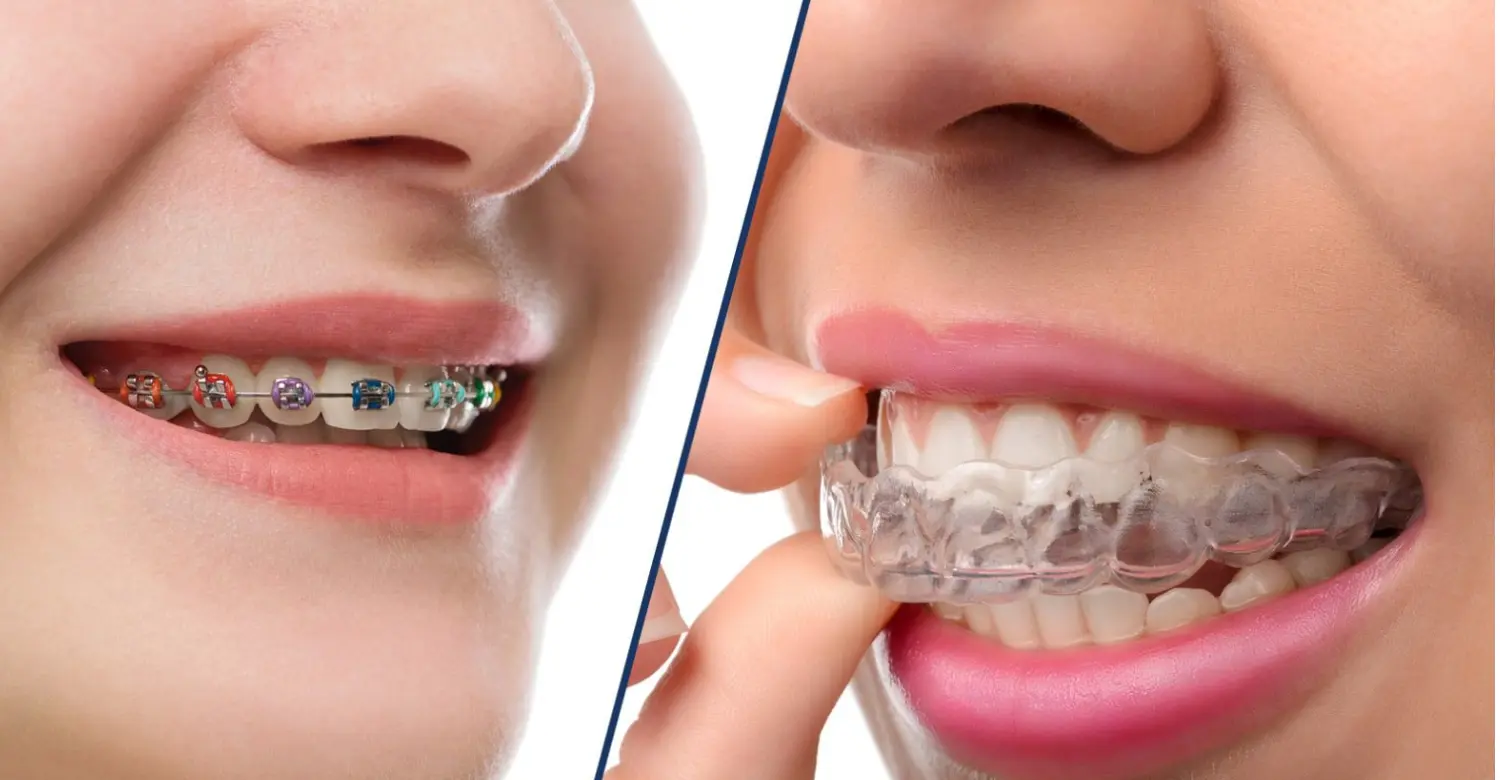
Traditional braces use metal or ceramic brackets bonded to teeth, with wires applying continuous pressure. Because the materials are standardized and the mechanics are well-established, these appliances require less proprietary lab technology. They remain the gold standard for complex corrections. They give orthodontists maximum control over tooth movement. To make an accurate comparison, we must establish how much it costs to straighten teeth on average today.
Overview of Invisalign and Clear Aligners
Invisalign uses removable transparent plastic trays custom-fabricated through sequential digital mapping. While these trays offer discretion, the custom manufacturing process adds to the total investment. The proprietary nature of the Invisalign system often adds a premium to the laboratory fees that providers must pay.
Differences Between Clear Braces and Invisalign
Clear ceramic braces are fixed to the teeth, while Invisalign is removable. When evaluating price differences, it is important to note that ceramic braces are often priced somewhere in the middle. They are more expensive than metal, but they often cost less than clear aligners.
Key Factors Affecting Orthodontic Costs
Several variables influence your final bill, including geographic location, the expertise of the orthodontist, and the length of treatment. To accurately estimate expenses for your specific case, you must consider whether you need a minor adjustment or a major bite correction. Labor costs vary directly based on time spent in the chair.
Are Traditional Braces Cheaper Than Invisalign?
Yes, traditional braces are often cheaper than Invisalign. However, the total cost depends on treatment complexity, duration, location, and what is included in your package. Invisalign may have a higher upfront price because of digital planning and customized aligners. Conversely, braces can involve additional expenses, such as repairs or replacement components.
When comparing traditional braces vs. Invisalign cost, consider the full treatment journey. Factor in consultations, adjustments, refinements, retainers, and follow-up care. At Vitrin Clinic, patients receive an individualized assessment to determine which option offers the best combination of clinical suitability, aesthetics, convenience, and long-term value.
Dr. Rifat Alsaman, Head of the Medical Team at Vitrin Clinic and a cosmetic dentist, recommends choosing orthodontic treatment based on your dental needs rather than price alone.
Cost Comparison: Braces vs Invisalign
Direct comparison shows metal braces ranging from $3,000 to $7,000, while Invisalign typically ranges from $3,000 to $8,000. In many moderate cases, the prices are virtually identical. The final figure depends heavily on the clinic's internal pricing structure.
Factors That Make Invisalign More Expensive
Invisalign involves high-tech 3D printing and specialized software. These lab fees are a major reason clear aligners often cost more. The orthodontist must pay the manufacturer for each set of custom trays produced for the patient.
Situations Where Braces Might Cost More
If a case is extremely severe, requiring headgear or temporary anchorage devices, braces may require more frequent, intensive office visits. In these rare instances, the labor-intensive nature of complex braces can drive prices up beyond clear aligner fees.
Effectiveness and Benefits
Both systems achieve excellent results, but they excel in different areas. Braces are often more effective for rotating cylindrical teeth or closing large gaps. Choosing them might save you money by preventing the need for a second "refinement" treatment later.
Is Invisalign Better Than Traditional Braces?
"Better" is subjective. Invisalign offers superior hygiene and aesthetics. Meanwhile, braces offer better precision for difficult cases. Consider if the convenience of eating whatever you want with aligners is worth the potentially higher price tag.
Advantages of Traditional Braces
The main advantage of braces is that they are "compliance-free." You cannot lose them or forget to wear them. This reliability is a huge benefit for parents treating teenagers, as it avoids the cost of lost aligners.
Advantages of Invisalign
Invisalign’s primary draws are comfort and invisibility. Many adults choose Invisalign despite potential extra costs. For them, attending a meeting or a wedding without visible metal is worth the extra investment.
Treatment Duration Comparison
Most treatments last between 12 and 24 months. Time is money in the medical world. Shorter treatment times generally lead to lower overall costs in both systems. The initial price tag is just one factor. The comfort clear aligners provide during treatment is highly valuable. Many patients find that swapping metal brackets for clear trays is well worth the slightly higher financial investment.
Aesthetic and Comfort Considerations
Braces can irritate the cheeks and lips. In contrast, aligners consist of smooth plastic. For many, daily quality of life makes the comfort of plastic over metal far more important than small price differences.
Choosing the Right Option for You
The best way to decide is to schedule a consultation. When you sit down with an expert, you can discuss quotes tailored to your specific teeth. They can provide a line-item breakdown comparing both methods.
Age and Lifestyle Considerations
Lifestyle plays a massive role in overall value. A busy professional might care less about initial costs than saving time. Aligners mean fewer emergency appointments for broken wires or loose brackets.
Hidden Costs and Long-Term Value Considerations
The initial treatment price does not always represent the total cost of orthodontic care. Patients should consider potential refinement fees, replacement aligners, bracket repairs, additional appointments, retainers, and other expenses. At Vitrin Clinic, treatment planning focuses on the complete cost of care rather than only the starting price, helping patients compare traditional braces and Invisalign more accurately.
Refinement Fees vs. Replacement Aligners and Bracket Repairs
With Invisalign, some patients may require additional refinement aligners if teeth do not reach the planned position after the initial series. The cost depends on the treatment plan and what is included by the provider. Traditional braces can also involve unexpected costs, such as repairs for broken brackets or wires.
Dr. Rifat Alsaman, Head of the Medical Team at Vitrin Clinic and a cosmetic dentist, explains that patients should ask what is included in their orthodontic package before choosing a treatment. Comparing the complete treatment plan is more meaningful than comparing only the initial price.
Related secondary keywords: Invisalign refinement fees, replacement aligner fee, hidden costs of orthodontic treatment.
Cost-Saving Strategies for Orthodontic Treatment
Patients can reduce unexpected orthodontic expenses by following their treatment instructions carefully, attending scheduled appointments, protecting their appliances, and asking about all included services before treatment begins. For Invisalign, wearing aligners as instructed can help avoid unnecessary delays and additional refinement.
At Vitrin Clinic, patients can discuss their treatment goals, expected duration, included appointments, and potential additional costs before starting. Dr. Rifat Alsaman recommends choosing an orthodontic plan based on clinical suitability and total value rather than selecting the option with the lowest advertised starting price.
Post-Treatment Retention & Long-Term Expenses
Orthodontic treatment does not end when braces are removed or the final Invisalign tray is completed. Retainers are usually an important part of maintaining the position of the teeth. Because retainers may eventually need replacement, patients should include retention in their long-term orthodontic budget.
At Vitrin Clinic, retention is considered part of the overall treatment journey. Dr. Rifat Alsaman, Head of the Medical Team at Vitrin Clinic and a cosmetic dentist, emphasizes that maintaining the result is just as important as achieving the initial tooth movement.
The Retention Reality: Retainer Costs After Braces vs. Invisalign
Both braces and Invisalign patients may need retainers after active treatment. The type, number, material, and replacement schedule can affect the total cost. Therefore, there is no universal answer that retainers are automatically cheaper after braces or Invisalign.
Patients should ask whether retainers are included in their package and what replacement costs may apply. Vitrin Clinic can explain the retention plan during treatment planning so patients understand the potential long-term expenses.
reatment Flexibility & Switching Options
Orthodontic treatment plans can sometimes change when clinical circumstances, patient preferences, or compliance issues change. However, switching treatment methods is not always straightforward and should be evaluated by the treating dentist or orthodontist.
At Vitrin Clinic, the decision to change from braces to Invisalign is based on the patient's current tooth position, bite, treatment progress, and remaining treatment objectives rather than cost alone.
Can You Switch From Traditional Braces to Invisalign Partway Through?
Yes, in some cases, switching from traditional braces to Invisalign may be possible, but it is not suitable for every patient. The dentist must first assess tooth movement, bite relationships, attachments, and the remaining treatment requirements. A new digital scan and treatment plan may also be necessary.
Dr. Rifat Alsaman, Head of the Medical Team at Vitrin Clinic and a cosmetic dentist, notes that switching should be considered only when the new method can safely and predictably achieve the remaining treatment goals. Patients should also ask whether the switch creates additional fees.
Candidate Profiles: Making the Decision
The most cost-effective orthodontic treatment is not necessarily the treatment with the lowest starting price. Suitability, treatment complexity, lifestyle, oral hygiene, compliance, aesthetics, and expected treatment duration all influence overall value.
Vitrin Clinic evaluates these factors during consultation to help patients understand whether traditional braces or Invisalign better matches their individual needs.
Ideal Candidate Profile: Who Should Choose Braces?
Traditional braces may be a strong option for patients who need predictable control of complex tooth movements, significant bite correction, or treatment where fixed appliances are clinically preferred. They may also suit patients who do not want to manage removable aligners.
Dr. Rifat Alsaman, Head of the Medical Team at Vitrin Clinic and a cosmetic dentist, explains that braces can be particularly useful when continuous force and detailed control are needed. Patients should therefore choose braces based on clinical indications, not simply because they appear cheaper initially.
Ideal Candidate Profile: Who Should Choose Invisalign?
Invisalign may suit patients who prioritize discreet orthodontic treatment, removable trays, easier access for brushing and flossing, and greater flexibility during meals. However, successful treatment requires consistent aligner wear and good patient compliance.
At Vitrin Clinic, Invisalign suitability is assessed according to the patient's bite, tooth position, treatment goals, and ability to follow the prescribed wear schedule. Dr. Rifat Alsaman emphasizes that the best choice is the treatment that provides a predictable result while fitting the patient's lifestyle.
What We Notice Clinically
Clinically, the price difference between braces and Invisalign can become less important when the complete treatment journey is considered. Treatment complexity, compliance, oral hygiene, broken appliances, refinement needs, and retention can all influence the final value of treatment.
Dr. Rifat Alsaman, Head of the Medical Team at Vitrin Clinic and a cosmetic dentist, emphasizes that orthodontic treatment should be planned around the patient's diagnosis rather than price alone. A lower starting fee does not necessarily mean a lower total cost if additional appointments, repairs, refinements, or replacement appliances are required.
At Vitrin Clinic, the clinical team evaluates the patient's bite, alignment, treatment complexity, oral health, lifestyle, and aesthetic expectations before recommending an orthodontic approach.
Spotlight on Vitrin Clinic
At Vitrin Clinic, we believe everyone deserves a confident smile. When patients ask are traditional braces cheaper than invisalign, we provide a transparent breakdown of all costs involved so there are no surprises at the end of treatment. If metal wires seem too painful, searching for the most affordable teeth aligners might bridge the financial gap perfectly.
Cost Transparency and Flexible Payment Options
We offer flexible payment plans to bridge the gap. If you find that are traditional braces cheaper than invisalign but you really want Invisalign, our monthly financing can make the "more expensive" option fit your monthly budget.
Insurance Coverage and Discounts
Most dental insurance plans cover a flat dollar amount for orthodontics (e.g., $2,000). This applies to both types, so the question are traditional braces cheaper than invisalign often results in the same out-of-pocket savings from your provider.
Maintaining Oral Health to Avoid Extra Costs
Finally, follow your orthodontist's instructions perfectly. Whether you conclude are traditional braces cheaper than invisalign, the total cost will always rise if you don't wear your retainers or if you damage your appliances through poor care.
Clinical Note
The most appropriate orthodontic treatment depends on the patient's individual diagnosis, tooth movement requirements, bite relationship, oral health, and ability to follow treatment instructions. Cost comparisons should therefore be made using the complete treatment plan rather than the advertised starting price.
Dr. Rifat Alsaman, Head of the Medical Team at Vitrin Clinic and a cosmetic dentist, recommends that patients ask about treatment duration, included appointments, refinement policies, appliance repairs, retainers, and potential additional fees before beginning treatment.
This approach allows patients to compare braces and Invisalign based on both clinical suitability and long-term value.
Tips for Patients
Ask for a complete written treatment quote rather than comparing only the starting price.
Ask whether Invisalign refinement aligners are included in your package.
Confirm the potential cost of replacement aligners if trays are lost or damaged.
Ask about possible bracket or wire repair fees with traditional braces.
Confirm whether retainers are included after active orthodontic treatment.
Ask about future retainer replacement costs.
Follow your orthodontist's instructions to avoid unnecessary delays or additional appointments.
Attend scheduled reviews so treatment progress can be monitored.
Discuss your lifestyle and expectations honestly during your consultation.
At Vitrin Clinic, ask the clinical team to explain the expected total treatment journey before choosing between braces and Invisalign.
Dr. Rifat Alsaman's recommendation: Patients should focus on the combination of clinical suitability, predictability, convenience, and total treatment cost rather than choosing an orthodontic option solely because of its initial price.
Reference
FAQs

Dr. Rifat Alsaman has more than 5 years of clinical experience in dentistry and currently serves as the Head of the Medical Team at Vitrin Clinic. He is dedicated to providing exceptional patient care, overseeing treatment planning, and ensuring the highest clinical standards across the team. His expertise, attention to detail, and commitment to continuous professional development have helped countless patients achieve healthier, more confident smiles.
.webp&w=3840&q=75)


