Invisalign
November 4, 2026
Are Invisible Braces Turkey Right for Your Smile? Treatment, Cost & Results
 Dr. Sami Assani

Choosing Invisible Braces Turkey involves more than finding an affordable treatment. Patients should understand which orthodontic problems aligners can address, how treatment is planned, and what follow-up care involves.
Invisible orthodontic systems offer a less noticeable way to improve tooth alignment. However, treatment suitability depends on several factors, including tooth positions, bite relationships, and gum health.
This guide covers the available treatment options, clinical assessment, treatment stages, estimated costs, possible side effects, and practical advice for international patients. It also explains how Vitrin Clinic coordinates clear aligner treatment in Istanbul.
Key Takeaways
Compare treatment options: Clear aligners, lingual braces and ceramic braces offer different benefits.
Check suitability: Clear aligners can treat selected crowding, gaps and bite problems, but not every complex case.
Understand treatment duration: Treatment may take around 6–24 months or longer.
Compare costs: Indicative clear aligner treatment prices in Turkey range from 2,350–5,200.
Wear aligners consistently: Most removable systems require 20–22 hours of daily wear.
Consider follow-up care: Monitoring, refinements and retainers are important parts of treatment.
Check clinic credentials: Review orthodontist experience, treatment planning and supervision arrangements.
Plan international visits: Confirm appointment schedules and follow-up support before travelling.
Ready to transform your smile?
Talk to our team and get a personal FREE treatment plan.
Understanding Invisible Braces and Your Treatment Options
Invisible braces describe orthodontic systems designed to straighten teeth with less visible appliances. Depending on the system, treatment may involve removable clear aligners or fixed appliances.
Clear Aligners, Lingual Braces and Ceramic Braces
The main options include:
Clear aligners: Transparent, removable trays that guide teeth through planned movements.
Lingual braces: Fixed brackets attached to the inner surfaces of the teeth.
Ceramic braces: Tooth-coloured brackets designed to blend with natural teeth.
Clear aligners can be removed for meals and oral hygiene. Lingual and ceramic braces remain attached throughout treatment.
How Do Clear Aligners Straighten Teeth?
Each aligner applies controlled pressure to selected teeth. Patients wear a series of custom-made trays, changing them according to their orthodontist's instructions.
Some treatment plans include small tooth-coloured attachments. These help the aligners grip certain teeth and support specific movements.
The required system depends on the diagnosis, planned corrections, and treatment goals.
.jpg)
Who Can Benefit from Invisible Orthodontic Treatment?
Invisible Braces Turkey may be suitable for adults and teenagers with selected alignment problems. An orthodontic assessment is necessary to determine whether removable aligners can achieve the required movements.
Can Adults Have Clear Aligner Treatment?
Adults can receive orthodontic treatment when their teeth and supporting tissues are suitable. There is no fixed upper age limit.
Common reasons for seeking treatment include:
Crowded or overlapping teeth.
Gaps between teeth.
Selected rotated teeth.
Certain bite irregularities.
Relapse following previous orthodontic treatment.
Existing crowns, fillings, implants, and gum conditions require individual consideration.
Which Alignment Problems Can Clear Aligners Address?
Clear aligners may treat selected cases involving:
Mild to moderate dental crowding.
Spacing between teeth.
Certain tooth rotations.
Selected overbites and underbites.
Some crossbites and open bites.
More complex cases may require additional orthodontic techniques or fixed appliances.
When Might Fixed Braces Be More Appropriate?
Traditional fixed braces may be considered for:
Severe tooth rotations.
Significant bite discrepancies.
Complex vertical tooth movements.
Certain skeletal jaw problems.
The decision between clear aligners and fixed braces should reflect clinical requirements rather than appearance preferences alone.
What Happens Before Starting Invisible Braces Treatment?
A proper assessment helps identify the cause of misalignment and determine which treatment approach is suitable. It also identifies dental conditions that may need attention before orthodontic treatment.
Initial Dental and Orthodontic Examination
The assessment may include:
Tooth crowding, spacing, and rotation.
Upper and lower jaw relationships.
Gum health and supporting bone.
Existing crowns, fillings, and implants.
Jaw movement and bite function.
Any active dental or gum disease should be addressed before orthodontic treatment begins.
Digital Scans and Diagnostic Imaging
Digital scans create a three-dimensional record of the teeth and dental arches. X-rays may also be recommended when clinically necessary.
These images can help assess root positions, impacted teeth, and supporting bone. A digital scan alone cannot establish complete orthodontic suitability.
Building an Individual Treatment Plan
After reviewing the findings, the orthodontist determines:
Which teeth require movement.
The sequence of planned corrections.
Whether attachments or additional procedures are needed.
The estimated treatment duration.
The monitoring and refinement arrangements.
Digital simulations can illustrate proposed movements. However, they cannot guarantee the final result.
How Invisible Braces Treatment Works at Vitrin Clinic
At Vitrin Clinic in Istanbul, treatment planning follows a coordinated process based on each patient's dental condition and orthodontic goals.
1. Consultation and Clinical Assessment
Review dental history, expectations, and previous orthodontic treatment.
Examine tooth alignment, bite relationships, and gum health.
Arrange digital scans and X-rays when clinically necessary.
Discuss treatment suitability and possible options.
International patients may begin with a preliminary remote consultation. Final treatment decisions require appropriate clinical examination and diagnostic records.
2. Digital Planning and Treatment Preparation
Review digital records and proposed tooth movements.
Prepare an individual treatment plan based on clinical findings.
Explain the expected stages, estimated duration, and costs.
Discuss possible attachments or additional procedures.
3. Aligner Fitting and Patient Instructions
Once the plan is approved, custom aligners are arranged for fitting.
Check how the aligners fit.
Explain how to insert and remove the trays.
Provide instructions for daily wear and cleaning.
Explain the prescribed tray-changing schedule.
Discuss ways to manage initial discomfort.
4. Progress Reviews and Refinements
Monitor tooth movement and aligner fit.
Review treatment progress at scheduled appointments.
Arrange additional scans when required.
Consider refinement trays if certain movements remain incomplete.
Remote communication can support suitable follow-up stages. Some concerns still require an in-person examination.
5. Retainers and Aftercare
After active treatment, retainers help maintain the corrected tooth positions. Depending on the case, removable retainers, fixed retainers, or both may be recommended.
Vitrin Clinic provides guidance on retainer use and ongoing dental reviews.
Ready to transform your smile?
Talk to our team and get a personal FREE treatment plan.
How Long Does Invisible Braces Treatment Usually Take?
The duration of Invisible Braces Turkey treatment varies according to case complexity, planned movements, and patient compliance.
Estimated Timeline by Treatment Complexity
Typical estimates include:
Mild corrections: Approximately 6–9 months.
Moderate corrections: Approximately 12–18 months.
Complex cases: Approximately 18–24 months or longer.
These ranges are estimates rather than guaranteed treatment times. Refinements or unexpected adjustments may extend the process.
Daily Aligner Wear Requirements
Most removable aligners require approximately 20–22 hours of daily wear.
Patients should remove them for:
Meals and snacks.
Drinks other than plain water.
Brushing and flossing.
Consistent wear helps maintain the planned treatment sequence. Patients should always follow their orthodontist's instructions.
Factors That May Extend Treatment
Treatment may take longer because of:
The severity of crowding or spacing.
Complexity of bite correction.
Difficulty of planned tooth movements.
Inconsistent aligner wear.
Individual biological responses.
Additional refinements or procedures.
Missed progress appointments.
Age alone does not determine treatment duration. Oral health and individual clinical findings also matter.
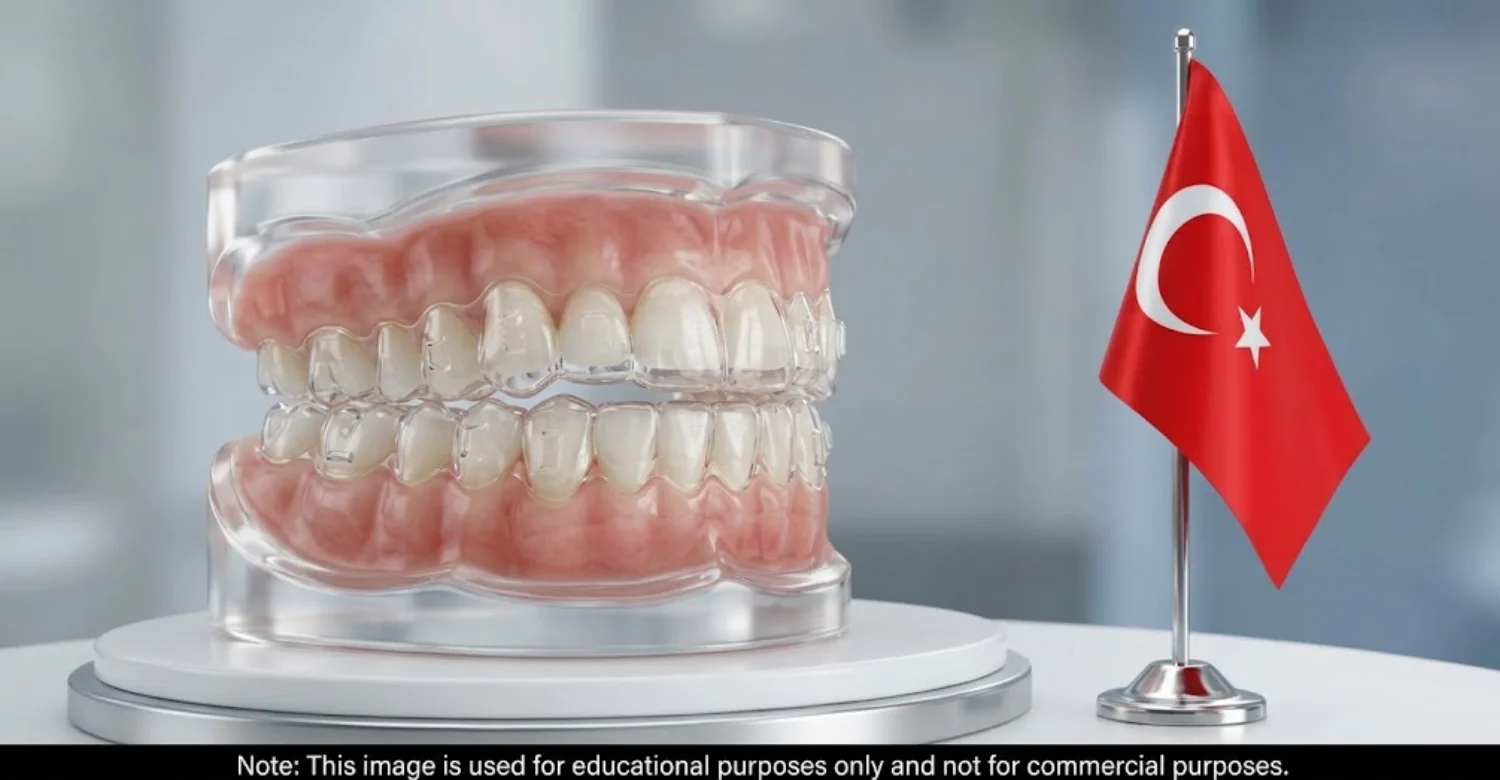
Invisible Braces Cost: Turkey vs UK vs US
The price of invisible orthodontic treatment depends on the required corrections, aligner system, and services included in the package.
The following figures are indicative private-treatment estimates for 2026, not fixed quotations.
United Kingdom
Estimated Cost: $3,000–$5,500
Estimated treatment cost
Estimated cost: $3,000–$5,500
Private UK clinic standard pricing
Domestic specialist treatment plan
Turkey
Estimated Cost: 2,350–5,200
Estimated treatment cost
Estimated cost: 2,350–5,200
Up to 50% savings vs. US/UK
Comprehensive full-service clinical care
United States
Estimated Cost: 3,500–7,500
Estimated treatment cost
Estimated cost: 3,500–7,500
US private clinic standard rate
Highest domestic private expense
What Determines the Final Treatment Price?
Several factors can influence the total cost:
Case complexity: Extensive corrections may require more treatment stages.
Aligner brand: Different systems have different fees.
Digital records: Scans and diagnostic imaging may be charged separately.
Refinements: Additional aligners may increase the cost.
Retainers: Final retainers or replacements may not be included.
Follow-up: Extra appointments may involve additional fees.
What Should an Aligner Package Include?
Before accepting a quotation, check whether it covers:
Initial consultation and diagnostic records.
Digital scanning and treatment planning.
Custom aligners and attachments.
Progress reviews and refinements.
Final retainers and replacement trays.
Is Treatment in Turkey More Affordable?
Private orthodontic treatment in Turkey may cost less than in the UK or US. However, international patients should calculate the wider cost of treatment.
Consider flights, accommodation, local transportation, and possible follow-up visits. Request a written, itemised estimate to understand what is included and identify potential additional charges.
Invisalign and Other Invisible Braces: What Is the Difference?
Invisalign is a branded clear aligner system. The term Invisible Braces Turkey covers a wider range of discreet orthodontic options, including different clear aligner brands and fixed lingual braces.
Invisalign Compared with Other Clear Aligner Systems
Aligner systems may differ in manufacturing technology, digital planning, and clinical support.
When comparing options, consider:
Orthodontist supervision.
Treatment planning technology.
Available refinement options.
Follow-up and retention arrangements.
Suitability for your specific case.
The most appropriate system depends on clinical requirements, not the brand name alone.
Clear Aligners Compared with Lingual Braces
Feature | Clear aligners | Lingual braces |
Position | Over the teeth | Behind the teeth |
Removable | Yes | No |
Eating | Removed before meals | Remain attached |
Cleaning | Easier to remove | Requires careful cleaning |
Visibility | Transparent | Hidden behind teeth |
Which Treatment Option Should You Choose?
Clear aligners are removable, discreet, and allow easier access for brushing and flossing. However, they require consistent daily wear and may not suit every complex movement.
Lingual braces remain fixed during treatment and may suit selected orthodontic cases. They can initially affect tongue comfort and speech.
An orthodontic assessment helps determine which option is appropriate for the patient's bite, alignment concerns, and treatment goals.
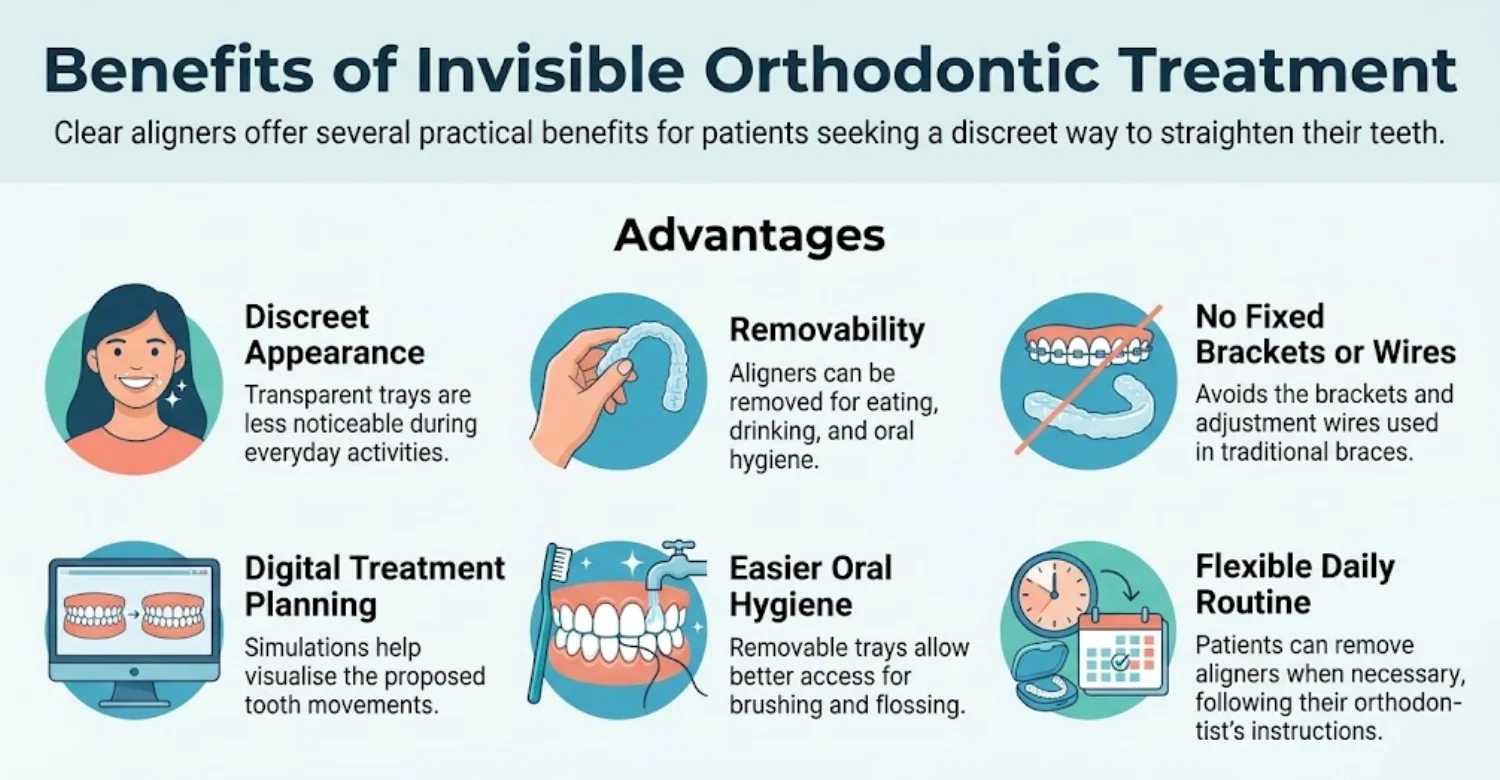
Benefits of Invisible Orthodontic Treatment
Clear aligners offer several practical benefits for patients seeking a discreet way to straighten their teeth.
Advantages
Discreet appearance: Transparent trays are less noticeable during everyday activities.
Removability: Aligners can be removed for eating, drinking, and oral hygiene.
No fixed brackets or wires: Avoids the brackets and adjustment wires used in traditional braces.
Digital treatment planning: Simulations help visualise the proposed tooth movements.
Easier oral hygiene: Removable trays allow better access for brushing and flossing.
Flexible daily routine: Patients can remove aligners when necessary, following their orthodontist's instructions.
Ready to transform your smile?
Talk to our team and get a personal FREE treatment plan.
Possible Side Effects and How to Manage Them
Invisible Braces Turkey treatment may cause temporary discomfort as teeth gradually move. Most common effects can be monitored, but persistent symptoms require professional advice.
Common Side Effects
Tooth pressure: Mild tenderness, particularly when starting a new aligner.
Sensitivity: Temporary sensitivity during the adjustment period.
Speech changes: A slight lisp or pronunciation difficulty while adapting to trays.
Gum irritation: Poorly fitting aligners may irritate the gums, tongue, or inner cheeks.
Temporary bite changes: Moving teeth may temporarily alter how upper and lower teeth meet.
Aligner discomfort: Tight, damaged, or poorly fitting trays may cause irritation.
When Should You Contact Your Orthodontist?
Seek professional advice if you experience:
Persistent or worsening tooth pain.
Broken or poorly fitting aligners.
Swollen, bleeding, or injured gums.
Unexpected tooth movement.
Difficulty biting or chewing comfortably.
Facial swelling, fever, or signs of dental infection require prompt medical assessment.
Practical Ways to Reduce Discomfort
Follow the prescribed aligner-changing schedule.
Choose softer foods during the first few days of adjustment.
Use warm saltwater rinses for minor gum irritation.
Avoid forcing tight or uncomfortable trays.
Contact your orthodontist if pain persists or worsens.
Home remedies should not replace professional assessment.
.jpg)
.jpg)
Daily Care: Eating, Cleaning and Aligner Maintenance
Good daily habits help protect teeth and keep aligners in suitable condition.
Foods and Drinks to Avoid
Remove aligners before eating.
Drink plain water while wearing aligners.
Avoid hot drinks that may distort the plastic.
Limit sugary and acidic drinks.
Brush your teeth before reinserting trays.
How to Clean Your Aligners
Rinse trays whenever you remove them.
Clean them using recommended products and instructions.
Brush and floss your teeth regularly.
Store aligners in their protective case.
Avoid hot water and abrasive cleaning products.
What If an Aligner Breaks?
Contact your orthodontist for instructions.
Do not force a damaged tray into position.
Ask whether your previous tray should be used temporarily.
Follow professional advice before changing your treatment schedule.
The appropriate response depends on the treatment stage and the extent of the damage.
Clinical Considerations: Why Personalised Orthodontic Planning Matters
Similar-looking alignment problems do not always have the same underlying cause. Effective treatment planning must consider more than the visible position of the teeth.
Similar Symptoms Can Require Different Treatments
Two patients may both have crowded teeth, but their clinical findings may differ.
One patient may have dental crowding.
Another may have a significant jaw discrepancy.
Root positions and supporting bone may affect possible movements.
Bite relationships can change the treatment approach.
Each patient therefore needs an individual orthodontic plan.
Patient Compliance Influences Treatment Progress
Removable aligners depend on consistent patient cooperation.
Frequent removal can interfere with the planned sequence of tooth movements. Following the prescribed wearing schedule and attending reviews supports progress, although it cannot guarantee a specific result.
Digital Simulations Are Planning Tools, Not Guarantees
Digital previews illustrate the intended tooth movements. Actual biological responses may differ from computer predictions.
Some teeth may move less predictably than expected. Refinement trays or alternative orthodontic techniques may become necessary.
Clinical Perspective: Dr. Sami on Invisible Orthodontics
Dr. Sami emphasises that orthodontic planning should begin with an individual assessment. Bite alignment, tooth positions, gum health, and supporting structures all influence treatment suitability.
Digital simulations support treatment planning but cannot guarantee final results. Successful care requires realistic expectations, consistent aligner wear, and professional monitoring.
.jpg)
.jpg)
International Patient Support for Invisible Braces at Vitrin Clinic
Choosing invisible braces in Turkey involves more than arranging a visit. At Vitrin Clinic, we help international patients understand the treatment process, clinical requirements, and follow-up arrangements before travelling.
Personalised Treatment Assessment
We review each patient's dental history, alignment concerns, and available records during the initial consultation. This helps us understand the treatment requirements and identify the next diagnostic steps.
Review previous orthodontic treatment and existing dental restorations.
Share recent dental records and X-rays, if available.
Discuss tooth alignment, bite concerns, and treatment expectations.
Arrange an in-person examination and any clinically necessary scans before confirming suitability.
Treatment Planning and Travel Coordination
Our team explains the proposed treatment stages and helps coordinate appointments for international patients.
Before travelling, patients should understand:
The recommended aligner system and treatment approach.
The expected treatment duration and review schedule.
Whether attachments or additional procedures may be required.
What the treatment package includes.
How refinements, replacement aligners, and retainers are arranged.
We provide a written treatment proposal and cost estimate based on the available clinical information. Final recommendations may change after examination.
Follow-Up Care and Retention
Treatment monitoring remains important after patients return home. We can support suitable follow-up needs through remote communication, while clinical concerns may require an in-person assessment.
Once active treatment is complete, retainers help maintain the achieved tooth positions. We explain the recommended retention schedule and the importance of regular dental check-ups.
Expected Results of Invisible Braces at Vitrin Clinic
Invisible braces aim to improve tooth alignment and, where clinically suitable, correct selected bite concerns. At Vitrin Clinic, treatment planning focuses on achieving a balanced result while considering each patient's dental structure and oral health.
What Results Can You Expect?
Depending on the initial condition and treatment plan, invisible braces may help to:
Reduce gaps and crowding between teeth.
Improve tooth positioning and alignment.
Correct selected bite irregularities.
Create a more balanced smile appearance.
Improve access for daily brushing and flossing.
What Affects the Final Results?
Results vary according to several factors:
Initial tooth positions and bite complexity.
Gum health and supporting bone condition.
Wearing aligners for the prescribed 20–22 hours daily.
Following the recommended tray-change schedule.
Attending progress reviews and completing refinements when needed.
How Does Vitrin Clinic Monitor Treatment Progress?
We use digital treatment planning to map the proposed tooth movements and monitor progress throughout treatment. Digital simulations help explain the intended changes, but they do not guarantee the final outcome.
Why Vitrin Clinic Is Among the Top 1% of Invisalign Providers in EMEA
When you choose Invisalign treatment at Vitrin Clinic, you’re choosing a team whose results are recognized at the highest level. Dr. Sami Assani has received the Invisalign Apex Award for 2026–2027. The award is given to the top 1% of Invisalign providers across Europe, the Middle East, and Africa.
Awards are only part of the story. What matters more is the expertise, care, and trust behind each smile we help create. That experience shows in three milestones:
Invisalign Apex Award: places Dr. Sami among the top 1% of Invisalign providers in the EMEA region.
Blue Diamond Provider status: Invisalign’s highest provider tier. Only 75 doctors across EMEA hold it, and just 32 of them are in Türkiye.
500+ Invisalign cases: hundreds of completed patient journeys and confident new smiles.
For our patients, this means a treatment plan designed by a doctor with extensive Invisalign experience. Each case benefits from the lessons of hundreds before it, and the care is consistent and precise from your first scan to your final aligner.
These awards reflect the standards we hold ourselves to every day: clinical excellence, continuous innovation, and genuine patient care.
.jpg)
Personalised Invisible Braces Planning at Vitrin Clinic
At Vitrin Clinic in Istanbul, we assess each patient's tooth positions, bite relationships, gum health, and supporting tissues before recommending an orthodontic approach.
Digital scans help record tooth positions and support treatment planning. Dental X-rays may be recommended when clinically necessary.
Our team coordinates consultations, treatment planning, progress reviews, and aftercare for international patients. Patients receive information about the proposed treatment stages and a written cost estimate before proceeding.
Clear aligners may suit selected alignment problems, while other cases may require fixed orthodontic treatment. Final recommendations depend on clinical findings and individual progress.
Request your FREE Treatment Plan from Vitrin Clinic to discuss your orthodontic needs and possible treatment options.
Conclusion: Are Invisible Braces Turkey Worth Considering?
Invisible Braces Turkey may be worth considering for patients seeking a discreet way to improve selected orthodontic problems. Clear aligners offer removability, convenience, and easier access for daily oral hygiene.
However, they are not suitable for every alignment or bite problem. Clinical assessment determines whether clear aligners, fixed braces, or another approach is more appropriate.
Before choosing treatment, compare clinical supervision, total costs, refinement arrangements, and retention plans. International patients should also consider appointment scheduling and follow-up after returning home.
The right treatment is one that addresses individual orthodontic needs through realistic planning and appropriate professional care.
Ready to transform your smile?
Talk to our team and get a personal FREE treatment plan.
References
FAQs
Indicative estimates for full clear aligner treatment in Turkey range from approximately $2,350 to $5,200. Actual fees depend on treatment complexity, the aligner system, and included services. Request an itemised estimate covering scans, aligners, refinements, and retainers. Flights and accommodation are additional expenses.
Dr. Sami Assani leads clear aligner treatment at Vitrin Clinic. He is an Invisalign Apex Award recipient (top 1% of providers in EMEA) and a Blue Diamond provider with 500+ completed Invisalign cases. He is known for precise digital planning and long-term, stable results.


