.webp&w=3840&q=75)
Maintaining a clear and healthy smile throughout your orthodontic journey requires a dedication to hygiene. Understanding the best way to clean invisalign aligners is the most important step in that process. At Vitrin Clinic, we believe that patient education is the foundation of a successful treatment. When you commit to a clear aligner system, you are choosing aesthetics and convenience. These benefits are only preserved if the plastic remains transparent and odor-free. This guide explores every facet of maintenance, ensuring your investment in your smile pays off with sparkling results.
The Structural Chemistry of Thermo-Formed Plastics: How Invisalign Works
Invisalign aligners are manufactured from advanced thermoplastic medical grade polymers. These polymers apply gentle, continuous pressure while remaining nearly invisible. Although these materials are highly durable, they are not indestructible. Exposure to excessive heat, harsh chemicals, or abrasive cleaning products can permanently alter their molecular structure. This reduces their ability to move teeth accurately.
At Vitrin Clinic, patients learn that every aligner is custom fabricated. It delivers movements measured in fractions of a millimeter. Even slight distortion can compromise treatment efficiency.
Dr. Rifat Alsaman, Head of the Medical Team at Vitrin Clinic and cosmetic dentist, explains that preserving the original shape of each aligner matters greatly. It is just as important as wearing it for the recommended number of hours. According to Dr. Rifat Alsaman, maintaining the structural integrity of the thermoplastic material helps ensure predictable tooth movement throughout treatment.
Why Cleaning Your Invisalign Aligners Is Essential
Cleaning your aligners properly is not just about looks; it is about protecting your teeth from decay. When you wear your trays for twenty-two hours a day, you are essentially sealing your teeth in a plastic environment. If food particles or sugars are trapped underneath, they can cause rapid enamel erosion. Vitrin Clinic experts emphasize that a clean aligner prevents the buildup of harmful pathogens. These pathogens could lead to cavities or gum disease during your straightening process.
Importance of oral hygiene while using aligners
To achieve the best way to clean invisalign aligners, you must first master your own oral hygiene. Brushing and flossing after every meal ensures that no debris is transferred to the trays. If you place a clean aligner over dirty teeth, you negate the benefits of the cleaning process. At Vitrin Clinic, we provide patients with comprehensive kits to help maintain their oral health standards while on the go. This support is vital for the aligners to remain effective. After brushing your trays, selecting the best mouthwash to use with Invisalign ensures your breath stays perfectly fresh all day.
Risks of improper cleaning (odor, bacteria, staining)
If you skip proper cleaning, you will quickly notice a buildup of biofilm. This results in a persistent foul odor. Bacteria thrive in the dark, moist space between the plastic and your teeth, creating a cloudy appearance. This makes the aligners visible to others. Staining is another major risk; certain foods and drinks can permeate the porous plastic. This leads to permanent discoloration that no amount of scrubbing can fix, which is why Vitrin Clinic stresses regular maintenance.
How regular cleaning supports overall dental health
Regular cleaning serves as a preventative measure against systemic dental issues. By keeping the trays sterile, you reduce the risk of gingivitis and other inflammatory conditions. Vitrin Clinic practitioners have observed that patients who prioritize their aligner hygiene tend to finish their treatments faster. They also experience fewer complications. A healthy mouth environment allows the teeth to move more predictably into their final, desired positions. There is no interference from plaque-induced swelling or irritation.
Clinical Implications: The True Biological Problem with Dirty Aligners
Dirty aligners do far more than affect appearance. Their smooth plastic surface allows bacterial biofilm, saliva proteins, food debris, and minerals to accumulate continuously throughout the day. Without proper cleaning, bacterial biofilm stagnation may increase the risk of bad breath, plaque buildup, enamel demineralization, gingival inflammation, and tooth decay.
As saliva dries on the aligners, calcium and phosphate minerals begin to crystallize. This leads to saliva calcification crystallization that creates a rough surface where bacteria can attach more easily. This also reduces invisible tray transparency, making the aligners appear cloudy.
At Vitrin Clinic, every Invisalign review includes an assessment of aligner hygiene, because oral health directly influences treatment success.
Dr. Rifat Alsaman emphasizes that aligners should never become bacterial reservoirs. According to Dr. Rifat Alsaman, patients who consistently clean their aligners experience healthier gums, fresher breath, and more comfortable orthodontic treatment.
Step-by-Step Guide: Best Way to Clean Invisalign Aligners
Establishing a routine helps you clean invisalign aligners without feeling overwhelmed by the process. Every time you remove your trays, have a plan for cleaning them before they go back into your mouth. This step-by-step approach ensures that no part of the aligner is neglected. At Vitrin Clinic, we recommend keeping a small cleaning kit with you at all times. This makes these steps second nature throughout your daily life.
Daily Cleaning Routine
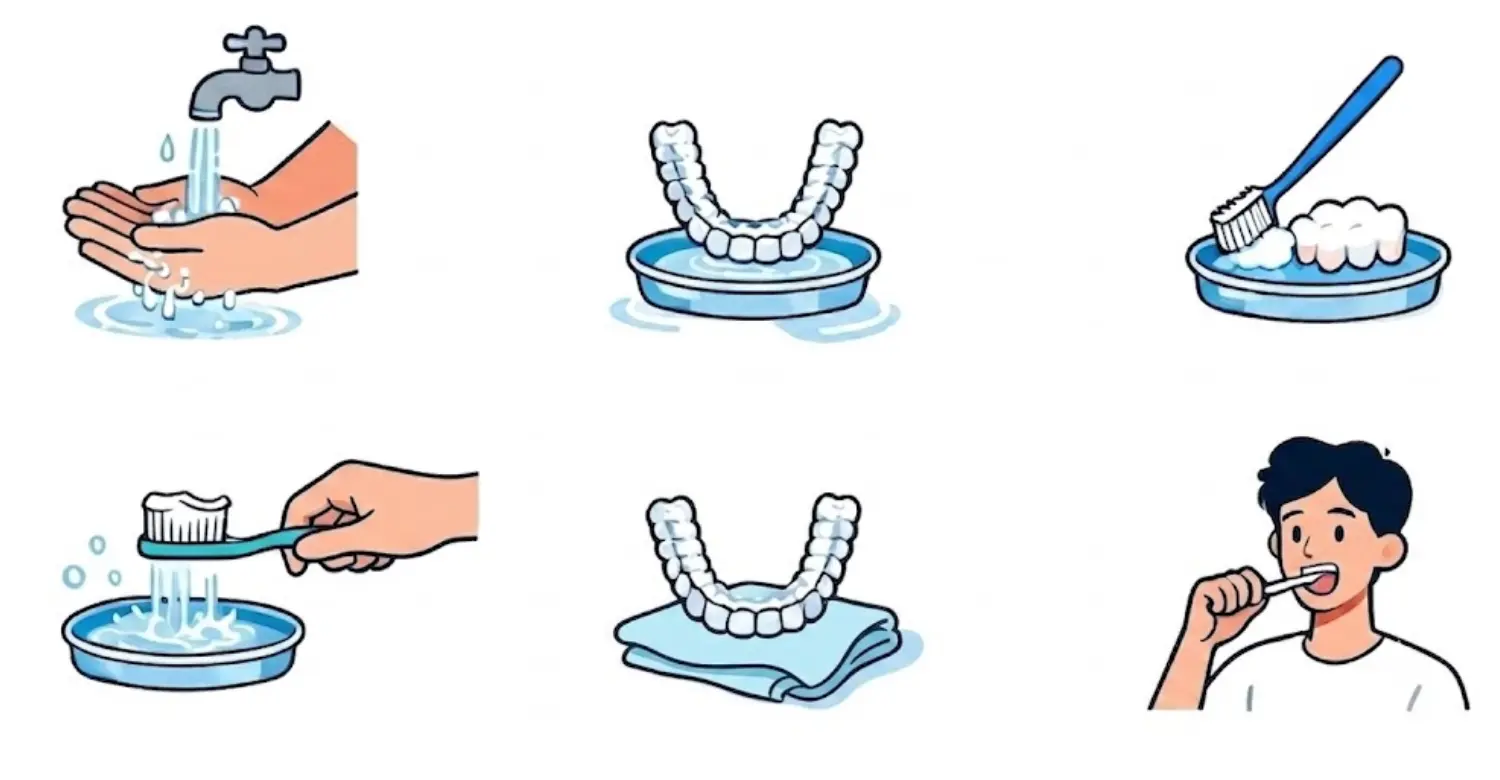
Daily maintenance begins with a thorough rinse under lukewarm water every single time you take your trays out. This prevents saliva from drying and hardening into tartar. You should also use a gentle, clear soap to wash away any surface film. Vitrin Clinic advises patients to perform a more detailed cleaning every morning and night. This ensures that any bacteria accumulated during sleep or throughout the busy day are completely eradicated from the plastic surfaces. Always wash your hands thoroughly before removing your clear trays to begin your evening soaking and brushing routine.
Brushing aligners gently with soft-bristle toothbrush
Using a dedicated soft-bristle toothbrush is a reliable method for manual hygiene. You must be very gentle to avoid creating microscopic scratches on the surface of the trays. These scratches can trap bacteria and make the aligners appear foggy or dull over time. Vitrin Clinic suggests using small, circular motions to clean the deep grooves and interior sections. Focus on the areas where the trays contact the chewing surfaces of your teeth, to ensure a comprehensive clean every time.
Avoiding toothpaste with abrasives
Many people assume that toothpaste is suitable for this task. This is a common misconception that Vitrin Clinic wishes to correct. Most toothpastes contain abrasive particles designed to scrub tooth enamel, which is much harder than the medical-grade plastic of your aligners. These abrasives will scuff the trays, making them lose their "invisible" quality. Instead, stick to non-abrasive cleaners or specialized foams that protect the smooth finish of your orthodontic appliances, while still providing a deep clean. If you trap bacteria against your enamel by skipping cleaning, you might soon ask is Invisalign bad for your teeth.
Using Specialized Cleaners
For many, cleaning invisalign aligners effectively involves the use of specialized products formulated for thermoplastic materials. These cleaners are designed to be powerful enough to kill 99% of odor-causing bacteria, without being so harsh that they warp the plastic. Vitrin Clinic often recommends these products for patients who have busy schedules. They need an efficient, reliable method to keep their aligners in pristine condition throughout their multi-month treatment plan.
Recommended Invisalign cleaning crystals
Invisalign cleaning crystals are widely regarded as a premium choice because they are specifically engineered for this purpose. You dissolve the crystals in water and soak the trays for about fifteen minutes. This chemical action breaks down the plaque and minerals that brushing might miss. At Vitrin Clinic, we find that patients who use these crystals once a week maintain much clearer trays. This holds true compared to those who only use water.
Material Warnings: What to Explicitly Avoid When Cleaning Invisalign Aligners
Many patients unintentionally damage their aligners while trying to clean them. Certain products and cleaning methods accelerate porous plastic tray degradation or permanently distort the appliance.
Avoid using:
Hot or Boiling Water
High temperatures soften thermoplastic polymers and may cause orthodontic appliance distortion, preventing the aligners from fitting properly.
Alcohol-Based Mouthwash
Alcohol may dry and weaken the plastic while reducing long-term transparency.
Bleach or Harsh Household Cleaners
These chemicals are unsafe for oral appliances and can permanently damage the material.
Abrasive Toothpaste
Whitening or charcoal toothpaste can scratch the aligners, creating microscopic grooves that trap bacteria and stains.
Colored Soaps
Artificial dyes and fragrances may leave residue or discolor the aligners.
At Vitrin Clinic, patients receive individualized cleaning instructions designed to preserve aligner clarity throughout treatment.
Dr. Rifat Alsaman advises choosing gentle, non-abrasive cleaning methods specifically intended for orthodontic appliances. According to Dr. Rifat Alsaman, protecting the material is essential for maintaining treatment precision.
How to properly soak aligners
Proper soaking requires the right temperature and container. Use a clean glass or a dedicated aligner bath filled with lukewarm water. Never use hot or boiling water, as this will melt or warp the plastic. This renders the aligners useless for moving your teeth. Vitrin Clinic instructs patients to ensure the trays are fully submerged. This lets the cleaning solution reach every corner, including the indentations made for attachments or buttons. If using cold water to clean your trays triggers pain, read our Vitrin Clinic sensitivity tips for immediate relief.
Timing and frequency
Timing matters as much as technique when caring for your trays. A deep soak once a day is ideal, perhaps while you are eating a meal. However, you should never leave them out of your mouth for more than two hours total per day. Vitrin Clinic reminds patients that while cleaning is vital, the trays only work when they are worn. Match your cleaning frequency to your eating frequency to ensure no bacteria are trapped.
Can You Use Denture Cleaner on Invisalign?
A frequent question at Vitrin Clinic is: can you use denture cleaner on invisalign? Many patients look for affordable, over-the-counter cleaning options. The answer is generally yes, but with caution. Denture cleaners are designed for sturdier materials like acrylic. You must ensure the brand you choose is not too abrasive. Also avoid soaking the aligners for an excessive amount of time.
Overview of denture cleaners for aligners
When considering if can you use denture cleaner for invisalign, it is important to understand the active ingredients. Most contain effervescent agents that lift stains and kill bacteria. While this can be helpful for some, Vitrin Clinic warns that some denture cleaners contain dyes. These dyes could potentially tint your clear aligners. Always choose a clear or "non-staining" formula to keep your trays as invisible as possible during your treatment.
Differences between denture cleaners and Invisalign-specific solutions
Proper hygiene might differ from cleaning dentures. Dentures are meant to last years, while aligners are changed every one to two weeks. Denture cleaners might be slightly more aggressive. Vitrin Clinic points out that Invisalign-specific crystals are optimized for thin medical-grade plastic. Denture cleaners remain a functional secondary option if used properly. The goal remains the same: removing the biofilm that accumulates during daily wear.
Safety tips for cleaning Invisalign with denture cleaner
If your budget calls for denture tablets, that's fine. Always rinse the trays thoroughly before putting them back in your mouth. Some people have sensitivities to the chemicals found in denture cleaners. Vitrin Clinic recommends a two-minute rinse under running water after any soak. This ensures no residue remains, which could irritate your gums or leave a medicinal taste that lingers throughout the day.
Can You Use Denture Cleaner to Clean Invisalign?
To answer the specific question, can you use denture cleaner to clean invisalign, you certainly can, provided you follow a strict protocol. Start by dissolving half a tablet in a cup of cool water. This prevents the solution from being too concentrated. Many find this useful when they are away from home or can't find specific aligner crystals. Denture tablets are available in almost any pharmacy or grocery store.
Step-by-step process
Cleaning aligners with a tablet starts with a first rinse of the trays. Place them in a container, add water, and then the cleaning tablet. Let them sit for no more than fifteen to twenty minutes. Vitrin Clinic advises against overnight soaking in these solutions, as the prolonged exposure to certain chemicals might weaken the plastic over time. Once finished, use a soft brush to remove any loosened debris and rinse again.
Dos and don’ts
When maintaining your trays, do use lukewarm water and do rinse thoroughly. Don't use colored mouthwash or hot water, as these will ruin the aligners. Vitrin Clinic also warns against using bleach or other household chemicals. If you are cleaning invisalign with denture cleaner, do stick to reputable brands. Don't assume that a longer soak equals a better clean; follow the timing instructions on the packaging carefully.
Cleaning Invisalign with Denture Cleaner – Expert Advice
For those cleaning invisalign with denture cleaner, expert advice suggests that this should be a supplemental method rather than the only method. The most effective routine remains a combination of mechanical brushing and chemical soaking. Vitrin Clinic experts note that denture cleaner is excellent for removing stubborn stains from coffee or tea. It should still be balanced with daily gentle brushing to keep the trays structurally sound.
How long to soak
The most effective way to manage a soak is to keep it brief. Most effervescent cleaners work within fifteen minutes. Prolonged soaking, especially in solutions not specifically made for aligners, can lead to a slight degradation of the plastic's flexibility. Vitrin Clinic recommends setting a timer on your phone. This ensures you don't forget your trays in the solution, so you can get back to your twenty-two-hour wear schedule promptly.
Potential risks if used excessively
If you rely on denture cleaners too much, you might notice the plastic becoming slightly more brittle. While the goal is to keep them sterile, over-processing them with harsh chemicals can change how they fit your teeth. At Vitrin Clinic, we monitor the fit of your aligners during every checkup. We can usually tell if a patient has been using cleaning methods that are too aggressive for the material.
Comparing effectiveness with Invisalign cleaning crystals
While denture cleaner for invisalign is effective, it is often compared to the official crystals. The crystals are generally gentler and formulated specifically for the proprietary plastic used by the brand. Still, the most effective method is whichever one you will actually use consistently. Vitrin Clinic finds that both methods are superior to using nothing at all. Just be careful about the temperature and duration of the soak.
Ultrasonic Technology in Modern Orthodontics: The Zima Cleaner System
Ultrasonic cleaning has become increasingly popular for maintaining clear aligners. Devices such as the Zima Ultrasonic Cleaner generate microscopic bubbles. This process, known as cavitation, loosens plaque, food particles, and bacterial deposits. This technology improves effervescent cleaning mechanics, while reaching areas that manual brushing may miss.
Although ultrasonic cleaners are highly effective, they should be used according to the manufacturer's recommendations. Combine their use with daily rinsing and proper oral hygiene.
At Vitrin Clinic, ultrasonic cleaning may be recommended for patients who struggle with recurring stains or plaque accumulation.
Dr. Rifat Alsaman notes that ultrasonic cleaning is an excellent supplement to routine care. It should never replace brushing, flossing, and regular dental examinations.
Emergency Action Protocols: What to Do If Trays Become Warped, Smelly, or Heavily Stained
Even with careful maintenance, problems occasionally occur. Knowing how to respond quickly can prevent treatment interruptions.
If Your Aligner Warps
Stop wearing the damaged tray and contact your orthodontist immediately. Continuing to use a distorted aligner may move teeth incorrectly.
If Your Aligner Smells Bad
Clean it thoroughly using approved cleaning crystals or an ultrasonic cleaner. Persistent odor usually indicates bacterial accumulation.
If Your Aligner Becomes Heavily Stained
Professional stain removal chemistry may improve appearance, but severely discolored aligners often require replacement.
If the Tray Cracks
Never attempt to repair it with glue. Schedule an evaluation as soon as possible.
At Vitrin Clinic, emergency Invisalign appointments help patients minimize delays and continue treatment safely.
Dr. Rifat Alsaman explains that early intervention often prevents minor aligner issues from becoming major treatment setbacks.
How to Disinfect Invisalign Retainers
Learning how to disinfect invisalign retainers is crucial for long-term success after your initial treatment is over. Retainers are often worn for longer periods or only at night, meaning they have more time to harbor bacteria. The best way to clean invisalign aligners and retainers involves deep disinfection at least once a week. This helps ensure they don't become a source of infection for your gums or mouth. Once you understand the terminology, the next logical question is can you use Invisalign instead of braces for your specific bite.
Home Disinfection Methods
Effective hygiene at home often involves simple ingredients found in your kitchen. These methods are cost-effective and surprisingly efficient at killing germs. Vitrin Clinic encourages patients to use these natural alternatives if they prefer to avoid commercial chemicals. Just be sure the ratios are correct, so the plastic is not damaged during the disinfection process.
Using vinegar and water solution
A mixture of one part white distilled vinegar to three parts water is a natural sterilization option. The acidity of the vinegar helps to dissolve calcium deposits and kill bacteria. Vitrin Clinic suggests soaking the trays for fifteen minutes and then brushing them gently. The vinegar smell will dissipate quickly once the trays are rinsed in cold water, leaving them fresh and clear.
Hydrogen peroxide and water solution
Using a solution of equal parts water and 3% hydrogen peroxide is another reliable option for deep disinfection. Hydrogen peroxide is excellent at killing various types of bacteria. It can also help brighten trays that have started to look a bit dull. Vitrin Clinic recommends this method particularly after a patient has been sick. It ensures no lingering viruses or bacteria remain on the orthodontic appliances.
Avoiding harsh chemicals that damage aligners
It is easy to reach for household bleach or boiling water when trying to disinfect quickly. Both are dangerous for your trays. Bleach is toxic if not rinsed perfectly and can turn the trays yellow. Boiling water will warp the plastic instantly. Vitrin Clinic warns that once an aligner is warped, it can no longer move your teeth correctly. This may result in additional costs and delays in your treatment plan.
Professional Recommendations
Following professional advice is truly the best way to clean invisalign aligners. Your clinical team has seen the results of various cleaning habits and can guide you toward what works best for your specific lifestyle. Vitrin Clinic provides personalized hygiene plans for every patient. Whether you are a heavy coffee drinker or a frequent snacker, your aligners will stay in top-notch condition throughout the process.
Consulting your dentist or orthodontist
Professional guidance can sometimes involve a quick office visit. If you notice a buildup that you cannot remove at home, ask your dentist for help. At Vitrin Clinic, our staff can use ultrasonic cleaners to vibrate away stubborn tartar that home brushing can't reach. This professional touch can restore a set of trays that might otherwise need to be replaced prematurely due to poor maintenance.
When professional cleaning is necessary
If your trays have developed a thick white crust that won't budge, it is time to seek the best way to clean invisalign aligners via professional assistance. This crust is usually hardened dental calculus. Vitrin Clinic uses medical-grade equipment to sanitize and refresh your aligners. We recommend bringing your trays to every appointment so we can inspect them for wear and tear while providing a deep cleaning service as part of your routine care.
Tips and Tricks for Maintaining Clear Aligners
Beyond just washing them, the best way to clean invisalign aligners involves smart daily habits. Small changes in how you handle and store your trays can significantly reduce the amount of cleaning required. Vitrin Clinic teaches patients "clean-as-you-go" habits that make the process feel less like a chore and more like a simple part of their daily grooming routine, ensuring long-term compliance.
Preventing Stains and Odors
Prevention is the best way to clean invisalign aligners. The fewer stains you create, the less scrubbing you have to do. Odors are usually a sign of bacteria that have been allowed to dry on the tray. Vitrin Clinic reminds patients that the longer an aligner stays out of the mouth without being rinsed, the harder it will be to get it completely clean later, so always keep water nearby.
Avoid colored drinks while wearing aligners
The absolute best way to clean invisalign aligners is to never get them dirty in the first place. You must remove your trays before drinking anything other than plain water. Coffee, tea, red wine, and even flavored waters with dyes can seep into the plastic. Vitrin Clinic has seen many cases where a single cup of turmeric tea or black coffee permanently stained a set of trays, necessitating an early switch to the next set.
Proper storage when not in use
When your trays are not in your mouth, the best way to clean invisalign aligners is to store them in their protective case. Leaving them out on a napkin or a counter exposes them to airborne bacteria and increases the risk of them being thrown away or stepped on. Vitrin Clinic provides every patient with a durable case, advising that "if they aren't in your face, they're in the case" to maintain maximum hygiene.
Travel-Friendly Cleaning Hacks
Traveling shouldn't disrupt the best way to clean invisalign aligners. When you are on the move, you might not have access to your full array of soaking solutions and brushes. Vitrin Clinic suggests packing a travel kit that includes a small bottle of clear liquid soap and a folding toothbrush. This allows you to maintain your hygiene standards whether you are in a restaurant bathroom or an airplane lavatory.
Portable aligner cases with cleaning solution
Some modern cases allow you to store a small amount of cleaning foam inside, which is the best way to clean invisalign aligners while you are at work or school. These foams work to kill bacteria while you wear the trays. Vitrin Clinic recommends these for patients with active social lives, as they provide a quick way to freshen up without needing a full sink and soaking station at every meal.
Quick rinse methods for on-the-go hygiene
If you are in a rush and cannot perform a full cleaning, the best way to clean invisalign aligners is a vigorous rinse with high-pressure tap water. While not a substitute for brushing, it removes the bulk of the saliva and food debris. Vitrin Clinic notes that even a quick rinse is significantly better than putting a dry, dirty aligner back into your mouth, which is the leading cause of aligner-related bad breath.
Spotlight on Vitrin Clinic: Expert Invisalign Care
At Vitrin Clinic, we pride ourselves on being more than just a provider; we are your partners in achieving a perfect smile. We believe the best way to clean invisalign aligners is through a combination of high-quality products and expert guidance. Our team is dedicated to staying updated on the latest orthodontic technologies and hygiene practices, ensuring our patients receive the most effective and comfortable treatment experience possible.
How Vitrin Clinic Helps Patients Maintain Aligners
We provide every patient with a comprehensive starter kit that outlines the best way to clean invisalign aligners from day one. Our staff takes the time to demonstrate proper brushing techniques and soaking methods during your initial fitting. At Vitrin Clinic, we understand that the first few weeks are a learning curve, and we are always available to answer questions or provide additional tips to make your journey smoother.
Professional guidance on aligner hygiene
Hygiene standards can vary depending on the complexity of your attachments. Some patients have more "buttons" on their teeth, which can create more areas for plaque to hide. Vitrin Clinic experts provide tailored advice on how to navigate these obstacles, ensuring that both your teeth and your aligners remain spotless. Our professional guidance is designed to prevent the common pitfalls that many first-time aligner users face.
What We Notice Clinically
Our clinical team regularly observes that patients with the cleanest aligners generally experience healthier gums, reduced plaque accumulation, and better treatment compliance. Clear aligners that remain transparent throughout treatment often reflect consistent oral hygiene habits.
At Vitrin Clinic, routine orthodontic reviews focus not only on tooth movement but also on aligner condition, oral hygiene, and gum health. These assessments help identify issues before they affect treatment progress.
Dr. Rifat Alsaman, Head of the Medical Team at Vitrin Clinic, frequently reminds patients that successful Invisalign treatment depends on both wearing the aligners as instructed and maintaining excellent hygiene. According to Dr. Rifat Alsaman, proper aligner care contributes significantly to predictable orthodontic outcomes.
Regular checkups to prevent oral issues
During your scheduled visits at Vitrin Clinic, we do more than just hand over your next set of trays. We perform a thorough inspection of your current oral health. This is the best way to clean invisalign aligners effectively by ensuring the environment they sit in is healthy. If we see signs of poor hygiene, we intervene early with new strategies and tools to get your routine back on track before any permanent damage occurs.
Recommendations for safe cleaning products
With so many products on the market, finding the best way to clean invisalign aligners can be confusing. Vitrin Clinic curates a list of recommended soaps, crystals, and tablets that we know are safe for your specific brand of aligners. We steer patients away from "DIY" hacks that might sound convenient but could ultimately ruin the trays. Trusting our vetted recommendations ensures that your aligners stay clear, functional, and safe for the duration of your care.
Clinical Note
Even when teeth appear clean, early cavities frequently develop without pain or visible changes. Because Invisalign trays cover the teeth for most of the day, undetected plaque accumulation may increase the risk of decay if oral hygiene is inadequate. Regular dental examinations and X-rays can identify cavities between teeth or beneath the enamel before symptoms develop.
At Vitrin Clinic, routine monitoring during Invisalign treatment includes evaluating both tooth movement and overall oral health. Dr. Rifat Alsaman recommends maintaining scheduled checkups throughout treatment so potential problems can be detected and managed early, helping patients achieve a healthy, long-lasting smile.
Tips for Patients
To keep both your teeth and Invisalign aligners in excellent condition:
Brush twice daily with a toothpaste containing 1,450 ppm fluoride.
After brushing, spit out the toothpaste rather than rinsing immediately with water to allow fluoride to remain on the teeth longer.
Remove your aligners before eating or drinking anything except plain water.
Clean your aligners every morning and evening using gentle, approved cleaning methods.
If you eat sugary foods, consume them with meals instead of frequent snacking to reduce repeated acid attacks that increase cavity risk.
Store aligners in their protective case whenever they are not being worn.
Attend all scheduled follow-up appointments at Vitrin Clinic so your aligners and oral health can be professionally monitored.
Dr. Rifat Alsaman encourages every patient to view aligner hygiene as an essential part of treatment rather than an optional habit. According to Dr. Rifat Alsaman, consistent daily care helps preserve aligner clarity, supports healthy teeth and gums, and contributes to a smoother Invisalign experience.
About Invisalign Cleaning
Maintaining clean Invisalign aligners is not only about appearance; it directly affects oral health, treatment comfort, and orthodontic outcomes. Research and clinical observations show that aligner hygiene plays an important role in controlling bacterial accumulation and preventing complications during clear aligner therapy.
Bacterial Accumulation on Clear Aligners
Studies examining clear orthodontic appliances have found that aligners can accumulate bacterial biofilm, including microorganisms associated with plaque formation and gum inflammation. Because Invisalign trays cover teeth for approximately 20–22 hours daily, poor cleaning habits may create a favorable environment for bacterial growth.
Clinical observations at Vitrin Clinic show that patients who clean their aligners consistently experience:
Better aligner transparency and appearance
Reduced unpleasant odor
Improved gum health
Lower plaque accumulation around attachments and tooth surfaces
Dr. Rifat Alsaman, Head of the Medical Team at Vitrin Clinic and cosmetic dentist, explains that aligner hygiene is an essential part of orthodontic success. According to Dr. Rifat Alsaman, the aligner is not only a tooth-moving device but also an appliance that stays in close contact with the oral environment, making daily cleaning extremely important.
Clear Aligner Wearing Time and Hygiene Impact
Modern Invisalign protocols typically recommend wearing aligners for 20–22 hours per day to achieve predictable tooth movement. This extended contact time means that saliva proteins, food particles, and bacteria can accumulate if cleaning routines are neglected.
Clinical insights suggest that patients who follow proper cleaning routines are more likely to maintain:
Clearer trays throughout treatment
More comfortable wearing experience
Healthier gingival tissues
Better overall oral hygiene
At Vitrin Clinic, Invisalign follow-up appointments include checking not only tooth movement but also aligner condition, oral cleanliness, and patient compliance.
Staining and Transparency Insights
Clear aligner transparency depends heavily on cleaning habits. Research indicates that exposure to strongly pigmented foods and drinks, including coffee, tea, colored sauces, and smoking products, can contribute to staining and reduced aesthetic appearance.
Common causes of aligner discoloration include:
Cause | Effect on Aligners |
Coffee and tea | Yellow or brown staining |
Smoking | Persistent discoloration and odor |
Poor cleaning | Plaque buildup and cloudiness |
Hot water exposure | Material distortion |
Dr. Rifat Alsaman highlights that Invisalign patients choose clear aligners because of their aesthetic advantage. According to Dr. Rifat Alsaman, preserving transparency requires combining proper cleaning techniques with good dietary habits.
Why Invisalign Cleaning Affects Treatment Success
Clear aligner therapy depends on accurate tray fit and consistent patient compliance. A poorly maintained aligner may not only look unpleasant but can also affect comfort and hygiene.
At Vitrin Clinic, specialists focus on three main factors during Invisalign treatment:
1. Maintaining Material Integrity
Thermoplastic aligners must keep their original shape to deliver planned tooth movements. Incorrect cleaning methods may lead to orthodontic appliance distortion.
2. Protecting Oral Health
Clean aligners reduce the accumulation of bacterial biofilm stagnation, helping protect teeth and gums throughout treatment.
3. Supporting Patient Compliance
Patients are more likely to wear their aligners as recommended when trays remain comfortable, odor-free, and visually clear.
Dr. Rifat Alsaman, Head of the Medical Team at Vitrin Clinic, states that successful Invisalign treatment is a combination of advanced technology, professional monitoring, and patient responsibility. According to Dr. Rifat Alsaman, cleaning habits are a simple daily action that can significantly influence the overall treatment experience.
Conclusion
Cleaning Invisalign aligners correctly is a fundamental part of achieving successful orthodontic results. While Invisalign uses advanced thermoplastic medical grade polymers designed for comfort and durability, these materials still require proper maintenance to prevent bacterial buildup, staining, odor, and material damage.
The best cleaning routine combines daily rinsing, gentle brushing, approved cleaning solutions, and regular dental monitoring. Patients should avoid harmful practices such as using hot water, abrasive toothpaste, or harsh chemicals that may damage aligner structure.
At Vitrin Clinic, Invisalign treatment focuses on both smile transformation and long-term oral health. Dr. Rifat Alsaman, Head of the Medical Team at Vitrin Clinic and cosmetic dentist, emphasizes that clean aligners support healthier teeth, better comfort, and more predictable orthodontic outcomes.
A consistent cleaning routine helps patients protect their investment, maintain invisible tray transparency, and achieve the confident smile they expect from Invisalign treatment.
Reference
FAQs

Dr. Rifat Alsaman has more than 5 years of clinical experience in dentistry and currently serves as the Head of the Medical Team at Vitrin Clinic. He is dedicated to providing exceptional patient care, overseeing treatment planning, and ensuring the highest clinical standards across the team. His expertise, attention to detail, and commitment to continuous professional development have helped countless patients achieve healthier, more confident smiles.

.webp&w=3840&q=75)


.webp&w=3840&q=75)