Dental Veneers in Turkey
May 8, 2025
Composite vs Porcelain Veneers: Which is the Best Option for You?

In the world of cosmetic dentistry, dental veneers are a popular way to transform your smile. When considering composite vs porcelain veneers, it's important to understand how each option can improve the appearance of your teeth.
Two of the most common options are composite veneers and porcelain veneers. Both use thin layers of material bonded to the teeth to correct imperfections like discoloration, chips, and uneven shapes.
While they share similarities, there are also key differences in material, durability, cost, and application. Understanding these can help you make the best choice for your smile makeover.
If you're deciding between composite vs porcelain veneers, here's the short version. Composite veneers are less expensive, completed in one visit, and require minimal tooth preparation. But they are less durable and may stain over time. Porcelain veneers are more expensive and require two visits. They involve some enamel removal, but offer superior strength, stain resistance, and a natural look. A well-placed porcelain veneer can last 10–15 years. Your choice depends on your budget, aesthetic goals, and dental condition.
Similarities and Differences Between Composite and Porcelain Veneers
Composite and porcelain veneers are both thin layers bonded to the teeth. They correct stains, chips, gaps, or misalignment. Both require skillful application by an experienced dentist for a natural-looking result. The key differences lie in material and durability. Composite is a tooth-colored resin lasting 5–7 years, while porcelain is a more durable, highly stain-resistant ceramic lasting 10–15 years. Composite is more affordable, often finished in a single visit, and needs minimal enamel removal. Porcelain typically costs more and requires multiple visits for fabrication, and it involves more enamel removal to fit properly. Overall, both aim to create a brighter, more attractive smile. Porcelain offers greater long-term stability, while composite offers a faster, lower-cost start.
Similarities Between Composite and Porcelain Veneers
Both are types of dental veneers used in cosmetic dentistry to enhance the appearance of teeth.
Both involve bonding a thin layer of material to the surface of your teeth.
Both improve cosmetic issues such as stains, chips, gaps, or misalignments.
Both options aim to create a more attractive and natural-looking smile.
Both require skillful application by an experienced dentist.
Differences Between Composite and Porcelain Veneers
Material:
Composite veneers are made from tooth-colored resin.
Porcelain veneers are crafted from high-quality porcelain, offering a more natural look.
Durability:
Porcelain veneers are more durable, lasting 10 to 15 years.
Composite veneers typically last 5 to 7 years.
Stain Resistance:
Porcelain veneers are highly stain-resistant.
Composite veneers are more porous and can stain or chip more easily.
Cost:
Composite veneers are more affordable, usually half the price of porcelain veneers.
Application Time:
Composite veneers can often be completed in a single chairside visit.
Porcelain veneers usually require multiple visits for fabrication and placement.
Invasiveness:
Composite veneers are less invasive, needing minimal enamel removal.
Porcelain veneers typically require more enamel removal to fit properly.
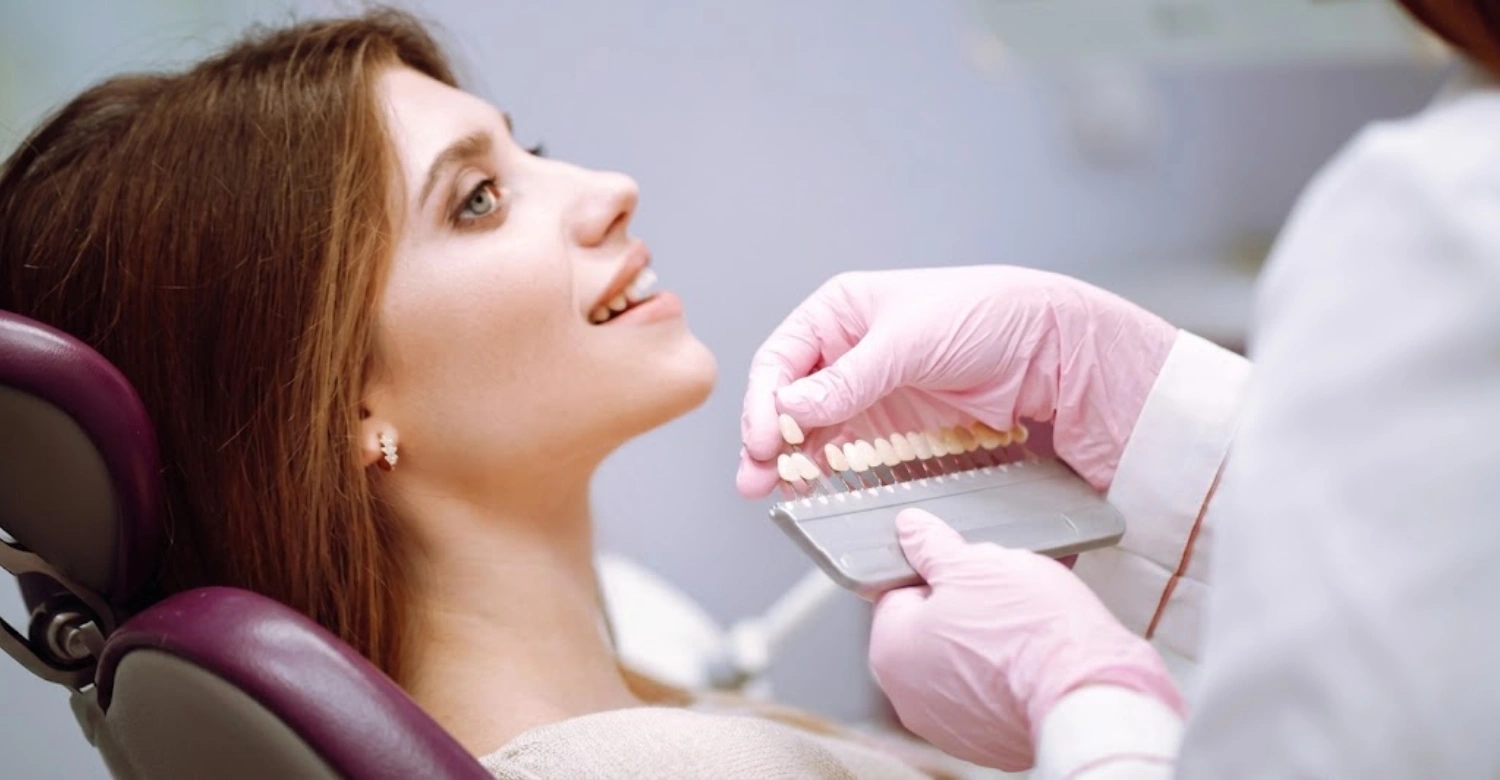
Composite vs Porcelain Veneers Pros and Cons
Composite veneers are more affordable, done in one visit, and need minimal tooth prep. But they last only 5–7 years and stain or chip more easily. Porcelain veneers cost more and take multiple visits. In return, they're stronger, stain-resistant, and last 10–15 years with a very natural look. Composite's edge is cost and speed, while its downside is a shorter lifespan and more upkeep. Porcelain's edge is durability and a natural finish, while its downside is the higher price and some enamel removal.
Composite Veneers Pros
Affordable: As mentioned, composite veneers are the more budget-friendly option.
Quick Application: The procedure typically takes less time since composite veneers are applied directly to the teeth.
Reversible: The process of applying composite veneers is less invasive and can often be reversed if needed.
Composite Veneers Cons
Less Durability: Composite veneers are more prone to staining and wear over time compared to porcelain.
Shorter Lifespan: Composite veneers after 5 years may show signs of wear or damage, requiring touch-ups or replacements.
Porcelain Veneers Pros
Long-lasting: Porcelain is more durable and resistant to stains, often lasting 10-15 years or longer.
Natural Appearance: Porcelain veneers are highly translucent, mimicking the appearance of natural teeth for a more lifelike look.
Stain Resistance: Porcelain is resistant to stains, maintaining its bright appearance over time.
Porcelain Veneers Cons
Costly: The higher price tag is the main drawback of porcelain veneers.
Non-Reversible: The process requires some tooth enamel removal, making porcelain veneers a permanent change to your smile.
Composite Veneers Before and After
At Vitrin Clinic, we've helped many patients achieve their desired smile with composite veneers. Our before-and-after photos showcase these significant improvements.
Composite vs Porcelain Veneers Cost
As mentioned earlier, the cost of composite vs porcelain veneers can vary widely. The final price depends on several factors, including the number of veneers needed and the location of the clinic. The complexity of the procedure also plays a role.
If you are looking for a more affordable option, composite veneers offer excellent value. But if you're looking for long-term durability and a natural look, porcelain may be the better choice.
Composite Veneers vs Porcelain Bonding
Another comparison to consider is porcelain veneers vs composite bonding. Both options improve the appearance of your teeth. Composite bonding is a quicker, less expensive alternative that involves applying a resin material to the teeth.
Porcelain veneers, however, offer more durability and a natural appearance. Bonding can also stain more easily and may not last as long as porcelain veneers.
Your Trusted Clinic for Veneers in Turkey – Vitrin Clinic
At Vitrin Clinic, we specialize in both composite and porcelain veneers, offering personalized solutions tailored to your needs.
Our experienced team of dentists will guide you through the process. We help you choose the right option for your smile, your budget, and your lifestyle.
Whether you opt for the affordability of composite veneers or the durability and beauty of porcelain veneers, Vitrin Clinic is here to help. We'll help you achieve the smile of your dreams.
Cosmetic and Restorative Dental Treatment Options at Vitrin Clinic
Composite bonding (composite veneers) can provide a quick and relatively affordable cosmetic improvement. This treatment is not offered at Vitrin Clinic, however. While it may initially appear to be a cost-effective solution, composite bonding is more prone to staining, chipping, cracking, and discoloration over time. For international patients, these issues can become particularly inconvenient after returning home. They often require ongoing maintenance, repairs, or replacements.
As a result, the long-term cost of composite bonding may exceed that of more durable and predictable treatments, such as porcelain veneers or comprehensive smile rehabilitation. For patients traveling for dental treatment, investing in longer-lasting solutions can provide greater aesthetic stability and reduced maintenance. It also offers better value over time.
More reliable treatment options includes:
Veneers, which deliver a natural-looking, highly durable smile with strong resistance to staining
Hollywood Smile, a full smile makeover designed to achieve a balanced, bright, and symmetrical aesthetic
Dental Crowns, which restore both function and appearance for damaged or weakened teeth with long-lasting strength
Dental Bridges, which replace missing teeth while maintaining bite stability and natural appearance
Teeth Whitening, a fast and non-invasive option to significantly enhance brightness and overall smile freshness.
Structural and Clinical Limitations of Composite Resin
Composite resin is a versatile restorative material. But it was never designed to behave like tooth enamel or porcelain over the long term. Understanding its structural limitations helps explain why composite veneers, while a reasonable short-term option, come with predictable trade-offs.
Structural Integrity and Load-Bearing Capacity Across Dental Materials
Every material used in cosmetic dentistry has a different capacity to withstand daily forces like chewing, grinding, and biting. Porcelain is a rigid, densely fired ceramic with a high resistance to compressive load. This is why it holds its shape and polish for a decade or more. Composite resin, by contrast, is a polymer-based material that is bonded layer by layer directly onto the tooth. It is more flexible and more prone to micro-fractures under repeated stress. This is one of the main structural limitations patients should understand before choosing composite.
This doesn't mean composite is unsafe or poorly made. It simply has a lower threshold for heavy bite forces, clenching, or grinding compared to porcelain or dental crowns. Patients with a strong bite or a history of bruxism tend to see faster wear on composite restorations than patients with a lighter bite pattern.
These structural limitations are a normal part of how the material is engineered. They are not a flaw specific to any one clinic or dentist. They simply need to be factored into expectations from the start.
Why Composite Veneers Photograph Well Initially But Age Poorly Over Time
In the first weeks after placement, composite veneers can look bright, smooth, and camera-ready. The resin is freshly polished, and its surface reflects light in a way that closely mimics natural enamel. This is often why "before and after" photos of composite work look so convincing.
The challenge is what happens next. Composite resin is more porous than porcelain, so it gradually absorbs pigments from coffee, tea, red wine, and everyday food. Combined with surface micro-scratching from brushing and chewing, this leads to noticeable discoloration well before the material reaches the end of its functional life. The edges can also pick up a duller, less translucent look compared to the surrounding natural teeth. This "photograph well initially, age poorly" pattern is one of the most common concerns raised in long-term follow-ups.
Reversibility and Tooth Preparation Myths
Composite veneers are frequently marketed as "100% reversible," and porcelain veneers are described as permanent. The reality is more nuanced, and understanding it properly can prevent disappointment later.
The Truth About "Reversibility" in Composite Veneers
It's true that composite veneers usually require little to no removal of enamel, which makes the procedure far less invasive than porcelain. But "reversible" does not mean "risk-free" or "consequence-free." Even minimal-prep composite bonding involves lightly etching or roughening the enamel surface so the resin can adhere properly. Once that surface texture is altered, the tooth doesn't return to its original, untouched state, even after the composite is removed.
In practice, this means composite veneers are best described as low-impact rather than fully reversible. This distinction matters for patients who are choosing composite specifically because they want the option to "undo" the treatment entirely in the future.
Transitioning from Composite to Porcelain: Procedure and Enamel Considerations
Many patients start with composite veneers and later decide to move to porcelain, whether due to staining, chipping, or simply wanting a more permanent result. Replacing composite veneers with porcelain is a common and straightforward transition in cosmetic dentistry.
The existing composite is removed, and the tooth surface is cleaned and evaluated. The dentist then determines how much natural enamel remains before preparing the tooth for a porcelain veneer or crown. Porcelain requires a slightly more defined preparation to seat properly and look natural, so enamel preservation becomes an important part of the planning conversation. A skilled clinician will aim to remove only what is structurally necessary. This protects as much of the natural tooth as possible while still achieving a durable, well-fitting final restoration.
Clinical Note
"When patients come to us wanting to upgrade from composite to porcelain, our priority is always conservative preparation," notes Dr. Rifat Alsaman, Head of the Medical Team at Vitrin Clinic. "We assess the condition of the enamel underneath the old composite carefully before deciding how the new restoration should be shaped." According to him, replacing composite veneers with porcelain should never be treated as a one-size-fits-all process. The amount of remaining healthy enamel differs from patient to patient. This is exactly why enamel preservation has to be assessed case by case rather than assumed.
When Is Composite Right vs. Wrong for You?
Neither composite nor porcelain is universally "better." The right material depends on your bite, your budget, your timeline, and how long you want the results to last. Understanding the correct clinical indication for composite veneers, rather than choosing based on price alone, is what separates a restoration that ages well from one that needs early replacement.
Case Selection Criteria for Composite Resin vs. Porcelain Restorations
As a general guide, composite veneers tend to suit patients who:
Need to correct minor chips, small gaps, or mild discoloration on a limited number of teeth
Are looking for a same-day, lower-cost solution
Have a light-to-moderate bite without significant grinding or clenching
Are comfortable with more frequent maintenance, polishing, or eventual replacement
Porcelain tends to be the more suitable choice for patients who:
Want a comprehensive smile makeover across multiple visible teeth
Have a stronger bite or a history of bruxism
Prioritize long-term stain resistance and a natural, translucent appearance
Are looking for a restoration that can realistically last 10–15 years with proper care
This porcelain vs composite longevity comparison is one of the most important factors in the decision. Composite typically lasts 5 to 7 years, while porcelain can last twice as long. This affects the true cost of ownership over time, not just the upfront price.
Tips for the Patients
If you're currently considering composite veneers, ask your dentist how your specific bite pattern, diet, and oral hygiene habits might affect the material's lifespan. If you already have composite veneers and are noticing staining, chipping, or a duller appearance, don't wait until the damage worsens. An early evaluation makes it easier to plan a smooth, conservative transition to a longer-lasting option like porcelain if needed.
It also helps to ask your dentist for a straightforward porcelain vs composite longevity comparison based on your own teeth and habits, rather than general averages. This way, your expectations match what your specific case is likely to experience.
Why Patients Trust Vitrin Clinic for Long-Term Veneer Results
Choosing between composite and porcelain isn't just a materials decision. It's a decision about how your smile will look and function years from now. At Vitrin Clinic, treatment planning is built around long-term outcomes rather than short-term cosmetic fixes. That's why the clinic focuses on porcelain veneers, Hollywood Smile makeovers, dental crowns, bridges, and teeth whitening as its core restorative offerings, rather than composite bonding.
For international patients in particular, this approach matters. A restoration that requires frequent touch-ups is far less practical when you live in a different country than your dentist. Vitrin Clinic's emphasis on durable, predictable materials is designed to reduce the need for follow-up repairs after patients return home. This offers greater long-term value and peace of mind.
What We Notice Clinically
"Patients traveling from abroad don't just want a smile that looks great on the day they leave. They want a smile that still looks great two or three years later, without needing a dentist nearby to maintain it," explains Dr. Rifat Alsaman, Head of the Medical Team at Vitrin Clinic and a cosmetic dentist. "That's the lens we use when we recommend one material over another."
Reference:
In conclusion, choosing between composite vs porcelain veneers depends on your aesthetic goals, oral health, and long-term expectations. The study reported comparable survival rates for both materials over two years, although composite veneers showed more surface changes. Porcelain veneers may therefore be preferable for patients seeking greater surface stability and lasting aesthetics. A dentist's evaluation remains essential to determine the most suitable option.
https://pmc.ncbi.nlm.nih.gov/articles/PMC11278355/
https://pmc.ncbi.nlm.nih.gov/articles/PMC9952524/
https://journaljammr.com/index.php/JAMMR/article/view/3877
FAQs

Dr. Rifat Alsaman has more than 5 years of clinical experience in dentistry and currently serves as the Head of the Medical Team at Vitrin Clinic. He is dedicated to providing exceptional patient care, overseeing treatment planning, and ensuring the highest clinical standards across the team. His expertise, attention to detail, and commitment to continuous professional development have helped countless patients achieve healthier, more confident smiles.

.webp&w=3840&q=75)


