
If you're considering Invisalign to straighten your teeth, one of the first questions you may ask is: Does orthodontics cover Invisalign? The answer depends on what you mean by "cover." If you're referring to orthodontic treatment itself, then yes Invisalign is a type of orthodontic treatment. If you're asking whether orthodontic insurance benefits cover Invisalign, the answer is also often yes, but the level of coverage varies depending on your insurance plan, age, provider, and treatment needs.
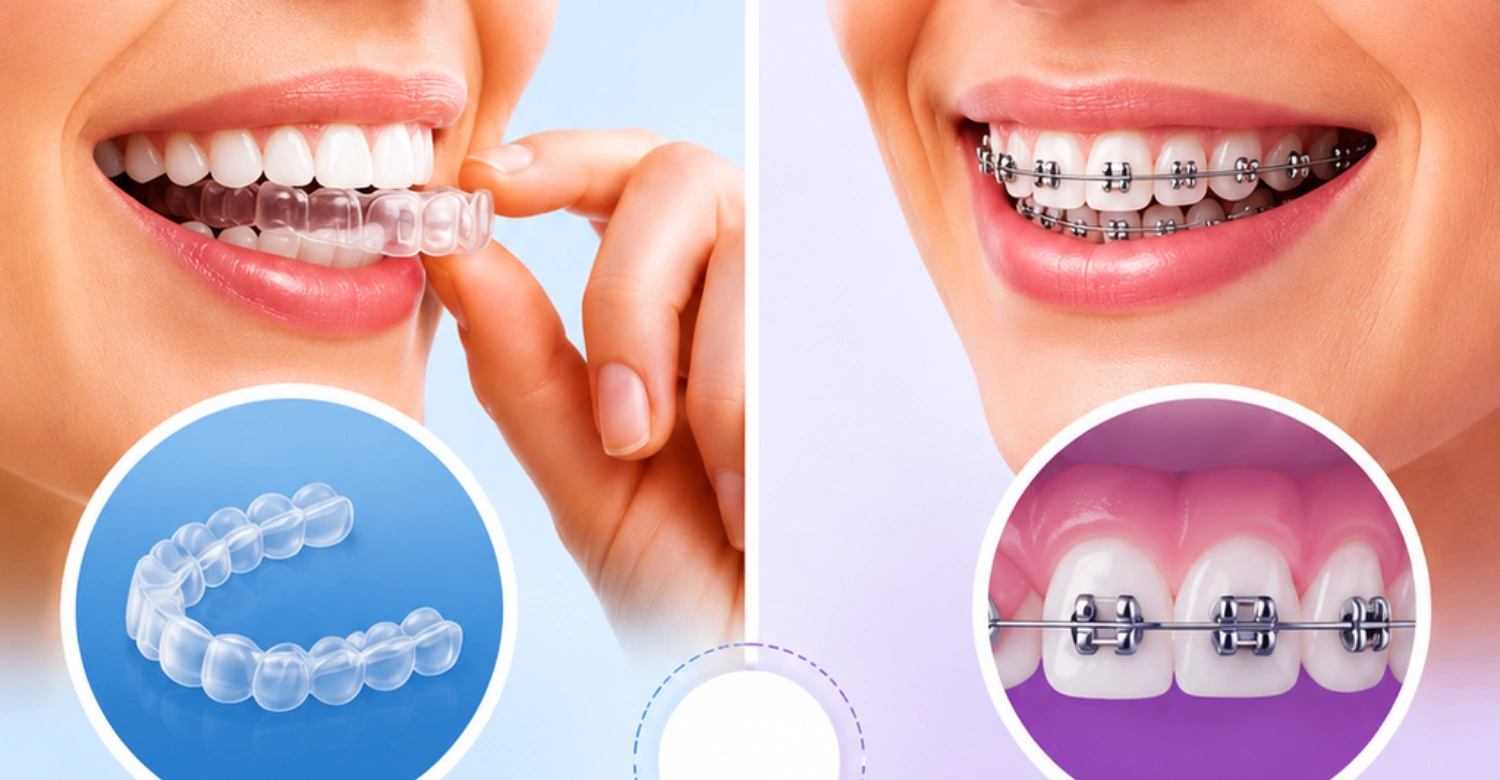
Invisalign has become one of the most popular alternatives to traditional metal braces because it uses clear, removable aligners to gradually move teeth into proper alignment. Many patients choose it for its discreet appearance, comfort, and convenience. However, Invisalign treatment is typically more expensive than some traditional orthodontic options, making insurance coverage an important consideration.
This guide explains how orthodontic coverage works for Invisalign, what factors affect insurance benefits, how much you may pay out of pocket, and how to maximize your orthodontic benefits.
What is Orthodontics and How Does Invisalign Fit In?
Orthodontics is a specialized branch of dentistry that focuses on diagnosing, preventing, and treating dental and facial irregularities (such as crooked, crowded teeth, misaligned jaws, and bad bites).
Historically, orthodontists relied exclusively on metal brackets, wires, and bands to move teeth into their correct positions by applying continuous, firm pressure. However, with the massive technological boom in the late 1990s and early 2000s, Align Technology introduced the Invisalign system as a revolutionary alternative. Today, Invisalign is considered a primary tool that orthodontists utilize to achieve the exact same structural goals as traditional braces, but with a highly aesthetic and comfortable approach for the patient. For a general overview of orthodontic pricing before diving into insurance specifics, our guide on how much orthodontics costs covers average price ranges in Turkey
How Does Invisalign Work in Orthodontic Treatment?
Invisalign relies on a fully digital workflow for planning and execution. Instead of using metal wires or elastic bands, the system uses a series of custom-made, clear plastic trays (aligners).
3D Digital Planning
The treatment begins with the orthodontist using a high-tech intraoral scanner (such as iTero) to capture a precise 3D digital blueprint of the patient's teeth. Using proprietary software called ClinCheck, the orthodontist maps out the exact movement of the teeth step-by-step. The patient can view a live simulation of how their teeth will move and see the final predicted outcome before the actual treatment even begins. For the full picture of Invisalign treatment beyond insurance questions, our dedicated Invisalign in Turkey page covers cost, eligibility, and how treatment is coordinated for international patients
Custom Manufacturing and Aligner Staging
Based on the digital plan, a series of clear aligners are manufactured using a patented medical-grade thermoplastic material called SmartTrack. The patient wears each set of aligners for roughly 7 to 14 days (as directed by the orthodontist) before switching to the next set in the series. Each aligner gently and incrementally moves the teeth by fractions of a millimeter. Since treatment length affects both cost and insurance planning, our guide on how long orthodontic treatment takes explains what determines the timeline for aligners versus braces
Advantages of Invisalign vs. Traditional Metal Braces
When your orthodontist gives you the choice between Invisalign and traditional braces, several factors make clear aligners the preferred option for many:
Aesthetics and Discretion
The biggest selling point of Invisalign is that it is virtually invisible. This allows adults and teenagers to undergo orthodontic treatment with full confidence, free from the social self-consciousness often associated with a "metal smile."
Comfort and Oral Health
The aligners are smooth, custom-trimmed to your exact gum line, and contain no sharp metal components. This drastically eliminates the painful cheek and tongue lacerations common with traditional wires. Furthermore, because the aligners apply highly targeted, calibrated forces, the overall soreness experienced after switching to a new tray is generally less intense than the tightening of traditional braces. If you're still weighing aligners against fixed appliances, our article on whether Invisalign is the right choice compares both options across comfort, cost, and case suitability
Removability and Dietary Freedom
Unlike fixed braces, which come with a long list of restricted foods (such as nuts, popcorn, gum, and hard candies), Invisalign trays are completely removable. You take them out whenever you eat, meaning you can enjoy your favorite foods without restrictions. Afterward, you simply brush and floss your teeth normally before putting the trays back in, significantly reducing the risk of plaque buildup, tooth decay, or gum disease during treatment. For patients using tax-advantaged accounts rather than insurance, our guide on using an HSA for orthodontics explains how Invisalign qualifies as an eligible expense
Orthodontic Conditions That Invisalign Can Treat
Thanks to continuous advancements in materials and biomechanical engineering, Invisalign can now treat the vast majority of orthodontic issues, including:
Crowding: When there is insufficient space in the jaw for all teeth to fit normally.
Spacing: Gaps and wide, unwanted spaces between the teeth.
Overbite: When the upper front teeth overlap significantly with the lower front teeth.
Underbite: When the lower front teeth protrude past the upper front teeth.
Open Bite: When the upper and lower teeth do not make contact when the mouth is closed.
Challenges and Limitations of Invisalign
While Invisalign offers a discreet way to straighten teeth, it requires strict discipline, as aligners must be worn for 20 to 22 hours daily to be effective. Patients often experience temporary discomfort or speech changes, like a slight lisp, when starting a new set of trays. The constant need to remove aligners before eating or drinking (anything other than water) demands meticulous oral hygiene and frequent teeth brushing throughout the day. It can also be more expensive than traditional metal braces, depending on the complexity of the treatment. Finally, it has structural limitations, making it less effective for severe orthodontic issues, such as complex bite corrections or severely rotated teeth.
Complete Dependency on Patient Compliance
Because the aligners are removable, the success of the treatment relies 100% on the patient's discipline. The trays must be worn for 20 to 22 hours per day. If a patient frequently forgets to wear them or leaves them out for extended periods, the teeth will stop tracking according to the digital plan, leading to prolonged treatment times or complete failure. For cases where traditional appliances remain the better fit, our guide to orthodontic braces in Turkey covers metal, ceramic, and lingual options in detail
Complex Cases and Surgical Orthodontics
While highly effective for most cases, Invisalign may not be the ideal choice for severe skeletal discrepancies that require massive jaw bone restructuring, or cases requiring orthognathic surgery. In these rare, complex scenarios, traditional metal or ceramic braces may still be necessary to provide the absolute vertical and rotational control needed over the roots of the teeth.
Cost Considerations
Generally, Invisalign can be slightly more expensive than traditional metal braces. This is due to the advanced digital scanning technology involved, the laboratory costs of custom-manufacturing multiple sets of trays globally, and the specialized software used by the orthodontist.
The Invisalign Experience at Vitrin Clinic
At Vitrin Clinic, the orthodontic journey is redefined through premium, patient-centered care. Vitrin Clinic utilizes the latest state-of-the-art 3D intraoral imaging technology to guarantee the highest level of accuracy when designing clear aligners.
The medical team at Vitrin Clinic focuses on a holistic approach to smile design, ensuring that your Invisalign treatment doesn't just straighten your teeth, but also enhances your overall facial aesthetics, symmetry, and oral health. By combining advanced digital planning with regular, efficient follow-ups, Vitrin Clinic provides a seamless, comfortable, and highly predictable path to a perfect smile. For a complete pricing comparison across every orthodontic system, our braces in Turkey guide breaks down costs by treatment type
Advanced Digital Orthodontics and Premium Care
At Vitrin Clinic, the orthodontic journey is fully redefined through premium, patient-centered care. Vitrin Clinic utilizes the latest state-of-the-art 3D intraoral imaging technology to guarantee the highest level of accuracy when designing clear aligners.
The medical team at Vitrin Clinic focuses on a holistic approach to smile design, ensuring that your Invisalign treatment doesn't just straighten your teeth, but also enhances your overall facial aesthetics, symmetry, and oral health. By combining advanced digital planning with regular, efficient follow-ups, Vitrin Clinic provides a seamless, comfortable, and highly predictable path to a perfect smile.
What We Notice Clinically
From a clinical standpoint, integrating clear aligner therapy into modern practice has shifted how dental transformations are achieved. According to Dr. Rifat Alsaman, the Head of the Medical team at Vitrin Clinic and a renowned cosmetics dentist, the true power of Invisalign lies in its unique blend of predictability and biomimetic movement. Dr. Rifat Alsaman notes that patients who choose clear aligners often exhibit significantly healthier periodontal (gum) tissues throughout their orthodontic journey compared to those with traditional brackets. As a cosmetics dentist, Dr. Rifat Alsaman emphasizes: "Invisalign allows us to precisely control the forces applied to each individual tooth, giving us the unique ability to preserve the natural health of the enamel and gums while simultaneously micro-adjusting the smile line to perfectly match the patient's facial contours." Furthermore, Dr. Rifat Alsaman, Head of the Medical team at Vitrin Clinic, highlights that the visual clarity of the 3D digital planning software boosts patient motivation, which drastically improves compliance and ensures that clinical results closely align with the initial digital simulation. Since insurance coverage often depends on medical necessity, our guide on whether orthodontic treatment is necessary explains how functional problems differ from purely cosmetic cases
The Expert Opinion of Dr. Rifat Alsaman
According to Dr. Rifat Alsaman, the Head of the Medical team at Vitrin Clinic and a renowned cosmetics dentist, the true power of Invisalign lies in its blend of predictability and biomimetic movement. Dr. Rifat Alsaman notes that patients who choose clear aligners often exhibit significantly healthier periodontal (gum) tissues throughout their orthodontic journey compared to those with traditional brackets.
As a cosmetics dentist, Dr. Rifat Alsaman emphasizes:
"Invisalign allows us to precisely control the forces applied to each individual tooth. From a cosmetic and clinical perspective, it gives us the unique ability to preserve the natural health of the enamel and gums while simultaneously micro-adjusting the smile line to perfectly match the patient's facial contours."
Furthermore, Dr. Rifat Alsaman, Head of the Medical team at Vitrin Clinic, highlights that the visual clarity of the 3D digital planning software boosts patient motivation, which drastically improves compliance and ensures that clinical results closely align with the initial digital simulation.
Reference:
In conclusion, whether orthodontics covers Invisalign depends on your insurance plan, treatment necessity, and lifetime orthodontic benefits. Before starting treatment, review your policy and confirm coverage with your provider. Recent clinical research also highlights that clear aligners continue to achieve reliable, predictable outcomes for many orthodontic cases, reinforcing Invisalign as a clinically supported option when both treatment goals and insurance benefits align.
https://pmc.ncbi.nlm.nih.gov/articles/PMC12665358/
FAQs

Dr. Rifat Alsaman has more than 5 years of clinical experience in dentistry and currently serves as the Head of the Medical Team at Vitrin Clinic. He is dedicated to providing exceptional patient care, overseeing treatment planning, and ensuring the highest clinical standards across the team. His expertise, attention to detail, and commitment to continuous professional development have helped countless patients achieve healthier, more confident smiles.


