Dental Crowns
October 15, 2026
What Is Full Mouth Rehabilitation for Severely Worn Teeth, and How Is It Treated?
 Dr. Rifat Alsaman
Full Mouth Rehabilitation for Severely Worn Teeth is a planned treatment that rebuilds worn teeth and restores a stable bite. It combines diagnosis, cause control, and restorations such as bonding, onlays, veneers, or crowns. Tooth wear is common, and research suggests around one in three adults shows signs of erosive wear. Most cases are mild, yet a smaller group develops severe wear that affects chewing, comfort, and appearance. This guide explains the causes, symptoms, diagnosis, treatment options, costs, risks, and aftercare in clear, practical terms.
.jpg)
.jpg)
.jpg)
.jpg)
.jpg)
.jpg)
What Is Full Mouth Rehabilitation for Severely Worn Teeth?
Full mouth rehabilitation for severely worn teeth means restoring most or all teeth in both jaws as one coordinated plan. The goal is not only nicer teeth, but healthy function, a balanced bite, and long-term stability. Dentists usually consider this approach when wear affects many teeth and the bite has changed. Treatment is tailored to each patient, so no two plans look exactly the same.
What Does Full Mouth Rehabilitation Involve?
Full mouth rehabilitation for severely worn teeth involves several connected stages rather than one single procedure. It starts with a detailed examination, scans, photographs, and a bite analysis. Next, the dentist identifies and controls the cause of wear, such as acid exposure or grinding. A diagnostic wax-up then shows the proposed tooth shapes before any irreversible work begins. Temporary restorations test the new bite, speech, and appearance for several weeks.
Full Mouth Rehabilitation vs. Full Mouth Reconstruction for Worn Teeth
The terms full mouth rehabilitation and full mouth reconstruction are often used interchangeably by patients and clinics. In practice, rehabilitation usually emphasises restoring function, bite health, and comfort across the whole mouth. Reconstruction often describes the physical rebuilding of teeth with crowns, onlays, implants, or bridges. For worn teeth, both terms describe a similar process with the same clinical priorities. What matters most is that the plan addresses the cause, the bite, and each tooth's remaining structure.
How Does Severe Tooth Wear Affect Oral Health, Appearance, and Bite Function?
Severe tooth wear removes protective enamel and exposes softer dentin underneath. Exposed dentin wears faster and often causes sensitivity to cold, sweet, or acidic foods. Shorter teeth can make the smile look older and reduce how much teeth show when speaking. Worn edges may become sharp, thin, and prone to chipping. Studies show severe wear affects roughly 3% to 5% of young adults, but the figure rises with age.
When Is Full Mouth Rehabilitation Necessary Instead of Treating Individual Teeth?
Treating individual teeth works well when wear is limited to a few areas. Full mouth rehabilitation for severely worn teeth becomes necessary when wear affects most teeth in both jaws. It is also considered when the bite has collapsed or the face looks shorter. Another sign is when there is no space left to restore teeth without changing the bite. Restoring one tooth at a time in these cases can create an unstable, uneven bite.
Ready to transform your smile?
Talk to our team and get a personal FREE treatment plan.
What Causes Severely Worn Down Teeth?
Severely worn teeth usually result from a combination of chemical and mechanical factors acting over many years. Some wear is normal, and enamel loses roughly 20 to 40 micrometres per year through chewing. Problems begin when acid, grinding, or friction speeds up that natural process. Identifying the main causes is essential before any restorative treatment begins.
Dental Erosion From Acidic Foods, Drinks, and Stomach Acid
Dental erosion is the chemical dissolution of enamel by acids that do not come from bacteria. Enamel begins to soften when the mouth's pH falls below about 5.5. Many soft drinks have a pH near 2.5, while citrus juices are around 3.5. Stomach acid is even stronger, with a pH that can fall below 2. A European study of over 3,000 young adults found about 29% had visible erosive wear.
Teeth Grinding and Clenching (Bruxism)
Bruxism is repetitive grinding or clenching of the teeth, either during sleep or while awake. A 2024 global meta-analysis estimated that about 21% of people have sleep bruxism. The same review found awake bruxism in roughly 23% of the population. Grinding forces during sleep can be several times stronger than normal chewing forces. Over time, this pressure flattens biting surfaces and can chip or crack teeth.
Attrition From Tooth-to-Tooth Contact
Attrition is wear caused by direct contact between upper and lower teeth. Some attrition happens naturally with age, chewing, and normal tooth contact. It becomes a concern when wear is fast, uneven, or linked to grinding habits. Attrition typically creates flat, shiny facets that match exactly between opposing teeth. Front teeth may become shorter and lose their natural rounded edges.
Abrasion From Aggressive Brushing and Other Habits
Abrasion is wear caused by objects other than teeth rubbing against tooth surfaces. Hard toothbrushes, heavy brushing pressure, and highly abrasive toothpastes are common causes. Abrasion often creates notches near the gumline where enamel is thinnest. Other habits include biting pens, opening packages with teeth, or holding pins between teeth. Some people also wear teeth by chewing ice or hard objects regularly.
Acid Reflux, Dry Mouth, and Other Contributing Factors
Gastro-oesophageal reflux disease affects around 13% to 14% of adults worldwide, according to global estimates. Reviews report dental erosion in roughly one third of people with reflux disease. Reflux often damages the inner surfaces of upper teeth first. Dry mouth also raises the risk because saliva normally neutralises acid and repairs enamel. Studies estimate that about one in five adults experiences dry mouth symptoms.
How Can Multiple Causes Lead to Advanced Tooth Wear?
Advanced tooth wear rarely has a single cause in adult patients. Acid first softens the enamel surface, making it far more vulnerable to mechanical forces. Grinding, chewing, or brushing then removes that softened layer much faster than normal. Once enamel thins, the softer dentin underneath wears even more rapidly. Dry mouth reduces natural protection and allows the damage to continue.
What Are the Symptoms of Severe Tooth Wear?
Severe tooth wear often develops slowly, so early symptoms are easy to miss. Many patients only notice a problem once teeth look shorter or feel sensitive. Recognising the warning signs early can prevent further loss and simplify treatment. The following symptoms are the most common in patients with advanced wear.
Flattened, Shortened, or Chipped Teeth
Flattened biting surfaces are one of the most visible signs of severe tooth wear. Front teeth may look shorter, straighter, and less rounded at the edges. Edges can become thin and translucent before chipping away. Back teeth may lose their natural cusps and look smooth or cupped. Some patients notice that their smile shows less teeth than before.
Tooth Sensitivity to Hot, Cold, Sweet, or Acidic Foods
Sensitivity occurs when enamel wears away and exposes tiny tubules within the dentin. These tubules carry fluid movement toward the nerve, triggering short, sharp pain. Cold drinks, ice cream, sweet foods, and acidic fruit often trigger the discomfort. A meta-analysis estimated dentin hypersensitivity affects about 11.5% of adults on average. Rates are higher in people with erosive wear and gum recession.
Difficulty Chewing and Changes in Bite Alignment
Worn teeth lose the cusps and grooves that help grind food efficiently. Patients may find tough meats, raw vegetables, or nuts harder to chew comfortably. Some people start chewing on one side to avoid sensitive or uneven teeth. The bite may feel different, as though teeth no longer meet in the same way. Front teeth can lose contact, placing more load on back teeth.
Yellowing or Darkening as Enamel Wears Away
Enamel is naturally translucent, while dentin underneath is yellow or brown in colour. As enamel thins, more dentin colour shows through and teeth appear darker. Patients often mistake this change for staining and try whitening products. Whitening cannot replace lost enamel and may increase sensitivity on worn teeth. Exposed dentin can also absorb stains from coffee, tea, and red wine more easily.
Jaw Muscle Discomfort and Uneven Tooth Contact
Many patients with severe wear report tired, tight, or aching jaw muscles. This is especially common in people who grind or clench their teeth at night. Morning headaches near the temples may also be linked to nighttime clenching. Uneven tooth contact can cause muscles to work harder during chewing and swallowing. Some people notice clicking in the jaw joint or limited mouth opening.
Can Severely Worn Teeth Cause Bite Collapse?
Yes, severely worn teeth can contribute to a condition often called bite collapse. Bite collapse happens when teeth lose enough height that the jaws close further than normal. The lower face may appear shorter, and lips can look thinner or folded inward. Deep creases may form at the corners of the mouth. Correcting a true collapse usually requires full mouth rehabilitation for severely worn teeth.
What Happens if Severe Tooth Wear Is Left Untreated?
Untreated tooth wear usually continues to progress, especially when its cause remains active. Enamel cannot regrow, so every layer lost is permanent. Over time, treatment becomes more complex, more invasive, and more expensive. Early action often allows simpler options and helps avoid full mouth rehabilitation for severely worn teeth later.
Progressive Enamel and Dentin Loss
Enamel is only about two to two and a half millimetres thick at its thickest point. Once acid or grinding breaks through it, the softer dentin is exposed. Dentin is less mineralised than enamel and wears much faster under the same forces. Research suggests wear rates can increase several times once dentin becomes exposed. This explains why wear often seems to speed up suddenly after years of slow change.
Increased Sensitivity and Risk of Tooth Fracture
As teeth lose structure, they become thinner and weaker under chewing forces. Thin enamel edges are especially likely to chip during normal eating. Teeth with large old fillings face an even higher risk of cracking. Grinding adds repeated stress that can turn small cracks into deeper fractures. Cracked teeth may cause sharp pain when biting or releasing pressure.
Pulp Irritation, Decay, and Possible Need for Root Canal Treatment
The pulp is the living tissue inside each tooth that contains nerves and blood vessels. Severe wear reduces the protective layer between the outside surface and the pulp. Teeth may react by producing extra internal dentin, but this defence has limits. If wear outpaces this response, the pulp can become inflamed or infected. Exposed dentin is also more vulnerable to decay than intact enamel.
Changes in Tooth Shape, Chewing Efficiency, and Bite Function
Worn teeth gradually lose their natural shapes, angles, and guiding surfaces. Front teeth normally guide the jaw during side movements and protect back teeth. When these guiding surfaces wear away, back teeth take more damaging sideways forces. Chewing efficiency drops because flattened teeth cut and grind food less effectively. Delayed treatment therefore often increases the need for full mouth rehabilitation for severely worn teeth.
Why Identifying the Cause of Tooth Wear Matters
Restorations placed without controlling the cause often fail early or wear quickly. Acid can damage the edges of fillings, while grinding can fracture crowns and veneers. Identifying the main cause allows the dentist to choose suitable materials and protective measures. Erosion may require dietary changes or medical management of reflux. Bruxism may require a night guard and stronger restorative materials.
How Is Severe Tooth Wear Diagnosed Before Full Mouth Rehabilitation?
Diagnosis is the foundation of successful full mouth rehabilitation for severely worn teeth. A thorough assessment shows how much tooth structure remains and why wear happened. It also reveals the condition of gums, roots, jaw joints, and existing restorations. Dentists often use a scoring system such as the Basic Erosive Wear Examination to grade wear severity.
Comprehensive Dental Examination and Medical History
The first appointment includes a detailed conversation about your health, habits, and symptoms. Your dentist will ask about diet, drinks, reflux, medications, sleep, and stress. Medical conditions such as diabetes or eating disorders can influence wear and healing. A list of current medications helps identify causes of dry mouth. The dentist then examines every tooth, the gums, tongue, cheeks, and jaw muscles.
Evaluating Tooth Structure, Enamel Loss, and Existing Restorations
Your dentist assesses how much enamel and dentin remain on each tooth. Worn teeth are checked for cracks, thin edges, and areas of exposed dentin. Existing fillings, crowns, and veneers are examined for leakage, wear, or fracture. Some old restorations may need replacing before new treatment can begin. The amount of remaining structure determines whether bonding, onlays, or crowns are suitable.
Assessing Gum Health, Tooth Mobility, and Signs of Bruxism
Healthy gums and bone are essential before placing any long-term restorations. Your dentist measures gum pockets, checks for bleeding, and looks for recession. Gum disease affects many adults, and severe periodontitis impacts around one billion people worldwide. Loose teeth may indicate bone loss or excessive biting forces from grinding. Signs of bruxism include flat wear facets, cheek ridges, scalloped tongue edges, and enlarged jaw muscles.
Bite Analysis and Evaluation of Vertical Dimension
Bite analysis studies how upper and lower teeth meet and how the jaw moves. Vertical dimension refers to the height of the lower face when teeth are together. Dentists assess this height using facial measurements, speech tests, and the resting jaw position. They also check whether there is enough space to restore worn teeth. If space is limited, the bite may need to be raised slightly.
Digital Dental X-Rays and CBCT When Clinically Indicated
Digital X-rays show areas the eye cannot see, including roots, bone, and decay. They help detect infections, cracks, and problems under existing fillings or crowns. Digital X-rays use considerably less radiation than traditional film X-rays. A cone beam CT scan creates a three-dimensional image of teeth, bone, and jaw joints. CBCT is not needed for everyone and is used only when clinically justified.
Intraoral Scans, Photographs, and Diagnostic Wax-Ups
An intraoral scanner creates a precise digital model of your teeth within minutes. Photographs record tooth colour, shape, smile line, and facial proportions. Together, these records help the dentist and laboratory plan the new tooth shapes. A diagnostic wax-up shows the proposed result on a model before treatment begins. This model can be transferred into your mouth as a temporary trial called a mock-up.
How Do Dentists Determine Whether Worn Teeth Can Be Saved?
Dentists look at several factors when deciding if a worn tooth can be saved. The most important is how much healthy tooth structure remains above the gum. Crowns usually need at least one and a half to two millimetres of sound tooth around the edges. Root health, bone support, and the absence of deep cracks are also essential. Teeth with vertical root fractures are usually not restorable.
When Is Referral to a Prosthodontist or Other Dental Specialist Appropriate?
A prosthodontist specialises in restoring and replacing teeth, including complex bite reconstruction. Referral may be appropriate when wear is severe, widespread, and involves bite changes. Gum specialists may help with crown lengthening or treatment of periodontal disease. Endodontists may handle complex root canal treatment on heavily worn teeth. Orthodontists may move teeth to create space or improve bite relationships.
What Are the Best Treatment Options for Severely Worn Down Teeth?
The best treatment depends on wear severity, cause, remaining tooth structure, and your goals. Modern dentistry favours the least invasive option that still provides lasting function. Many patients need a combination of treatments rather than one single solution. Your dentist should explain the benefits, limits, and costs of each option.
Conservative Treatment for Early or Moderate Tooth Wear
Conservative treatment aims to slow wear and protect remaining tooth structure. It is most suitable when wear is mild to moderate and the bite is stable. These options remove little or no healthy tooth tissue. They also keep future treatment choices open if wear progresses later. Conservative care is often combined with monitoring at regular dental visits.
Fluoride Treatments and Desensitizing Products
Fluoride strengthens enamel and helps it resist acid attacks. Dentists may apply high-concentration fluoride varnish two to four times each year. Prescription toothpaste with 5,000 ppm fluoride may also be recommended for high-risk patients. Stannous fluoride toothpaste has shown good results in protecting against erosive wear. Desensitising toothpastes containing potassium nitrate or stannous fluoride reduces sensitivity over several weeks.
Composite Bonding to Restore Lost Tooth Structure
Composite bonding uses tooth-coloured resin to rebuild worn edges and surfaces. The material bonds directly to teeth, often with little or no drilling. Bonding can restore length, cover sensitive dentin, and protect thin enamel edges. It can also be used to test a new bite before committing to ceramic work. Clinical studies of worn dentitions report good survival rates, often above 90% over several years.
Dietary Changes and Management of Acid Exposure
Reducing acid exposure is one of the most important steps in slowing erosion. Limit soft drinks, sports drinks, citrus juices, and acidic snacks between meals. Drink acidic beverages with meals and use a straw to reduce contact with teeth. Rinse with water or eat cheese after acidic foods to help neutralise acid. Avoid swishing or holding acidic drinks in your mouth.
Dental Crowns for Severely Worn Teeth
Dental crowns cover the whole visible part of a tooth to restore shape, strength, and height. They are often recommended when teeth have lost large amounts of structure. Crowns are a central part of many plans for full mouth rehabilitation for severely worn teeth. However, they are not automatically the best choice for every worn tooth.
When Are Zirconia or Porcelain Crowns Appropriate?
Zirconia crowns are extremely strong and suit patients who grind or clench heavily. Monolithic zirconia resists chipping and can be made relatively thin. Porcelain options such as lithium disilicate, often called E.max, offer excellent natural translucency. These are popular for front teeth where appearance matters most. Systematic reviews report five-year survival rates of roughly 92% to 98% for modern ceramic crowns.
How Much Natural Tooth Structure Must Be Removed?
Crowns require more tooth reduction than most other restorations. Research estimates that full crowns remove about 63% to 76% of the visible tooth structure. Veneers, by comparison, typically remove only about 3% to 30%. In worn teeth, much of the needed space may already exist because of wear. This can reduce how much healthy teeth must be prepared.
Benefits and Limitations of Rebuilding Worn Teeth With Dental Crowns
Crowns can restore height, shape, strength, and a consistent bite across the mouth. They protect weakened teeth from further wear and fracture. Ceramic crowns resist staining and look natural when well designed. However, crown preparation is permanent and cannot be reversed. Crowns also need replacing eventually, often after 10 to 15 years or longer.
Onlays and Partial-Coverage Restorations
Onlays covers only the damaged parts of a tooth, usually the biting surface and cusps. They preserve more healthy tooth structure than full crowns. Partial-coverage restorations typically remove around 30% to 45% of the visible tooth structure. Onlays can be made from ceramic, composite, or gold. They are increasingly used in full mouth rehabilitation for severely worn teeth to protect natural tissue.
Veneers for Selected Teeth With Adequate Remaining Structure
Veneers are thin shells bonded to the front surface of teeth. They suit front teeth that still have enough enamel for strong bonding. Veneers can restore length, colour, and shape on teeth with moderate wear. Some designs wrap over the biting edge to rebuild worn incisal surfaces. Clinical studies report veneer survival around 90% to 95% over ten years.
Root Canal Treatment for Teeth With Pulp Damage
Root canal treatment removes infected or inflamed pulp from inside the tooth. It becomes necessary when wear, cracks, or decay reach the pulp. The canals are cleaned, shaped, disinfected, and sealed to prevent reinfection. Modern root canal treatment has reported success rates of around 85% to 95%. Treated teeth usually need a crown or onlay to protect them from fracture.
Orthodontic Treatment When Tooth Position Contributes to the Problem
Tooth position can contribute to wear when teeth meet at damaging angles. Crowded or misaligned teeth may wear unevenly under normal chewing forces. Orthodontic treatment can align teeth and create space for restorations. Clear aligners are often used to move teeth before restorative treatment begins. Moving teeth first may reduce how much tooth must be drilled later.
Night Guards for Teeth Grinding and Clenching
A night guard is a custom-made appliance worn over the teeth during sleep. It does not stop grinding, but it protects teeth and restorations from damage. Hard acrylic guards spread forces evenly and reduce wear on natural teeth. Night guards are strongly recommended after full mouth rehabilitation for severely worn teeth. Studies link bruxism with higher rates of ceramic chipping and restoration failure.
When Are Dental Implants or Bridges Needed for Non-Restorable or Missing Teeth?
Some severely worn teeth cannot be saved because of deep fractures or insufficient structure. Missing or non-restorable teeth can be replaced with implants or bridges. Dental implants replace the root with a titanium post and support a crown. Long-term studies report implant survival rates of about 95% after ten years. Bridges use neighbouring teeth for support, which requires preparing those teeth.
How Do Dentists Choose the Most Conservative Effective Treatment?
Dentists follow a principle often called minimally invasive dentistry. This means choosing the least destructive option that still provides reliable long-term results. They consider remaining tooth structure, bite forces, cause of wear, and aesthetic goals. Additive treatments like bonding and onlays are often preferred when enamel remains. A tailored mix of treatments is central to modern full mouth rehabilitation for severely worn teeth.
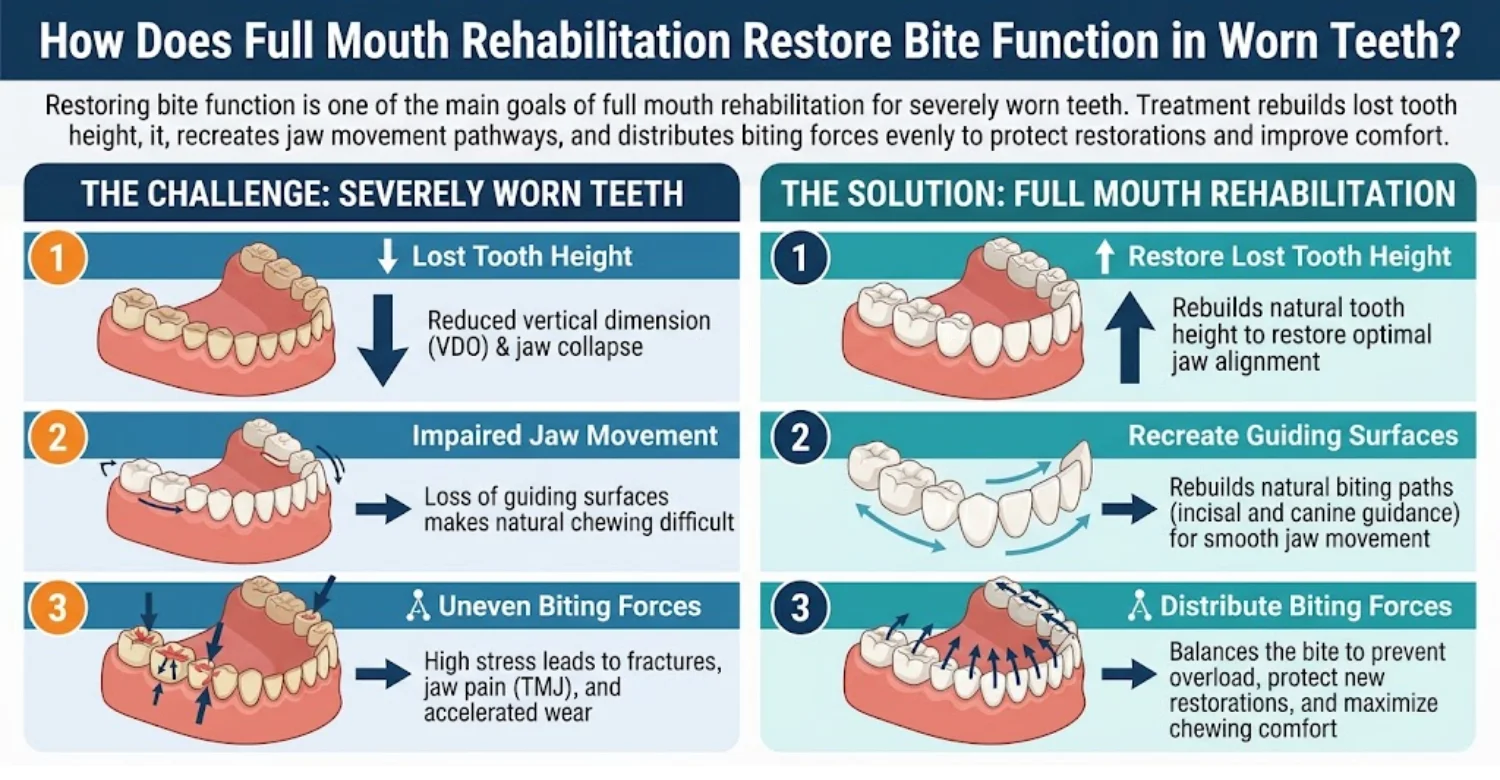
What Is Full Mouth Rehabilitation for Bite Collapse?
Bite collapse occurs when worn or missing teeth allow the jaws to close too far. Full mouth rehabilitation for bite collapse rebuilds teeth to restore proper height and support. It may combine crowns, onlays, bonding, implants, and orthodontic treatment. The plan often raises the bite in a controlled and tested way. This can improve facial proportions, lip support, and chewing efficiency.
How Do Dentists Determine the Correct Bite Height?
Determining bite height combines measurements, clinical judgement, and patient feedback. Dentists measure the resting position of the jaw and the space between teeth. They assess speech, especially sounds like "S" that require precise tooth positions. Facial proportions and lip support also guide the decision. The planned height should provide enough space for strong restorations.
Can the Original Tooth Shape and Chewing Function Be Restored?
In most cases, well-planned treatment can restore natural tooth shapes and chewing function. Restorations recreate cusps, grooves, and edges lost through wear. Front teeth can be lengthened to restore guiding surfaces and a youthful smile. Back teeth regain the shape needed to grind food efficiently. Studies show chewing efficiency often improves significantly after full mouth restoration.
How Are Temporary Restorations Used to Test the New Bite?
Temporary restorations act as a trial run for the planned final result. They are made from resin and copied from the diagnostic wax-up. Patients wear them for several weeks, often between one and three months. During this time, dentists check comfort, speech, chewing, and appearance. Adjustments are easy to make on temporaries before final restorations are produced.
Why Must Jaw Comfort, Speech, and Tooth Contact Be Evaluated?
Changing tooth shape and bite height affects how the jaw, muscles, and tongue work. Jaw comfort shows whether muscles and joints accept the new position. Speech tests reveal whether teeth are too long, too thick, or wrongly positioned. Even, simultaneous tooth contact helps spread biting forces across the whole mouth. Uneven contacts can cause sensitivity, muscle pain, or restoration fractures.
How Is the Final Bite Checked After Restorations Are Placed?
After final restorations are fitted, the dentist carefully checks every tooth contact. Thin marking paper shows where teeth meet during biting and side movements. Some clinics use digital bite analysis tools to measure force distribution. Small adjustments are made to remove high spots and smooth contacts. Patients usually return for review within one to two weeks.
Ready to transform your smile?
Talk to our team and get a personal FREE treatment plan.
What We Notice Clinically
Clinical experience adds practical insight to what research and textbooks describe. Patients with advanced wear often share similar patterns, habits, and concerns. Understanding these patterns helps dentists recommend realistic and conservative treatment. The following observations reflect common findings in restorative practice.
Common Patterns in Patients With Advanced Tooth Wear
Many patients arrive believing their teeth are simply ageing or stained. Most are surprised to learn that acid or grinding plays a major role. We commonly see worn front teeth combined with cupped craters on back teeth. Patients often report frequent sparkling water, citrus, or sports drinks. Many also describe morning jaw tightness or a partner hearing grinding noises.
Why Tooth Wear Does Not Always Mean That Every Tooth Needs a Crown
Severe wear does not automatically mean crowns on every tooth. Many teeth still have enough enamel to support bonding or onlays. Additive approaches can rebuild teeth while preserving healthy structure underneath. Crowning healthy enamel unnecessarily can increase the long-term risk of pulp problems. Patients sometimes receive quotes for 28 crowns when a mixed approach would suit them.
Distinguishing Enamel Erosion From Grinding, Abrasion, and Tooth Fractures
Each type of wear leaves a characteristic pattern on teeth. Erosion creates smooth, rounded, glassy surfaces and cupped areas on biting surfaces. Grinding creates flat, shiny facets that match between upper and lower teeth. Abrasion produces notches near the gumline, often on the side of brushing hand dominance. Fractures show sharp edges, crack lines, or missing pieces of tooth.
Why Treating the Cause Is as Important as Restoring the Teeth
Restorations cannot succeed long term if the cause of wear continues unchecked. Acid can weaken bonding edges and wear composite surfaces quickly. Grinding can chip porcelain and fracture even strong restorations. We often see failed previous treatments where the cause was never addressed. Managing reflux, diet, and bruxism protects both teeth and restorations.
Clinical Note: Dr. Rifat Alsaman's Perspective on Full Mouth Rehabilitation
Dr. Rifat Alsaman views full mouth rehabilitation as a functional treatment first and a cosmetic treatment second. In his approach, every plan starts with understanding why teeth wore down. He believes beautiful teeth mean little if the bite is unstable or uncomfortable. His team uses digital planning and trial restorations before any permanent work. This allows patients to see, feel, and approve their new smile in advance.
Dr. Rifat Alsaman : on Preserving Natural Tooth Structure
According to Dr. Rifat Alsaman, healthy enamel is the best restorative material available. He prefers bonding and onlays wherever remaining tooth structure allows. Crowns are recommended when teeth are heavily damaged or need full protection. He explains that preserving tooth structure keeps future treatment options open. Conservative preparation also helps protect the pulp and reduce sensitivity.
Why Bite Stability and Long-Term Maintenance Should Guide Treatment Decisions
Dr. Rifat Alsaman stresses that bite stability determines how long restorations last. An even, well-tested bite reduces chipping, fractures, and jaw discomfort. He considers night guards essential for most patients after full mouth rehabilitation for severely worn teeth. Regular reviews allow small issues to be corrected before they become serious. He encourages patients to view treatment as a long-term partnership with their dental team.
What Is the Average Cost of Full Mouth Rehabilitation for Severely Worn Teeth?
The cost of full mouth rehabilitation for severely worn teeth depends on the number of teeth requiring treatment, restoration materials, additional procedures, and clinic location. Treatment may involve crowns, veneers, onlays, composite bonding, or a combination of restorative techniques. The following figures are indicative planning estimates, not fixed quotes.
Average Full Mouth Rehabilitation Cost by Country
Average Cost of Individual Treatments
Treatment | United States | United Kingdom | Turkey |
Zirconia or ceramic crown | 1,100–2,500 | 600–1,200 | 200–400 |
Molar root canal treatment | 1,000–1,600 | 500–1,000 | 150–300 |
Custom night guard | 300–800 | 250–600 | 80–150 |
Prices depend on the material, tooth location, clinical complexity, laboratory fees, and the services included in the treatment package.
Average Full Mouth Rehabilitation Cost in the United States
Full mouth rehabilitation for severely worn teeth typically costs 25,000–80,000, with a planning midpoint of approximately $52,500. Complex cases involving dental implants or extensive additional procedures may exceed $90,000.
Ceramic and zirconia crowns typically cost 1,100–2,500 per tooth, while molar root canal treatment may add 1,000–1,600 per tooth. Insurance coverage varies, and annual benefit limits or exclusions may leave patients responsible for a substantial portion of the total.
Average Full Mouth Rehabilitation Cost in the United Kingdom
Private full mouth rehabilitation generally costs 15,000–50,000, with a planning midpoint of approximately $32,500.
Private ceramic crowns typically range from 600–1,200 per tooth, while molar root canal treatment may cost 500–1,000. NHS dental treatment may be less expensive for eligible patients, but complex restorative treatment is subject to clinical eligibility and availability.
Average Full Mouth Rehabilitation Cost in Turkey
In Turkey, full mouth rehabilitation typically costs 4,000–15,000, with a planning midpoint of approximately $9,500.
Zirconia crowns generally range from 200–400 per tooth, and molar root canal treatment may cost 150–300. The final amount depends on the number of restorations, material selection, diagnostic requirements, and whether additional procedures are necessary.
Using these planning midpoints, Turkey's estimated cost is approximately 82% lower than the US midpoint and 71% lower than the UK midpoint. These are mathematical comparisons of the stated estimates, not guaranteed savings for an individual patient. Travel, accommodation, and follow-up visits should also be considered.
How Does the Number of Restorations Affect the Total Cost?
Treatment Approach | Main Cost Consideration |
Composite bonding | Often less expensive for suitable teeth with limited damage |
Porcelain or zirconia crowns | Higher material and laboratory costs; may be needed for extensively worn teeth |
Ceramic onlays | May preserve more natural tooth structure than full crowns in appropriate cases |
Mixed restorative treatment | Combines different treatments according to each tooth's condition |
Implant-supported restorations | Adds surgical, implant component, and prosthetic costs when teeth cannot be preserved |
The number of teeth treated strongly influences the total cost. However, treating 28 teeth does not necessarily mean placing 28 crowns. A dentist may recommend a mixture of crowns, onlays, veneers, and bonding depending on the remaining tooth structure and bite.
What Additional Costs Should Patients Consider?
Additional Service | Why It May Affect the Budget |
Diagnostic X-rays and scans | Needed to assess teeth, roots, and supporting structures |
Root canal treatment | May be required for teeth with pulpal damage |
Gum treatment | Helps manage periodontal disease before restorative work |
Temporary restorations | May be used to test the bite and appearance |
Custom night guard | Helps protect restorations when indicated, particularly in patients who grind their teeth |
Follow-up and adjustments | May involve additional visits or fees |
Dental implants | May be necessary when severely damaged teeth cannot be restored |
What Should an Itemized Full Mouth Rehabilitation Quote Include?
A detailed quote should list the teeth being treated, the proposed restoration for each tooth, the materials, laboratory work, diagnostics, and temporary restorations. It should also specify whether root canal treatment, gum treatment, night guards, follow-up visits, and adjustments are included.
Comparing itemized treatment plans helps patients understand the total expected cost and avoid choosing a treatment based on price alone. The most suitable plan should prioritize preserving healthy tooth structure, restoring the bite, and achieving a durable result.
All amounts above are illustrative estimates in USD. Actual prices vary by provider, location, exchange rates, and individual clinical needs
At Vitrin Clinic Treatment Pricing
The cost of a dental crown varies depending on the material selected, the clinical complexity of the case, and the country of treatment.
The following table provides a transparent comparison of average costs by crown type across the United Kingdom, United States, and Vitrin Clinic in Istanbul allowing patients to assess their options accurately before their consultation.
Crown type | 🇬🇧 UK | 🇺🇸 USA | 🇹🇷 Turkey |
|---|---|---|---|
Zirconia crown Monolithic, high strength per unit | $890 – $1,525 | $1,000 – $2,500 | From $150 / unit |
E.max crown Lithium disilicate, premium aesthetics per unit | $1,270 – $2,030 | $1,200 – $2,500 | From $180 / unit |
PFM crown Porcelain-fused-to-metal per unit | $570 – $1,015 | $800 – $1,500 | From $100 / unit |
CEREC same-day crown CAD/CAM milled, single visit per unit | $1,015 – $1,780 | $1,000 – $2,000 | From $200 / unit |
Consultation & scans | Charged separately | Charged separately | Free & included |
Estimated saving | — | — | Up to 70% less |
* Prices are averages for reference only and may vary based on individual case requirements, tooth location, material selection, and treatment complexity. A personalised quote is provided following your free consultation.








What Are the Possible Side Effects and Risks of Full Mouth Rehabilitation?
Like any dental treatment, full mouth rehabilitation for severely worn teeth carries some risks. Most side effects are mild, temporary, and manageable with proper care. Understanding them helps you make an informed decision and recognise problems early. Careful planning and experienced clinicians greatly reduce the risk of complications.
Temporary Tooth Sensitivity After Restorative Treatment
Sensitivity is the most common side effect after tooth preparation or bonding. Teeth may react to cold, heat, or pressure for several days or weeks. This happens because preparation and bonding can temporarily irritate the pulp. Most sensitivity settles gradually within two to six weeks. Desensitising toothpaste and avoiding very cold foods usually help.
Gum Irritation and Discomfort During Recovery
Gums may feel tender after preparation, impressions, or fitting restorations. Temporary restorations can sometimes trap food and irritate gum tissue. Mild swelling or bleeding usually settles within a few days. Gentle brushing and warm salt water rinses can help gums heal. Well-fitting final restorations should allow gums to remain healthy.
Bite Discomfort While Adjusting to New Restorations
Changes to tooth shape and bite height take time to get used to. Teeth may feel bulky, high, or different when biting together. Speech may feel slightly unusual for a few days, especially with front teeth. Research suggests most patients adapt to new bite heights within about two weeks. Jaw muscles may feel tired as they adjust to the new position.
Pulp Damage and Possible Need for Root Canal Treatment
Tooth preparation generates heat and removes protective tooth structure. Some teeth may lose vitality months or years after preparation. Studies suggest roughly 10% to 19% of crowned vital teeth may eventually need root canal treatment. The risk is higher for teeth with previous large fillings or deep decay. Conservative preparation and adhesive restorations help reduce this risk.
Crown or Restoration Chipping, Fracture, or Loosening
Restorations can chip, crack, or loosen over time, especially under heavy forces. Bruxism is one of the strongest predictors of ceramic chipping and failure. Layered porcelain chips more easily than monolithic zirconia or E.max. Composite restorations wear and chip more often but are easy to repair. Loose crowns may result from decay, cement failure, or limited tooth height.
Why Irreversible Tooth Preparation Requires Careful Planning
Once enamel is removed, it cannot be replaced by the body. Prepared teeth will always need some form of restoration for the rest of your life. Restorations eventually need replacing, and each replacement removes a little more structure. This cycle is sometimes called the restorative cycle or death spiral of a tooth. Careful planning helps avoid unnecessary preparation and extends tooth lifespan.
How Can Patients Reduce the Risk of Restorative Complications?
Choose a clinic that performs detailed diagnosis and bite testing before final work. Ask about the materials, laboratory, and experience behind your planned treatment. Follow your dentist's aftercare instructions carefully, especially during the first weeks. Wear your night guard every night if you grind or clench. Keep up excellent oral hygiene, including cleaning between teeth daily.
.webp)
Note : All images used are for editorial and illustrative purposes only and may not originate from the original news provider or associated company.
How Can Patients Find Relief From Symptoms of Severe Tooth Wear?
Several simple steps can reduce discomfort while you wait for definitive treatment. These measures ease sensitivity, protect remaining enamel, and slow further wear. They do not replace professional care, but they can make daily life more comfortable. Most patients notice improvement within a few weeks of consistent use.
Relief for Tooth Sensitivity Before Definitive Treatment
Desensitising toothpaste is usually the first step for sensitive worn teeth. Products containing potassium nitrate, stannous fluoride, or arginine can reduce sensitivity. Use them twice daily and avoid rinsing straight after brushing. Many patients notice improvement within two to four weeks of regular use. Applying a small amount to sensitive areas before bed may add benefit.
Safe Ways to Reduce Discomfort When Chewing
Choose softer foods while teeth are sensitive or uneven. Cut food into smaller pieces to reduce biting forces on worn teeth. Avoid chewing ice, hard sweets, nuts, or very crunchy foods. Try to chew evenly on both sides if comfortable. Avoid extremely hot or cold foods that trigger sensitivity.
Choosing a Soft-Bristled Toothbrush and Fluoride Toothpaste
A soft-bristled toothbrush cleans effectively while reducing abrasion on worn surfaces. Electric toothbrushes with pressure sensors help prevent brushing too hard. Use gentle circular movements rather than hard side-to-side scrubbing. Choose a fluoride toothpaste with low abrasiveness, often labelled for sensitive teeth. Adult toothpaste should usually contain at least 1,350 to 1,450 ppm fluoride.
Avoiding Acidic Foods and Drinks That Worsen Erosion
Reducing acidic foods and drinks is essential to slow erosion. Common culprits include soft drinks, energy drinks, wine, citrus fruits, and vinegar-based foods. Even sparkling water and fruit teas can be mildly acidic. Consume acidic items with meals rather than sipping them throughout the day. Finish meals with water, milk, or cheese to help neutralise acid.
When Should Patients Ask About Desensitizing Treatments or Pain Relief?
Ask your dentist about professional treatments if home products do not help within four weeks. Sensitivity that wakes you at night or lingers after triggers needs assessment. Pain when biting may indicate a crack rather than simple sensitivity. Your dentist can apply fluoride varnish, sealants, or bonding to sensitive areas. They may also prescribe high-fluoride toothpaste for daily use.
Why Home Remedies Cannot Rebuild Lost Enamel or Tooth Structure
Enamel contains no living cells, so the body cannot regrow it once lost. Fluoride and remineralising products can strengthen early softened enamel surfaces. However, they cannot replace enamel or dentin that has already worn away. Oil pulling, charcoal, and similar remedies do not rebuild teeth. Some, like charcoal toothpaste, may even increase abrasion on worn surfaces.
What Medical and Dental Tips Help Prevent Further Tooth Wear?
Prevention protects both natural teeth and any restorations you receive. Simple daily habits can significantly slow or stop further wear. Prevention is especially important after full mouth rehabilitation for severely worn teeth. The following tips combine dental and medical advice for lasting protection.
How to Reduce Acid Exposure From Foods, Drinks, and Reflux
Limit acidic foods and drinks to mealtimes rather than snacking throughout the day. Choose water or milk as everyday drinks instead of juices or soft drinks. Use a straw for acidic drinks and avoid holding them in your mouth. If you have reflux, ask your doctor about medical treatment and lifestyle changes. Avoid eating large meals within three hours of bedtime.
Why Patients Should Avoid Brushing Immediately After Acid Exposure
Acid temporarily softens the enamel surface, making it vulnerable to abrasion. Brushing straight after acidic food or vomiting can remove this softened layer. Dentists generally recommend waiting at least 30 to 60 minutes before brushing. During this time, saliva helps neutralise acid and reharden enamel. Rinse with water or fluoride mouthwash immediately after acid exposure instead.
How a Custom Night Guard May Help Manage Bruxism
A custom night guard creates a protective barrier between upper and lower teeth. It absorbs grinding forces that would otherwise wear down teeth or restorations. Guards are made from digital scans or impressions for a precise fit. Hard acrylic guards are generally preferred for patients with strong grinding habits. Wearing a guard consistently is key to protecting full mouth rehabilitation for severely worn teeth.
Why Regular Dental Checkups Help Detect Progressive Wear
Regular check-ups allow your dentist to monitor wear before it becomes severe. Many dentists recommend visits every six months for patients with active wear. Photographs and digital scans can be compared over time to measure changes. Early detection allows simple preventive measures rather than major restorations. Check-ups also detect decay, gum disease, and restoration problems early.
Questions to Ask Before Agreeing to Full Mouth Reconstruction
Asking the right questions helps you choose treatment with confidence. Ask what caused your wear and how it will be managed. Ask whether bonding or onlays could replace some planned crowns. Ask how the bite height will be tested before final restorations. Ask which materials and laboratory will be used for your case.
How to Maintain Crowns, Bonding, and Other Restorations
Brush twice daily with fluoride toothpaste and a soft-bristled toothbrush. Clean between teeth daily using floss, interdental brushes, or a water flosser. Wear your night guard every night to protect restorations from grinding. Avoid abrasive whitening toothpastes that can dull composite and ceramic surfaces. Attend regular check-ups and professional cleaning appointments.
Which Habits Can Damage Newly Restored Teeth?
Certain habits can chip, crack, or loosen new restorations. Avoid chewing ice, hard sweets, pens, fingernails, or bones. Never use your teeth to open bottles, packages, or tear tape. Clenching during exercise or stress can overload restorations. Being aware of these habits helps protect your full mouth rehabilitation for severely worn teeth.
When Should You See a Dentist for Severely Worn Teeth?
You should see a dentist as soon as you notice teeth becoming shorter, sensitive, or chipped. Early assessment often allows simpler and less expensive treatment. Some symptoms need routine care, while others require prompt or urgent attention. Knowing the difference helps you act at the right time.
Signs That Require a Routine Dental Assessment
Book a routine appointment if your teeth look shorter, flatter, or more yellow. Mild sensitivity to cold or sweet foods also deserves assessment. Visible notches near the gumline or rough tooth edges are worth checking. A partner noticing grinding noises at night is another reason to visit. Old fillings that look raised above the tooth surface may indicate wear.
When Persistent Sensitivity or Pain Needs Prompt Evaluation
Sensitivity lasting more than a few weeks despite desensitising toothpaste needs prompt evaluation. Pain that lingers after hot or cold triggers may indicate pulp inflammation. Spontaneous toothache without an obvious trigger also requires attention. Pain that wakes you at night is a sign of deeper problems. These symptoms can signal pulp damage, cracks, or decay beneath worn surfaces.
Warning Signs Such as Tooth Fractures, Swelling, or Pain When Biting
A broken or cracked tooth should be assessed as soon as possible. Sharp pain when biting or releasing pressure often suggests a crack. Small gum swellings or pimples near a tooth may indicate infection. A tooth that has darkened noticeably may have damaged pulp. Loose restorations or missing pieces of tooth also need quick attention.
When Facial Swelling or Fever Requires Urgent Dental Care
Facial swelling suggests a dental infection may be spreading beyond the tooth. Fever, feeling unwell, or swollen glands alongside tooth pain also need urgent care. These signs may indicate a dental abscess requiring drainage and antibiotics. Contact your dentist the same day or seek an emergency dental service. Do not apply heat to facial swelling, as it may spread infection.
When Difficulty Breathing or Swallowing Requires Emergency Medical Care
Difficulty breathing or swallowing is a medical emergency and needs immediate help. Swelling spreading to the neck, under the tongue, or around the eye is also dangerous. These signs may indicate a severe spreading infection affecting the airway. Call emergency services or go to the nearest hospital emergency department immediately. Do not wait for a routine dental appointment in these situations.
Ready to transform your smile?
Talk to our team and get a personal FREE treatment plan.
Tips for Patients Preparing for Full Mouth Rehabilitation
Good preparation helps you get the most from full mouth rehabilitation for severely worn teeth. It improves communication with your dentist and supports better decisions. Preparation also reduces stress and helps treatment run smoothly. The following tips are useful for both local and international patients.
What Records and Previous Dental Treatments Should You Bring?
Bring any recent dental X-rays, scans, or treatment records you have. Records of previous crowns, root canals, implants, or orthodontic treatment are helpful. A list of current medications and medical conditions is essential. Information about reflux, sleep problems, or grinding habits also matters. Older photographs of your smile can show how teeth have changed.
How to Discuss Treatment Priorities, Budget, and Expected Outcomes
Be honest with your dentist about your main concerns and goals. Some patients prioritise comfort and function, while others focus on appearance. Share your budget early so the dentist can suggest suitable options. Phased treatment may be possible if you cannot complete everything at once. Ask to see digital designs or mock-ups to understand expected results.
Why Patients Should Understand the Alternatives Before Choosing Crowns
Crowns are effective but involve permanent removal of tooth structure. Bonding, onlays, and veneers may offer similar benefits with less drilling. Each option has different costs, lifespans, and maintenance needs. Understanding alternatives helps you make an informed, confident choice. Ask your dentist why crowns are recommended for each specific tooth.
What to Ask About Temporary Teeth, Recovery, and Follow-Up
Ask how long you will wear temporary restorations and what they look like. Find out which foods to avoid while temporaries are in place. Ask what to do if a temporary breaks or comes loose. Understand how much discomfort to expect and how to manage it. Ask how many follow-up visits are needed after final restorations.
How to Plan Treatment if You Are Traveling for Dental Care
Many patients travel abroad for full mouth rehabilitation for severely worn teeth. Treatment usually requires two visits, each lasting about five to ten days. The first visit covers diagnosis, preparation, and temporary restorations. The second visit, often two to six months later, completes the final restorations. Plan flexible flights in case extra adjustments are needed.
At Vitrin Clinic: Personalized Planning for Severely Worn Teeth
At Vitrin Clinic, we plan every case around your teeth, bite, health, and goals. We focus on understanding why your teeth wore down before suggesting treatment. Our team combines digital planning with conservative restorative principles. This approach helps create results that look natural and function comfortably for years.
Assessing Tooth Structure, Gum Health, and Bite Function
Every assessment begins with a detailed examination of each tooth and the gums. We evaluate remaining enamel, dentin exposure, cracks, and existing restorations. Gum health, bone support, and tooth mobility are carefully checked. We also assess the jaw muscles, joints, and signs of grinding. Bite analysis helps us understand how teeth meet and move together.
Using Digital Scans and Dental Imaging When Clinically Appropriate
We use intraoral scanners to create precise digital models of your teeth. Digital X-rays help us check roots, bone, and hidden decay. CBCT scans are used only when they provide clinically useful information. Digital photographs record your smile, tooth shape, and facial proportions. These records support accurate planning and clear communication with our laboratory.
Comparing Crowns, Bonding, and Other Restorative Options
We explain each suitable option clearly so you can make an informed choice. Bonding may suit teeth with moderate wear and good remaining enamel. Onlays protect worn back teeth while preserving healthy tooth structure. Crowns are recommended when teeth are heavily damaged or need full coverage. Veneers may suit selected front teeth with enough enamel for bonding.
Developing a Personalized Plan for Function, Durability, and Appearance
Your plan for full mouth rehabilitation for severely worn teeth is built around your clinical needs. We balance chewing function, long-term durability, and natural appearance. The plan considers your bite forces, grinding habits, and acid exposure. Materials are chosen to suit each tooth's position and load. Trial restorations allow you to test comfort, speech, and appearance first.
Reviewing Treatment Stages, Estimated Costs, and Maintenance Requirements
We provide a clear, itemised plan showing each treatment stage. Estimated costs are listed for every tooth and procedure. We explain the number of visits and expected time between stages. Maintenance requirements, including night guards and check-ups, are discussed openly. You will know what is included and what may cost extra.
How Vitrin Clinic Supports Your Treatment Journey
Our support begins before your first appointment and continues after treatment ends. We guide you through each stage with clear communication and practical help. International patients receive extra coordination for travel and scheduling. Our aim is to make complex treatment feel organised and manageable.
Initial Consultation and Review of Dental Records
Your journey begins with a consultation, either in person or online. You can share photographs, X-rays, and previous treatment records in advance. Our team reviews this information to understand your concerns and needs. We discuss your symptoms, goals, and medical history in detail. A preliminary opinion may be offered before a full clinical examination.
Coordinating Diagnostic Assessment and Treatment Planning
Once you decide to proceed, we arrange a full diagnostic assessment. This includes clinical examination, digital scans, X-rays, and bite analysis. Our dentists and laboratory technicians work together on your digital design. We prepare a diagnostic wax-up or mock-up to preview the result. Any gum treatment or root canal needs are identified at this stage.
Explaining the Proposed Procedures, Timeline, and Expected Recovery
We explain every procedure in simple language before treatment begins. You will understand what happens at each visit and why. The timeline shows how long each stage takes and when results appear. We describe expected sensitivity, temporary discomfort, and adjustment periods. Aftercare instructions are given in writing for easy reference.
Coordinating Appointments for International Patients
International patients receive dedicated support with scheduling and travel planning. We help organise appointments to fit your travel dates efficiently. Our team can advise on accommodation and transfers when needed. Treatment stages are planned to minimise the number of trips required. Communication continues by message or video between visits.
Providing Aftercare Guidance and Follow-Up Recommendations
Aftercare is essential for protecting full mouth rehabilitation for severely worn teeth. We provide clear guidance on cleaning, diet, and night guard use. Follow-up visits check your bite, gums, and restorations after fitting. International patients receive recommendations for ongoing care with a local dentist. We remain available to answer questions after you return home.
Ready to transform your smile?
Talk to our team and get a personal FREE treatment plan.
Key Takeaways
Severe tooth wear is common, progressive, and usually caused by several factors together. Early diagnosis allows simpler treatment and protects remaining tooth structure. The following points summarise the most important information in this guide.
The Main Causes and Symptoms of Severe Tooth Wear
The main causes are acid erosion, grinding, attrition, and abrasion. Reflux, dry mouth, and acidic diets significantly increase the risk of erosion. Around one in three adults shows some erosive wear, and about one in five grinds at night. Common symptoms include short or flat teeth, sensitivity, and chipped edges. Teeth may also look darker as enamel things.
Why Diagnosis and Bite Assessment Should Come Before Restorative Treatment
Diagnosis identifies why wear happened and how much structure remains. Bite assessment shows whether space exists to restore teeth or if bite height must change. Scans, photos, and wax-ups allow results to be previewed before drilling. Temporary restorations test comfort, speech, and function first. Careful planning is the foundation of full mouth rehabilitation for severely worn teeth.
How Conservative and Full Mouth Treatment Options Differ
Conservative options include fluoride, desensitising products, bonding, and dietary changes. They suit early or moderate wear and remove little or no tooth structure. Full mouth treatment restores most teeth together and often involves onlays and crowns. It is used when wear is widespread or the bite has changed. Many plans combine both approaches for the best balance.
Why Managing the Cause of Tooth Wear Helps Protect Restorations
Restorations can fail quickly if acid or grinding continues unchecked. Managing diet and reflux protects bonding edges and natural teeth. A night guard protects restorations from grinding forces. Correct brushing habits reduce abrasion on teeth and restorations. Cause control is essential for long-lasting results after full mouth rehabilitation for severely worn teeth.
When Persistent Pain, Fractures, or Swelling Need Professional Evaluation
Persistent sensitivity or pain lasting several weeks needs prompt dental assessment. Cracked teeth, pain when biting, or gum swellings should be checked quickly. Facial swelling or fever requires urgent same-day dental care. Difficulty breathing or swallowing is a medical emergency needing immediate help. Acting early protects teeth and reduces treatment complexity.
At Vitrin Clinic
At Vitrin Clinic, successful dental crown treatment starts with careful diagnosis and personalized planning. Our goal is to preserve healthy tooth structure while restoring tooth strength, function, and appearance. For patients with severely worn teeth, dental crowns may form part of a full mouth rehabilitation plan, depending on the condition of each tooth and the patient's bite. Our team supports local and international patients throughout consultation, treatment planning, and aftercare. Contact Vitrin Clinic to request an assessment and learn which dental crown treatment options may suit your needs.
Reference
FAQs
Dr. Rifat Alsaman has more than 5 years of clinical experience in dentistry and currently serves as the Head of the Medical Team at Vitrin Clinic. He is dedicated to providing exceptional patient care, overseeing treatment planning, and ensuring the highest clinical standards across the team. His expertise, attention to detail, and commitment to continuous professional development have helped countless patients achieve healthier, more confident smiles.


