Periodontics
March 16, 2026
Can Gum Recession Treatment Be Reversed? Discover the Best Options & Costs
 Dr. Rifat Alsaman

Gum recession can gradually expose tooth roots, increase sensitivity, and change the appearance of your smile. Gum Recession Treatment depends on the underlying cause, recession severity, gum thickness, and supporting bone condition. Some cases respond to preventive care and non-surgical procedures. Others require periodontal surgery to restore lost gum coverage. Understanding the available options helps patients make informed decisions. This guide explores treatment techniques, surgical procedures, recovery, realistic results, and international treatment costs. It also explains when professional intervention becomes necessary and how individual treatment plans are developed.
Key Takeaways
Gum recession exposes tooth roots and may cause sensitivity, root decay, and aesthetic changes.
Lost gum tissue does not usually grow back naturally without periodontal treatment.
Non-surgical care controls contributing factors but cannot reliably restore lost gum coverage.
Connective tissue grafting and coronally advanced flaps can improve root coverage in suitable cases.
Treatment success depends on recession severity, gum thickness, interdental attachment, and oral hygiene.
Recovery varies by surgical technique, with healing and tissue stabilisation taking several weeks.
Gum graft costs vary by country, graft material, number of teeth, and specialist fees.
Vitrin Clinic recommends individual periodontal examination and a written treatment plan before surgery.
Ready to transform your smile?
Talk to our team and get a personal FREE treatment plan.
What Is Gum Recession, and Why Does It Need Attention?
Gum recession occurs when gum tissue moves away from the tooth crown, exposing the underlying root. It can affect one tooth or several teeth and may develop gradually. Periodontal disease, brushing trauma, and anatomical factors can contribute. Unlike tooth crowns, exposed roots lack an enamel covering. This increases their vulnerability to sensitivity, root decay, and surface wear. The right Gum Recession Treatment depends on the cause and extent of tissue loss.
How Does Gum Recession Affect Exposed Tooth Roots?
Healthy gum tissue normally protects the tooth root from direct exposure. When the gum margin moves towards the root, several problems may develop:
Tooth sensitivity: Cold, hot, or sweet foods may trigger discomfort.
Root decay: Exposed root surfaces become more vulnerable to cavities.
Appearance changes: Teeth may look longer than their original proportions.
Root wear: Exposed surfaces may develop grooves or cervical wear.
Plaque accumulation: Irregular root surfaces can make effective cleaning more difficult.
What Are the Main Causes of Receding Gums?
Gum recession often develops through several contributing factors rather than one isolated cause. Identifying them helps guide suitable treatment.
Common contributing factors include:
Brushing too forcefully or using an unsuitable brushing technique.
Periodontal inflammation and existing gum disease.
Naturally thin gum tissue or inherited anatomical characteristics.
Poorly positioned teeth or prominent tooth roots.
Smoking and other tobacco use.
Teeth grinding or excessive biting forces.
Repeated irritation from lip or tongue piercings.
Dental restorations with unsuitable contours or positioning.
Orthodontic movement beyond the supporting bone boundaries.
A 2025 meta-analysis found associations between recession, smoking, plaque, and periodontitis. These findings highlight the importance of identifying individual risk factors.
Which Early Signs May Indicate Gum Recession?
Gum recession can develop gradually, making early changes difficult to notice. Watch for these possible signs:
Teeth appear longer than before.
Yellowish root surfaces become visible near the gumline.
Increased sensitivity to cold or sweet foods.
Small grooves developing near the gumline.
Uneven gum margins between neighbouring teeth.
Discomfort when brushing exposed root surfaces.
New spaces appear between neighbouring teeth.
Redness, swelling, or bleeding may indicate accompanying gum inflammation. However, recession does not always cause these symptoms.
What Can Happen If Gum Recession Is Left Untreated?
Untreated recession may expose roots to further damage. Possible complications depend on its cause, severity, and progression.
These may include:
Persistent sensitivity affecting eating and brushing.
Root surface cavities requiring dental treatment.
Further loss of gum attachment in affected areas.
Greater difficulty maintaining effective plaque control.
Changes in tooth appearance and gum symmetry.
Increased tooth mobility when supporting structures are damaged.
Advanced periodontal disease can eventually threaten tooth stability. However, isolated gum recession does not automatically cause loose teeth. Early diagnosis helps identify the cause and reduce preventable complications.
.jpg)
.jpg)
Can Receding Gums Return to Their Original Position Naturally?
Gum recession rarely reverses naturally once supporting tissue has been lost. However, controlling inflammation and mechanical trauma can help prevent further recession. The appropriate Gum Recession Treatment depends on whether the goal involves stabilising the gumline or restoring root coverage.
Why Does Lost Gum Tissue Not Grow Back Naturally?
Gum tissue does not usually return to its original position after a significant recession. Changes in tissue attachment and structure prevent predictable natural restoration.
Home remedies cannot rebuild missing periodontal tissue or cover exposed roots. Better brushing techniques and plaque control help protect remaining gum tissue. However, these measures cannot reliably reverse existing recession.
Can Dental Procedures Restore Gum Coverage?
Yes, selected periodontal procedures can improve coverage over exposed tooth roots. Connective tissue grafting is a commonly used option. Dentists may also perform coronally advanced flap procedures or use alternative graft materials.
Treatment suitability and potential coverage depend on several factors:
Recession depth and defect classification.
Interdental bone and attachment levels.
Gum thickness and tissue quality.
Tooth position and root condition.
Surgical technique and individual healing response.
Complete root coverage is not possible in every case. Your dentist evaluates these factors before recommending surgery.
How Do Gum Repair and Periodontal Regeneration Differ?
Gum repair and periodontal regeneration have different treatment objectives.
Treatment approach | Main purpose |
Gum repair | Improve soft tissue coverage or thickness. |
Root coverage | Reduce the exposed portion of the tooth root. |
Periodontal regeneration | Rebuild selected damaged supporting tissues. |
Periodontal maintenance | Control inflammation and prevent further tissue damage. |
A gum graft mainly adds or repositions soft tissue. It does not automatically restore lost periodontal bone or attachment. Regenerative procedures require specific defects and clinical conditions.
How Do Dentists Choose the Right Gum Recession Treatment?
Choosing the right Gum Recession Treatment starts with examining the gums, teeth, and supporting structures. Dentists evaluate recession severity, tissue characteristics, and contributing causes. These findings help determine whether conservative care or surgery is appropriate.
How Do Dentists Measure Recession and Interdental Attachment Loss?
Periodontal measurements show the extent of gum recession and supporting tissue loss. Dentists use a periodontal probe to record:
Gum recession depth.
Periodontal pocket depth.
Clinical attachment levels.
Bleeding during probing.
Attachment loss between neighbouring teeth.
How Do Gum Thickness and Exposed Roots Affect Treatment?
Gum thickness influences surgical planning and potential healing outcomes. Thin and thick tissues may respond differently to grafting procedures.
Dentists also examine exposed roots for:
Cervical wear or surface defects.
Root surface decay.
Existing restorations.
Surface irregularities.
Signs of sensitivity.
How Do Bone Loss, Tooth Position, and Cervical Wear Influence Treatment?
Supporting bone levels and tooth position can affect treatment options. Dentists check whether recession occurs alongside periodontal bone loss. Dental X-rays may help evaluate supporting bone when clinically indicated. However, they cannot fully show soft tissue thickness or recession characteristics.
When Is Monitoring More Suitable Than Gum Surgery?
Not every case of gum recession requires surgery. Stable, mild recession may only need preventive care and regular monitoring.
Monitoring may be appropriate when:
Recession shows no documented progression.
Sensitivity remains manageable.
Exposed root surfaces remain healthy.
Oral hygiene is effective.
No significant aesthetic or functional concerns exist.
What Are the Surgical and Non-Surgical Gum Recession Treatment Options?
Gum Recession Treatment ranges from preventive care to periodontal surgery. The right approach depends on recession severity, tissue condition, symptoms, and treatment goals. Dentists also consider whether active gum disease contributes to the recession.
What Does Non-Surgical Gum Recession Treatment Involve?
Non-surgical care aims to control contributing factors and protect exposed roots. It may include:
Professional plaque and calculus removal.
Improved brushing techniques.
Regular periodontal maintenance.
Desensitising products.
Treatment of active gum inflammation.
Correction of irritating dental restorations.
These measures support gum health and help manage sensitivity. However, they cannot reliably replace tissue already lost.
Advantages:
Avoids surgical wounds.
Usually requires less recovery time.
Addresses contributing risk factors.
Helps protect exposed root surfaces.
Limitations:
Does not reliably restore lost gum coverage.
May not address advanced recession.
Requires consistent long-term maintenance.
Sensitivity may persist in some cases.
Can Scaling and Root Planing Help Receding Gums?
Scaling and root planing removes plaque and hardened deposits from tooth and root surfaces. It is used when periodontitis contributes to gum recession.
The procedure involves removing deposits above and below the gumline. Clinicians then clean affected root surfaces and review the healing response.
This treatment controls periodontal inflammation but does not replace lost gum tissue. Recession may appear more noticeable after swelling subsides. Further treatment may be needed if deep pockets remain.
How Can Dentists Protect Exposed Roots and Reduce Sensitivity?
Exposed roots contain dentine, which has microscopic channels connected to the tooth's nerve. These channels can contribute to sensitivity.
Treatment options may include:
Professional desensitising applications.
Fluoride-based preventive treatments.
Desensitising toothpaste.
Protective restorations for cervical defects.
Changes to traumatic brushing habits.
Treatment depends on the underlying cause. Persistent pain needs examination because decay, cracks, and other conditions can cause similar symptoms.
When Is Gum Graft Surgery Recommended?
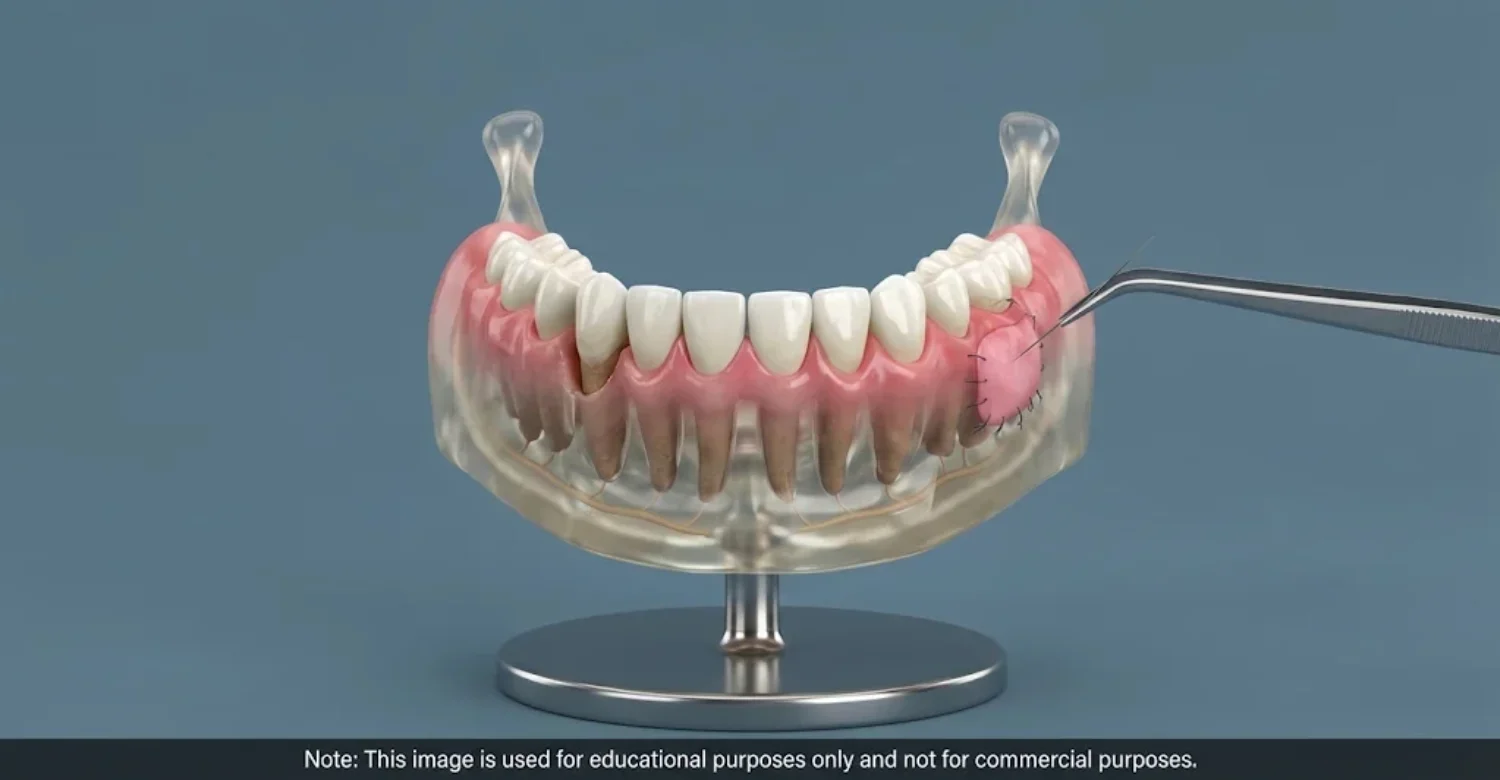
Gum graft surgery adds soft tissue to areas affected by recession. The graft may come from the patient's palate or an alternative material.
Potential treatment goals include:
Increasing gum thickness.
Improving root coverage.
Protecting exposed root surfaces.
Reducing sensitivity in selected cases.
Improving uneven gum margins.
Connective tissue grafting is commonly used for root coverage. However, suitability depends on the recession defect and surrounding tissue support.
How Do Coronally Advanced Flaps and Connective Tissue Grafts Work?
This technique combines repositioning existing gum tissue with additional connective tissue. The surgeon releases and moves the gum margin towards the tooth crown. A graft may be placed underneath to increase tissue thickness.
Potential benefits include improved tissue thickness and root coverage. The technique can treat selected single or multiple recession defects. Outcomes depend partly on interdental attachment and defect characteristics.
What Are the Alternatives to Connective Tissue Grafts?
Some patients may prefer to avoid harvesting tissue from their palate. Alternative graft materials can provide additional options.
These may include:
Acellular dermal matrices.
Collagen-based matrices.
Other clinically approved graft substitutes.
Potential advantages:
Avoids a palatal donor site.
May reduce donor-site discomfort.
Provides options for selected cases.
Limitations:
Results vary by material and technique.
Evidence differs between graft materials.
Outcomes may differ from connective tissue grafts.
Availability and suitability vary.
The surgeon should explain the evidence, expected benefits, and limitations before treatment.
When Should You Consider Gum Graft Surgery?
Surgical Gum Recession Treatment may be appropriate when recession causes significant clinical concerns. These may include exposed roots, progressive tissue loss, or insufficient gum thickness. However, visible recession alone does not determine the need for surgery.
Which Signs May Indicate a Need for Gum Grafting?
Gum grafting may be considered when recession progresses or causes persistent problems.
Potential indicators include:
Increasing root exposure over time.
Persistent sensitivity despite conservative treatment.
Repeated root surface damage.
Thin or insufficient gum tissue.
Difficulty maintaining effective plaque control.
Significant aesthetic concerns affecting several teeth.
These findings do not automatically mean surgery is necessary. A periodontal examination helps determine whether grafting offers meaningful benefits.
When Does Persistent Sensitivity or Root Exposure Justify Surgery?
Persistent sensitivity can interfere with eating, drinking, and brushing. Dentists first identify whether exposed dentine, decay, cracks, or another condition causes the symptoms.
If recession contributes to the problem, root coverage surgery may be considered. However, protective restorations and desensitising treatments remain suitable for many patients.
Can Gum Tissue Deficiency Affect Future Dental Treatment?
Insufficient gum thickness may influence selected restorative and orthodontic treatment decisions. Soft tissue augmentation may be considered when examination identifies a specific concern.
Planning may be relevant before:
Orthodontic tooth movement in selected cases.
Certain restorative procedures.
Treatment involving vulnerable root surfaces.
Specific periodontal procedures.
Surgery should address an established clinical need. It should not be recommended solely because a future problem might develop.
When Is Complete Root Coverage Less Predictable?
Complete root coverage becomes less predictable when interdental attachment has been lost. Other factors may also limit surgical outcomes:
Extensive recession.
Thin periodontal tissues.
Prominent or incorrectly positioned roots.
Significant cervical root defects.
Poor plaque control.
Uncontrolled periodontal inflammation.
Partial coverage may still improve tissue thickness and root protection. Your periodontist should explain realistic outcomes before treatment.
Ready to transform your smile?
Talk to our team and get a personal FREE treatment plan.
What Happens During Gum Recession Surgery?
Surgical Gum Recession Treatment follows a planned sequence to reposition or augment soft tissue. The exact steps depend on the graft technique, affected teeth, and individual anatomy.
How Is the Surgical Site Prepared?
Preparation begins with a periodontal examination and an individual treatment plan. Before surgery, the dental team may:
Control active gum inflammation.
Remove plaque and calculus deposits.
Review medical history and current medications.
Record recession and attachment measurements.
Examine the donor site when necessary.
Explain recovery instructions and potential risks.
Surgery may be postponed when periodontal inflammation remains uncontrolled.
How Are Local Anaesthesia and Gum Tissue Preparation Performed?
Local anaesthesia numbs the treatment area during surgery. The periodontist then prepares the gum tissue using the selected technique.
Small incisions may release the gum margin for repositioning. Their location and pattern depend on the recession defect and surgical approach.
Patients should discuss dental anxiety and previous anaesthetic reactions beforehand.
How Is the Gum Graft Material Collected or Prepared?
The graft material depends on the selected procedure. For an autogenous connective tissue graft, the surgeon usually collects tissue from the palate. The donor site receives appropriate protection during healing.
Alternatively, the surgeon may prepare an approved graft substitute. The choice depends on clinical suitability, available materials, and patient preferences.
How Is the Graft Positioned and Secured?
The surgeon places the graft beneath the prepared gum tissue. Fine sutures secure it in the planned position.
Careful tissue handling helps preserve blood supply and support healing. The surgeon may also reposition the gum margin towards the tooth crown.
Achievable root coverage depends on anatomy, attachment levels, and healing response.
What Happens Immediately After Gum Graft Surgery?
Patients receive instructions covering food, oral hygiene, activity, and medication. Common recommendations include:
Avoid disturbing the surgical site.
Follow the prescribed cleaning instructions.
Choose soft foods during early healing.
Avoid smoking and tobacco products.
Do not pull the lip to inspect the graft.
Attend scheduled postoperative appointments.
Instructions vary according to the surgical technique and individual healing needs.
.jpg)
.jpg)
.jpg)
What Is Recovery Like After Gum Graft Surgery?
Recovery after Gum Recession Treatment depends on the graft technique, surgical extent, and individual healing response. Some tenderness, swelling, and sensitivity are common during early recovery. Following postoperative instructions helps protect the graft.
What Should You Expect During the First 48 Hours?
The first 48 hours are important for protecting the surgical site. Patients may experience:
Mild bleeding or blood-stained saliva.
Localised swelling.
Tenderness around the treated area.
Discomfort when eating.
Sensitivity around the donor site.
Use cold compresses and prescribed medication as directed. Contact your dental team if bleeding persists or symptoms become increasingly severe.
How Long Does Gum Graft Healing Take?
Healing develops gradually, and recovery varies between patients.
Healing stage | What may happen |
First 48 hours | Swelling and tenderness may develop. |
Days 3–7 | Discomfort often begins improving. |
Weeks 1–2 | Early tissue healing continues. |
Weeks 3–4 | Tissue maturation progresses. |
Weeks 6–8 | Further healing and stabilisation occur. |
What Should You Eat, and How Should You Clean Your Teeth?
Protecting the graft helps prevent unnecessary movement and irritation. Follow these precautions:
Choose soft, cool or lukewarm foods initially.
Avoid hard, crunchy, and sharp foods.
Chew away from the surgical area.
Avoid brushing directly over the graft until permitted.
Use prescribed mouth rinses as instructed.
Avoid smoking and tobacco products.
Resume normal brushing around the surgical site only when your surgeon advises.
Which Symptoms and Complications Can Occur After Surgery?
Temporary discomfort, swelling, bruising, and sensitivity may occur. Donor-site surgery can cause additional tenderness.
Possible complications include:
Infection.
Persistent bleeding.
Graft displacement.
Delayed healing.
Partial graft failure.
Persistent sensitivity.
Changes in the final gum contour.
Contact your dental team about increasing pain, swelling, fever, or persistent bleeding. Follow-up examinations help identify healing problems early. Rapidly spreading facial or neck swelling, or difficulty breathing or swallowing, requires emergency medical attention.
When Can You Return to Normal Activities?
Many patients resume light daily activities within a few days. However, recovery depends on the procedure and daily physical demands.
Avoid strenuous exercise during early healing if instructed. Follow your surgeon's advice before resuming demanding activities.
A follow-up appointment helps confirm when normal eating and brushing can safely resume.
Gum Recession Before and After Treatment: What Results Can You Expect?
Results following Gum Recession Treatment depend on the original defect and selected surgical technique. Before-and-after photographs can show visible changes. However, they cannot independently confirm periodontal health or long-term stability.
How Can Gum Coverage and Tooth Appearance Change?
Successful treatment may reduce exposed root surfaces and improve gum symmetry. Patients may notice:
Less visible root exposure.
Increased gum thickness.
More balanced gum contours.
Reduced sensitivity in some cases.
Improved appearance around treated teeth.
The amount of root coverage varies between patients. Some defects achieve complete coverage, while others show partial improvement.
Which Factors Influence Root Coverage and Long-Term Stability?
Several clinical and lifestyle factors influence treatment outcomes:
Interdental attachment levels.
Initial recession depth.
Gum thickness and tissue quality.
Tooth position.
Surgical technique.
Smoking and tobacco use.
Plaque control.
Long-term periodontal maintenance.
Defects without interdental attachment loss generally have more favourable root coverage potential.
Why Might Some Gum Recession Cases Have Limited Results?
Not every recession defect responds equally to surgery. Significant interdental attachment loss can restrict achievable root coverage. Prominent roots and cervical defects may also complicate treatment.
Your periodontist should explain realistic expectations before surgery. Partial coverage may still improve tissue thickness and root protection.
How Can You Maintain Results After Gum Recession Treatment?
Long-term stability requires consistent oral hygiene and periodontal care. Patients should:
Use a soft-bristled toothbrush.
Apply gentle brushing pressure.
Clean between teeth daily.
Attend recommended periodontal reviews.
Address grinding or clenching when necessary.
Avoid tobacco products.
Monitor changes around treated teeth.
Surgery does not automatically remove the factors that caused recession. Ongoing prevention and maintenance remain important.
How Much Does Gum Recession Treatment Cost?
Gum Recession Treatment costs vary by country, surgical technique, and treatment area. The following figures represent indicative market ranges, not confirmed Vitrin Clinic prices.
How Much Does Gum Graft Surgery Cost in Turkey?
Published Turkish market listings indicate prices ranging from approximately 500 to 1,840. The currency and included services should be confirmed before publication. Final costs depend on the graft technique and clinical requirements.
What Is the Average Gum Graft Surgery Cost in the USA?
Indicative private-market estimates range from $600 to $3,000 per graft. Specialist fees and additional procedures may increase the total cost.
How Much Does Gum Graft Surgery Cost in the UK?
Published private treatment fees range approximately from $450 to $2,450. Some practices charge separately for consultations, imaging, and follow-up appointments.
UK
Indicative graft cost: $450–$2,450
Indicative graft cost
Indicative graft cost: $450–$2,450
Private UK clinic standard rate
Varies by single-site vs. multi-site scope
Turkey
Indicative graft cost: 500–1,840
Indicative graft cost
Indicative graft cost: 500–1,840
Lowest upper-end threshold vs. UK & USA
Accredited periodontal & surgical specialists
USA
Indicative graft cost: 600–3,000
Indicative graft cost
Indicative graft cost: 600–3,000
US private clinic standard rate
Highest upper-end expense for complex cases
Which Factors Affect the Final Gum Graft Cost?
The final price depends on several factors:
Recession severity and number of treated teeth.
Graft technique and material.
Periodontist or specialist fees.
Required imaging and examinations.
Additional periodontal procedures.
Medication and follow-up appointments.
What Should an Itemised Gum Graft Quotation Include?
Request a written breakdown covering the clinical examination, X-rays, surgery, and graft material. Confirm whether medication and follow-up visits are included. Ask about exclusions and possible additional charges before travelling.
Is Gum Recession Treatment in Turkey a Suitable Option for International Patients?
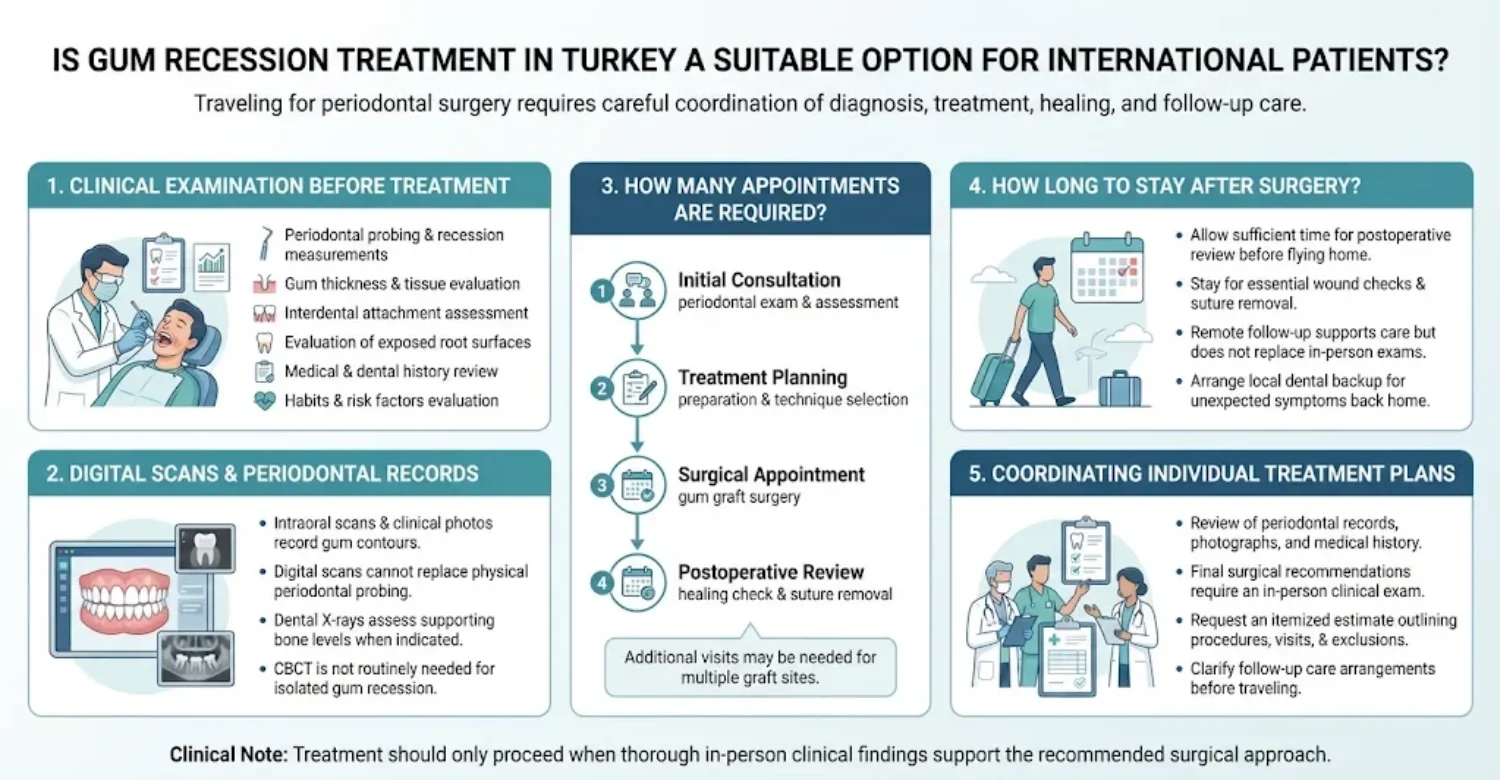
Turkey may be an option for international patients considering periodontal surgery. However, travelling requires careful coordination of diagnosis, treatment, healing, and follow-up care.
What Should a Clinical Examination Include Before Treatment?
A thorough examination helps determine whether surgery is appropriate. It should include:
Periodontal probing and recession measurements.
Gum thickness and tissue evaluation.
Interdental attachment assessment.
Examination of exposed root surfaces.
Medical and dental history review.
Evaluation of contributing habits and risk factors.
These findings help clinicians recommend suitable surgical or non-surgical care.
How Do Digital Scans and Periodontal Records Support Treatment Planning?
Digital records support communication and treatment documentation. Clinical photographs and intraoral scans record visible tooth and gum contours.
However, digital scans cannot replace periodontal probing. Probing measures pocket depths and clinical attachment levels. Dental X-rays may help evaluate supporting bones when indicated. CBCT is not routinely required for isolated gum recession.
How Many Appointments Does Gum Graft Surgery Usually Require?
Appointment numbers depend on the surgical technique and treatment extent. A typical pathway may involve:
Initial consultation and periodontal examination.
Treatment planning and preparation.
Surgical appointment.
Postoperative examination and healing review.
Additional visits may be necessary for multiple graft sites or complications.
How Long Should International Patients Stay After Gum Graft Surgery?
International patients should allow sufficient time for postoperative review before travelling home. The recommended stay depends on the procedure, healing response, and surgeon's advice.
Some patients require additional appointments for wound checks or suture removal. Remote follow-up supports communication but cannot replace necessary clinical examinations. Patients should also arrange local dental care for unexpected symptoms after returning home.
How Does Vitrin Clinic Coordinate Individual Treatment Plans?
At Vitrin Clinic, Gum Recession Treatment planning starts with reviewing the patient's periodontal condition.
Our clinical team reviews available photographs, dental records, and relevant medical information. An initial discussion helps identify possible treatment requirements. Final recommendations require an appropriate clinical examination.
International patients should receive an itemised estimate outlining proposed procedures, appointments, and exclusions. Follow-up arrangements should also be discussed before travelling. Treatment proceeds only when clinical findings support the recommended approach..
How Does Vitrin Clinic Plan Individual Periodontal Treatment?
Vitrin Clinic considers gum health, exposed roots, and supporting structures before recommending treatment. The priority is identifying the underlying cause before selecting a suitable procedure.
Which Factors Shape Your Gum Recession Treatment Plan at Vitrin Clinic?
Gum Recession Treatment recommendations should reflect individual clinical findings, not standardised packages.
Treatment planning may consider:
Number of affected teeth.
Recession depth and classification.
Gum thickness and available tissue.
Periodontal inflammation and attachment levels.
Root surface damage.
Suitability for grafting.
Postoperative care and follow-up needs.
How Do Vitrin Clinic's Treatment Costs Compare With the USA and UK?
The comparison below separates clinic-specific quotations from indicative private-market prices.
Treatment consideration | Vitrin Clinic, Turkey | USA | UK |
Consultation | Confirm individually | Varies | Varies |
Gum graft | Written quotation required | 600–3,000 | $450–$2,450 |
X-rays | According to clinical need | Provider-dependent | Provider-dependent |
Graft material | Confirm in quotation | Technique-dependent | Technique-dependent |
Follow-up | Agree before travelling | Provider-dependent | Provider-dependent |
How are potential savings calculated?
Comparison | Calculation |
Vitrin Clinic vs USA | (USA price − Vitrin price) ÷ USA price × 100 |
Vitrin Clinic vs UK | (UK price − Vitrin price) ÷ UK price × 100 |
What Should International Patients Confirm Before Booking?
Before travelling, patients should confirm:
The treating clinician's periodontal qualifications.
The proposed graft technique and material.
The number of surgical sites.
The complete itemised treatment estimate.
Postoperative appointment arrangements.
Complication management after returning home.
What Is Dr. Rifat Alsaman's Clinical Perspective?
The main consideration in Gum Recession Treatment is identifying why the gum margin has moved. An exposed root does not automatically require graft surgery.
Clinicians should evaluate tissue thickness, periodontal attachment, tooth position, and root condition. Controlling contributing factors remains important before and after surgery.
What Do We Consider When Reviewing Gum Recession Cases?
Gum recession varies between patients, even when visible defects appear similar. Two affected teeth may have very different supporting tissue conditions.
Some patients have thin gum tissue without significant interdental attachment loss. Others have recession associated with periodontal disease or cervical wear.
These differences influence treatment selection and expected root coverage. Clinical photographs alone cannot establish a complete periodontal diagnosis.
Ready to transform your smile?
Talk to our team and get a personal FREE treatment plan.
Final Thoughts: Can Early Gum Recession Treatment Protect Your Smile?
Gum recession needs individual care based on its cause, severity, and supporting tissue condition. Gum Recession Treatment may involve preventive measures, periodontal cleaning, desensitising care, or surgical grafting. Early diagnosis helps protect exposed roots and prevent avoidable complications. Patients considering treatment abroad should prioritise qualified clinicians, transparent treatment plans, and reliable postoperative care. Long-term gum health also depends on consistent oral hygiene and regular periodontal reviews.
Reference
FAQs
The best Gum Recession Treatment depends on the underlying cause and tissue condition. Mild cases may improve with plaque control, professional cleaning, and brushing corrections. Advanced recession may require connective tissue grafting or a coronally advanced flap. A periodontist should evaluate the recession before recommending surgery. No single technique suits every patient.
Dr. Rifat Alsaman has more than 5 years of clinical experience in dentistry and currently serves as the Head of the Medical Team at Vitrin Clinic. He is dedicated to providing exceptional patient care, overseeing treatment planning, and ensuring the highest clinical standards across the team. His expertise, attention to detail, and commitment to continuous professional development have helped countless patients achieve healthier, more confident smiles.


