Dental Implant
November 15, 2026
How Long Do Dental Implants Take in Turkey? Complete Treatment Timeline
 Dr. Rifat Alsaman

How long do dental implants take in Turkey? For most conventional cases, the complete treatment takes around 3–6 months and two visits. The appointment for a single implant often lasts about one to two hours. Your first stay in Turkey usually covers assessment and placement. The healing period, called osseointegration, happens at home. The final restoration is fitted on a second trip.
The honest answer to how long dental implants take in Turkey depends on bone condition, implant stability, additional procedures such as grafting, and the type of restoration planned.
Key Takeaways
Dental implants replace missing tooth roots. How long do dental implants take in Turkey? Conventional treatment often takes several months and two visits.
Conventional, immediate placement, immediate loading and All-on-4 or All-on-6 approaches each follow different schedules.
Gums heal within weeks. Osseointegration commonly takes around 3–6 months, and permanent teeth are fitted only after clinical confirmation.
The number of implants, grafting, sinus lifts and the final restoration shape your quotation. Ask for an itemised plan.
Smiles Made By Vitrin Clinic

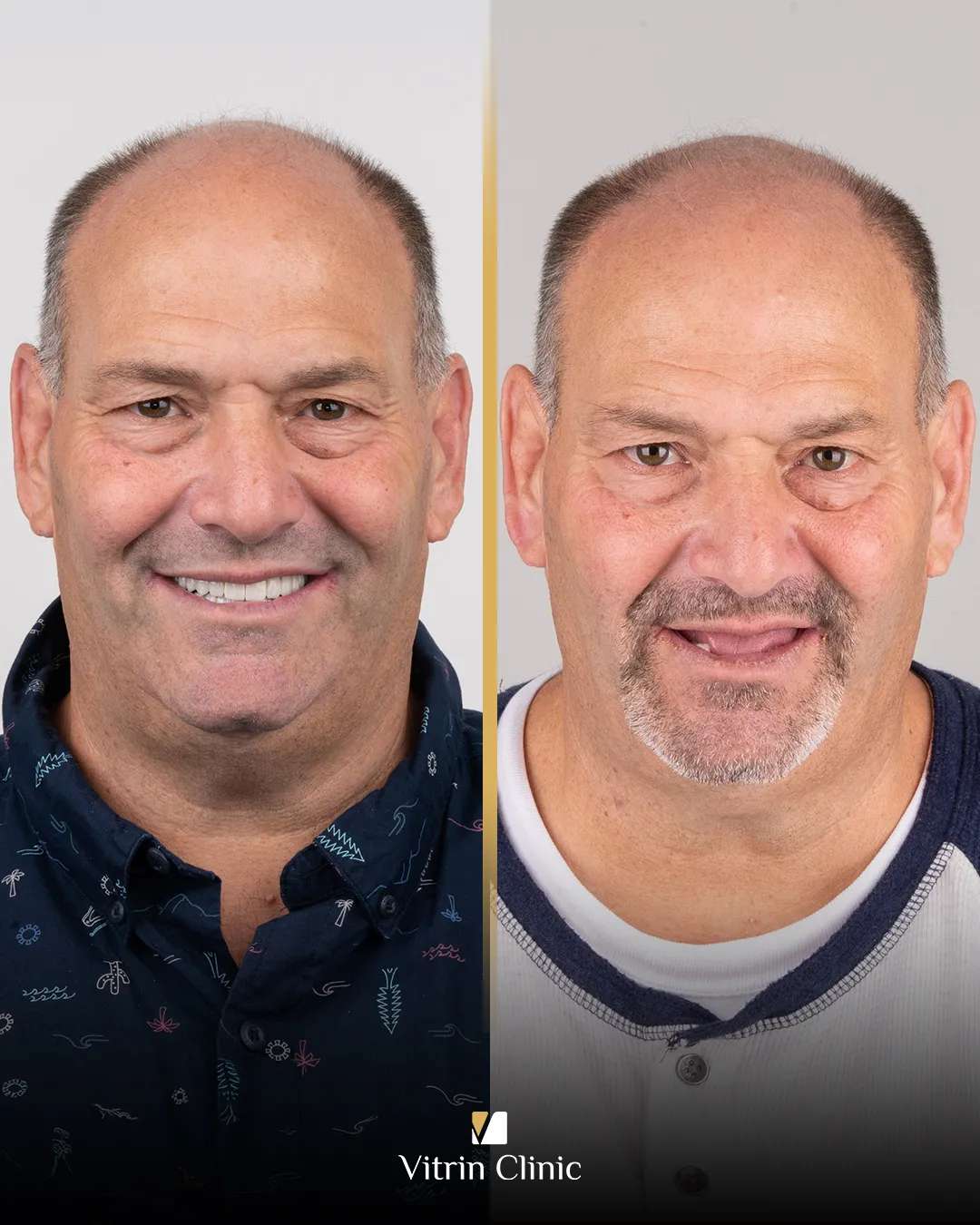
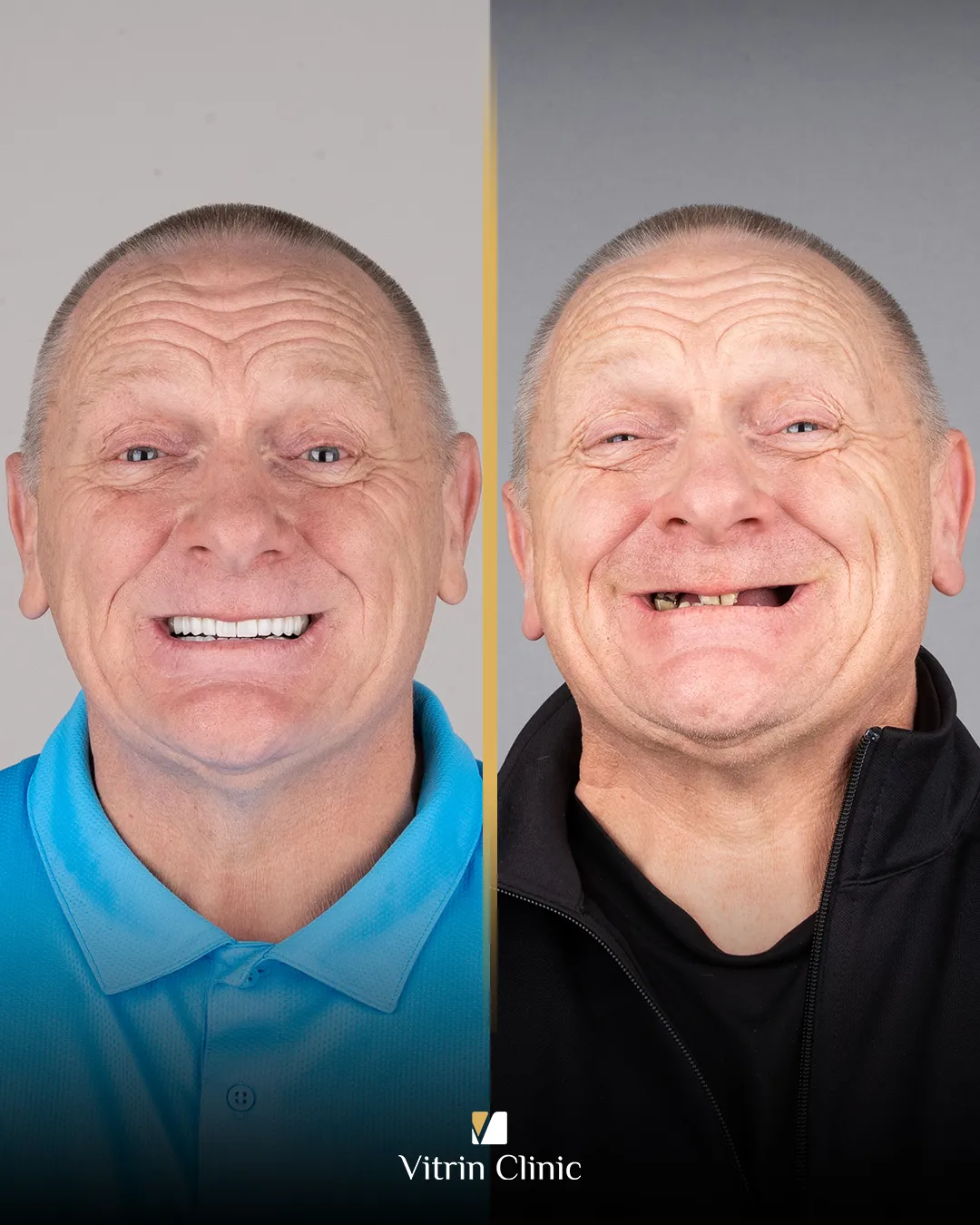
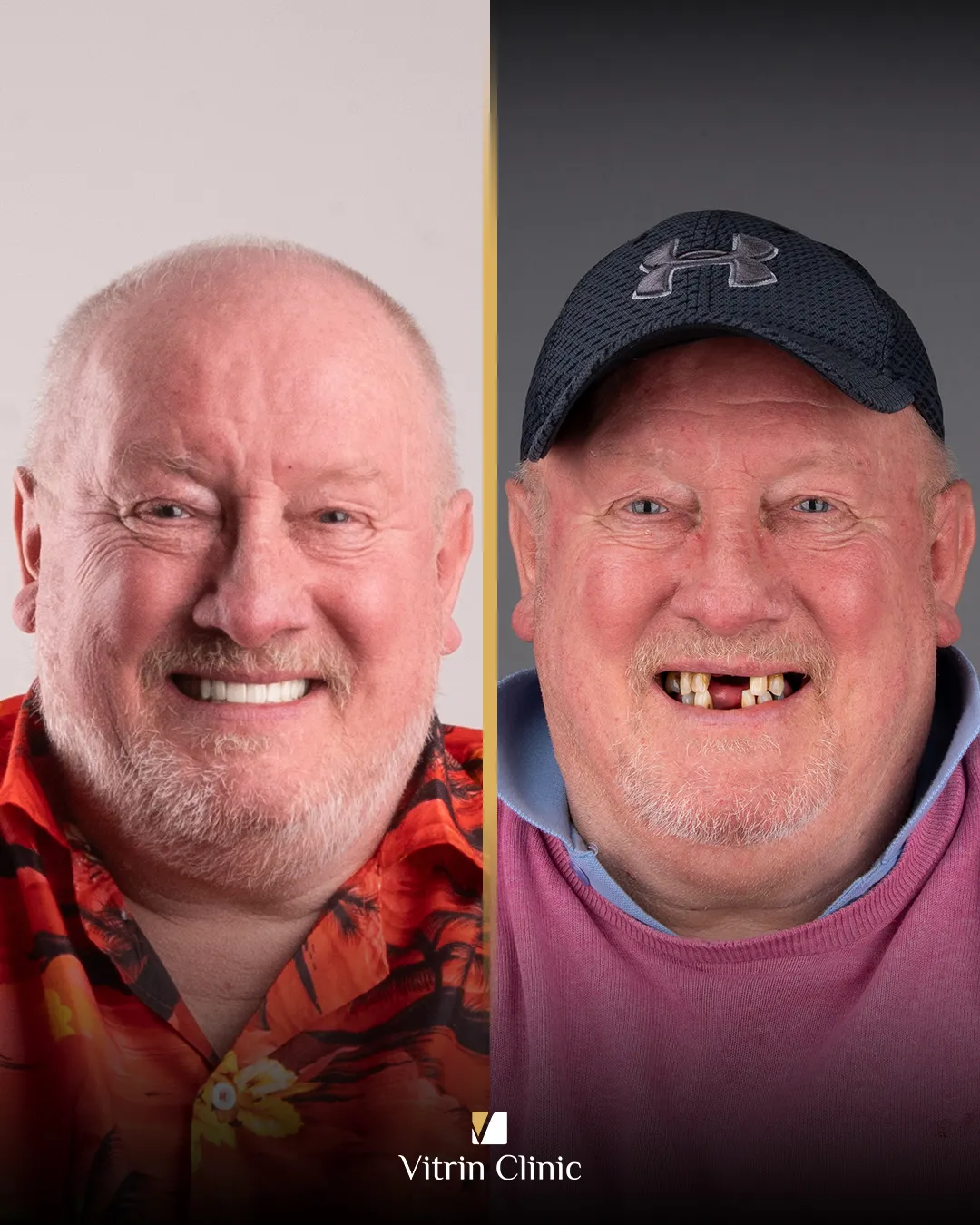
Ready to transform your smile?
Talk to our team and get a FREE treatment plan.
How Long Does the Dental Implant Procedure Take in Turkey?
How long dental implants take in Turkey depends on which part of treatment you mean. Surgery time and total treatment time are different things. For one implant, the dental implant procedure time Turkey patients should expect is often under an hour of placement. Multiple implants or full-mouth placement can take several hours.
Surgical complexity, the number of implants and procedures such as extractions or grafting all extend the appointment. Preparation, anaesthesia and postoperative assessment add time beyond the placement itself.
How Long Does One Dental Implant Take to Place?
Placement often takes around 30–60 minutes, within a longer appointment. First, the surgical site is prepared and local anaesthesia is given. The dentist then opens the gum, or uses a flapless approach when suitable, and prepares the bone in sequential steps. The implant is positioned at the planned depth and angle. The site is closed with stitches or a healing cap.
Multiple implants do not always take proportionally longer. Preparation, anaesthesia and setup happen once per session, not once per implant.
How Long Does Full-Mouth Dental Implant Surgery Take?
Full-mouth surgery commonly takes around 2–4 hours per jaw. It can take longer when extractions, bone smoothing or grafting are needed.
Planning is more detailed. CBCT imaging, bite records and prosthetic design guide where each implant goes. All-on-4 uses four implants per arch, with the back implants often angled to avoid the sinus or nerve. All-on-6 uses six implants for wider support.
Implant distribution, bone condition and whether temporary teeth are fitted the same day all influence session length, and how long do dental implants take in Turkey on surgery day.
How Long Does All-on-4 Treatment Take?
For All-on-4, how long dental implants take in Turkey is usually two visits over 3–6 months. Treatment begins with surgery and a fixed temporary bridge placed within about 24–72 hours, when stability allows. This first stage is often completed within one stay.
The temporary bridge should be treated gently during healing. At the second visit, the implants, gums and bite are assessed. The definitive prosthesis is then designed, tried in and fitted.
How Long Does All-on-6 Treatment Take?
All-on-6 follows a similar overall timeline to All-on-4, but surgical planning is more detailed. Six implants need enough bone along the arch to space them correctly.
Bone distribution decides whether all six can be placed without grafting. Prosthetic design matters too. Six implants can support a stronger framework and spread chewing forces more widely. If grafting is needed for any position, how long do dental implants take in Turkey may extend by several months.
Can You Get Permanent Full-Mouth Teeth During Your First Visit?
Usually not. Temporary fixed teeth are commonly fitted during the first visit. The definitive prosthesis is made after healing.
Immediate loading is possible only when the implants achieve sufficient primary stability. Even then, a temporary bridge is often preferred. Gums and bone change shape during healing, so a final bridge made too early may not fit well later. The temporary also lets the dentist test bite and appearance before the permanent design.
.webp)
How Long Do Dental Implants Take in Turkey?
Treatment | First visit (estimate) | Second visit (estimate) |
Single implant | 4–6 days | 4–7 days |
Multiple implants | 5–7 days | 5–7 days |
All-on-4 / All-on-6 | 5–8 days | 7–10 days |
With bone graft or sinus lift | 6–10 days | Depends on healing |
What Happens During Your First Visit to Turkey?
Your first visit begins with a clinical examination and a review of your medical history and medications. Dental imaging follows, including CBCT when indicated, to measure bone height, width and nearby structures.
The dentist assesses your teeth, gums, bite and jawbone, then confirms implant positions and the treatment plan. Implant surgery is carried out next. Temporary teeth or provisional restorations are fitted only when clinically appropriate. Before you travel home, you receive a postoperative check and written aftercare instructions. This visit defines how long dental implants take in Turkey for you.
What Happens During Your Second Visit?
Healing assessment: The dentist checks gum healing and implant stability.
Osseointegration confirmation: X-rays or stability measurements may be used to assess whether the implant has integrated sufficiently with the jawbone.
Digital impressions: Scans or impressions are taken to record the implant positions accurately.
Laboratory preparation: Your permanent crowns, bridges or full-arch restoration are custom-made.
Final fitting: The dentist checks the restoration's appearance, fit and bite alignment.
Final adjustments: Any necessary modifications are made to improve comfort and function.
Aftercare instructions: You receive guidance on cleaning, maintenance and follow-up appointments.
Dental Implant Cost in Turkey vs UK, USA and Europe
Vitrin Clinic – Turkey (Approx.)
Single dental implant (including crown) = $ 500–$700
All-on-4 (per arch) = $3,500–$7,500
All-on-6 (per arch) = $4,000–$9,000
Full-mouth dental implants (both arches) = $7,000–$15,000
UK
Single dental implant (including crown) = £2,000–£3,500
All-on-4 (per arch) = £10,000–£22,000
All-on-6 (per arch) = £12,700–£25,400
Full-mouth dental implants (both arches) = £23,000–£40,000+
USA
Single dental implant (including crown) = $3,000–$6,000
All-on-4 (per arch) = $18,000–$30,000
All-on-6 (per arch) = $20,000–$35,000
Full-mouth dental implants (both arches) = $36,000–$70,000+
Europe
Single dental implant (including crown) = €1,500–€3,500
All-on-4 (per arch) = €8,000–€15,000
All-on-6 (per arch) = €10,000–€18,000
Full-mouth dental implants (both arches) = €20,000–€35,000+
Ready to transform your smile?
Talk to our team and get a FREE treatment plan.
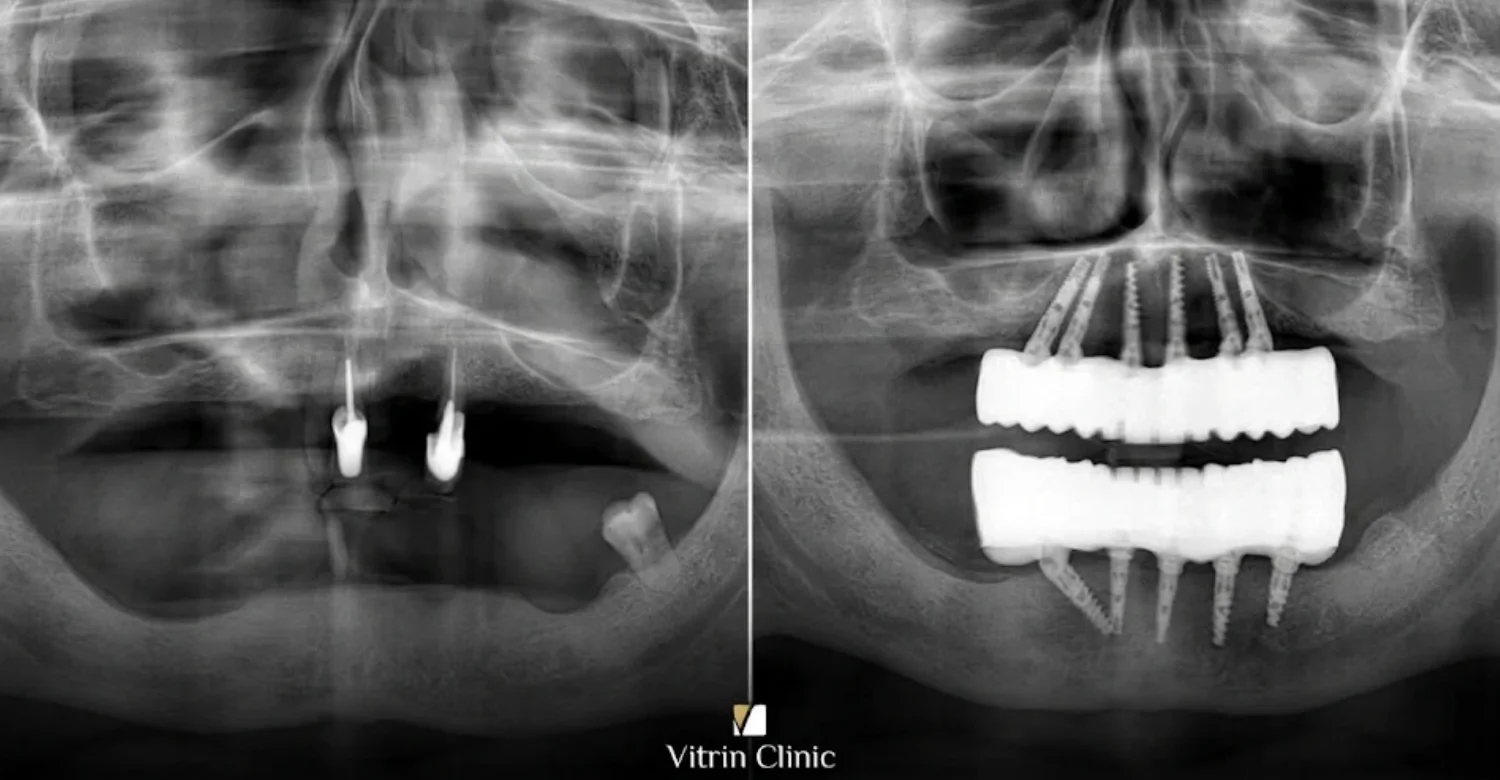
Dental Implant Treatment Timeline: Step by Step
The dental implants treatment timeline follows five stages. This dental implant process step by step shows a typical conventional case.
Initial consultation and assessment: Records, X-rays and medical history are reviewed before travel.
Implant placement: Surgery takes place during the first visit to Turkey.
Early postoperative recovery: Swelling and tenderness settle over the first days and weeks.
Osseointegration: Bone bonds to the implant over a period commonly around 3–6 months. Some cases need more or less time.
Permanent restoration: Assessment, digital impressions, fabrication, fitting and final adjustment of the definitive restoration.
How Long Between Dental Implant Placement and Crown Fitting?
The gap is commonly around 3–6 months. The lower jaw often heals faster than the upper jaw because its bone is usually denser.
During osseointegration, bone cells grow onto the implant surface. Initial stability comes from the mechanical grip of the bone. That grip briefly weakens in the first weeks while new bone replaces it. A temporary crown protects appearance. A permanent crown carries a full chewing load. Immediate loading suits only selected cases. Clinical stability, not a calendar date, decides readiness.
Dental Implant Healing Time: What Happens During Each Recovery Stage?
Dental implant healing time has two layers. The gums heal within a few weeks. The bone takes months. Understanding both helps you plan realistically when asking how long do dental implants take in Turkey.
Dental implant recovery time also differs from case to case. Most patients return to normal daily activity within a few days, while internal healing continues quietly.
First 24–72 Hours After Dental Implant Surgery
Swelling usually peaks around 48–72 hours, and some bruising is possible, particularly after multiple implants or grafting. Mild to moderate discomfort is common and usually managed with prescribed medication.
Minor bleeding or oozing can occur on the first day. Cold compresses in short intervals help limit swelling. Eat soft, lukewarm foods and avoid chewing on the surgical site. Avoid smoking, spitting forcefully and drinking through a straw.
The First 1–2 Weeks: Gum Healing
The soft tissue around the implant closes and matures during this period. Swelling and tenderness gradually reduce, and most patients feel noticeably better by the end of the first week.
A follow-up check may be recommended. Keep the area clean with a soft brush and any rinse your dentist advises, without scrubbing the wound. Non-dissolvable stitches are usually removed after around 7–14 days. Dissolvable stitches break down naturally over a similar period.
Months 1–3: Bone Integration
Bone cells gradually grow onto the roughened implant surface and form a direct structural bond. This is the core of osseointegration.
Many patients feel completely comfortable during this stage. That comfort reflects healed gums, not a finished implant. The bone around the implant is still remodeling. Excessive force, such as chewing hard food on the site or pressure from an ill-fitting denture, can disturb integration. Follow your dietary guidance until your dentist confirms healing.
Months 3–6: Preparing for Permanent Teeth
At this stage, the dentist assesses implant stability and healing. X-rays show the bone level around the implant. Stability testing may confirm that the implant is firmly integrated.
If the implant is ready for restoration, impressions or digital scans record its exact position. The laboratory then prepares the definitive prosthetic restoration. If stability is not yet sufficient, extra healing time is the safer choice, even if it changes how long do dental implants take in Turkey. Rushing this stage increases the risk of implant failure.
Can You Get Same-Day Dental Implants in Turkey?
Yes, in selected cases. "Same-day implants" usually means a temporary tooth or bridge is attached on the day of placement or shortly after. It rarely means the whole treatment ends that day.
Immediate implant placement and immediate loading are different procedures. Definitive restorations usually still need a separate visit after healing. Immediate loading requires strong primary stability, good bone and a controlled bite. So how long do dental implants take in Turkey with same-day teeth? Often just as long overall.
Immediate Implant Placement vs Immediate Loading
Immediate placement means inserting the implant right after extraction, when the bone and gum allow it. It removes a separate waiting period for the socket to heal.
Immediate loading means attaching a temporary restoration to the implant shortly after placement. One relates to the timing of surgery. The other relates to the timing of teeth. A patient may have one, both or neither. Neither automatically means the entire treatment is completed in one day.
Who May Be Suitable for Same-Day Dental Implants?
Suitable candidates usually have adequate bone volume and quality to hold the implant firmly. Sufficient primary implant stability, often measured by insertion torque or a stability reading, is essential.
Healthy periodontal tissues reduce infection risk around the new implant. A suitable bite also matters, because the temporary teeth must avoid heavy contact while bone heals. The patient should have no significant clinical contraindications, such as uncontrolled diabetes or recent radiotherapy to the jaw.
Why Same-Day Implants Are Not Suitable for Everyone
Insufficient bone support can prevent an implant from reaching the stability needed to carry a tooth straight away. Active gum disease or infection raises the risk of failure and must be treated first.
Complex bone defects often need grafting and an unloaded healing period. Unfavourable bite forces, including clenching or grinding, can overload a fresh implant. Some medical factors, such as certain bone medications, may also affect healing. In these cases, a staged approach is safer.
Ready to transform your smile?
Talk to our team and get a FREE treatment plan.
What Factors Can Make Dental Implant Treatment Take Longer?
Bone loss: Reduced jawbone volume may require bone grafting before implant placement.
Sinus anatomy: A sinus lift may be necessary for some upper-jaw implants.
Gum disease: Existing gum problems may need treatment before implant surgery.
Smoking: Can affect healing and implant success.
Medical conditions: Certain health conditions and medications may influence treatment planning and healing.
Number of implants: Full-arch treatments generally require more planning than single implants.
Final restoration complexity: The type of crown, bridge or full-arch restoration affects the treatment schedule.
Additional procedures: Bone grafting, sinus lifts and extra appointments can extend the treatment timeline and increase costs.
Cost consideration: These factors can change your quotation. Request an itemised treatment plan outlining each procedure, its cost and the expected timeline.
Insufficient Jawbone and Bone Grafting
After tooth loss, the jawbone gradually shrinks. Too little width or height can prevent stable implant placement in the ideal position.
Bone grafting rebuilds the missing volume. Small defects are often grafted at the same time as implant placement, known as simultaneous grafting. Larger defects may need staged augmentation, where the graft heals for several months before the implant is placed. Staged grafting can add roughly 4–9 months to how long do dental implants take in Turkey.
Sinus Lift Surgery and Its Effect on Treatment Duration
In the upper back jaw, bone height under the sinus often drops after molars are lost. A sinus lift raises the sinus membrane and places graft material underneath.
A closed, or crestal, sinus lift works through the implant site when moderate bone height remains. The implant is often placed at the same time. An open, or lateral window, sinus lift suits more severe bone loss. It may need a longer healing period, sometimes 6–9 months, before restoration or implant placement. This explains why how long do dental implants take in Turkey differs in upper-jaw cases.
Gum Disease and Existing Oral Health Problems
Periodontal health should always be assessed before implant placement. Bacteria from active gum disease can spread to the tissues around a new implant and cause peri-implantitis.
Active gum disease usually requires treatment first, followed by a check that the tissues have stabilised. Decayed teeth, infected roots or failing restorations may also need attention before surgery. This phase can add weeks to how long do dental implants take in Turkey, but it protects the long-term health of the implant.
Smoking, Medical History and Healing Complications
Smoking reduces blood flow to the gums and bone. It is associated with slower healing and a higher rate of implant failure. Stopping before surgery and throughout healing gives the implant a better chance.
Medications and medical conditions also need review. Blood thinners, bone-related medications such as bisphosphonates and poorly controlled diabetes can affect surgery or healing. Infection, delayed healing or a loose implant may require extra appointments and extend how long do dental implants take in Turkey.
Number of Implants and Restoration Complexity
Replacing one tooth usually involves one implant and one crown. Replacing several teeth may involve bridges supported by fewer implants, which requires careful positioning.
Full-mouth rehabilitation adds bite analysis, aesthetic planning and often temporary teeth that need adjustment. Laboratory work for full-arch prostheses takes longer than a single crown. These steps affect both the schedule and the cost. Quotations differ according to the number of implants, any grafting and the final restoration material.
Clinical Note
Dr. Rifat Alsaman, Head of the Medical Team at Vitrin Clinic, approaches implant timelines through diagnosis first. In his approach, how long dental implants take in Turkey is answered by diagnosis, not a standard schedule.
Each assessment covers teeth, gums, bite and jawbone. Bone volume and density determine implant length, width and angle, and whether grafting or a sinus lift is needed. Primary stability at placement and confirmed osseointegration both matter before a definitive restoration carries load. Immediate loading is considered only when stability, bone quality and bite conditions support it.
When Can You Fly Home After Dental Implant Surgery?
Return flights should be planned around your recovery, not only around your surgery date. Swelling, bleeding and discomfort are usually highest in the first few days. An early clinical review before departure helps confirm that healing has started normally.
Extensive surgery, bone grafting and sinus lift procedures may need extra precautions. After a sinus lift, cabin pressure changes and nose blowing can stress the healing site. There is no universal number of days, just as how long do dental implants take in Turkey has no universal answer. Ask the treating clinician for individual travel advice and clearance.
Is It Safe to Fly Two or Three Days After Dental Implant Surgery?
For uncomplicated implant surgery, flying after two or three days is often possible once the clinician has checked the site. More extensive procedures, including full-arch surgery, grafting or a sinus lift, may require a longer wait.
Persistent bleeding, increasing swelling, fever or severe pain can affect travel and should be checked first. The treating clinician's check before departure is the safest guide.
How to Prepare for Your Dental Implant Trip to Turkey
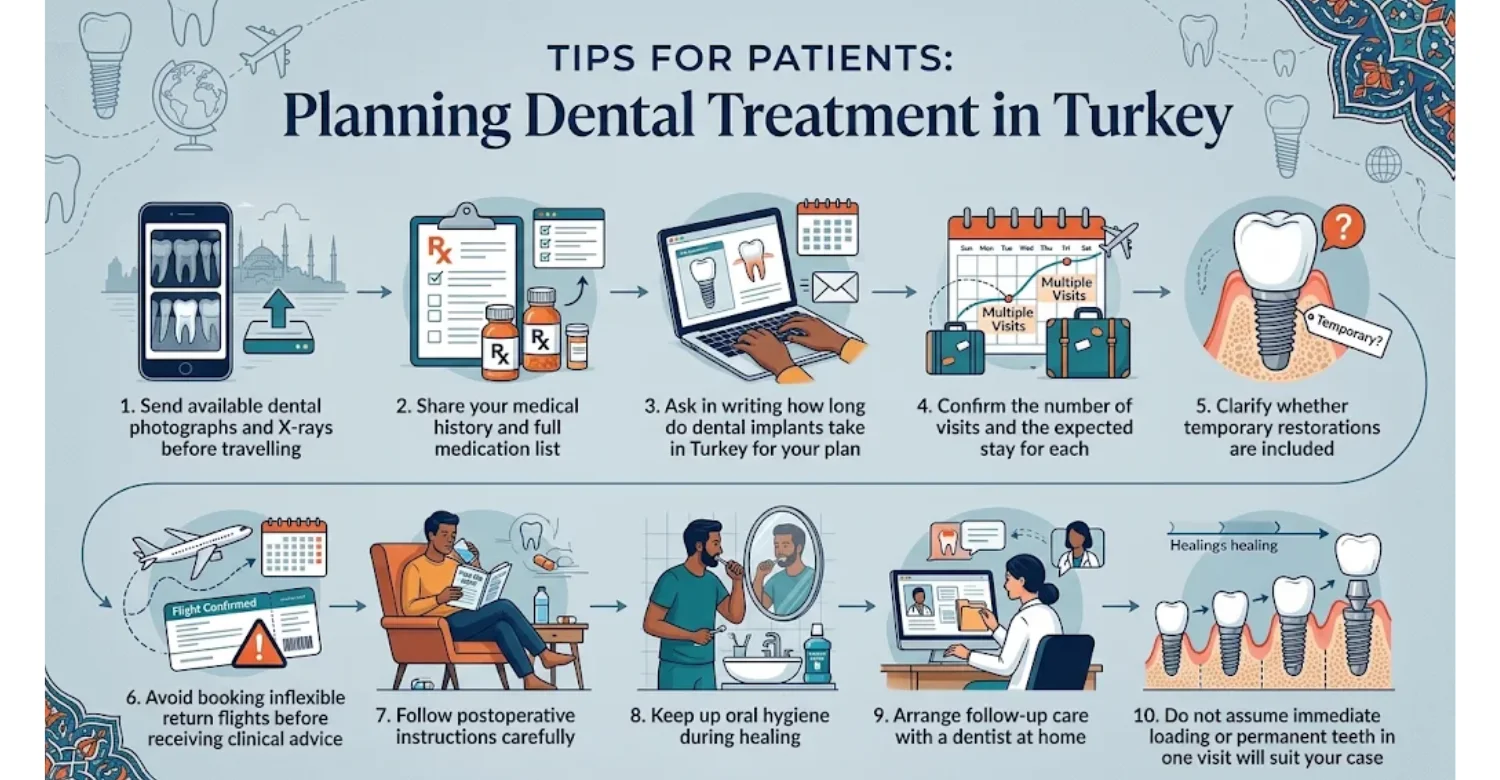
Arrange a preliminary treatment plan before booking flights. Send dental photographs and any recent X-rays for assessment. Share your medical history and medications early, as these can change the plan.
Keep travel dates flexible. Confirm accommodation, transfers and appointments where they are part of your arrangement. Request a written treatment plan showing estimated stages and visits. When choosing a clinic, check qualifications, diagnostic methods, implant systems, laboratory capability, pricing transparency and aftercare. Turkey suits international patients when both visits are organised in advance.
What Should You Ask Before Booking Dental Implants in Turkey?
Before booking, ask these questions:
How many implants are planned?
Will I need bone grafting or a sinus lift?
How many visits will my treatment require?
How long should I stay during each visit?
Will I receive temporary teeth?
When can my permanent crowns or bridge be fitted?
What happens if healing takes longer than expected?
What follow-up support is available after returning home?
What We Notice Clinically
Patients often feel fully comfortable within a couple of weeks. This does not mean the implant has completed osseointegration.
Temporary teeth serve appearance and function during healing. Permanent restorations are designed for long-term load. Bone grafting and sinus augmentation can change the expected schedule, sometimes significantly. Clenching or grinding influences restoration design and may call for a night guard. Gum health and oral hygiene remain important throughout healing. When judging how long dental implants take in Turkey, the fastest schedule is not always the most suitable.
Your Dental Implant Timeline at Vitrin Clinic in Istanbul
Your dental implant timeline at Vitrin Clinic in Istanbul follows four planned stages, from your initial online consultation to the fitting of your permanent teeth.
Our international patient team coordinates appointments across both visits. Digital dental technology and in-house laboratory capabilities are used where applicable. Treatment plans and pricing are shared transparently, so you understand each stage before committing.
Step 1 – Free Online Consultation and Preliminary Treatment Plan
You send available dental photographs and X-rays for review. The team discusses your missing teeth and previous dental treatments, such as old bridges, root canals or extractions.
Your medical history and current medications are also reviewed. Based on the available information, you receive a preliminary assessment of your possible treatment requirements, including whether bone grafting may be necessary. This provides an initial estimate of how long dental implants take in Turkey. The final treatment plan is confirmed after an in-person examination in Istanbul.
Step 2 – Personalised Implant Assessment and Surgery
Dr. Rifat Alsaman, Head of the Medical Team, evaluates your teeth, gums, bite and jawbone condition. Digital imaging and CBCT scans are used when clinically indicated to assess bone volume and density at each planned implant site.
If the assessment confirms your suitability, implant surgery is performed according to the agreed treatment plan. Any additional procedures, such as bone grafting or a sinus lift, are incorporated into the treatment sequence. Temporary restoration options are also discussed when clinically appropriate, depending on your case.
Before leaving Istanbul, you receive postoperative instructions covering pain management, diet, oral hygiene and warning signs that require attention.
Step 3 – Healing, Osseointegration and Follow-Up
After implant placement, a healing period allows the implants to integrate with the surrounding jawbone through a process called osseointegration. This commonly takes around 3–6 months, although the exact duration depends on bone quality, implant stability and whether additional procedures were performed.
Your healing progress is monitored through follow-up updates and photographs when needed. You receive guidance on oral hygiene, dietary restrictions and protecting the surgical area. The timing of your second visit is determined by clinical progress rather than a fixed schedule.
Step 4 – Second Visit, Permanent Teeth and Final Adjustments
During your second visit, implant stability and healing are reassessed. Digital impressions or scans are then taken to record the implant positions accurately.
The laboratory prepares your permanent crowns, bridges or full-arch restoration. During fitting, the dentist checks aesthetics, bite alignment and overall fit before making any necessary adjustments.
You receive final maintenance and aftercare instructions, including cleaning methods and recommended check-ups to help maintain your implant-supported restoration over time.
Dental Implant Treatment at Vitrin Clinic in Istanbul, Turkey
At Vitrin Clinic in Istanbul, dental implant treatment follows a personalized timeline based on your jawbone condition, gum health, implant stability and final restoration requirements. Rather than applying the same schedule to every patient, the medical team evaluates your case to determine the appropriate treatment stages and healing period.





Book your FREE treatment plan with Vitrin Clinic and get a personalized treatment plan from our dental team.
Ready to transform your smile?
Talk to our team and get a FREE treatment plan.
Medical Disclaimer:
This article is for general information and does not replace a personal assessment by a qualified dentist. Prices are approximate 2026 averages, with UK and Turkey figures converted to US dollars, and may vary by clinic and case.
References:
FAQs
Conventional treatment commonly takes around 3–6 months, over two visits. Grafting or a sinus lift can extend it to 9–12 months or more.
Dr. Rifat Alsaman has more than 5 years of clinical experience in dentistry and currently serves as the Head of the Medical Team at Vitrin Clinic. He is dedicated to providing exceptional patient care, overseeing treatment planning, and ensuring the highest clinical standards across the team. His expertise, attention to detail, and commitment to continuous professional development have helped countless patients achieve healthier, more confident smiles.


