Blog
October 13, 2026
Oral Thrush Treatment: What Works Best, and When Do You Need Medication?
 Dr. Rifat Alsaman

Oral thrush treatment aims to bring an overgrowth of Candida back under control. Candida is a yeast that normally lives in the mouth without causing problems. When the mouth's natural balance shifts, however, it can multiply and cause symptoms. These may include white patches, soreness, a burning sensation, altered taste, or discomfort while eating.
What Is Oral Thrush Treatment, and How Does It Work?
Oral thrush treatment works by reducing Candida overgrowth and correcting the conditions that allowed it to develop. Most plans combine two elements. The first is an antifungal medicine, applied inside the mouth or taken by mouth, when a clinician judges it necessary. The second is addressing contributing factors, such as dry mouth, denture hygiene, inhaler technique, or blood glucose control. Medication clears the active infection. Correcting the trigger lowers the chance of the problem returning. Both parts matter for a lasting result.
What Is Oral Thrush?
Oral thrush, also called oral candidiasis, is a fungal infection of the mouth's lining. It is most often caused by Candida albicans. Small amounts of Candida live harmlessly in many healthy mouths. Thrush develops only when the yeast overgrows and begins irritating the tissues. Because the whole oral lining can be affected, thrush may appear on the tongue, inner cheeks, palate, gums, or the back of the throat. An oral yeast infection treatment targets this overgrowth rather than eliminating all Candida.
What Does Oral Thrush Feel and Look Like?
Oral thrush often produces creamy white patches on the tongue and inner cheeks. Some people instead notice red, sore areas without an obvious white coating. Common sensations include burning, tenderness, and sensitivity to hot or spicy foods. Taste may become dull or unpleasant. Cracks can form at the corners of the mouth. Eating, drinking, or swallowing may also feel uncomfortable.
However, white patches have several possible causes. They should not automatically be assumed to be thrush without a proper examination.
Can Oral Thrush Go Away Without Treatment?
Some mild cases improve once a contributing factor is corrected. This may happen after a short antibiotic course ends or when rinsing after inhaler use becomes routine. Waiting is not always wise, though. Persistent, painful, or recurrent symptoms deserve professional assessment, because untreated thrush can spread and other conditions can look similar. People with weakened immunity, such as those receiving chemotherapy, should seek prompt attention. For them, delaying oral thrush treatment may allow the infection to extend further.
.webp)
What Causes Oral Thrush, and Who Is More Likely to Develop It?
Oral thrush develops when something disturbs the balance between Candida and the mouth's defenses. These defenses include saliva, healthy oral tissues, competing bacteria, and a working immune system. Anyone can develop thrush. It is more common, however, in babies, older adults, denture wearers, and people with certain medical conditions or medicines. Understanding the cause matters, because effective oral thrush treatment includes correcting the trigger whenever possible. The following factors are among the most common contributors.
Recent Antibiotic Use
Antibiotics target bacteria, including many harmless species that normally live in the mouth. When these bacterial populations shrink, Candida faces less competition and can multiply more easily. This is why thrush sometimes appears during or shortly after a course of antibiotics, especially broad-spectrum ones. Still, antibiotics do not directly cause every case. Most people who take them never develop thrush. You should never stop a prescribed antibiotic early because of mouth symptoms. Instead, contact the prescriber for advice.
Inhaled Corticosteroids and Oral Hygiene Habits
Inhaled corticosteroids, often used for asthma and COPD, can leave medication deposits in the mouth and throat. These deposits reduce local immune activity, which may allow Candida to overgrow. Rinsing the mouth with water and spitting it out after each dose helps reduce this risk. General oral hygiene also matters. Plaque on teeth, gums, dentures, and oral appliances such as retainers can harbour Candida. Regular, careful cleaning reduces the yeast reservoir and supports healthier oral tissues.
Dry Mouth and Reduced Saliva
Dry mouth, known medically as xerostomia, is a persistent feeling of insufficient saliva. Saliva rinses away microorganisms, contains natural antimicrobial proteins, and helps protect the oral lining. When saliva flow drops, these protective functions weaken. Candida can then settle more easily. Many common medicines reduce saliva, including some antidepressants, antihistamines, and blood pressure drugs. Other contributors include radiotherapy to the head and neck, certain autoimmune conditions, dehydration, and mouth breathing. Persistent dryness deserves discussion with a healthcare professional.
Dentures and Oral Appliances
Dentures can create a warm, sheltered space against the palate where Candida thrives. This is especially true when dentures are worn continuously or not cleaned thoroughly. Poorly fitting dentures may also rub the tissues, causing irritation that makes infection more likely. Denture stomatitis, a redness under the denture, is often linked to Candida. Removing dentures overnight, when your dentist advises it, gives the tissues time to recover. Cleaning the denture daily is equally important.
Diabetes and Weakened Immune Function
Poorly controlled diabetes can raise glucose levels in saliva and impair immune responses. Together, these create favourable conditions for Candida. Weakened immunity also increases susceptibility. This may result from HIV, chemotherapy, transplant medicines, or long-term oral corticosteroids. In these groups, thrush may be more extensive or recur more often. However, oral thrush alone does not prove someone has diabetes or an immune disorder. A clinician may suggest further tests when the history or recurrence pattern raises concern.
Other Factors That May Increase Risk
Smoking alters the oral lining and is associated with a higher risk of oral candidiasis. Deficiencies in iron, folate, or vitamin B12 may also contribute. Age plays a role, as infants and older adults are more commonly affected. Recent radiotherapy and wearing orthodontic appliances can add to the risk. Several of these factors often overlap. For instance, an older denture wearer who uses an inhaler and takes a medicine that dries the mouth faces combined risk.
What Other Symptoms Can Occur Alongside Oral Thrush?
Beyond white patches, oral thrush can cause a range of related symptoms. Some affect comfort, such as burning or soreness. Others affect daily function, such as taste, eating, and swallowing. Symptoms vary with the severity and location of the infection. A mild case may cause only slight tenderness. A more extensive infection may make meals difficult. Noticing the full pattern helps a clinician choose the right oral thrush treatment and decide whether further assessment is needed.
Mouth Pain, Burning, and Taste Changes
Inflamed tissues may sting when you eat, drink, brush, or even speak. Acidic, salty, or spicy foods often make burning worse. Many people also describe a cotton-like feeling in the mouth. Others notice a reduced sense of taste or a persistent unpleasant taste. These changes can reduce appetite and enjoyment of food. In older adults or people who are already unwell, this may affect nutrition and fluid intake. Reporting these symptoms helps your clinician judge urgency.
Cracked Corners of the Mouth
Angular cheilitis is inflammation at the corners of the lips. It causes redness, cracking, soreness, and sometimes crusting. Candida commonly contributes, and the condition may occur alongside oral thrush. However, other causes are also possible. These include bacteria such as Staphylococcus aureus, saliva pooling in deep skin folds, poorly fitting dentures, and nutritional deficiencies. Because the causes differ, the appropriate cream or management also differs. A clinician can help identify what is driving the problem.
Difficulty Swallowing or Pain in the Throat
Pain or difficulty when swallowing needs medical assessment rather than home management. It may suggest that infection has spread beyond the mouth. Esophageal candidiasis, a Candida infection of the food pipe, is more concerning. It mainly occurs in people with weakened immunity. It usually requires systemic antifungal medicine, not mouth-only products. Swallowing problems can also have unrelated causes. If you cannot swallow fluids or your own saliva, seek urgent medical attention immediately.
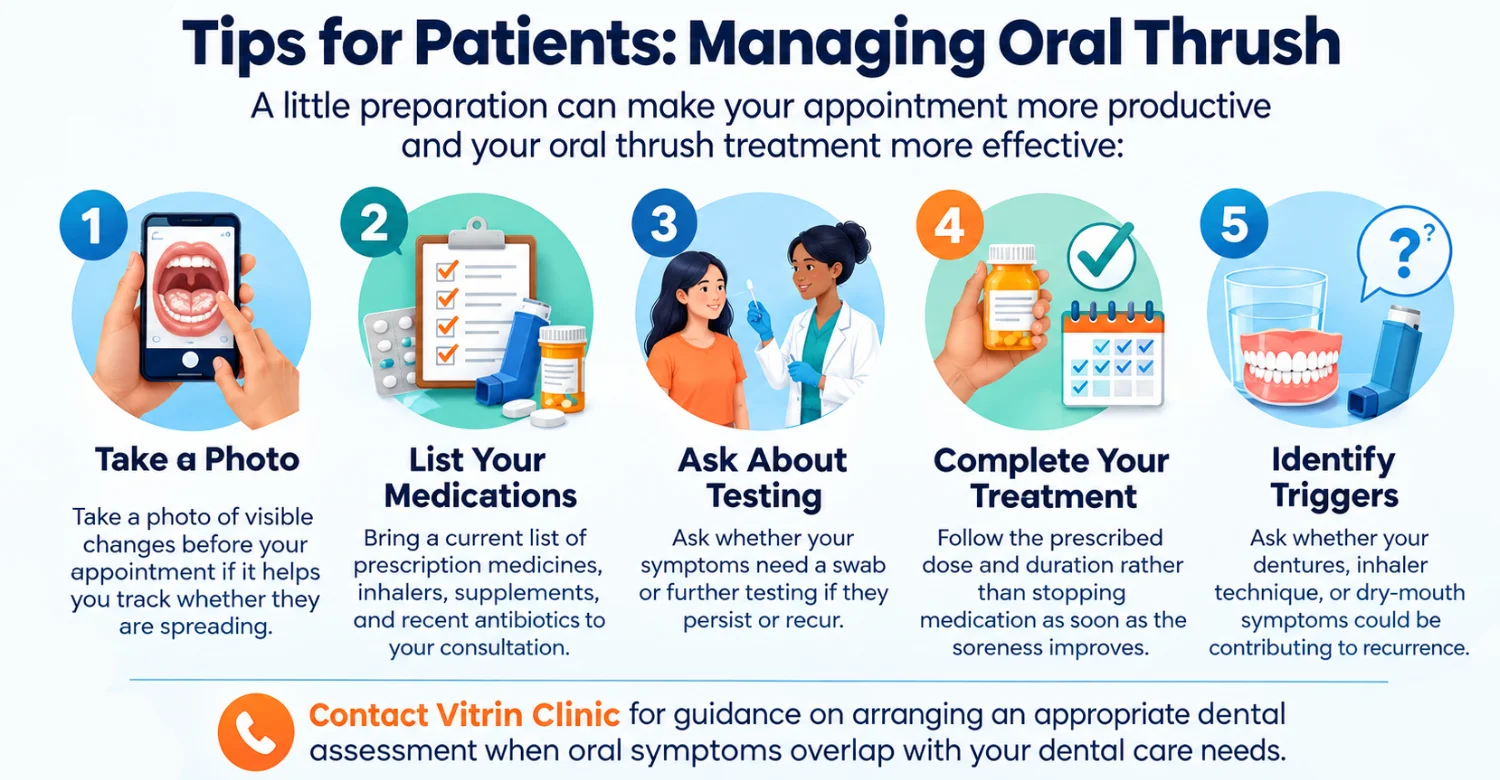
What Can You Do at Home to Relieve Oral Thrush Symptoms?
Home care can ease discomfort and support recovery. However, it does not replace antifungal medicine when one is needed. The aim is to keep the mouth clean, avoid further irritation, and stay comfortable enough to eat and drink. Gentle hygiene, sensible food choices, and good hydration all help. Home measures work best alongside professional oral thrush treatment, not instead of it. If symptoms worsen or persist despite these steps, arrange a clinical assessment.
Keep Your Mouth Clean Without Irritating It
Brush twice daily with a soft-bristled toothbrush and fluoride toothpaste, using gentle strokes. Avoid scrubbing sore areas. Clean the tongue lightly with the brush rather than scraping it, since forceful scraping can damage inflamed tissue. Keep cleaning between teeth where comfortable. It may be tempting to skip brushing when the mouth feels tender. However, continued hygiene reduces plaque and yeast build-up. If your toothpaste stings, ask your dentist about a milder option.
Choose Foods and Drinks That Feel Comfortable
Soft, moist foods are usually easier to manage. Good choices include yoghurt, warm (not hot) soups, mashed vegetables, and scrambled eggs. Cool drinks and water can soothe burning tissues. Avoid foods that commonly trigger stinging, including citrus fruits, vinegar, spicy dishes, and very hot drinks. Alcohol may also irritate. Staying well hydrated supports saliva flow and comfort. If eating becomes very difficult, contact a healthcare professional rather than skipping meals.
Avoid Remedies That May Irritate Your Mouth
Harsh alcohol-based mouthwashes, undiluted essential oils, concentrated vinegar, or baking soda pastes may irritate already inflamed tissues. Scraping off white patches can cause bleeding and pain without clearing the infection. A warm saltwater rinse may offer temporary comfort. Still, it does not replace antifungal medicine when needed. Probiotics and dietary changes are sometimes promoted online. Research on them remains limited, and they should not be treated as proven cures for oral thrush.
Which Tools and Oral Care Products May Help During Recovery?
Certain products can make recovery more comfortable and reduce the risk of thrush returning. These include gentle toothbrushes, suitable denture cleaners, inhaler spacers, and dry-mouth products. They do not kill Candida directly in the way antifungal medicines do. Instead, they reduce irritation, support hygiene, and limit known risk factors. Used alongside appropriate oral thrush treatment, they help create conditions in which the mouth heals and stays healthier. Choose these products with professional guidance.
Soft Toothbrushes and Gentle Cleaning Tools
A soft or extra-soft toothbrush cleans effectively while minimizing trauma to sore tissue. Small-headed brushes can help reach the back of the mouth gently. Interdental brushes or floss keep the gaps between teeth clean. Many clinicians suggest replacing your toothbrush after recovery, particularly if it was used during an active infection. This is a sensible hygiene step. However, replacing the brush alone does not cure thrush, and evidence for its effect on recurrence is limited.
Denture Cleaning Products and Storage
Clean dentures daily with a soft brush and a cleaner designed for denture materials. Ordinary toothpaste can be abrasive. It may scratch acrylic, creating rough surfaces where yeast can settle. Soak dentures overnight in a suitable cleaning solution or water, according to your dentist's instructions. Do not use household bleach. It can damage acrylic, discolour components, and corrode metal parts. Rinse dentures thoroughly before wearing them again to remove any cleaning residue.
Inhaler Spacers and Dry-Mouth Products
A spacer is a chamber that attaches to some inhalers, mainly pressurized metered-dose inhalers. It can reduce the amount of medication deposited in the mouth and throat. Ask your doctor or pharmacist whether one is compatible with your device. For dry mouth, saliva substitutes, moisturizing gels, and sugar-free gum or lozenges may improve comfort. These products support comfort and reduce risk. They do not directly treat Candida.
.jpg)
When Should You See a Doctor or Dentist for Oral Thrush?
See a doctor or dentist if white patches or soreness do not settle within a few days. You should also seek advice if symptoms are significant from the start. A professional can confirm whether thrush is present and rule out conditions that look similar. Early assessment also guides the right oral thrush treatment for your health and current medicines. Some groups should seek advice sooner, including babies, people with diabetes, and those with weakened immunity.
Symptoms That Need Prompt Assessment
Arrange a prompt appointment if you notice any of the following:
White patches that persist or spread
Significant pain or difficulty eating and drinking
Repeated episodes of suspected thrush
Symptoms that continue despite appropriate treatment
Suspected thrush in someone with a weakened immune system
These signs suggest that the diagnosis, the treatment, or an underlying factor needs reviewing. Prompt assessment prevents unnecessary discomfort. It also avoids delays in identifying other conditions that may look similar.
When Oral Thrush Symptoms Become Urgent
Difficulty or pain when swallowing, fever, or signs of infection beyond the mouth need prompt medical assessment. Some symptoms are urgent warning signs. These include being unable to swallow liquids or saliva, breathing difficulty, or signs of severe dehydration. Dehydration may show as very little urine, dizziness, or confusion. Seek emergency care immediately if these occur. Such symptoms may have causes other than oral thrush. They should never be self-diagnosed or managed only at home.
How Is Oral Thrush Diagnosed?
Diagnosis usually begins with an examination of the mouth. The clinician also reviews symptoms, medicines, medical history, and risk factors. In many straightforward cases, this is enough. A swab or scraping may be sent for laboratory testing when symptoms are persistent, recurrent, or unusual, or when treatment has failed. Blood tests may help check for diabetes or deficiencies. Persistent or atypical white lesions may need further assessment, sometimes including a biopsy, to exclude other conditions.
Which Oral Thrush Medication Works Best?
No single oral thrush medication works best for everyone. The most suitable option depends on how widespread the infection is, the patient's age and health, and any other medicines being taken. Antifungal medicines fall into two main groups. Topical products act directly inside the mouth. Systemic tablets or liquids work throughout the body. Effective oral thrush treatment means matching the medicine to the individual situation. That is why professional assessment comes first.
Topical Antifungal Treatments
Topical antifungals act mainly on the surfaces of the mouth. They are often used for mild, uncomplicated thrush. Nystatin suspension is held and swished around the mouth before swallowing or spitting, as directed. Clotrimazole is available in some countries as slowly dissolving lozenges, called troches. Miconazole oral gel is another option in some regions, although it can interact with warfarin and some other medicines. Availability, dosing schedules, and suitability vary. These medicines need adequate contact time with affected tissues.
Oral Antifungal Medicines
Systemic medication, most commonly fluconazole, may be considered for moderate or severe thrush. It may also be used when infection is extensive, or when the throat or esophagus is involved. It is another option when topical oral thrush treatment is unsuitable or ineffective. This oral candidiasis medication is usually taken once daily. However, it can interact with several medicines, including certain blood thinners, statins, and drugs affecting heart rhythm. It is not suitable for everyone, so professional review is essential.
How Do Dentists and Doctors Choose a Medicine for Mouth Thrush?
Choosing a medicine for mouth thrush involves several factors. Clinicians consider the severity and extent of infection, the patient's age, and their medical history. Pregnancy or breastfeeding status and immune function also matter. Current medicines are reviewed, because interactions can be significant. The ability to use the product correctly counts too, as young children and some older adults may struggle with lozenges. For these reasons, the same oral thrush medicine may not suit everyone. Selection should follow clinical assessment, not online symptom matching.
What Happens If the First Treatment Does Not Work?
If symptoms persist after oral thrush treatment, the clinician will reassess. They may check whether the diagnosis is correct and whether the medicine was used as directed. They will also ask whether risk factors remain, such as denture problems or poor inhaler technique. Some Candida species respond poorly to certain antifungals, so resistance is possible. A swab and laboratory culture can identify the organism and guide the next step. Avoid repeatedly taking antifungals without advice.
What We Notice Clinically
In clinical practice, oral thrush is often straightforward, but several patterns deserve attention. Patients frequently arrive having already tried various products, sometimes without a confirmed diagnosis. Others experience repeated episodes without anyone examining why. Dr. Rifat Alsaman, Head of the Medical Team and cosmetic dentist at Vitrin Clinic, notes that careful observation often reveals more than the white patches themselves. The following observations explain why oral thrush treatment should begin with understanding, not guessing.
Why White Patches Do Not Always Mean Oral Thrush
Several conditions can cause white areas in the mouth. These include frictional keratosis from cheek biting or rough teeth, and oral lichen planus. Leukoplakia is another, and it may occasionally carry a risk of malignant change. Thrush patches can sometimes be wiped away, leaving a red surface beneath. Yet this feature alone cannot confirm the diagnosis. Dr. Rifat Alsaman, Head of the Medical Team and cosmetic dentist at Vitrin Clinic, stresses that unexplained white patches deserve examination rather than assumption.
Why Recurrent Oral Thrush Deserves a Closer Look
Repeated episodes often point to an ongoing contributing factor. Common examples include dry mouth, inhaled corticosteroid use, denture hygiene issues, and poorly controlled diabetes. Recurrent thrush does not automatically signal a serious underlying illness. However, it does suggest something has not been fully addressed. Dr. Rifat Alsaman, Head of the Medical Team and cosmetic dentist at Vitrin Clinic, explains that identifying these factors is more effective than repeatedly treating symptoms alone. Lasting improvement depends on removing the trigger.
Why Treatment Must Match the Cause and Severity
Localized thrush may respond well to topical medicine. More extensive infection may need systemic therapy. Drug interactions must be reviewed, and other diagnoses should be considered if progress stalls. Dr. Rifat Alsaman, Head of the Medical Team and cosmetic dentist at Vitrin Clinic, emphasizes evidence-based assessment and realistic expectations. Where further medical evaluation is needed, coordinated care with a physician helps ensure the oral candidiasis treatment fits the patient's overall health, not just the visible symptoms.
Clinical Note
Oral thrush is usually manageable, but appearance alone cannot establish the diagnosis. Antifungal therapy should match the patient's clinical situation. Drug interactions, contraindications, and treatment duration all matter. Stopping too early may allow symptoms to return. Persistent white patches, recurrent symptoms, or difficulty swallowing require appropriate professional assessment. Choosing an oral thrush treatment without examination risks missing another condition. This educational content does not replace an individual examination or personalized medical advice.
How Can You Prevent Oral Thrush From Returning?
Prevention focuses on the same factors that allowed thrush to develop. Good oral hygiene, careful denture care, and correct inhaler technique all reduce risk. Managing dry mouth and relevant medical conditions also helps. Even successful oral thrush treatment can be followed by recurrence if these triggers remain. Small daily habits make a meaningful difference. If thrush returns despite these measures, a clinician should look for a cause that has not yet been identified.
Maintain a Consistent Oral Hygiene Routine
Brush twice daily for about two minutes with fluoride toothpaste. Clean between your teeth once a day using floss or interdental brushes. Clean dentures, retainers, mouthguards, and other appliances thoroughly every day. Use gentle pressure and a soft brush, as aggressive brushing or scraping can damage the oral lining. Regular dental check-ups also help. They can detect early changes, poorly fitting appliances, or other problems before they become harder to manage.
Reduce Medication-Related Risk Where Possible
If you use an inhaled corticosteroid, rinse your mouth with water and spit after each dose. Ask whether a spacer is recommended for your inhaler, and have your technique checked periodically. If you frequently need antibiotics, discuss the pattern with your doctor. Most importantly, never stop or change prescribed medicines without consulting the prescriber. Many of these medicines are essential. Safer adjustments are usually possible without stopping treatment altogether.
Manage Dry Mouth and Relevant Health Conditions
Sip water regularly throughout the day. Avoid habits that worsen dryness, such as smoking and excessive alcohol. Discuss persistent dry mouth with a doctor or dentist, as a medicine review or saliva substitute may help. If you have diabetes, follow your recommended management plan, because better glucose control may reduce thrush risk. If symptoms keep returning, arrange a reassessment. Repeated self-managed oral yeast infection treatment can hide an underlying problem.
Care for Dentures Properly
Remove dentures overnight when your dentist recommends it, allowing the gums and palate to rest. Brush dentures daily and soak them in a suitable cleaning solution, following the product and professional instructions. Store them in a clean container and rinse them before use. If dentures rub, cause sores, or feel loose, arrange an adjustment. Ill-fitting dentures can irritate tissues and trap Candida. This increases the likelihood of repeated infection.
Choosing the Right Oral Thrush Treatment
Choosing the right oral thrush treatment starts with identifying the cause and confirming the diagnosis. Recognize warning signs such as swallowing difficulty, spreading patches, or frequent recurrence. Gentle home care can ease discomfort. However, it cannot replace antifungal medicine when clinically indicated. Equally, medication works best when contributing factors are corrected. Seek professional assessment for persistent, recurrent, or severe symptoms. Avoid self-prescribing antifungals, as the wrong medicine or duration can delay recovery.
How Vitrin Clinic Approaches Oral Health Assessment
Vitrin Clinic focuses on individualized dental assessment. During an examination, the dental team looks for oral findings that may affect comfort, health, or dental treatment planning. This helps distinguish local concerns, such as denture irritation or dry mouth, from problems needing medical referral before oral thrush treatment begins. Suspected oral candidiasis sometimes requires coordination with a physician. This is particularly true when systemic medication or investigation of underlying conditions is needed.
Dr. Rifat Alsaman, Head of the Medical Team and cosmetic dentist at Vitrin Clinic, highlights careful assessment, clear communication, and realistic treatment expectations. Patients are guided on whether dental care, medical evaluation, or both are appropriate. If you have ongoing oral symptoms, contact Vitrin Clinic to discuss an appropriate dental assessment.
Ready to transform your smile?
Talk to our team and get a FREE treatment plan.
References:
FAQs
Dr. Rifat Alsaman has more than 5 years of clinical experience in dentistry and currently serves as the Head of the Medical Team at Vitrin Clinic. He is dedicated to providing exceptional patient care, overseeing treatment planning, and ensuring the highest clinical standards across the team. His expertise, attention to detail, and commitment to continuous professional development have helped countless patients achieve healthier, more confident smiles.


