Dental Tourism in Turkey
November 9, 2026
Is Gum Contouring Turkey the Right Solution for a More Balanced Smile?
 Dr. Rifat Alsaman

Gum contouring Turkey is a cosmetic dental procedure that reshapes excess gum tissue around the teeth. It can improve an uneven gum line and change how much tooth structure appears when smiling. However, not every gummy smile requires gum removal. The underlying cause must be identified first. At Vitrin Clinic, treatment planning should consider gum health, tooth proportions, and individual smile characteristics. This guide explains the available techniques, clinical considerations, costs, recovery, and expected results.
Key Takeaways
Gum contouring reshapes excess gum tissue to improve smile symmetry and tooth proportions.
Treatment options include gingivectomy, gingivoplasty, and crown lengthening.
Gum thickness, bone levels, and periodontal health determine treatment suitability.
Results depend on the underlying cause of excessive gum display.
Gum contouring in Turkey typically costs 250–800.
Proper aftercare and follow-up help maintain healthy gums and stable results.
Ready to transform your smile?
Talk to our team and get a personal FREE treatment plan.
What Is Gum Contouring and Why Is It Performed?
Gum contouring Turkey reshapes excess or uneven gum tissue to create a more balanced relationship between teeth and gums. It may address excessive gum display, irregular gum lines, or tissue covering too much of the natural tooth crown. The technique depends on periodontal health and underlying anatomy.
What Is the Difference Between Gum Contouring and Gum Reshaping?
Both terms describe changing the gum line. Contouring focuses on improving gum proportions around individual teeth, while reshaping is a broader term. Gingivectomy removes selected gum tissue, whereas gingivoplasty refines its shape. Both techniques may be combined when clinically appropriate.
What Causes a Gummy Smile or Uneven Gum Line?
Several factors can contribute to excessive gum display:
Altered passive eruption: Gum tissue covers more of the natural tooth crown.
Gingival enlargement: Excess tissue makes more gum visible.
Lip-related factors: A short or hypermobile upper lip exposes more gum when smiling.
Skeletal factors: Vertical maxillary excess can increase gum display.
Dentoalveolar extrusion: Tooth positioning contributes to an uneven smile line.
Multiple causes may occur together. Identifying the underlying cause determines whether gum contouring Turkey is suitable.
Who Is a Suitable Candidate for Gum Contouring?
Suitable candidates generally have healthy gums and excess tissue affecting their smile. Tooth roots, bone levels, and gum margins must support the planned changes. Active gum disease should be treated first. Patients with lip-related or skeletal causes may need a different approach. A clinical examination helps determine the most appropriate option.
.jpg)
What Are the Different Gum Contouring Treatments?
The right gum contouring Turkey technique depends on excess tissue, bone position, periodontal attachment, and desired results. Dentists examine these factors before choosing the safest approach.
Which Techniques Are Used to Reshape the Gums?
Traditional surgical reshaping: Uses specialised instruments to remove or refine selected gum tissue under local anaesthesia. The procedure must preserve healthy periodontal attachment.
Gingivectomy: Removes excess gum tissue, often to address gingival enlargement or suitable cases of altered passive eruption.
Gingivoplasty: Refines the shape of the remaining gum tissue. It may accompany gingivectomy to create smoother contours.
What Is the Difference Between Gum Contouring and Crown Lengthening?
The main difference is whether treatment involves the underlying bone:
Soft-tissue contouring: Reshapes the gums without removing supporting bone.
Aesthetic crown lengthening: May remove gum tissue and reshape bone to improve visible tooth proportions.
Functional crown lengthening: Exposes additional tooth structure when needed for restorative treatment.
How Is Gum Contouring Performed at Vitrin Clinic?
At Vitrin Clinic, gum contouring Turkey begins with identifying the cause of excessive gum display. The dentist examines periodontal health, tooth proportions, and underlying bone before selecting the appropriate technique.
How Are the Gums Examined and Treatment Planned?
The dentist checks gum inflammation, bleeding, pocket depths, recession, and periodontal attachment. The distance between the gum margin and underlying bone may also be evaluated.
Photographs and digital smile analysis help review gum symmetry, tooth proportions, and lip movement. Digital previews can illustrate potential changes but cannot guarantee the final result.
What Happens During the Gum Contouring Procedure?
The procedure varies according to the treatment plan and may involve:
Confirming the planned gum margins.
Administering local anaesthesia when required.
Removing or reshaping selected gum tissue.
Adjusting underlying bone only when clinically necessary.
Checking the final contours and periodontal relationships.
Placing sutures or protective materials when needed.
How Long Does Gum Contouring Take?
Treatment time depends on the number of teeth, technique, and complexity. Limited soft-tissue reshaping usually requires less time than extensive crown lengthening. Your dentist will explain the expected appointment duration before treatment.
Gum Contouring Before and After at Vitrin Clinic: What Results Can You Expect?
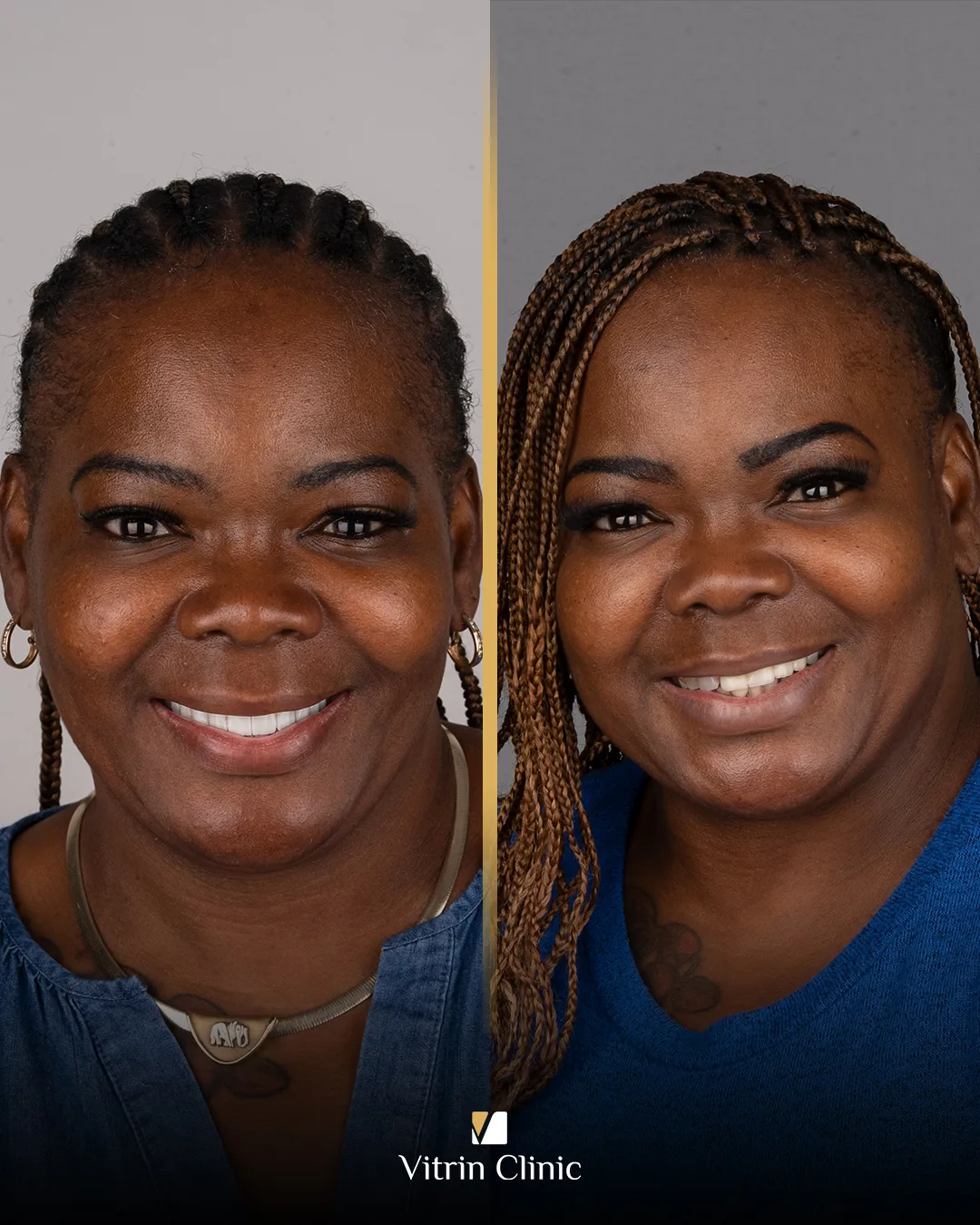
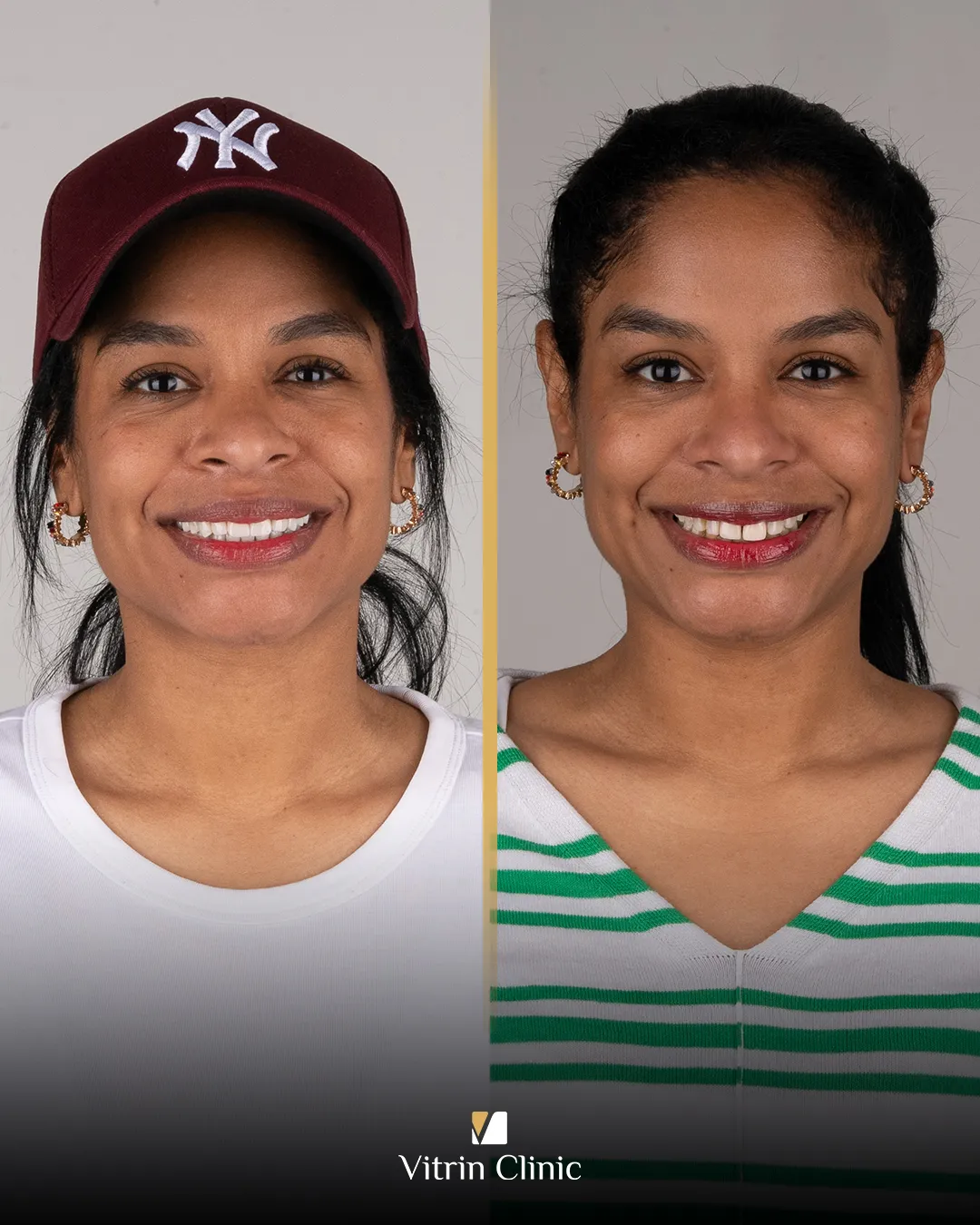
Before-and-after results depend on gum anatomy, treatment technique, and healing. Gum contouring Turkey can reveal a more natural tooth surface and create a more balanced gum line. However, results vary, and photographs should use comparable lighting, angles, and smile positions.
How Can Gum Contouring Change Your Smile?
Reshaping excess tissue can make naturally short-looking teeth appear longer and improve gum symmetry. It changes the visible tooth proportions, not the actual tooth structure.
Can It Correct an Uneven Gum Line?
Yes, when uneven margins result from excess gum tissue. However, tooth positioning, bone levels, and eruption patterns can also cause asymmetry. Identifying the cause helps avoid unnecessary tissue removal and unstable results.
Are the Results Permanent?
Results can be long-lasting, but gum tissues may change over time. Inflammation, periodontal disease, tissue rebound, and aging can affect the gum line. Regular dental care helps maintain periodontal health.
What Affects the Final Results?
Gum thickness and tissue characteristics.
Natural tooth size and proportions.
Underlying bone position and periodontal attachment.
Lip movement when smiling.
Healing response and oral hygiene.
Treatment technique and amount of tissue removed.
These factors help establish realistic treatment goals before the procedure.
.jpg)
.jpg)
.jpg)
Gum Contouring Cost in Turkey vs UK vs US
The cost of gum contouring Turkey varies by treatment technique, clinical complexity, and the number of teeth involved. The following published prices provide an initial budgeting guide.
UK
Indicative Price: $600 – $2,000
Indicative price
Indicative price: $600 – $2,000
Private UK clinic standard rate
Domestic specialist dental care
Turkey
Indicative Price: $250 – $800
Indicative price
Indicative price: $250 – $800
Save up to ~70–75% vs. US/UK
High-standard international clinic care
US
Indicative Price: 1,000–3,000
Indicative price
Indicative price: 1,000–3,000
US private clinic standard rate
Highest domestic private expense
What Factors Affect Gum Contouring Costs?
Treatment extent: Reshaping several teeth may cost more than treating a limited area.
Procedure type: Soft-tissue contouring differs from crown lengthening involving bone modification.
Clinical complexity: Imaging, specialist involvement, and additional procedures may affect the total.
Treatment requirements: Anaesthesia, follow-up appointments, and laboratory or diagnostic services may influence the quotation.
What Should a Gum Contouring Quote Include?
Request an itemised written estimate covering the consultation, imaging, anaesthesia, procedure, and follow-up. Confirm whether any additional treatment carries a separate charge before proceeding.
Ready to transform your smile?
Talk to our team and get a personal FREE treatment plan.
Are There Any Risks After Gum Reshaping?
Although gum contouring Turkey is usually a minor periodontal procedure, it involves reshaping delicate gum tissue. Possible side effects vary according to the technique, treatment area, and individual healing response.
What Changes Might You Notice During Early Healing?
Swelling and bleeding: Mild swelling, tenderness, or bleeding may occur during the first stages of recovery.
Post-treatment sensitivity: Teeth near the treated area may become temporarily sensitive after the anaesthesia wears off.
Unwanted gum recession: Removing too much tissue may expose root surfaces, increase sensitivity, or affect periodontal support.
Infection or slow healing: Existing inflammation, inadequate oral hygiene, and certain health conditions may delay recovery.
Mild symptoms generally improve as the gums heal. Persistent bleeding, increasing swelling, worsening pain, fever, or discharge require professional review.
Which Symptoms Should Never Be Ignored?
Contact your dentist if symptoms worsen or fail to improve as expected. Rapidly spreading facial or neck swelling requires urgent medical attention. Breathing or swallowing difficulties require emergency care.
Your Gum Contouring Recovery: Comfort, Care and Healing Tips
Recovery after gum contouring Turkey depends on the surgical technique, amount of tissue reshaped, and individual healing response. Following appropriate aftercare helps protect the treated area.
What Can Help Ease Swelling and Discomfort?
Apply a cold compress if recommended by your dentist.
Ask which pain-relief medication is suitable.
Avoid touching, pulling, or disturbing the treated gums.
Do not apply unapproved products to the surgical site.
Which Foods Are Best While Your Gums Heal?
Choose soft foods that require minimal chewing during early recovery. Avoid hard, crunchy, sharp, or very hot foods that may irritate the treated area. Resume your usual diet according to your dentist's instructions.
How Can You Keep the Surgical Area Clean?
Use a soft toothbrush and clean gently around the treated area. Follow your dentist's instructions for brushing and mouth rinses. Avoid vigorous brushing or disturbing healing tissues.
When Will Your Gums Look and Feel Healed?
Initial healing may take several days, while complete tissue maturation can take several weeks or longer. More extensive procedures may require additional recovery time. Follow-up visits help monitor healing and gum stability.
What Should You Avoid While Your Gums Recover?
Avoid smoking and strenuous exercise during early recovery, following your dentist's recommended timeframe. Avoid activities that could disturb the surgical area until your clinician confirms they are safe.
The Clinical Details That Shape Successful Gum Contouring
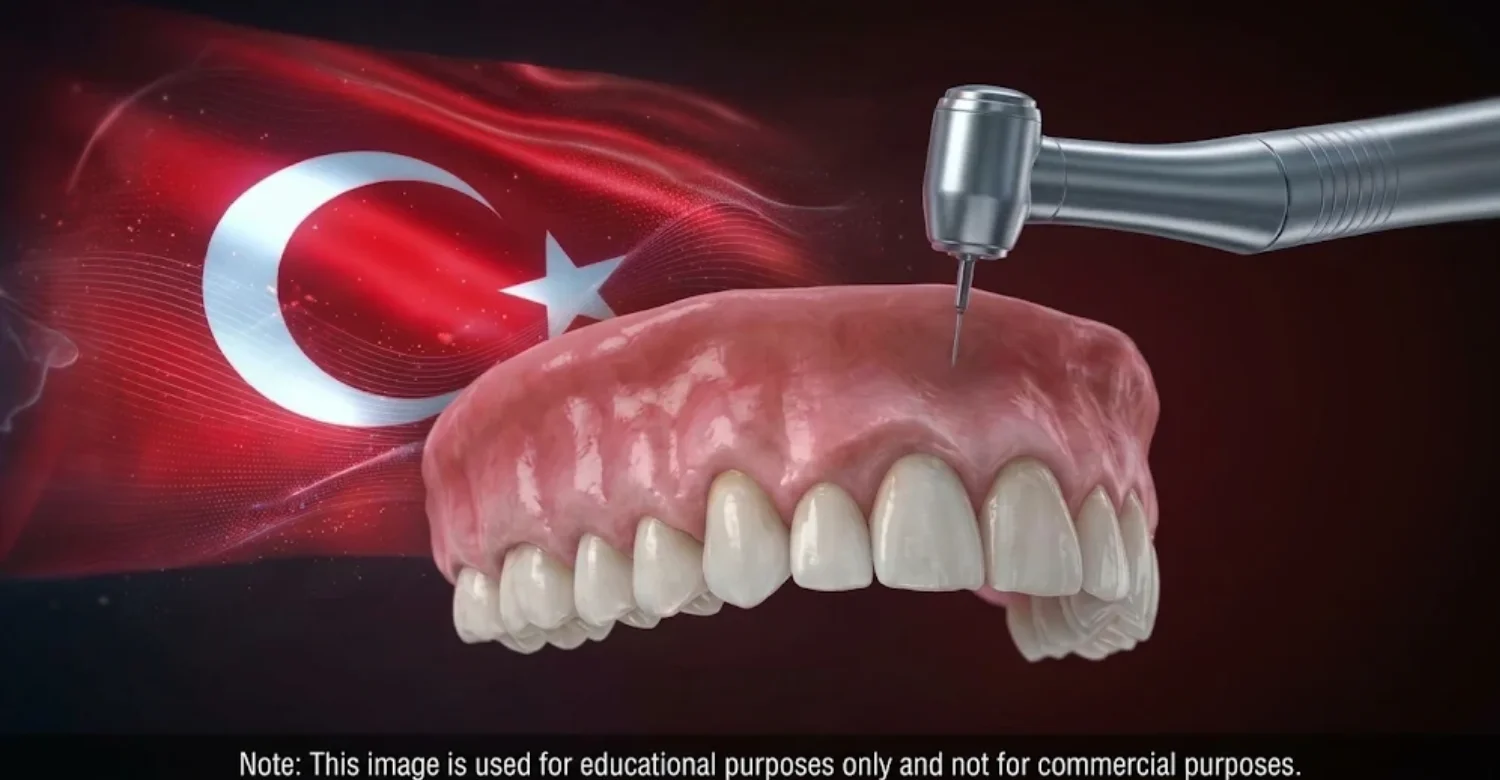
Planning gum contouring Turkey starts with identifying why excessive gum tissue appears when smiling. Gum thickness, tooth proportions, lip movement, and underlying bone position all influence treatment suitability.
Why Isn't Every Gummy Smile Treated the Same Way?
Excessive gum display can originate from several factors, including excess gum tissue, upper-lip movement, or skeletal anatomy. Removing gum tissue alone cannot correct every cause. Incorrect treatment may expose roots or compromise periodontal health.
What Role Do Gum Thickness and Bone Levels Play?
Gum thickness, tooth dimensions, and periodontal attachment influence how much tissue can be safely reshaped. If the underlying bone sits too close to the planned gum margin, crown lengthening may be necessary.
Dr. Rifat Alsaman's Clinical Perspective on Gum Aesthetics
Dr. Rifat Alsaman, Head of the Medical Team at Vitrin Clinic, highlights the importance of evaluating the complete tooth–gum relationship. Treatment planning should consider balanced proportions while preserving natural tooth structure and healthy periodontal tissues.
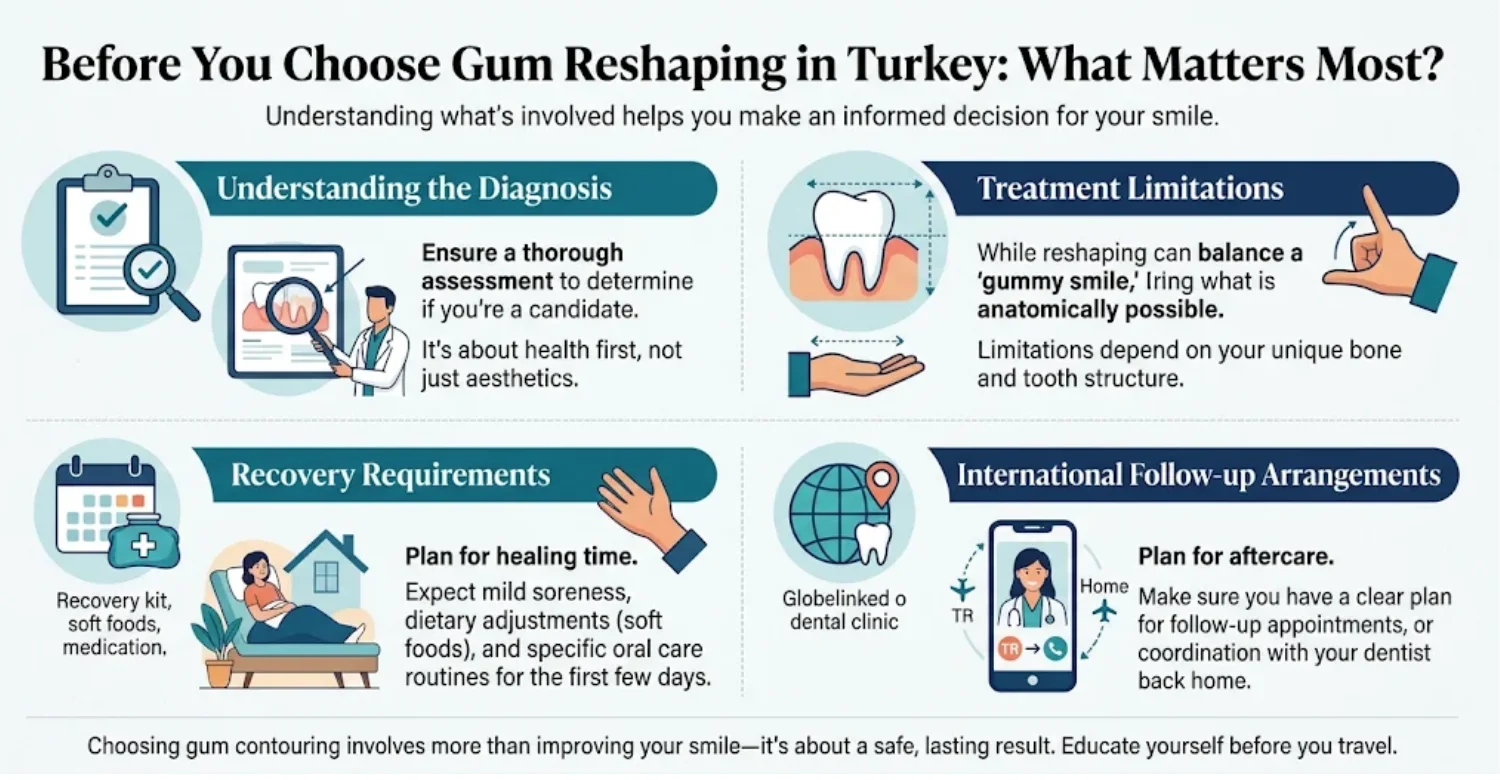
Before You Choose Gum Reshaping in Turkey: What Matters Most?
Choosing gum contouring Turkey involves more than improving the appearance of your smile. Understanding the diagnosis, treatment limitations, and recovery requirements helps you make an informed decision. International patients should also consider follow-up arrangements.
What Questions Can Help You Make an Informed Decision?
What is causing my excessive gum display?
Can soft-tissue reshaping address the problem?
Will crown lengthening or bone modification be necessary?
How much gum tissue is expected to be removed?
What complications could affect my results?
How many follow-up visits will I need?
What happens if the gum line heals unevenly?
Is Your Gum Health Ready for Cosmetic Surgery?
Healthy periodontal tissues are important for proper healing. Existing inflammation or gum disease may affect treatment suitability. Your dentist should examine bleeding, pocket depths, attachment levels, and gum recession before recommending surgery.
What Should You Look for in Before-and-After Photos?
Compare images taken from similar angles and lighting.
Look at gum symmetry and neighbouring tooth proportions.
Ask whether the examples involved similar clinical conditions.
Remember that photographs alone cannot establish your suitability for treatment.
A Personalised Approach to Gum Contouring at Vitrin Clinic
At Vitrin Clinic, gum contouring Turkey begins with identifying the cause of each patient's concerns. Our clinical team considers periodontal health, tooth proportions, and smile characteristics before recommending a suitable approach.
How Do We Analyse Your Gum Line Before Treatment?
The dentist examines gum thickness, gingival margins, tooth dimensions, and periodontal attachment. Photographs and digital smile records may support visual planning. Dental X-rays are used when clinically indicated to examine relevant underlying structures.
How Is the Right Gum Reshaping Technique Selected?
Recommendations depend on individual clinical findings. Some patients may benefit from soft-tissue reshaping, while others may need crown lengthening or a different treatment approach. Our team explains the proposed technique, limitations, and expected recovery before treatment begins.
From Your First Consultation to Aftercare at Vitrin Clinic
For international patients considering gum contouring Turkey, Vitrin Clinic provides guidance across each stage of the treatment journey.
Your First Step: Sharing Your Dental History
Discuss your smile concerns and treatment expectations.
Review your dental history and available records.
Explore suitable options after a clinical examination.
From Clinical Findings to a Personalised Plan
Capture photographs and digital records when useful.
Arrange X-rays or other imaging when clinically necessary.
Explain the findings and recommended treatment steps.
Coordinating Your Visit and Treatment Schedule
Arrange appointments around your procedure and recovery needs.
Allow flexibility for additional clinical reviews if needed.
Confirm the proposed schedule before booking your travel.
Aftercare That Continues Beyond Your Visit
Receive guidance on oral hygiene and post-treatment diet.
Learn which symptoms require professional attention.
Review follow-up arrangements before travelling home.
Keep copies of your treatment records for future dental care.
Ready to transform your smile?
Talk to our team and get a personal FREE treatment plan.
Conclusion: Is Gum Contouring Turkey the Right Choice for Your Smile?
gum contouring Turkey may be suitable for patients whose uneven gum line results from excess gingival tissue. However, a gummy smile can have several underlying causes. Clinical examination is essential before selecting treatment. Understanding the benefits, limitations, risks, and recovery requirements helps patients make informed decisions. The priority should always be healthy periodontal tissues and appropriate treatment planning.
Reference
FAQs
Gum contouring in Turkey typically costs around 250–800. The final price depends on the number of teeth treated, surgical technique, and clinical complexity. Crown lengthening or additional procedures may increase the cost. Consultation, imaging, and follow-up arrangements may also affect the total. Request an itemised written quotation before treatment.
Dr. Rifat Alsaman has more than 5 years of clinical experience in dentistry and currently serves as the Head of the Medical Team at Vitrin Clinic. He is dedicated to providing exceptional patient care, overseeing treatment planning, and ensuring the highest clinical standards across the team. His expertise, attention to detail, and commitment to continuous professional development have helped countless patients achieve healthier, more confident smiles.


