Can Gum Grafting Be Combined with Dental Implant Surgery in Turkey?
Yes, a gum graft with a dental implant can often be done in the same surgery. Adding gum tissue while the implant is placed can thicken thin gums, widen the firm band of gum around the implant and help the final tooth look natural. In some cases, the graft is safer before or after the implant instead.

Yes, a gum graft with dental implant placement can often be done in the same surgery. Adding gum tissue while the implant is placed can thicken thin gums, widen the firm band of gum around the implant and help the final tooth look natural. In some cases, the graft is safer before or after the implant instead.
At Vitrin Clinic, the online consultation is free and no-obligation, with a written plan and fixed price before you travel.
Key Takeaways
These are the main points to know before planning a gum graft with dental implant treatment.
Healthy, thick gum around an implant protects it and helps the crown look natural.
A gum graft can be done before, during or after implant surgery.
Thin gums in the smile zone and too little firm gum are the most common reasons to graft.
Tissue from the roof of the mouth gives reliable results, while substitutes avoid a second sore spot.
In visible areas, the gum needs a few months to settle before the final crown.
At Vitrin Clinic, your plan shows whether grafting is combined or staged before you travel.
Prices from $150 per crown
Six E.max front crowns from
$1,080
Timescale
5 to 7 days
Hotel + transfers available
Airport-Hotel-Clinic
coordination included
Ready to transform your smile?
Talk to our team and get your Free Treatment plan.
Can You Get a Gum Graft With Dental Implant Surgery?
Yes. A gum graft is often added during implant surgery, especially for front teeth or sites with thin gums. When the gum or bone needs more time to heal, the graft is done as a separate step. At Vitrin Clinic, the timing is set out in your written plan.
What Is a Dental Gum Graft?
A dental gum graft is a small procedure that adds gum tissue where it is thin, missing or has pulled back. The tissue usually comes from the roof of your mouth or from a prepared substitute. It is used around natural teeth and around implants.
What Does a Soft Tissue Graft Around an Implant Do?
A soft tissue graft adds gum where it is thin or missing. It can stop the implant from showing through, widen the firm band of gum around it and rebuild a natural gum shape. Thicker, firmer gum is also easier to keep clean.
Should the Gum Graft Be Done Before, During or After Implant Surgery?
It depends on your gums and bone:
Before: When gums are very thin or a tooth is being removed, to prepare the site.
During: At the implant surgery, to save a separate procedure.
After: Around a finished implant, to correct thin gum or recession.
Is Gum Grafting Considered Surgery?
Yes. Gum grafting is a minor oral surgery done under local anaesthesia, usually in one appointment. It involves small cuts in the gum and fine stitches. Most patients go home the same day and return to light activity within a day or two.
Why Does Gum Tissue Around Implants Matter?
The gum around an implant is its first line of defence. It seals the implant from bacteria, supports how the crown looks and affects how easy the area is to clean every day.
How Is Gum Tissue Around Implants Different From Gums Around Teeth?
Natural teeth are attached to the bone by a ligament with its own blood supply. Implants do not have this ligament, and the gum fibbers around them run differently. This makes the gum around implants more likely to become inflamed or recede.
What Is Keratinized Gum and How Does It Protect the Implant?
Keratinized gum is the firm, pale-pink band of gum that does not move when you talk or chew. Research has linked a narrow or missing band around implants with more plaque, sore brushing, inflammation and recession. A band of about 2 mm or more is often considered helpful.
Does It Matter if Your Gum Tissue Is Thin or Thick?
Yes. Thin gum is more likely to recede, especially at the front, and can let the grey of the implant show through. Thick gum, often around 2 mm or more, is more stable and hides the implant better. Your gum type is checked before surgery.
When Is a Gum Graft Needed With an Implant?
A gum graft with dental implant treatment is usually recommended when the gum around the implant site is thin, there is too little firm gum, the gum has receded after tooth loss or the implant shows through. At Vitrin Clinic, your gums are checked at your exam in Istanbul before your plan is confirmed.
Ready to see Vitrin Clinic’s magic in action, before & after?

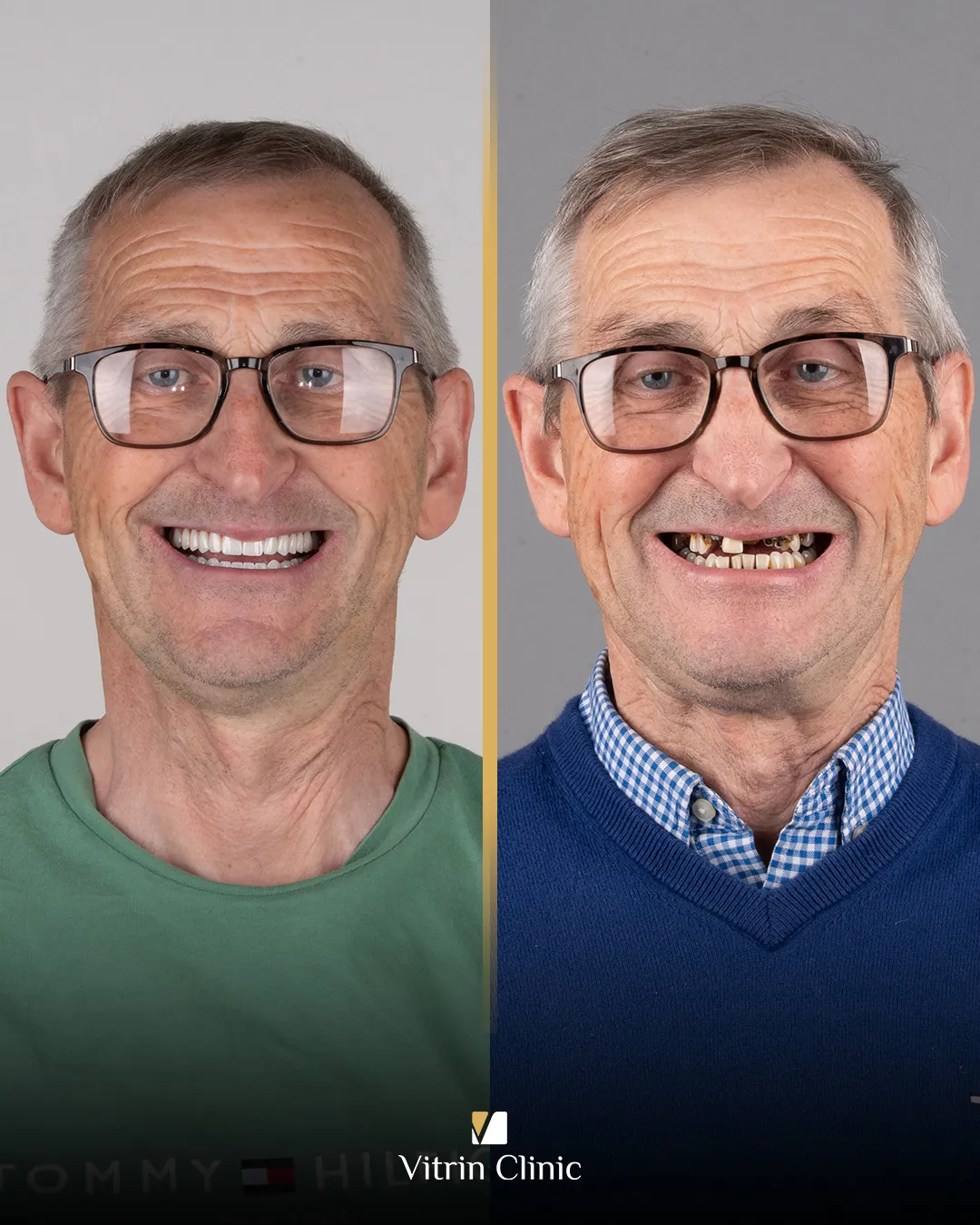
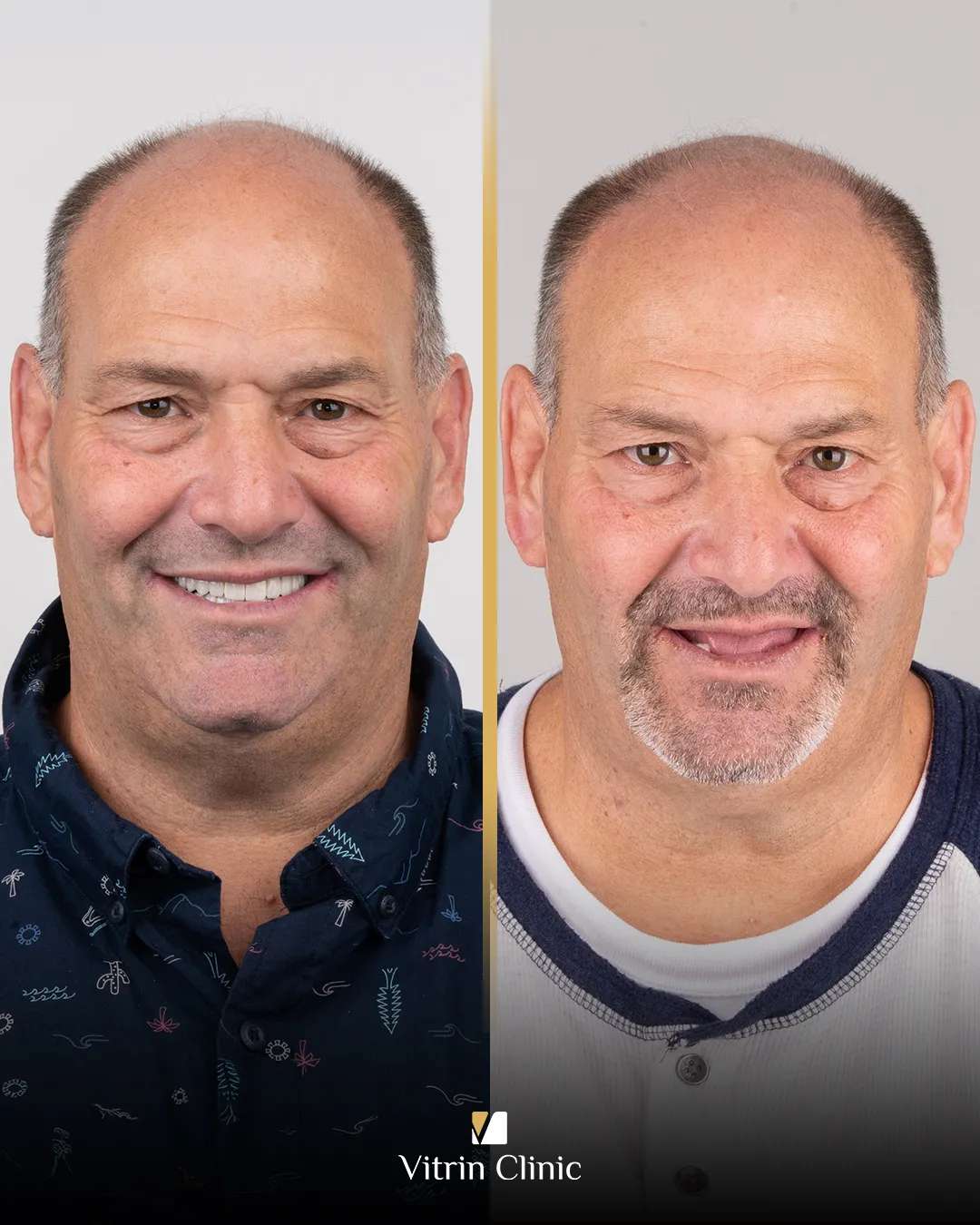
Why Do Thin Gums in the Smile Zone Need Extra Care?
In the front of the mouth, even small changes in the gum line are easy to see. Thin gum can recede after an implant is placed and change how the tooth looks when you smile. Thickening it at the start helps keep the gum line stable.
What If There Is Too Little Firm Gum Around the Implant?
If the implant is surrounded mostly by loose, movable gum, brushing can feel sore and plaque builds up more easily. A graft can create a band of firm gum that is more comfortable to clean and better protects the implant.
Can Gum Recession After Tooth Loss or Extraction Affect an Implant?
Yes. After a tooth is lost, the gum often shrinks along with the bone. Without enough gum, the new tooth can look longer than its neighbours. A graft can rebuild some of that lost volume before or during implant surgery.
What Causes Grey Show-Through or a Flat Gum Contour?
Both usually come from gum that is too thin over the implant. The grey of the implant can show through, and the gum can look flat where a root would normally bulge. Adding gum thickness corrects both.
When Is It Too Late for Gum Grafting?
It is rarely too late. Gum grafts can be done before, during or years after implant surgery. However, results are more predictable when the graft is done early, before recession becomes severe or bone is lost. If an implant has lost a lot of bone, other treatment may be needed first.
When Can a Gum Graft Be Done During Implant Surgery?
A graft can often be combined with implant surgery, but the right moment depends on whether the implant is placed right after extraction, in a healed site or with a bone graft.
Can a Gum Graft Be Done With an Immediate Implant After Extraction?
Yes. When an implant is placed right after a tooth is removed, a graft is often added to thicken the gum on the front surface. This helps lower the risk of recession, which is higher with immediate implants.
Can You Get a Tooth Pulled and an Implant Put In the Same Day?
Yes, in suitable cases. If there is no active infection and enough healthy bone, the tooth can be removed and the implant placed in one visit. For gum grafting, this is a good moment to thicken thin gum at the same time.
Can a Gum Graft Be Done With a Delayed Implant in a Healed Site?
Yes. In a healed site, the graft can be placed during implant surgery or when the implant is uncovered a few months later. The second option uses a surgery that is already planned.
Can a Gum Graft Be Combined With a Bone Graft?
Sometimes. Bone is rebuilt first and gum is added on top, in the same surgery. When both defects are large, the gum covering the bone graft can be under strain, so many surgeons do them in separate stages.
Can a Bone Graft and Dental Implant Be Done at the Same Time?
Often, yes, when the bone loss is small and the implant can still be held firmly. Larger bone loss usually needs grafting first and several months of healing. When gum grafting is also needed, the dentist decides whether all three can be done together safely.
When Is It Better to Graft in a Separate Stage?
A separate stage is usually safer when:
The gum is very thin or scarred
A large bone graft is needed
There is active gum disease
The patient smokes heavily
What Types of Implant Soft Tissue Augmentation Are There?
1. Free Gingival Graft (FGG)
A thin layer of firm gum is taken from the roof of the mouth and placed around the implant.
It mainly adds firm, attached gum (keratinized tissue).
It helps protect the implant from irritation and makes brushing more comfortable.
The graft is usually a little paler than the surrounding gum, so it's often used on back teeth.
2. Connective Tissue Graft (CTG)
Tissue is taken from under the surface of the roof of the mouth and placed under the gum around the implant.
It mainly adds gum thickness and volume.
It can also improve the amount of firm gum around the implant.
The colour blends well with the surrounding gum, so it's often used on front teeth where appearance matters most.
3. Soft Tissue Substitutes (Collagen Matrix)
A ready-made collagen material is used instead of tissue from your own mouth.
It adds gum thickness, and some types can also help increase firm gum.
There's no second surgical site, so healing is usually more comfortable.
It may give less predictable results than your own tissue in some cases.
What Is a Connective Tissue Graft?
A thin layer of tissue is taken from under the surface of the roof of the mouth and placed beneath the gum around the implant. It is the most reliable way to add thickness, and it blends in well with the surrounding gum, which makes it ideal for front teeth.
What Is a Free Gingival Graft?
A strip of surface tissue is taken from the roof of the mouth and placed where firm gum is missing. It is very effective at creating a band of firm gum, but it can look paler than the gum around it, so it is used more often away from the smile.
Can a Collagen Matrix or Donor Tissue Replace Your Own Gum?
In some cases, yes. These processed materials are used instead of tissue from your own mouth, so there is no second sore spot in your palate. They may add less thickness than your own tissue, so they suit smaller corrections best.
How Do Gum Graft Options for Implants Compare?
Each option suits a different need.
Graft Type | Best For | Main Limitation |
Connective tissue graft | Adding thickness, especially at front teeth | Needs tissue from the palate |
Free gingival graft | Creating a band of firm gum | May look paler; palate is sore while healing |
Collagen matrix or donor tissue | Avoiding a palate donor site | May add less thickness |
How Do Dentists Plan a Gum Graft With Dental Implant Surgery?
Planning looks at your gum thickness, the width of firm gum, the implant position and how much gum shows when you smile. At Vitrin Clinic, these are checked with an exam and a 3D scan before the plan is confirmed.
How Are Gum Thickness and Firm Gum Width Measured?
The dentist measures the band of firm gum with a small probe and checks thickness by looking through the gum or with digital scans. These measurements show whether you need more thickness, more firm gum, or both.
How Does Implant Position Affect the Gums?
An implant placed too far toward the cheek leaves very little bone and gum over it, which raises the risk of recession. Placing it in the right position for the future crown protects the gum over the long term.
Why Do Your Smile Line and Aesthetic Goals Matter?
If your smile shows your gums, small changes in the gum line are easy to see. In that case, gum thickness and shape are planned with more care, and the dentist explains what result to expect before surgery.
When It Comes to a Gum Graft, Does It Matter if the Periodontist Is Board Certified?
What matters most is that the dentist has specific training and regular experience with gum grafting around implants. Board certification is a common sign of advanced training in some countries, such as the US. Ask how often the dentist performs these grafts and to see examples of results.
What Happens During a Gum Graft With Implant Surgery?
The combined procedure is usually done under local anaesthesia in one appointment. It takes a little longer than an implant alone, because the graft is prepared and stitched in place.
The procedure usually follows these steps:
Numbing: Local anaesthesia is given around the implant site and, if needed, the roof of the mouth.
Implant placement: The implant is placed in the jawbone.
Graft placement: Tissue from the roof of the mouth, or a collagen substitute, is placed where the gum needs to be thicker or firmer.
Stitching: The gum and graft are stitched in place so they heal steadily.
Aftercare: You leave with care instructions, and a follow-up visit checks healing.
Mild tenderness for a few days is normal, and most people return to normal activities within a day or two.
Medical note: The graft is sometimes done before or after the implant instead, depending on your gum and bone. Your dentist decides after an exam and scans.
What Happens Before the Procedure?
Preparation makes sure your gums are healthy enough to heal well:
An exam and 3D scan to plan the implant and graft
Treatment of any gum disease first
A review of your medicines, especially blood thinners
Stopping or cutting down smoking before and after surgery
How Does the Combined Procedure Work Step by Step?
The implant and the graft are placed in a set order:
The area is numbed.
The implant is placed, with a bone graft if needed.
Graft tissue is taken from the palate, or a substitute is prepared.
The graft is placed around the implant site.
The gum is closed with fine stitches.
What Happens at the Palate Donor Site?
If tissue is taken from the roof of your mouth, that area is often the sorest part of recovery. It usually heals within about 1 to 2 weeks. A thin protective plate or dressing can make eating more comfortable while it heals.
When I Get a Gum Graft, Wouldn't It Ruin the Place the Gum Is Taken From?
No. The roof of the mouth heals well, usually within a few weeks, and the tissue grows back. Only a small amount is taken, and the shape of your mouth does not change. Some people notice slight tenderness for a short time while it heals.
What Does It Feel Like to Have Tissue Taken From the Roof of Your Mouth?
During the procedure, you feel only pressure, as the area is numbed. Afterward, the palate can feel sore, like a burn from hot food, for several days. Soft, cool foods, painkillers and a protective plate help most patients stay comfortable.
Is Getting a Gum Graft Anything to Be Scared or Worried About?
Not usually. Gum grafting is a common, routine procedure done under local anaesthesia. Most discomfort is mild and short-lived. Your dentist explains each step beforehand, and sedation may be an option if you feel very anxious.
Which Is More Painful, Dental Bone Graft or Implant?
Many patients find a bone graft slightly more uncomfortable than an implant alone, as it involves more work on the bone and gum. Both are done under local anaesthesia, and soreness usually lasts a few days. When a gum graft is added, the palate is often the sorest spot.
What Is Recovery Like After a Gum Graft and Implant?
After a gum graft with dental implant surgery, most people feel back to normal within 1 to 2 weeks, and the gum keeps maturing for a few months after that. At Vitrin Clinic, you leave with written aftercare instructions, and our team stays in touch from home while you heal.
What Happens in the First Two Weeks?
Swelling, mild pain and some bleeding are common in the first days, especially at the palate. Painkillers and cold packs usually keep you comfortable. Stitches are usually removed or dissolve after about 1 to 2 weeks.
How Do You Eat, Brush and Protect the Graft?
The graft needs to stay still while it attaches to its new blood supply:
Eat soft, cool foods and chew on the other side.
Do not brush the graft until your dentist says so; rinse gently instead.
Do not pull your lip or cheek to look at the area.
Avoid smoking, which can cause the graft to fail.
When Does the Gum Shape Settle and the Crown Get Placed?
In visible areas, the gum usually needs a few months to settle before the final crown is designed. A temporary crown may be used to shape the gum in the meantime. In back teeth, the crown can often follow the normal implant healing time.
Can Gum Recession Around an Existing Implant Be Treated?
Often, yes. Gum that has pulled back from an implant can sometimes be covered or thickened with a graft. The result depends on how much bone is left and whether the area is healthy. If your implant was placed elsewhere, you can send photos and X-rays to Vitrin Clinic for a review.
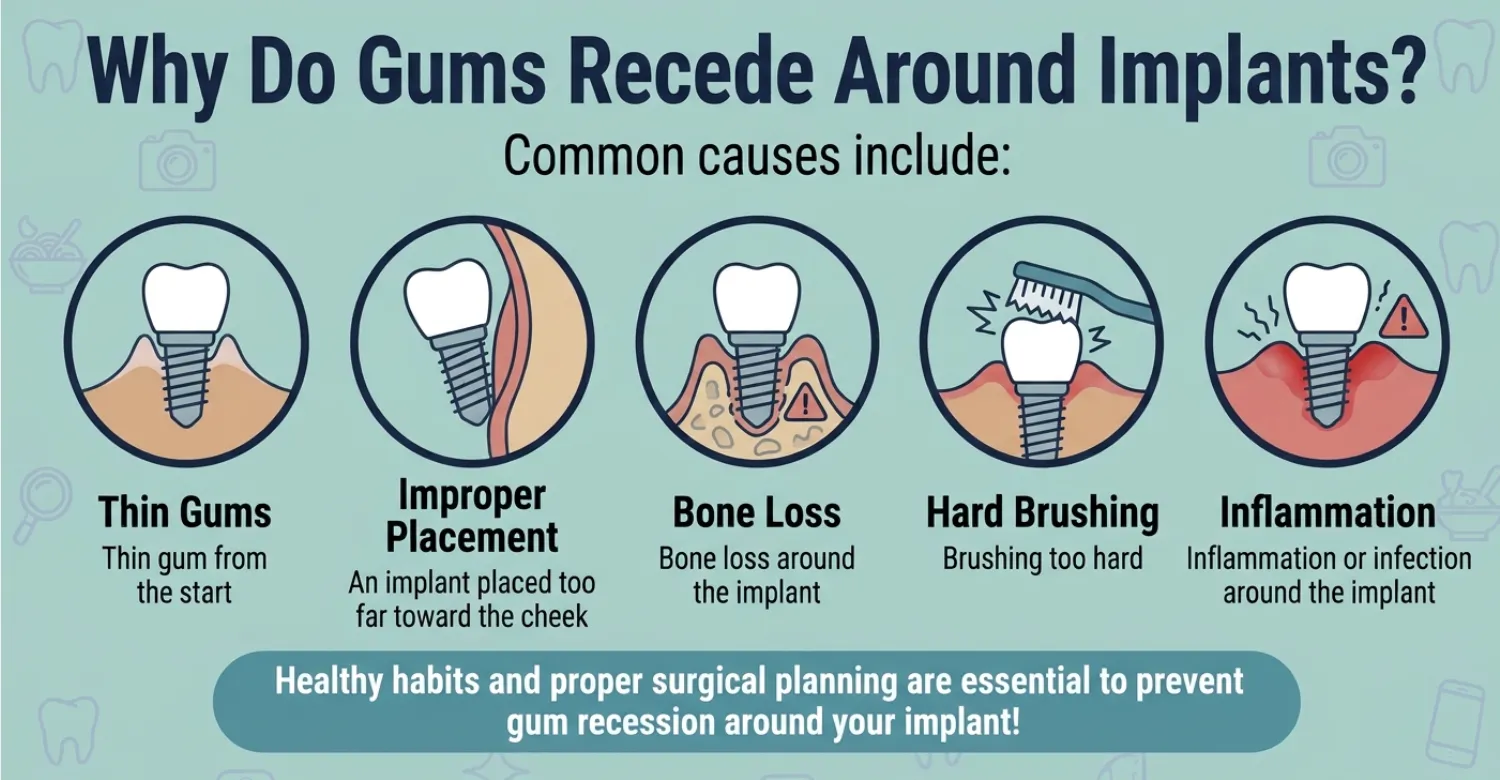
Why Do Gums Recede Around Implants?
Gum recession around a dental implant can affect both the appearance and long-term stability of your restoration. See the quick guide below to understand the primary factors that can cause the gumline to recede:
How Do You Fix Receding Gums Around Implants?
First, any inflammation or infection around the implant is treated. Small areas of recession can then be covered or thickened with a gum graft. In more advanced cases, the crown may be replaced, or rarely the implant. Covering an exposed implant is less predictable than covering a natural tooth root.
What Are the Benefits and Limitations of Combining Gum Grafting With Implants?
Combining the two saves a surgery and some healing time, but only when the gum and bone are healthy enough to allow it.
What Are the Benefits of a Combined Procedure?
A combined procedure can make treatment shorter and simpler:
One surgery and one recovery instead of two
Fewer trips if you are traveling for treatment
Thicker gum in place from the start, protecting the implant as it heals
A more natural gum shape around the final crown
What Are the Limitations and Possible Complications?
It is not right for every site, and a few risks are worth knowing:
It needs healthy gum and enough bone to support both grafts.
Taking tissue from the palate adds a second sore spot.
Part of the graft can shrink as it heals.
As with any surgery, bleeding, infection and graft failure are possible.
What Should You Know Before Getting Dental Implants?
Before implant treatment, it helps to know who is a good candidate, how long it takes, what problems can happen and what other options exist. Healthy gums play a big part in all of these.
What Disqualifies You From Getting Dental Implants?
Very few things rule out implants completely. Treatment may need to wait or be adjusted for:
Active gum disease
Uncontrolled diabetes
Heavy smoking
Not enough bone, unless grafting is possible
Some medicines, such as certain bone medicines, or radiation to the jaw
Are You Ever Too Old for a Gum Graft With Dental Implant Treatment?
No. Age alone does not rule out a gum graft or an implant. What matters is your general health, healing ability and gum condition. Older patients often have thinner gums, so a graft can be especially helpful to protect the implant.
Can Dental Implants Really Be Done in 24 Hours?
In some cases, the implant and a temporary tooth can be placed within about a day, known as immediate loading. The final tooth still needs a few months of healing first. If a gum graft is needed, the gum also needs time to settle before the final crown.
What Is the Most Common Gum Problem Around Implants?
The most common problem is inflammation of the gum around the implant, called peri-implant mucositis. It causes redness, swelling and bleeding when brushing, and can usually be reversed with better cleaning. If untreated, it can progress to bone loss around the implant.
Do People Regret Dental Implants?
Most patients are happy with their implants, as they look and feel close to natural teeth. Regret usually comes from problems such as gum recession, a crown that looks too long or poor cleaning habits. Good planning, including gum grafting when needed, helps prevent these issues.
What Do Patients Wish They Knew About Their Gums Before Implants?
Many patients wish they had known that healthy, thick gum matters as much as the implant itself. Thin gum can lead to recession and a grey shadow over time. Asking your dentist to check your gums before surgery helps avoid these problems.
What Can Be Done Instead of a Dental Implant?
The main alternatives are:
A dental bridge supported by the teeth next to the gap
A Maryland bridge, which is bonded to the neighbouring teeth
A removable partial or full denture
These avoid surgery but do not replace the tooth root or protect the jawbone like an implant.
What Does the Research Say About Soft Tissue Grafts at Implants?
Systematic reviews show that soft tissue grafts can improve the gum around implants. Connective tissue grafts reliably add thickness, free gingival grafts widen the band of firm gum, and substitutes tend to add less than your own tissue. A lack of firm gum has also been linked with more plaque, inflammation and recession.
Planning Gum Graft and Implant Treatment in Turkey: How Many Trips?
A combined procedure usually needs two trips, and a staged one usually needs three. With Vitrin Clinic, your expected trips are listed in your written plan, and our team books your hotel and arranges your transfers for each visit.
What Does the Trip Plan Look Like for a Combined Procedure?
The graft and implant are placed together on your first trip:
Trip 1: Exam, 3D scan, implant and gum graft, then early checks.
At home: Implant and gum healing for a few months, with follow-ups.
Trip 2: Gum and implant check, then your final crown.
What Does the Trip Plan Look Like for a Staged Procedure?
The graft and implant are placed on separate trips:
Trip 1
Exam, scan and the first procedure, either the gum graft or the implant.
Trip 2
The second procedure, after healing at home.
Trip 3
Your final crown.
Which Implant Treatments Does Vitrin Clinic Provide?
At Vitrin Clinic, your implant plan depends on how many teeth you are missing, how much bone you have and the health of your gums. Our implant options include:
Single tooth implants
Immediate implants after extraction
Multiple implants and implant-supported bridges
All-on-4, All-on-6 and All-on-8 full arch implants
Implants with bone grafting or sinus lift
Zygomatic implants for severe upper jaw bone loss
Gum treatment and gum grafting before or around implants
What to send: close-up photos of your gums and smile, any X-rays and which teeth are missing.
Learn more about dental implants at Vitrin Clinic.
How Does Vitrin Clinic Combine Gum Grafting and Implant Treatment?
At Vitrin Clinic, the online consultation is free and no-obligation. You send photos, your dental history and any X-rays, and our dentists review your case. A personalized treatment plan is sent in less than 24 hours.
Your written plan includes the treatments, the timeline and a fixed, all-inclusive price before you travel. Our team books your hotel and arranges your transfers, and aftercare continues once you're home. Vitrin Clinic has been treating patients in Istanbul since 2007.
What Is Your Patient Journey With Vitrin Clinic?
Your journey with Vitrin Clinic follows six steps, from your first review to your final crown and gum check.
Step 1: How Does the Free Online Review of Your Photos and X-Rays Work?
You send close-up photos of your gums and smile, your dental history and any X-rays. Our dentists review your case and suggest whether a gum graft may be needed with your implant.
Step 2: What Happens During the Gum and Bone Assessment in Istanbul?
After a transfer from your hotel, the dentist examines your gums, measures their thickness and takes a 3D scan of the bone at our clinic.
Step 3: How Are the Graft and Implant Planned Together?
The exam results confirm whether your gum graft and implant can be combined or need separate stages, and your plan is updated if needed.
Step 4: What Happens During Implant Placement With Gum Grafting?
Treatment follows your confirmed plan under local anaesthesia, and you leave with aftercare instructions for both the implant and the graft.
Step 5: How Do Healing and Follow-Up From Home Work?
Our team stays in touch while your implant and gum heal. You can send photos or questions at any time.
Step 6: When Are the Final Crown and Gum Check Done?
Once everything has healed, you return for your final crown and a check of the gum around it.
Is Combining a Gum Graft With Your Implant Right for You?
You may need a gum graft with dental implant treatment if your gums are thin, the band of firm gum is narrow or the implant is in your smile zone. When the gum and bone are healthy, the graft can often be placed in the same surgery; when they need more time, a staged plan is safer. At Vitrin Clinic, a free online review is the first step to a clear written plan.






References

Medically reviewed by
Dr. Rifat AlsamanDr. Rifat Alsaman has more than 5 years of clinical experience in dentistry and currently serves as the Head of the Medical Team at Vitrin Clinic. He is dedicated to providing exceptional patient care, overseeing treatment planning, and ensuring the highest clinical standards across the team. His expertise, attention to detail, and commitment to continuous professional development have helped countless patients achieve healthier, more confident smiles.
More in Dental Treatments
View all 19 min readCan Gum Disease Treatment Be Combined with Implant Preparation?Yes, gum disease treatment and implant preparation can be combined in one plan. The gum infection is treated first, and steps like removing hopeless teeth or grafting bone can run alongside it. The implants themselves are placed once the gums are healthy and stable.
 17 min readCan Root Canal Treatment and a Dental Crown in Turkey Be Planned Together?Yes, a root canal and crown are best planned together from the start. The root canal removes the infection, and the crown protects what is left of the tooth afterward. Planning both at once means the tooth is checked, treated and restored in the right order, without long gaps in between.
 33 min readCBCT Scan for Dental Implants in Turkey: How Does Vitrin Clinic Use 3D Imaging?A CBCT scan for dental implants provides detailed three-dimensional images of the jawbone and surrounding anatomical structures. It helps dentists examine bone dimensions, locate important nerves, and evaluate the maxillary sinuses.
 19 min readIs It Possible to Get Dental Implants If I Smoke?Dental implants for smokers are possible in many cases. Yes, you can usually get dental implants if you smoke. Smoking does not automatically rule you out of treatment.
Still have a question?
Our patient coordinators answer every day of the week: before, during and long after your treatment.