CBCT Scan for Dental Implants in Turkey: How Does Vitrin Clinic Use 3D Imaging?
A CBCT scan for dental implants provides detailed three-dimensional images of the jawbone and surrounding anatomical structures. It helps dentists examine bone dimensions, locate important nerves, and evaluate the maxillary sinuses.

A CBCT scan for dental implants provides detailed three-dimensional images of the jawbone and surrounding anatomical structures. It helps dentists examine bone dimensions, locate important nerves, and evaluate the maxillary sinuses. These findings can influence implant positioning, dimensions, and additional surgical requirements.
Unlike conventional dental X-rays, CBCT produces cross-sectional images of selected anatomical areas. However, not every patient requires this examination. The decision depends on clinical findings, existing images, and treatment complexity.
At Vitrin Clinic in Istanbul, diagnostic information supports individual implant planning. This guide explains CBCT technology, its benefits, limitations, and costs. It also compares imaging prices and dental implant packages in Turkey, the USA, and the UK.
Key Takeaways
A CBCT scan for dental implants provides three-dimensional information about the jawbone and surrounding anatomy.
It helps evaluate bone height, width, shape, nerves, and maxillary sinus boundaries.
Vitrin Clinic considers diagnostic findings when planning suitable implant positions and restorations.
CBCT is not necessary for every patient. Imaging must have a clear clinical purpose.
Conventional X-rays may provide sufficient information for some initial examinations.
Radiation exposure varies according to equipment, scanning area, and exposure settings.
Metal restorations can create image artefacts and affect interpretation.
Existing DICOM files may support preliminary treatment planning before travelling to Istanbul.
CBCT supports clinical decisions but cannot guarantee successful implant treatment.
Patients should compare complete treatment quotations, not imaging or implant prices alone.
Ready to transform your smile?
Talk to our team and get a personal FREE treatment plan.
What Is a CBCT Scan for Dental Implants and Why Does Vitrin Clinic Use It?
A CBCT scan for dental implants is a specialised dental X-ray examination. CBCT stands for cone beam computed tomography. It produces three-dimensional images of selected oral structures. Dentists can examine the jawbone from different angles and evaluate nearby anatomical features. This information can support implant planning when conventional images cannot answer important anatomical questions.
How Does Vitrin Clinic Use Cone Beam Technology During Implant Planning?
CBCT uses a cone-shaped X-ray beam and a rotating imaging unit. The machine captures multiple images during one rotation around your head. Computer software reconstructs these images into a three-dimensional dataset. Vitrin Clinic can use relevant imaging information alongside clinical examination and other diagnostic records. The findings help evaluate anatomical conditions before proposed implant treatment.
What Information Can Vitrin Clinic Obtain From a 3D Dental Scan?
A dental CBCT examination can display several important structures:
Jawbone height, width, and shape.
The inferior alveolar nerve canal.
The mental foramen.
Maxillary sinus boundaries.
Existing teeth and their roots.
Certain bone defects and abnormalities.
Previous grafting and implant sites.
The visible anatomy depends on the selected scanning area. Professional interpretation must consider the complete dataset, not isolated screenshots.
What Are the Four Views of CBCT?
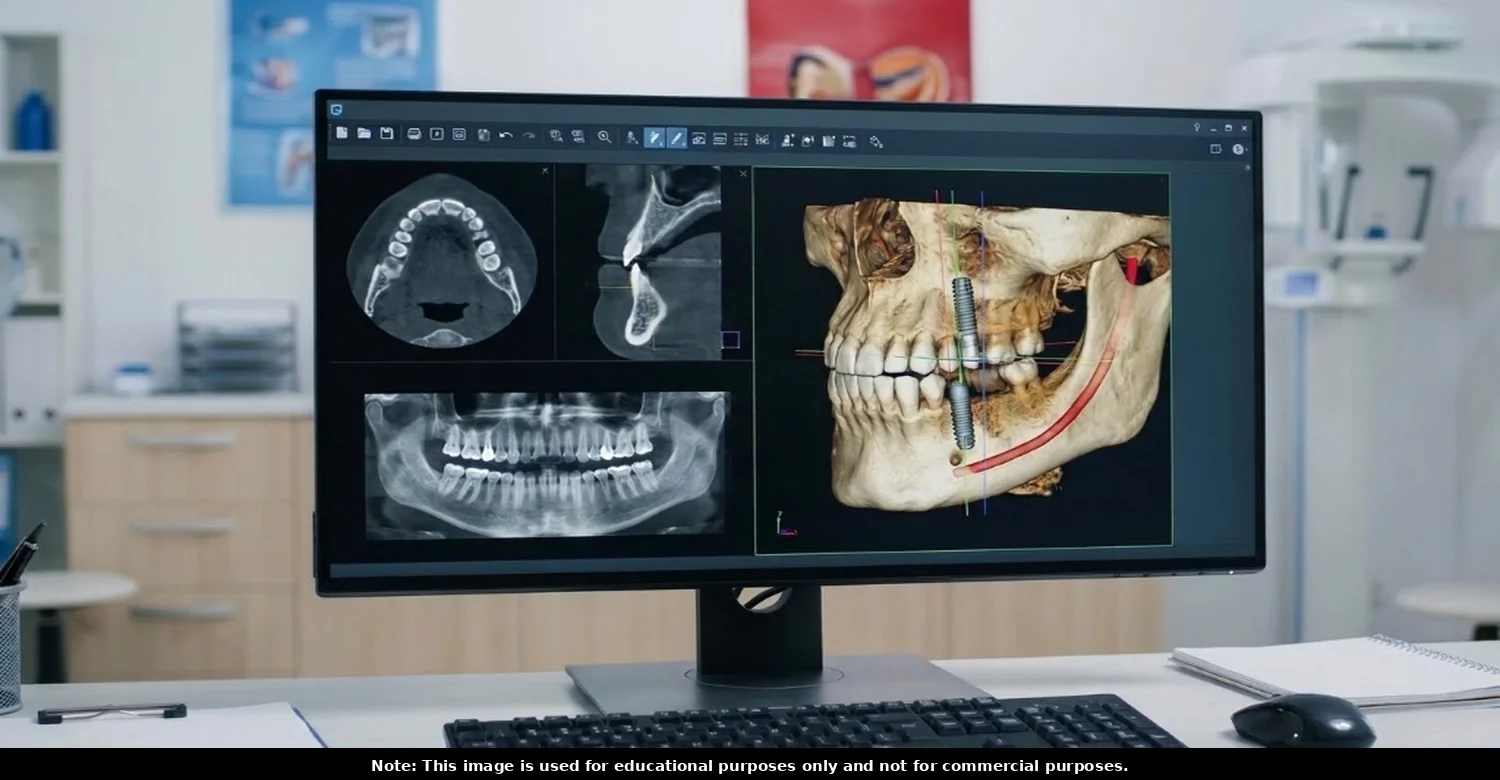
CBCT software usually displays the scanned volume in four main views:
Axial view: Horizontal slices, seen as if looking down from above.
Coronal view: Vertical slices dividing the front and back of the head.
Sagittal view: Vertical slices dividing the left and right sides.
3D reconstruction: A three-dimensional rendering of the scanned bone and teeth.
For implant planning, the software can also create panoramic and cross-sectional views along the jaw. These help dentists measure bone at each proposed implant site.
How Does a CBCT Scan Look?
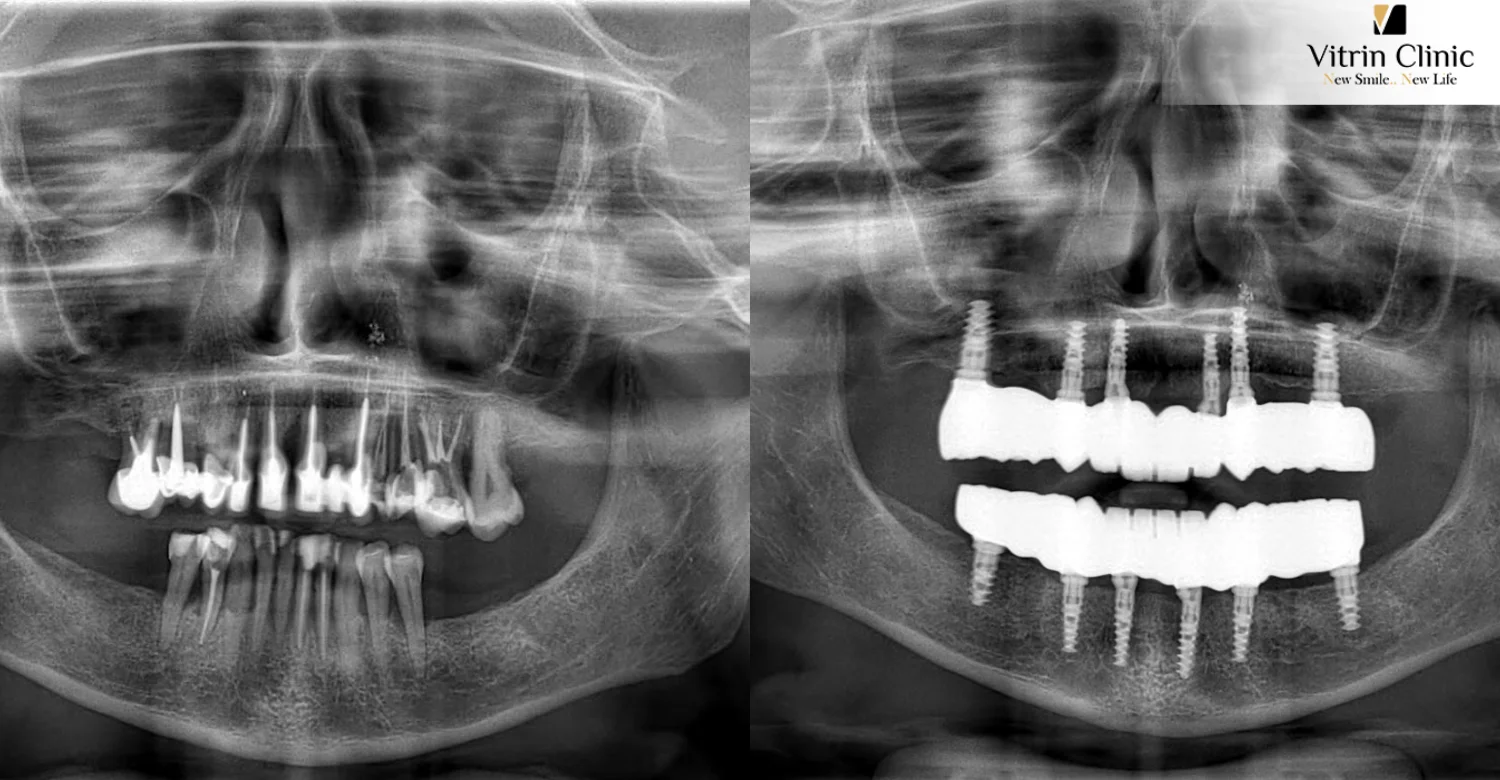
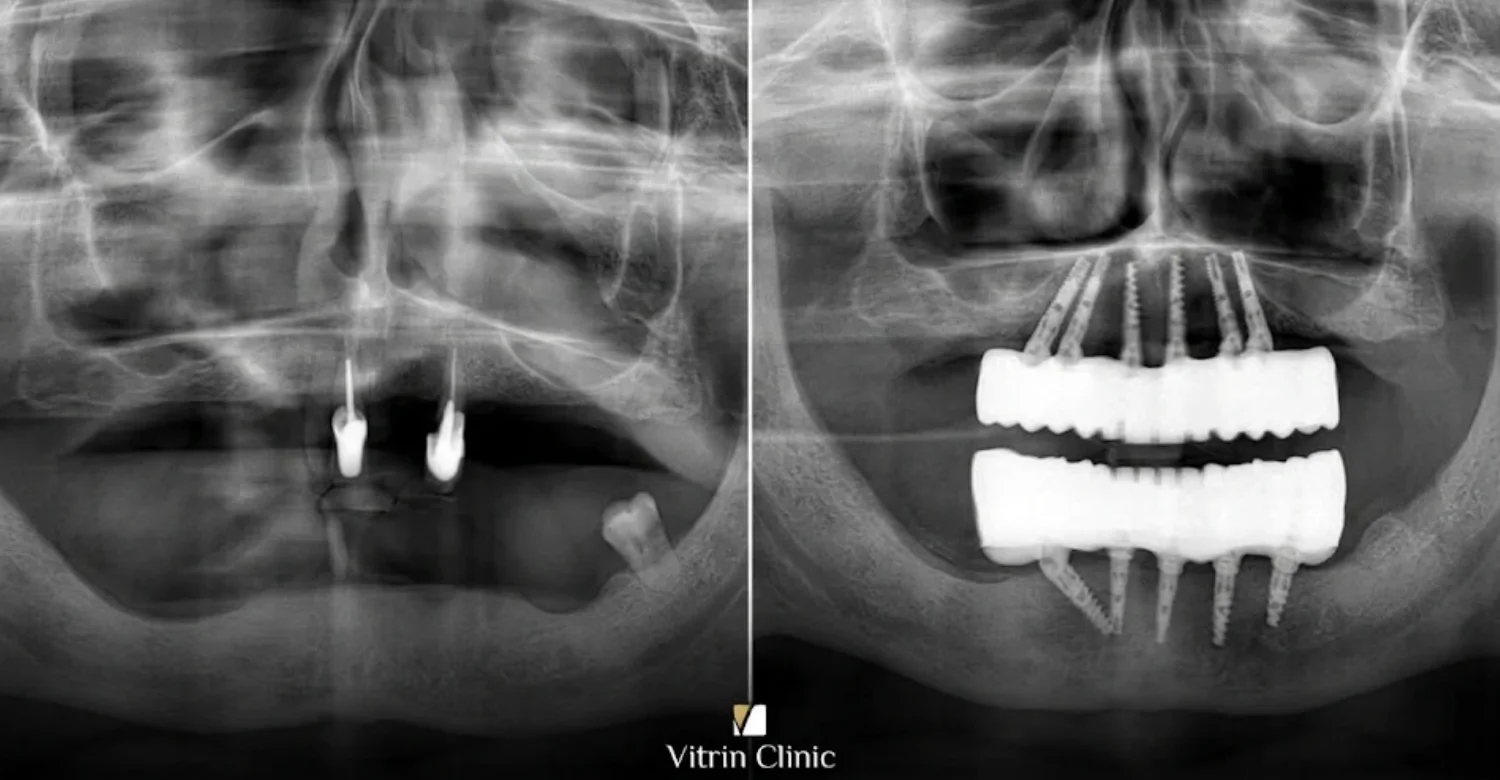
CBCT images appear as greyscale pictures. Dense structures such as teeth, implants, and bone appear white or light grey. Soft tissues appear darker grey, while air spaces such as the sinuses appear black. The software shows thin image slices in different directions alongside a 3D model of the jaws. Metal restorations may create bright streaks. The scanner itself is an open machine with a rotating arm, not an enclosed tunnel.
How Does CBCT Compare With Traditional Dental X-Rays at Vitrin Clinic?
Traditional dental X-rays produce two-dimensional images. They can show tooth roots, bone levels, and selected dental structures. However, overlapping anatomy can make certain measurements difficult. CBCT provides three-dimensional views of the selected region. It can reveal bone width and anatomical relationships more clearly. This additional information generally involves greater radiation exposure than many conventional dental X-rays.
Imaging method | Main information | Common purpose | Main limitation |
Periapical X-ray | Detailed tooth and root images | Examining individual teeth | Two-dimensional image |
Panoramic X-ray | Broad view of both jaws | Initial dental examination | Limited anatomical depth |
CBCT scan | Three-dimensional bone and anatomical views | Selected implant planning cases | Uses ionising radiation |
Medical CT | Detailed cross-sectional images | Selected complex medical or surgical cases | Often involves higher exposure |
Why Might Vitrin Clinic Request Three-Dimensional Imaging Before Implant Surgery?
Three-dimensional imaging may help evaluate proposed implant sites before surgery. It provides information about bone dimensions and nearby anatomical structures. This may reveal limitations that conventional images cannot show clearly. CBCT can also support digital planning and surgical guide design when appropriate. However, imaging complements clinical examination rather than replacing it.
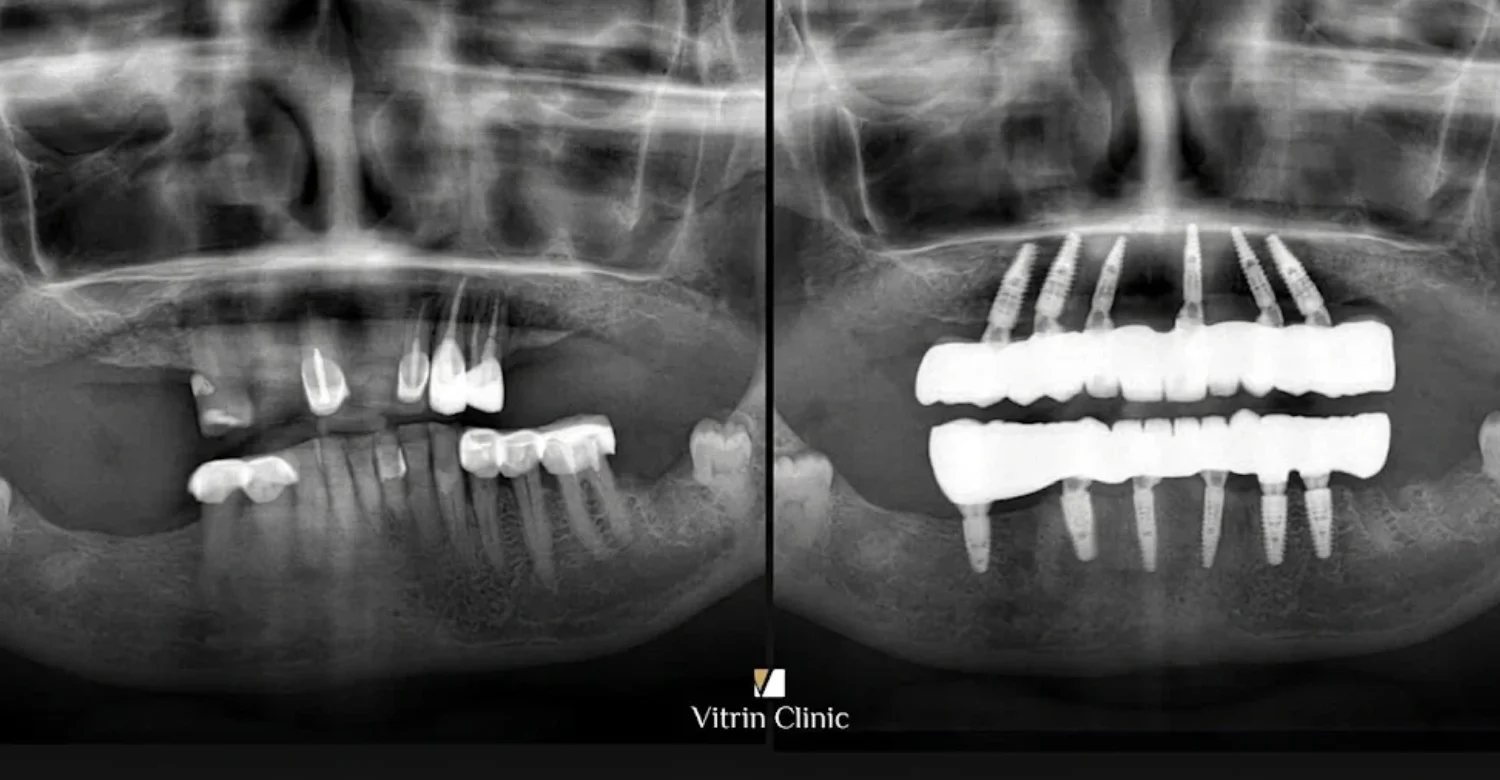
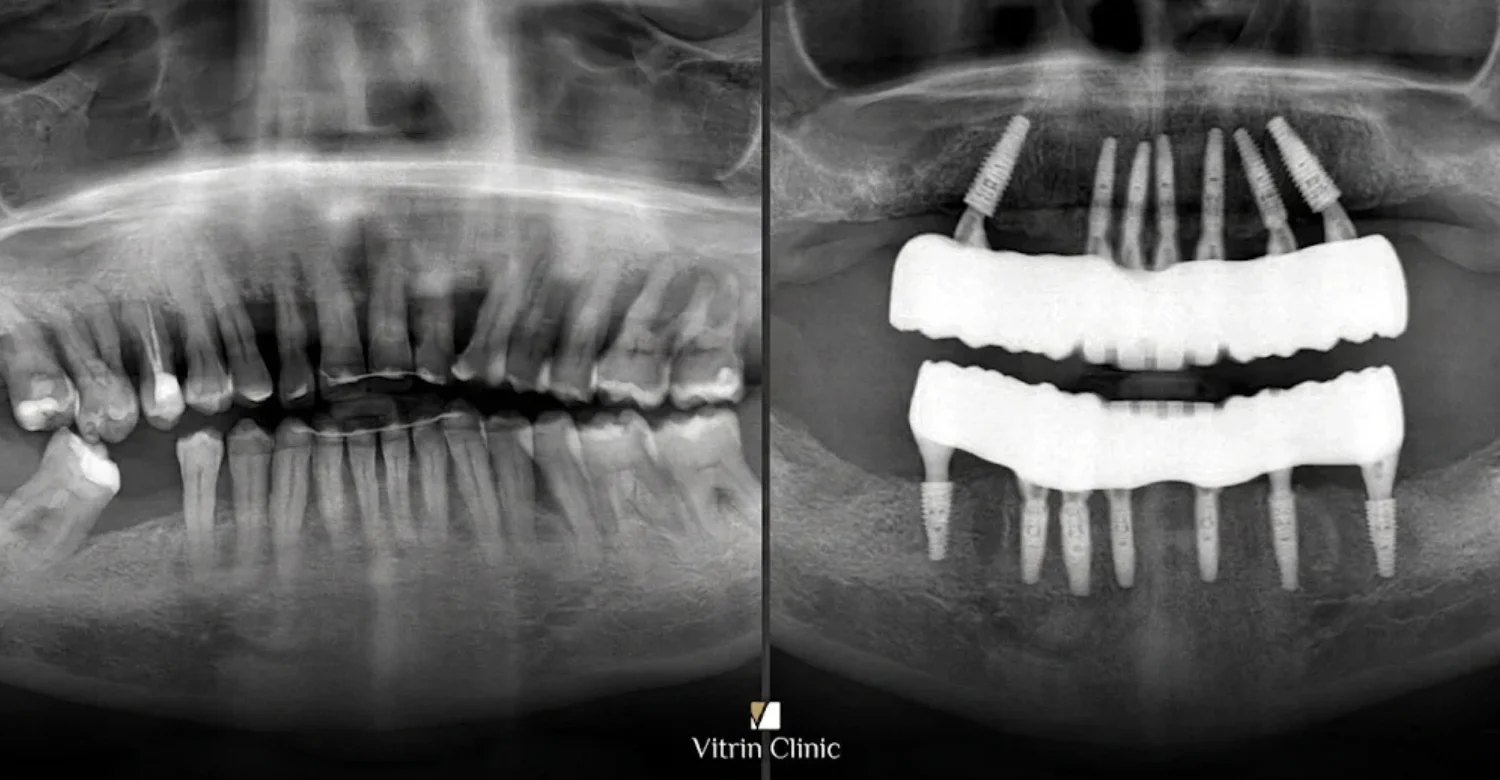
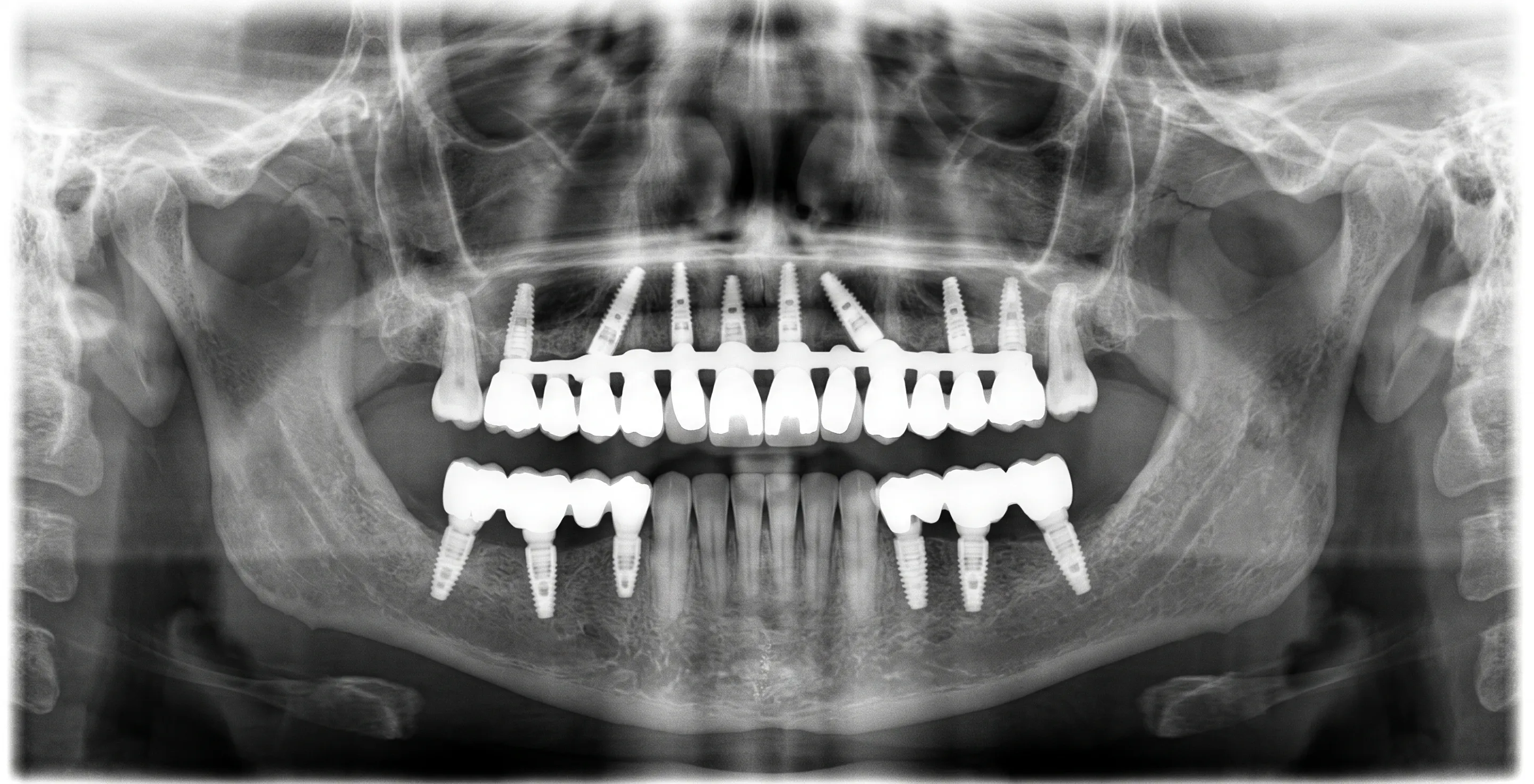
Does Every Vitrin Clinic Patient Need a CBCT Scan Before Dental Implants?
No, imaging decisions should follow an individual clinical examination. A CBCT scan for dental implants is appropriate when its additional information is clinically justified. Conventional images may be sufficient for some preliminary investigations. Vitrin Clinic should recommend further imaging only when it answers a relevant clinical question.
When Can Conventional X-Rays Replace CBCT During Initial Implant Assessment?
Conventional dental X-rays may provide sufficient information during initial examinations. Panoramic images show both jaws and many dental structures. Periapical images provide detailed views of selected teeth and surrounding bone. However, these images cannot reliably show every three-dimensional measurement. Additional imaging may become necessary before surgery.
Which Patients May Benefit Most From CBCT at Vitrin Clinic?
Patients with complex anatomy may benefit from three-dimensional evaluation. This includes people with limited bone volume or previous grafting. Patients with nearby anatomical structures may also need additional imaging. Those considering complex implant rehabilitation may require more detailed planning. The dentist should explain the specific clinical reason.
Does Vitrin Clinic Recommend CBCT for Patients Receiving Multiple Implants?
Multiple implant placement often involves more complex anatomical and restorative planning. Three-dimensional imaging can help evaluate several proposed implant sites. It also shows how implant positions relate to the planned restoration. The required scanning area depends on treatment scope. More implants do not automatically justify unnecessary radiation exposure.
Why Might Vitrin Clinic Request Additional Imaging Before Bone Grafting?
Bone grafting changes the surgical planning requirements. Clinicians need to evaluate the recipient area and available bone. They may also need information about a potential donor site. Three-dimensional imaging can help assess defect dimensions. It may support decisions about graft type and surgical approach.
Is CBCT Necessary Before Full-Mouth Dental Implant Treatment at Vitrin Clinic?
Full-mouth implant treatment frequently requires detailed evaluation of both jaws. Imaging can help assess bone volume, nerve positions, and sinus anatomy. It can also support coordinated planning for multiple implants. The selected field of view should cover the relevant anatomical area. The treating surgeon determines the appropriate imaging protocol.
What Can CBCT Reveal About Your Jawbone Before Vitrin Clinic Places Implants?
A CBCT scan for dental implants provides detailed information about jawbone shape and dimensions. It helps clinicians understand anatomical limitations before selecting implant positions. These findings contribute to surgical planning, but they do not establish suitability alone.
How Does Vitrin Clinic Measure Jawbone Height and Width Using CBCT?
Three-dimensional images allow clinicians to measure jawbone height and width. These measurements help establish available space for implant placement. They also reveal ridge contours and nearby anatomical boundaries. The findings support decisions about implant dimensions and positioning. Measurements require calibrated imaging software and professional interpretation.
Can a CBCT Scan Confirm Whether You Have Enough Bone for Implants?
A CBCT examination helps evaluate whether sufficient bone appears available for the proposed implant. The dentist considers bone height, width, shape, and anatomical limitations. However, imaging alone cannot establish overall surgical suitability. Gum health, medical history, bite forces, and restoration requirements also matter. Additional procedures may be considered when bone volume is insufficient.
How Does Vitrin Clinic Evaluate Bone Quantity Compared With Bone Quality?
Bone quantity describes the available volume of bone. Bone quality relates to its internal structure and mechanical characteristics. Both factors influence implant planning. CBCT can show bone dimensions and structural patterns. However, its grey values cannot reliably provide conventional medical CT bone-density measurements. Clinical findings and other information remain important.
Can CBCT Help Vitrin Clinic Locate the Inferior Alveolar Nerve?
The inferior alveolar nerve travels through a canal inside the lower jaw. It supplies sensation to the lower teeth and related areas. CBCT can help visualise this canal. The dentist evaluates its relationship to proposed implant positions. This information helps plan appropriate surgical clearance and reduce nerve injury risk.
Why Does Vitrin Clinic Examine the Maxillary Sinus Before Upper-Jaw Implants?
The maxillary sinuses are air-filled spaces above the upper back teeth. Their position can limit available bone for upper-jaw implants. CBCT helps examine sinus boundaries and remaining bone height. It may also reveal anatomical variations or certain sinus abnormalities. These findings can influence implant placement or sinus augmentation decisions.
Can CBCT Identify Anatomical Conditions That May Change Your Implant Plan?
Yes, imaging may reveal anatomical variations affecting surgical access or implant positioning. Examples include narrow ridges, undercuts, and sinus septa. It can also identify certain bone abnormalities. Findings requiring further investigation should receive appropriate attention. The dentist considers their clinical relevance before finalising treatment.
How Does CBCT Compare With Other Imaging Options at Vitrin Clinic?
Different imaging methods answer different clinical questions. A CBCT scan for dental implants provides three-dimensional information when conventional images cannot answer important planning questions. The most suitable examination depends on individual diagnostic requirements.
Is CBCT More Informative Than a Panoramic X-Ray for Implant Planning?
Panoramic X-rays capture a broad, two-dimensional view of both jaws. They show teeth, roots, and general bone levels. However, they cannot reliably measure bone width. CBCT provides cross-sectional images and three-dimensional anatomical information. It may therefore be more useful for detailed implant-site evaluation.
Should Vitrin Clinic Use CBCT Instead of Intraoral X-Rays?
Intraoral X-rays focus on selected teeth and surrounding structures. They provide detailed two-dimensional information about roots and local bone levels. CBCT covers a larger selected volume. It provides additional anatomical depth and cross-sectional views. Both methods can contribute to diagnosis and follow-up.
What Is the Difference Between Dental CBCT and Medical CT?
Both technologies use X-rays but employ different imaging systems. Dental CBCT uses a cone-shaped beam for maxillofacial imaging. Medical CT uses different scanning geometry and reconstruction methods. CBCT often involves lower radiation than comparable medical CT examinations. However, exposure varies according to equipment and scanning protocol.
Which Imaging Method Offers the Best Value Before Dental Implants?
The most suitable method depends on the clinical question. Panoramic and intraoral X-rays can support initial evaluation. Three-dimensional imaging may be needed for presurgical anatomical assessment. Medical CT may be appropriate for selected complex conditions. Your dentist should explain why the chosen examination is necessary.
Comparison factor | Conventional X-rays | CBCT |
Image format | Two-dimensional | Three-dimensional |
Bone width evaluation | Limited | More detailed |
Nerve location | Limited visibility | Better anatomical visualisation |
Sinus evaluation | Limited | More detailed |
Radiation exposure | Generally lower | Protocol-dependent and generally higher |
Typical cost | Usually lower | Usually higher |
Clinical role | Initial and focused examinations | Selected advanced planning |
How Does Vitrin Clinic Use CBCT Results to Design Your Implant Treatment?
A CBCT scan for dental implants can translate anatomical findings into practical surgical and restorative decisions. Its value depends on accurate interpretation and integration with clinical information. It should support an individual plan rather than determine treatment independently.
How to Read CBCT for Implants?
Reading a CBCT scan for implant planning requires professional training and specialised software. Dentists usually:
Review the whole scanned volume in axial, coronal, and sagittal views.
Create cross-sectional slices at each proposed implant site.
Measure bone height and width.
Trace the inferior alveolar nerve canal in the lower jaw.
Check the maxillary sinus floor in the upper jaw.
Assess ridge shape, defects, and neighbouring teeth.
Plan virtual implants within the available bone.
Patients can view their own images, but they should not make treatment decisions without professional interpretation.
How Does Three-Dimensional Imaging Help Vitrin Clinic Choose Implant Positions?
The images help clinicians visualise proposed implant sites from different angles. They can consider bone boundaries and nearby anatomical structures. The restorative plan also influences the preferred implant position. This helps coordinate implant placement with the future crown or bridge. Digital planning may support surgical guide production.
Can CBCT Help Vitrin Clinic Select the Correct Implant Dimensions?
Yes, measurements help evaluate suitable implant dimensions. The dentist considers available bone height, width, and anatomical clearance. Implant diameter and length must also suit the restorative design. The largest implant is not necessarily the most appropriate. Final selection requires professional judgement.
Can Your CBCT Results Show Whether You Need Bone Grafting at Vitrin Clinic?
Imaging can reveal areas with limited bone volume. The dentist may consider bone augmentation when existing dimensions are inadequate. Grafting decisions depend on defect size, location, and treatment objectives. Some patients may have alternative implant options. The final decision follows clinical examination and surgical planning.
How Does Vitrin Clinic Evaluate the Need for a Sinus Lift?
The scan shows the relationship between the upper jawbone and maxillary sinus. It helps measure remaining bone beneath the sinus floor. This information can support sinus augmentation decisions. The dentist also evaluates sinus anatomy and relevant health findings. A sinus lift is not automatically required for upper-jaw implants.
Can CBCT Support Guided Implant Surgery at Vitrin Clinic?
Yes, CBCT data can contribute to computer-guided implant planning. The digital dataset may be combined with intraoral scans. Software helps plan implant positions and surgical guide designs. Guides can transfer the digital plan into the surgical setting. However, they require proper design, verification, and clinical supervision.
How Can Implant Position Affect Your Final Crown or Full-Arch Restoration?
Implant position influences the function, appearance, and cleanability of the final restoration. Poor positioning may complicate prosthetic design. It can also affect access for daily hygiene. The surgeon and restorative dentist should coordinate their planning. The intended restoration should guide implant placement whenever possible.
Ready to transform your smile?
Talk to our team and get a personal FREE treatment plan.
What Happens During a CBCT Scan Appointment at Vitrin Clinic?
A CBCT scan for dental implants is generally a straightforward imaging appointment. It usually requires no injections or surgical preparation. The radiographer explains the positioning process before image capture.
How Should You Prepare for Your CBCT Appointment?
Preparation is usually minimal. Follow the imaging centre's specific instructions. You may need to remove jewellery, glasses, dentures, or removable metal objects. Tell the radiographer if pregnancy is possible. Mention previous imaging and relevant medical information. Certain implant-planning examinations may require a localisation stent.
What Happens Inside the CBCT Scanner?
The radiographer positions your head carefully inside the scanner. You may sit or stand depending on the machine. A support helps keep your head still. The imaging unit rotates around your head while collecting images. Remain still during image capture. No instruments enter your mouth.
How Long Does Vitrin Clinic's CBCT Imaging Appointment Take?
Image acquisition usually takes less than a minute or a few minutes. The duration depends on equipment and scanning protocol. Positioning and preparation require additional time. The complete appointment may take approximately 10–15 minutes. More complex examinations can take longer. Confirm the expected duration with the imaging provider.
Is a CBCT Scan Painful or Uncomfortable?
No, the imaging process itself is painless. You do not receive an injection for a routine scan. You simply remain still while the machine rotates. Some patients may find positioning equipment uncomfortable. Tell the radiographer if standing or maintaining a particular position is difficult.
When Will Vitrin Clinic Review Your CBCT Results?
Your dentist may review the images after acquisition. More complex examinations may require specialist reporting. Timing depends on image processing and clinical arrangements. Ask whether the fee includes interpretation and a written report. Receiving image files does not automatically mean they have been fully reviewed.
How Is a CBCT Scan Interpreted?
A CBCT scan is interpreted by a trained dentist, oral surgeon, or oral and maxillofacial radiologist. The clinician should review the entire scanned volume, not only the implant area. This helps identify incidental findings such as sinus changes, cysts, or other bone abnormalities. Findings are compared with the clinical examination, medical history, and other images. Some examinations include a written radiology report. Ask who will interpret your scan and whether reporting is included.
What Happens After Your CBCT Images Have Been Analysed?
Your dentist combines imaging findings with examination results and medical history. The team then discusses suitable treatment options. These may include implant placement, bone grafting, or alternative rehabilitation. You should receive explanations of relevant findings and limitations. Ask questions before consenting to surgery.

Is a CBCT Scan Safe Before Dental Implants at Vitrin Clinic?
A CBCT scan for dental implants uses ionising radiation. It should only be performed when its expected diagnostic benefit justifies exposure. Appropriate scanning protocols help avoid unnecessary radiation.
How Much Radiation Does a Dental CBCT Scan Use?
Radiation exposure varies considerably between scanners and protocols. The selected field of view and exposure settings influence the dose. Small-area examinations generally use less radiation than larger scans. No single dose applies to every patient. Ask your imaging provider about the protocol used.
Does CBCT Expose You to More Radiation Than Conventional Dental X-Rays?
Generally, CBCT involves more radiation than an individual conventional dental X-ray. However, the difference depends on equipment, settings, and examination size. CBCT can provide information that two-dimensional images cannot show. Dentists should balance diagnostic value against radiation exposure.
How Does Vitrin Clinic Help Avoid Unnecessary Radiation Exposure?
Clinicians should follow recognised radiation protection principles. These include:
Justifying every examination.
Selecting the smallest suitable field of view.
Using appropriate exposure settings.
Avoiding unnecessary repeat scans.
Reviewing existing diagnostic images.
Applying quality assurance procedures.
The objective is sufficient diagnostic information with the lowest reasonably achievable exposure.
Can Pregnant Patients Have a CBCT Scan Before Implant Treatment?
Pregnancy should always be discussed before imaging. A dentist must determine whether the examination is clinically necessary. Non-urgent imaging may be postponed when appropriate. If imaging is essential, the clinical team should follow relevant radiation protection requirements. Always inform the radiographer about possible pregnancy.
Should Vitrin Clinic Repeat Your CBCT Scan Before Implant Surgery?
A repeat scan is not automatically necessary. Existing images may remain useful when complete and diagnostically adequate. However, changes in anatomy or treatment requirements may justify new imaging. The dentist should review original files before requesting another examination.
What Are the Limitations of CBCT Imaging at Vitrin Clinic?
Although CBCT provides valuable anatomical information, it cannot answer every clinical question. Understanding its limitations helps patients make informed imaging decisions. Its findings must always be interpreted within the wider clinical picture.
Can CBCT Show Gum Disease and Other Soft Tissue Conditions?
CBCT is primarily designed to show mineralised structures, particularly bone and teeth. Its ability to distinguish soft tissues is limited. It cannot replace clinical examination of gums, muscles, and other oral tissues. Additional investigations may be necessary when soft tissue abnormalities are suspected.
How Can Metal Crowns and Implants Affect CBCT Image Quality?
Metal restorations can create image artefacts. These may appear as bright streaks, dark areas, or distortions. Dental implants and certain restorations can obscure nearby structures. Clinicians must consider these limitations when interpreting images. Alternative imaging or specialist review may sometimes be appropriate.
Can I Do a CT Scan With Dental Implants?
Yes. Having dental implants does not normally prevent CT or CBCT imaging. The scan does not damage titanium implants. However, metal can create bright streaks or shadows that make nearby structures harder to see. Tell the radiographer about implants, crowns, and other metal restorations before the scan. MRI scans are also generally possible with titanium implants, but always inform the MRI team beforehand.
Can Vitrin Clinic Use CBCT to Measure Bone Density Precisely?
CBCT can display variations in bone appearance and structure. However, its grey values are not reliably interchangeable with medical CT Hounsfield units. Scanner settings and reconstruction methods influence these measurements. Clinicians should not rely on CBCT grey values alone to determine bone density.
Does a CBCT Scan Guarantee Successful Implant Surgery?
No imaging examination can guarantee successful treatment. Implant outcomes depend on several factors. These include bone conditions, surgical technique, medical history, oral hygiene, and restoration design. Imaging reduces uncertainty but cannot eliminate surgical risks. Patients should receive realistic explanations of expected benefits and limitations.
Why Must Vitrin Clinic Combine CBCT Results With Clinical Examination?
Images provide anatomical information but cannot show the complete clinical picture. The dentist must examine teeth, gums, bite, and oral tissues. Medical history and medication use also influence treatment suitability. Combining these findings supports more responsible treatment decisions.
What Are the Main Advantages and Disadvantages of CBCT?
Advantages
Provides three-dimensional anatomical information.
Helps evaluate bone dimensions.
Shows important anatomical structures.
Supports digital implant planning.
Can assist guided surgery planning.
Disadvantages
Uses ionising radiation.
Costs more than many conventional X-rays.
Provides limited soft tissue contrast.
Can contain metal artefacts.
Requires trained interpretation.
Possible side effects: The scan itself is painless and does not normally cause immediate physical symptoms. Its main consideration is exposure to ionising radiation. The risk from an individual examination is generally low. However, unnecessary exposure should always be avoided.
Recovery
Routine imaging normally requires no recovery period or pain-relief medication.
Clinical Note
A technically detailed scan is useful only when its findings answer a relevant clinical question.
Dr. Rifat's Opinion
Three dimensional imaging should support treatment decisions, not replace professional judgement. Dentists must understand anatomical findings and restorative requirements together.
Can Vitrin Clinic Review Your Existing CBCT Scan Before You Travel to Turkey?
Existing imaging may be suitable for treatment planning when it meets clinical requirements. International patients should share original digital files before travelling. The treating dentist must confirm whether these records provide sufficient information.
Can You Send Your Previous CBCT Scan to Vitrin Clinic Online?
Yes, you can ask Vitrin Clinic to review existing imaging during your initial consultation. Send the original digital dataset whenever possible. Screenshots and photographs may not provide sufficient information. The clinical team must confirm whether the files are suitable for planning.
How Recent Must Your CBCT Images Be for Vitrin Clinic?
There is no universal expiry date for dental imaging. Suitability depends on changes in your oral condition and treatment requirements. Recent extractions, infections, grafting, or other procedures may affect planning. Your dentist decides whether existing images remain adequate.
What Are DICOM Files and Why Should You Send Them to Vitrin Clinic?
DICOM means Digital Imaging and Communications in Medicine. It is a standard format for storing and exchanging medical imaging information. CBCT examinations are commonly supplied as DICOM datasets. These files preserve original image information for professional review. Compatible software can reconstruct different anatomical views.
How to View CBCT Images?
CBCT images are usually provided as DICOM files on a USB drive, CD, or download link. Viewing them requires DICOM viewer software. Many imaging centres supply a free viewer with the files, and free general DICOM viewers are also available. The software lets you scroll through image slices and rotate the 3D model. Opening the files does not replace professional interpretation. Share the original files with your dentist for review.
How to Read CBCT PDF?
A CBCT PDF usually contains a written report and selected screenshots rather than the full scan. It may include images of specific areas, measurements, and the radiologist's findings. Read the findings and conclusion sections for the main results. Ask your dentist to explain unfamiliar terms. A PDF cannot be scrolled or measured like the original dataset. For implant planning, send the original DICOM files as well.
Can Vitrin Clinic Review Your CBCT Images Before Your Arrival?
Yes, your dentist may review suitable digital files remotely. This can help identify potential treatment requirements before arrival. However, remote review cannot replace clinical examination. Final treatment decisions may change after examining your mouth in person.
When Might Vitrin Clinic Request a New CBCT Scan in Istanbul?
A new examination may be necessary when existing files are incomplete or unsuitable. Changes in bone anatomy may also justify updated imaging. The required scanning area may differ from previous examinations. Your dentist should explain why another scan is necessary before proceeding.
Which Documents Should You Send Before Your Vitrin Clinic Consultation?
Prepare the following information:
Original DICOM files, if available.
Previous panoramic and intraoral X-rays.
Recent dental treatment records.
Medical history and current medicines.
Information about missing teeth.
Previous implant or grafting records.
Treatment goals and expected travel availability.
This information helps the clinical team understand your situation before arranging an appointment.
How Much Does a CBCT Scan Cost at Vitrin Clinic Compared With the USA and UK?
Imaging prices depend on the scanning area, provider, reporting, and location. The following figures are indicative private-market references supplied for comparison. They are not guaranteed quotations or national averages.
What Is the CBCT Scan Price in Turkey Compared With Vitrin Clinic's Quotation?
The supplied Turkish listings show starting prices around $ 4,729–5,238. These are marketplace starting figures, not a verified national average. No separate confirmed Vitrin Clinic CBCT fee was supplied. Ask whether imaging is included in your treatment quotation or charged separately.
Digital File Delivery (DICOM)
Indicative price: $0–500
Imaging cost comparison
Indicative price: $0–500
Raw 3D scan files for remote review
Transferable to home dental providers
Vitrin Clinic CBCT Scan
Indicative price: $150–350
Imaging cost comparison
Indicative price: $150–350
In-clinic 3D cone-beam dental imaging
Often bundled in full treatment packages
Additional Specialist Report
Indicative price: $1,500–2,000
Imaging cost comparison
Indicative price: $1,500–2,000
Formal radiological or specialist evaluation
Detailed diagnostic documentation
Turkey Marketplace Listings
Indicative price: $4,729–5,238
Imaging cost comparison.
Indicative price: $4,729–5,238
Third-party aggregator listing benchmark
Reflects bundled hospital/diagnostic tiers
How Much Does a CBCT Scan Cost in the USA Compared With Turkey?
The supplied private-market reference range in the USA is approximately 150–400. The Turkish marketplace figures use a different currency and may involve different services. A direct comparison requires current exchange rates and equivalent scan specifications. Reporting and image delivery may also affect the final price.
USA
Indicative CBCT price: 150–400
Country or provider
Indicative CBCT price: 150–400
Important consideration: Private-market reference
Often billed separately from surgical fees
Vitrin Clinic
Indicative CBCT price: 150–350
Country or provider
Indicative CBCT price: 150–350
Important consideration: Indicative reference; confirm whether the scan is included in the treatment package
3D cone-beam imaging for implant planning
Turkey
Indicative CBCT price: $4,729–5,238
Country or provider
Indicative CBCT price: $4,729–5,238
Important consideration: Supplied marketplace listings
Reflects third-party bundled listing ranges
What Is the CBCT Scan Price in the UK Compared With Turkey?
The supplied UK private-price references range from approximately $85–$292. Different scanning areas can have different fees. Specialist reporting may involve additional charges. Confirm whether image interpretation is included before booking.
UK
Indicative CBCT price: $85–$230
Country or provider
Indicative CBCT price: $85–$230
UK private dental imaging benchmark
Formal radiology reports often priced separately
Vitrin Clinic
Indicative CBCT price: 150–350
Country or provider
Indicative CBCT price: 150–350
In-clinic 3D cone-beam scan for implant planning
Often included in full-arch treatment packages
Turkey Marketplace Listings
Indicative CBCT price: $4,729–5,238
Country or provider
Indicative CBCT price: $4,729–5,238
Third-party medical marketplace listing range
Reflects bundled hospital/diagnostic packages
Which Factors Make CBCT Imaging More Expensive at Different Clinics?
Several factors can influence the final imaging fee:
Small-area, single-jaw, or dual-jaw scanning.
Selected field of view.
Specialist interpretation and reporting.
Digital file delivery.
Additional implant-planning services.
Whether imaging forms part of a treatment package.
Always confirm what the quoted imaging fee includes.
Does Vitrin Clinic Include CBCT Imaging in Its Dental Implant Packages?
The supplied Vitrin Clinic implant information lists three-dimensional imaging and consultation as included without charge. Package conditions may change. Confirm current availability, exclusions, and contractual terms in writing before accepting a treatment plan.
Is It Cheaper to Pay for CBCT Separately or Choose a Vitrin Implant Package?
The answer depends on the complete treatment quotation. A separate scan fee may be lower than a package price. However, packages can include surgery, temporary teeth, accommodation, and transfers. Compare identical services before deciding. Do not treat an included scan as evidence that the entire package is cheaper.
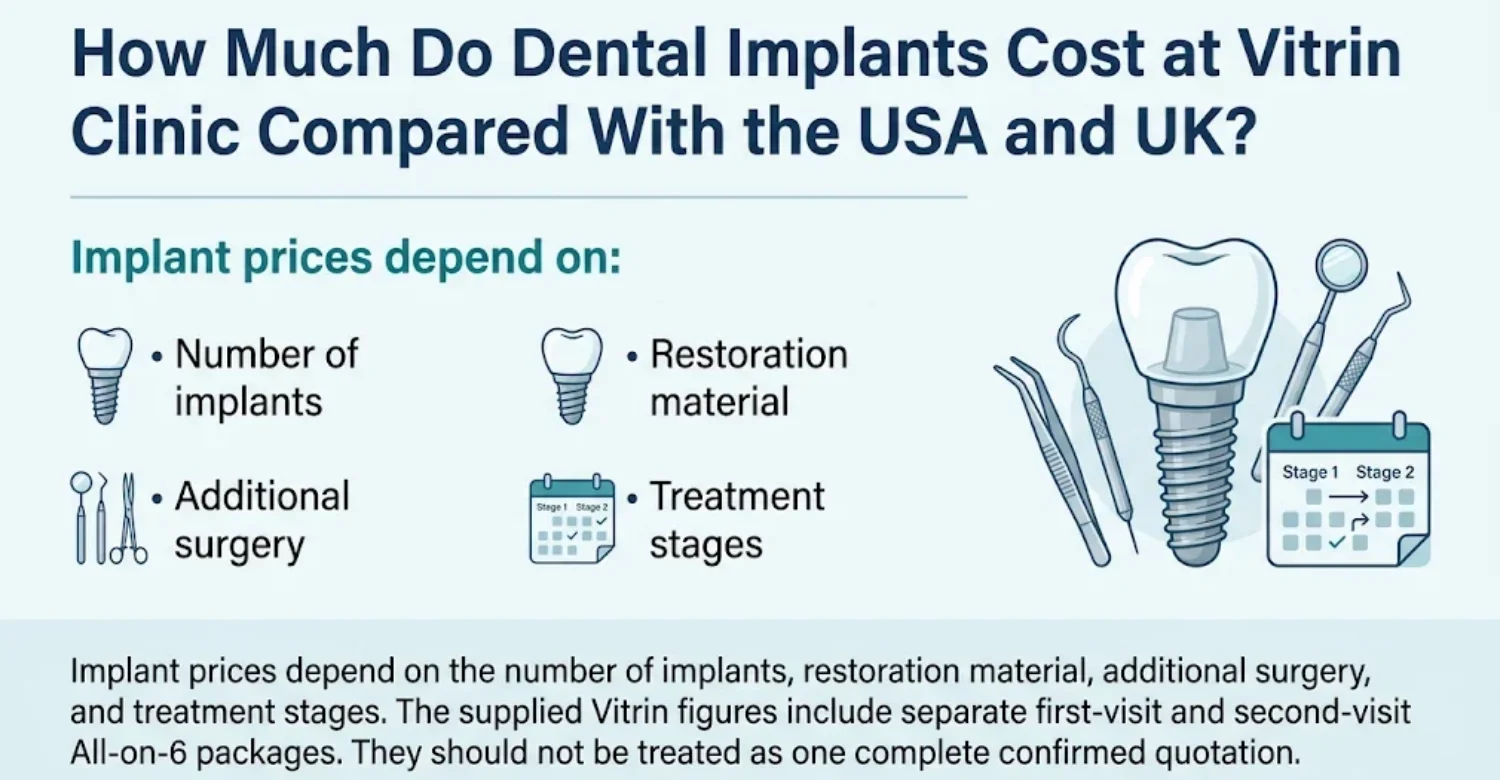
How Much Do Dental Implants Cost at Vitrin Clinic Compared With the USA and UK?
Implant prices depend on the number of implants, restoration material, additional surgery, and treatment stages. The supplied Vitrin figures include separate first-visit and second-visit All-on-6 packages. They should not be treated as one complete confirmed quotation.
What Is the Vitrin Clinic All-on-6 First-Visit Price Compared With Overseas Costs?
The supplied Vitrin Clinic first-visit All-on-6 package starts at $3,600. Its listed second-visit zirconia crown package costs $4,200. The first-visit and second-visit packages have different inclusions. Overseas prices also vary according to restoration scope and clinical requirements.
UK
Combined estimated cost, per arch: $14,700–$29,900
All-on-6 treatment
First-visit treatment, per arch: $12,700–$25,400
Second-visit zirconia restoration: $2,000–$4,500
Combined estimated cost, per arch: $14,700–$29,900
Vitrin Clinic
Combined estimated cost, per arch: $7,800
All-on-6 treatment
First-visit treatment, per arch: From $3,600
Second-visit zirconia restoration: $4,200 listed package
Combined estimated cost, per arch: $7,800
US
Combined estimated cost, per arch: 23,000–41,000
All-on-6 treatment
First-visit treatment, per arch: 20,000–35,000
Second-visit zirconia restoration: 3,000–6,000*
Combined estimated cost, per arch: 23,000–41,000
How Does the Vitrin Clinic All-on-6 Package Compare With USA Treatment Costs?
The supplied USA reference for All-on-6 ranges from 20,000–35,000 per arch. The two listed Vitrin stages total $7,800. A meaningful comparison requires matching implant systems, restoration materials, and surgical inclusions.
Combined Listed Vitrin Stages
Indicative price: $7,800
Comparison
Indicative price: $7,800
Combines first-visit ($3,600) & second-visit ($4,200)
Save $12,200–$27,200 vs. USA reference
Vitrin First-Visit Package
Indicative price: $3,600
Comparison
Indicative price: $3,600
✓Initial surgical placement of 6 implants
Includes 3D CBCT scan & provisional teeth
Vitrin Second-Visit Package
Indicative price: $4,200
Comparison
Indicative price: $4,200
Final fixed zirconia arch restoration
Fitted after 3–6 months of osseointegration
USA All-on-6
Indicative price: 20,000–35,000
Comparison
Indicative price: 20,000–35,000
US private-market full-arch benchmark
Significantly higher single-arch investment
How Does Vitrin Clinic Compare With Private All-on-6 Treatment in the UK?
The supplied UK reference ranges from 12,700–25,400 per arch. The listed Vitrin first and second stages total $7,800. However, these figures may represent different treatment inclusions. Request itemised quotations before calculating potential savings.
Difference Before Additional Costs
Indicative price: 4,900–17,600
Comparison
Indicative price: 4,900–17,600
Calculated before flights, extra nights & add-ons
Substantial net savings on single-arch care
Vitrin First and Second Stages (Combined Treatment Cost)
Indicative price: $7,800
Comparison
Indicative price: $7,800
Covers both implant surgery & final restoration
Complete two-visit All-on-6 arch total
UK All-on-6
Indicative price: 12,700–25,400
Comparison
Indicative price: 12,700–25,400
UK private-market full-arch benchmark
Higher baseline domestic treatment expenditure
What Is Included in Vitrin Clinic's Listed All-on-6 Packages?
The supplied first-visit package includes five hotel nights, VIP transfers, temporary teeth, and extractions. The listed second-visit restoration package includes seven hotel nights, flights, and VIP transfers. Confirm current availability and exact contractual inclusions. Ask whether flights, accommodation, and transfers apply to every patient.
What Could Increase the Final All-on-6 Treatment Cost at Vitrin Clinic?
The final quotation may depend on:
Implant system and components.
Number and complexity of extractions.
Bone grafting or sinus augmentation.
Temporary and permanent restoration materials.
Diagnostic imaging and specialist involvement.
Additional medication or clinical procedures.
Extra accommodation nights and travel changes.
Additional visits or laboratory requirements.
Request a written breakdown before accepting the proposed treatment.
What Other Dental Treatment Costs Should You Compare Before Travelling to Vitrin Clinic?
Patients should consider the wider cost of dental care, not implant prices alone. The following figures are general references supplied for comparison. They are not confirmed Vitrin Clinic tariffs.
How Do Common Dental Treatment Prices Compare in the USA, UK, and Turkey?
UK
From $40
UK private dental benchmark
Examination and X-rays: $40–$120 plus imaging
Filling: $80–$200
Root canal: $200–$800
Simple extraction: $70–$250
Dental abscess treatment: $100–$500
Turkey
From 30
General & urgent dental care
Examination and X-rays: 30–100
Filling: 40–120
Root canal: 100–250
Simple extraction: 50–150
Dental abscess treatment: 100–300
US
From 50
US private dental benchmark
Examination and X-rays: 50–350
Filling: 90–450
Root canal: 500–1,500
Simple extraction: 75–300
Dental abscess treatment: 604–1,048
Why Can the Same Dental Procedure Cost Different Amounts at Vitrin Clinic and Overseas?
Prices can reflect different treatment plans and materials. Implant systems, laboratory work, surgical complexity, and restoration design influence costs. Some quotations include imaging and temporary teeth. Others charge separately for these services. Compare complete clinical plans rather than headline prices.
Should You Compare Individual Implant Prices With All-on-6 Packages?
No, these represent different treatment scopes. An individual implant quotation may exclude the crown and additional procedures. An All-on-6 package generally involves full-arch rehabilitation. Compare the same number of implants, restorations, and services. Ask whether temporary and permanent teeth are included.
What Should an Itemised Vitrin Clinic Quotation Include?
Quotation component | What should be specified? |
Clinical examination | Consultation and diagnostic review |
Imaging | X-rays and CBCT, if required |
Implant system | Manufacturer and components |
Implant surgery | Number and placement |
Additional procedures | Grafting, sinus lift, extractions |
Temporary restoration | Material and fitting |
Permanent restoration | Material and number of teeth |
Accommodation | Hotel category and nights |
Transfers | Airport and clinic transport |
Follow-up | Reviews and communication |
Exclusions | Extra procedures and additional visits |
Ready to transform your smile?
Talk to our team and get a personal FREE treatment plan.
How Can You Compare Vitrin Clinic's Digital Planning With Other Implant Clinics?
Digital planning can involve different technologies and clinical workflows. Patients should compare the purpose of each technology, not simply the number of devices advertised. The important question is whether the information improves individual treatment planning.
Does Vitrin Clinic Use CBCT and Intraoral Scanning for the Same Purpose?
No, these technologies capture different information. CBCT displays three-dimensional anatomical structures, including bone. Intraoral scanners capture digital impressions of visible teeth and oral surfaces. They can complement each other during treatment planning. Neither technology replaces clinical examination.
How Does Digital Smile Design Differ From CBCT Imaging?
Digital Smile Design focuses on visualising proposed restorative changes. CBCT examines anatomical structures, including jawbone and surrounding areas. The technologies answer different clinical questions. They may contribute to coordinated planning when both are appropriate.
What Should You Ask Vitrin Clinic About Its Digital Implant Workflow?
Ask which diagnostic technologies your treatment requires. Confirm whether CBCT, intraoral scanning, and digital planning are included. Request an explanation of how the findings affect implant positioning. Ask whether a surgical guide is planned and clinically appropriate.
Is a Clinic Offering More Digital Technology Always the Better Choice?
No, the number of technologies does not establish treatment quality. Appropriate selection and professional interpretation matter more. Patients should review the clinical plan, implant system, restoration design, and aftercare. Technology should address a specific treatment need.
What Should You Expect During Your Dental Implant Journey at Vitrin Clinic?
The treatment journey involves initial information gathering, clinical examination, diagnostic imaging, surgery, and follow-up. Each stage depends on individual treatment requirements. International patients should understand the proposed sequence before booking travel.
What Should You Send Vitrin Clinic Before Your First Consultation?
Send recent dental photographs, existing X-rays, and relevant treatment records. Include your medical history and current medicines. Mention previous implant procedures, extractions, or bone grafts. Provide your expected travel dates and treatment objectives.
How Do You Receive Preliminary Treatment Recommendations From Vitrin Clinic?
The team reviews your submitted information and discusses potential treatment options. You may receive a preliminary treatment plan and estimated costs. These recommendations can change following clinical examination and imaging. Ask for clarification about proposed additional procedures.
What Happens During Your First Clinical Examination in Istanbul?
The dentist reviews your medical history and examines your mouth. Teeth, gums, oral tissues, and bite relationships are considered. Existing restorations and missing teeth are evaluated. Additional diagnostic examinations are arranged when clinically necessary.
When Are CBCT Imaging and Digital Scans Performed?
Imaging is performed when the clinical examination identifies a diagnostic need. CBCT may provide additional anatomical information for implant planning. Intraoral scanning records dental surfaces and bite relationships. The dentist determines which technologies are appropriate.
How Does Vitrin Clinic Confirm Your Final Implant Treatment Plan?
The final plan follows examination and diagnostic findings. It explains proposed implant positions and restoration requirements. Additional procedures and possible alternatives should also be discussed. Understand the risks, costs, and treatment stages before consenting.
How Are Implant Appointments Organised During Your Stay in Istanbul?
Appointments depend on surgical complexity and planned treatment stages. Your schedule may include examination, imaging, surgery, and postoperative reviews. Laboratory work may also require coordinated appointments. Allow sufficient time for clinical checks before travelling home.
How Is Your Healing Reviewed After Returning Home?
Follow-up arrangements should be agreed before departure. Patients may need remote discussions and examinations by a local dentist. Photographs can help communicate visible changes but cannot replace clinical examination. Report increasing pain, swelling, bleeding, or other concerning symptoms promptly.


What Should You Ask Vitrin Clinic Before Booking CBCT and Dental Implant Treatment?
International patients should understand the clinical and financial arrangements before travelling. Clear questions help prevent misunderstandings about imaging, treatment stages, and package inclusions.
Which Questions Should You Ask About Your CBCT Scan?
Why is this examination necessary?
Which anatomical structures need evaluation?
What scanning area is required?
Will the images change my treatment plan?
Does the price include specialist reporting?
Can I receive the original digital files?
Are alternative imaging methods sufficient?
Which Questions Should You Ask About Vitrin Clinic's Implant Prices?
Does the quotation include the implant components?
Are temporary teeth included?
What material is used for permanent restorations?
Are extractions and bone grafting included?
Is CBCT imaging included?
How many hotel nights are provided?
Are flights and transfers included?
What additional costs might arise?
Are further visits required?
Should You Request Copies of Your Dental Imaging and Treatment Records?
Yes, requesting your diagnostic records is practical. Ask for the original DICOM dataset and any written report. Keep copies of previous X-rays and treatment records. These documents can support future consultations and follow-up care.
Why Should Your Vitrin Clinic Treatment Plan Explain Every Proposed Procedure?
A useful treatment plan connects imaging findings with practical decisions. It should explain bone limitations and relevant anatomical structures. It should also identify additional procedures and possible alternatives. Patients should understand the reasons behind proposed treatment before giving consent.
What Is the Best Next Step for Patients Considering Dental Implants at Vitrin Clinic?
A CBCT examination can provide valuable anatomical information for individual implant planning. However, it should always have a clear clinical justification. The right imaging method depends on your examination, existing records, and treatment requirements.
If you are considering dental implants in Istanbul, gather your existing dental records first. Share your medical history and recent X-rays with Vitrin Clinic. You can request a FREE Digital Treatment Plan before travelling. Ask whether CBCT is necessary and whether imaging is included in your quotation. Confirm implant components, restoration materials, package inclusions, and follow-up arrangements in writing.
A well-explained treatment plan should connect diagnostic findings with your clinical needs. It should also provide realistic costs and clear treatment stages. Your final decision should follow an individual clinical examination and informed discussion.
Reference

Medically reviewed by
Dr. Rifat AlsamanDr. Rifat Alsaman has more than 5 years of clinical experience in dentistry and currently serves as the Head of the Medical Team at Vitrin Clinic. He is dedicated to providing exceptional patient care, overseeing treatment planning, and ensuring the highest clinical standards across the team. His expertise, attention to detail, and commitment to continuous professional development have helped countless patients achieve healthier, more confident smiles.
More in Dental Treatments
View all 19 min readIs It Possible to Get Dental Implants If I Smoke?Dental implants for smokers are possible in many cases. Yes, you can usually get dental implants if you smoke. Smoking does not automatically rule you out of treatment.
 18 min readCan I Get Dental Implants in Turkey If I Have Gum Disease?Dental implants with gum disease are possible for many patients, but timing matters. Many people with a history of gum disease can get implants, provided the condition is treated and stabilized first.
 47 min readWhat Makes You Eligible for Immediate Dental Implants?Immediate dental implant eligibility depends on bone availability, gum health, infection control, and initial implant stability.
 22 min readWill I Need a Bone Graft Before Getting Dental Implants, or Can I Avoid It?Do I need bone graft for dental implant treatment? Many patients ask this when planning to replace a missing tooth. The honest answer is: not always. Some people have enough healthy jawbone for direct implant placement.
Still have a question?
Our patient coordinators answer every day of the week: before, during and long after your treatment.