Can Multiple Root Canal Treatments Be Completed in One Appointment?
Having several painful or damaged teeth does not always require separate dental visits.

Having several painful or damaged teeth does not always require separate dental visits. Multiple root canals one appointment may be possible when clinical conditions allow. The dentist must consider infection, root anatomy, medical history, and available treatment time. Combining procedures can reduce travel and appointment demands. However, it does not automatically improve treatment outcomes. At Vitrin Clinic, scheduling should follow individual clinical examinations and diagnostic findings. Each tooth must independently qualify for root canal treatment.
Key Takeaways
Multiple root canals one appointment may be suitable for selected patients, but every tooth requires an independent diagnosis.
The number of teeth treated depends on root anatomy, infection severity, restorability, medical history, and patient comfort.
Two or more straightforward root canals may be completed together when sufficient clinical time is available.
Complex anatomy, persistent infection, retreatment, or patient fatigue may make separate appointments more appropriate.
Clinical research does not establish single-visit treatment as universally superior to multiple-visit treatment.
Root canal treatment addresses infected or irreversibly inflamed pulp, but not every painful or deeply decayed tooth needs this procedure.
Recovery may involve temporary tenderness, biting sensitivity, and jaw soreness. Worsening pain, swelling, or systemic symptoms require prompt attention.
Vitrin Clinic should confirm treatment requirements, appointment schedules, and itemised costs after clinical examination, with clear restoration and follow-up arrangements for international patients.
Ready to transform your smile?
Talk to our team and get a personal FREE treatment plan.
Can You Have Multiple Root Canals One Appointment at Vitrin Clinic?
Yes, selected patients may receive several root canal treatments during one appointment. Vitrin Clinic must examine every affected tooth before confirming suitability. The number of teeth alone does not determine the treatment schedule. Infection severity, canal anatomy, anaesthesia, and restorative requirements also matter. Available clinical time and patient comfort influence the decision. The dentist should explain whether combining procedures is appropriate. A separate appointment may remain necessary when clinical conditions require additional treatment stages.
Can Vitrin Clinic Treat Two Root Canals During the Same Appointment?
Two root canal procedures may be completed together when both teeth are suitable. The dentist examines each tooth independently before confirming the schedule. Multiple root canals one appointment can be practical for straightforward cases. Longer treatment time may still be necessary. Complex anatomy or active infection may require separate sessions. Patient comfort also influences the final decision.
How Many Teeth Can Be Treated During One Root Canal Appointment?
There is no universal maximum number of teeth per appointment. The dentist considers tooth location, canal anatomy, complexity, and patient comfort. Two straightforward teeth may require less time than several molars. Four teeth could demand substantial clinical time. Multiple root canals one appointment should never follow a fixed numerical target. Treatment quality must determine the schedule.
Can Four or More Root Canals Be Completed in One Visit?
Four or more teeth may sometimes receive treatment during one carefully planned visit. However, individual clinical findings determine suitability. Every tooth requires adequate cleaning, disinfection, shaping, and sealing. Rushing procedures to meet a schedule can compromise treatment quality. Staged appointments may provide better control in extensive cases. The dentist should explain the reasons for the recommended approach.
Does Vitrin Clinic Recommend One Appointment or Multiple Sessions?
Neither approach is automatically better for every patient. Vitrin Clinic should recommend a schedule according to examination findings and treatment complexity. Multiple root canals one appointment may suit selected cases. Separate appointments may provide greater flexibility for complex anatomy or infection management. Patient comfort and adequate clinical time remain priorities. The decision should never depend on convenience alone.
Is It Normal to Have Two Appointments for Root Canal Treatment?
Yes, many root canal treatments are completed over two appointments. The first visit usually involves removing damaged pulp, cleaning the canals, and placing medication with a temporary filling. The second visit completes the cleaning and seals the canals. Two appointments are common when infection is present, anatomy is complex, or more treatment time is needed. A two-visit schedule does not mean treatment is going wrong.



Why Might You Need Multiple Root Canal Treatments?
Several teeth may require root canal treatment when their pulps become irreversibly inflamed or infected. Dental pulp contains nerves, blood vessels, and connective tissue. Damage can develop independently in different teeth. Deep decay, cracks, previous restorations, and trauma may contribute. Each affected tooth requires an individual diagnosis. Treating several teeth together is appropriate only when each independently needs root canal treatment.
Is It Normal to Need Multiple Root Canals?
Yes, some patients need root canal treatment in more than one tooth. This often happens when deep decay, cracks, large old restorations, or trauma affect several teeth. However, needing multiple root canals does not mean every painful tooth requires the same treatment. Each tooth should receive its own diagnosis. Some teeth may only need fillings or monitoring.
Can Deep Tooth Decay Affect Several Teeth at Once?
Yes, untreated decay can progress in several teeth simultaneously. Bacteria may eventually reach the pulp through deep cavities. However, deep decay does not always require root canal treatment. The dentist evaluates pulp condition, symptoms, and diagnostic findings. Some teeth may remain suitable for fillings or other conservative treatment. Treatment depends on the actual condition.
Can Multiple Teeth Develop Infected or Inflamed Dental Pulp?
Yes, different teeth can develop pulp inflammation or infection. Deep decay, cracks, trauma, and previous treatment may contribute. Irreversible pulpitis describes inflammation that cannot predictably recover. Pulp necrosis means the pulp tissue has died. Multiple root canals one appointment may be considered when several teeth independently meet treatment criteria. Each diagnosis must be confirmed separately.
When Is It Too Late to Avoid a Root Canal?
It is usually too late to avoid a root canal once the pulp becomes irreversibly inflamed or dies. Warning signs include spontaneous or lingering pain, pain that wakes you at night, swelling, a gum boil, or tooth darkening. Changes around the root tip on X-rays may also indicate pulp necrosis. Before this stage, a filling or vital pulp therapy may still preserve the pulp in suitable cases. Early dental examination gives the best chance of conservative treatment. When a tooth can no longer be restored, extraction may become the only option.
Can Previous Dental Restorations Cause Problems in Several Teeth?
Large or leaking restorations can contribute to recurrent decay and bacterial leakage. Repeated dental procedures may also affect pulp health. However, an old filling or crown does not automatically require replacement. Nor does it automatically mean root canal treatment is necessary. Clinical examination helps identify the actual problem. The dentist may recommend monitoring, repair, or further treatment.
Can Dental Trauma Require Multiple Root Canal Procedures?
Yes, significant trauma can damage the pulps of several teeth. Injuries may follow accidents, falls, or sports incidents. Pulp damage may appear immediately or develop later. The dentist may recommend monitoring, imaging, or root canal treatment. Recommendations depend on individual findings and pulp responses. Not every traumatised tooth requires immediate root canal treatment.
How Does Vitrin Clinic Identify Which Teeth Need Root Canal Treatment?
Vitrin Clinic should evaluate every suspected tooth separately. The process includes symptoms, dental history, clinical examination, and appropriate pulp tests. Dental X-rays may reveal deep decay or changes around root tips. Additional imaging may be appropriate in selected cases. Multiple root canals one appointment should proceed only after confirming each treatment requirement. The dentist must also consider whether every affected tooth can be restored.
How Does Vitrin Clinic Determine Whether Multiple Root Canals Are Suitable?
Suitability depends on each tooth's condition and the patient's circumstances. The dentist reviews symptoms, pulp vitality, root anatomy, infection, and restorability. Available treatment time also influences scheduling. Multiple root canals one appointment must remain a clinical decision. A convenient appointment does not establish treatment suitability. The dentist should explain any reason for staging procedures.
What Happens During the Initial Dental Examination at Vitrin Clinic?
The dentist reviews symptoms, previous procedures, and medical history. The examination checks cavities, restorations, cracks, gums, and tenderness. Pulp tests may help evaluate nerve responses. Dental X-rays may provide additional information about roots and surrounding tissues. The dentist then identifies which teeth require treatment. Other teeth may need monitoring or different procedures.
How Do Dental X-Rays Help Identify Infected Teeth?
Dental X-rays help reveal deep decay, root anatomy, and changes around root tips. Periapical images provide detailed views of individual teeth. Additional imaging may be indicated for complicated cases. X-rays cannot independently confirm every pulp condition. Findings must be interpreted alongside symptoms and clinical tests. The dentist selects imaging according to the diagnostic question.
Does Root Canal Anatomy Affect the Number of Appointments?
Yes, complicated root anatomy can increase treatment difficulty. Molars often contain several canals with curved or narrow pathways. Calcification can make canals difficult to locate. Previous treatment may also complicate retreatment. Multiple root canals one appointment becomes less practical when several teeth have challenging anatomy. The dentist may recommend additional sessions.
Can Severe Tooth Infections Change the Treatment Schedule?
Yes, infection severity can influence treatment timing and technique. Some teeth require drainage, additional cleaning, or medication between visits. Facial swelling and systemic symptoms require careful evaluation. The dentist may prioritise urgent infection management. Completing every planned procedure together may be inappropriate. The treatment schedule should reflect clinical priorities.
How Does Your Medical History Influence Multiple Root Canal Treatment?
Medical history helps determine anaesthesia, appointment duration, and recovery considerations. Relevant information includes allergies, prescribed medicines, bleeding disorders, and previous reactions. Pregnancy and certain chronic conditions may influence clinical decisions. Patients should disclose their complete medical history before treatment. This information helps the dentist plan safely.
Can Vitrin Clinic Determine Treatment Suitability Before Your Visit?
Pre-arrival records can help Vitrin Clinic estimate possible treatment requirements. Photographs and existing dental X-rays may support preliminary discussions. However, remote records cannot replace an examination in person. The final decision about multiple root canals one appointment requires clinical confirmation. Additional findings may change the proposed schedule.
Is It Better to Have Multiple Root Canals in One Appointment or Separate Sessions?
The better schedule depends on clinical complexity, patient comfort, and infection management. Both approaches can be appropriate. Research has not established that single-visit treatment is universally superior. A systematic review published in 2023 included 13 studies and 1,505 teeth. It found no clear difference in radiological failure between treatment approaches. The evidence also showed no consistent difference across several short-term outcomes. Therefore, clinical circumstances should guide scheduling rather than convenience alone.
What Are the Advantages of Treating Several Teeth Together?
Treating suitable teeth together can reduce separate appointments and repeated travel. It may simplify scheduling for international patients. Some patients also prefer completing straightforward procedures during one visit. However, convenience should never replace adequate treatment time. The dentist must still evaluate each tooth independently.
Potential advantages include:
Fewer separate treatment appointments.
Reduced repeated travel.
More coordinated scheduling.
Less disruption to work and personal commitments.
Convenient planning for eligible international patients.
What Are the Disadvantages of Longer Root Canal Appointments?
Long appointments may cause jaw fatigue, stiffness, and general tiredness. Remaining in one position can become uncomfortable. Complex procedures may also require additional time. Multiple root canals one appointment may be unsuitable when patients cannot tolerate extended sessions. Existing jaw problems may require additional breaks. Separate appointments can provide greater flexibility.
When Does Vitrin Clinic Recommend Separate Endodontic Sessions?
Separate appointments may be appropriate for complicated canals, persistent infection, or difficult anaesthesia. They can also help patients manage fatigue. Some teeth require medication and temporary sealing before completion. The dentist should explain why additional visits are clinically necessary. A staged approach may provide better control in selected cases.
Why Do Root Canals Take Multiple Appointments?
Root canals may take multiple appointments when a tooth needs more time or a staged approach. Common reasons include:
Active infection or abscess requiring medication between visits.
Complex anatomy with curved, narrow, or calcified canals.
Persistent drainage or bleeding inside the canals.
Retreatment of a previously treated tooth.
Difficulty achieving adequate anaesthesia.
Patient comfort during long procedures.
Medication placed between visits helps disinfect the canals before final sealing.
Why Do I Have Three Appointments for a Root Canal?
Three appointments may be planned when a tooth needs additional disinfection or restoration stages. For example, the first visit may relieve pain and place medication. The second may complete cleaning and sealing. A third visit may be needed for the permanent filling or crown preparation. Complex retreatments or persistent infection may also require an extra session. Ask the dentist to explain what each appointment involves.
Can Treating Multiple Teeth Together Reduce Clinic Visits?
Yes, combining suitable procedures can reduce treatment appointments. However, this does not eliminate necessary examinations or restorative visits. Multiple root canals one appointment may reduce scheduling demands. Patients may still need follow-up care or permanent restorations. The final number of visits depends on clinical requirements.
Does Every Root Canal Require the Same Treatment Duration?
No, treatment duration varies considerably between teeth. Front teeth often have simpler anatomy than molars. Canal numbers, curvature, calcification, infection, and previous treatment affect complexity. Some cases require additional diagnostic or restorative procedures. The dentist should estimate time after reviewing each tooth. One fixed duration cannot suit every patient.
How Many Visits Does a Root Canal Usually Take?
Most root canals take one or two visits. Straightforward cases, such as some front teeth without active infection, may be completed in one appointment. Molars, infected teeth, and retreatments more often need two visits. A separate appointment may also be required for the final crown or permanent filling. The dentist should estimate the number of visits after examining the tooth.
What Does Clinical Research Say About Single-Visit and Multiple-Visit Treatment?
Clinical evidence does not establish one approach as universally superior. A 2023 systematic review analysed 13 studies involving 1,505 teeth. It found no clear difference in radiological failure between approaches. Several pain and complication outcomes also showed no clear difference. However, evidence certainty varied between outcomes. Treatment complexity and patient circumstances should guide the schedule.
Ready to transform your smile?
Talk to our team and get a personal FREE treatment plan.
What Are the Advantages and Disadvantages of Multiple Root Canal Treatments?
The main advantage is potentially reducing separate appointments. The main disadvantage is the physical and clinical demands of longer sessions. Multiple root canals one appointment may suit selected patients. However, the approach requires careful planning and sufficient treatment time. Patients should understand both advantages and limitations before choosing a schedule.
What Are the Main Advantages of Combining Suitable Procedures?
Combining procedures may reduce the number of separate visits. It can also help international patients organise their travel. Some patients prefer completing suitable treatments together. However, these benefits depend on clinical suitability.
Possible advantages include:
Fewer appointments for selected cases.
Reduced travel between treatment visits.
More coordinated clinical scheduling.
Less disruption to daily commitments.
Potentially simpler arrangements for international patients.
What Are the Main Disadvantages of Combining Procedures?
Longer sessions can increase fatigue and discomfort. More teeth may experience temporary tenderness after treatment. Unexpected complications can also change the planned schedule. Patients may still need additional visits.
Possible disadvantages include:
Longer periods with the mouth open.
Greater possibility of jaw fatigue.
More demanding recovery arrangements.
Less flexibility when treatment becomes complicated.
Possible additional appointments despite the original schedule.
.jpg)
.jpg)
.jpg)
What Happens When Vitrin Clinic Performs Multiple Root Canal Treatments?
Each tooth follows the essential stages of conventional root canal treatment. The dentist isolates the tooth and accesses the pulp chamber. Damaged pulp tissue is removed, and the canals are cleaned and shaped. They are then sealed when clinical conditions permit. Multiple root canals one appointment involves repeating these stages for every selected tooth. The technique may differ according to anatomy and diagnosis.
How Does the Dentist Prepare Several Teeth for Treatment?
The dentist reviews diagnostic findings and confirms the planned teeth. The mouth is examined, and the treatment area is prepared. A rubber dam may isolate each tooth during treatment. This barrier helps prevent contamination and protects the patient. The dentist selects suitable isolation methods for each tooth.
How Is Local Anaesthesia Administered for Multiple Root Canals?
Local anaesthesia temporarily blocks pain signals around the treatment area. The dentist selects an appropriate technique for each tooth. Additional anaesthesia may sometimes be necessary. Patients should report discomfort during treatment. The dentist can then review the anaesthetic approach.
How Does the Dentist Clean and Disinfect Each Root Canal?
The dentist creates access to the pulp chamber and identifies the canals. Infected or damaged pulp tissue is removed. Special instruments shape the canals. Irrigation solutions help clean the internal spaces. The canals are then prepared for sealing. Each tooth requires careful attention.
Can Different Teeth Receive Different Root Canal Techniques?
Yes, techniques may differ according to tooth anatomy and clinical condition. Front teeth, premolars, and molars have different root structures. Previously treated teeth may require retreatment techniques. The dentist selects appropriate methods for each case. A single protocol does not suit every tooth.
When Are Root Canals Filled and Temporarily Restored?
Cleaned canals may be sealed during the same visit when appropriate. Other cases require medication and temporary filling before completion. A temporary restoration protects the access opening between appointments. The dentist determines when definitive sealing is suitable. Infection status and clinical findings influence this decision.
How Does Vitrin Clinic Plan Permanent Crowns After Root Canal Treatment?
The final restoration depends on remaining tooth structure and biting forces. Some teeth may need fillings, while others require crowns. Molars often need stronger protection because of chewing demands. The dentist should explain restoration requirements separately. A crown is not automatically included in every root canal quotation. Patients should understand the expected restorative costs.
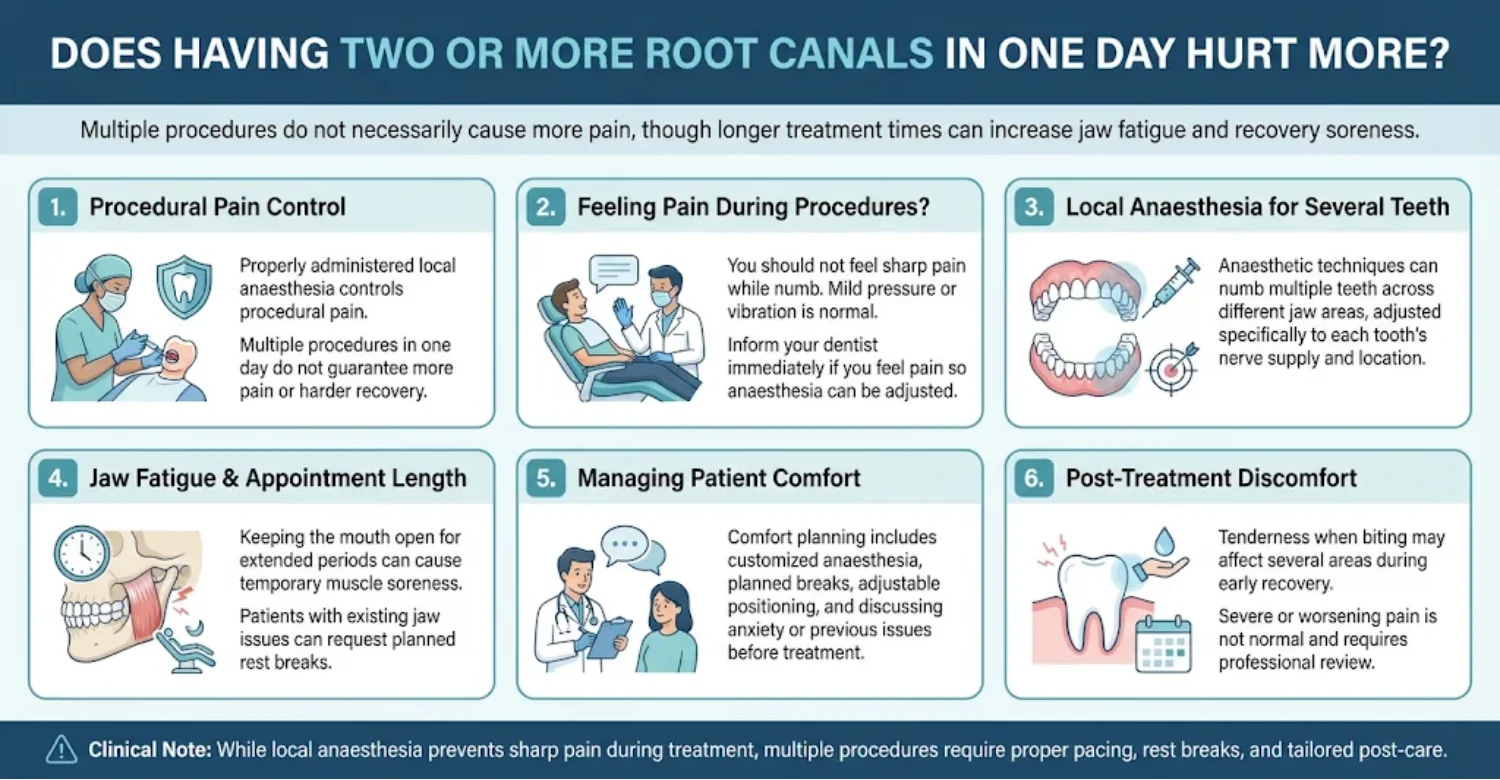
Does Having Two or More Root Canals in One Day Hurt More?
Not necessarily. Properly administered local anaesthesia should control procedural pain. However, several procedures can increase treatment time and jaw fatigue. Post-treatment discomfort depends on inflammation and clinical complexity. Multiple root canals one appointment does not guarantee more pain. Nor does it guarantee an easier recovery.
Can You Feel Pain During Multiple Root Canal Procedures?
Most patients should not experience sharp pain during adequately anaesthetised treatment. Pressure, movement, or vibration may remain noticeable. Patients should tell the dentist immediately if pain occurs. Additional anaesthesia or a different technique may be needed. Silent discomfort can make treatment more difficult.
Does Local Anaesthesia Work for Several Teeth?
Yes, suitable anaesthetic techniques can numb several treatment areas. The dentist considers tooth location and nerve supply. Some lower molars require different approaches from upper front teeth. Multiple root canals one appointment may involve several injections. The dentist selects the technique according to each treatment area.
Can Longer Appointments Cause Jaw Discomfort?
Yes, keeping the mouth open for extended periods can cause temporary muscle soreness. Patients with existing jaw problems may need additional breaks. Tell the dentist about jaw pain or restricted movement beforehand. Appointment length can then be considered during planning.
How Does Vitrin Clinic Help Patients Manage Treatment Discomfort?
Comfort measures may include appropriate anaesthesia, planned breaks, and clear communication. The dentist can adjust positioning when possible. Patients should discuss dental anxiety and previous anaesthetic difficulties beforehand. They should also report discomfort during treatment. Comfort planning should form part of the appointment schedule.
Is Post-Treatment Pain Different When Several Teeth Are Treated?
Discomfort may affect several areas rather than one tooth. Tenderness when biting can occur during early recovery. However, severe or worsening pain should not be dismissed. Multiple root canals one appointment does not mean every tooth will recover identically. Persistent symptoms require professional review.
Can Vitrin Clinic Treat Multiple Infected Teeth During One Appointment?
Sometimes, infection severity must guide the schedule. Several infected teeth may require different interventions. Root canal treatment can address infected pulp when a tooth remains restorable. An abscess may also require drainage or additional management. The dentist must evaluate every infection separately. Completing all procedures together is not always appropriate.
Can Two Teeth With Dental Abscesses Receive Treatment Together?
Possibly, if both teeth are suitable and the patient is clinically stable. Each abscess requires an individual diagnosis. Drainage may be necessary alongside treatment of the source. The dentist decides whether combining procedures is appropriate. More urgent infection management may take priority.
What Happens When an Infection Causes Facial Swelling?
Facial swelling requires prompt dental evaluation. The dentist identifies the infection source and checks possible spread. Rapidly increasing swelling requires urgent attention. Difficulty breathing or swallowing requires emergency medical care. Swelling near the eye also needs immediate evaluation. Patients should not delay care while waiting for a routine appointment.
When Does an Acute Dental Infection Require Urgent Treatment?
Severe toothache, pus, fever, and facial swelling require urgent dental advice. Difficulty breathing, speaking, or swallowing requires emergency medical attention. Rapidly spreading facial swelling also needs immediate care. A suspected abscess should never be ignored. Temporary pain relief does not establish that infection has resolved.
Can Antibiotics Replace Root Canal Treatment?
No, antibiotics cannot remove infected pulp inside a tooth. They do not permanently treat the source of infection. Antibiotics may be indicated when infection spreads or systemic symptoms develop. Drainage, root canal treatment, or extraction may still be necessary. The dentist determines the appropriate treatment.
How Does Vitrin Clinic Prioritise Teeth With Different Infection Severities?
The dentist considers pain, swelling, infection spread, and tooth restorability. Urgent problems receive priority. Less urgent teeth may be scheduled separately. Completing every tooth during one visit may be inappropriate. Infection management should determine the sequence of care.
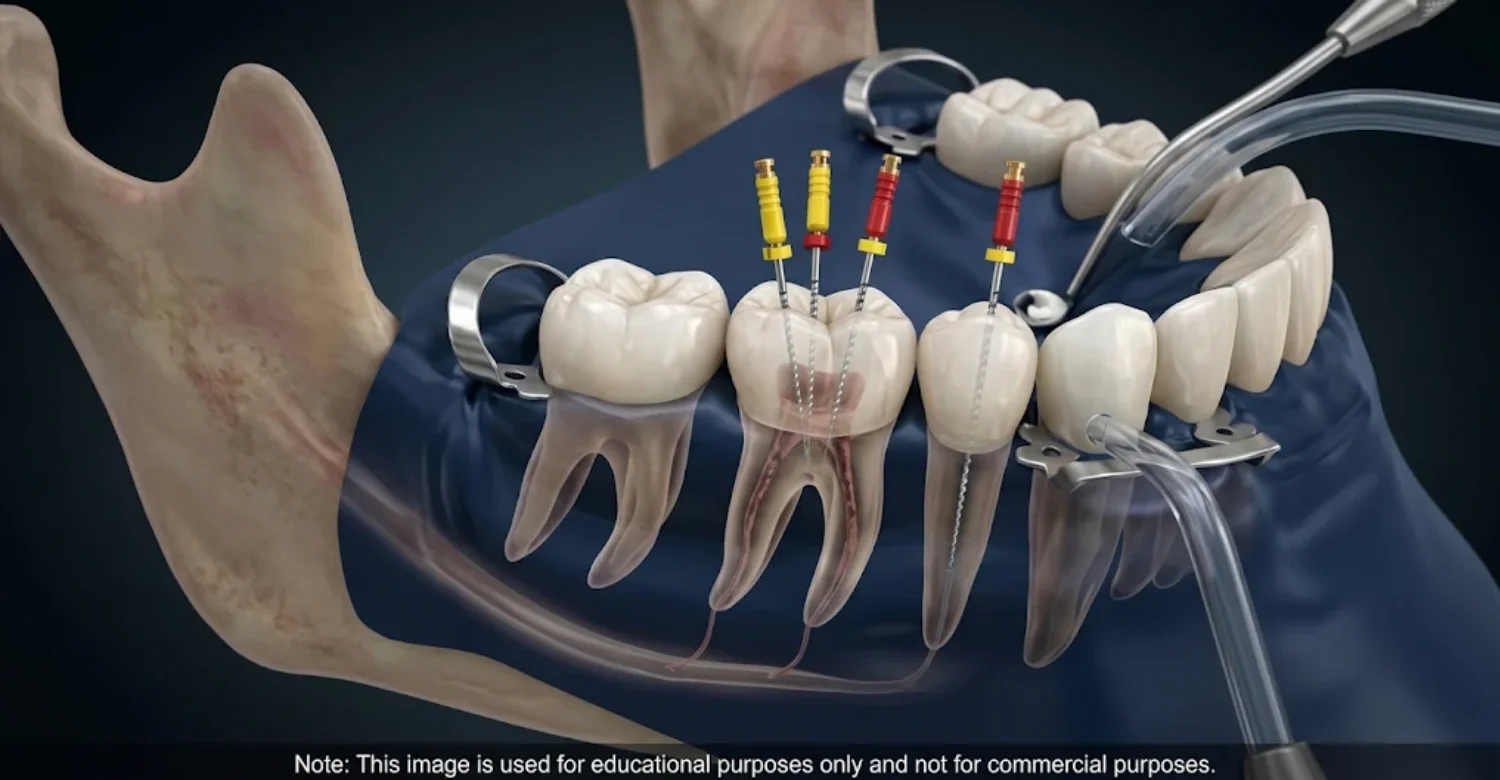
What Side Effects Can Occur After Multiple Root Canal Treatments?
Temporary tenderness, sensitivity when biting, and jaw soreness can occur. Localised swelling may also develop in some cases. Symptoms should generally improve rather than progressively worsen. Multiple root canals one appointment may affect several areas during recovery. Severe pain, visible swelling, or returning symptoms require prompt dental advice.
What Are the Most Common Post-Treatment Effects?
Possible temporary effects include:
Tenderness around treated teeth.
Temporary sensitivity when biting.
Mild jaw muscle soreness.
Irritation around injection sites.
Occasional localised inflammation.
Can Treating Several Teeth Increase Recovery Discomfort?
It can increase the number of areas experiencing tenderness. Longer appointments may also contribute to jaw fatigue. However, discomfort varies between patients. The number of teeth alone cannot predict recovery severity. The condition of each tooth also matters.
When Should Side Effects Become a Concern?
Contact your dentist about increasing pain, visible swelling, or persistent pressure. Returning infection symptoms also require review. A loose temporary restoration needs attention. Difficulty breathing or swallowing requires emergency medical care. Do not wait for symptoms to resolve without advice.
Ready to transform your smile?
Talk to our team and get a personal FREE treatment plan.
How Can You Relieve Discomfort After Multiple Root Canal Treatments?
Recovery measures include following dental instructions, eating carefully, and protecting temporary restorations. Multiple root canals one appointment may require attention to several treated areas. Home care can support comfort but cannot replace professional follow-up. Contact the treating clinic if symptoms worsen. Follow any individual instructions provided after treatment.
What Can Help Relieve Post-Treatment Pain?
General measures may include:
Follow the dentist's written aftercare instructions.
Use a cold compress externally when advised.
Choose soft foods temporarily.
Avoid chewing hard foods on treated teeth.
Maintain gentle oral hygiene.
Medication should follow professional advice and product instructions. Patients with medical conditions should check suitability before taking medicines.
What Should You Know About Pain-Relief Medicines?
Medication choice depends on the product, medical history, and other medicines. Follow professional advice and never exceed the stated dose. Liver or kidney problems require individual guidance. Discuss pregnancy and breastfeeding before taking medicines. Suspected overdose requires immediate medical advice, even without symptoms. Do not combine medicines without checking their ingredients.
Can Home Remedies Replace Dental Treatment?
No, home remedies cannot remove infected pulp or resolve the underlying problem. Gentle measures may temporarily support comfort. Persistent toothache requires professional dental examination. Delaying treatment can allow some dental conditions to worsen. Home remedies should never replace prescribed care.
.jpg)
.jpg)
.jpg)
What Should You Expect After Multiple Root Canal Treatments?
Recovery depends on the condition of each tooth and procedures performed. Mild tenderness may last several days. The dentist should explain eating restrictions, medication instructions, and temporary restorations. Patients should also understand follow-up requirements. Multiple root canals one appointment does not create one universal recovery timeline. Each treated tooth may respond differently.
How Long Does Recovery Take After Treating Several Teeth?
Many patients experience improving tenderness during the first few days. More complicated cases may need longer observation. Multiple root canals one appointment does not establish one universal recovery period. Persistent or worsening symptoms require dental review. The dentist should explain expected recovery based on individual findings.
What Are the Signs That a Root Canal Has Been Successful?
A successful root canal usually shows gradual improvement in symptoms over the following days and weeks. Signs include:
Tenderness that settles within the first few days.
No spontaneous or lingering pain.
Comfortable chewing on the treated tooth.
No swelling, gum boil, or discharge.
Healing of bone around the root tip on follow-up X-rays.
Bone healing can take several months to appear on X-rays. Follow-up reviews help confirm long-term success.
Can You Eat Normally After Multiple Root Canals?
Wait until normal sensation returns before eating. This helps reduce accidental biting of numb tissues. Choose softer foods initially. Avoid heavy pressure on teeth with temporary restorations. Follow the dentist's advice about returning to normal chewing.
What Foods Should You Avoid After Treatment?
Avoid very hard, sticky, or chewy foods around temporary restorations. Extremely hot or cold foods may aggravate sensitivity. Choose foods requiring minimal chewing during early recovery. Follow any additional restrictions provided by the dentist.
How Can You Manage Sensitivity and Post-Treatment Discomfort?
Maintain gentle brushing and follow medication instructions. Avoid chewing directly on vulnerable teeth. Contact the dentist if sensitivity becomes severe or worsens. Do not assume every painful tooth has the same cause. Persistent symptoms require examination.
What Warning Signs Should You Discuss With Your Dentist?
Report severe pain, increasing swelling, fever, or an uneven bite. A lost temporary restoration also needs attention. Returning symptoms require professional review. Difficulty breathing or swallowing needs emergency medical attention. Patients should follow the clinic's emergency instructions.
When Should Vitrin Clinic Complete Permanent Dental Restorations?
Timing depends on infection control, tooth structure, and restorative requirements. Some teeth can receive definitive restorations promptly. Others require further review before placement. A crown may protect a weakened tooth from fracture. The dentist should explain the appropriate timing. Patients should not assume every crown can be fitted immediately.
How Should You Maintain Teeth After Multiple Root Canals?
Brush twice daily using fluoride toothpaste. Clean between teeth daily with suitable interdental aids. Attend recommended dental reviews. Avoid using treated teeth to bite hard objects. Maintain regular examinations to identify new decay or restoration problems. Good maintenance supports the long-term health of treated teeth.
How Much Do Multiple Root Canals Cost at Vitrin Clinic Compared With the USA and UK?
Costs depend on tooth type, canal numbers, complexity, and additional treatment. The following table provides indicative comparisons rather than guaranteed quotations. US figures reflect published average costs by tooth type. UK NHS charges use England's treatment-band system. Private UK fees vary between practices. Turkish figures require confirmation from the treating clinic.
What Is the Average Cost of One Root Canal in the USA?
Published US estimates vary according to tooth type and provider. One recent cost guide reported averages of $905 for front teeth. Premolars averaged $1,023, while molars averaged $1,220. These figures exclude some additional costs and may vary geographically. Insurance coverage and specialist treatment can change the patient's final expense.
How Much Does Root Canal Treatment Cost in the UK?
NHS England charges $76.60 for Band 2 treatment from April 2026. This band includes eligible root canal treatment, fillings, and extractions. Patients pay one charge for the course, even when several visits are required. Private root canal fees vary according to tooth position and complexity. Specialist endodontic treatment may cost more.
How Do Root Canal Prices Compare Between the USA, UK, and Turkey?
The following comparison separates US private averages from NHS England charges. Turkey's figures are broad planning estimates, not confirmed Vitrin Clinic prices.
UK
From $27.90
UK NHS band pricing basis
Front tooth root canal: $76.60
Premolar root canal: $76.60
Molar root canal: $76.60
Examination and X-rays: $27.90
Final crown or restoration: $332.10
Turkey Indicative Estimate
From 20
Root canal & restoration pricing
Front tooth root canal: 60–210
Premolar root canal: 80–250
Molar root canal: 100–300
Examination and X-rays: 20–100
Final crown or restoration: 150–500
US
From 50
US private dental benchmark
Front tooth root canal: 590–1,527
Premolar root canal: 691–1,827
Molar root canal: 833–2,171
Examination and X-rays: 50–250
Final crown or restoration: 500–2,500
How Much Does One Root Canal Cost at Vitrin Clinic in Turkey?
Root canal treatment at Vitrin Clinic starts from approximately $100 per tooth, based on previously supplied starting prices. The final fee depends on tooth location, canal numbers, and treatment difficulty. A molar may cost more than a straightforward front tooth because it often has more canals and complex anatomy.
Premolar
Vitrin Clinic indicative price: 125–175
Vitrin Clinic indicative price
Vitrin Clinic indicative price: 125–175
Mid-arch tooth (typically 1–2 root canals)
Precision rotary canal cleaning & sealing
Front Tooth
Vitrin Clinic indicative price: 100–150
Vitrin Clinic indicative price
Vitrin Clinic indicative price: 100–150
Single-canal anterior tooth treatment
Fastest & most straightforward canal access
Molar
Vitrin Clinic indicative price: 150–200
Vitrin Clinic indicative price
Vitrin Clinic indicative price: 150–200
Multi-canal posterior tooth (3+ canals)
Full infection removal & structural protection
How Much Do Multiple Root Canals Cost at Vitrin Clinic?
The total depends on the number of teeth and their individual treatment requirements. Multiple root canals one appointment does not necessarily mean one combined treatment fee. Each tooth may require separate cleaning, shaping, and sealing.
3 Teeth
Indicative treatment cost: 300–600
Indicative treatment cost
Indicative treatment cost: 300–600
3-tooth endodontic treatment scope
Coordinated multi-canal infection removal
2 Teeth
Indicative treatment cost: 200–400
Indicative treatment cost
Indicative treatment cost: 200–400
Targeted 2-tooth endodontic care
Combined multi-tooth appointment efficiency
4 Teeth
Indicative treatment cost: 400–800
Indicative treatment cost
Indicative treatment cost: 400–800
4-tooth comprehensive endodontic scope
Structured multi-tooth restoration plan
How Do Vitrin Clinic Root Canal Prices Compare With the USA?
Private root canal treatment in the USA can involve substantial costs. Published estimates differ between front teeth, premolars, and molars.
USA
From 590
US private dental benchmark
Front tooth: 590–1,527
Premolar: 691–1,827
Molar: 833–2,171
Vitrin Clinic Indicative Estimate
From 100
Root canal by tooth type
Front tooth: 100–150
Premolar: 125–175
Molar: 150–200
How Do Vitrin Clinic Root Canal Prices Compare With the UK?
UK costs depend on whether patients receive NHS or private treatment. NHS England uses treatment bands rather than charging separately for every procedure.
UK
Charge: $76.60 Band 2
Fixed NHS Band 2 charge
Front tooth root canal: $76.60 Band 2
Premolar root canal: $76.60 Band 2
Molar root canal: $76.60 Band 2
Vitrin Clinic
From 100
Root canal by tooth type
Front tooth root canal: 100–150
Premolar root canal: 125–175
Molar root canal: 150–200
UK
From 300
UK private dental benchmark
Front tooth root canal: 300–700
Premolar root canal: 350–900
Molar root canal: 500–1,200
Does Treating Multiple Teeth Affect the Total Treatment Cost?
Yes. Each additional tooth may require separate cleaning, shaping, and sealing. However, some examination and imaging costs may cover several teeth.
Complex anatomy may increase the fee for individual procedures. The written quotation should distinguish shared diagnostic costs from treatment charges. Patients should ask whether multiple procedures affect the final estimate.
How Much Do Dental Crowns Add to the Vitrin Clinic Treatment Plan?
A crown is an additional restorative procedure, not an automatic part of every root canal. The dentist considers remaining tooth structure and fracture risk. Some teeth may need fillings instead.
Previously supplied Vitrin starting prices include:
Restoration | Vitrin Clinic indicative price |
Zirconia crown | From $150 per tooth |
E.max crown | From $180 per tooth |
CEREC same-day crown | From $200 per tooth |
What Factors Determine Your Final Vitrin Clinic Quotation?
Several clinical and practical factors can influence the total cost:
Tooth location and number of root canals.
Infection severity and treatment complexity.
Retreatment requirements.
Additional imaging when clinically indicated.
Specialist involvement, if required.
Fillings, crowns, or other restorations.
Follow-up arrangements and additional appointments.
Travel and accommodation expenses.
Patients should request clarification about every item. An individual quotation is more useful than a general advertised price.
Can Vitrin Clinic Provide an Itemised Treatment Estimate Before Travel?
Vitrin Clinic can discuss preliminary treatment possibilities using available dental records. Photographs and existing X-rays may help identify potential treatment requirements. However, final treatment needs must be confirmed during clinical examination.
Ready to transform your smile?
Talk to our team and get a personal FREE treatment plan.
How Can International Patients Arrange Multiple Root Canals at Vitrin Clinic in Turkey?
International patients should organise records, treatment expectations, and follow-up before travelling. Multiple root canals one appointment may simplify scheduling when clinically appropriate. However, patients should allow flexibility for additional treatment or recovery. Preliminary planning cannot guarantee that every procedure will be completed during one visit. The final schedule depends on examination findings.
Can You Arrange Multiple Root Canal Treatments Before Travelling to Turkey?
Yes, preliminary arrangements can begin before travel. Share available records and explain your symptoms. Vitrin Clinic can review the information and discuss possible treatment requirements. Final suitability depends on examination findings. Patients should avoid treating preliminary plans as confirmed diagnoses.
What Dental Records Should You Send to Vitrin Clinic?
Useful records may include recent dental X-rays and previous treatment reports. Clear photographs can help show visible problems. Include information about pain, swelling, and previous procedures. Share relevant medical history and current medication information. These records support preliminary discussions before travelling.
Can Vitrin Clinic Review Your Dental X-Rays Before Your Arrival?
Existing X-rays may help identify possible problems and estimate treatment needs. Image quality and date influence their usefulness. Additional imaging may be necessary after arrival. Remote review cannot confirm every diagnosis. Final recommendations require clinical examination.
How Does Vitrin Clinic Organise Appointments for International Patients?
Scheduling should consider examination time, treatment complexity, and recovery. The clinic can discuss possible appointment arrangements after reviewing available records. Patients should allow flexibility for unexpected findings. Avoid booking an inflexible return journey before confirming the treatment schedule. Complex cases may require additional visits.
How Many Days Should You Allow for Multiple Root Canal Treatments at Vitrin Clinic?
There is no fixed stay suitable for every patient. Straightforward cases may require less time than complex infections or retreatments. Ask the clinic for a proposed schedule and contingency time. Confirm whether permanent restorations require additional appointments. Travel plans should allow for clinical changes.
Should You Schedule Dental Crowns During the Same Trip?
Possibly, depending on clinical findings and laboratory requirements. Some restorations require additional preparation and fitting appointments. Other teeth may need temporary protection first. The dentist should confirm whether each tooth is ready for its definitive restoration. Patients should not assume every crown can be completed immediately.
What Follow-Up Arrangements Should You Discuss With Vitrin Clinic?
Clarify who will review symptoms after treatment. Ask how complications will be handled after returning home. Request available treatment records and relevant X-rays. Discuss whether local dental follow-up will be necessary. Clear arrangements support continuity of care.
.jpg)
.jpg)
.jpg)
How Does Vitrin Clinic Personalise Multiple Root Canal Treatment Plans?
Individual planning helps each tooth receive treatment appropriate to its condition. Multiple root canals one appointment should not involve identical treatment for every tooth. Clinical findings, restoration needs, and patient circumstances determine the plan. The dentist should explain why procedures may differ. Treatment timing should reflect clinical priorities and patient comfort.
How Does Vitrin Clinic Evaluate Each Tooth Individually?
The dentist reviews symptoms, pulp tests, X-rays, and restorability. Existing fillings, cracks, and gum conditions also matter. A tooth that cannot be predictably restored may require another treatment discussion. Each diagnosis should be explained before treatment begins. This helps patients understand why different teeth may need different procedures.
How Are Digital Dental Scans Used During Treatment Planning?
Digital scans record tooth surfaces and bite relationships. They may support restorative planning and crown design. However, ordinary digital scans do not replace dental X-rays or pulp testing. Each technology serves a different diagnostic purpose. The dentist selects appropriate tools according to clinical needs.
How Does Vitrin Clinic Coordinate Endodontic and Restorative Procedures?
Endodontic treatment addresses the pulp and root canal system. Restorative treatment protects and rebuilds the remaining tooth. Coordination helps determine the appropriate sequence and timing. Some teeth may need crowns, while others require fillings. The dentist explains the expected stages before treatment begins.
How Are Multiple Appointments Organised Around Your Clinical Needs?
Appointments should reflect infection control, treatment complexity, and recovery. Some teeth may be treated together. Others may need staged procedures. Patient comfort and adequate clinical time remain priorities. The schedule should change when clinical findings justify it.
How Does Vitrin Clinic Explain Treatment Options and Expected Costs?
Patients should receive an explanation of diagnosis, proposed treatment, alternatives, and limitations. Costs should identify included and excluded procedures. Multiple root canals one appointment should be presented as an option only when clinically appropriate. Patients should have time to ask questions before consenting.
What Should Your Written Vitrin Clinic Treatment Plan Include?
A useful treatment plan should identify:
The diagnosis for each affected tooth.
Proposed root canal procedures.
Recommended imaging and investigations.
Temporary and permanent restorations.
Appointment sequence and estimated duration.
Itemised fees and possible additional costs.
Follow-up and aftercare arrangements.
Patients should understand which details are confirmed and which remain provisional. Any significant changes should be explained before treatment proceeds.
What Is the Vitrin Clinic Patient Journey for Multiple Root Canal Treatments?
The patient journey connects preliminary information, examination, treatment planning, procedures, and aftercare. Each stage should explain what is confirmed and what may change. International patients should understand the practical arrangements before travelling. Clinical findings remain the basis for the final treatment schedule.
How Do You Start Your Multiple Root Canal Journey With Vitrin Clinic?
Start by explaining your symptoms and treatment goals. Share available dental records and X-rays. Vitrin Clinic can use this information to discuss possible next steps. The team can also explain preliminary appointment arrangements. Final treatment recommendations require clinical examination.
How Does Vitrin Clinic Review Your Dental Records Before Arrival?
The team reviews available images and treatment history. This helps identify questions for the clinical examination. Preliminary opinions should not be treated as confirmed diagnoses. Additional imaging or tests may be required after arrival. Patients should provide accurate information about previous treatment.
What Happens During Your First Dental Visit at Vitrin Clinic?
The dentist reviews medical and dental history. A clinical examination and appropriate diagnostic tests follow. The findings help establish which teeth require treatment. The dentist also considers restorability and possible alternatives. Patients can discuss the proposed schedule before consenting.
How Does the Dental Team Create Your Individual Treatment Plan?
The dentist discusses each diagnosis and its treatment options. The plan considers infection, anatomy, restorability, and appointment requirements. It should identify procedures that may be combined safely. Patients should understand the expected stages before consenting. The schedule may change if examination findings require it.
How Are Multiple Root Canal Appointments Scheduled at Vitrin Clinic?
The schedule depends on clinical priorities and available treatment time. Suitable teeth may be grouped together. Complex or infected cases may require separate sessions. The dentist should explain the reason for the selected approach. Patient comfort remains an important consideration.
How Does Vitrin Clinic Coordinate Your Treatment and Dental Restorations?
The treatment team plans root canal completion alongside necessary fillings or crowns. Each restoration depends on remaining tooth structure. Some teeth may need temporary restorations first. The dentist explains the expected sequence before treatment begins. Final restoration timing depends on clinical findings.
What Can You Expect During Recovery and Aftercare?
Patients receive instructions about eating, oral hygiene, medication, and warning signs. Temporary restorations require particular care. Contact the clinic if symptoms worsen or unexpected problems develop. Patients should understand their follow-up responsibilities before leaving Turkey. Relevant treatment records should be kept for future care.
How Does Vitrin Clinic Arrange Follow-Up After You Return Home?
Discuss follow-up responsibilities before leaving Turkey. Request copies of relevant records and treatment details. Your local dentist may need to monitor healing or complete further restorative care. Contact Vitrin Clinic if you need clarification about the completed procedures. Clear communication supports continuity after treatment abroad.
What Should Patients Understand Before Combining Root Canal Procedures?
Combining procedures should depend on clinical suitability, not appointment convenience. The dentist must confirm pulp disease and assess root anatomy. Each tooth must also be restorable. Adequate treatment time and patient comfort are essential. Multiple root canals one appointment is an option for selected cases, not a universal recommendation.
Dr. Rifat's Opinion: Is Completing Several Root Canals in One Day Always Better?
Completing several root canals in one day is not automatically better. A shorter schedule does not guarantee a better clinical outcome. The decision should reflect infection status, anatomy, patient comfort, and restorative requirements. Individual recommendations must follow examination findings. Treatment quality should take priority over appointment numbers.
What Do We Notice Clinically When Several Teeth Need Root Canal Treatment?
Several painful teeth do not necessarily share the same diagnosis. One tooth may have irreversible pulpitis. Another may have deep decay without irreversible pulp damage. Some teeth may need fillings rather than root canal treatment. Each diagnosis must be established independently. Treating every painful tooth with the same procedure can lead to unnecessary treatment.
How Can You Arrange a Multiple Root Canal Consultation With Vitrin Clinic?
Contact Vitrin Clinic with your symptoms and available dental records. Ask about examination requirements, imaging, treatment options, and estimated fees. Discuss whether combining procedures may be suitable. A confirmed schedule should follow clinical examination. Photographs and symptoms alone cannot establish the final treatment plan.
Ready to transform your smile?
Talk to our team and get a personal FREE treatment plan.
What Should You Remember Before Choosing Multiple Root Canals One Appointment?
Multiple root canals one appointment may be suitable for selected patients. However, the dentist must examine every tooth and consider treatment complexity. Single-visit and multiple-visit approaches can both be appropriate. Research does not establish one approach as universally superior. Patients should compare clinical recommendations rather than choosing solely for convenience.
At Vitrin Clinic, treatment planning should reflect individual diagnoses and restorative needs. International patients can share available records before travelling. An in-person examination confirms the final treatment requirements and costs. Patients should receive an itemised plan and clear aftercare instructions. The priority is treating each tooth appropriately while protecting long-term oral health.
Reference

Medically reviewed by
Dr. Rifat AlsamanDr. Rifat Alsaman has more than 5 years of clinical experience in dentistry and currently serves as the Head of the Medical Team at Vitrin Clinic. He is dedicated to providing exceptional patient care, overseeing treatment planning, and ensuring the highest clinical standards across the team. His expertise, attention to detail, and commitment to continuous professional development have helped countless patients achieve healthier, more confident smiles.
More in Dental Treatments
View all 47 min readWhat Makes You Eligible for Immediate Dental Implants?Immediate dental implant eligibility depends on bone availability, gum health, infection control, and initial implant stability.
 22 min readWill I Need a Bone Graft Before Getting Dental Implants, or Can I Avoid It?Do I need bone graft for dental implant treatment? Many patients ask this when planning to replace a missing tooth. The honest answer is: not always. Some people have enough healthy jawbone for direct implant placement.
 19 min readCan I Get a Dental Implant If I Have Been Missing the Tooth for Many Years?A dental implant after years of missing tooth is possible for most patients. Time alone rarely rules you out. What matters is how much jawbone remains, how healthy your gums are, and whether your bite has shifted.
 18 min readCan Tooth Extractions and Dental Implants Be Done on the Same Day?Yes, a tooth extraction and implant on the same day is often possible. It's called an immediate implant, and it works when the socket is free of active infection, the surrounding bone is intact and the implant can be held firmly. When those conditions aren't met, the implant is placed a few weeks or months later.
Still have a question?
Our patient coordinators answer every day of the week: before, during and long after your treatment.