How Can You Get a Second Opinion on Dental Work Completed Abroad in Turkey?
Getting a second opinion after dental treatment abroad can help clarify previous procedures and identify appropriate next steps

Getting a second opinion after dental treatment abroad can help clarify previous procedures and identify appropriate next steps. A second opinion after dental treatment abroad in Turkey may be useful when you experience discomfort, cosmetic concerns, bite changes, or implant problems. Another dentist can review your symptoms, available records, and existing restorations. However, photographs and previous treatment plans cannot replace an examination when clinical testing is necessary. This guide explains the review process, important dental records, possible corrective treatments, costs, and Vitrin Clinic's approach to international patients.
Key Takeaways
A second opinion helps clarify previous dental work and investigate ongoing problems.
Common concerns include pain, uncomfortable crowns, bite changes, gum inflammation, and implant complications.
Previous treatment plans, X-rays, photographs, and implant details support the clinical review.
Photographs provide initial guidance but cannot replace an in-person examination.
Corrective options may include adjustment, repair, replacement, or monitoring.
Vitrin Clinic provides individual clinical reviews and treatment planning.
Costs depend on examination findings, diagnostic tests, and required procedures.
Ready to transform your smile?
Talk to our team and get a personal FREE treatment plan.
What Is a Second Opinion After Dental Treatment Abroad in Turkey?
A second opinion is an independent clinical review of existing dental work, symptoms, and previous treatment recommendations. A second opinion after dental treatment abroad in Turkey helps patients understand whether previous procedures remain clinically suitable.
Why Might International Patients Need Another Dentist to Review Previous Treatment?
Patients may seek another opinion when symptoms continue after returning home. Common concerns include persistent pain, loose restorations, gum changes, and uncomfortable biting. Others simply want clarification about their original treatment plan. A review can help distinguish expected recovery from problems requiring further investigation.
How Does an Independent Dental Opinion Differ From a Routine Check-Up?
A routine check-up reviews general oral health and identifies current problems. An independent opinion also considers previous procedures, treatment records, and unresolved concerns. The dentist may compare earlier findings with the present clinical condition.
Can a Second Opinion Confirm Whether Previous Dental Treatment Was Appropriate?
A clinical review can identify findings that support or question previous treatment decisions. However, adequate records and examination findings are essential. Some complications require additional imaging or specialist investigation before conclusions can be reached.
Does Seeking Another Dentist's Opinion Mean Previous Treatment Failed?
No. Seeking another opinion does not automatically mean previous treatment failed. It may provide reassurance, clarification, or an alternative explanation. It can also identify problems requiring further investigation.
Is It Common to Get a Second Opinion From a Dentist?
Yes. Seeking a second opinion is a common and accepted part of dental care, particularly before complex, costly, or irreversible treatment. Many patients do this before implants or full-mouth restorations, or when a diagnosis is unclear. A professional dentist should not be offended by the request and can share your records to support the review.
Can You Switch Back and Forth Between Dentists?
Yes. Patients can change dentists or see more than one for different opinions or treatments. Request copies of your records and X-rays and share them with each dentist. Make sure every clinician knows about completed treatment, current medicines, and planned procedures, so care is not duplicated or contradictory.
.jpg)
.jpg)
When Should You Seek a Second Opinion After Dental Treatment in Turkey?
Consider a second opinion after dental treatment abroad in Turkey when symptoms persist, restorations feel unstable, or the original treatment remains unclear. Early review can help identify problems before they become more complicated.
Should You Seek Another Opinion If Your Dental Crowns Feel Uncomfortable?
Yes. Persistent discomfort around crowns deserves examination. A crown may feel high, loose, rough, or uncomfortable during chewing. The dentist can examine its margins, contact points, bite relationships, and supporting teeth.
Can Persistent Tooth Sensitivity Indicate a Problem With Previous Dental Work?
Persistent sensitivity can have several possible causes. These include exposed dentine, gum recession, decay, cracks, or inflammation inside the tooth. Sensitivity that worsens or continues after temperature changes requires dental review.
Why Might Your Bite Feel Different After Multiple Crowns or Bridges?
Multiple restorations can change tooth contacts and chewing patterns. One restoration may contact earlier than neighbouring teeth. Muscle adaptation can also influence how your bite feels. Persistent discomfort requires examination rather than self-adjustment.
Should Gum Inflammation or Bleeding Around Restorations Be Investigated?
Yes. Bleeding, swelling, tenderness, or persistent redness can indicate gum inflammation. Plaque accumulation, restoration contours, or periodontal disease may contribute. A dentist should examine the surrounding tissues and restoration margins.
When Should You Have Dental Implants Examined After Returning Home?
Arrange an examination if an implant feels mobile or painful. Persistent swelling, discharge, bleeding, or difficulty chewing also needs review. Problems may involve surrounding bone, soft tissues, or prosthetic components.
Can Cosmetic Dissatisfaction Indicate an Underlying Dental Problem?
Sometimes. Uneven edges, food trapping, or speech changes may relate to restoration shape. A dentist should distinguish cosmetic preferences from functional or clinical concerns.
What Can I Do if I Am Not Happy With My Dental Treatment?
Start by contacting the dentist or clinic that provided the treatment. Explain your concerns in writing and ask how they can be addressed, including any warranty or remedial treatment. You can also:
Request copies of your records, X-rays, and invoices
Arrange a second opinion from another dentist
Keep photographs and notes of your symptoms
Use the clinic's formal complaints procedure
If the issue remains unresolved, you may contact the relevant professional or regulatory body in the country where treatment took place. Do not delay care for urgent symptoms.
What Can Vitrin Clinic Examine When Reviewing Previous Dental Work?
A second opinion after dental treatment abroad in Turkey at Vitrin Clinic begins with understanding your concerns and reviewing available clinical information. The examination focuses on existing restorations, teeth, gums, bite, and implant-supported work.
How Does Vitrin Clinic Examine Existing Crowns, Bridges, and Veneers?
The clinical team reviews restoration conditions, shape, margins, and surrounding tissues. They may check for fractures, looseness, plaque retention, or visible gaps. The dentist also considers the condition of supporting teeth.
Can Vitrin Clinic Identify Problems With Restoration Fit and Bite Contacts?
Yes. A clinical examination can identify several fit and bite concerns. The dentist may use bite-marking materials to locate premature contacts. They also examine chewing movements and symptoms reported by the patient.
How Are Dental Implants and Their Surrounding Tissues Examined?
Implant reviews consider tissue health, restoration stability, and reported symptoms. The dentist may check for inflammation, bleeding, mobility, or prosthetic damage. Imaging may be required to evaluate supporting bones.
Can Digital Dental Scans Help Evaluate Previous Restorations?
Digital scans record visible tooth surfaces and restoration contours. They may help compare shapes, spaces, and bite relationships. However, scans cannot independently diagnose infection or evaluate every bone condition.
When Does Vitrin Clinic Recommend Dental X-rays or CBCT Imaging?
Dental X-rays may help examine roots, bone levels, and areas beneath restorations. CBCT provides three-dimensional information when clinically justified. It is not necessary for every patient or restoration review.
A 2023 study involving 170 patients found that CBCT changed treatment plans in 32% of selected impacted upper wisdom-tooth cases. This finding applies to that specific clinical situation, not every dental review.
How Does the Clinical Team Distinguish Cosmetic Concerns From Functional Problems?
The dentist considers appearance alongside chewing, speech, comfort, and tissue health. A cosmetic concern may not require restorative treatment. Functional symptoms may need additional testing before treatment decisions.
How Does Vitrin Clinic Determine Whether Previous Dental Work Needs Correction?
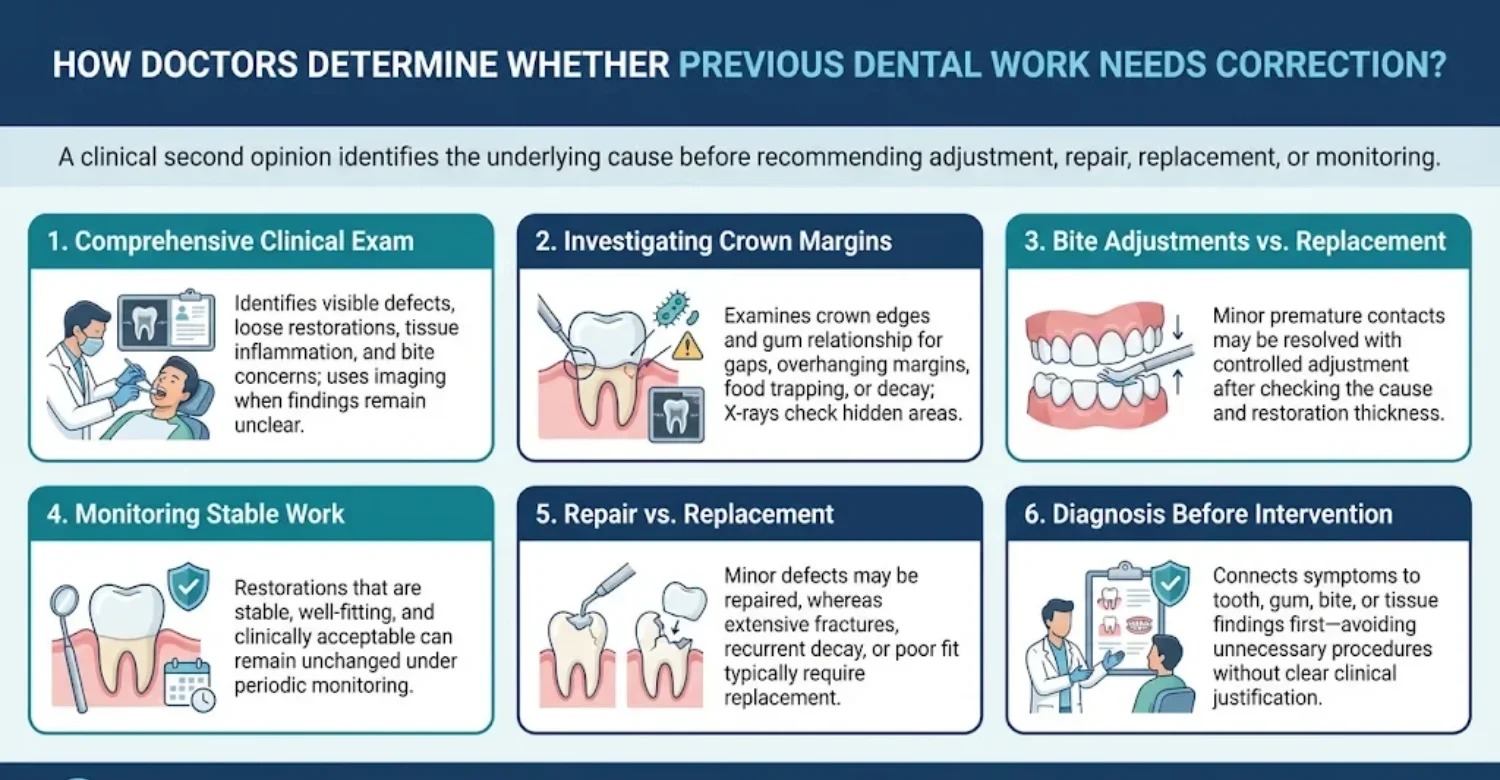
A second opinion after dental treatment abroad in Turkey should identify the underlying cause before recommending corrective procedures. Vitrin Clinic reviews clinical findings before considering adjustment, repair, replacement, or monitoring.
What Can a Clinical Examination Reveal About Existing Restorations?
The examination can identify visible defects, loose restorations, inflammation, and bite concerns. The dentist also checks supporting teeth and surrounding tissues. Imaging may be needed when findings remain unclear.
How Are Possible Problems With Crown Margins Investigated?
The dentist examines crown edges and their relationship with the gum. They look for gaps, overhanging margins, food trapping, and signs of decay. X-rays may help investigate areas that cannot be examined directly.
Can Bite Adjustments Resolve Discomfort Without Replacing Dental Crowns?
Sometimes. A minor premature contact may be corrected through carefully controlled adjustment. However, adjustment is not appropriate for every complaint. The dentist must establish the cause and evaluate restoration thickness first.
When Can Existing Restorations Remain Unchanged?
Restorations may remain unchanged when they are stable and clinically acceptable. The dentist considers tissue health, function, fit, and patient symptoms. Monitoring may be more appropriate than unnecessary replacement.
How Does the Dentist Decide Whether Repair or Replacement Is Necessary?
The decision depends on damage, fit, supporting tooth condition, and restoration design. Minor defects may be repairable. Extensive fractures, recurrent decay, or poor fit may require replacement.
Why Must the Underlying Cause Be Identified Before Corrective Treatment?
Treating symptoms without identifying their cause can lead to unnecessary procedures. Pain may originate from the tooth, gum, bite, or surrounding structures. Diagnosis helps determine which treatment, if any, is appropriate.
Clinical note: What should be established before treatment?
A clinical review should connect reported symptoms with examination findings. The dentist should explain confirmed problems, uncertain findings, and whether further tests are necessary.
Dr. Rifat Alsaman's Clinical Perspective
The priority is identifying the source of the problem before changing existing restorations. Treatment decisions should consider tooth structure, gum health, bite function, and diagnostic evidence. This approach helps avoid procedures without clear clinical justification.
Which Dental Records Should You Provide to Vitrin Clinic?
A second opinion after dental treatment abroad in Turkey becomes more informative when the dentist receives complete treatment records. Previous documents explain which procedures were performed and why.
Should You Bring Your Original Treatment Plan and Itemized Invoice?
Yes. These documents show the procedures performed and the materials or services charged. They can also identify unfinished treatment stages and planned follow-up appointments.
Are Pre-Treatment and Post-Treatment Photographs Useful?
Yes. Photographs can show visible changes in teeth, gums, and restorations. They may help explain cosmetic concerns. However, photographs cannot establish root health or confirm implant integration.
Can Previous Dental X-rays and CBCT Scans Support the Review?
Previous images may help compare bone levels, roots, and implant positions. Provide original diagnostic files whenever possible. Screenshots may lose detail and limit clinical interpretation.
Why Are Implant Brands and Restoration Material Specifications Important?
Implant records identify the system, dimensions, and components used. Restoration specifications clarify material types and laboratory details. This information may help when replacement components or repairs are considered.
What Can You Do If Your Previous Dentist Did Not Provide Complete Records?
Request copies of your treatment plan, clinical notes, and diagnostic images. Ask for implant labels or product details when relevant. Tell the reviewing dentist if records remain unavailable.
Can Vitrin Clinic Review Available Records Before Your Appointment?
Available records can support an initial review before travelling. The coordination team can help organise documents for clinical consideration. Missing information may still require examination or additional imaging.
Can Vitrin Clinic Provide a Dental Second Opinion Before You Travel to Turkey?
A remote second opinion after dental treatment abroad in Turkey can help international patients understand possible next steps before travelling. Its reliability depends on the quality and completeness of the information supplied.
Can International Patients Share Dental Photographs and Previous Records Remotely?
Yes. Patients can share photographs, previous X-rays, treatment plans, and reports. Clear images and original diagnostic files are more useful than cropped screenshots.
What Information Does Vitrin Clinic Need for an Initial Treatment Review?
Provide your treatment dates, symptoms, affected teeth, and procedures received. Include previous imaging, restoration details, and relevant medication information. Explain whether symptoms are improving, stable, or worsening.
Can Photographs Alone Confirm Whether Previous Restorations Are Clinically Satisfactory?
No. Photographs cannot test tooth vitality, detect every cavity, or measure implant stability. They also cannot reliably assess hidden restoration margins or supporting bone.
When Is an In-Person Clinical Examination Necessary?
An examination is necessary when symptoms require physical testing or diagnostic imaging. Pain, swelling, bleeding, mobility, and bite problems may need direct evaluation. Urgent symptoms should never wait for remote feedback.
How Does Vitrin Clinic Explain the Limitations of Remote Dental Reviews?
Remote reviews provide preliminary guidance rather than a confirmed diagnosis. The team should explain which findings remain uncertain. An in-person examination may change the initial recommendations.
Ready to transform your smile?
Talk to our team and get a personal FREE treatment plan.
What Happens If Vitrin Clinic Identifies Complications After Dental Treatment Abroad?
A second opinion after dental treatment abroad in Turkey may identify a problem requiring monitoring, repair, or further investigation. The appropriate response depends on the diagnosis and severity.
Can Minor Bite Problems Be Corrected Without Replacing Existing Restorations?
Some minor bite discrepancies can be adjusted without replacing a restoration. The dentist must confirm that contact is genuinely excessive. Unnecessary grinding can damage otherwise acceptable dental work.
How Does Vitrin Clinic Investigate Painful or Poorly Fitting Dental Crowns?
The dentist checks crown margins, bite contacts, supporting teeth, and gum condition. X-rays or other tests may be requested when indicated. Treatment depends on the identified cause.
What Treatment Options May Be Considered for Damaged Bridges or Restorations?
Options may include polishing, recementation, repair, or replacement. Supporting teeth and bridge design influence suitability. The dentist should explain each option's benefits and limitations.
How Are Possible Dental Implant Complications Investigated?
The review considers pain, swelling, bleeding, mobility, and prosthetic stability. X-rays or CBCT may be required to examine supporting structures. Infection, bone changes, and mechanical problems need different management.
When Might Additional Diagnostic Procedures or Specialist Input Be Necessary?
Further investigation may be needed when symptoms have several possible causes. Complex implant, gum, nerve, or root problems may require specialist input. The dentist should explain why referral is appropriate.
Can Vitrin Clinic Develop an Individual Treatment Plan for Previously Treated Teeth?
Yes. A plan can be developed using examination findings. It should identify confirmed problems and suitable options. It should also explain treatment stages, limitations, costs, and follow-up needs.
What Are the Possible Side Effects of Corrective Dental Treatment?
Corrective procedures can cause temporary sensitivity, tenderness, or gum irritation. Surgical treatment may involve swelling, bruising, or discomfort. Risks vary according to the procedure and individual health factors.
How Can You Relieve Discomfort While Waiting for a Dental Appointment?
Avoid chewing hard foods on the affected area. Maintain gentle oral hygiene and follow professional instructions. Do not file, glue, or adjust restorations yourself. Persistent or worsening pain needs prompt dental care.
Seek emergency medical attention for breathing or swallowing difficulties. Rapidly spreading facial or neck swelling also requires emergency care.
How to Tell if You Have Dental Sepsis?
Dental sepsis is a rare but life-threatening reaction that can occur when a dental infection spreads through the body. Warning signs may include:
Fever, chills, or a very low body temperature
A rapid heartbeat or fast breathing
Confusion, drowsiness, or feeling extremely unwell
Rapidly spreading facial or neck swelling
Difficulty swallowing or breathing
Seek emergency medical care immediately if these symptoms develop. Do not wait for a dental appointment.
.jpg)
.jpg)

Can a Second Opinion Help Review All-on-6 Dental Implants in Turkey?
A second opinion after dental treatment abroad in Turkey can be particularly useful after full-arch implant treatment. All-on-6 uses six implants to support a fixed full-arch prosthesis when clinically suitable.
What Should a Dentist Examine After Previous All-on-6 Treatment?
The dentist reviews implant positions, prosthesis fit, bite distribution, and gum condition. They also check cleaning access and signs of inflammation. Previous surgical records and implant details are important.
Can All-on-6 Implants Develop Complications After Returning Home?
Yes. Possible concerns include inflammation around implants, prosthetic screw loosening, fractures, and changes in supporting bone. Symptoms and imaging help determine the likely cause.
Does Every All-on-6 Complication Require Implant Removal?
No. Some problems involve the prosthesis or surrounding tissues rather than implant failure. Management may include hygiene treatment, prosthetic repair, bite correction, or further investigation.
What Records Are Important After All-on-6 Treatment in Turkey?
Request implant brands and dimensions, placement dates, surgical notes, and prosthesis specifications. Keep information about temporary and final bridges. Previous panoramic images and CBCT files may also help.
How Does the Dentist Review Bite Pressure Across Six Implants?
The dentist examines how the prosthesis contacts opposing teeth. Bite-marking materials may help identify selected contact points. Uneven loading can require prosthetic or occlusal review.
What Advantages and Limitations Should Patients Understand About All-on-6?
Six implants may provide multiple support points for a fixed full-arch restoration. This design may suit selected patients with adequate bone and appropriate implant distribution.
However, surgery, healing, hygiene, and maintenance require careful planning. More implants do not automatically guarantee better outcomes. Bone availability, medical history, bite forces, and prosthesis design remain important.
What Should Patients Know About All-on-6 Recovery and Maintenance?
Follow the treating clinician's instructions about diet and cleaning. Attend scheduled reviews and report persistent pain or swelling. Long-term maintenance includes professional monitoring and careful daily cleaning.
How Much Does a Dental Second Opinion Cost at Vitrin Clinic Compared With the UK and USA?
The cost of a second opinion after dental treatment abroad depends on the examination, diagnostic tests, and any corrective treatment required. The following tables compare indicative prices in the USA, UK, and Turkey. Vitrin Clinic figures are provisional estimates and must be confirmed before publication.
How Do Dental Examination and Treatment Costs Compare?
UK
From 13
UK dental fee benchmark
Dental examination: 65–113
Dental consultation: 40–100
Dental X-ray: 13–63
Composite filling: 150–196
Root canal treatment: 469–619
Simple extraction: 143–216
Abscess treatment: 130–650*
Vitrin Clinic
From 15
General & urgent dental services
Dental examination: 30–45
Dental consultation: 25–35
Dental X-ray: 15–55
Composite filling: From $40
Root canal treatment: From $100
Simple extraction: From $50
Abscess treatment: 100–250
Turkey 2027 Guide
From 16
National dental fee guide reference
Dental examination: $33
Dental consultation: $22
Dental X-ray: 16–40
Composite filling: 67–105
Root canal treatment: 91–204
Simple extraction: From $49
Abscess treatment: 174–221
US
From 50
US private dental benchmark
Dental examination: 50–350
Dental consultation: 50–200
Dental X-ray: 55–226
✓ Composite filling: 139–226
Root canal treatment: 984–1,337
Simple extraction: $177
Abscess treatment: 604–1,048
How Much Does an Independent Dental Consultation Cost in Turkey?
The 2027 Turkish professional tariff lists a general dental examination at approximately $33 and a separate consultation at $22. Specialist examinations and diagnostic imaging have separate fees. Vitrin Clinic's estimated prices are shown below.
Turkey 2027 Guide
From $16
National dental fee guide reference
Standard dental examination: $33
Dental consultation: $22
Specialist examination: $40
Periapical X-ray: $16
Panoramic X-ray: $40
Regional tomography (CBCT): $54
Vitrin Clinic
From 15
Examination & diagnostic imaging
Standard dental examination: 30–45
Dental consultation: FREE
Specialist examination: 40–60
Periapical X-ray: 15–25
Panoramic X-ray: 40–55
Regional tomography (CBCT): 55–75
What Is the Estimated Cost of a Dental Second Opinion in the UK?
Private dental examination fees vary between UK practices. One supplied practice example lists a new-patient examination with two X-rays at approximately $65. Another lists an examination at around $113 and panoramic imaging at $63.
Dental Examination
Estimated price: 65–113
UK private service
Estimated price: 65–113
Routine clinical check-up across UK practices
X-rays & hygiene typically billed separately
New-Patient Exam & Imaging
From $63
UK private service
Panoramic imaging: $63
New-patient examination with two X-rays: $65
Initial oral assessment & baseline radiography
Additional Consultation
Estimated price: 40–100*
UK private service
Estimated price: 40–100*
Follow-up or targeted treatment discussion
Varies by clinic location & specialist tier
How Much Might Patients Pay for an Independent Dental Review in the USA?
US dental review costs depend on the provider and services included. A routine examination may include cleaning or X-rays, while a second opinion involving previous treatment records may require a separate consultation.
Dental X-Ray
Estimated price: 55–226
US service
Estimated price: 55–226
Covers single films to full-mouth series
Billed separately from clinical exams
Routine Exam & Consultation
From 50
US service
Routine dental examination: 50–350
Dental consultation: 50–200
General oral evaluation & treatment planning
Specialist Review
Estimated price: 100–300
US service
Estimated price: 100–300
Targeted endodontic, implant, or surgical assessment
Varies by region & specialist tier
What Does Vitrin Clinic Include in Its Consultation and Clinical Review?
Patients should confirm the consultation fee and included services before booking. Ask whether the appointment covers a clinical examination, review of previous dental records, and written recommendations. X-rays, CBCT scans, and additional investigations may involve separate charges. The final plan depends on the available records and clinical findings.
Will Dental Insurance Pay for a Second Opinion?
Coverage depends on the insurance policy. Some plans cover examinations and X-rays, subject to frequency limits and pre-approval requirements. Corrective treatment following dental work abroad may be excluded. Patients should check their policy and retain itemised receipts.
Do Dental X-rays, CBCT Scans, or Additional Investigations Increase the Total Cost?
Additional investigations can increase the overall cost. A periapical X-ray, panoramic image, or CBCT scan has a different fee. CBCT should only be recommended when three-dimensional imaging is clinically justified. Patients should ask which tests are necessary and whether each is charged separately.
How Does Vitrin Clinic Calculate the Cost of Corrective Dental Treatment?
Corrective treatment costs depend on the diagnosis and procedures required. A minor bite adjustment differs from crown replacement or implant-related treatment. Materials, laboratory work, specialist involvement, and treatment complexity can also affect the quotation. Vitrin Clinic should provide an itemised estimate after reviewing the clinical findings.
Can Patients Receive a Written, Itemised Treatment Quotation Before Proceeding?
Patients should request a written quotation before accepting treatment. It should list consultations, imaging, procedures, materials, laboratory charges, and follow-up arrangements separately. Any exclusions or possible additional costs should also be explained.
Which Factors Influence the Final Cost of Reviewing and Correcting Previous Dental Work?
Several factors can affect the final price:
The number and type of teeth or restorations requiring review.
The condition of existing crowns, bridges, or implants.
Whether infection or bite problems require further investigation.
The need for additional imaging or specialist consultation.
Laboratory work and replacement materials.
The number of treatment and follow-up appointments.
Travel, accommodation, and additional visits should be budgeted separately.
How Do Vitrin Clinic, Turkey, the UK, and the USA Compare for Treatment Packages?
Package prices are only comparable when they include equivalent services. Patients should check whether the quotation covers examination, imaging, corrective procedures, laboratory work, and follow-up.
UK
From 13
UK private dental benchmark
Clinical examination: 65–113
Specialist consultation: 40–100
X-rays or imaging: 13–63
Minor corrective procedure: 100–350
Crown adjustment or repair: 100–250
Laboratory work: 100–400
Vitrin Clinic
From 15
Restorative & corrective package elements
Clinical examination: 30–45
Specialist consultation: 40–60
X-rays or imaging: 15–75
Minor corrective procedure: 50–150
Crown adjustment or repair: 40–100
Laboratory work: 50–200
US
From 50
US private dental benchmark
Clinical examination: 50–350
Specialist consultation: 100–300
X-rays or imaging: 55–226
Minor corrective procedure: 150–500
Crown adjustment or repair: 150–400
Laboratory work: 150–600
How Much Could Patients Save by Choosing Vitrin Clinic?
The following comparison uses the estimated cost of an examination and one X-ray. It provides a clearer example than comparing unrelated treatment packages.
UK Private: Examination and One X-Ray
Estimated difference: -$22 to $131
Comparison
Other location (UK private): 78–176
Vitrin Clinic: 45–100
Estimated difference: -$22 to $131
USA: Examination and One X-Ray
Estimated difference: 5–531
Comparison
Other location (USA): 105–576
Vitrin Clinic: 45–100
Estimated difference: 5–531
Turkey Guide: Examination and One X-Ray
Estimated difference: -$51 to $28
Comparison
Other location (Turkey guide): 49–73
Vitrin Clinic: 45–100
Estimated difference: -$51 to $28
Use this calculation when comparing written quotations:
Estimated saving = Comparable overseas quotation − Vitrin Clinic quotation
Include travel, accommodation, repeat visits, and aftercare before comparing the overall cost. A lower initial consultation fee does not necessarily mean a lower total treatment cost.
What Do Dental Tourism Statistics Reveal About Follow-Up Costs?
A British Dental Association survey received responses from more than 1,000 dentists. Among respondents, 95% had examined patients treated abroad, and 86% of those reported treating complications. Two-thirds reported remedial costs of at least $500, while more than half reported costs exceeding $1,000.
Ready to transform your smile?
Talk to our team and get a personal FREE treatment plan.
How Does the Vitrin Clinic Patient Journey Work for International Patients Seeking a Second Opinion?
A second opinion after dental treatment abroad in Turkey can begin with remote communication and available records. The next steps depend on symptoms and clinical requirements.
Step 1: How Can You Contact Vitrin Clinic and Share Previous Dental Records?
Contact the clinic through its official communication channels. Share your treatment history, photographs, and available diagnostic files. Explain your main concern and when it started.
Step 2: What Happens During the Initial Review With the Patient Coordination Team?
The coordination team collects relevant information and helps organise communication. Clinical questions should be directed to the dental team. Administrative coordination does not replace diagnosis.
Step 3: How Is Your Appointment Arranged Before Travelling to Istanbul?
Appointment planning depends on available information and expected clinical needs. Confirm dates, examination requirements, and possible additional investigations. Avoid booking corrective treatment before receiving a clear plan.
Step 4: What Should You Expect During Your First Clinical Examination at Vitrin Clinic?
The dentist reviews your concerns and medical history. They examine teeth, gums, restorations, bite, and implant-supported work when relevant. Imaging is requested only when clinically indicated.
Step 5: How Are Diagnostic Findings Explained and Discussed With You?
The dentist should explain confirmed findings in understandable language. They should distinguish visible problems from suspected causes. Patients should have time to ask questions.
Step 6: When Will You Receive Your Individual Treatment Plan and Itemised Quotation?
Timing depends on case complexity and required investigations. A complete plan should follow the necessary clinical review. The quotation should separate recommended procedures and additional costs.
Step 7: How Does Vitrin Clinic Coordinate Appointments if Further Treatment Is Required?
The schedule depends on treatment complexity and healing requirements. Some procedures need multiple visits. Patients should understand the expected timeline before making travel arrangements.
Step 8: What Follow-Up Support Is Available After Completing Treatment?
Confirm who to contact and how follow-up is arranged before leaving Istanbul. Keep copies of records and care instructions. Remote communication cannot replace examination when symptoms require it.
.jpg)
.jpg)
.jpg)
Why Should International Patients Choose Vitrin Clinic for a Dental Second Opinion in Turkey?
A second opinion after dental treatment abroad in Turkey should provide clear clinical reasoning, not automatic recommendations for additional procedures. Vitrin Clinic's review should focus on findings, suitable options, and informed decisions.
How Does Vitrin Clinic Approach Patients With Previous Dental Treatment Concerns?
The clinical team first reviews the patient's concerns and treatment history. The examination then focuses on affected teeth and restorations. Recommendations depend on the findings.
Why Is Reviewing Existing Dental Work Important Before Recommending New Procedures?
Existing restorations may remain functional and clinically acceptable. Replacing them without a clear reason can remove additional tooth structure. Reviewing their condition helps guide appropriate decisions.
How Does Individual Treatment Planning Help Avoid Unnecessary Dental Interventions?
Individual planning considers symptoms, oral health, and previous procedures. It helps distinguish essential treatment from optional changes. Patients can discuss alternatives before proceeding.
How Can Digital Diagnostics Support Clinical Decision-Making When Indicated?
Digital scans and dental X-rays provide different types of information. Scans record visible surfaces, while X-rays help examine internal structures. CBCT may support selected complex implant or bone investigations.
How Does Vitrin Clinic Coordinate Communication Between Clinicians and International Patients?
Clear communication helps patients understand findings and next steps. Treatment records and written recommendations support continuity. Patients should know who handles clinical questions and follow-up.
What Makes the Vitrin Clinic Treatment Environment Suitable for International Visitors?
International patients may need help coordinating appointments and travel arrangements. Confirm accommodation, transport, language support, and appointment timing before travelling. These arrangements should remain separate from clinical guarantees.
How Can Patients Receive Clear Explanations of Clinical Findings and Treatment Options?
Ask for the diagnosis, supporting evidence, and treatment alternatives. Request explanations of risks, limitations, and expected maintenance. Written information can help when discussing decisions at home.
How Does Vitrin Clinic Support Patients Throughout Treatment and Follow-Up?
Patients should receive clear instructions and contact arrangements. Follow-up planning should consider their home country and travel limitations. Urgent symptoms still require timely local care.
What Should You Do Before Deciding on Further Dental Treatment at Vitrin Clinic?
Before accepting treatment, compare clinical findings with the proposed procedures. A second opinion after dental treatment abroad in Turkey should clarify what is necessary and what can wait.
Should You Compare Clinical Findings Before Accepting Corrective Procedures?
Yes. Compare the diagnosis, imaging, and proposed treatment rationale. Ask whether the findings support each recommended procedure. Consider another review if important questions remain unanswered.
What Questions Should You Ask About Recommended Dental Treatment?
Ask what caused the problem and how it was confirmed. Clarify alternatives, risks, costs, and expected recovery. Also ask what may happen if treatment is delayed.
Can You Trust a Dentist in Turkey?
Turkey has many qualified and experienced dentists, but standards vary between clinics, as in any country. Before treatment, check the dentist's qualifications and registration, ask for a written itemised treatment plan, and confirm the implant brands and materials used. Ask how complications and follow-up are handled after you return home. Avoid clinics that pressure you into extensive treatment without a proper examination.
What Is a Red Flag for a Dentist?
Possible warning signs include:
Pressure to commit to treatment quickly
A treatment plan given without an examination or necessary imaging
Recommending replacement of healthy teeth or restorations without explanation
No written, itemised quotation
Unclear information about materials or implant brands
Reluctance to share records or X-rays
Guaranteed results, or unusually low prices with hidden extras
No clear aftercare or follow-up arrangements
A second opinion can help when you notice these signs.
Can You Request Alternatives When Existing Restorations Do Not Require Replacement?
Yes. Ask whether monitoring, minor repair, or conservative adjustment is suitable. The dentist should explain why replacement is necessary when recommending it.
Why Should You Understand Treatment Risks, Limitations, and Expected Outcomes?
Every procedure has potential limitations and risks. Understanding them helps you make an informed decision. No dentist can guarantee a specific long-term result.
How Can a Written Treatment Plan Help You Make an Informed Decision?
A written plan records the diagnosis and recommended procedures. It should explain materials, costs, timing, and follow-up. Keep a copy for future dental care.
What Are the Advantages and Disadvantages of Getting Another Dental Opinion?
Potential advantages: A second opinion may clarify uncertain diagnoses, identify alternatives, and explain previous treatment. It can also help patients understand whether further procedures are necessary.
Potential disadvantages: Additional examinations may involve costs and travel. Different clinicians may interpret complex findings differently. Further tests may be needed before reaching a conclusion.
Ready to transform your smile?
Talk to our team and get a personal FREE treatment plan.
What Is the Next Step If You Need a Second Opinion After Dental Treatment Abroad?
A second opinion after dental treatment abroad in Turkey can help organise your records and clarify possible next steps. The right timing depends on symptoms and clinical urgency.
How Can Vitrin Clinic Help You Understand Previous Dental Treatment?
Vitrin Clinic can review available records and arrange a clinical examination when appropriate. The dentist can explain findings and discuss possible options. Recommendations depend on individual clinical needs.
When Should You Arrange a Clinical Examination Instead of Relying on Photographs?
Arrange an examination when pain, swelling, bleeding, mobility, or bite problems persist. Photographs cannot confirm root health, bone condition, or implant stability. Emergency symptoms require immediate care.
How Can You Request a FREE Treatment Plan From Vitrin Clinic?
Contact Vitrin Clinic through its official website. Share previous treatment records and explain your concerns. Ask which documents are needed for an initial review and whether examination fees apply.
.jpg)
.jpg)
.jpg)
Is a Second Opinion at Vitrin Clinic the Right Next Step After Dental Treatment Abroad?
A second opinion after dental treatment abroad in Turkey may help when symptoms remain unresolved or treatment records are unclear. The most useful review explains confirmed findings and areas requiring further investigation. Patients should understand available options before deciding on corrective procedures. Severe swelling or difficulty breathing or swallowing requires immediate emergency care.
References

Medically reviewed by
Dr. Rifat AlsamanDr. Rifat Alsaman has more than 5 years of clinical experience in dentistry and currently serves as the Head of the Medical Team at Vitrin Clinic. He is dedicated to providing exceptional patient care, overseeing treatment planning, and ensuring the highest clinical standards across the team. His expertise, attention to detail, and commitment to continuous professional development have helped countless patients achieve healthier, more confident smiles.
More in After Care
View all 28 min readHow to Arrange Dental Maintenance in Your Home Country After Treatment in Turkey?Dental maintenance after treatment abroad in Turkey should continue after you return home. Regular examinations help monitor implants, crowns, bridges, gums, and natural teeth.
 19 min readWhat Happens If Your Teeth Shift After Completing Invisalign Treatment in Turkey?Many patients come to us about teeth shifting after Invisalign in Turkey, sometimes months and sometimes years after their final aligner. If your smile no longer looks as straight as it did, you are not alone, and the change can usually be managed.
 17 min readHow to Manage Excess Saliva or Gagging With New Dentures in Turkey?Gagging with new dentures in Turkey is a common concern among patients who travel for full or partial dentures. In the first days, many people also notice excessive saliva with dentures, drooling, or mild nausea.
 29 min readWhat Should You Do If You Develop Mouth Sores After Dental Treatment in Turkey?Mouth sores after dental treatment in Turkey can develop from tissue injuries, accidental biting, friction, or unrelated oral conditions.
Still have a question?
Our patient coordinators answer every day of the week: before, during and long after your treatment.