What Happens If Your Teeth Shift After Completing Invisalign Treatment in Turkey?
Many patients come to us about teeth shifting after Invisalign in Turkey, sometimes months and sometimes years after their final aligner. If your smile no longer looks as straight as it did, you are not alone, and the change can usually be managed.

Many patients come to us about teeth shifting after Invisalign in Turkey, sometimes months and sometimes years after their final aligner. If your smile no longer looks as straight as it did, you are not alone, and the change can usually be managed. Teeth sit in living bone and gum tissue, so they can move throughout life. This guide explains why relapse happens, how it is assessed and which treatments may help. It also explains how dental tourism at Vitrin Clinic in Istanbul can fit your plans.
Key Takeaways
Teeth can shift after Invisalign because of biological changes, ageing and inconsistent retainer use.
Early signs include crowding that comes back, gaps that reopen and changes in how your teeth bite together.
Treatment may involve a replacement retainer, Invisalign refinement or a second orthodontic treatment.
Teeth shifting after Invisalign in Turkey is assessed with scans, X-rays and a bite examination before any treatment is planned.
Long-term retention and regular orthodontic monitoring are essential for keeping your teeth aligned.
.jpg)
.jpg)
.jpg)
Ready to transform your smile?
Talk to our team and get a FREE treatment plan.
Teeth Shifting Back Years After Finishing Treatment, How Common Is This Really?
It is more common than many patients expect. Long-term studies of orthodontic patients show that most people see some change in alignment once they stop wearing retainers. The lower front teeth are affected most often. The amount varies widely. Some people notice only a tiny overlap, while others see crowding return. Teeth moving after Invisalign years later is often linked to stopping retainers, natural ageing or gum changes. Wearing a retainer every night greatly reduces the risk.
Why Do Teeth Move After Invisalign Treatment in Turkey?
Several forces act on your teeth every day. Chewing, swallowing, tongue pressure and natural ageing of the jaws all play a part. Knowing the causes of relapse after Invisalign treatment helps you protect your result. The main risk factors include:
Tissue memory in the gums and ligaments around the teeth
Wearing retainers inconsistently, or stopping altogether
Age-related changes in the jaws and dental arches
Grinding, clenching and other pressure habits
Gum disease that reduces bone support
Natural Tooth Movement and Periodontal Tissue Memory
Each tooth is held in its socket by the periodontal ligament, a thin cushion of fibres. During aligner treatment, this ligament and the surrounding bone remodel so the tooth can move. After treatment, the ligament usually reorganizes within three to four months. The elastic gum fibres around the neck of the tooth adapt much more slowly, and can take a year or longer. Until they adapt, they gently pull teeth back. This is why teeth that were rotated are especially prone to relapse.
Not Wearing Retainers Consistently
Retainers hold teeth in place while bone and gum fibres mature around their new positions. Teeth moving without retainers is the most common cause of relapse that orthodontists see. Skipping a few nights may make your retainer feel tight. Stopping altogether can let teeth drift gradually over months or years. Even an excellent Invisalign result will not last on its own without retention. The forces that cause relapse keep acting long after your final aligner.
My Teeth Shift SO Quickly When I'm Not Wearing My Aligners?
This is normal during active treatment. While you wear aligners, the bone around your teeth is constantly remodelling, so your teeth are slightly mobile. If you take your aligners out for several hours, your teeth can start drifting back, and the next fitting may feel tight. This is why aligners are usually prescribed for 20–22 hours a day. If your aligners stop fitting after a break, contact your orthodontist. Don't force them in or skip ahead to the next set.
How Quickly Do Teeth Shift Back in Invisalign?
How fast teeth shift back depends on the stage you're at. During treatment, teeth can start drifting within hours of taking aligners out, which is why a missed day makes the next set feel tight. In the first months after treatment, the gums and bone are still settling, so teeth can move noticeably within weeks without a retainer. Years later, any movement is usually slow and gradual. Rotated teeth and closed gaps tend to shift back first.
Age-Related Changes in Teeth and Jaw Alignment
Your mouth keeps changing throughout adult life. The dental arches tend to narrow and shorten slightly with age, and the lower front teeth often become more crowded. The lower jaw can keep growing slightly into the twenties. Gum recession and bone changes may also reduce the support around teeth. These natural processes explain why teeth shifting after clear aligners can happen even when treatment was completed correctly. Long-term retention helps counter these slow changes.
Teeth Grinding and Excessive Bite Pressure
Bruxism means grinding or clenching your teeth, often during sleep. These repeated forces can be much stronger than normal chewing. Over time, they may push teeth out of position, wear out retainers faster and strain teeth that gum disease has already weakened. Uneven contacts when you bite can also push individual teeth out of line. Many people don't know they grind. Signs include a tired jaw when you wake up, flattened tooth edges and cracked or worn retainers.
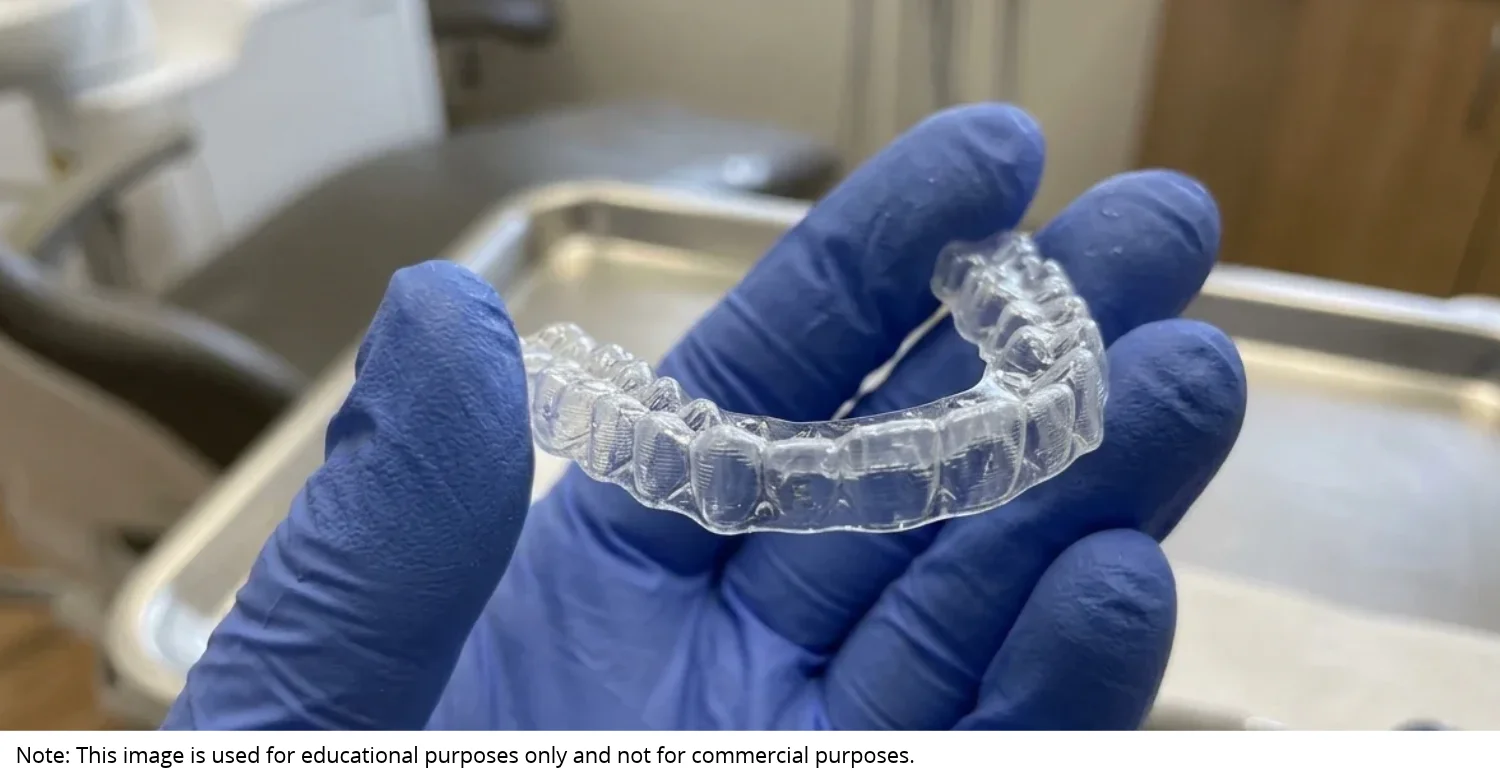
What Are the Signs of Invisalign Relapse?
Spotting the early signs of teeth shifting after Invisalign in Turkey or at home keeps treatment simpler. Common Invisalign relapse symptoms include:
Overlapping or crooked front teeth: the lower front teeth are usually the first to crowd.
Small gaps reopening between previously aligned teeth: especially where spaces were closed during treatment.
Changes in the dental midline or tooth positioning: the centre lines of your upper and lower teeth may no longer match.
Changes in how upper and lower teeth meet: your bite may feel different.
Retainers feeling tighter or no longer fitting properly: this is often the earliest warning sign.
When Should You Seek Prompt Orthodontic Care?
Most relapse develops slowly and is not an emergency. However, contact your dentist or orthodontist soon if you notice:
A tooth that feels loose or wobbly
Bleeding, swollen or receding gums
A fixed retainer wire that has come loose or broken
A sudden change in your bite, or difficulty closing your teeth together
Ongoing tooth or jaw pain, or clicking when you chew
A retainer that no longer fits at all
What Should You Do If Your Teeth Have Shifted After Invisalign?
Act early and stay calm. Keep wearing your retainer if it still fits comfortably, because it may stop further movement. Don't force a tight retainer or an old aligner into place, as this can strain your teeth and gums. Take clear photos of your smile and bite so you can compare them later. Then book an orthodontic assessment. If you live abroad, a clinic treating teeth shifting after Invisalign in Turkey can often review your case remotely first, using your photos and records.
Arrange an Orthodontic Assessment
An assessment shows exactly what has changed and why. Your orthodontist will:
Measure how far your teeth have moved and in which direction
Check your current bite, tooth positions and retainer fit
Determine whether the movement involves only the teeth or is linked to a wider bite problem
Replace a Damaged or Poorly Fitting Retainer
A replacement retainer may be appropriate when your old one is lost, cracked, worn or slightly loose, and your teeth have barely moved. It helps to understand what a retainer can and cannot do. A retainer is designed to hold teeth in place, not to move them. It can stabilize very small changes, but it won't correct movement that has already happened. If your teeth have clearly shifted, a new retainer will simply hold them in their shifted positions.
Consider Invisalign Refinement for Minor Relapse
A refinement is a short series of new clear aligners made from a fresh digital scan. It targets only the teeth that have moved, such as a rotated lower front tooth or a small gap that has reopened. For teeth shifting after Invisalign in Turkey, refinement may be suitable when:
Only a few teeth have moved
Your bite is still stable
Your gums and bone are healthy
You are committed to wearing retainers afterwards
It is usually quicker and simpler than starting full treatment again.
When Is a Second Full Orthodontic Treatment Necessary?
A second full course may be needed when relapse involves significant crowding, several reopened spaces, bite changes or movement in both arches. The decision rests on clinical findings, not on how your smile looks alone. Two smiles that look similar can have very different underlying problems.
Option | Best suited for | What it does |
Replacement retainer | Little or no movement | Holds teeth in their current position |
Invisalign refinement | Minor relapse in a few teeth | Corrects small changes |
Full retreatment | Moderate to significant relapse or bite problems | Realigns the teeth and bite |
What If My Teeth Move After Invisalign?
A small amount of movement after Invisalign is common, and it rarely means your treatment failed. The important thing is how much your teeth have moved and why. Slight changes caught early can often be held with a well-fitting retainer or corrected with a few refinement aligners. Bigger changes may need a new treatment plan. Don't wait to see if things settle, because teeth seldom move back into place on their own. An early check-up keeps your options simpler and treatment shorter.
Ready to transform your smile?
Talk to our team and get a FREE treatment plan.
How Is Teeth Shifting After Invisalign in Turkey Evaluated?
Evaluating teeth shifting after Invisalign in Turkey involves more than looking at your smile. A thorough assessment checks your teeth, gums, bone, roots and bite before any new aligners are planned. This protects your oral health and makes results more predictable. International patients usually complete the assessment on their first visit to Istanbul, often after sending photos in advance. The steps below explain what to expect and how to prepare.
Reviewing Your Previous Invisalign Treatment
Your treatment history helps explain why relapse happened. If you have them, bring:
Previous treatment records and digital scans
Your original orthodontic plan or ClinCheck images
Before-and-after photos
Details of any teeth that were removed
The type of retainer you were given and how often you wore it
Don't worry if some records are missing. An accurate assessment of teeth shifting after Invisalign in Turkey can still be done using fresh scans and X-rays.
Checking Gum and Bone Support
Healthy gums and bone are essential before teeth are moved again. Your dentist will check your gum health and measure your periodontal pockets, the small spaces between gum and tooth. They will also look for gum recession and check bone levels on X-rays. Any active gum disease must be treated and brought under control first, because moving teeth through inflamed tissue can speed up bone loss. Once the gums are stable, many patients can have aligners safely with closer monitoring.
Evaluating Tooth Roots and Existing Dental Work
X-rays show the length and position of your roots. Orthodontic treatment can sometimes cause mild root shortening, called root resorption. It is usually minor, but it must be checked before teeth are moved further. Existing dental work also matters:
Crowns may need special bonding techniques for aligner attachments
Bridges join teeth together, so those teeth cannot move independently
Dental implants are fixed in the bone and do not move with aligners
These factors shape what treatment can safely achieve.
Digital Scanning and Bite Assessment
An intraoral scanner takes a 3D digital impression of your teeth in minutes, with no messy moulds. The scan records your current tooth positions and can be compared with earlier records. Your orthodontist also checks how your teeth meet when you bite and chew. This shows whether relapse affects only alignment or also how your teeth work together, for example through uneven contacts, crossbites or jaw discomfort. For teeth shifting after Invisalign in Turkey, this scan forms the basis of the treatment plan.
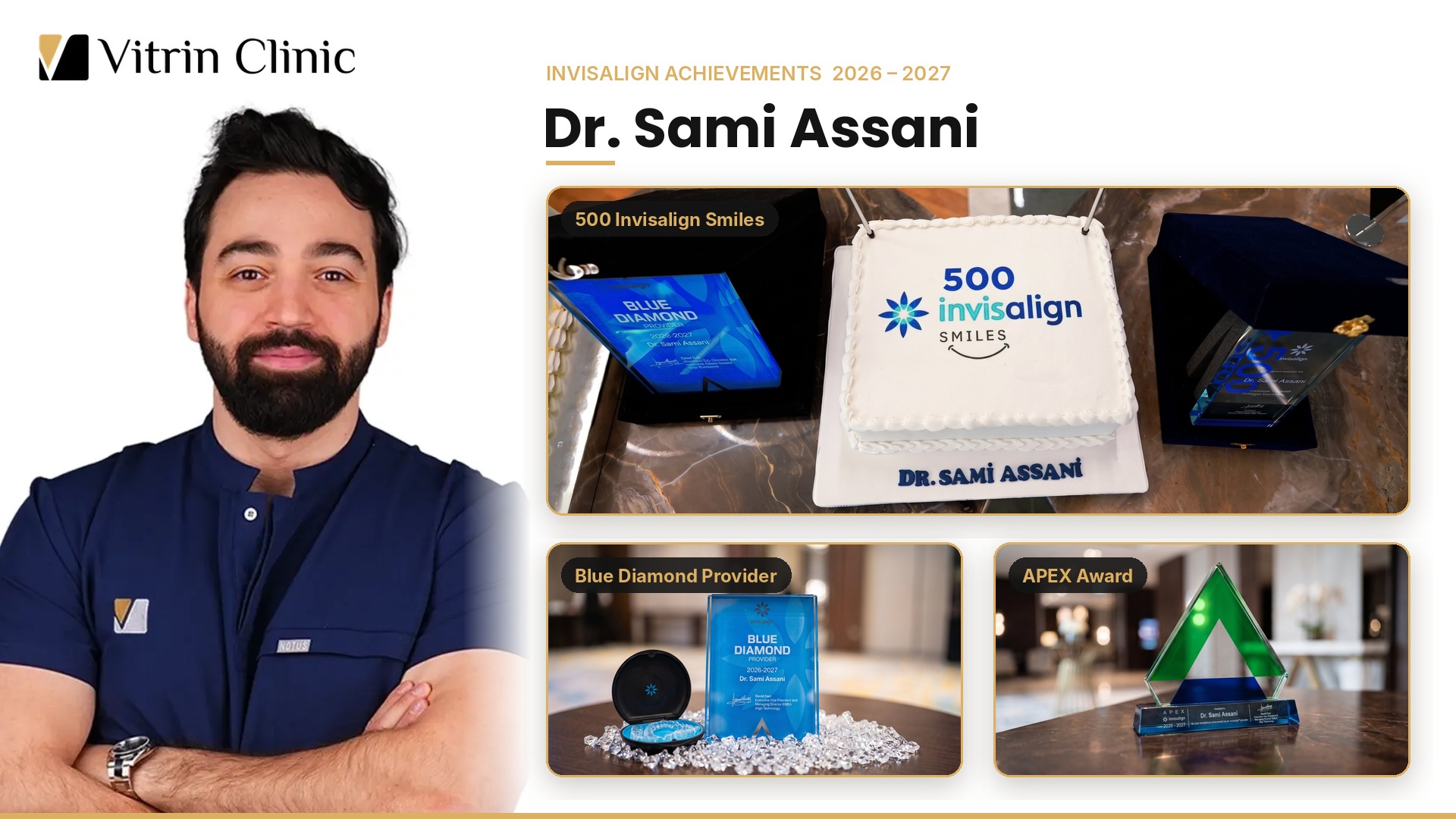
Dr. Sami’s Invisalign Excellence: Top 1% Recognition and 500+ Successful Cases
Dr. Sami has been honored with the prestigious Invisalign Apex Award, a distinction that places him among the top 1% of Invisalign providers across Europe, the Middle East, and Africa (EMEA). This milestone is further underscored by his achievement of Blue Diamond status and the successful completion of more than 500 Invisalign cases.
Ready to transform your smile?
Talk to our team and get a FREE treatment plan.
Can Invisalign Correct Teeth That Have Shifted Again?
In many cases, yes. Clear aligners are often well suited to correcting orthodontic relapse after Invisalign, especially when the movement is mild or moderate. The approach depends on how many teeth have moved, how far they have moved and whether your bite is affected. Your orthodontist will explain whether aligners alone can give a stable result. Severe cases may need other methods. Correcting teeth shifting after Invisalign in Turkey starts with knowing which category your relapse falls into.
Mild Relapse: Correcting Minor Crowding and Gaps
Mild relapse usually means small spaces, minor rotations or front-tooth crowding that has come back. These changes respond well to a small number of aligners. Treatment may focus on one arch only, often the lower front teeth. Because the movements are small, results usually come relatively quickly. Afterwards, a new retainer is made to fit the corrected positions. Mild cases of teeth shifting after Invisalign in Turkey are often the simplest to manage.
Moderate Relapse: When More Comprehensive Alignment Is Needed
Moderate relapse affects several teeth or causes more visible changes, so a more comprehensive aligner plan may be needed. Your orthodontist may use:
Attachments: small tooth-coloured bumps bonded to the teeth that help aligners grip and guide movement
Interproximal reduction (IPR): gentle polishing of a fraction of a millimetre of enamel between teeth to create space
Severe Relapse: When Clear Aligners May Not Be Enough
Some cases need more than aligners. These may include:
Significant bite problems, such as a deep bite or an open bite
Advanced bone loss from gum disease
Skeletal problems, where the jaws themselves don't match
In these situations, your orthodontist may consider fixed braces, combined treatment with a gum specialist or other orthodontic approaches. The aim is to improve function and stability, not just appearance.
Can Invisalign Fix a Shifted Tooth?
Often, yes. A single shifted tooth, such as a rotated or tipped front tooth, can often be corrected with a short course of aligners. Attachments may be added to give the aligner a better grip on that tooth. First, though, your orthodontist checks why it moved. If a fixed retainer has come loose, a filling has changed or a bite contact is pushing the tooth, that cause must be fixed. Otherwise, the tooth may move again after correction.
.jpg)
How Long Does a Second Invisalign Treatment Take?
Retreatment is often shorter than the original course, especially when only a few teeth have shifted. Minor corrections may take a few months, while complex cases take longer. For teeth shifting after Invisalign in Turkey, the timeline depends on:
How many teeth are affected
How far they have moved
Whether your bite needs correcting
The health of your gums and bone
How consistently you wear your aligners (20–22 hours a day, when prescribed)
Digital planning estimates how many aligners you will need. Extra refinement aligners are sometimes needed if teeth don't follow the plan exactly.
How Can You Prevent Teeth from Shifting After Orthodontic Treatment?
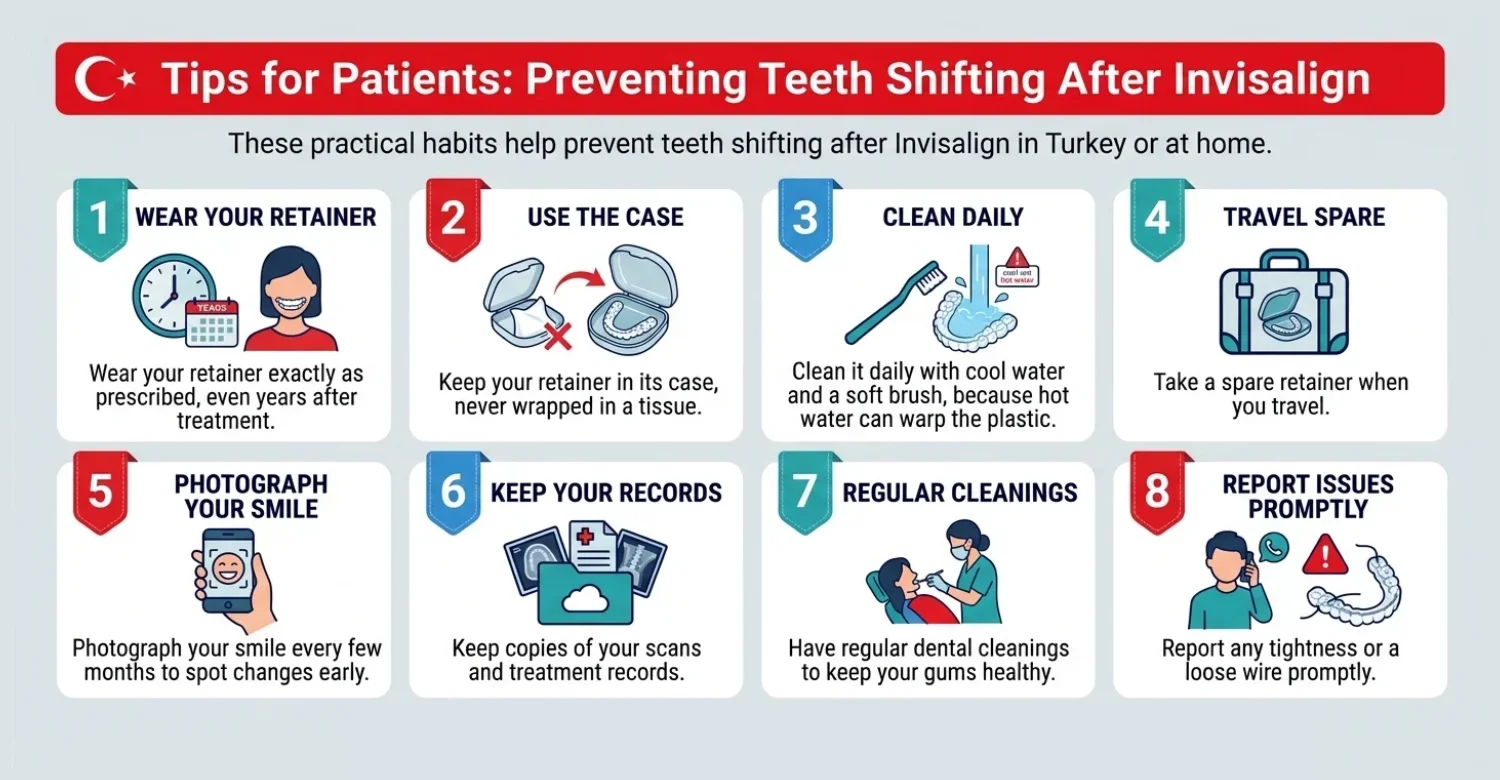
Preventing teeth from shifting after orthodontic treatment depends mostly on retention. Your teeth can move throughout life, so keeping them stable needs ongoing support. Good habits, healthy gums and regular check-ups all help. The goal is to protect the time and money you have already put into your smile. Whether you were treated locally or are considering care for teeth shifting after Invisalign in Turkey, these steps apply to every patient.
Follow Your Long-Term Retainer Schedule
Feature | Fixed retainer | Removable retainer |
Design | Thin wire bonded behind the front teeth | Clear plastic or wire-and-acrylic appliance |
Wear | Works 24 hours a day | Worn as prescribed, usually at night |
Reliance on you | Nothing to remember | Needs daily wear |
Cleaning | Needs careful flossing around the wire | Teeth can be cleaned normally |
Some patients need both types, especially after severe crowding, gap closure or rotations. Many orthodontists recommend wearing a removable retainer at night for many years, often for life.
Replace Lost, Broken or Damaged Retainers Promptly
Teeth can start moving within days to weeks without a retainer. The longer you wait for a replacement, the more your teeth can move, and you may need aligners to correct them. If your retainer is lost or cracked, contact your clinic quickly. If they have a digital scan on file, a new retainer can often be made without new impressions. If a fixed retainer comes loose, avoid biting on it and book a repair promptly. Meanwhile, wear a removable retainer if you have one.
Address Habits That Put Pressure on Your Teeth
Everyday habits can slowly push teeth out of line. Common examples include:
Tongue thrusting, where the tongue presses against the front teeth when you swallow
Nail biting
Lip or cheek biting
Clenching and grinding
If you grind your teeth (bruxism), your dentist may recommend a custom night guard. It protects your teeth and spreads the force of biting more evenly. In some cases, one carefully designed appliance can work as both a retainer and a guard. Your orthodontist will advise on the best option.
Attend Regular Orthodontic Follow-Ups
Regular check-ups catch small changes before they become noticeable. During follow-ups, your orthodontist checks your tooth alignment, how your retainer fits and how worn it is, your gum health and your bite. Small problems, such as a slightly loose fixed retainer, can be fixed quickly. If you were treated abroad, you can combine check-ups with your local dentist and remote reviews. Sending photos to your treating clinic once or twice a year is an easy way to keep track.
What We Notice Clinically
At Vitrin Clinic, we see similar relapse patterns again and again. The lower front teeth are usually the first to crowd. Many patients wore their retainers well for the first year, then gradually stopped. Teeth that were rotated and gaps that were closed are the most common places for movement. Some patients try their old aligners at home, which can cause discomfort without fixing the problem. Many patients we see for teeth shifting after Invisalign in Turkey have mild changes, but every case still needs a full assessment.
Questions to Ask Your Orthodontist
Bring these questions to your appointment about teeth shifting after Invisalign in Turkey:
Why have my teeth moved, and is the cause still present?
Is my relapse mild, moderate or severe?
Can a refinement fix it, or do I need full retreatment?
Are my gums, bone and roots healthy enough for more movement?
Which retainer will I need afterwards, and for how long?
Clinical Note
Dr.Sami Assani stresses that orthodontic relapse should never be judged by appearance alone. Two patients with similar-looking crowding can have very different causes. Before recommending more aligner treatment, the orthodontist should examine tooth positions, gum health, root condition and the bite. This keeps treatment safe and deals with the real cause of the movement. It also gives the new result the best chance of staying stable over the long term.
.jpg)
.jpg)
Your Invisalign Journey at Vitrin Clinic
Your journey to a straighter smile begins with understanding your orthodontic needs and ends with a personalized treatment plan designed around your teeth, bite, and smile goals. At Vitrin Clinic, every stage of your Invisalign treatment is carefully coordinated, combining digital treatment planning, professional orthodontic care, and international patient support to make your experience in Istanbul as smooth and comfortable as possible.
1. Your Initial Invisalign Assessment
Every successful orthodontic treatment begins with a thorough evaluation. Share your smile photographs, available dental records, and relevant medical history with our team. Our orthodontic specialists assess your teeth alignment, bite, gum health, and overall oral condition to determine whether Invisalign is suitable for your case and identify any preliminary treatment requirements.
2. Your Personalized Invisalign Treatment Plan
Your teeth deserve an individual approach, not a standard aligner package. Following your initial assessment, our orthodontic team develops a personalized treatment plan using digital scans and ClinCheck planning. This process helps map out the anticipated tooth movements, estimated treatment duration, and number of aligners required. Where necessary, your plan may also include attachments, interproximal reduction (IPR), or elastics to support specific tooth movements.
3. Your Stay in Istanbul, Seamlessly Arranged
From your arrival to your orthodontic appointments, our international patient coordination team helps organize the practical details of your visit. Depending on your treatment arrangement, this may include hotel accommodation and airport, hotel, and clinic transfers. Our team also assists with appointment coordination and communication, allowing you to focus on starting your Invisalign treatment during your stay.
4. Your Invisalign Transformation and Ongoing Care
Your Invisalign treatment begins with receiving your custom-made clear aligners and instructions on how to wear and maintain them. For effective progress, aligners generally need to be worn for 20–22 hours daily, removing them only for eating, drinking anything other than water, and oral hygiene. Your orthodontist monitors your progress and may recommend refinements or adjustments when necessary. Before returning home, you receive personalized instructions on aligner care, follow-up appointments, and long-term retention to help maintain your results after treatment.
Your Treatment at Vitrin Clinic
Vitrin Clinic in Istanbul welcomes international patients for the assessment and treatment of teeth shifting after Invisalign in Turkey. Invisalign treatmentis led by Dr. Sami Assani, who plans each case around your tooth alignment, bite and gum health. Digital scans and ClinCheck planning let you preview the proposed tooth movements before treatment begins. The orthodontic team then explains whether a minor refinement or a new treatment course suits your situation better.
Retention and long-term follow-up are agreed before retreatment starts, so your results stay protected once you return home. Dental tourism patients often combine treatment with a short stay in Istanbul. To begin, share your previous Invisalign records, scans and recent smile photos for an initial assessment of teeth shifting after Invisalign in Turkey. This gives the team a clearer picture of your likely treatment, the number of visits you'll need and your timeline.






Book your FREE treatment plan with Vitrin Clinic and get a personalized treatment plan from our dental team.
Ready to transform your smile?
Talk to our team and get a FREE treatment plan.
References

Medically reviewed by
Dr. Sami AssaniDr. Sami Assani leads clear aligner treatment at Vitrin Clinic. He is an Invisalign Apex Award recipient (top 1% of providers in EMEA) and a Blue Diamond provider with 500+ completed Invisalign cases. He is known for precise digital planning and long-term, stable results.
More in After Care
View all 28 min readHow to Arrange Dental Maintenance in Your Home Country After Treatment in Turkey?Dental maintenance after treatment abroad in Turkey should continue after you return home. Regular examinations help monitor implants, crowns, bridges, gums, and natural teeth.
 27 min readHow Can You Get a Second Opinion on Dental Work Completed Abroad in Turkey?Getting a second opinion after dental treatment abroad can help clarify previous procedures and identify appropriate next steps
 17 min readHow to Manage Excess Saliva or Gagging With New Dentures in Turkey?Gagging with new dentures in Turkey is a common concern among patients who travel for full or partial dentures. In the first days, many people also notice excessive saliva with dentures, drooling, or mild nausea.
 29 min readWhat Should You Do If You Develop Mouth Sores After Dental Treatment in Turkey?Mouth sores after dental treatment in Turkey can develop from tissue injuries, accidental biting, friction, or unrelated oral conditions.
Still have a question?
Our patient coordinators answer every day of the week: before, during and long after your treatment.
