Dental Tourism in Turkey
September 16, 2025
Essential Root Canal Therapy: Why Turkey Is the Smart Choice in 2026?
 Dr. Rifat Alsaman
Endodontic treatment, also known as Root Canal Therapy, treats infection or inflammation inside a tooth's pulp. It lets patients keep their natural teeth by removing damaged tissue and sealing the space to prevent future infections.
Why Is This Procedure Performed?
This treatment is needed when the pulp becomes infected or damaged. Deep decay, trauma, or repeated dental work can cause this. The pulp is the soft tissue inside the tooth that contains nerves and blood vessels.
Clinical Overview: What Are Some Important Facts About Endodontic Treatment?
Endodontic therapy is one of the most successful procedures in modern dentistry. Success rates exceed 90% when performed correctly and followed by proper restoration. The treatment removes infected or inflamed dental pulp while preserving the natural tooth structure. Contrary to common belief, a root canal eliminates pain rather than causing it. Modern anesthesia makes the procedure comfortable for most patients. At Vitrin Clinic, our specialists use advanced digital imaging and precision endodontic techniques. This improves treatment accuracy, reduces complications, and helps patients keep their natural teeth for many years.
The Biological Breakdown: Enamel, Dentine, and the Dental Pulp Layer
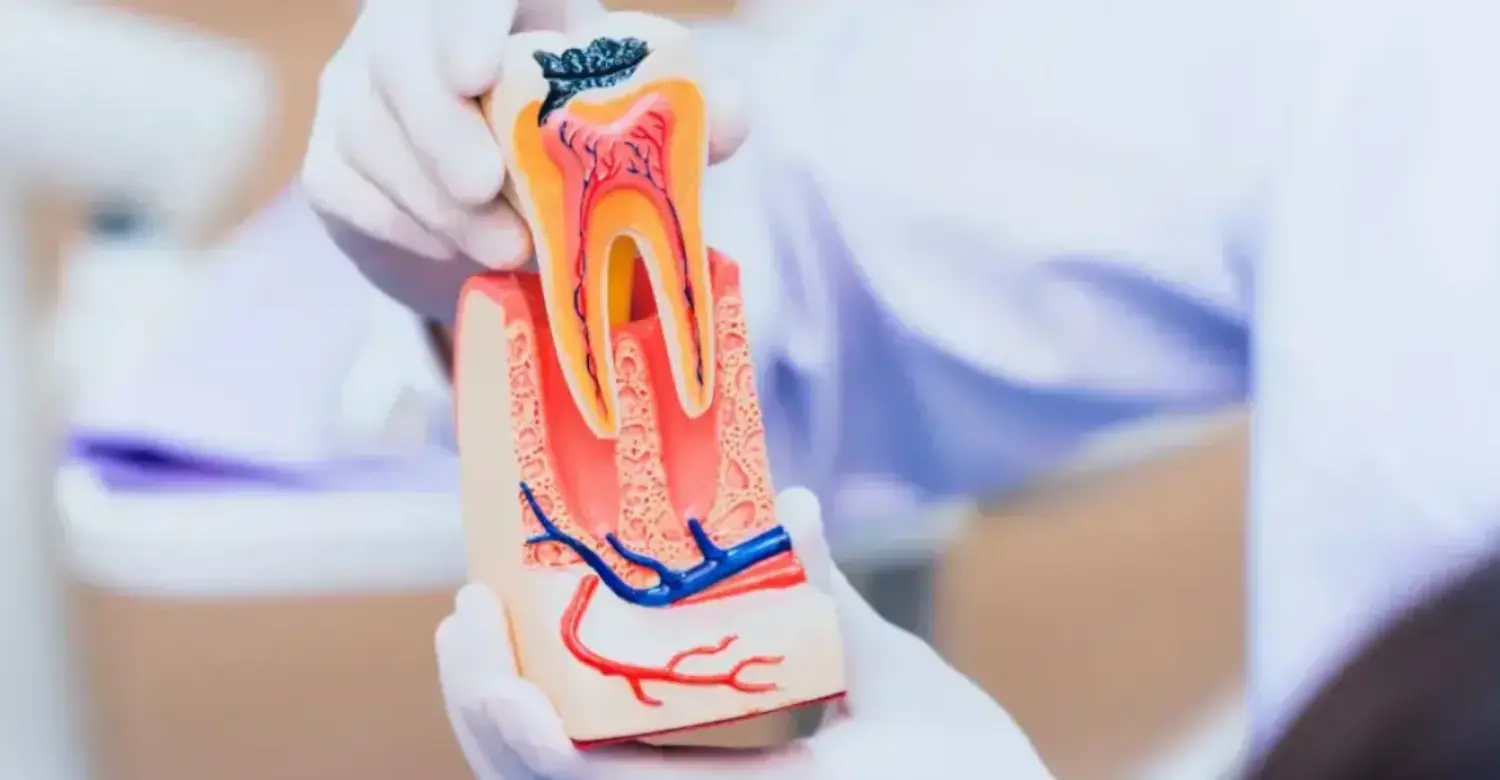
Understanding tooth anatomy helps explain why this treatment becomes necessary. The outer enamel is the body's hardest tissue and protects the tooth from daily wear. Beneath it lies dentine, a porous layer containing microscopic tubules that can transmit sensitivity when exposed. At the center is the dental pulp. It contains nerves, blood vessels, and connective tissue responsible for nourishing the tooth during development. Once bacteria reach the pulp through deep decay, cracks, or trauma, inflammation and infection can develop. At Vitrin Clinic, preserving as much healthy enamel and dentine as possible is always a priority while safely treating infected pulp tissue.
What Happens Inside the Tooth During the Procedure?
During the procedure, the infected pulp is removed. The inside of the tooth is then cleaned, disinfected, shaped, and filled with a biocompatible material called gutta-percha. Finally, the tooth is sealed and restored with a filling or crown.
How Does This Treatment Save the Tooth?
By removing the infected tissue and sealing the tooth, this treatment eliminates pain and infection while preserving the natural structure. This helps maintain the patient’s bite, chewing ability, and natural appearance.
What Are the Main Steps of the Procedure?
The procedure involves diagnosis, cleaning and shaping of the canals, sealing, and restoration.
How Is the Tooth Diagnosed Before the Procedure?
X-rays and clinical tests evaluate the condition of the pulp and surrounding bone. Your dentist will determine if the pulp is infected or inflamed, and whether this treatment is the right option.
What Happens During Cleaning and Shaping of Root Canals?
After numbing the area, the dentist opens the tooth to access the canals. Then they remove the infected tissue and shape the canals for filling.
How Is the Canal Sealed and Restored?
Once cleaned, the canals are filled and sealed to prevent reinfection. The tooth is then restored with a filling or crown to regain full function and appearance.
Who Needs This Treatment and When Is It Recommended?
This treatment is recommended for patients with signs of pulp infection or when the tooth's integrity has been compromised.
What Are the Common Symptoms Indicating the Need for a Root Canal?
Persistent tooth pain, sensitivity to hot or cold, swelling, and darkening of the tooth are common symptoms.
How Can Tooth Sensitivity Signal Problems?
Long-lasting sensitivity, especially to heat, may indicate inflamed or infected pulp. This often requires endodontic treatment.
Does Persistent Tooth Pain Mean This Treatment Is Needed?
Yes, ongoing pain can signal a deep infection or nerve damage. This is especially true if over-the-counter painkillers provide little relief. Metal, porcelain, or zirconia? Find the right material for your needs. Know more about types of dental crowns.
Which Dental Conditions Typically Lead to This Treatment?
Various conditions can cause pulp damage.
How Do Deep Cavities Result in Infections?
If a cavity reaches the pulp, bacteria can cause infection. This leads to severe pain and abscess formation.
Why Can Dental Trauma Require This Treatment?
A physical impact, even without visible cracks, can damage the tooth’s nerve. This may require endodontic therapy.
How Do Repeated Dental Procedures Affect the Tooth Nerve?
Multiple fillings or restorations can irritate the pulp. Over time, this may lead to inflammation or infection.
How Is Root Canal Therapy Performed in Turkey?
Step | What Happens |
|---|---|
1. Examination & Diagnosis | X‑rays / panoramics / 3D imaging to see the infection, the root anatomy, etc. Your dentist/endodontist will check if a root canal is needed. |
2. Local Anaesthesia | The area around the affected tooth is numbed; you should not feel pain during the procedure, though you may feel pressure. |
3. Isolation of the Tooth | Use of a rubber dam to keep the tooth dry and to avoid saliva contamination. Not all clinics explicitly mention this, but many do. |
4. Access Opening | The dentist drills into the crown of the tooth to reach the pulp chamber. |
5. Removal of Infected Pulp / Cleaning and Shaping Canals | The pulp is removed; the canals are cleaned, shaped, enlarged. Irrigants (antiseptic fluids) are used to disinfect, removing bacteria & debris. |
6. Possibly an Inter‑Appointment Medicament | If infection is severe, they might place medication temporarily to help disinfect before completing the treatment in a later visit. |
7. Filling (Obturation) & Sealing | Once the canal is clean and dry, it is filled with a biocompatible material (often gutta‑percha) and sealed to prevent reinfection. |
8. Restoring the Tooth | After root canal, since the tooth can become fragile, a filling is put in; often a crown is recommended to protect and restore function. |
9. Aftercare & Follow‑up | Pain / sensitivity for a few days is normal. The clinic should provide instructions, pain meds if needed, possibly antibiotics. Follow‑ups to check healing and ensure there is no further infection. |
What Makes Root Canal Therapy in Turkey Different?
Turkey offers modern technology, experienced specialists, and competitive pricing in state-of-the-art clinics.
Why Do Many International Patients Choose Turkey for Root Canal?
Affordable costs, high standards of care, English-speaking staff, and seamless medical tourism services make Turkey a preferred destination.
How Do Advanced Clinics in Turkey Improve Success Rates?
Clinics in Turkey use 3D imaging, rotary instruments, and laser-assisted cleaning for precision and higher success rates. A micro-surgical procedure to remove infection at the root tip and save your tooth. Know more about apicoectomy surgery.
What Is the Typical Procedure Timeline in Turkish Clinics?
The typical procedure timeline in Turkish dental clinics is designed for efficiency and patient comfort. First, patients undergo an initial consultation and digital imaging to assess their needs.
Treatment planning follows, with cost and procedure details explained clearly. Depending on the treatment such as smile design, implants, or lumineers preparatory steps like cleaning, impressions, or minor adjustments may take one to two days. The main procedure is usually completed within a few sessions, often over a week.
Follow-up visits ensure proper healing and final adjustments. This streamlined process makes Turkey a popular destination for international patients.
How Many Visits Are Required for This dental procedure?
Most cases are completed in 1–2 visits, depending on the severity of the infection and restoration needs.
How Long Does Each Appointment Usually Last?
Appointments typically last between 60 to 90 minutes per session.
What Is the Cost of Root Canal Therapy in Turkey?
Dental treatment The therapy Cost at Vitrin Clinic:
Tooth Type | Complexity | Estimated Cost (USD) | Estimated Cost (EUR) |
|---|---|---|---|
Front Tooth | Simple (1 canal) | $80 – $150 | €75 – €140 |
Premolar | Moderate (1–2 canals) | $150 – $250 | €140 – €230 |
Molar (Back Tooth) | Complex (3+ canals) | $200 – $350 | €190 – €330 |
Re-treatment | Previously treated | $250 – $400+ | €230 – €380+ |
Optional Crown | After RCT (zirconia/porcelain) | $150 – $300+ | €140 – €280+ |
How Does the Price Compare to Europe or the US?
It in Turkey can be 50–70% more affordable than in Western countries without compromising quality.
What Factors Influence the Cost of Root Canal Treatment?
Tooth location, complexity, number of canals, and need for a crown can affect the overall cost.
Financial Optimization: Dental Insurance Policy Coverage Options Explained
Dental insurance coverage for such treatment varies depending on the provider, country, and individual policy. Many insurance plans partially cover medically necessary endodontic treatment, while cosmetic procedures are usually excluded. Patients traveling internationally should also check whether overseas dental care qualifies for reimbursement. At Vitrin Clinic, our treatment coordinators provide transparent cost estimates and help international patients prepare the necessary documentation for insurance claims whenever applicable.
Comfort-First Dentistry: Sedation Options
We understand that dental anxiety is common, especially for procedures like root canals. That's why Vitrin Clinic offers several sedation options to ensure your comfort. From nitrous oxide (laughing gas) for mild relaxation to oral sedation for moderate anxiety, we tailor the approach to your needs. For more complex cases, IV sedation can be arranged. Dr. Al-Samman and his team are experienced in managing anxious patients, making your visit as stress-free as possible. Your comfort is our priority.
What Are the Benefits of Root Canal Therapy?
Saves your natural tooth – Prevents the need for extraction.
Cost-effective long-term – Less expensive than tooth extraction + implant/bridge.
Restores normal chewing and biting – You can eat comfortably again.
Eliminates infection and pain – Removes the source of inflammation or abscess.
Maintains natural appearance – Keeps your smile intact.
Prevents spread of infection – Stops bacteria from reaching other teeth or bloodstream.
Painless procedure – Modern techniques make it virtually pain-free (similar to a filling).
Supports jawbone health – Preserves bone structure by keeping the root in place.
Long-lasting results – A properly done root canal can last decades, especially with a crown.
Avoids repeated dental problems – Stops recurring issues like abscesses or swelling.
Constant pain? It could signal an infection or a failed root canal. Know more about persistent toothache.
Debunking Endodontic Myths: Common Misconceptions About Root Canals
Despite decades of research proving the safety and effectiveness of this endodontic procedure, several myths continue to discourage patients from seeking treatment. Modern endodontics is based on scientific evidence, advanced technology, and minimally invasive techniques. Understanding the facts can help patients make informed decisions and avoid unnecessary tooth extractions. At Vitrin Clinic, patient education is an important part of every treatment plan.
Myth: A Root Canal Removes the Entire Root of the Tooth
This is one of the most common misconceptions. A root canal does not remove the tooth's roots. Instead, the dentist cleans the infected pulp from inside the root canals while leaving the natural roots securely anchored in the jawbone. Preserving these roots allows the tooth to continue functioning normally after restoration with a filling or crown.
Myth: Endodontic Treatment Can Cause Systemic Sickness or Illness
Scientific research has found no reliable evidence that properly performed root canal treatment causes systemic diseases. This myth originated from outdated research that has long been disproven. Modern infection control protocols make this therapy a safe and predictable procedure for preserving natural teeth.
Myth: A Tooth That Has Had a Root Canal Will Eventually Fall Out
A tooth treated with a successful root canal can remain healthy for decades when properly restored and maintained. Placing a protective crown when recommended, maintaining excellent oral hygiene, and attending routine dental checkups significantly increase long-term success. At Vitrin Clinic, patients receive individualized follow-up care to maximize treatment longevity.
How Does This Treatment Relieve Pain?
By removing the infected pulp and sealing the canal, the pain is eliminated almost immediately after treatment.
How Does It Prevent Tooth Loss and Preserve Natural Teeth?
It saves the original tooth structure, which helps maintain jawbone health and avoids the need for extraction or implants.
How Does It Improve Oral Health and Overall Aesthetics?
A treated and crowned tooth restores a natural look and full functionality, contributing to a healthy smile.
Understanding Why Antibiotics Alone Cannot Cure Severe Tooth Infections
Many patients assume antibiotics can replace root canal treatment, but this is rarely possible. Once the pulp inside a tooth becomes infected and loses its blood supply, antibiotics cannot effectively reach the bacteria trapped within the root canal system. Medication may temporarily reduce swelling or help control infection in surrounding tissues, but it cannot eliminate bacteria inside the tooth itself. The only predictable solution is removing the infected pulp and disinfecting the canals. At Vitrin Clinic, antibiotics are prescribed only when clinically appropriate and are never considered a substitute for proper endodontic treatment.
The Hidden Reality: Why Disappearing Pain Does Not Mean the Infection Is Cured
A sudden reduction in tooth pain may seem like good news, but it can actually indicate that the nerve inside the tooth has died. While discomfort may disappear temporarily, bacteria can continue spreading silently into the surrounding bone, increasing the risk of abscess formation and tooth loss. Delaying treatment often makes future care more complicated and costly. At Vitrin Clinic, digital examinations help detect hidden infections before they become serious, allowing patients to receive timely treatment and improve the chances of saving the natural tooth.
Exploring Alternatives: When Root Canal Isn't the Only Option
While this procedure is the standard for treating infected pulp, there are alternatives in specific cases. For children with immature teeth, a pulpotomy may be performed to preserve the tooth's vitality. Apexification is another option for teeth with open roots, encouraging the formation of a calcified barrier. However, these are often temporary or less predictable than a root canal. Dr. Al-Samman will evaluate your unique situation and recommend the most effective treatment, ensuring you understand all available options before proceeding.
What Risks or Complications Can Occur After Root Canal Therapy?
Infection or reinfection
If bacteria are not fully removed or the tooth is not properly sealed, infection can return.
Tooth fracture
The tooth may become more brittle over time, especially without a protective crown.
Post-treatment pain or sensitivity
Some discomfort is normal for a few days. Prolonged or severe pain may indicate a problem.
Swelling or inflammation
Temporary swelling is common. If it persists, it may signal infection or tissue irritation.
Incomplete cleaning of root canals
Complex root structures may be hard to fully clean, especially in molars.
Instrument breakage
Tiny dental tools may break inside a canal. This is rare but possible.
Damage to surrounding tissues
Irrigating solutions or instruments may irritate the jaw or soft tissues if not handled properly.
Need for retreatment or surgery
If the root canal fails, retreatment or an apicoectomy (root tip surgery) might be required.
Tooth discoloration
The treated tooth may darken over time, especially if no crown is placed.
A second chance to save a tooth when a root canal fails. Know more about endodontic retreatment.
What Are the Short-Term Side Effects of This Procedure?
Mild discomfort, swelling, or sensitivity is common. It usually resolves within a few days.
How Common Are Root Canal Treatment Failures?
Failures are rare but possible.
What Causes the Treatment to Fail?
Incomplete cleaning, missed canals, or reinfection can lead to failure.
How Is a Failed Root Canal Retreated?
Retreatment involves reopening the tooth. The dentist removes the previous filling, cleans the canals again, and reseals them.
Structural Preservation: The Technical Role of Dental Membranes
In certain complex cases, regenerative materials and specialized dental membranes may be used during surgical endodontic procedures. They encourage proper healing of surrounding bone and soft tissues. These materials are not required for routine the intervention. However, they can improve healing in selected cases involving root-end surgery or extensive bone loss. At Vitrin Clinic, treatment plans are customized according to each patient's clinical condition to achieve the best possible outcome.
Anatomical Challenges: How Complex or Curved Canals Affect Treatment Efficiency
Not every tooth has straight, easily accessible canals. Some teeth contain multiple branches, narrow passages, or sharply curved canals. These features make cleaning and shaping more technically demanding. Advanced magnification, rotary instruments, and three-dimensional imaging allow dentists to locate hidden canals and improve treatment precision. At Vitrin Clinic, modern endodontic technology helps manage complex root anatomy while preserving healthy tooth structure whenever possible.
How to Prepare for Root Canal Therapy?
What To Do | Why It Helps |
|---|---|
Book a free consultation beforehand with Vitrin’s endodontist. | To discuss your case (which tooth, how many roots, any infection) and get instructions. |
Bring your dental and medical history (medications, allergies, chronic conditions). | So Vitrin can adjust anesthesia or choose instruments safely. |
Eat a light meal a few hours before the appointment. | Local anesthesia can make you nauseous; having some food helps. |
Avoid alcohol, smoking at least 12–24 hours before. | Helps with healing and lowers risk during the procedure. |
Ensure you have someone to accompany or help you afterward (if sedation or travel needed). | Helps with comfort and logistics. |
Bring any x‑rays or dental records you have. | Helps reduce repeat imaging and speeds up planning. |
Ask questions in advance: how many visits will this take, what materials they’ll use, whether a crown will be needed. | Helps you understand cost, duration, and aftercare. |
Wear comfortable clothes, avoid jewelry in the mouth/neck area. | More comfort and easier procedure. |
Plan for aftercare: soft foods, pain relief meds, follow‑up appointments. | You’ll heal better and reduce complications. |
What Should Patients Expect Before the Procedure?
A consultation, dental imaging, and medical history review will be done. Local anesthesia is used during the procedure.
Are There Dietary or Medical Restrictions Before Root Canal?
Patients may be advised to eat before the procedure and avoid certain medications. Always follow your dentist’s instructions.
Restore a damaged tooth with a custom, durable cap in just 2-3 visits. Know more about fitting a crown.
What Is the Recovery Process After Root Canal Therapy?
Immediately After Treatment
Numbness lasts a few hours
Avoid chewing on the treated tooth until the numbness wears off. This prevents accidental injury.
Mild discomfort or soreness
You may feel some tenderness around the tooth or gum. It is usually less intense than a toothache.
First Few Days
Manage pain and swelling
Over-the-counter pain relievers like ibuprofen or acetaminophen usually help.
Use a cold compress if you notice swelling.
Avoid hard or sticky foods
Stick to soft foods like soups, yogurt, or mashed potatoes. This protects the treated tooth.
Maintain oral hygiene
Continue gentle brushing and flossing. Avoid vigorous brushing near the treated tooth.
Follow-Up Care
Return to the dentist
You may need a follow-up visit to check healing. A permanent filling or crown is placed then.
Permanent restoration
A crown is often recommended. It protects the tooth and restores full function.
Long-Term Care
Good oral hygiene
Brush twice daily and floss regularly. This prevents further infection.
Regular dental checkups
Visit your dentist every 6 months or as recommended.
Avoid excessive force on the tooth
Don’t use it to bite very hard objects or open packages.
How Long Does It Take to Heal After Root Canal Treatment?
Most patients recover in 2–5 days. Pain subsides quickly, and normal activities can resume soon after.
What Foods Should Be Avoided After Root Canal Therapy?
Avoid hard, sticky, or chewy foods until the final restoration is placed.
When Can Patients Return to Normal Activities After the Procedure?
Most return to daily activities the next day. Strenuous activity can resume after a short rest.
How Does Root Canal Therapy Compare to Alternatives?
Treatment Option | Description | Pros | Cons |
|---|---|---|---|
Endodontic treatment (RCT) | Removal of infected pulp, cleaning, sealing tooth | - Saves your natural tooth- Relieves pain- Maintains chewing function- Prevents infection spread | - Requires multiple visits sometimes- Needs restoration (crown)- Possible complications |
Tooth Extraction | Complete removal of the tooth | - Quick solution- Eliminates infection source- Sometimes less expensive upfront | - Loss of natural tooth- May cause shifting of other teeth- Need replacement (implant, bridge, denture)- Longer overall treatment and cost if replaced |
Dental Implant | Artificial tooth root placed surgically + crown | - Permanent tooth replacement- Preserves jawbone better than extraction alone- Natural look and function | - Higher cost- Surgical procedure with healing time- Requires sufficient bone density |
Dental Bridge | Fixed prosthetic that bridges gap of missing tooth | - Less invasive than implant- Restores function and aesthetics quickly | - Requires reduction of adjacent teeth- Can affect surrounding teeth health- May need replacement after years |
Watchful Waiting / Medication | Managing symptoms with painkillers or antibiotics temporarily | - Non-invasive- Can delay invasive treatment | - Does not solve underlying problem- Risk of worsening infection- Not a permanent solution |
Is Tooth Extraction a Better Option Than Root Canal?
Root canal preserves your natural tooth, which is generally preferred over extraction.
How Does Root Canal Therapy Compare to Dental Implants?
Implants are great but more invasive and costly. Root canal is less expensive and faster when tooth preservation is possible.
Can a Dental Crown Alone Replace This dental procedure?
No, a crown covers the tooth but does not treat internal infection. Root canal is necessary if the pulp is damaged.
What Technologies Are Used in Modern The therapy?
Digital X-rays and 3D Cone Beam CT Scans (CBCT)
Provide detailed images of tooth anatomy and root structure for accurate diagnosis and treatment planning.
Operating Microscope
Enhances visibility inside tiny root canals, allowing dentists to see details invisible to the naked eye.
Electronic Apex Locators
Precisely measure the length of the root canal to ensure thorough cleaning and filling.
Rotary Endodontic Files (Nickel-Titanium Instruments)
Flexible, powered files that efficiently clean and shape root canals with less risk of breakage.
Ultrasonic Instruments
Help remove debris, old filling materials, or infection more effectively in hard-to-reach canals.
Laser-Assisted Disinfection
Uses lasers to kill bacteria inside canals and improve sterilization beyond traditional methods.
Biocompatible Root Canal Filling Materials (e.g., Gutta-Percha)
Durable and safe materials to seal canals and prevent reinfection.
Digital Treatment Planning Software
Allows dentists to simulate and plan treatment steps, improving accuracy and patient outcomes.
3D Printing for Customized Tools or Guides (Emerging)
Used in some advanced clinics for precision in complex cases.
How Does Digital Imaging Improve Root Canal Accuracy?
Digital X-rays and CBCT scans provide detailed views for accurate diagnosis and precise treatment planning.
Why Are Rotary Instruments Preferred Over Manual Tools?
Rotary instruments allow for quicker and more effective canal shaping with fewer complications.
How Do Lasers Enhance It Outcomes?
Laser technology sterilizes canals more effectively and reduces bacterial presence, improving long-term success.
What Should Patients Know About Such treatment in Turkey?
Overview of The intervention in Turkey
Procedure: This treatment involves removing infected or damaged pulp from inside the tooth, cleaning and disinfecting the canal, and then sealing it to prevent further infection.
Duration: Typically takes between 1 to 2 hours per tooth.
Anesthesia: Local anesthesia is used to ensure the procedure is pain-free.
Recovery: Most patients experience mild discomfort for a few days, which can be managed with over-the-counter pain relievers.
Cost of Endodontic treatment in Turkey
The cost varies depending on the complexity of the case and the clinic’s location:
Single Canal Tooth: Approximately €75–€200.
Multiple Canal Teeth: Costs can be higher, depending on the number of canals and the complexity of the procedure.
Comparison: In countries like the USA or UK, similar treatments can cost between $700–$1,200, making Turkey a more affordable option.
Choosing a Clinic
When selecting a clinic in Turkey:
Accreditation: Ensure the clinic is accredited by relevant health authorities.
Technology: opt for clinics that use modern equipment like digital X-rays and rotary endodontic tools.
Reviews: Check patient testimonials and reviews to gauge the clinic’s reputation.
Consultation: Many clinics offer free initial consultations.
Benefits of Choosing Turkey
Cost-Effective: Significant savings compared to Western countries.
Quality Care: Many Turkish dentists are internationally trained and English-speaking.
Dental Tourism: Combine treatment with a visit to Turkey’s rich cultural heritage.
Considerations and Risks
Quality Variations: Not all clinics maintain the same standards.
Follow-Up Care: Post-treatment support might be limited if you’re traveling from abroad.
Potential Complications: As with any medical procedure, there’s a risk of complications.
Final Tips
Research: Thoroughly research clinics and read patient reviews.
Communication: Ensure clear communication regarding the procedure, costs, and expectations.
Aftercare: Understand the aftercare instructions and ensure you can follow them during your stay.
How Do Turkish Dentists Ensure Pain-Free Treatment?
Modern anesthesia, sedation options, and advanced techniques ensure a comfortable and pain-free experience.
What Languages Do Dentists in Turkey Speak for International Patients?
Many dentists speak English, and clinics often provide multilingual staff to support patients from abroad.
How Do Clinics in Turkey Maintain Sterilization and Safety Standards?
Clinics follow strict international protocols, including sterilized instruments, PPE, and hygiene monitoring system
Periapical Healing: How Modern Sealers Supercharge This dental procedure
Modern dentistry focuses heavily on saving your natural teeth through advanced clinical techniques. A systematic review published in BioMed Research International evaluated how different root canal sealers affect the healing of tissues around the tooth root. The study concluded that while all modern materials facilitate healing, advanced bioactive and bioceramic sealers show significantly faster and more complete bone regeneration. At Vitrin Clinic, we integrate these scientific findings into our daily treatments to ensure our patients receive the most durable and successful outcomes.
What We Notice Clinically
At Vitrin Clinic, we clinically observe that utilizing advanced biocompatible sealers in the therapy significantly accelerates the healing of surrounding periapical tissues and bone lesions. Dr. Rifat Alsaman, the Head of the Medical team at Vitrin Clinic and a leading cosmetics dentist, notes that bone density surrounding the treated root begins to show remarkable radiographic improvement within just a few weeks. Dr. Rifat Alsaman emphasizes that our patients experience an almost immediate reduction in post-operative pain and sensitivity, thanks to the exceptional biocompatibility of the modern materials we use. As a specialized medical team led by Dr. Rifat Alsaman, we carefully monitor the regression of inflammation using digital X-rays to ensure the tooth root is completely sealed and protected from future bacterial activity.
This rapid and secure tissue healing provides us at Vitrin Clinic with a solid, stable bone foundation that allows us to safely place cosmetic crowns or veneers without any unnecessary delays. Integrating these state-of-the-art endodontic techniques not only guarantees the clinical success of the internal root therapy but also offers our patients a highly comfortable treatment free from complications.
We firmly believe that maintaining healthy roots and strong jawbones is the ultimate secret and fundamental pillar behind the long-term sustainability of the beautiful, radiant smiles we design.
Real Stories, Real Smiles
Our patients' experiences speak volumes. For instance, Sarah from the UK arrived with severe tooth pain and anxiety about root canal treatment. Under Dr. Al-Samman's care, she received a painless procedure and was amazed by the comfort and efficiency. "I was terrified, but the team at Vitrin Clinic made me feel at ease. The root canal was over before I knew it, and I've had no issues since," she shares. Similarly, Michael from Germany praised the clinic's transparent communication and follow-up care. These are just a few examples of the many patients who have trusted us with their dental health and left with confident smiles.
Understanding Potential Complications
As with any medical procedure, it carries some risks, including nerve damage, sinus issues (especially for upper molars), or incomplete cleaning. However, at Vitrin Clinic, we minimize these risks through meticulous planning and execution. Dr. Al-Samman emphasizes the importance of accurate diagnosis and using advanced imaging to map the root canals precisely. Our team is trained to handle complications promptly, ensuring your safety and comfort throughout the process. We also provide detailed post-operative instructions to help you recover smoothly.
Decades of Experience, Thousands of Smiles
Dr. Rifaat Al-Samman brings over a decade of clinical experience to Vitrin Clinic, having performed thousands of dental procedures, including root canal treatments. His background includes training at Izmir Katip Celebi University Hospital, where he treated patients across multiple specialties. As the Director of the Medical Team, he oversees every case, ensuring that each patient receives the highest standard of care. This depth of experience translates into predictable, successful outcomes for our patients.
The Evidence Behind Root Canal Success
Such treatment has a long track record of success, with research indicating success rates between 85% and 97% (e.g., a study published in the Journal of Endodontics). These outcomes depend on factors such as the tooth's condition, the skill of the dentist, and post-treatment care. At Vitrin Clinic, we stay updated with the latest scientific literature to ensure our techniques are evidence-based. For more information, you can refer to the American Association of Endodontists' patient resources, which provide reliable data on root canal outcomes.
Our Commitment to Professional Standards
Dr. Al-Samman and his team are members of recognized dental associations, including the Turkish Dental Association and the International Congress of Oral Implantologists (ICOI). These memberships require continuous education and adherence to ethical guidelines. We also participate in international conferences and training programs to stay at the forefront of dental innovation. For more information, you can visit the websites of these organizations to verify our credentials.
Our Promise: Quality You Can Trust
At Vitrin Clinic, we stand behind the quality of our work. We offer a guarantee on our root canal treatments, ensuring that if any issues arise related to the procedure within a specified period, we will provide corrective treatment at no additional cost. This warranty reflects our confidence in our clinical expertise and our commitment to your long-term oral health. We also provide comprehensive aftercare instructions and are always available for follow-up consultations.
The intervention in Turkey: A Quick Overview
If you're considering endodontic treatment, Turkey offers a winning combination of high-quality care, experienced specialists, and cost savings. At Vitrin Clinic, led by Dr. Rifaat Al-Samman, you'll receive evidence-based treatment using advanced technology, with success rates on par with global standards. We prioritize your comfort with sedation options and provide a guarantee on our work. With thousands of satisfied international patients, we are a trusted choice for dental tourism. Read on to discover why Turkey is the smart choice for your root canal in 2026.
The Medical Team's Perspective on Bone Regeneration
At Vitrin Clinic, we monitor recovery with digital radiographs to track bone density. Dr. Rifat Alsaman, Head of the Medical team, notes that patients treated with advanced bioceramic sealers heal more smoothly. These modern materials mimic natural tooth structure. They allow the surrounding bone to repair itself faster than traditional alternatives. This accelerated recovery is essential before cosmetic work begins. Using biocompatible sealers ensures the foundation of your smile is healthy and stable.
Why Choose Vitrin Clinic for Your This dental procedure?
Choosing Vitrin Clinic means receiving exceptional dental care. We blend precise biological treatment with beautiful, long-lasting aesthetic results. Under Dr. Rifat Alsaman, we use the latest international protocols. This ensures a safe, comfortable, and pain-free procedure. We rely on advanced biocompatible sealers that stimulate bone regeneration. They also shield the tooth from future bacterial infections. Dr. Alsaman emphasizes that successful nerve treatment builds a solid internal foundation. This foundation supports cosmetic crowns and veneers for a lifetime. Patients benefit from accurate diagnoses using state-of-the-art digital imaging. It maps even the most complex root canal anatomies. Vitrin Clinic provides a sterile, relaxing environment that meets global standards. This eliminates anxiety and delivers a swift, pleasant experience. Our combination of clinical expertise and advanced biotechnology makes us the premier choice for your smile.
What We Notice Clinically
Dr. Rifat Alsaman notes a common pattern in clinical practice. Patients often wait until pain becomes severe before seeking treatment. Many infected teeth could be saved with simpler procedures if diagnosed earlier. Patients are often surprised when pain disappears after the nerve dies. They mistakenly believe the problem is resolved. In reality, untreated infection can spread beneath the surface without symptoms. Early diagnosis, accurate imaging, and timely endodontic treatment preserve the natural tooth. They also avoid more extensive procedures.
Advanced Biomaterials and Cosmetic Excellence
Selecting the right clinic means choosing a team that understands internal healing. Under Dr. Rifat Alsaman, we combine biological health with stunning aesthetics. We use premium biocompatible sealers that promote tissue regeneration. Your treated tooth remains strong and healthy for decades. Our diagnostic technology allows precise, pain-free treatments. These save natural teeth and prevent future complications. Trusting your smile to Dr. Alsaman and his team means investing in a healthy, beautiful foundation.
Resource:
In conclusion, this procedure is highly effective. It eliminates infection, preserves your natural tooth, and restores long-term oral function. A systematic review found that modern endodontic sealers achieve comparable healing outcomes when treatment is performed correctly. Proper technique plays a greater role than the choice of sealer alone.
https://pmc.ncbi.nlm.nih.gov/articles/PMC11950017/
https://pmc.ncbi.nlm.nih.gov/articles/PMC12239130/
https://pmc.ncbi.nlm.nih.gov/articles/PMC9286882/
FAQs
Dr. Rifat Alsaman has more than 5 years of clinical experience in dentistry and currently serves as the Head of the Medical Team at Vitrin Clinic. He is dedicated to providing exceptional patient care, overseeing treatment planning, and ensuring the highest clinical standards across the team. His expertise, attention to detail, and commitment to continuous professional development have helped countless patients achieve healthier, more confident smiles.


.webp&w=3840&q=75)
