Dental Tourism in Turkey
November 10, 2026
Dental Implants Aftercare: How to Protect Your Implants During Healing and Beyond?
 Dr. Rifat Alsaman

Dental Implants Aftercare plays an important role in protecting the surgical site and supporting successful healing. Proper care helps protect surrounding gum tissue while the implant integrates with the jawbone. It also helps reduce avoidable complications during recovery. However, recovery instructions depend on the surgical technique and individual circumstances. Patients receiving bone grafts, multiple implants, or full-arch restorations may need additional precautions. Understanding each healing stage helps patients protect their implants and recognise potential complications. This guide explains what to do after surgery, which foods to choose, how to clean around implants, and how to maintain them long term.
Key Takeaways
Dental implant aftercare starts immediately after surgery.
Protect the surgical site during the first 24 hours.
Follow Vitrin Clinic's instructions about brushing and rinsing.
Choose soft foods while the surgical area remains sensitive.
Avoid smoking, strenuous exercise, and unnecessary pressure during early healing.
Contact Vitrin Clinic if pain, swelling, bleeding, or implant movement develops.
Maintain daily oral hygiene after the surgical site heals.
Attend regular implant maintenance appointments.
Prices from £200 per tooth
Full mouth restoration from
£1,600
Timescale
5 to 7 days
Hotel + transfers available
Airport-Hotel-Clinic
coordination included
Ready to transform your smile?
Talk to our team and get a personal FREE treatment plan.
What Should You Do After Dental Implant Surgery?
Dental implant aftercare starts immediately after surgery and continues throughout the first two weeks. During this period, protecting the surgical site and maintaining careful oral hygiene help support healing. At Vitrin Clinic, our surgical team provides postoperative instructions based on the procedure, implant location, and individual clinical needs.
What Should You Do During the First 24 Hours?
The first day focuses on protecting the surgical wound and managing early discomfort. Follow these precautions:
Rest and avoid strenuous physical activity.
Avoid vigorous rinsing, spitting, and drinking through straws.
Do not touch the wound with your fingers or tongue.
Avoid hot food and drinks while your mouth remains numb.
Use clean gauze only as directed by our surgical team.
Apply an external cold compress if recommended.
Follow instructions about temporary dentures and surgical dressings.
Avoid chewing directly over the operated area.
Do not repeatedly pull your lip or cheek to inspect the wound. Unnecessary movement may disturb the healing tissues.
How Can You Manage Bleeding, Swelling, and Discomfort?
Mild bleeding, bruising, swelling, and tenderness can occur after implant surgery. Light blood-stained saliva may be noticeable during the first day. If bleeding occurs, follow Vitrin Clinic's instructions about applying gentle pressure with clean gauze. An external cold compress may help manage early swelling. Swelling can become more noticeable during the first two or three days before gradually improving. Contact our clinical team if bleeding continues or swelling becomes increasingly severe.
How Should You Sleep After Implant Surgery?
Keep your head slightly elevated using comfortable pillows. This may help manage early swelling. Avoid putting direct pressure on the operated side when possible. Never sleep with gauze in your mouth unless our surgical team specifically instructs you to do so. Patients who receive sedation must also follow the additional recovery instructions provided by the treating team.
Which Medications Should You Take After Surgery?
Our clinical team may recommend pain relief or prescribe medication according to the surgical procedure and individual needs. Follow the prescribed dosage and timing. Do not increase doses, combine medicines, or stop prescribed medication without professional advice. Inform the Vitrin Clinic team about medication allergies, pregnancy, breastfeeding, and relevant medical conditions. Contact the clinic if pain worsens despite following the prescribed instructions. If an overdose or serious medication reaction is suspected, seek immediate medical advice.
How Should You Maintain Oral Hygiene During the First Two Weeks?
The surgical site needs careful cleaning while the surrounding tissues heal. Many patients can resume gentle brushing within 24 hours, but the operated area may need special protection. Use a soft-bristled toothbrush and gentle movements. Avoid brushing directly over the surgical wound until our clinical team confirms it is safe. Continue cleaning unaffected teeth to limit plaque accumulation.
Avoid vigorous rinsing during the first 24 hours unless our surgical team advises otherwise. After this period, gentle rinsing with a specific solution may be recommended. Follow the recommended frequency and avoid forceful spitting. Do not introduce medicated mouthwashes or home remedies without professional guidance.
For careful cleaning during early healing:
Brush unaffected teeth gently.
Use prescribed rinses as directed.
Avoid aggressive brushing near stitches.
Keep sharp objects away from the wound.
Follow instructions for removable prostheses.
Avoid using interdental brushes directly on the surgical site until permitted.
Our dental team explains when and how to clean around healing abutments or other exposed components.
Which Habits Should You Avoid During Early Healing?
Certain activities may disturb the surgical site or increase the risk of complications.
Smoking and vaping:
Smoking is associated with impaired healing and increased implant-related risks. Avoid smoking and vaping during recovery. Patients who need cessation support should discuss suitable options with a healthcare professional.
Alcohol:
Avoid alcohol during the initial recovery period, particularly when taking prescribed medication. Follow the instructions provided by Vitrin Clinic about when it is safe to resume drinking.
Strenuous exercise:
Avoid strenuous exercise immediately after surgery. Physical exertion may increase bleeding and discomfort. Resume activities gradually when our clinical team approves. Avoid contact sports until the surgical area has recovered sufficiently.
Touching the wound or disturbing stitches:
Do not pull stitches or repeatedly touch the wound with your fingers. Avoid chewing directly over the surgical site. Dissolvable stitches usually disappear naturally, while other stitches may need removal at a scheduled appointment. Contact Vitrin Clinic if stitches open unexpectedly or the wound appears separated.

What Should You Eat While Your Dental Implants Heal?
Good dental implant aftercare includes choosing nutritious foods that are easy to chew. The diet should protect healing tissues without compromising nutritional intake.
Which Foods Are Best After Implant Surgery?
Soft foods can help patients maintain a balanced diet while reducing pressure on the surgical area. Suitable options may include mashed potatoes, soft-cooked vegetables, scrambled eggs, soft fish, yoghurt, oatmeal, smooth soups, mashed fruit, soft pasta, and well-cooked grains. Choose protein-rich meals and maintain adequate hydration. Avoid using straws during the initial recovery period.
Which Foods Should You Avoid During Healing?
Hard, crunchy, sticky, or chewy foods may irritate the wound or place pressure on the implant area. Initially avoid nuts, popcorn, crunchy snacks, crusty bread, hard foods, chewy sweets, tough meat, and very hot meals or drinks. Spicy or acidic foods may also cause irritation. Reintroduce firmer foods gradually, following the dietary instructions provided by Vitrin Clinic.
When Can You Eat Normally Again?
Return to the usual diet gradually as healing progresses. Timing depends on tissue recovery, implant stability, and the procedure performed. Our clinical team may advise avoiding direct chewing over the implant for longer. Feeling no pain does not confirm complete bone integration.
Does Your Diet Change After Multiple Implants or Full-Arch Treatment?
Yes. Multiple implants and full-arch procedures may require a longer period of modified eating. Vitrin Clinic may recommend a soft-food diet to protect surgical sites and temporary restorations from excessive chewing forces. Do not test temporary teeth with hard foods. Follow the dietary schedule provided by the treating team.
Dental Implants Aftercare Stages: What Happens Beneath the Gum?
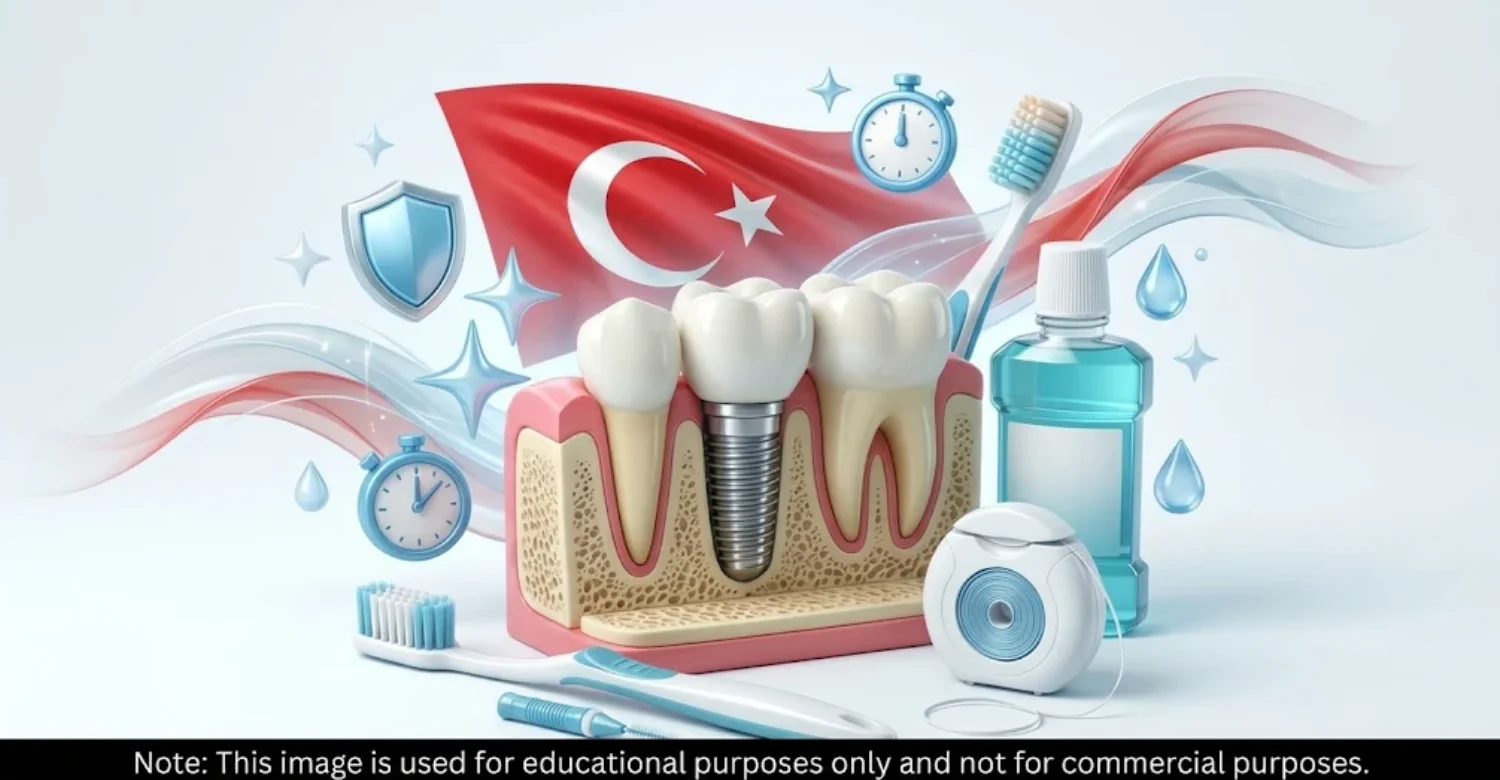
Dental implant recovery involves more than the visible healing of the gums. The implant also needs to develop a stable biological connection with the surrounding jawbone.
Stage 1: Initial Healing and Gum Recovery
After surgery, a blood clot forms and supports early wound healing. The surrounding tissues begin recovering while swelling and tenderness gradually settle. Stitches may dissolve naturally or require removal by the treating dental team.
Stage 2: Osseointegration: How Does the Implant Join With Bone?
Osseointegration describes the biological connection between the implant surface and surrounding bone. New bone develops around the implant over time. This connection provides the foundation for implant stability and the future restoration. The process generally takes several months. Bone quality, implant location, surgical complexity, and individual healing can affect the timeline.
Stage 3: When Can the Final Crown or Bridge Be Fitted?
The final restoration is fitted when the clinical team considers the implant sufficiently stable. At Vitrin Clinic, our dental team reviews healing, implant stability, and surrounding tissues. Additional imaging may be used when clinically indicated. Some patients receive temporary restorations during healing. Their design and loading depend on implant stability and the treatment plan.
How Long Does Dental Implants Aftercare Usually Take?
Initial gum healing often takes around one to two weeks. Osseointegration generally takes several months, although some patients need longer. Bone grafting and other additional procedures may extend the timeline. At Vitrin Clinic, the treating team determines when an implant is ready for its final restoration through clinical reviews. A fixed recovery schedule should not replace individual clinical findings.
What Factors Can Affect Implant Healing Time?
Healing varies between patients and depends on several factors:
Jawbone quality and quantity.
Implant location and number.
Bone grafting requirements.
Smoking habits.
General health and healing capacity.
Gum condition and oral hygiene.
Surgical complexity.
The recovery schedule should reflect individual clinical findings rather than a fixed average.
Which Dental Implant Symptoms Are Normal, and Which Need Attention?
Knowing what to expect after surgery helps patients recognise when professional advice is necessary. Symptoms should generally improve rather than become progressively worse.
What Is Normal During Early Recovery?
Mild symptoms can occur after implant placement, including:
Light bleeding during the first 24 hours.
Localised tenderness around the implant site.
Temporary facial swelling or bruising.
Difficulty chewing near the surgical area.
Mild irritation around the stitches.
These symptoms should gradually improve. Persistent or worsening discomfort requires professional review.
How Can You Recognise an Infection?
An infection may affect the surgical wound or surrounding implant tissues. Watch for increasing redness or swelling, pus or unusual discharge, persistent unpleasant taste, worsening pain, fever, feeling generally unwell, or swelling that continues to spread. Contact Vitrin Clinic promptly if these signs develop. Never attempt to drain the area independently.
Which Symptoms Require Urgent Attention?
Contact the Vitrin Clinic team if you experience:
Persistent bleeding.
Increasing or worsening pain.
Unusual discharge from the surgical site.
New or persistent numbness.
Changes in your bite.
Seek emergency medical attention immediately if you experience difficulty breathing or swallowing, or rapidly spreading facial or neck swelling.
Can a Dental Implant Fail During Healing?
Yes. Early implant failure can occur if successful integration with the jawbone does not develop. Possible contributing factors include infection, inadequate bone support, excessive implant movement, and certain health-related risks. Clinical examination and appropriate imaging help investigate suspected failure.
What Should You Do If Your Implant Feels Loose?
Contact Vitrin Clinic promptly. Do not move, tighten, or repeatedly test the loose component. The problem may involve the crown, abutment, or implant fixture. Each requires a different approach, so professional examination is essential.
Ready to transform your smile?
Talk to our team and get a personal FREE treatment plan.
Dental Implants Aftercare Cleaning and Oral Hygiene: How to Protect Your Results
Dental implant aftercare continues long after the surgical wound heals. Consistent cleaning helps control plaque and protect the gums surrounding implants.
How Should You Clean Around Implant Crowns?
Brush twice daily using a soft-bristled toothbrush and gentle movements. Pay particular attention to the crown's junction with the gumline, where plaque can accumulate. Clean natural teeth just as carefully. Implant restorations need maintenance even though they cannot develop tooth decay.
Which Toothbrush and Cleaning Tools Should You Use?
A soft-bristled toothbrush is generally suitable for daily implant care. An appropriately sized interdental brush can reach spaces around implant restorations. The Vitrin Clinic dental team can recommend a suitable size and cleaning technique. Avoid abrasive cleaning methods that could damage restoration surfaces.
Are Interdental Brushes, Floss, and Water Flossers Useful?
Different tools can support cleaning in different areas. Interdental brushes clean spaces that a regular toothbrush may miss. Specialised floss helps clean beneath certain bridges and around restorations. Water flossers can support plaque removal when used correctly. These tools should complement, not replace, regular brushing. Our dental team can recommend the most suitable method for each restoration.
How Do You Clean Implant Bridges and Full-Arch Restorations?
Implant-supported bridges need careful cleaning beneath the artificial teeth. Food debris and plaque can be collected in these areas. Specialised floss, interdental brushes, and single-tufted brushes may help reach difficult spaces. Removable implant-supported restorations may require separate cleaning and reinsertion instructions. Follow the cleaning routine recommended for the specific restoration.
How Often Should You Schedule Professional Implant Maintenance?
Maintenance intervals depend on gum health, implant condition, restoration design, and individual risk factors. Some patients need reviews every six months or less, while others require more frequent visits. Appointments may include examination of the gums around implants, checks for bleeding and inflammation, professional plaque removal, review of the implant-supported restoration, bite and functional checks, and imaging when clinically justified. At Vitrin Clinic, maintenance recommendations should reflect each patient's clinical needs rather than apply one interval to everyone.
Long-Term Dental Implant Care: How Can You Protect Your Results?
Long-term implant care focuses on maintaining healthy gums, protecting supporting bone, and monitoring the implant restoration.
How Can You Prevent Peri-Implant Mucositis and Peri-Implantitis?
Peri-implant mucositis is inflammation of the gum tissue around an implant. Signs may include redness, swelling, and bleeding during brushing. It affects the soft tissues without the supporting bone loss associated with peri-implantitis. Early treatment can help prevent progression. Peri-implantitis is a more advanced inflammatory condition involving supporting bone loss. It requires professional diagnosis and treatment. Daily plaque control and regular implant maintenance help reduce the risk of these conditions.
How Do Smoking, Gum Disease, and Teeth Grinding Affect Implants?
Several factors can increase the risk of implant complications. Smoking can impair healing and increase implant-related risks. Previous gum disease requires careful monitoring of the surrounding tissues. Teeth grinding can place excessive forces on implant restorations, and a night guard may be recommended when clinically appropriate. Uncontrolled diabetes can affect healing and periodontal health. Discuss relevant medical conditions and habits with the Vitrin Clinic clinical team. A personalised maintenance plan should consider individual risk factors.
Why Are Regular Implant Check-Ups Important?
Routine examinations help identify changes before they become more serious. The dental team checks gum health, restoration condition, and bite function. X-rays may be recommended when necessary to evaluate supporting bones. Continue professional maintenance even when implants feel comfortable.
Can Dental Implants Last a Lifetime?
Dental implants can function for many years, but lifetime survival is never guaranteed. The implant fixture and attached crown or bridge have different maintenance needs. Restorations may eventually require repair or replacement. Long-term outcomes depend on oral hygiene, general health, implant position, bite forces, and regular professional care.
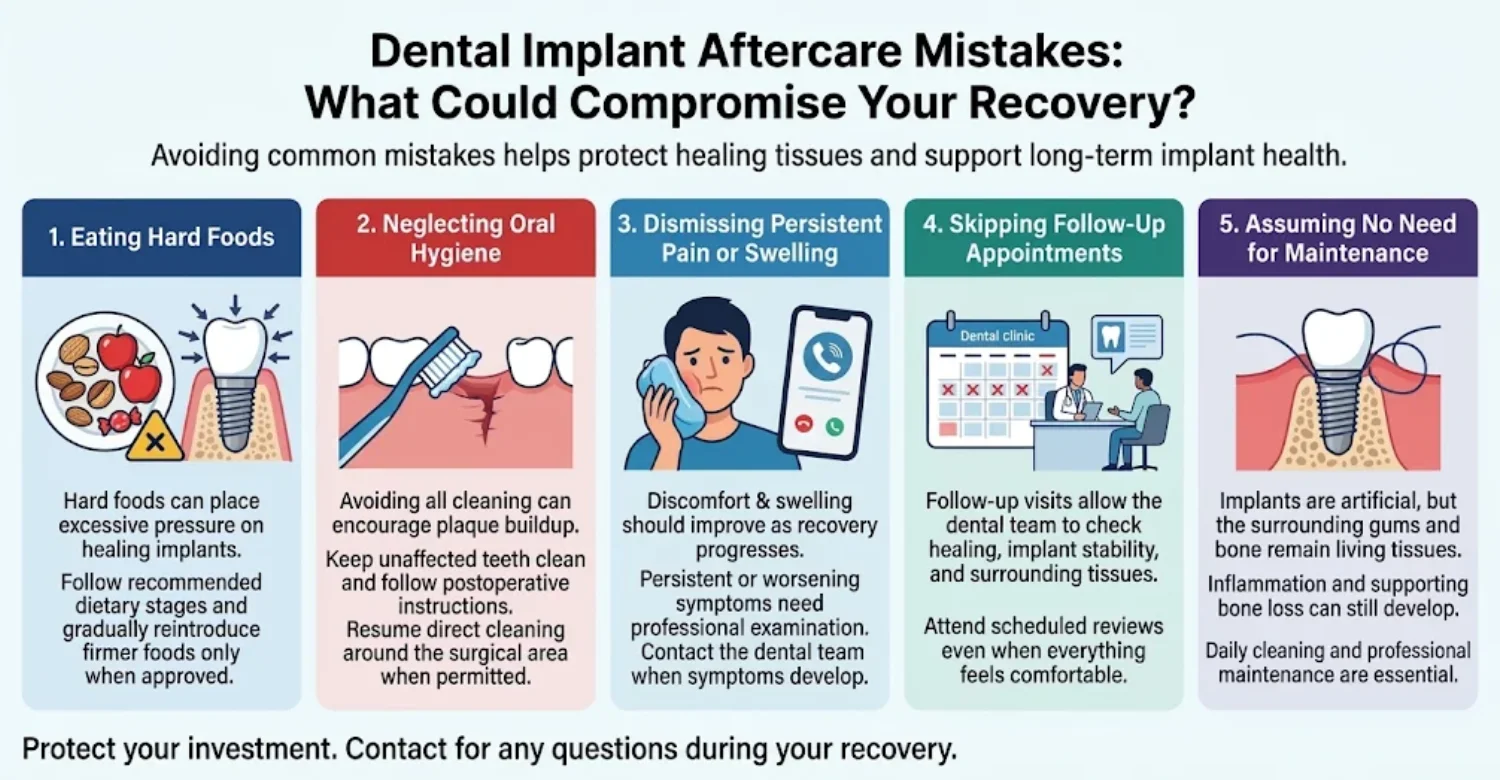
Dental Implant Aftercare Mistakes: What Could Compromise Your Recovery?
Avoiding common mistakes helps protect healing tissues and support long-term implant health.
Eating Hard Foods Before Approval
Hard foods can place excessive pressure on healing implants. Follow the recommended dietary stages and gradually reintroduce firmer foods only when the clinical team approves.
Neglecting Oral Hygiene Near the Surgical Site
Avoiding all cleaning can encourage plaque buildup. Keep unaffected teeth clean and follow the postoperative instructions provided by Vitrin Clinic. Resume direct cleaning around the surgical area when permitted.
Dismissing Persistent Pain or Swelling
Discomfort and swelling should generally improve as recovery progresses. Persistent or worsening symptoms need professional examination. Do not assume they are part of normal healing. Contact Vitrin Clinic when symptoms develop.
Skipping Follow-Up Appointments
Follow-up visits allow the dental team to check healing, implant stability, and surrounding tissues. Attend scheduled reviews even when everything feels comfortable.
Assuming Dental Implants Do Not Need Maintenance
Implants are artificial replacements, but the surrounding gums and bone remain living tissues. Inflammation and supporting bone loss can still develop. Daily cleaning and regular professional maintenance remain essential.
How Can International Patients Manage Dental Implant Aftercare?
International patients need a clear follow-up plan before travelling home. Good aftercare includes recovery guidance, accessible records, and arrangements for ongoing dental care.
What Should You Confirm Before Flying Home?
Confirm that the Vitrin Clinic treating team considers you fit to travel. Ask about wound healing, stitches, temporary restorations, and upcoming reviews. Clarify which symptoms require urgent attention. Allow sufficient recovery time based on the procedure and individual medical circumstances.
Why Should You Request Written Aftercare Instructions?
Before leaving Türkiye, obtain written guidance covering oral hygiene and cleaning instructions, dietary restrictions and activity levels, prescribed medication and possible side effects, expected recovery changes and warning signs, emergency contact details, and planned follow-up appointments. Make sure the instructions are provided in a language you understand.
How Should You Arrange Follow-Up Care at Home?
Arrange follow-up appointments before leaving Türkiye whenever possible. Share surgical and restoration records with a local dental professional. Agree on who will monitor healing and manage potential complications. Remote communication with Vitrin Clinic can support coordination. However, it cannot replace necessary clinical examinations.
What Should You Do If a Problem Develops After Returning Home?
Seek local dental care promptly if complications arise. Contact Vitrin Clinic and explain the symptoms, but do not delay necessary treatment while waiting for an overseas response. Breathing difficulties or rapidly spreading facial or neck swelling require emergency medical attention.
Which Implant Records Should You Keep?
Keep copies of important treatment details, including the implant manufacturer, model, and dimensions, implant locations and placement records, surgical and bone grafting details, crown or bridge materials and design, relevant dental X-rays, and written maintenance instructions. These records help future dental professionals understand the treatment and plan appropriate care.
.jpg)
.jpg)
.jpg)
Dental Implant Aftercare Costs in the US, UK, and Turkey
The cost of dental implants involves more than the initial surgery. Patients should consider the implant fixture, abutment, crown, follow-up appointments, professional cleaning, and possible additional procedures. Prices vary between clinics and countries. The following comparison provides indicative treatment ranges and explains the potential financial difference when choosing Vitrin Clinic in Istanbul.
How Much Does a Dental Implant Cost in the US, UK, and Turkey?
A complete single-tooth implant usually involves three main components. The implant fixture is the artificial root placed into the jawbone. The abutment connects the implant to the crown. The dental crown is the visible replacement tooth.
UK
Estimated Cost: 1,900–3,500
Estimated cost
Estimated cost: 1,900–3,500
Private UK clinic standard rate
Domestic specialist dental care
Turkey
Estimated Cost: 700–1,500
Estimated cost
Estimated cost: 700–1,500
Up to ~75% savings vs. US & UK
Full professional clinic standard care
US
Estimated Cost: 3,000–6,000
Estimated cost
Estimated cost: 3,000–6,000
US private clinic standard rate
Highest domestic private expense
How Much Can You Save With Vitrin Clinic?
Vitrin Clinic provides dental implant treatment in Istanbul, Türkiye. The final cost depends on the implant system, restoration materials, number of implants, and clinical requirements. Using an indicative Vitrin treatment range of 700–1,500, potential savings can be illustrated by comparing the midpoint of each price range.
United Kingdom
Local Price Midpoint: $2,700
Estimated saving vs. Vitrin
Local midpoint: $2,700
Vitrin price midpoint: $1,100
Estimated saving: Approximately 59%
Vitrin Clinic
Vitrin Price Midpoint: $1,100
Price midpoint
Vitrin midpoint: $1,100
Save ~59% vs. United Kingdom
Save ~76% vs. United States
United States
Local Price Midpoint: $4,500
Estimated saving vs. Vitrin
Local midpoint: $4,500
Vitrin price midpoint: $1,100
Estimated saving: Approximately 76%
What Do Dental Implant Aftercare Appointments Cost?
After implant placement, patients still need professional reviews and hygiene appointments. These help monitor the surrounding gums, supporting bone, and implant restoration.
UK
From $12
Aftercare service costs
Routine implant review: $70–$140
Professional implant cleaning: $45–$85
Dental X-rays: $12–$30
Treatment for implant inflammation: $100–$350+
Crown or component repair: $100–$600+
Turkey
From $10
Aftercare service costs
Routine implant review: 30–75
Professional implant cleaning: 55–75
Dental X-rays: 10–30
Treatment for implant inflammation: 65–250+
Crown or component repair: 50–250+
US
From 50
Aftercare service costs
Routine implant review: 100–200
Professional implant cleaning: 120–170
Dental X-rays: 50–70
Treatment for implant inflammation: 200–600+
Crown or component repair: 125–765+
What Can Increase Dental Implant Aftercare Costs?
Some patients need additional care depending on their oral health and implant restoration. Possible expenses include:
Additional dental examinations.
X-rays or CBCT imaging when clinically indicated.
Professional cleaning around implant-supported bridges.
Removal and cleaning of full-arch restorations.
Treatment of peri-implant inflammation.
Repair or replacement of damaged crowns or implant components.
The cost depends on the problem and treatment required. Routine maintenance should not be confused with treatment for an implant complication.
Does Travelling to Turkey Still Offer Financial Savings?
Travelling to Turkey may reduce the initial cost of implant treatment. However, patients should include flights, accommodation, transfers, and additional appointments when calculating the total expense. Long-term maintenance also needs to be planned in the patient's home country. Patients should arrange access to a dental professional who can examine and maintain their implants after returning home. At Vitrin Clinic, patients should request a written, itemised treatment plan before travelling. It should identify the implant system, abutment, crown material, surgical procedures, follow-up arrangements, and services not included in the quotation. A lower initial price should never replace careful clinical planning or ongoing implant maintenance.
Ready to transform your smile?
Talk to our team and get a personal FREE treatment plan.
How Vitrin Clinic Supports Patients After Implant Surgery
Dental Implants Aftercare recovery requires clear instructions and appropriate clinical monitoring. At Vitrin Clinic, postoperative guidance should reflect the procedure performed and each patient's individual healing needs.
Individual Aftercare Instructions Based on the Procedure
Single implants, multiple implants, and full-arch restorations may require different precautions. Bone grafting can also change recovery recommendations. Our approach considers the treatment performed when providing postoperative guidance. Instructions cover hygiene, eating, activity, and symptoms that require professional attention.
Coordinating Healing Checks and Treatment Stages
Clinical follow-ups help monitor gum recovery and implant integration. Our dental team reviews healing tissues and implant stability. Imaging may be recommended when clinically indicated. The final restoration is planned according to implant stability and the patient's treatment requirements. Treatment timing is not assumed to be identical for everyone.
Continuing Implant Care After Returning Home
International patients need clear documentation and practical arrangements after leaving Türkiye. Patients should receive written instructions and relevant contact information. Remote communication with Vitrin Clinic can help coordinate questions and planned treatment stages. However, local clinical examination remains important when symptoms develop. Remote guidance does not replace emergency care or necessary in-person examinations.
Understanding Implant and Restoration Details
Patients should keep relevant treatment information for future dental care. This includes implant specifications, placement locations, restoration details, and available radiographs. Keeping personal copies helps maintain continuity of care with dental professionals in the patient's home country.
Conclusion: Maintaining Healthy Dental Implants Aftercare Through Proper Care
Dental Implants Aftercare , Successful implant maintenance requires consistent hygiene and professional monitoring. Early recovery involves protecting the surgical site and following individualised instructions from the treating team. Long-term care focuses on controlling plaque and monitoring surrounding tissues. Never ignore persistent discomfort, swelling, bleeding, or changes in restoration stability. Seek professional advice when symptoms develop. With appropriate maintenance, dental implants can remain functional for many years. However, individual outcomes and longevity cannot be guaranteed.
References
FAQs
Most patients need rest during the first 24 hours. The required recovery period depends on surgical complexity and individual circumstances. Light daily activities may resume gradually when comfortable. Avoid strenuous exercise until the treating dental team approves. Patients receiving sedation must follow additional recovery precautions. Do not drive until medically cleared.
Dr. Rifat Alsaman has more than 5 years of clinical experience in dentistry and currently serves as the Head of the Medical Team at Vitrin Clinic. He is dedicated to providing exceptional patient care, overseeing treatment planning, and ensuring the highest clinical standards across the team. His expertise, attention to detail, and commitment to continuous professional development have helped countless patients achieve healthier, more confident smiles.


