
The appearance of a smile can change significantly after carefully planned zirconia restorations. Zirconia Crowns and Veneers Before and After comparisons show changes in tooth shape, color, symmetry, and smile balance. However, photographs cannot predict individual results. Each restoration depends on tooth condition, preparation, bite, gum health, and smile design. Zirconia is valued for strength, durability, and aesthetics. Recent evidence supports strong clinical performance for zirconia crowns. A systematic review reported five-year survival rates between 91.2% and 95.9% for single crowns. It also identified complications that require monitoring. Vitrin Clinic approaches treatment through individualized assessment rather than copying another smile. The goal is a balanced result fitting facial features, dental proportions, and functional needs.
Zirconia Crowns and Veneers Before and After: What to Expect
Patients usually expect visible improvements after zirconia treatment. Zirconia Crowns and Veneers Before and After images illustrate these changes clearly when photographed consistently. Crowns restore damaged teeth, while veneers modify selected visible surfaces. Treatment can improve tooth proportions, color, alignment, and smile symmetry. The transformation depends heavily on the starting condition. Some patients require extensive restorative work, while others need only limited changes. Digital planning helps clinicians evaluate tooth dimensions before fabrication begins. Photographs can exaggerate brightness through lighting, angles, whitening, or editing. At Vitrin Clinic, treatment planning considers both appearance and oral function together. A good result looks appropriate under different lighting and remains comfortable during chewing.
What Changes Before and After Zirconia Treatment?
The most noticeable changes involve tooth shape, shade, proportions, and surface defects. Zirconia Crowns and Veneers Before and After comparisons show uneven, discolored, or fractured teeth becoming more uniform. Crowns rebuild missing structure and restore functional contours. Veneers address aesthetic concerns on front surfaces. The extent of change depends on enamel, existing restorations, tooth position, and occlusion. Gum contours also influence the result. Healthy, symmetrical gingival margins make restorations appear more harmonious. The restoration should be planned as part of the complete smile. Vitrin Clinic evaluates these factors before recommending an option. Patients should judge success by comfort, function, and natural appearance rather than color alone.
Zirconia Crowns and Veneers Before and After Results
Zirconia Crowns and Veneers Before and After results should be evaluated using clinical criteria rather than a glance at brightness. Tooth width, length, surface texture, translucency, and gingival relationships influence the final appearance. Crowns create substantial change when teeth have severe damage. Veneers produce subtler improvement when underlying teeth are healthy. Research supports encouraging performance for zirconia crowns. One review found a 97.3% five-year survival rate for veneered zirconia crowns. Monolithic zirconia showed a 96.8% survival rate. These figures represent study populations rather than personal guarantees. Vitrin Clinic assesses dental condition before treatment, combining aesthetic planning with preparation, cementation, occlusal control, and maintenance.
How Lighting and Photography Affect Before-and-After Results
Photography dramatically influences how dental restorations appear. Zirconia Crowns and Veneers Before and After photographs look different due to lighting, camera settings, angles, and background conditions. This occurs even when the restoration has not changed. Bright frontal lighting makes teeth appear whiter and flatter. Side lighting emphasizes texture and surface differences. White balance shifts perceived shade. Camera distance changes how tooth proportions appear within the smile. Avoid judging treatment solely from edited photographs. Clinical images require consistent positioning and comparable lighting. Dentists evaluate restorations under different illumination to confirm natural translucency. Vitrin Clinic uses standardized photography to improve communication between patients, clinicians, and laboratories.
Why Every Patient's Results Are Different
No two patients begin with identical dental conditions, so outcomes vary even with the same material. Tooth structure, enamel thickness, previous restorations, gum position, and tooth color change the approach. Bite forces influence restoration design. Bruxism may require protective strategies. Smile width and facial proportions dictate ideal tooth dimensions. Existing crowns limit available preparation options. Periodontal health matters because inflamed tissue compromises aesthetic harmony. Patients should compare treatment principles rather than expect identical results from someone else's photograph. Vitrin Clinic develops personalized plans based on clinical findings. The most appropriate restoration is determined by patient needs, not by photographs alone.
Zirconia Crowns Before and After Results
Zirconia crowns create substantial change when teeth are structurally compromised, often producing dramatic transformations. A crown covers the prepared tooth and restores external anatomy. It improves chewing surfaces, contact points, tooth proportions, and visible aesthetics. Modern zirconia materials offer varied optical characteristics. Translucent formulations look more natural than older, highly opaque versions. Material selection must match the location and clinical requirements of each tooth. Systematic reviews indicate strong five-year survival for tooth-supported zirconia crowns. However, high survival rates do not eliminate the need for routine upkeep. Regular examinations remain important for detecting caries, periodontal problems, occlusal changes, and complications early.
What Do Zirconia Crowns Look Like Before and After?
Before treatment, a tooth may show decay, fractures, discoloration, wear, or an outdated restoration. After treatment, the crown recreates a complete anatomical form. Zirconia Crowns and Veneers Before and After images show both cosmetic and structural change at once. A well-designed crown should not look bulky or artificial. Its contour must respect adjacent teeth and soft tissue. Color selection considers neighboring teeth, skin tone, lighting, and patient preferences. Surface texture affects how light reflects from the restoration. Vitrin Clinic discusses the desired appearance before fabrication. A crown's look depends on preparation, laboratory design, cementation, and surrounding tissue working together.
Natural-Looking Zirconia Crowns Before and After
Natural-looking crowns require more than a bright shade. Evaluations must consider translucency, texture, anatomy, and tooth relationships. Natural teeth rarely have identical shade from gumline to edge, containing subtle ridges and reflective areas. Modern zirconia can be layered, stained, glazed, or used in monolithic designs. A clinical review found color mismatch among the recognized complications of zirconia restorations. This underscores the importance of individualized shade selection. Vitrin Clinic coordinates clinical and laboratory stages to improve consistency. We aim for a restoration that integrates with the entire smile rather than appearing separately manufactured.
Zirconia Crowns Aesthetic Results Before and After
Aesthetic assessment should include more than tooth whiteness. Zirconia Crowns and Veneers Before and After comparisons reveal changes in length, width, alignment, and smile continuity. Tooth proportions should complement neighboring teeth and facial characteristics. Excessively uniform shapes look artificial. Incisal edges must relate appropriately to the lips and smile line. Gum symmetry influences whether crowns appear balanced. Digital smile planning helps visualize these relationships beforehand, though previews remain planning tools rather than guaranteed final results. The outcome depends on preparation, material properties, laboratory execution, and clinical placement together. Vitrin Clinic applies these principles when developing restorative treatment, prioritizing harmony over brightness.
Clinical Note
Clinical evidence supports zirconia as a durable material, but outcomes depend on treatment circumstances. Zirconia Crowns and Veneers Before and After photographs should be interpreted alongside clinical evidence. A review of 10,000 zirconia restorations found satisfactory five-year results. Tooth-supported single-crown survival ranged from 91.2% to 95.9%. Technical complications included chipping, framework fracture, retention loss, and marginal problems. Biological complications included caries, periodontal disease, and endodontic issues. These findings reinforce the importance of proper diagnosis before cosmetic treatment. Material strength cannot compensate for untreated disease or poor hygiene. Dr. Rifat Alsaman's approach at Vitrin Clinic emphasizes function and tissue health alongside aesthetics.
Zirconia Veneers Before and After Photos
Zirconia veneers produce noticeable cosmetic change when indicated for shade, minor shape irregularities, or spacing concerns. Zirconia Crowns and Veneers Before and After photos demonstrate improved tooth color, contour, and overall smile uniformity. However, zirconia veneers should not automatically replace other ceramic veneer materials. Evidence for zirconia laminate veneers remains more limited than evidence for zirconia crowns. Some newer studies report promising short-term results. One two-year study involving 201 ultrathin 5Y-TZP zirconia veneers reported 99.5% survival. These results are encouraging but do not establish lifetime performance. Vitrin Clinic evaluates enamel availability, bite forces, tooth position, periodontal health, and aesthetic expectations before recommending zirconia veneers.
How to Evaluate Zirconia Veneers Before and After Photos
Patients should examine more than whiteness when reviewing a portfolio. Zirconia Crowns and Veneers Before and After photos must use consistent angles and lighting. Viewers should look at tooth length, width, symmetry, incisal edges, and gingival relationships. Check whether restorations blend naturally with untreated neighboring teeth. Observe if the smile looks excessively uniform or opaque. Close-up images reveal marginal contours and texture. Full-face images show whether proportions suit the patient's facial appearance. Ask whether pictured cases are genuinely comparable to your own. A patient with intact enamel differs from one with structural damage. Vitrin Clinic helps patients understand which Zirconia Crowns and Veneers Before and After results are relevant to their condition.
Zirconia Veneers Smile Makeover Results
A zirconia veneer smile makeover addresses multiple visible concerns within one coordinated plan. Zirconia Crowns and Veneers Before and After results include changes in shade, proportions, surface irregularities, and spacing appearance. The number of treated teeth depends on the smile line and objectives. Treating too few creates visible shade differences, while treating too many removes healthy structure unnecessarily. The clinician must balance aesthetic goals with preservation. Occlusion should be evaluated before veneers are selected, since heavy grinding requires protective planning. Evidence suggests zirconia veneers perform well in selected cases, but long-term data remains limited compared to crowns. Vitrin Clinic tailors plans around preservation, function, and maintenance.
Zirconia Veneers for a Complete Smile Makeover
A complete smile makeover requires coordinated planning rather than simply placing veneers on visible teeth. Zirconia Crowns and Veneers Before and After results should reflect harmony between teeth, gums, lips, and facial proportions. The clinician determines which teeth require treatment. Some need crowns for structural weakness, while others need conservative cosmetic work. Gum contouring or periodontal treatment can improve the final appearance. Whitening natural teeth beforehand helps establish a suitable shade target. Digital scans support precise laboratory communication. Temporary restorations offer a chance to evaluate shape and phonetics before placement. Vitrin Clinic coordinates these stages as part of a comprehensive smile plan.
What We Notice Clinically
Clinically, successful transformations involve careful control of proportions rather than a singular focus on color. Zirconia Crowns and Veneers Before and After photographs attract attention because of dramatic color change. However, experienced clinicians evaluate margins, gingival health, occlusion, contacts, and tooth anatomy. Restoration thickness must provide strength without unnecessary tooth reduction. The bite must distribute forces appropriately across treated teeth. A 2026 randomized trial reported five-year survival between 94.7% and 100% among different zirconia posterior prosthesis designs. This supports careful material selection over assuming all zirconia behaves identically. At Vitrin Clinic, clinical assessment guides aesthetic design from the beginning.
Zirconia Crowns and Veneers Comparison
Choosing between crowns and veneers requires understanding their different purposes. Crowns restore teeth needing substantial structural protection. Veneers modify visible surfaces when adequate healthy structure remains. The appropriate option depends on diagnosis rather than aesthetic preference alone. Tooth damage, enamel availability, bite forces, and periodontal health influence planning. A crown suits extensive structural loss, while a veneer is conservative when the tooth remains sound. Restoration material does not determine treatment indication by itself. Vitrin Clinic assesses each tooth individually rather than applying one solution across the arch, preserving healthy tissue while achieving predictable outcomes.
Zirconia Crowns vs Zirconia Veneers
Zirconia crowns and veneers differ in coverage and clinical purpose. A crown covers the prepared tooth circumferentially. A veneer covers the visible facial surface and selected edges. Crowns are considered for weakened, fractured, heavily restored, or endodontically treated teeth. Veneers suit teeth with cosmetic concerns and sufficient supporting structure. Preparation requirements differ accordingly, and bite relationships influence whether veneers are appropriate. Zirconia comes in different formulations with varying optical and mechanical properties. Clinical studies demonstrate strong survival for zirconia crowns, while veneer evidence remains comparatively smaller long term. Vitrin Clinic selects the restoration according to individual clinical requirements.
When Are Zirconia Crowns Recommended?
Zirconia crowns are recommended when a tooth requires substantial structural restoration. Common indications include extensive decay, large existing restorations, fractures, severe wear, and root-treated teeth. Remaining structure must be evaluated first, since a crown cannot compensate for inadequate support or untreated disease. The clinician assesses periodontal condition and occlusion. Some teeth need a core build-up or root canal before receiving a definitive crown. Zirconia offers high strength and favorable biological characteristics. However, the material does not eliminate fracture, debonding, caries, or periodontal risk. Vitrin Clinic determines whether a crown provides the appropriate balance between protection and aesthetics.
When Are Zirconia Veneers Recommended?
Zirconia veneers suit patients seeking aesthetic improvement while retaining structurally sound teeth. However, veneers require appropriate enamel and favorable occlusion. Patients with strong parafunctional forces need additional evaluation. Existing restorations affect bonding and preparation, sometimes favoring a crown instead. The dentist determines whether a conservative approach can achieve the desired transformation. Alternative ceramic materials may offer optical or bonding advantages depending on the case. Literature describes promising zirconia veneer outcomes, though researchers call for stronger long-term evidence. Vitrin Clinic evaluates tooth structure, gum health, bite relationships, and expectations before recommending this option.
Which Option Is Better for a Smile Makeover?
There is no universally superior restoration for every smile makeover. Some patients need crowns on compromised teeth, while other teeth remain suitable for conservative veneers. A combined approach often provides the most harmonious result. Treatment planning must weigh tooth proportions, smile width, facial characteristics, gum contours, and functional forces before selecting materials. Over-treatment removes healthy structure unnecessarily, while under-treatment compromises strength or longevity. The best smile makeover starts with diagnosis rather than material selection. Vitrin Clinic develops a sequence based on individual dental conditions. Patients should ask why each restoration is recommended and what alternatives exist.
Zirconia Dental Restoration Before and After
Zirconia restorations address both functional and aesthetic concerns within a single treatment plan. Zirconia Crowns and Veneers Before and After comparisons show changes extending beyond color into structure and function. Restorations rebuild fractured surfaces, restore chewing anatomy, close spaces, and improve proportions together. The final appearance depends heavily on the original tooth condition. Identical materials can produce very different-looking Zirconia Crowns and Veneers Before and After results. Restoration design must respect biological width and periodontal tissue. Proper contacts and occlusion support stability and reduce excessive stress. Vitrin Clinic coordinates restorative and aesthetic objectives within one treatment plan.
How Zirconia Restorations Can Transform a Smile
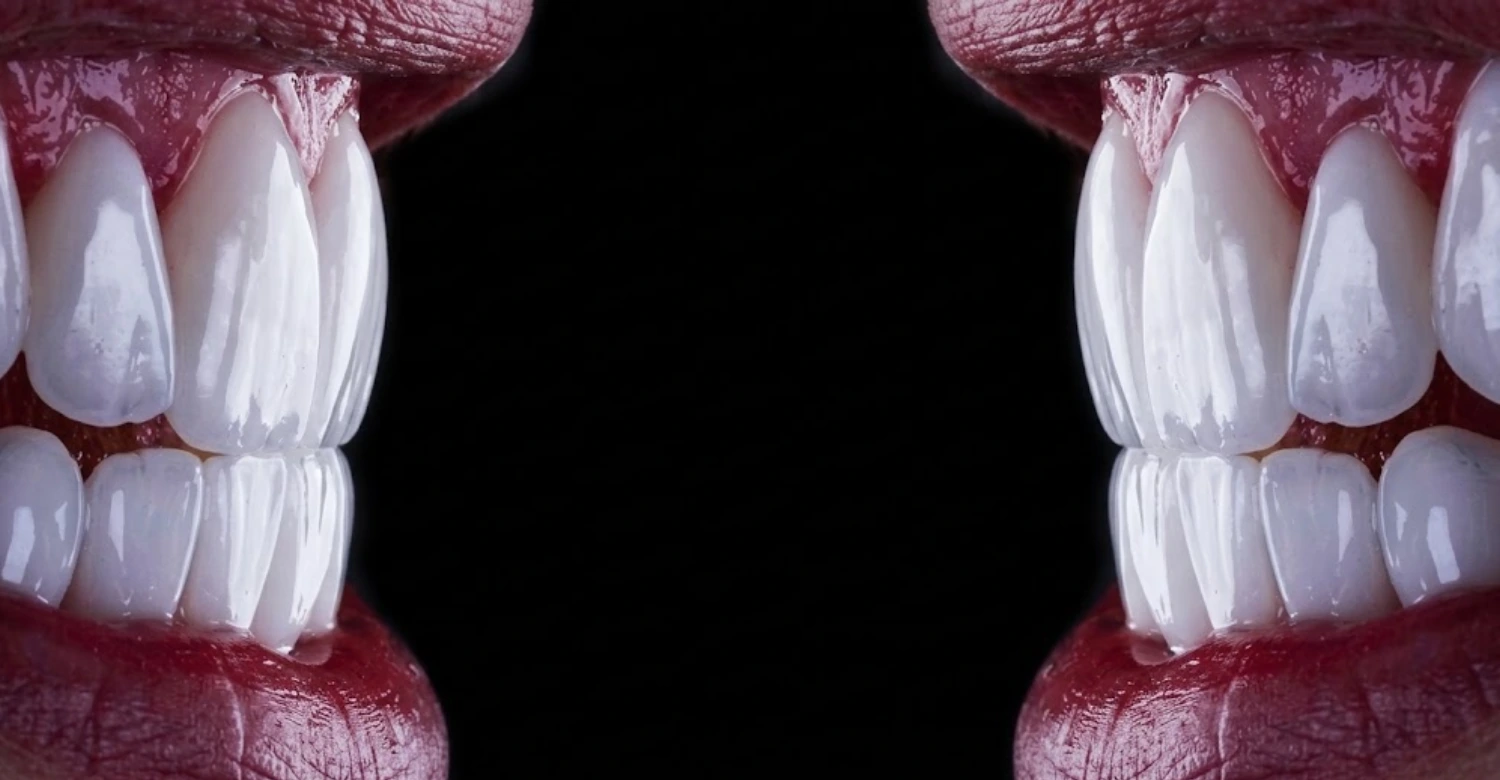
A zirconia restoration changes the visual architecture of a smile beyond the individual tooth treated. Zirconia Crowns and Veneers Before and After images show improved color, length, contours, and symmetry. These factors influence how the entire smile is perceived. A missing corner makes a tooth look short. An uneven incisal edge disrupts visual continuity. A dark or heavily restored tooth contrasts poorly with neighbors. Carefully designed zirconia addresses these concerns while restoring function, though clinicians must avoid overly thick or opaque restorations. Vitrin Clinic evaluates the smile as a complete visual system, connecting individual restoration design with facial harmony.
Functional Changes vs Aesthetic Changes
Restorative treatment produces functional improvement alongside visible change, and both deserve equal attention. Functional improvements include restored chewing surfaces and better contact relationships. Aesthetic improvements include better proportions and consistent color. These goals overlap but are not identical. A restoration can look attractive while still needing occlusal adjustment. Alternatively, a functional restoration may need aesthetic refinement before final placement. The dentist evaluates speech, chewing, contacts, and bite stability. Patients should report discomfort or difficulty closing normally. Vitrin Clinic combines functional assessment with aesthetic planning so final restorations support comfortable function and natural appearance.
How Tooth Condition Affects the Final Result
Starting conditions strongly influence the outcome. Zirconia Crowns and Veneers Before and After comparisons cannot be interpreted without considering baseline tooth health. Severely discolored teeth need different opacity management than lightly discolored ones. Heavily restored teeth require crowns rather than veneers. Teeth with recession may need periodontal treatment first. Rotated teeth influence preparation and thickness. Existing crowns or root treatment limit available space or require evaluation. Each factor changes the treatment sequence in ways not visible from the outside. Avoid comparing your teeth directly with another person's photographs. Vitrin Clinic evaluates existing conditions to determine the appropriate strategy.
Tooth Damage and Existing Restorations
Previous damage affects restoration planning significantly. Results look more dramatic when the original tooth has extensive structural defects that treatment corrects. Large fillings reduce remaining structure and influence retention. Cracks can extend below the gumline. Existing crowns sometimes require removal to evaluate the underlying tooth. Old restorations may conceal recurrent caries or marginal problems not visible on the surface. Dentists must identify these issues before designing a replacement. Radiographs and digital scans provide critical documentation before preparation begins. Vitrin Clinic uses structured assessment to determine whether restoration replacement is appropriate, addressing underlying problems directly.
Gum Health and Smile Aesthetics
Healthy gums are essential for attractive restorative outcomes. Zirconia Crowns and Veneers Before and After photographs look dramatically different when gingival contours are improved alongside restorations. Inflamed gums appear red, swollen, or uneven around restorations. Bleeding complicates scanning or impression procedures. Periodontal inflammation should be controlled before definitive cosmetic treatment. Recession can expose margins and change tooth proportions, while uneven gingival levels make symmetrical crowns appear different in height. Periodontal therapy may precede restorative treatment, and professional cleaning supports tissue stability. Vitrin Clinic assesses gingival health as part of smile planning, protecting the aesthetic result.
Zirconia Crowns Smile Transformation
A successful smile transformation involves more than replacing damaged teeth. Zirconia Crowns and Veneers Before and After comparisons reveal how small changes create a cohesive result. Tooth length, width, shade, texture, and symmetry work together visually. Facial proportions influence ideal tooth dimensions. Lip movement determines how much tooth structure becomes visible. Gingival display influences perceived tooth length. Digital smile planning organizes these variables before treatment begins, and the laboratory translates the plan into restoration anatomy. Temporary restorations help evaluate phonetics and appearance beforehand. Vitrin Clinic uses a multidisciplinary approach for complex transformations, aiming for balanced smiles.
Improving Tooth Shape and Proportions
Tooth shape influences smile aesthetics, often more than color alone. Zirconia Crowns and Veneers Before and After photographs reveal changes in width, length, and incisal contours. Short teeth make a smile appear aged, while excessively long teeth look disproportionate to the lips. Width-to-length relationships should remain visually coherent. Dentists use digital measurements to assess proportions before fabrication. Tooth shape should reflect facial characteristics rather than a universal template. The restoration must transition naturally toward the gingival margin. Vitrin Clinic incorporates facial and dental proportions into smile planning while allowing clinical factors to guide final designs.
Creating a Natural-Looking Tooth Color
Color selection involves more than choosing the whitest available shade. Evaluations must consider value, chroma, translucency, and surrounding teeth. Extremely bright restorations appear unnatural when adjacent teeth remain darker. Natural teeth show subtle shade variation from the cervical area to the incisal edge. Surface texture influences how light reflects throughout the day. Modern zirconia offers different translucency levels for varying clinical situations. Material selection should balance aesthetics and function. Vitrin Clinic coordinates shade communication before fabrication to reduce mismatch, since photographs cannot reproduce every optical characteristic accurately.
Improving Smile Symmetry
Symmetry influences how balanced a smile appears, though perfect symmetry is not always the goal. Small differences create realistic variation that patients often find appealing. Major discrepancies in tooth length or gingival position become distracting. Digital planning helps identify asymmetries before treatment, evaluating midline position, incisal edges, tooth widths, and gingival levels. Facial asymmetry must be considered because teeth do not exist independently from the face. Vitrin Clinic balances symmetry with natural variation during smile design, aiming for harmony rather than mechanical uniformity.
Matching Zirconia Restorations With Natural Teeth
Matching restorations to natural teeth is challenging because natural enamel has complex optical properties. Selected zirconia must reflect appropriate light characteristics for the clinical situation. Translucency and surface texture affect how a restoration interacts with surrounding teeth. Existing natural teeth change shade over time from diet, aging, or habits like smoking. Whitening should be considered before definitive shade selection when appropriate. Laboratory photographs and shade information improve communication with technicians. Vitrin Clinic coordinates clinical and laboratory assessment for consistency, though exact visual matches are difficult when natural teeth vary significantly in shade.
Clinical Note
Smile transformation requires integration between restorative dentistry and periodontal health. Zirconia Crowns and Veneers Before and After photographs show the final appearance. However, they rarely reveal preparation quality or the decisions behind it. Clinicians evaluate margins, contacts, occlusion, tissue response, and restoration thickness long before taking a photograph. Systematic reviews report five-year survival above 90% across several zirconia crown categories. This supports the material's usefulness without suggesting identical longevity in every case. Dr. Rifat Alsaman emphasizes evaluating function before finalizing aesthetic detail. At Vitrin Clinic, the goal is a stable restoration that supports healthy tissue over the long term.
Zirconia Crowns and Veneers Transformation Results
Final results depend on several interconnected clinical and laboratory factors. Zirconia Crowns and Veneers Before and After photographs represent the combined outcome of these decisions, condensing weeks of planning into one visual moment. Tooth preparation determines available space, digital scanning captures the prepared anatomy for laboratory design, and occlusion influences functional loading and restoration contours. Gum health affects margins and visual proportions, material selection influences translucency and mechanical behavior, and laboratory fabrication determines final anatomy and surface characteristics. Cementation or bonding affects retention and marginal integrity for years afterward. Vitrin Clinic guides patients through each stage to improve communication and predictability, since proper planning remains one of the most important factors behind successful outcomes.
Factors That Influence the Final Results
Several variables affect the final appearance and function of zirconia restorations. Preparation design influences restoration thickness and contour, shade selection influences perceived brightness, and gingival position affects visible tooth length. Occlusion affects long-term durability, and laboratory expertise influences anatomy, texture, and optical characteristics in ways that vary between technicians. Patient habits also influence performance: bruxism may increase mechanical demand, and poor oral hygiene can increase biological complications around treated teeth. Regular dental visits help identify problems before they become advanced. Vitrin Clinic incorporates these variables into individualized treatment planning, and patients should ask how each factor applies specifically to their case.
The Role of Tooth Preparation
Preparation creates the foundation for a successful restoration, and mistakes at this stage are difficult to correct later. The dentist must provide sufficient space for the selected material without over-reducing the tooth; excessive reduction sacrifices healthy structure unnecessarily, while insufficient reduction can compromise contour or create unwanted bulk. Preparation margins should support accurate laboratory fabrication, since smooth, clearly defined margins improve scanning and fit. The design must account for functional forces and aesthetic requirements simultaneously, and conservative preparation matters especially when treating relatively healthy teeth. Vitrin Clinic tailors preparation to each tooth rather than applying one standardized design, supporting both restoration strength and natural appearance.
The Importance of Bite and Occlusion
Occlusion influences restoration comfort, function, and longevity, and deserves functional evaluation rather than a purely visual assessment. Excessive or uneven contact can increase mechanical stress, sometimes contributing to chipping or fracture in certain designs. Patients who grind their teeth may require additional protection, and bite assessment should occur before treatment and again after final placement. Adjustments should preserve appropriate anatomy while establishing stable contacts across the arch. Patients should report jaw discomfort, headaches, tooth sensitivity, or evidence of grinding as soon as they notice it. Vitrin Clinic incorporates occlusal assessment into comprehensive restorative planning, since aesthetic improvement should never be separated from functional stability.
The Role of Gum and Periodontal Health
Periodontal health directly influences restorative aesthetics and maintenance. Inflammation can cause swelling around restoration margins, and recession can expose margins and alter perceived tooth length. Plaque accumulation increases the risk of gingival inflammation and periodontal complications around restored teeth, so professional assessment should generally precede extensive restorative treatment. Patients with active periodontal disease may need stabilization before definitive restorations are placed, and home care should include appropriate brushing and interdental cleaning. Regular professional maintenance supports tissue health around restorations for years afterward. Vitrin Clinic evaluates periodontal conditions before beginning cosmetic restorative treatment, since healthy gums provide a more stable foundation for long-term results.
What Happens During a Zirconia Smile Makeover?
A zirconia smile makeover usually involves several carefully coordinated stages across multiple appointments. Treatment begins with examination and diagnosis, followed by determining which teeth require crowns, veneers, or alternative treatments. Digital scans document existing anatomy and support restoration design, tooth preparation follows the selected plan, and the laboratory fabricates provisional or definitive restorations accordingly. Try-in procedures allow evaluation of shape, shade, phonetics, and bite before anything is permanently placed, and final placement occurs after necessary adjustments are completed. Follow-up appointments assess tissue response and function once restorations have settled. Vitrin Clinic coordinates these stages around individual treatment objectives from start to finish.
Initial Dental Examination
The first appointment establishes whether restorative treatment is appropriate and sets the tone for everything that follows. The dentist examines teeth, gums, existing restorations, bite, and overall oral health systematically, and radiographs may be recommended when deeper problems need investigation. Zirconia Crowns and Veneers Before and After photographs and digital scans document the starting appearance and existing contours for reference. Patients should explain aesthetic concerns and functional symptoms honestly, since incomplete information can lead to a less suitable plan. Previous dental treatment can also influence the recommended approach, and preliminary treatment may be needed before cosmetic work begins. Vitrin Clinic uses this examination to distinguish aesthetic concerns from conditions requiring clinical treatment first.
Smile Design and Treatment Planning
Smile design translates patient goals into measurable clinical objectives. Planning should consider tooth proportions, facial features, gingival levels, and lip dynamics together, and digital tools can help visualize potential changes before fabrication, though these previews remain references rather than guarantees. The clinician determines which teeth require treatment and which can remain natural, keeping preparation as conservative as clinically appropriate. Shade, material, restoration contours, and occlusion are discussed at this stage, and the laboratory receives detailed information about the intended design. Vitrin Clinic uses personalized planning to avoid overly generic smile designs, balancing patient preference with biological and functional requirements.
Tooth Preparation
Preparation creates the physical foundation for the planned restoration, and its precision directly affects the final result. The dentist removes only the structure required for the selected restoration, guided by the treatment plan; the amount varies according to tooth condition and design, with crowns usually requiring more reduction than conservative veneers. Margins should be carefully positioned to support periodontal health and fit, and temporary restorations may protect prepared teeth during laboratory fabrication. Patients can experience temporary sensitivity after preparation, and persistent discomfort should be reported rather than tolerated. Vitrin Clinic uses digital records and detailed laboratory communication during this stage to support both aesthetics and mechanical stability.
Digital Scanning and Restoration Design
Digital scanning can capture detailed three-dimensional information about teeth and surrounding structures with impressive accuracy. Scans may reduce dependence on conventional impressions in suitable cases, improving comfort, and the digital model helps laboratories design restoration contours with considerable precision. Occlusal information can be incorporated into computer-aided workflows for more accurate contact design, and the dentist reviews the proposed design before fabrication when appropriate. Scanning accuracy depends on moisture control, preparation visibility, and operator technique, and the technology does not replace clinical judgment. Vitrin Clinic integrates digital workflows into appropriate restorative cases where they add genuine value.
Zirconia Restoration Fabrication
The laboratory converts the treatment plan into a physical zirconia restoration through digital design and precise manufacturing. Different zirconia formulations balance strength and translucency differently, and computer-aided manufacturing mills restorations accurately from solid blocks of material. Additional characterization modifies surface texture and shade to better match surrounding teeth, and sintering produces the final material properties through controlled high-temperature firing. The restoration is inspected for fit, contours, contacts, and aesthetics before leaving the laboratory. Vitrin Clinic coordinates clinical information with the laboratory from the start, since even high-quality materials still require precise design and manufacturing to perform well.
Try-In and Aesthetic Evaluation
Try-in provides an important opportunity to assess the proposed restoration before final placement locks in the result. The dentist checks tooth length, width, shade, midline, symmetry, and smile display, while phonetics may also be assessed since certain sounds can reveal contour problems. The patient can provide feedback while the restoration is still adjustable, and the dentist evaluates occlusion and fit at this stage as well. Not every proposed change should be accepted if it compromises function or tissue health. Vitrin Clinic uses this stage to refine the aesthetic design before definitive placement, reducing avoidable dissatisfaction after treatment.
Final Placement and Bite Adjustment
Final placement completes the restorative phase, though the patient's experience continues to evolve afterward. The dentist checks margins, contacts, occlusion, and overall appearance before the patient leaves the chair, and any necessary bite adjustment should preserve restoration anatomy while establishing comfortable contacts. Surrounding gums are inspected for irritation or pressure, and patients may need time to adapt to changed tooth contours; speech and chewing typically feel more natural within days to weeks. Persistent pain, looseness, or bite problems require professional evaluation. Vitrin Clinic schedules follow-up care to monitor adaptation and tissue response after placement.
Tips for Patients Considering Zirconia Crowns or Veneers
Patients should research treatment carefully before committing to extensive restorative work, since these decisions are difficult to reverse. Ask which restoration is recommended for each tooth and why, understand how much preparation is expected, and discuss gum health, bite forces, and possible grinding habits. Ask which zirconia formulation will be used and clarify maintenance requirements and possible complications. Request information about alternatives even if you already have a preference, and consider whether the proposed smile suits your facial features rather than someone else's ideal. Vitrin Clinic discusses these factors during treatment planning, since informed patients are better positioned to make decisions that match their needs.
Look Beyond Before-and-After Photos
Zirconia Crowns and Veneers Before and After photographs can demonstrate possibilities, but they rarely show the complete clinical story. Images should be treated as examples rather than promises, so ask whether photographs use comparable lighting and camera angles, and whether the patients pictured had similar starting conditions. Check whether images have been edited or enhanced, and look closely at gingival contours, tooth proportions, and restoration margins rather than the overall impression alone. Clinical photographs also cannot reveal bite stability or periodontal health, both of which matter for long-term success. Vitrin Clinic explains which aspects of a photograph are relevant to your individual case, since a realistic discussion is more valuable than selecting a restoration from pictures alone.
Ask About Tooth Preparation
Tooth preparation should be discussed before treatment begins, since this is the point at which the process becomes irreversible. Ask whether the treatment is reversible, since crowns and traditional veneers generally involve permanent alteration of tooth structure, and the amount depends on clinical design and existing anatomy. Ask whether minimally invasive alternatives could achieve your objectives with less structural loss. Patients should understand the reason for every preparation requirement rather than accepting it without explanation, since healthy enamel preservation matters especially for bonding procedures. Vitrin Clinic explains the expected preparation according to each tooth's condition before treatment begins.
Check Your Gum Health Before Treatment
Gum health should be assessed before extensive cosmetic restoration, since untreated inflammation can compromise the entire plan. Bleeding gums can interfere with accurate scanning and impression procedures, and swelling can alter the apparent position of restoration margins, leading to a poor fit once tissue settles. Periodontal disease may change tooth support and gum levels in ways that affect the whole restorative plan, so these problems should be managed first whenever possible. Daily brushing and interdental cleaning remain important afterward, and professional maintenance helps monitor gum health around treated teeth. Vitrin Clinic evaluates periodontal health before beginning a smile makeover to reduce the risk of complications.
Discuss Your Bite and Bruxism Risk
Bite forces can affect restoration performance over time, sometimes determining how long a restoration ultimately lasts. Patients who grind or clench their teeth place greater stress on restorations, and bruxism can also contribute to tooth wear and muscle discomfort beyond its effects on restorations. The dentist may recommend a protective night guard for selected patients, and bite adjustment can improve contact distribution after placement. Patients should mention jaw soreness, morning headaches, or visible tooth wear during consultation, since these signs indicate increased functional loading. Vitrin Clinic incorporates occlusal risk into treatment planning from the earliest stages to support both comfort and longevity.
Ask About Maintenance and Longevity
No dental restoration should be considered maintenance-free, regardless of how durable the material is marketed to be. Regular dental examinations allow early detection of biological or mechanical complications, and professional cleaning helps control plaque around restoration margins that are hard to reach at home. Patients should continue brushing twice daily with fluoride toothpaste and clean between restored teeth where plaque tends to accumulate. Hard objects should never be used to test restoration strength, and patients with bruxism may need additional protection. Vitrin Clinic establishes individualized maintenance schedules based on treatment complexity, since longevity depends on both clinical quality and patient care together.
Choose a Natural-Looking Smile Design
A natural smile should look appropriate rather than excessively manufactured, and this matters more to long-term satisfaction than initial impact. Tooth proportions should complement facial features and lip movement rather than following a generic template, and slight variations help restorations resemble natural teeth more convincingly than perfectly uniform shapes. Surface texture should interact naturally with surrounding teeth, incisal edges should follow an appropriate smile curve, and gingival contours should support visual balance across the arch. Patients should communicate their preferred brightness and tooth shape during consultation. Vitrin Clinic focuses on individualized smile planning rather than one universal aesthetic design for every patient.
What Should You Expect After Zirconia Treatment?
The period after treatment involves both visual and functional adaptation over the following days and weeks. Teeth may initially feel different because their contours have changed, minor sensitivity can occur after preparation, and speech may feel unusual briefly as the tongue adjusts to new surfaces. The brain generally adapts as the new contours become familiar within one to two weeks. Patients should maintain normal oral hygiene unless instructed otherwise, and follow-up appointments allow evaluation of margins, gums, bite, and comfort. Any persistent symptoms should be assessed rather than ignored. Vitrin Clinic monitors adaptation and makes appropriate adjustments when necessary, since proper aftercare protects both restorations and surrounding natural teeth.
Immediate Aesthetic Changes
Patients usually notice changes in tooth color and shape immediately after placement, often before leaving the dental chair. Zirconia Crowns and Veneers Before and After comparisons may therefore appear dramatic on the first day, before surrounding tissues have fully settled. However, gums may require time to settle around new restoration contours, and temporary swelling can affect the immediate appearance in some cases. Patients should avoid judging the final result solely within the first few hours, since lighting can make restorations appear different throughout the day. Any major bite discrepancy should be reported promptly. Vitrin Clinic reviews the result during scheduled follow-up appointments in the weeks after treatment.
Adjusting to Your New Smile
Adapting to new dental contours can take time, and this adjustment period is a normal part of the process rather than a sign of a problem. Changes may affect how the tongue contacts the teeth, and pronunciation can temporarily feel different, especially for sounds requiring the tongue to touch the front teeth. Chewing may feel unfamiliar when multiple teeth are restored at once, though most patients adapt gradually. Persistent discomfort may indicate an occlusal issue requiring adjustment rather than something that resolves on its own. Vitrin Clinic provides guidance during the adjustment period, and follow-up care is particularly important after extensive smile makeovers.
Oral Hygiene and Maintenance
Daily hygiene remains essential after zirconia treatment, and this does not change simply because the material itself is durable. Patients should brush gently but thoroughly twice daily, paying attention to the gumline, and use fluoride toothpaste to protect remaining natural tooth structure. Interdental cleaning matters around contacts and between treated teeth where a toothbrush cannot reach effectively, and water flossers may help some patients maintain difficult areas. Professional examinations can detect early inflammation or marginal problems, and patients should continue routine preventive care for untreated teeth elsewhere in the mouth. Vitrin Clinic recommends an individualized maintenance routine based on the patient's oral condition.
Follow-Up Appointments
Follow-up appointments help confirm that restorations remain comfortable and healthy well beyond the initial placement visit. The dentist may check occlusion, gingival response, contacts, and restoration margins at each visit, and early adjustments can resolve minor bite discrepancies before they cause larger problems. Periodontal monitoring can identify inflammation around margins at an early, manageable stage, and radiographs may be recommended when clinically justified. The frequency of follow-up depends on oral health, treatment complexity, and individual risk factors. Vitrin Clinic establishes follow-up recommendations according to individual needs rather than a fixed schedule for everyone.
When Should You Contact Your Dentist?
Patients should contact their dentist when symptoms persist or worsen rather than waiting to see if the problem resolves on its own. Persistent pain can indicate an underlying dental or occlusal problem, and a loose restoration requires prompt professional assessment. Significant sensitivity should be evaluated when it does not improve, and bleeding or swelling around restoration margins may indicate gingival inflammation needing treatment. A noticeable change in bite can require adjustment, and patients should report cracks, fractures, or sharp restoration edges as soon as they are noticed. Vitrin Clinic evaluates unexpected symptoms quickly, and patients should avoid attempting to repair or adjust restorations themselves.
Are Zirconia Crowns and Veneers a Permanent Solution?
Zirconia restorations are durable, but they should not be described as permanently indestructible. Zirconia Crowns and Veneers Before and After results can remain successful for many years with appropriate care, though longevity varies according to restoration type, location, material, preparation, bite forces, and patient habits. One systematic review found five-year survival above 90% across evaluated zirconia crown categories, while veneer evidence remains less extensive, particularly beyond five years. Mechanical complications can still occur despite zirconia's strength, and biological problems can develop around the supporting tooth or gums regardless of restoration durability. Vitrin Clinic monitors restorations and recommends replacement when clinically necessary, since zirconia should be viewed as long-lasting rather than everlasting.
How Long Can Zirconia Restorations Last?
Zirconia restoration longevity varies considerably between individual patients, which is why single-number promises deserve some skepticism. Five-year survival rates above 90% have been reported for several zirconia crown categories, and some studies report excellent longer-term performance in favorable clinical situations. However, survival depends on restoration design, tooth location, preparation, occlusion, and maintenance working together over time. Bruxism can increase mechanical loading, poor hygiene can increase biological risk, and recurrent decay or periodontal disease can undermine an otherwise sound restoration. Regular examinations can identify these problems early. Vitrin Clinic monitors restorations over time and discusses expected longevity according to each patient's specific treatment rather than a universal number.
What Can Affect Their Longevity?
Many factors influence how long zirconia restorations remain functional, and most are at least partly within the patient's control. Bruxism increases loading and wear, poor preparation can affect fit or thickness, and inadequate hygiene increases caries and periodontal risk around margins. Poor occlusal relationships can place excessive force on selected restorations, and material formulation and laboratory manufacturing quality both affect performance. Cementation or bonding must follow appropriate clinical protocols for a reliable attachment, and regular professional maintenance helps identify complications before they progress. Vitrin Clinic evaluates these risk factors before and after treatment, since controlling modifiable risks improves the likelihood of long-term success.
Can Zirconia Crowns or Veneers Be Replaced?
Zirconia restorations can be replaced when they fail, become unsuitable, or require planned renewal after years of service. Replacement may become necessary because of fracture, recurrent decay, periodontal changes, poor fit, or aesthetic concerns that develop over time, and the reason should be diagnosed before removing the restoration. Sometimes the underlying tooth requires treatment first, such as addressing decay found beneath an old restoration, and a replacement may need a different material or design. Replacing a restoration can require additional preparation, further reducing available structure, which makes appropriate planning important from the start. Vitrin Clinic assesses the existing restoration and supporting tooth before recommending replacement.
Why Choose Vitrin Clinic for Zirconia Crowns and Veneers?
Vitrin Clinic approaches restorative treatment through individualized planning and clinical assessment rather than a one-size-fits-all protocol. The clinic evaluates tooth condition, gum health, bite, and aesthetic preferences before treatment begins, and digital planning supports communication between the clinical and laboratory teams throughout. Treatment recommendations remain based on clinical indications rather than trends alone, even when a patient requests something specific. Zirconia selection considers strength, translucency, and restoration location for each tooth, reducing the risk of treating teeth unnecessarily. Vitrin Clinic's goal is to create restorations that support both aesthetics and function together, tailored to each patient's individual dental requirements.
Cost Comparison for Zirconia Crowns and Veneers by Country
Cost is one of the most common questions patients ask once they understand the clinical side of treatment, and it varies considerably by location. The figures below are general market ranges rather than fixed prices, since an individual quote depends on the number of teeth, material grade, and case complexity.
Treatment | United States (per tooth) | United Kingdom (per tooth) | Turkey (per tooth) |
Zirconia Crown | $1,000 – $2,500 | £600 – £1,200 | $250 – $500 |
Zirconia Veneer | $1,200 – $2,800 | £700 – £1,400 | $250 – $450 |
Full Smile Makeover (16–20 units) | $18,000 – $50,000 | £11,000 – £24,000 | $4,000 – $9,000 |
Digital Smile Design Consultation | $300 – $800 | £250 – £600 | Often included |
Comparing Treatment Access in the US, UK, and Turkey
Beyond price, patients often want to understand how the overall treatment experience differs between regions, since cost is only one part of the decision.
Factor | United States | United Kingdom | Turkey |
Typical wait time for consultation | Days to a few weeks | Weeks to months (NHS longer) | Often days |
Material transparency | Varies by clinic | Generally regulated | Varies; ask for brand documentation |
Visits typically required | 2–4 over several weeks | 2–4 over several weeks | Often condensed into one 5–10 day trip |
Travel considerations | Not applicable for residents | Not applicable for residents | Usually required, sometimes package-included |
Follow-up care after treatment | Local and straightforward | Local and straightforward | Requires coordination with a home-country dentist |
These tables are meant as general orientation rather than a substitute for an individual quote, since clinic fees, exchange rates, and case complexity all shift the final number. Patients evaluating treatment abroad should ask specifically about the zirconia brand used, the warranty offered, and how follow-up care will be handled once they return home. Vitrin Clinic can provide a detailed, itemized quote once a treatment plan has been established.
Personalized Smile Planning
Every smile has different proportions, tooth conditions, and aesthetic requirements, which is why planning cannot be reduced to a single template. The dentist evaluates tooth dimensions, gum levels, facial relationships, and smile dynamics during consultation, and digital photographs and scans document the starting condition for later reference. Patients can communicate their expectations before the laboratory process begins, allowing adjustments early, and the clinician determines which requests are realistic given the clinical findings. Some patients prefer subtle improvement, while others require comprehensive reconstruction because of significant tooth damage. Vitrin Clinic adapts the treatment plan to these different needs rather than defaulting to one approach.
Focus on Natural-Looking Results
Natural-looking restorations depend on balance rather than maximum brightness, a principle that guides design at Vitrin Clinic. Zirconia Crowns and Veneers Before and After comparisons should consider translucency, texture, tooth proportions, and gum relationships rather than shade in isolation, since restoration contours should complement adjacent natural teeth instead of standing apart visually. Tooth surfaces should reflect light in a controlled, realistic way, and minor variations often create a more natural appearance than perfectly matched, identical teeth. Shade selection should also consider existing teeth and facial characteristics rather than a generic target. A natural-looking smile should remain attractive under different lighting conditions and viewing distances, not just under ideal studio lighting.
Advanced Digital Treatment Planning
Digital dentistry can improve communication during complex restorative treatment, reducing guesswork that once characterized this stage of care. Intraoral scanning captures three-dimensional tooth anatomy with precision that traditional impressions rarely matched, and digital photography documents facial and dental relationships relevant to the overall design. Computer-aided design supports restoration contours before fabrication, allowing adjustments before any material is milled, and digital records improve laboratory communication across distance when needed. These technologies help clinicians identify spatial or occlusal considerations earlier in the process. However, digital tools complement rather than replace clinical judgment. Vitrin Clinic integrates digital planning when appropriate, since the final restoration still depends on clinical execution and laboratory quality.
Your Zirconia Smile Transformation at Vitrin Clinic
A smile transformation at Vitrin Clinic begins with understanding the patient's individual dental needs before any material is discussed. Zirconia Crowns and Veneers Before and After expectations are discussed before treatment begins so the plan reflects what is realistically achievable. The clinical team evaluates teeth, gums, bite, existing restorations, and aesthetic preferences during consultation. The treatment sequence depends on the number and condition of teeth involved, and some patients may require preliminary periodontal or restorative treatment before cosmetic work can begin. Temporary restorations offer a chance to assess appearance and function before final materials are fabricated, and follow-up appointments monitor adaptation afterward. The objective is a coordinated transformation that remains comfortable and maintainable.
From Consultation to Final Smile
The journey begins with consultation and continues through planning, preparation, fabrication, and placement, each stage building on the one before it. During consultation, the clinician identifies dental problems and discusses aesthetic goals in detail, and digital photographs and scans support the assessment and provide a baseline for comparison later. The treatment plan identifies which teeth require restoration and which can remain as they are. Preparation follows the selected design, laboratory fabrication follows the clinical instructions, and try-in allows aesthetic and functional evaluation before final placement. The dentist completes cementation or bonding and checks occlusion carefully. Vitrin Clinic guides patients through each stage and explains what to expect at every point.
Personalized Treatment Based on Your Dental Needs
Treatment should be customized according to clinical findings rather than copied from another smile that simply looked appealing in a photo. Tooth structure may vary considerably between patients even when the presenting concern sounds similar, and gum levels can create different aesthetic requirements that affect how a restoration should be shaped. Bite forces influence restoration design and material selection in ways specific to each patient, and existing restorations may require replacement before aesthetic changes can proceed safely. Some patients need periodontal treatment first to establish a stable foundation, while others require a combination of restorative and cosmetic procedures. Vitrin Clinic develops a sequence based on these individual factors rather than a fixed protocol.
Dr. Rifat Alsaman's Clinical Approach to Zirconia Smile Design
Dr. Rifat Alsaman's clinical approach emphasizes the relationship between aesthetics, function, and dental health rather than treating them as separate goals. Tooth preparation should preserve appropriate healthy structure whenever clinically possible, and occlusion should be considered before finalizing restoration contours so the final result functions as well as it looks. Gingival health remains part of the treatment plan from the first assessment, and smile design should complement the patient's facial characteristics rather than follow one standard template. Material selection should reflect the clinical demands of each tooth, and patients should receive realistic expectations about maintenance and longevity. At Vitrin Clinic, this approach supports individualized restorative planning tailored to each case.
An Additional Section: How to Make Your Zirconia Smile Look More Natural
Natural-looking restorations require coordination between clinical design, laboratory fabrication, and patient expectations. Patients should avoid choosing extremely bright shades without considering neighboring untreated teeth, and tooth proportions should remain consistent with facial characteristics rather than following a trend seen online. Slight differences between teeth create a realistic appearance that a perfectly matched set often lacks, and surface texture influences how light reflects across the smile throughout the day. Gingival symmetry should be considered before finalizing tooth length, and bite forces should influence restoration design from the earliest planning stages. Vitrin Clinic helps patients balance aesthetic preferences with clinical considerations throughout planning.
Final Thoughts on Zirconia Crowns and Veneers Before and After
The most meaningful restorative transformations combine aesthetics, function, and biological health rather than prioritizing any single element. Zirconia Crowns and Veneers Before and After photographs can illustrate potential change in tooth color, shape, proportions, and smile harmony, though they cannot predict the exact result for another patient, no matter how similar the starting photos might appear. Tooth condition, preparation, occlusion, gum health, material selection, and laboratory quality all influence outcomes together. Evidence supports strong clinical performance for many zirconia crown applications, while veneer evidence remains promising but less extensive long term. Vitrin Clinic evaluates individual needs before recommending crowns, veneers, or alternatives suited to the case. The best result is not simply a dramatic before-and-after image; it is a comfortable, healthy, natural-looking smile designed for the individual patient.
Reference
FAQs

Dr. Rifat Alsaman has more than 5 years of clinical experience in dentistry and currently serves as the Head of the Medical Team at Vitrin Clinic. He is dedicated to providing exceptional patient care, overseeing treatment planning, and ensuring the highest clinical standards across the team. His expertise, attention to detail, and commitment to continuous professional development have helped countless patients achieve healthier, more confident smiles.


