Dental Crowns
November 12, 2026
Crown on Back Teeth Turkey: Cost, Types & Treatment Guide
 Dr. Rifat Alsaman

Crown on back teeth Turkey is a common choice for international patients with damaged molars or premolars. Back teeth handle the heaviest chewing forces in the mouth. When decay, fractures, or large fillings weaken them, a crown can restore shape, strength, and function. This guide compares crown materials, explains costs and treatment time, and covers recovery. It also shows how to choose a clinic. The goal is simple: helping you make an informed decision before you travel.
Key Takeaways
A crown is a custom cap that covers the whole visible tooth. On molars and premolars, it protects teeth weakened by decay, fractures, large fillings, root canal treatment, or grinding.
Monolithic zirconia is often preferred for molars. PFM, all-ceramic, and gold crowns are still good options in some cases.
Mild sensitivity and gum tenderness usually settle within days. Good hygiene and regular check-ups support long-term success.
The final price of a Crown on back teeth Turkey depends on material, laboratory work, and any extra procedures needed.
Prices from £200 per tooth
Full mouth restoration from £1,600
Timescale
5 to 7 days
Hotel + transfers available
Airport-Hotel-Clinic coordination included
Why Do Patients Choose Dental Crowns for Back Teeth?
A Crown on back teeth Turkey is usually chosen when a molar or premolar can no longer be restored predictably with a filling. Common reasons include extensive decay, large old fillings, cracked or fractured cusps, and severe wear from bruxism. Root-canal-treated back teeth often need a crown, as full cuspal coverage helps protect them from fracture. However, a crown is not always the right answer. If enough healthy tooth remains, a filling or onlay may preserve more natural structure.
.jpg)
.jpg)
.jpg)
Ready to transform your smile?
Talk to our team and get a FREE treatment plan.
Best Types of Dental Crowns for Back Teeth: Comparing Your Options
Each crown material behaves differently under chewing pressure. The right choice for a Crown on back teeth Turkey depends on strength, appearance, bite, and how much tooth remains.
Zirconia Crowns for Back Teeth
Zirconia is a high-strength ceramic widely used for a Crown on back teeth Turkey. Monolithic zirconia is milled from one solid block, so there is no porcelain layer to chip. Layered zirconia has a porcelain coating that looks more natural but carries a higher risk of chipping. For heavy chewing forces, monolithic zirconia is often preferred. Selection still depends on available crown thickness, bite forces, opposing teeth, and whether the patient grinds. Modern translucent zirconia also offers improved aesthetics for visible premolars.
Porcelain-Fused-to-Metal (PFM) Crowns
PFM crowns combine a metal framework with an outer porcelain layer. The metal provides strength, while the porcelain gives a tooth-coloured appearance. They have a long clinical track record. However, a dark line may appear at the gum margin if gums recede. The porcelain layer can also chip under heavy forces. PFM crowns usually need more tooth reduction than monolithic zirconia. They can remain suitable when a metal-supported restoration is preferred or when matching existing PFM work.
All-Ceramic and Porcelain Crowns
All-ceramic crowns contain no metal. Materials such as lithium disilicate offer excellent translucency and a very natural look. They bond well to tooth structure, which can help retention. However, they are generally less strong than zirconia. For second molars or patients who grind, they may not be the safest choice. They are often more suitable for premolars or first molars with favourable bites. The dentist must confirm adequate thickness before choosing this option for back teeth.
Temporary Crowns
During treatment for a Crown on back teeth Turkey, a temporary crown protects the prepared tooth while the permanent crown is made in the laboratory. It is usually made from acrylic or composite resin. It keeps the tooth comfortable, maintains spacing, and protects the gums. Temporary crowns are not designed for long-term use. They are weaker and use a softer cement. Patients should avoid sticky or hard foods on that side. If a temporary crown loosens, the dental team should re-cement it promptly.
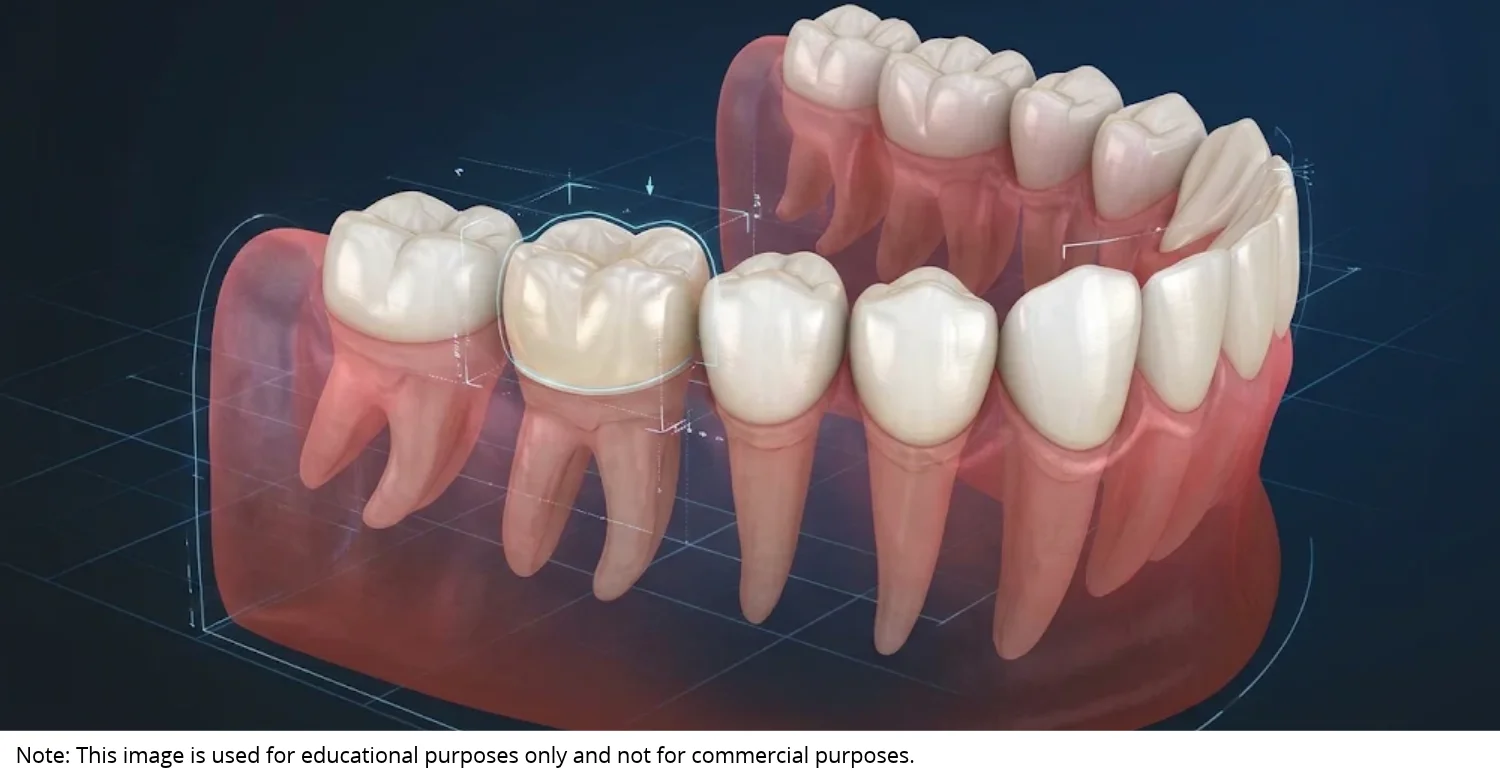
Zirconia vs PFM vs Porcelain Crowns for Back Teeth
This table compares how the main materials perform on molars and premolars. Use it as a starting point only. The final choice always depends on your clinical findings.
Feature | Monolithic Zirconia | PFM | All-Ceramic (e.g. lithium disilicate) | Gold |
Strength | Very high | High (porcelain may chip) | Moderate to high | Very high |
Appearance | Good | Good, possible dark margin | Excellent | Metallic |
Metal content | None | Yes | None | Yes |
Wear on opposing teeth | Low when well polished | Can be higher with porcelain | Low to moderate | Very low |
Suitability for molars | Excellent | Good | Selected cases | Excellent |
Which Crown Material Is Most Suitable for Molars?
Molars absorb strong vertical and grinding forces. For most patients choosing a Crown on back teeth Turkey, monolithic zirconia offers the best balance of strength and appearance. Gold remains an excellent functional option. The remaining tooth structure also matters. A tooth with very little sound structure may need a core build-up before any crown. Bruxism and the type of opposing tooth influence the decision too. A rough ceramic surface can wear down opposing enamel, so careful polishing is essential.
Does Crown Thickness Affect Strength and Durability?
Yes. Every material needs a minimum thickness to resist fracture. Monolithic zirconia and gold can work with thinner sections, often around 1 mm on the chewing surface. Glass ceramics and PFM crowns usually need more reduction. Removing too much tooth weakens it, while too little space produces a fragile crown. Good planning balances both. Crown design, connector shape, and laboratory precision also affect how well the crown handles daily loads over time. This is why preparation and design must be planned together.
How Much Does a Crown on Back Teeth Turkey Cost ?
The cost of a Crown on back teeth Turkey varies by material, case complexity, and what the treatment plan includes. A clear, itemised quote is the best way to compare options.
Average Dental Crown Prices in (Vitrin Clinic) Turkey by Material
Dental Crown Cost in Turkey vs the UK, USA, and Europe
What Factors Affect the Final Cost of a Back Tooth Crown?
Crown material: Zirconia, PFM, and all-ceramic crowns have different material and production costs.
Laboratory work: The dental laboratory's technology, expertise, and fabrication standards can affect the price.
Tooth preparation: Extensive damage or complex preparation may require additional clinical work.
Root canal treatment: If the tooth has an infected or damaged pulp, root canal treatment may be necessary before crown placement.
Core build-up: A weakened or severely damaged tooth may need additional structural support before receiving a crown.
Gum treatment: Existing gum disease or the need for crown lengthening can add to the overall treatment cost.
Digital technology: Digital scanning and CAD/CAM fabrication may influence the price, depending on the technology and workflow used.
Additional appointments: Temporary crowns, adjustments, and follow-up visits may also affect the final quotation.
What Is Included in a Dental Crown Treatment Package?
A dental crown treatment package may include several stages, depending on the clinic and the patient's treatment requirements:
Initial consultation: Dental examination and assessment of the tooth's condition.
Diagnostic imaging: X-rays or other imaging when needed to evaluate the tooth and surrounding structures.
Tooth preparation: Reshaping the tooth to create sufficient space and support for the crown.
Digital scans or impressions: Recording the prepared tooth's dimensions to guide accurate crown fabrication.
Temporary crown: Placement of a temporary restoration when required while the permanent crown is being made.
Crown fabrication: Production of the permanent crown using the selected material and laboratory workflow.
Permanent crown placement: Cementation or bonding of the final crown, depending on the material and clinical requirements.
Bite adjustment: Checking the contact between upper and lower teeth to ensure comfortable function.
Follow-up arrangements: Post-treatment checks and guidance, depending on the clinic's aftercare policy.
Ready to transform your smile?
Talk to our team and get a FREE treatment plan.
How to Choose the Right Dental Clinic for Back Tooth Crowns in Turkey
Choosing a clinic for a Crown on back teeth Turkey involves more than comparing prices. Diagnosis, materials, technology, and aftercare all influence the result.
Dentist Experience and Treatment Planning
Before any Crown on back teeth Turkey, ask who will examine your tooth and decide whether a crown is truly necessary. A good dentist checks existing fillings, root condition, gum health, and bite alignment before recommending treatment. X-rays help reveal hidden decay, cracks, or infection at the root tip. Treatment should follow your individual findings, not a fixed package. If a smaller restoration can protect the tooth, an honest dentist should tell you. Careful planning prevents unnecessary tooth removal and future complications.
Crown Materials and Laboratory Quality
Ask which zirconia brand or ceramic system the clinic uses. Reputable manufacturers provide documented material properties and quality standards. Clarify whether your crown will be monolithic or layered, since this affects chipping risk on molars. Laboratory precision is equally important. A crown with poor margins can trap plaque and lead to decay or gum inflammation. Well-fitted contact points also prevent food packing between teeth. Quality materials only perform well when the fabrication is accurate.
Digital Technology and Diagnostic Equipment
Intraoral scanners capture detailed 3D images without traditional impression material. This often improves comfort and accuracy. CAD/CAM systems let the team design and mill crowns digitally where available. Dental X-rays are essential for assessing roots and bone. When clinically indicated, 3D imaging such as CBCT may help evaluate complex cases. Technology supports good care, but it does not replace clinical judgement. The skill of the team using it remains the key factor.
Before-and-After Cases and Patient Reviews
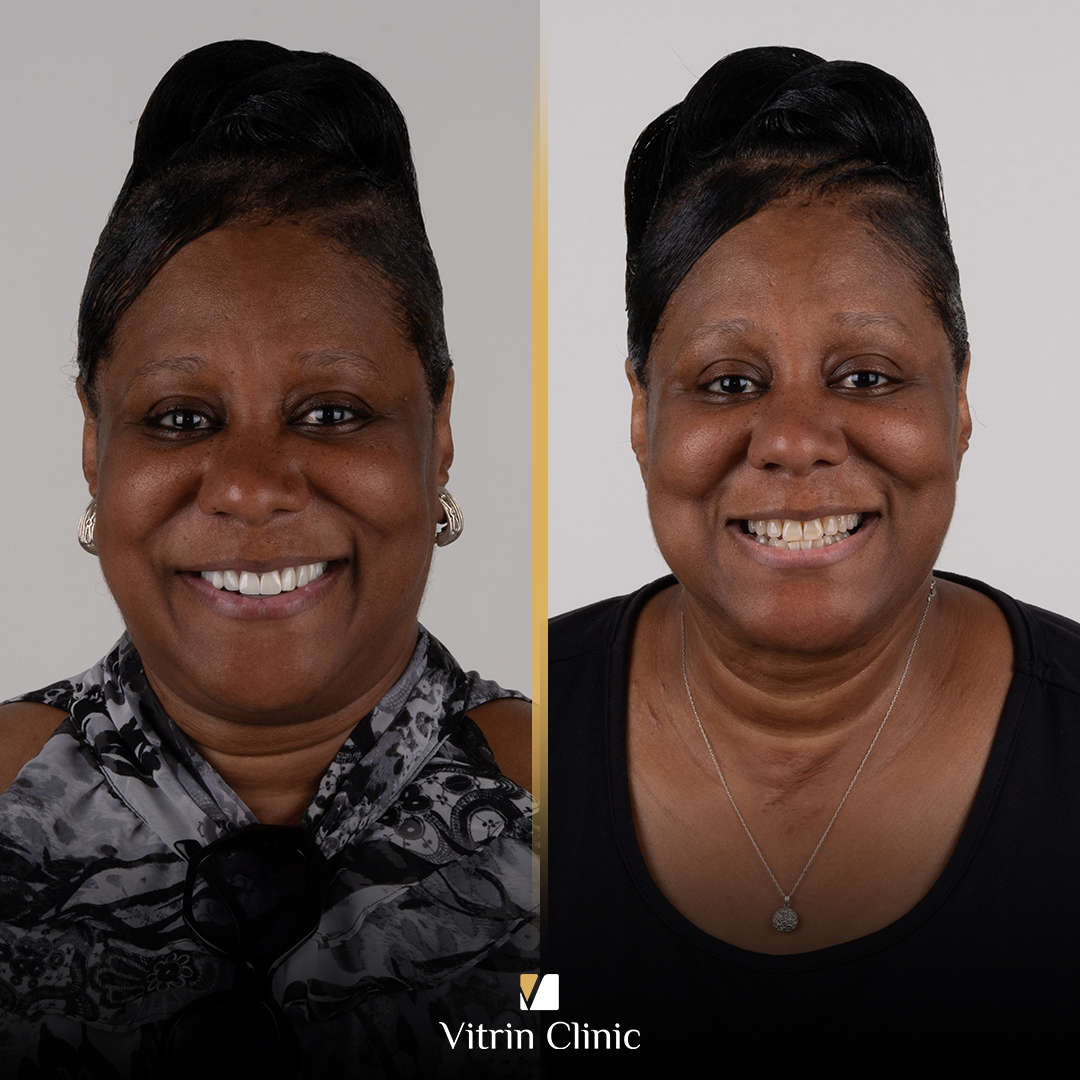
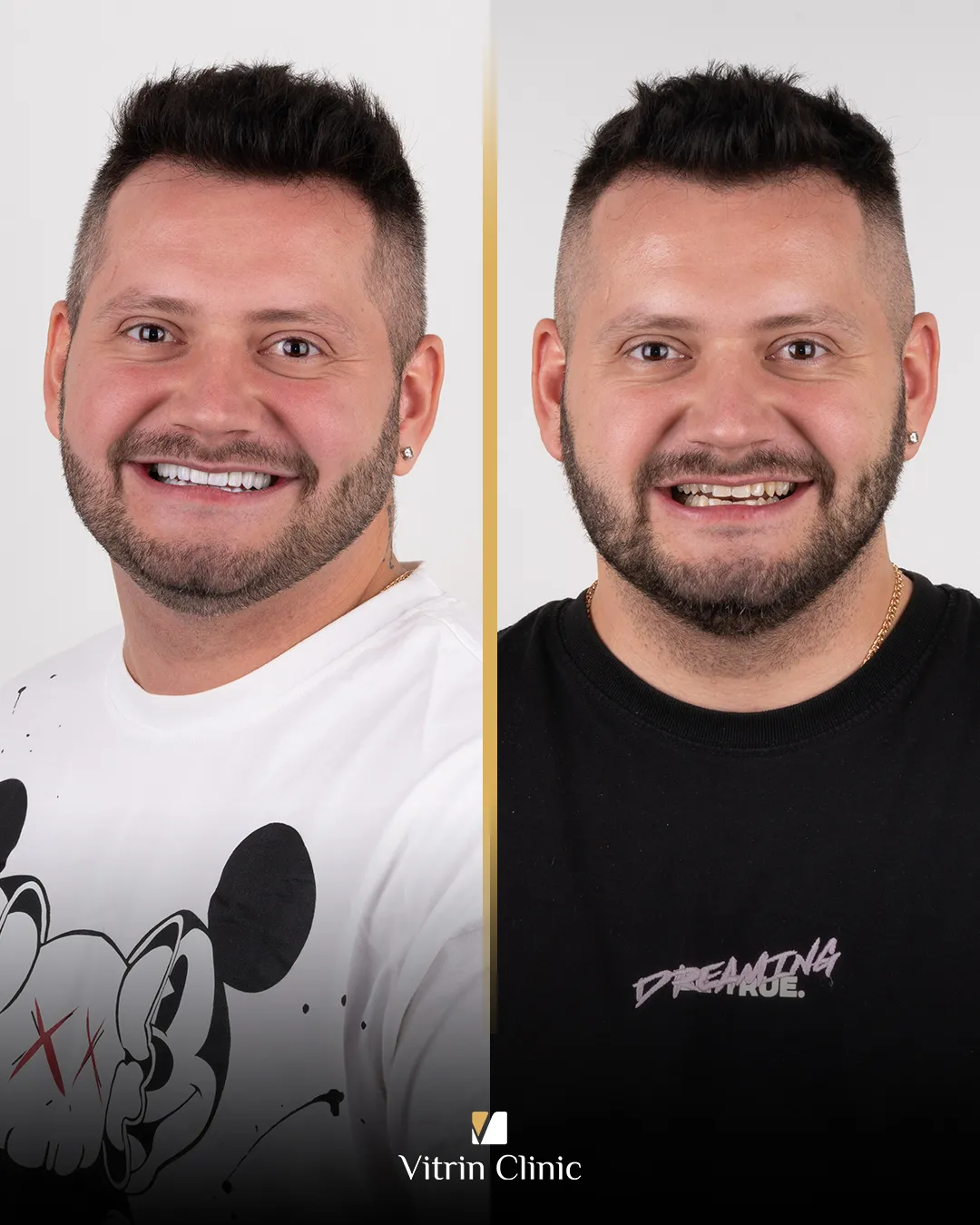
When comparing clinics for a Crown on back teeth Turkey, look for real posterior crown cases, not only front-tooth smile makeovers. Molar crowns have different functional demands. Check whether the photographs show similar problems to yours, such as broken or heavily filled teeth. Read patient reviews that mention follow-up experiences, not just the first week. Long-term feedback is more meaningful than initial impressions. Be cautious with heavily edited images. Honest clinics explain what was done and which material was used in each case.
Transparent Pricing and Aftercare
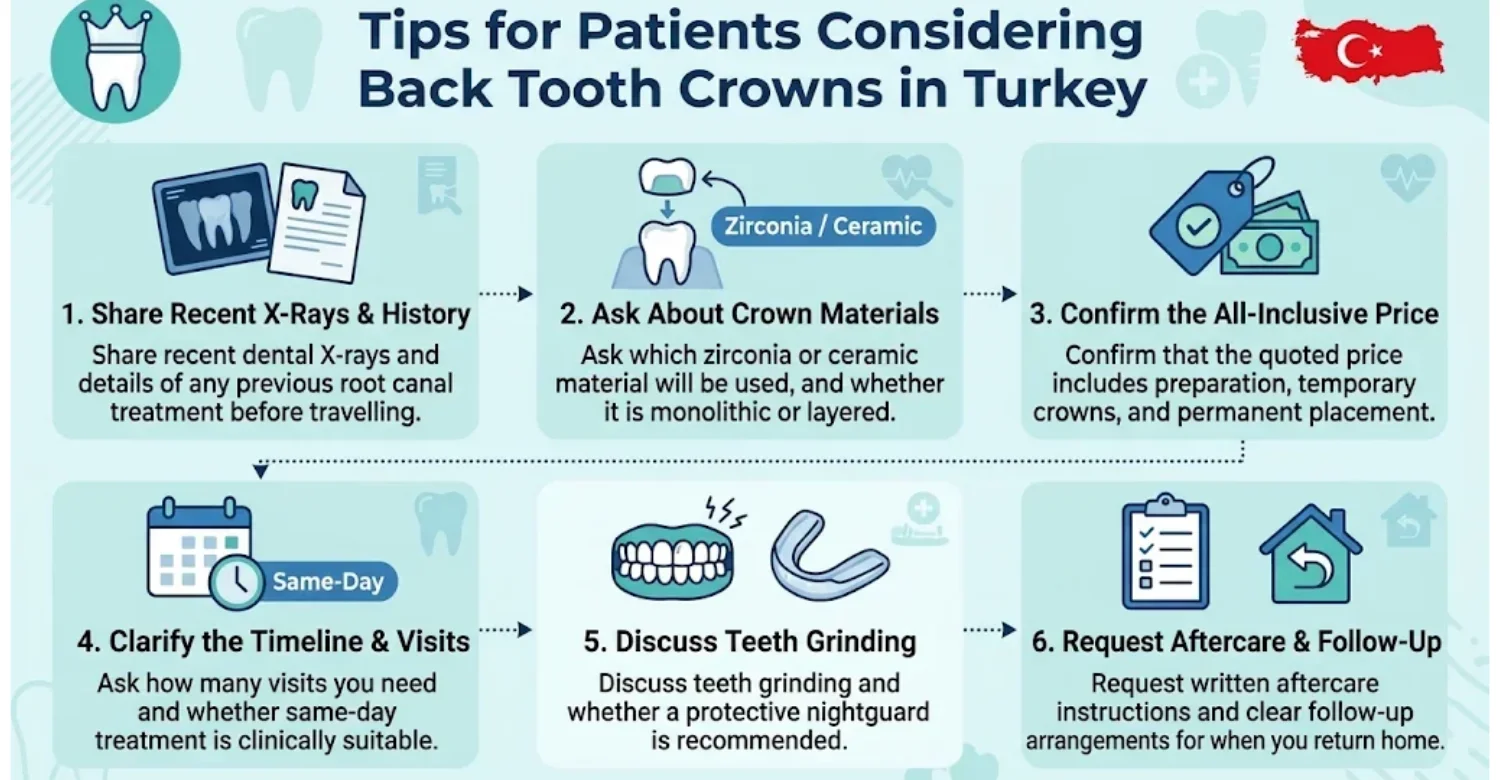
Request an itemised quote before booking. It should list each procedure, the crown material, and the number of teeth involved. Ask about possible extra costs, such as root canal treatment or core build-ups found during examination. Clarify the follow-up process once you return home. Ask how the clinic handles a loose crown, bite discomfort, or sensitivity after travel. Clear written aftercare and a reliable contact point give you peace of mind. They also make any later adjustment easier to arrange.
.jpg)
What Is the Dental Crown Procedure at Vitrin Clinic?
At Vitrin Clinic, treatment for a Crown on back teeth Turkey follows clear stages. Each step is planned around your diagnosis, comfort, and travel schedule.
Initial Online Consultation and Preliminary Assessment
The process starts before you travel. You can share clear photographs of your teeth and any recent X-rays. The team reviews your concerns, dental history, and previous treatments, such as root canals or old crowns. Based on this information, you receive a preliminary treatment plan. This plan is not final, because a full examination is needed. However, it helps you understand likely treatment options, approximate costs, and how long you may need to stay.
In-Clinic Examination and Tooth Preparation
At your first visit for a Crown on back teeth Turkey, the dentist confirms the diagnosis with a clinical exam and X-rays. Tooth structure, gum health, and bite are assessed carefully. Any decay or old filling material is removed. If needed, a core build-up restores missing structure. The tooth is then shaped under local anaesthesia to create space for the crown. Finally, digital scans or impressions record the prepared tooth, neighbouring teeth, and your bite in precise detail.
Crown Design and Laboratory Fabrication
The crown material is selected according to your tooth, bite, and aesthetic needs. For most molars, this means a strong ceramic such as zirconia. The crown is then designed to match your natural anatomy. Shape, dimensions, and contact points with neighbouring teeth are customized. The shade is matched to surrounding teeth. Laboratory production follows, with quality checks where applicable. Accurate margins and correct thickness are verified before the crown reaches the fitting appointment.
Permanent Crown Placement and Bite Adjustment
Before cementation, the dentist checks the crown's marginal fit at the gumline. Contacts with neighbouring teeth are tested with floss. The bite is evaluated in closing and in side-to-side chewing movements. High spots are adjusted and polished, because an uneven bite can cause pain or fracture. Once everything fits correctly, the crown is permanently cemented or bonded. You then receive written instructions for cleaning and caring for your new crown.
How Long Does It Take to Get a Back Tooth Crown in Turkey?
The timeline for a Crown on back teeth Turkey depends on the fabrication method, laboratory scheduling, and whether other procedures are needed first.
Traditional Laboratory-Made Crowns
A laboratory-made Crown on back teeth Turkey usually needs at least two appointments. At the first visit, the tooth is prepared, scanned, and fitted with a temporary crown. The laboratory then designs and produces the final crown. This step often takes several working days, depending on material and case complexity. At the second visit, the dentist tries in the crown, checks the fit and bite, and cements it permanently. Minor adjustments may need a short extra visit.
Same-Day Crowns Using CAD/CAM Technology
Same-day crowns use digital scanning, computer design, and in-office milling. The tooth is prepared and scanned, then the crown is designed on screen. A milling unit shapes it from a ceramic block. Some materials need firing or sintering before fitting. Not every case qualifies. Teeth with deep margins, complex bites, or multiple crowns may need laboratory fabrication. Material choice may also be more limited, so suitability depends on clinical findings.
How Many Days Should You Stay in Istanbul?
Your stay depends on how many teeth are involved and whether you need extra procedures. A simple single crown may need only a few days. Root canal treatment, gum treatment, or several crowns can extend your stay. Laboratory scheduling also affects timing. Always confirm your appointment plan with the clinic before booking flights. Allow a small buffer for final adjustments. This avoids rushed decisions if your bite needs refining before departure.
Clinical Note from Dr. Rifat Alsaman
Choosing the crown material is never the first step. Diagnosis comes first. I evaluate how much healthy tooth remains, the condition of the root, gum health, and how the patient bites. A full crown is appropriate when a tooth is too weak to be protected any other way. When enough structure remains, a more conservative onlay or filling is often better. Preserving natural tooth structure is always a priority, because once it is removed, it cannot be replaced.
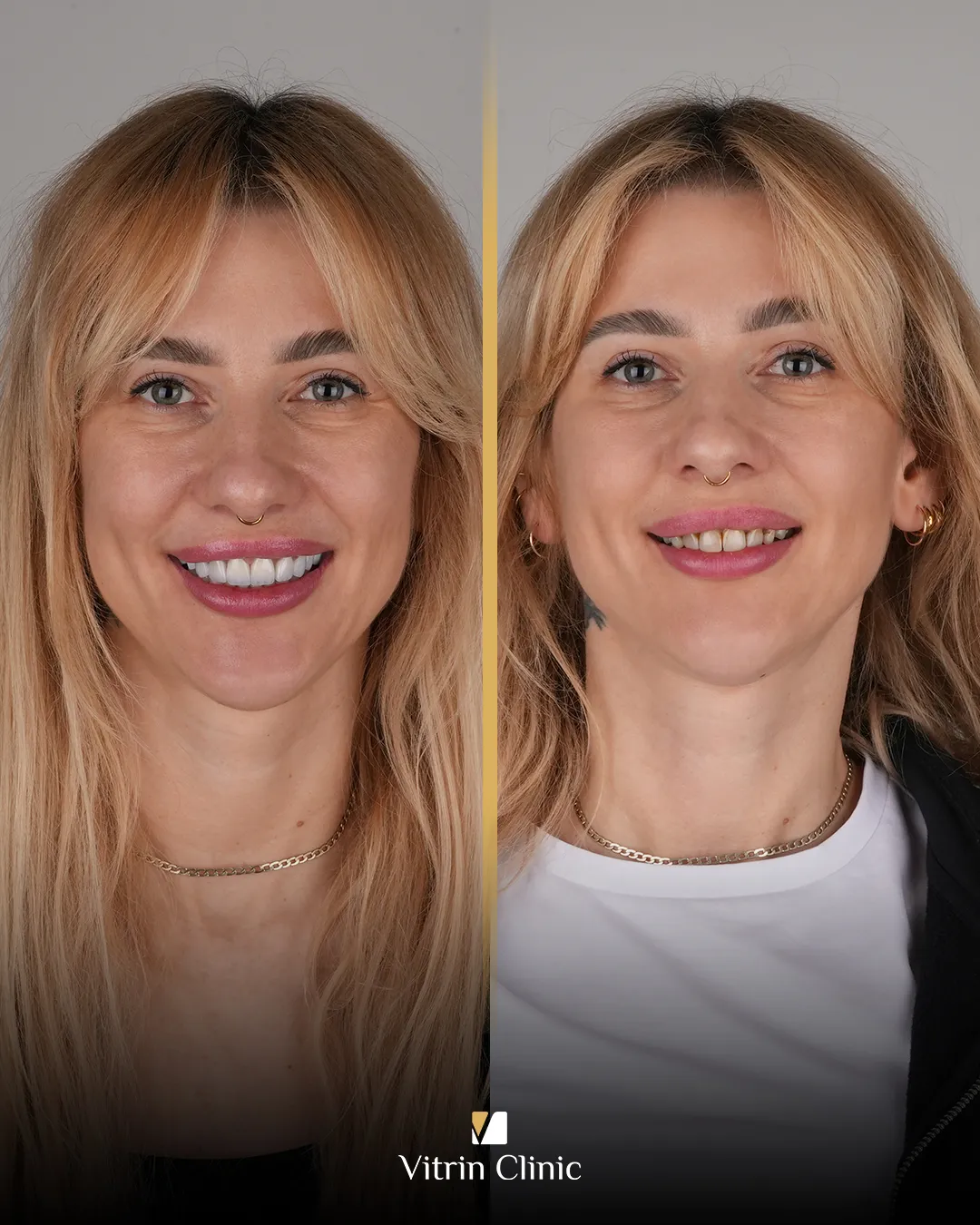
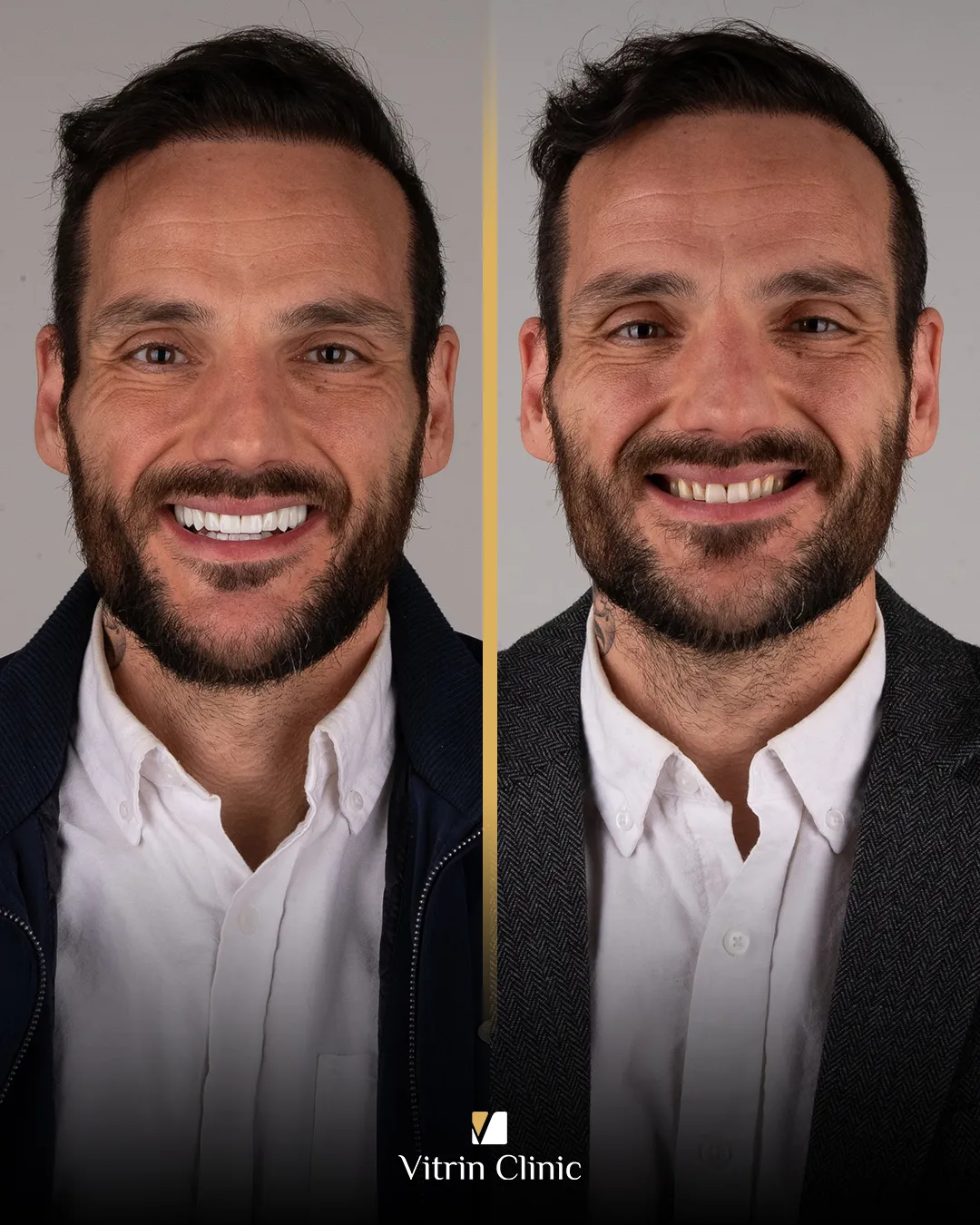
Crowns by Vitrin Clinic
.jpg)
Ready to transform your smile?
Talk to our team and get a FREE treatment plan.
Recovery, Longevity, and Maintenance of Back Tooth Crowns
Recovery after a Crown on back teeth Turkey is usually quick. Long-term success, however, depends on daily care and regular dental check-ups.
What to Expect After Crown Placement
After a Crown on back teeth Turkey, mild sensitivity to hot or cold is common for a few days. Gum tenderness around the crown usually settles within a week. The new crown may feel slightly different at first, and your tongue and bite need a short adjustment period. Contact your dentist if pain worsens, if the bite feels high, or if swelling develops. Persistent throbbing pain may indicate nerve problems in a tooth that has not had root canal treatment.
How Long Do Back Tooth Crowns Last?
Many well-made crowns last 10 to 15 years or longer. Longevity depends on material and fabrication quality. Monolithic zirconia and gold tend to perform very well on molars. Oral hygiene and periodontal health are just as important, because decay can develop at the crown margin. Bruxism and excessive chewing forces increase the risk of fracture or loosening. Regular dental examinations allow early detection of small problems before they become serious. Replacing a worn crown early also protects the tooth underneath.
How to Protect Your Crown and Avoid Complications
Brush twice daily with fluoride toothpaste, focusing on the gumline around the crown. Clean between teeth every day with floss or interdental brushes. Avoid chewing ice, hard sweets, pens, or opening packets with your teeth. If you grind or clench, a custom nightguard can protect both crowns and natural teeth. Attend regular check-ups so your dentist can monitor crown margins, surrounding gums, and supporting bone on X-rays. Early care keeps minor issues small.
Alternatives to Full Dental Crowns for Back Teeth
A full crown is not always necessary. Before choosing a Crown on back teeth Turkey, it helps to understand more conservative options.
Dental Fillings
A filling can be enough when decay or damage is small to moderate. Composite fillings bond to the tooth and preserve most natural structure. They are quicker and less invasive than crowns. However, very large fillings in molars may weaken remaining walls. Under heavy chewing forces, these thin cusps can crack. When more than about half the tooth is damaged, a filling may not offer predictable long-term protection. In these cases, cuspal coverage is usually safer.
Dental Inlays and Onlays
Inlays and onlays are partial restorations made in a laboratory or milled digitally. An inlay fits within the cusps, while an onlay covers one or more cusps. They protect weakened areas without reducing the entire tooth. This preserves more healthy enamel than a full crown. Onlays are often suitable for molars with lost cusps but sound remaining walls. The final choice depends on crack patterns, bite, and the amount of healthy structure.
Dental Implants
When a tooth is non-restorable, extraction may be necessary. This may be due to a vertical root fracture, extensive decay below the bone, or severe infection. A dental implant can then replace the root, supporting an implant crown. Implants offer excellent function. However, preserving a restorable natural tooth should always be considered first. A natural tooth has a periodontal ligament that provides feedback and cushioning during chewing. An implant also involves surgery and a longer healing period.
What We Notice Clinically
Among patients seeking a Crown on back teeth Turkey, two molars with similar visible damage may need very different treatments. X-rays often reveal hidden decay, cracks, or root problems. The amount of remaining tooth structure strongly guides our choice between an onlay, a crown, or a core build-up first. A previous root canal alone does not confirm a tooth is ready for a crown. We assess the root filling quality and any signs of infection. We also see that bruxism and uneven bites are common causes of failure. Healthy gums and well-placed margins remain essential for long-term success.
Discover Your Smile Journey at Vitrin Clinic
From your first smile assessment to the moment you see your new smile, every step is thoughtfully planned around your dental needs. Enjoy a seamless journey to Istanbul, with personalized dental care, comfortable accommodation, and dedicated support along the way.
01. Your Smile Assessment
Every great smile starts with understanding your dental needs. Share your smile photos, dental records, and medical history with our team. Our dentists will review your case and explore the most suitable treatment options for your teeth, gums, and bite.
02. Your Personalized Smile Plan
Your smile deserves more than a standard treatment package. We create a tailored dental plan outlining your recommended procedures, treatment stages, estimated timeline, and transparent total cost, so you know exactly what to expect before travelling to Istanbul.
03. Your Istanbul Stay, Taken Care Of
Your journey should be as comfortable as your treatment is personalized. We coordinate your hotel accommodation and airport, hotel, and clinic transfers, allowing you to focus on your dental care while we take care of the arrangements.
04. Your New Smile Begins
This is where your smile transformation comes together. Our dental team carries out your planned treatments with attention to dental function, aesthetics, and your individual needs. Before you return home, we provide aftercare instructions and continued follow-up support to help you look after your new smile.
Why Choose Vitrin Clinic for Dental Crowns in Turkey?
Vitrin Clinic provides professional dental crown treatments, offering individualized diagnosis and restorative planning for every patient seeking a crown on back teeth in Turkey. The medical team is led by Dr. Rifat Alsaman. Each treatment plan considers tooth structure, gum health, and bite alignment before selecting the most appropriate crown material. Digital dental technology is used where appropriate, alongside the clinic's in-house laboratory capabilities. Patients receive transparent quotations before travelling. Online consultations, international patient coordination, and aftercare support help ensure a smooth treatment journey from the initial assessment to follow-up.






Book your FREE treatment plan with Vitrin Clinic and get a personalized treatment plan from our dental team.
Ready to transform your smile?
Talk to our team and get a FREE treatment plan.
Medical Disclaimer:
This article is for general information and does not replace a personal assessment by a qualified dentist. Prices are approximate 2026 averages, with UK and Turkey figures converted to US dollars, and may vary by clinic and case.
Reference:
https://myhealth.alberta.ca/Health/pages/conditions.aspx?hwid=uh1743
https://my.clevelandclinic.org/health/treatments/10923-dental-crowns
FAQs
The price of a zirconia Crown on back teeth Turkey depends on the zirconia type, laboratory work, and any preparatory treatment. Request an itemised quote after sharing your X-rays.
Dr. Rifat Alsaman has more than 5 years of clinical experience in dentistry and currently serves as the Head of the Medical Team at Vitrin Clinic. He is dedicated to providing exceptional patient care, overseeing treatment planning, and ensuring the highest clinical standards across the team. His expertise, attention to detail, and commitment to continuous professional development have helped countless patients achieve healthier, more confident smiles.


