Dental Implant
August 5, 2026
3D Printed vs Milled Titanium Implant: Which Manufacturing Method Delivers Better Clinical Outcomes?
 Dr. Rifat Alsaman
Choosing between a 3D printed vs milled titanium implant is one of the most common questions patients ask before starting implant treatment. Both approaches use medical-grade titanium. But they reach the final implant shape through very different manufacturing paths. Understanding titanium implant manufacturing methods helps patients see why dentists sometimes recommend one option over the other.
3D Printed vs Milled Titanium Implant: Why the Manufacturing Process Matters
The 3D printed vs. milled titanium implant decision affects far more than appearance. It influences accuracy, surface texture, and how well the implant integrates with bone. Both technologies produce reliable results. Still, the manufacturing method shapes design flexibility and clinical suitability. Dentists weigh these differences carefully. They don't assume one method is automatically superior, since patient anatomy and treatment goals ultimately guide the right choice for each individual case.
Titanium Is the Same—The Engineering Is Different
Both 3D printed titanium dental implants and milled titanium dental implants use identical medical-grade titanium alloy. The material itself is not the variable. What changes is the engineering process: additive manufacturing dental implants build up material layer by layer. Milling subtracts material from a solid titanium block instead. This difference in fabrication affects internal structure, surface texture, and how precisely each implant can be customized to a patient's unique anatomy. This distinction sits at the heart of the 3D printed vs milled titanium implant decision.
How Manufacturing Influences Clinical Performance
Titanium implant manufacturing methods directly shape clinical performance, from initial stability to long-term durability. Printed implants allow intricate internal geometries that support bone growth. Milled implants offer a dense, consistently uniform structure refined over decades of clinical use. Neither method guarantees success on its own. Performance also depends on bone quality, surgical technique, and prosthetic planning. That's why manufacturing is only one part of a much larger clinical picture. Even so, it remains central to the 3D printed vs milled titanium implant discussion.
The complete article for Sedation Options For Anxious Patients
Why Dentists Consider More Than Just Implant Shape
Implant shape matters. But dentists also evaluate bone density, available height and width, occlusal forces, and healing potential before recommending a manufacturing approach. A 3D printed vs CNC milled implants comparison isn't just about which technology sounds more advanced. It's about matching a proven fabrication method to the patient's specific anatomical and functional needs. Comprehensive diagnostics guide this decision more than any single manufacturing trend. This diagnostic-first approach shapes every 3D printed vs milled titanium implant recommendation.
From Digital Scan to Final Implant: The Complete Manufacturing Journey
Every implant, regardless of manufacturing method, begins with detailed digital planning. This shared starting point ensures accuracy before any titanium is shaped. From there, the pathways diverge. One builds the implant additively, the other mills it from solid stock. Understanding each step clarifies how titanium implant manufacturing methods translate a digital plan into a precise, functional implant ready for surgical placement. This shared starting point applies to every 3D printed vs. milled titanium implant case.
CBCT Imaging and Digital Diagnosis
Cone-beam CT imaging captures a detailed three-dimensional view of the jaw. It reveals bone density, nerve position, and sinus location. This digital diagnosis forms the foundation for any implant plan, whether the final device will be milled or additively manufactured. Accurate imaging reduces surgical risk. It also allows dentists to anticipate anatomical challenges early, ensuring the chosen manufacturing method actually fits the patient's bone structure and treatment goals. Accurate imaging shapes the entire 3D printed vs. milled titanium implant decision from the start.
Virtual Implant Design Using CAD Software
Once imaging is complete, CAD software translates the scan into a virtual implant model. Dentists and technicians adjust dimensions, angulation, and thread patterns digitally before manufacturing begins. This virtual stage is where custom 3D printed titanium implants often diverge from standard sizes, since software allows precise anatomical matching. Milled implants, by contrast, are typically selected from a validated range of pre-designed sizes rather than fully redesigned. This is often the first fork in the 3D printed vs milled titanium implant pathway.
Additive Manufacturing Dental Implants
Additive manufacturing dental implants are built by fusing titanium powder layer by layer using a focused energy source. This process allows complex internal lattice structures impossible to achieve through subtractive methods. It's especially valuable for custom 3D printed titanium implants designed for irregular bone anatomy, severe bone loss, or patient-specific solutions. Standard implant shapes simply wouldn't fit the available anatomical space in these cases. These cases often tip the 3D printed vs. milled titanium implant decision toward printing.
Layer-by-Layer Titanium Printing
Layer-by-layer titanium printing fuses thin layers of titanium powder using laser or electron beam technology. It gradually builds the implant from base to tip. Each layer is only microns thick, allowing highly detailed geometries. This precision supports porous surface structures that can encourage bone integration. The process requires careful calibration, since inconsistent layering can affect the implant's final mechanical properties and structural reliability. This calibration step matters greatly in the 3D printed vs milled titanium implant comparison.
Heat Treatment and Surface Optimization
After printing, implants undergo heat treatment to relieve internal stress and stabilize the titanium's crystalline structure. This step improves fatigue resistance and mechanical strength. Surface optimization follows, refining texture to support predictable healing. Without proper heat treatment, printed titanium can retain residual stress that compromises long-term durability. This stage is essential to producing a clinically reliable additive manufacturing dental implant. Proper treatment keeps a printed option competitive in the 3D printed vs. milled titanium implant comparison.
CAD CAM Titanium Implant Fabrication
CAD CAM titanium implant fabrication mills implants from a solid block of medical-grade titanium using computer-guided cutting tools. This subtractive method has decades of clinical documentation behind it. It produces dense, structurally uniform implants. Milling starts from solid stock rather than powder, so the resulting implant typically has fewer internal irregularities. This is one reason milled implants remain a trusted, well-established standard option. This track record anchors one side of the 3D printed vs. milled titanium implant comparison.
Precision CNC Milling
Precision CNC milling uses computer-controlled cutting instruments to shape titanium blocks into exact implant dimensions specified during digital design. The process achieves tight tolerances and highly consistent results across production batches. Milling removes material rather than building it up. So the finished implant benefits from the titanium block's inherent density, contributing to the structural reliability milled implants are widely recognized for in clinical practice. This density advantage is often cited in the 3D printed vs milled titanium implant comparison.
Surface Finishing and Sterilization
After milling, implants undergo surface finishing to create the texture needed for proper bone attachment. Rigorous sterilization protocols follow. Surface treatments may include acid-etching or sandblasting to increase surface roughness at a microscopic level. Sterilization ensures the implant is biologically safe for surgical placement. This final stage is critical regardless of manufacturing method, directly affecting how predictably the implant integrates with surrounding bone. This stage matters equally on both sides of the 3D printed vs. milled titanium implant comparison.
Must-read guide to Veneers In Turkey
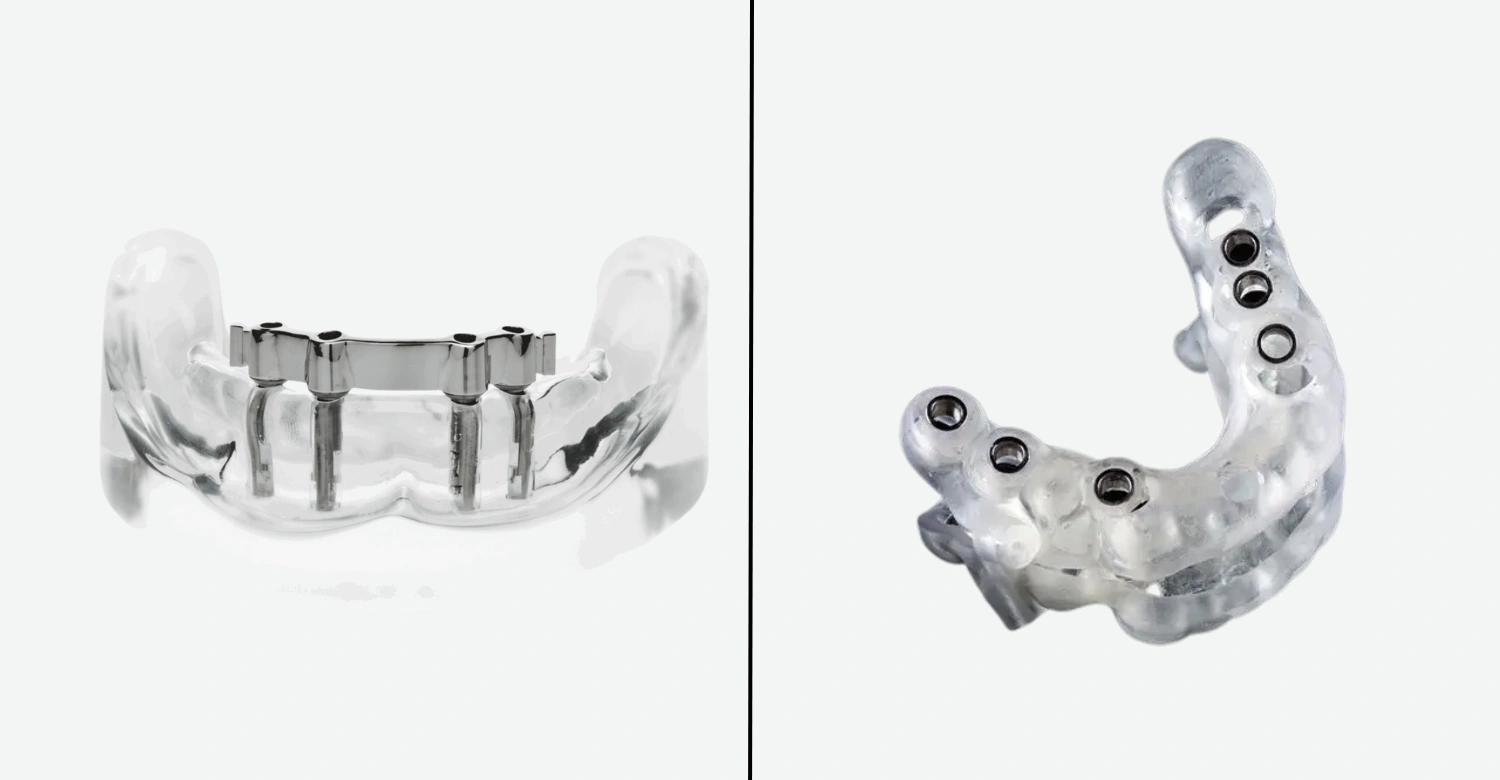
3D Printed Titanium Dental Implants vs Milled Titanium Dental Implants
Comparing 3D printed titanium dental implants vs milled titanium dental implants side by side highlights where each technology excels. Printed implants offer greater design freedom for complex anatomy. Milled implants offer proven consistency backed by extensive clinical history. Neither option is universally "better." The right choice depends on the patient's bone condition, treatment complexity, and whether a standard or customized solution best serves the case. This is the essence of the 3D printed vs. milled titanium implant question.
Design Freedom and Personalization
Additive manufacturing allows highly personalized implant geometries, including porous internal structures and patient-specific external shapes that match irregular bone contours. This makes custom 3D printed titanium implants especially useful in complex cases. Milled implants offer less shape flexibility since they're cut from standardized blanks. But they still come in numerous sizes and configurations suitable for the majority of routine implant placements. Design flexibility is a defining factor in the 3D printed vs. milled titanium implant comparison.
Accuracy and Manufacturing Precision
Both methods achieve high precision, though they measure accuracy differently. CNC milling delivers extremely tight, repeatable tolerances due to its subtractive nature. 3D printing achieves precision through calibrated layer deposition. This can vary slightly based on equipment and material quality. In a 3D printed vs CNC milled implants comparison, both technologies meet strict manufacturing standards required for safe, predictable dental implant placement. Precision standards apply equally across the 3D printed vs milled titanium implant comparison.
Surface Characteristics That Influence Healing
Surface texture plays a major role in how quickly bone attaches to an implant. Printed implants can incorporate porous, roughened surfaces directly during fabrication, potentially supporting bone ingrowth. Milled implants achieve comparable roughness through post-processing treatments like etching or blasting. Both approaches aim for the same clinical goal: predictable osseointegration. They just use different technical paths to create a bone-friendly implant surface. Surface texture is a frequent talking point in the 3D printed vs. milled titanium implant comparison.
Clinical Applications for Each Technology
Milled titanium dental implants suit the majority of standard cases with adequate bone volume and straightforward anatomy. 3D printed titanium dental implants become particularly valuable for complex cases. Think severe bone loss, unusual anatomy, or revision surgery, where a customized shape offers a meaningful clinical advantage. Dentists select between the two based on individual diagnostic findings, not a blanket preference for either manufacturing method. Case complexity often decides the 3D printed vs. milled titanium implant recommendation.
In-depth look at Best Dental Clinic In Istanbul For A Full Smile Makeover
Can Manufacturing Affect Bone Integration?
Manufacturing method can influence certain aspects of bone integration, particularly surface texture and implant geometry. However, integration success depends heavily on factors beyond manufacturing alone. Bone quality, surgical precision, and post-operative care all play significant roles. This section examines how titanium implant manufacturing methods interact with the biological healing process. Manufacturing is just one variable among several that determine implant success. Bone integration remains a key factor in the 3D printed vs. milled titanium implant discussion.
Initial Implant Stability
Initial stability refers to how securely an implant sits in bone immediately after placement, before biological healing begins. This mechanical stability depends on implant design, thread geometry, and bone density at the placement site. Both 3D printed and milled implants can achieve strong initial stability when properly matched to the patient's anatomy. Thread design differences between manufacturing methods may suit different bone densities. Stability outcomes are closely tracked in the 3D printed vs. milled titanium implant comparison.
Bone-to-Implant Contact
Bone-to-implant contact describes the percentage of implant surface directly touching bone rather than soft tissue. It's a key indicator of successful osseointegration. Surface roughness, whether achieved through printing or post-milling treatment, influences this contact percentage. Studies generally show both manufacturing methods can achieve favorable bone-to-implant contact. This holds true when surface preparation follows established clinical protocols and the implant is placed with proper surgical technique. This measure is often referenced in the 3D printed vs milled titanium implant discussion.
Healing Around Different Surface Structures
Porous printed surfaces may allow bone cells to grow partially into the implant's outer layer. Milled implants rely on roughened but non-porous surfaces for attachment instead. Both structures support healing differently but effectively. Individual healing response also varies based on patient health, smoking status, and oral hygiene. Surface structure is only one contributing factor among many influencing overall osseointegration success. Healing patterns differ subtly across the 3D printed vs. milled titanium implant comparison.
Factors More Important Than Manufacturing Alone
Bone quality, surgical technique, prosthetic loading timing, and patient health history often matter more to healing outcomes than whether an implant was printed or milled. Manufacturing method sets the foundation, but clinical execution determines results. This is why thorough diagnostic evaluation, careful treatment planning, and experienced surgical placement remain more decisive to long-term success than manufacturing technology on its own. Clinical execution outweighs the 3D printed vs milled titanium implant choice itself.
Clinical advice on Full Mouth Rehabilitation In Turkey
When Standard Implants Are Not Enough
Standard implants work well for most patients. But some cases require more than a conventional off-the-shelf solution. Severe bone loss, trauma, complex jaw anatomy, or failed previous implants often call for a customized approach. This is where custom 3D printed titanium implants offer genuine clinical value. They provide solutions tailored precisely to anatomy that standard implants simply cannot accommodate. These are the cases where the 3D printed vs. milled titanium implant question becomes most relevant.
Custom 3D Printed Titanium Implants for Severe Bone Loss
Patients with significant bone loss may not have enough volume to support a standard implant, even with grafting. Custom 3D printed titanium implants can be designed to match the patient's remaining bone structure directly. This sometimes reduces the need for extensive grafting procedures. This personalized approach expands treatment possibilities for patients who previously had limited options for implant-supported restoration. Severe bone loss often settles the 3D printed vs milled titanium implant decision in favor of printing.
Reconstruction After Trauma
Facial or jaw trauma can create irregular bone defects that standard implants cannot address. Additive manufacturing allows implants to be custom-designed around the exact contours of trauma-affected bone, based on precise CBCT imaging. This level of customization supports functional and aesthetic reconstruction. It matters most in cases where conventional implant shapes would be poorly suited to the patient's altered anatomy. Trauma cases frequently shift the 3D printed vs milled titanium implant balance toward customization.
Implant Solutions for Complex Jaw Anatomy
Some patients have naturally irregular jaw anatomy, narrow ridges, or unusual sinus positioning that complicates standard implant placement. Custom 3D printed titanium implants can be engineered to navigate these anatomical challenges while maintaining proper support and stability. This customization helps avoid more invasive bone augmentation procedures in select cases. Clinical suitability is always assessed individually, though. Complex anatomy is a common deciding factor in the 3D printed vs milled titanium implant choice.
Revision Cases After Previous Implant Failure
When a previous implant fails, the remaining bone often has altered density or shape, complicating a standard replacement. Custom-designed implants can account for this changed anatomy more precisely than an off-the-shelf option. Careful diagnostic evaluation is essential in revision cases. It helps identify the failure's cause and determine whether a customized or conventional solution offers the better long-term outcome. Revision cases add another layer to the 3D printed vs milled titanium implant decision.
Health impact of Gum Disease And Overall Health
3D Printed Subperiosteal Implants: A Modern Alternative
3D printed subperiosteal implants sit on top of the jawbone rather than inside it, offering an alternative for patients with severe bone loss. Once largely abandoned due to manufacturing limitations, this technique has returned thanks to digital design and additive manufacturing. It represents one of the more advanced applications of titanium implant manufacturing methods available in modern implant dentistry today. It stands apart from the standard 3D printed vs milled titanium implant comparison.
Why They Have Returned to Modern Dentistry
Subperiosteal implants fell out of favor decades ago due to poor-fitting, hand-crafted designs that often caused complications. Digital scanning and additive manufacturing now allow these implants to be custom-fitted precisely to a patient's jawbone surface. This renewed precision has made 3D printed subperiosteal implants a viable option again. They're particularly useful for patients who aren't candidates for traditional bone-anchored implants.
Digital Design Based on Patient Anatomy
Modern subperiosteal implants are designed using CBCT scans that map the exact contour of the patient's jawbone. This data guides additive manufacturing to produce a frame that fits precisely over the bone surface. The accuracy of this digital design process is central to the implant's stability and comfort. It distinguishes today's approach from older, less precise fabrication techniques.
Patients Who May Avoid Extensive Bone Grafting
For patients with insufficient bone volume for traditional implants, subperiosteal implants can sometimes reduce or eliminate the need for extensive grafting procedures. The implant rests on the bone surface rather than requiring bone height for anchorage. This offers an alternative pathway to tooth replacement for select patients. Otherwise, they might face lengthy staged grafting treatment.
Current Clinical Limitations
Despite renewed interest, 3D printed subperiosteal implants aren't suitable for every patient. They require careful case selection. Long-term clinical data, while promising, is less extensive than for traditional root-form implants. Dentists must weigh these limitations against potential benefits. Patients should understand this remains a specialized solution reserved for specific anatomical circumstances rather than a universal replacement option.
Titanium Implant Strength Comparison
A titanium implant strength comparison shows that both printed and milled implants can meet the mechanical demands of everyday chewing when properly manufactured and heat-treated. Strength depends on material quality, manufacturing precision, and post-processing treatment rather than method alone. This section explores how each technology performs under functional load and over years of daily use. Strength is one of the most researched aspects of the 3D printed vs milled titanium implant question.
Mechanical Strength Under Chewing Forces
Titanium implants must withstand repeated chewing forces without deforming or fracturing. Both milled and properly printed-and-treated implants demonstrate strong mechanical resistance to these forces when manufactured to clinical standards. Milled implants benefit from the inherent density of solid titanium stock. Printed implants rely on precise layering and heat treatment to achieve comparable strength for daily functional use. Both sides of the 3D printed vs milled titanium implant comparison meet daily strength demands.
Fatigue Resistance Over Time
Fatigue resistance describes how well an implant withstands years of repetitive loading without developing microscopic cracks. Proper heat treatment significantly improves fatigue resistance in printed implants by relieving internal stress from the layering process. Milled implants generally start with fewer internal irregularities. Both methods, when manufactured correctly, can achieve fatigue resistance suitable for long-term functional dental restoration. Fatigue data is closely watched in the 3D printed vs milled titanium implant comparison.
Structural Reliability in Daily Function
Day-to-day structural reliability depends on manufacturing quality control as much as the method itself. Consistent titanium implant manufacturing methods, whether additive or subtractive, must follow strict quality standards to ensure predictable performance. Patients can expect reliable daily function from either well-manufactured option. This holds true provided the implant was properly designed, fabricated, and matched to their specific bite forces and anatomy. Reliability depends less on labels and more on execution in the 3D printed vs milled titanium implant comparison.
Understanding the risks of Waterborne Diseases And Oral Health
Clinical Evidence on Long-Term Durability
Milled implants have several decades of long-term clinical evidence supporting their durability across large patient populations. 3D printed implants are newer to widespread clinical use, with a growing but comparatively smaller body of long-term data. This doesn't indicate inferior durability. It does mean milled implants currently carry a longer documented track record in clinical literature. This gap in data is often raised in the 3D printed vs milled titanium implant discussion.
Tips for Patients
Patients should ask detailed questions during consultation, request thorough digital imaging, and avoid choosing a manufacturing method based on marketing trends alone. Seeking a second opinion for complex cases is reasonable. Prioritizing clinics with comprehensive diagnostic capabilities and transparent communication generally supports more confident, well-informed implant treatment decisions overall.
3D Printed Implant vs Traditional Implant
Comparing a 3D printed implant vs traditional implant highlights how digital manufacturing has expanded, rather than replaced, conventional treatment options. Traditional milled implants remain a well-established standard. 3D printing introduces new possibilities for complex cases. Understanding both helps patients see how digital dentistry has broadened the range of available implant solutions. This overlaps closely with the broader 3D printed vs milled titanium implant conversation.
Conventional Implant Manufacturing
Conventional implant manufacturing relies on CNC milling from standardized titanium blanks, producing implants in a defined range of sizes and shapes. This traditional method has been refined over decades, with extensive clinical documentation supporting its predictability. It remains the primary manufacturing approach for the majority of routine implant cases. Standard sizing adequately matches the patient's anatomy in most of these cases.
What Has Changed With Digital Dentistry
Digital dentistry has introduced CBCT imaging, CAD design, and additive manufacturing into implant treatment. These tools allow greater precision and, in select cases, full customization. They haven't replaced traditional milling but have expanded the toolkit available to dentists. Patients now benefit from more thorough diagnostic planning regardless of which final manufacturing method is chosen for their implant.
Choosing Between Innovation and Established Protocols
Choosing between innovative 3D printing and established milling protocols isn't about picking the newer technology by default. It's about matching the manufacturing method to the patient's specific anatomical needs and treatment complexity. Established protocols offer proven reliability. Innovation offers solutions for cases standard approaches can't address. Both have a legitimate place in modern implant dentistry.
Questions Dentists Ask Before Choosing an Implant Manufacturing Method
Before recommending a specific manufacturing approach, dentists work through a structured set of diagnostic questions. These considerations help determine whether a standard milled implant will suffice or whether a customized solution is clinically necessary. This evaluation process ensures the chosen titanium implant manufacturing method genuinely fits the patient's anatomy rather than following a manufacturing trend.
Is Enough Healthy Bone Available?
Adequate bone volume and density are fundamental requirements for implant stability. Dentists assess this through CBCT imaging, checking bone height, width, and quality at the intended placement site. Insufficient healthy bone may indicate a need for grafting, a customized implant design, or an alternative approach like a subperiosteal implant. The right path depends on the severity of bone loss present.
Will a Standard Implant Fit the Anatomy?
Even with adequate bone, anatomical variations like narrow ridges, sinus proximity, or nerve positioning can affect whether a standard implant size and shape will fit safely. Dentists evaluate these anatomical details carefully using digital scans. This happens before selecting between a conventional milled implant and a more tailored manufacturing approach suited to the patient's unique jaw structure.
Does the Patient Need a Fully Customized Solution?
Full customization becomes necessary when standard implant options can't adequately address complex anatomy, trauma-related defects, or revision cases. Dentists weigh the added complexity and cost of custom 3D printed titanium implants against the clinical benefit they provide. For straightforward cases, standard milled implants typically offer a simpler, equally effective solution.
Are Additional Bone Augmentation Procedures Necessary?
When bone volume is insufficient, dentists must decide whether grafting procedures, sinus lifts, or a customized implant design offers the better path forward. This decision depends on the extent of bone loss, patient health, and treatment timeline preferences. Sometimes a combination approach works best. Partial grafting alongside a tailored implant can provide the most predictable long-term outcome.
Available Treatment Pathways
Patients considering implant treatment have several pathways available, ranging from conventional root-form implants to fully customized digital solutions. Each pathway suits different anatomical and clinical circumstances. Reviewing these options helps patients understand what to expect during consultation. It also shows how their specific case might guide the recommended manufacturing and surgical approach.
Conventional Root-Form Titanium Implants
Root-form implants are the most common and well-established implant type, shaped like a small screw and placed directly into the jawbone. Typically manufactured through CNC milling, they suit the majority of patients with adequate bone volume. Their long clinical track record makes them a reliable first-line option for standard single-tooth or multi-tooth replacement cases.
Patient-Specific Custom Titanium Implants
For complex anatomy or significant bone loss, patient-specific implants designed through additive manufacturing offer a tailored alternative. These custom 3D printed titanium implants are built directly from the patient's CBCT data. This allows precise anatomical matching that standard implants cannot achieve. This pathway is generally reserved for cases where conventional options are anatomically unsuitable.
Digital Guided Implant Surgery
Digital guided surgery uses CAD-designed surgical guides, created from CBCT data, to direct precise implant placement during surgery. This technology improves placement accuracy regardless of whether the implant itself is printed or milled. Guided surgery reduces surgical guesswork. It helps ensure the implant is positioned exactly as planned during the digital design phase.
Immediate vs Delayed Implant Placement
Immediate placement positions the implant right after tooth extraction. Delayed placement allows the socket to heal first instead. The choice depends on bone quality, infection presence, and aesthetic requirements at the extraction site. Both approaches can be used with milled or printed implants. The decision is driven by clinical circumstances rather than manufacturing method.
Before, During, and After Treatment
Implant treatment follows a structured sequence regardless of manufacturing method: planning, placement, healing, and restoration. Each phase plays a distinct role in the overall success of the treatment. Understanding this sequence helps patients know what to expect at every stage, from the first digital scan through to receiving their final prosthetic restoration.
Preoperative Digital Planning
Preoperative planning begins with CBCT imaging and CAD-based implant design, establishing the foundation for accurate placement. This stage determines implant positioning, angulation, and sizing before any surgical or manufacturing work begins. Thorough digital planning reduces surgical risk. It helps ensure the chosen implant, whether printed or milled, fits the patient's anatomy precisely.
Surgical Placement
During surgical placement, the implant is positioned into or onto the jawbone following the digital surgical plan. Precision at this stage directly affects initial stability and long-term success. Guided surgical techniques, informed by earlier CBCT and CAD planning, help ensure accurate placement. This holds true regardless of whether the implant was manufactured through printing or milling.
Healing and Osseointegration
Following placement, a healing period allows bone to fuse with the implant surface through osseointegration. This process typically takes several months. It's influenced by bone quality, implant surface characteristics, and patient health factors. Both printed and milled implants require this same biological healing window before they can safely support a permanent prosthetic restoration.
Long-Term Prosthetic Restoration
Once osseointegration is confirmed, a permanent crown, bridge, or denture is attached to the implant, completing the restoration. This final stage restores full chewing function and aesthetics. Long-term success then depends on ongoing maintenance, proper oral hygiene, and regular follow-up visits to monitor the implant and surrounding tissue over time.
Common Mistakes Patients Should Avoid
Patients researching implant options sometimes make avoidable mistakes that affect their treatment outcome or decision-making process. Recognizing these common pitfalls helps set realistic expectations and supports better long-term results. This section outlines key mistakes to avoid when considering a 3D printed vs milled titanium implant treatment plan.
Choosing Technology Instead of Clinical Expertise
Some patients focus heavily on choosing between printed or milled technology without considering the clinical expertise guiding their treatment. Manufacturing method matters less than accurate diagnosis, careful planning, and skilled surgical execution. Prioritizing an experienced, thorough clinical evaluation over technology alone typically leads to better-informed treatment decisions and outcomes.
Ignoring Bone Health
Overlooking bone density and volume assessment before treatment can lead to complications regardless of implant manufacturing method. Adequate bone health is fundamental to implant stability and long-term success. Patients should ensure comprehensive CBCT imaging and bone evaluation occur before committing to any specific implant type or treatment pathway.
Delaying Replacement After Tooth Loss
Waiting too long after tooth loss allows surrounding bone to gradually resorb, potentially reducing future implant options. This delay can increase the need for grafting or push patients toward more complex, customized solutions later. Addressing tooth loss promptly generally preserves more treatment flexibility. It can also simplify the eventual implant procedure.
Missing Maintenance Appointments
Skipping post-treatment maintenance appointments increases the risk of complications like peri-implant inflammation, which can compromise long-term implant success. Regular follow-up allows early detection of issues around the implant site. Consistent maintenance is essential for protecting the investment made in implant treatment, regardless of whether the implant was printed or milled.
Clinical Note
Successful implant therapy begins with accurate diagnosis, not manufacturing technology alone. Bone quality, occlusion, and thorough digital planning determine most treatment outcomes. Customization through additive manufacturing becomes valuable in specific cases: severe bone loss, trauma, or revision surgery. In these cases, standard implants can't adequately address the patient's anatomy. Manufacturing supports treatment; it doesn't replace careful clinical judgment.
What We Notice Clinically
The best implant is the one that matches the patient's anatomy, not the newest technology available. 3D printed implants have expanded treatment possibilities for patients previously considered poor candidates for standard options. Milled implants remain the gold standard for many routine cases due to their extensive long-term evidence. Every implant recommendation at Vitrin Clinic is based on digital analysis, clinical examination, and patient expectations rather than manufacturing trends.
The Future of Titanium Implant Manufacturing
Titanium implant manufacturing methods continue evolving as digital technology advances. Emerging tools promise even greater precision and personalization in implant dentistry. These innovations expand what's clinically possible. But they build upon, rather than replace, the diagnostic and surgical fundamentals that have long determined successful implant outcomes for patients.
Artificial Intelligence in Implant Design
Artificial intelligence is increasingly used to analyze CBCT scans and assist in implant design, potentially improving planning accuracy and speed. AI tools can help identify optimal implant positioning and predict complications before surgery. While still developing, this technology may further refine both additive manufacturing dental implants and traditional milled implant planning processes in coming years.
Patient-Specific Digital Workflows
Fully digital workflows, from initial scan to final restoration, are becoming increasingly streamlined and integrated. These workflows reduce manual steps and potential errors between diagnosis, design, and manufacturing. As patient-specific digital workflows mature, custom 3D printed titanium implants may become more accessible and cost-effective for a broader range of complex clinical cases.
Next-Generation Biomaterials
Researchers continue exploring biomaterial coatings and titanium alloy modifications designed to further improve bone integration and reduce healing time. These developments may enhance both additive manufacturing dental implants and CAD CAM titanium implant fabrication processes. While promising, new biomaterials require extensive clinical testing before becoming standard components of everyday implant treatment.
Personalized Implant Dentistry
Personalized implant dentistry, driven by digital imaging and manufacturing advances, continues moving treatment toward individualized rather than one-size-fits-all solutions. This shift benefits patients with complex anatomy who previously had limited options. Even as personalization expands, thorough clinical evaluation remains essential to matching each patient with the most appropriate treatment approach.
Why Patients Choose Vitrin Clinic for Advanced Implant Dentistry
Patients select Vitrin Clinic for implant treatment due to comprehensive digital diagnostics, experienced clinical staff, and access to both traditional and advanced manufacturing options. This combination allows treatment plans tailored to each patient's specific anatomy and goals. Patients get an individualized approach instead of a one-size-fits-all approach to implant therapy.
Comprehensive Digital Diagnostics
Vitrin Clinic uses detailed CBCT imaging and digital diagnostic tools to evaluate each patient's bone quality, anatomy, and treatment needs before recommending an implant approach. This thorough diagnostic process supports informed decision-making. It also helps determine whether a standard or customized manufacturing method best suits the individual case.
Experienced, Dedicated Implant Team
The implant team at Vitrin Clinic brings extensive clinical experience across both conventional and digitally manufactured implant solutions. This breadth of expertise allows patients to receive treatment recommendations based on clinical suitability. The recommendations aren't based on a preference for one manufacturing technology, ensuring each case receives an appropriately tailored approach.
Advanced CAD/CAM and Digital Manufacturing Workflows
Vitrin Clinic integrates CAD/CAM design and digital manufacturing workflows into treatment planning, supporting both traditional milled implants and custom 3D printed solutions. This dual capability allows the clinic to address a wide range of clinical scenarios. These range from straightforward single-tooth replacements to complex, anatomically challenging implant cases.
Personalized Treatment Planning for Every Patient
Every treatment plan at Vitrin Clinic begins with individual diagnostic evaluation rather than a standardized protocol. This personalized approach ensures the recommended manufacturing method, implant type, and surgical technique align with each patient's specific bone structure, health history, and treatment expectations. The result is the best possible outcome for every case.
Long-Term Clinical Follow-Up
Vitrin Clinic emphasizes ongoing follow-up care after implant placement, monitoring healing, function, and long-term implant health. This continued attention helps detect potential issues early and supports lasting treatment success. It reinforces that manufacturing technology is just one part of a comprehensive, long-term approach to implant dentistry.
Conclusion
Manufacturing technology plays an important supporting role in implant dentistry. But it doesn't replace careful diagnosis, surgical expertise, or individualized treatment planning. Whether a 3D printed vs milled titanium implant approach is recommended depends on each patient's unique anatomy, bone condition, and treatment goals. Patients considering implant treatment should seek thorough professional evaluation. This helps determine whether a conventional milled implant or a customized 3D printed solution offers the most appropriate path forward for their specific case.
References:
FAQs
Dr. Rifat Alsaman has more than 5 years of clinical experience in dentistry and currently serves as the Head of the Medical Team at Vitrin Clinic. He is dedicated to providing exceptional patient care, overseeing treatment planning, and ensuring the highest clinical standards across the team. His expertise, attention to detail, and commitment to continuous professional development have helped countless patients achieve healthier, more confident smiles.


